Populations
Populations All individuals of a given species in a particular habitat
Communities All the organisms in a defined area Ecosystem A community plus all the non-living (abiotic) components in a habitat
Populations Measuring Populations How populations are regulated
Measuring Populations Population Density Number of individuals per unit area
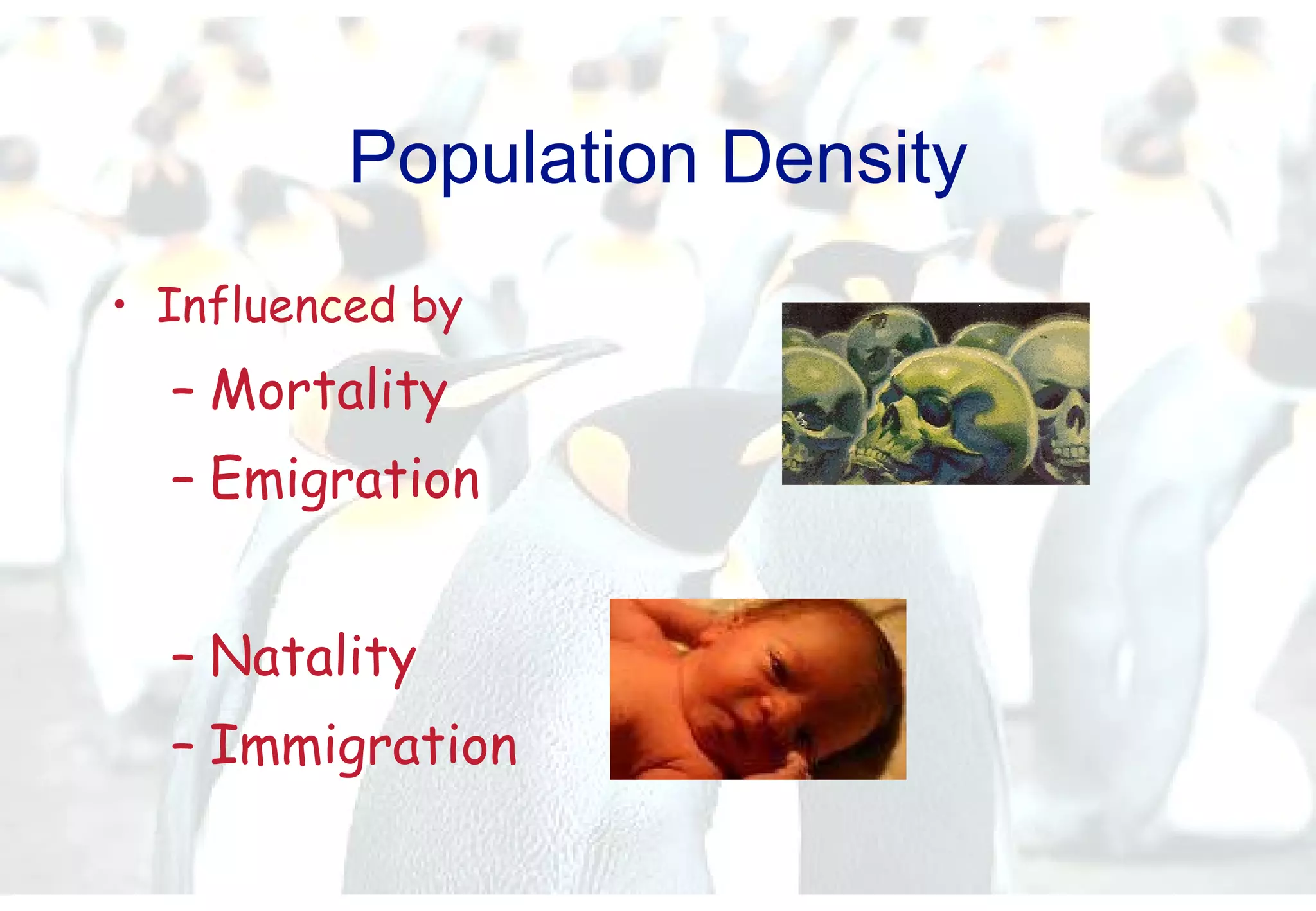
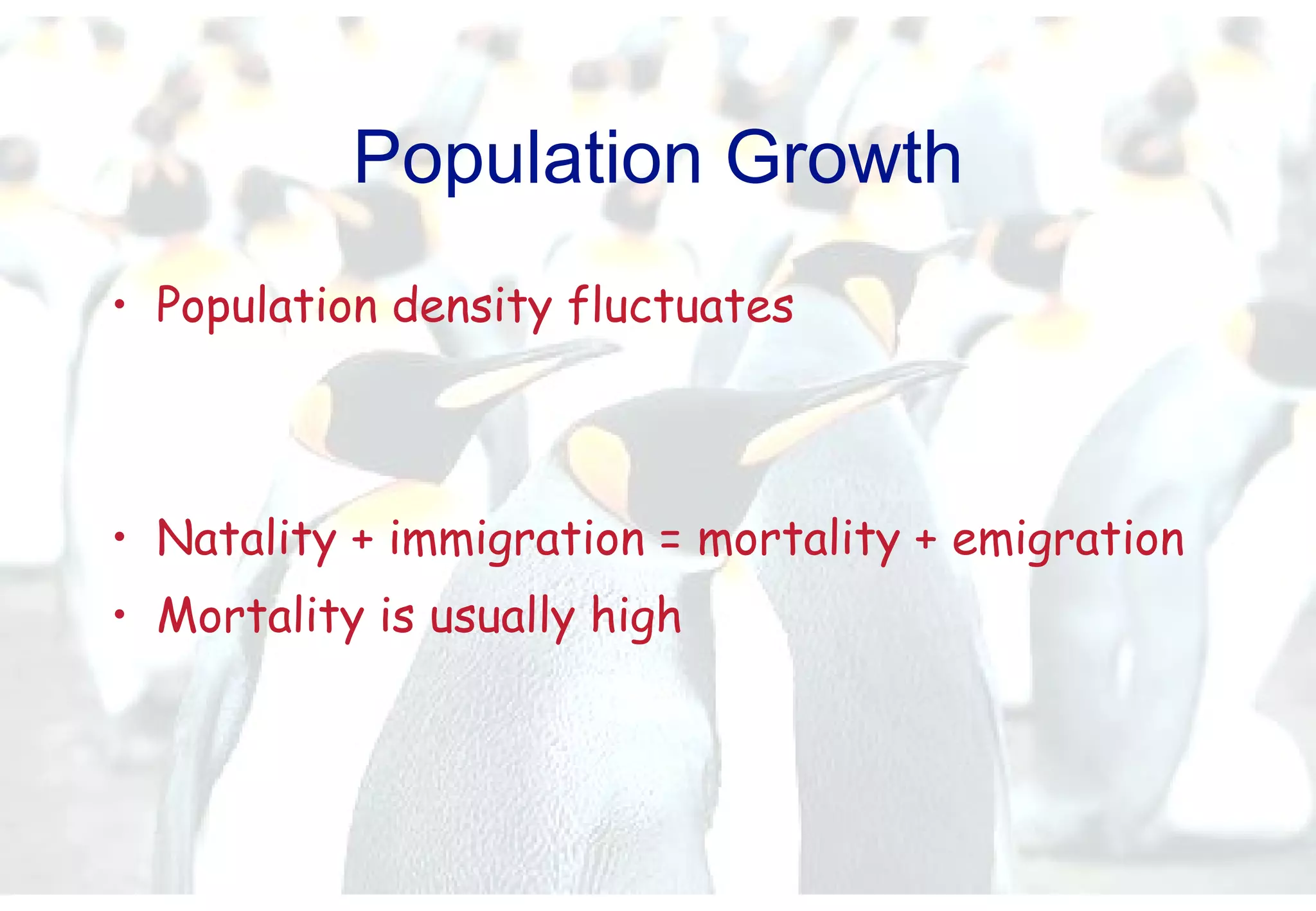
Population Density Influenced by Mortality Emigration  Natality Immigration
Population Growth Population density fluctuates Natality + immigration = mortality + emigration Mortality is usually high
Types of Populations Open Natality, mortality, immigration and emigration affect population size Closed Only natality and mortality affect population size
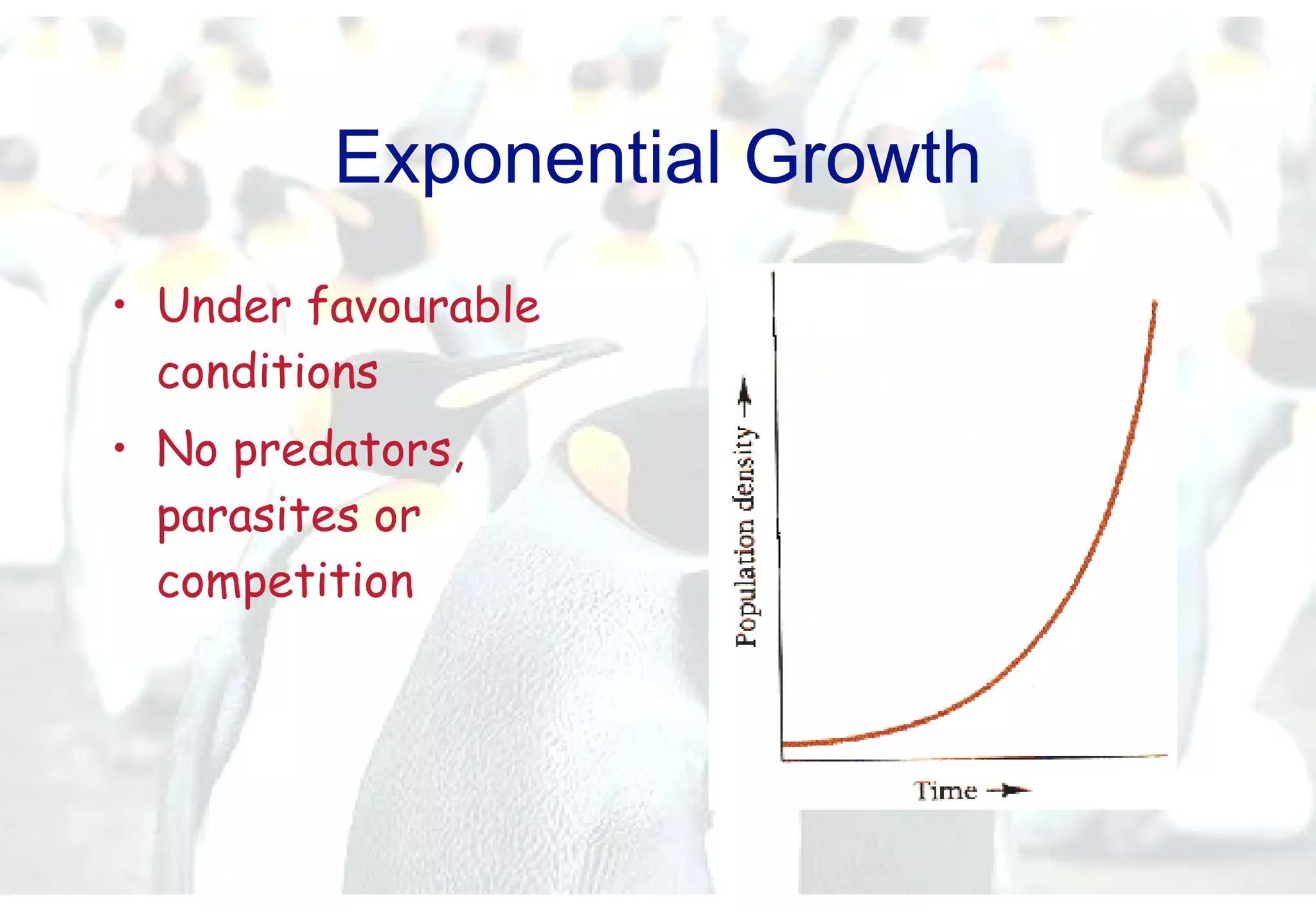
Exponential Growth Under favourable conditions No predators, parasites or competition
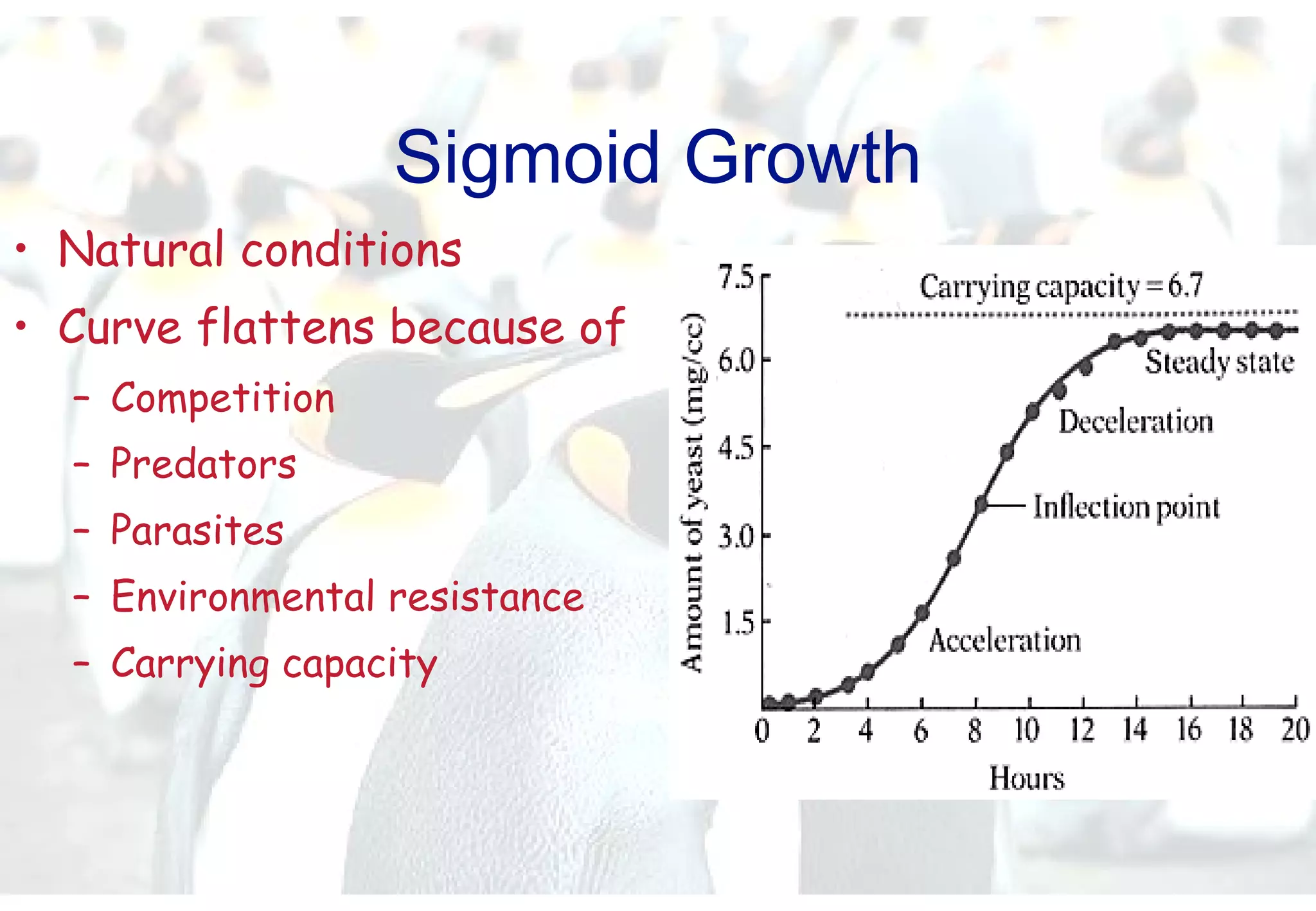
Sigmoid Growth Natural conditions Curve flattens because of Competition Predators Parasites  Environmental resistance Carrying capacity
Closed Population Growth No immigration or emigration Population slowly kills itself Lack of  Food Space Oxygen Water Poisons itself
J Curve Closed population Upper limit Seasonal conditions Never reaches carrying capacity
Survivorship  The chance of remaining alive to pass on your genes to the next generation Life expectancy Life span
Survival of the species Most energy is put into survival of species
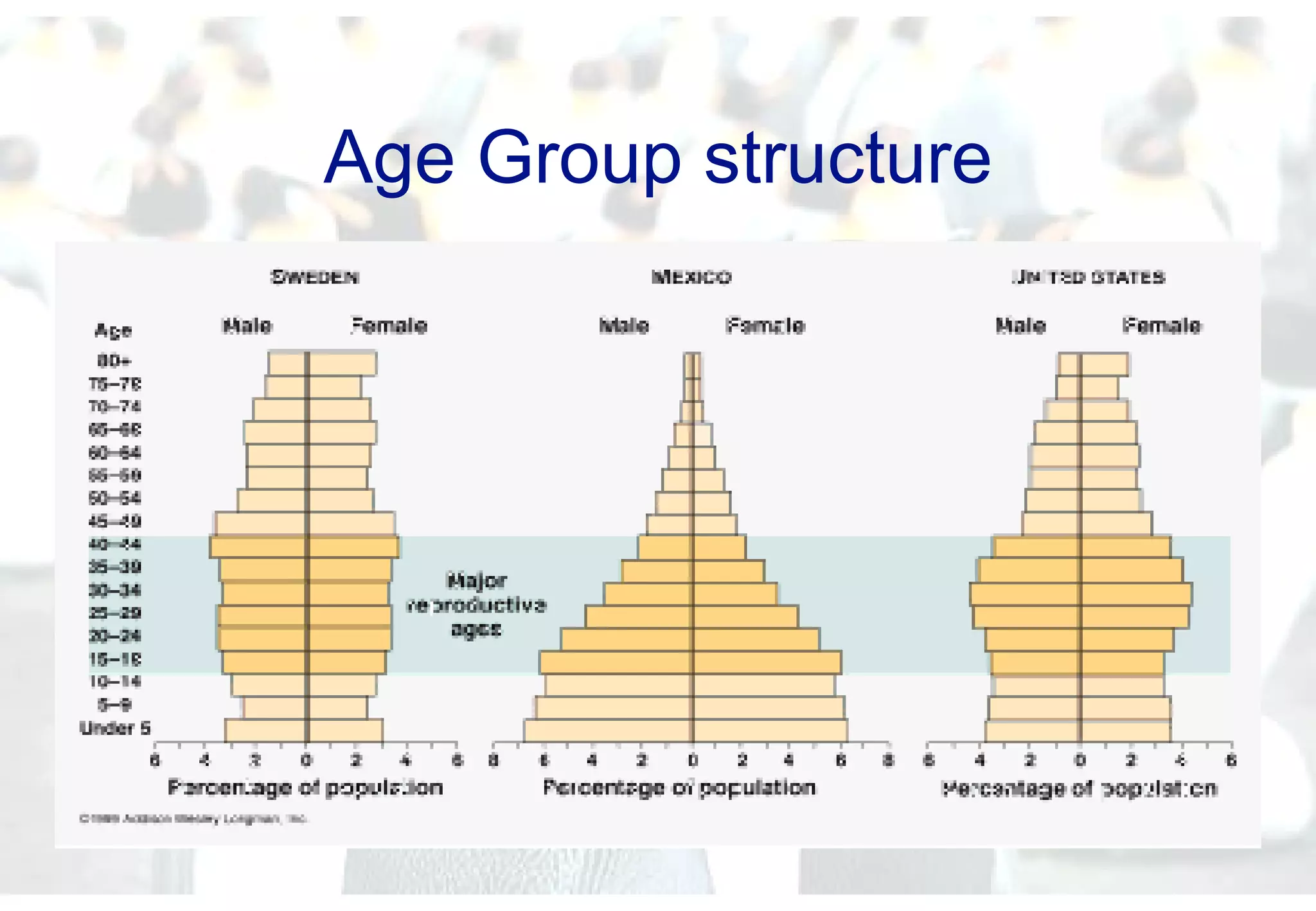
Age Group structure
Population Distribution Clumped  Random Evenly spread out
Clumped Populations Increases competition for food and space Reduces drying out Greater defence Easier to find mates May also be due to substrate
Evenly Spread  Animals By competition or aggression Defended territories Limits population density Plants Shading Competition Allelopathy
Population Regulation Abiotic Tolerance Acclimation Geographical Barriers  Liebig’s Law of Minimum Biotic Predation, paracitism Disease, toxic wastes Competition, Humans
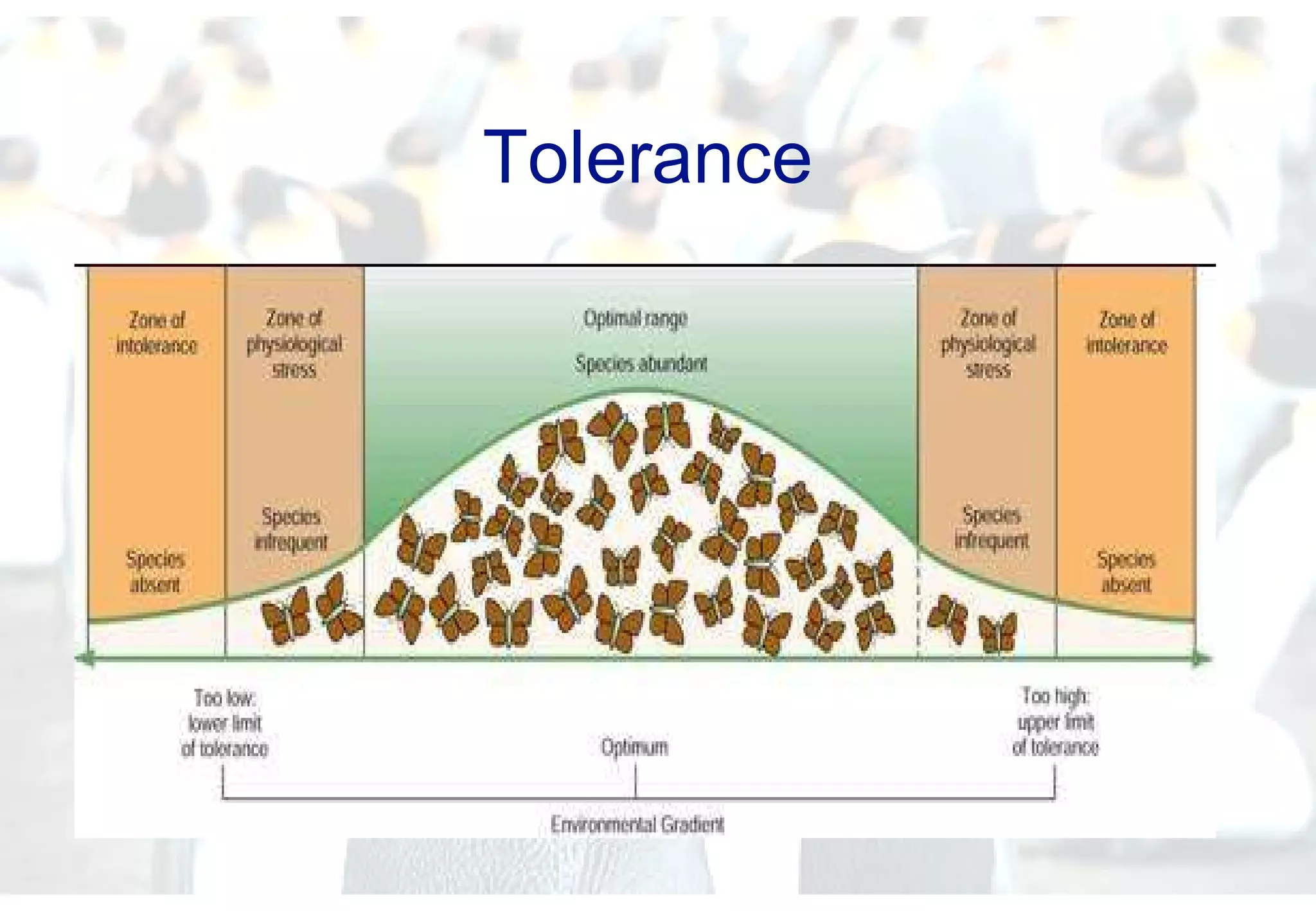
Tolerance
Acclimation  When tolerance limits for an organism change they acclimatise Slow process Usually to seasons
Liebig’s Law The functioning of an organism in limited or controlled by  whatever essential environmental factor is in the least favourable amount
Geographical Barriers Mountain ranges Seas and oceans Rivers
Predation
Humans  Over-hunting Extinction
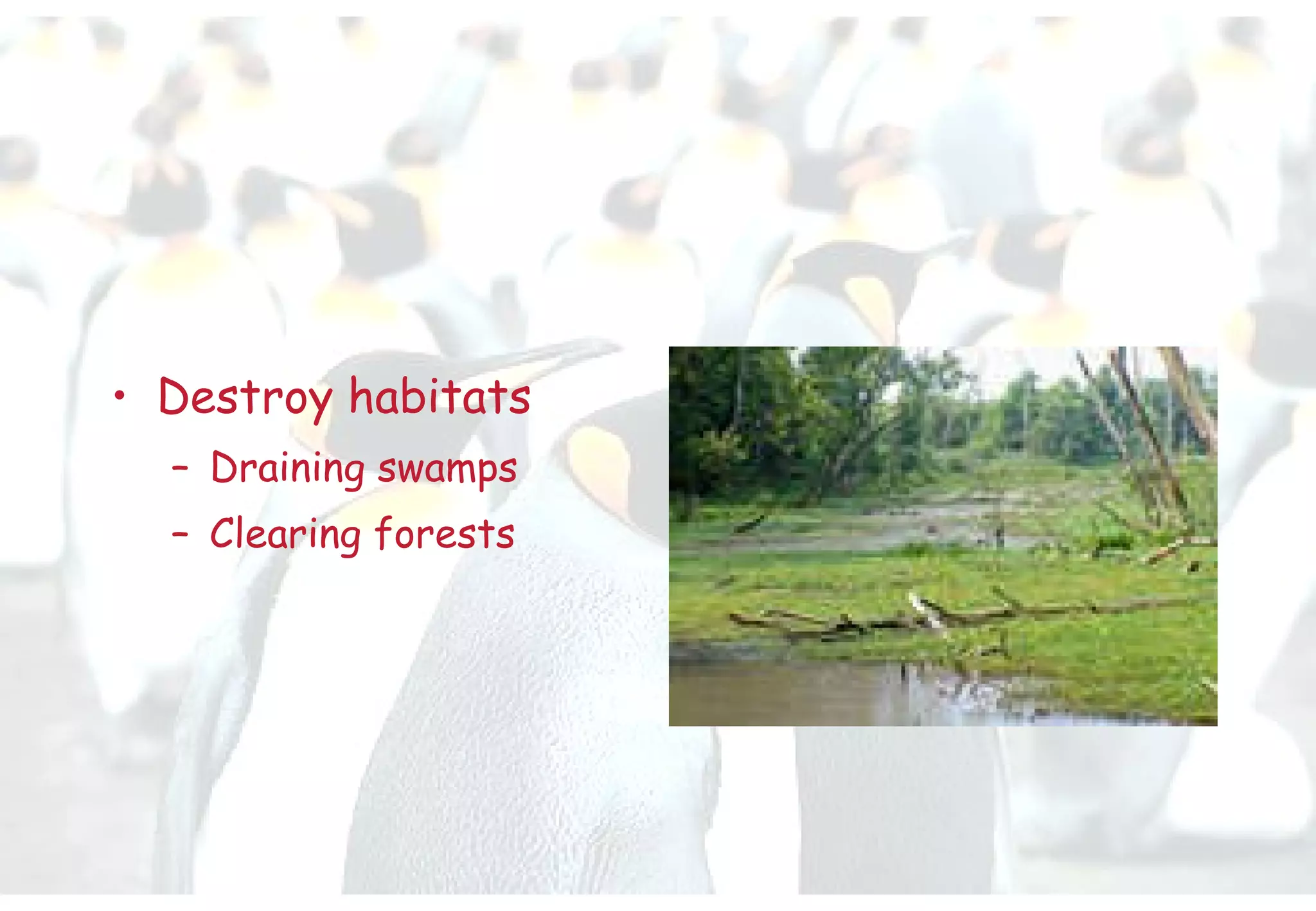
Destroy habitats Draining swamps Clearing forests
Over-use of pesticides
Toxic wastes

2 Populations

Editor's Notes

  • #7 Mortality (death rate) Decreases population density Emigration (number of organisms moving out) Decreases population density Natality (birth rate) Increases population density Immigration (number of organisms moving in) Increases population density
  • #8 Many individuals die withou reproducing, predators,
  • #9 Open-New orgs born and immigrate while others die or emigrate - Most ecosystems in nature Closed - Usually in a laboratory or game reserve situation
  • #11 Competition for food Increase in predator population Increase in parasites Environmental resistance Factors which cause resistance to population growth Carrying capacity The population size that a habitat can sustain Lag phase Period of adaptation to new conditions Low initial numbers Exponential Growth Constant cell division High natality rate Transition Period Natality rate slows Affected by overcrowding Slowing Phase Rate of natality slows further Stationary Phase Natality = mortality Population growth stops
  • #14 Average life expectance at birth The age half the individuals born will survive to Maximum length of life for a species Annuals - 1 year Biennials - 2 year
  • #15 More energy into numbers = less into rearing offspring Or Less energy into numbers = more energy into rearing offspring Fish lay many eggs No parental care Few survive Mice reproduce early and often Dogs have smaller annual litters
  • #16 Percentage of populaiton in different age clases - pre-reproductive, reproductive and post reproductive Sweden diminshing populaiton (urn shape curve) - few pre reproductive, post reproductive Mexico - expanding population - pyramid curve - most pre reproductive - very few post reproductive USA - stable - bell shape - widest at bottom - pre and reproductive similar - post reproductive less
  • #18 Substrate - plants in rocky areas - grow between rocks
  • #21 Optimum range When conditions are most favourable Zone of physiological stress When conditions are “uncomfortable” Upper and Lower limits of tolerance Organisms die