chandan.vichoray@gmail.com
Private Labels
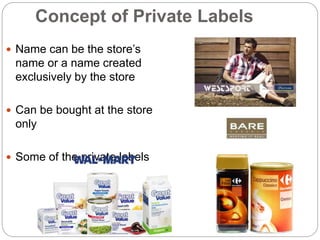
Concept of Private Labels
 Name can be the store’s
name or a name created
exclusively by the store
 Can be bought at the store
only
 Some of the private labels
Classification of Private Labels
 Store Brand
 Which carries the retailer’s name such as Westside, Foodworld, Big
Bazaar
 Umbrella Brand
 Common brand across multiple categories – e.g. Bare from pantaloons,
Splash from Lifestyle
 Individual Brands
 Specific brand names created for specific market segments and / or
categories
The Need for Private Labels
 Private Labels act as value added marketing differentiator
 Bringing unique products within the range of the customer
by pricing it aggressively thus creating a competitive
advantage
 Lesser costs on account of in-house designing,
merchandising, outsourcing and distributions
 In store promotions brings down the cost of promotion
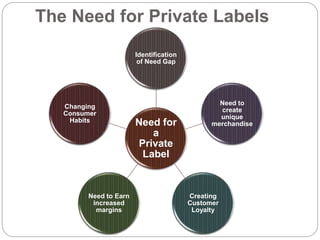
The Need for Private Labels
Need for
a
Private
Label
Identification
of Need Gap
Need to
create
unique
merchandise
Creating
Customer
Loyalty
Need to Earn
increased
margins
Changing
Consumer
Habits
The Evolution of Private Labels
 Generic Product offerings towards price value proposition
 Inspires less confidence and trust as it is a substitute for
the real thing
 Increases business and builds customer loyalty
 Evolution from cheaper substitutes to niche products like
 Wellness products
 Core products
 Expertise
 Aspirational
The Evolution of Private Labels
1st Generation 2nd Generation 3rd Generation 4th Generation
Type of Brand Generic
No Name
Brand free
Unbranded
Quasi Brand
Own Label
Own Brand Extended own
brand i.e.
segmented own
brand
Strategy Generics Cheapest Price Me-Too Value Added
Objective Increase
Margins
Providing
Choice in
Pricing
Increase
Margins
Reduce
manufacturer’s
power by
setting entry
price
Provide better
value product
Enhance
category
margins
Expand product
assortments
Build retailer’s
image among
customers
Increase and
retain client
base
Enhance
category
margins
Improve image
further
Differentiation
The Evolution of Private Labels
1st Generation 2nd Generation 3rd Generation 4th Generation
Product Basic and
functional
products
One-off staple
lines with a
large volume
Big Products
category
Image forming
product groups
Large number
of products with
small volumes
(niche)
Technology Simple
production
process and
basic
technology
lagging behind
market leader
Technology still
lagging behind
market leaders
Close to the
brand leader
Innovative
technology
The Evolution of Private Labels
1st Generation 2nd Generation 3rd Generation 4th Generation
Quality / Image Lower image
and inferior
image
compared to
the
manufacturer’s
brands
Medium quality
but still
perceived as
lower than
leading
manufacturer’s
brands
Secondary
brand,
alongside the
leading
manufacturer’s
brand
Comparable to
market leaders
Same or better
than market
leaders
Innovative and
different
products from
brand leaders
Approximate
Pricing
20% or more
below brand
leader
10-20% below 5-10% below Equal or higher
than known
brand
Consumer’s
motivation to
Price Price Both quality
and price i.e.
Better and
unique products
Process of Private Label
Creation
 Defining Objective
 Factors like creating differentiation, wide product range, enhancing
margins
 Defining Gaps in the Market
 Gaps can be price gaps, offerings gaps, etc
 Decision on make or buy and Sourcing
 Checking on own’s SWOT
 Determine the Marketing and Sales Strategy
 Determine the Measures of performance
 Creating metrics of measurement

18 private labels

  • 1.
  • 2.
    Concept of PrivateLabels  Name can be the store’s name or a name created exclusively by the store  Can be bought at the store only  Some of the private labels
  • 3.
    Classification of PrivateLabels  Store Brand  Which carries the retailer’s name such as Westside, Foodworld, Big Bazaar  Umbrella Brand  Common brand across multiple categories – e.g. Bare from pantaloons, Splash from Lifestyle  Individual Brands  Specific brand names created for specific market segments and / or categories
  • 4.
    The Need forPrivate Labels  Private Labels act as value added marketing differentiator  Bringing unique products within the range of the customer by pricing it aggressively thus creating a competitive advantage  Lesser costs on account of in-house designing, merchandising, outsourcing and distributions  In store promotions brings down the cost of promotion
  • 5.
    The Need forPrivate Labels Need for a Private Label Identification of Need Gap Need to create unique merchandise Creating Customer Loyalty Need to Earn increased margins Changing Consumer Habits
  • 6.
    The Evolution ofPrivate Labels  Generic Product offerings towards price value proposition  Inspires less confidence and trust as it is a substitute for the real thing  Increases business and builds customer loyalty  Evolution from cheaper substitutes to niche products like  Wellness products  Core products  Expertise  Aspirational
  • 7.
    The Evolution ofPrivate Labels 1st Generation 2nd Generation 3rd Generation 4th Generation Type of Brand Generic No Name Brand free Unbranded Quasi Brand Own Label Own Brand Extended own brand i.e. segmented own brand Strategy Generics Cheapest Price Me-Too Value Added Objective Increase Margins Providing Choice in Pricing Increase Margins Reduce manufacturer’s power by setting entry price Provide better value product Enhance category margins Expand product assortments Build retailer’s image among customers Increase and retain client base Enhance category margins Improve image further Differentiation
  • 8.
    The Evolution ofPrivate Labels 1st Generation 2nd Generation 3rd Generation 4th Generation Product Basic and functional products One-off staple lines with a large volume Big Products category Image forming product groups Large number of products with small volumes (niche) Technology Simple production process and basic technology lagging behind market leader Technology still lagging behind market leaders Close to the brand leader Innovative technology
  • 9.
    The Evolution ofPrivate Labels 1st Generation 2nd Generation 3rd Generation 4th Generation Quality / Image Lower image and inferior image compared to the manufacturer’s brands Medium quality but still perceived as lower than leading manufacturer’s brands Secondary brand, alongside the leading manufacturer’s brand Comparable to market leaders Same or better than market leaders Innovative and different products from brand leaders Approximate Pricing 20% or more below brand leader 10-20% below 5-10% below Equal or higher than known brand Consumer’s motivation to Price Price Both quality and price i.e. Better and unique products
  • 10.
    Process of PrivateLabel Creation  Defining Objective  Factors like creating differentiation, wide product range, enhancing margins  Defining Gaps in the Market  Gaps can be price gaps, offerings gaps, etc  Decision on make or buy and Sourcing  Checking on own’s SWOT  Determine the Marketing and Sales Strategy  Determine the Measures of performance  Creating metrics of measurement