Introduction
Private label
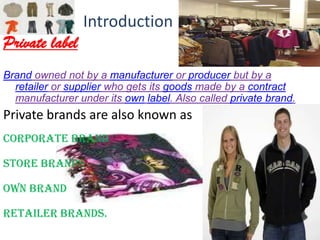
Brand owned not by a manufacturer or producer but by a
  retailer or supplier who gets its goods made by a contract
  manufacturer under its own label. Also called private brand.
Private brands are also known as
Corporate brand

Store brands

Own brand

Retailer brands.
Private Brand Growth

  Some of the factors for this growth include:
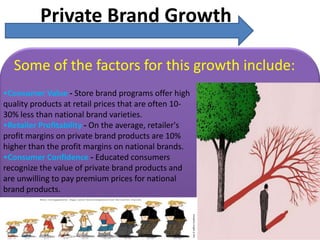
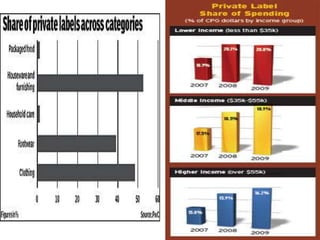
•Consumer Value - Store brand programs offer high
quality products at retail prices that are often 10-
30% less than national brand varieties.
•Retailer Profitability - On the average, retailer's
profit margins on private brand products are 10%
higher than the profit margins on national brands.
•Consumer Confidence - Educated consumers
recognize the value of private brand products and
are unwilling to pay premium prices for national
brand products.
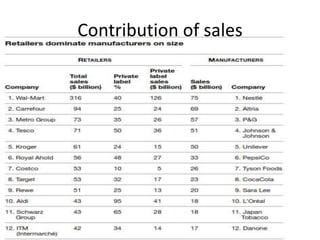
Contribution of sales
GROWTH OF PRIVATE LABEL BRANDS
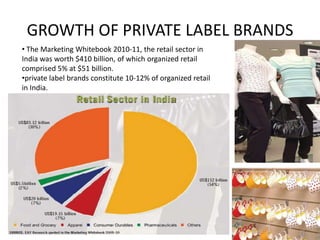
• The Marketing Whitebook 2010-11, the retail sector in
India was worth $410 billion, of which organized retail
comprised 5% at $51 billion.
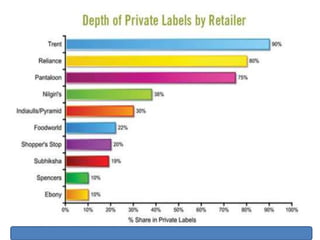
•private label brands constitute 10-12% of organized retail
in India.
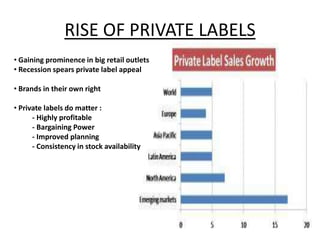
RISE OF PRIVATE LABELS
• Gaining prominence in big retail outlets
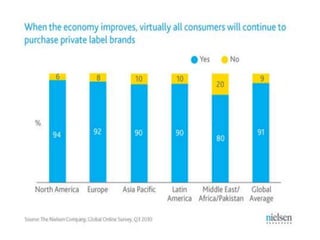
• Recession spears private label appeal

• Brands in their own right
                                             .
• Private labels do matter :
      - Highly profitable
      - Bargaining Power
      - Improved planning
      - Consistency in stock availability
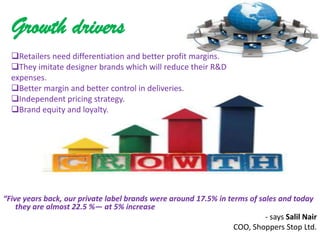
Growth drivers
  Retailers need differentiation and better profit margins.
  They imitate designer brands which will reduce their R&D
  expenses.
  Better margin and better control in deliveries.
  Independent pricing strategy.
  Brand equity and loyalty.


“Five years back, our private label brands were around 17.5% in terms of sales and today
    they are almost 22.5 %— at 5% increase
                                                                           - says Salil Nair
                                                                  COO, Shoppers Stop Ltd.
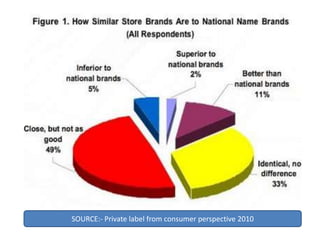
SOURCE:- Private label from consumer perspective 2010
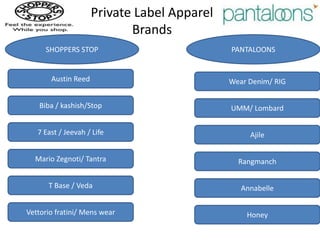
Private Label Apparel
                            Brands
     SHOPPERS STOP                           PANTALOONS


       Austin Reed                           Wear Denim/ RIG

   Biba / kashish/Stop                       UMM/ Lombard

   7 East / Jeevah / Life                         Ajile

  Mario Zegnoti/ Tantra                        Rangmanch


      T Base / Veda                             Annabelle

Vettorio fratini/ Mens wear                      Honey
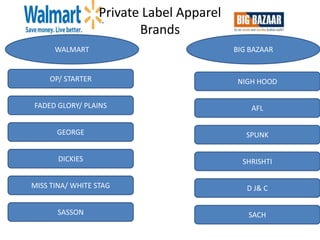
Private Label Apparel
                         Brands
      WALMART                             BIG BAZAAR


    OP/ STARTER                            NIGH HOOD

FADED GLORY/ PLAINS                           AFL

      GEORGE                                 SPUNK

       DICKIES                              SHRISHTI


MISS TINA/ WHITE STAG                        D J& C

       SASSON                                SACH
Challenges faced by Private Labels

 Higher risk of inventory.
 Higher Research and Development expense.
 Markdown or return allowances will not be
  available.
 Failure of the product will create a negative
  image about the retailer.
 More marketing expenses.
Private labels are slowly becoming the
protagonist in the big Indian retail growth
story.

PRIVATE LABEL BRAND

  • 1.
    Introduction Private label Brand ownednot by a manufacturer or producer but by a retailer or supplier who gets its goods made by a contract manufacturer under its own label. Also called private brand. Private brands are also known as Corporate brand Store brands Own brand Retailer brands.
  • 2.
    Private Brand Growth Some of the factors for this growth include: •Consumer Value - Store brand programs offer high quality products at retail prices that are often 10- 30% less than national brand varieties. •Retailer Profitability - On the average, retailer's profit margins on private brand products are 10% higher than the profit margins on national brands. •Consumer Confidence - Educated consumers recognize the value of private brand products and are unwilling to pay premium prices for national brand products.
  • 3.
  • 4.
    GROWTH OF PRIVATELABEL BRANDS • The Marketing Whitebook 2010-11, the retail sector in India was worth $410 billion, of which organized retail comprised 5% at $51 billion. •private label brands constitute 10-12% of organized retail in India.
  • 5.
    RISE OF PRIVATELABELS • Gaining prominence in big retail outlets • Recession spears private label appeal • Brands in their own right . • Private labels do matter : - Highly profitable - Bargaining Power - Improved planning - Consistency in stock availability
  • 6.
    Growth drivers Retailers need differentiation and better profit margins. They imitate designer brands which will reduce their R&D expenses. Better margin and better control in deliveries. Independent pricing strategy. Brand equity and loyalty. “Five years back, our private label brands were around 17.5% in terms of sales and today they are almost 22.5 %— at 5% increase - says Salil Nair COO, Shoppers Stop Ltd.
  • 8.
    SOURCE:- Private labelfrom consumer perspective 2010
  • 11.
    Private Label Apparel Brands SHOPPERS STOP PANTALOONS Austin Reed Wear Denim/ RIG Biba / kashish/Stop UMM/ Lombard 7 East / Jeevah / Life Ajile Mario Zegnoti/ Tantra Rangmanch T Base / Veda Annabelle Vettorio fratini/ Mens wear Honey
  • 12.
    Private Label Apparel Brands WALMART BIG BAZAAR OP/ STARTER NIGH HOOD FADED GLORY/ PLAINS AFL GEORGE SPUNK DICKIES SHRISHTI MISS TINA/ WHITE STAG D J& C SASSON SACH
  • 13.
    Challenges faced byPrivate Labels  Higher risk of inventory.  Higher Research and Development expense.  Markdown or return allowances will not be available.  Failure of the product will create a negative image about the retailer.  More marketing expenses.
  • 14.
    Private labels areslowly becoming the protagonist in the big Indian retail growth story.