Branding &  Brand Positioning Prepared by: Samer Meqdad
Outline What is a Brand? Brand Elements Brand Role and Advantages Brand Equity Brand Portfolios Strategic Brand Management Brand Positioning PODs & POPs Product Lifecycle Market Evolution
What is a Brand? A  name ,  term ,  sign ,  symbol  or  design , or a combination of them, intended to  identify   the goods or services of one seller or group of sellers and to differentiate them from those of competitors. What is Branding? Providing goods and services with the  power of the brand .
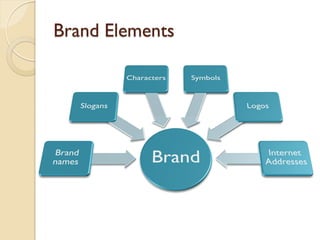
Brand Elements
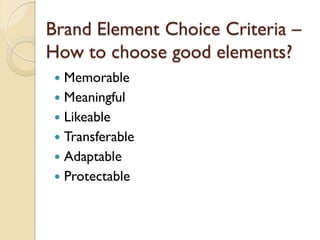
Brand Element Choice Criteria – How to choose good elements? Memorable Meaningful Likeable Transferable Adaptable Protectable
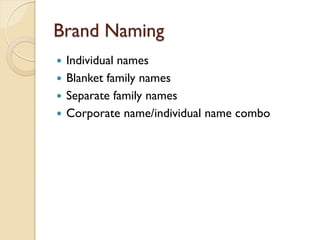
Brand Naming Individual names Blanket family names Separate family names Corporate name/individual name combo
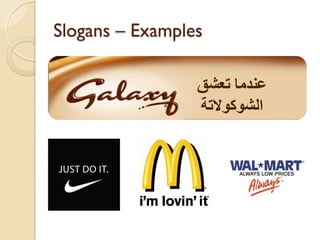
Slogans – Examples عندما تعشق الشوكولاتة
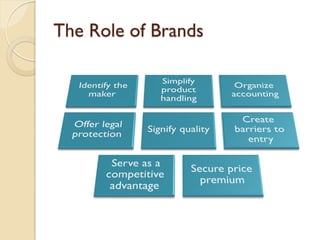
The Role of Brands
Advantages of Strong Brands Improved perceptions of product performance Greater loyalty Less vulnerability to competitive marketing actions Less vulnerability to crises Larger margins More inelastic consumer response Greater trade cooperation Increased marketing communications effectiveness Possible licensing opportunities
What is Brand Equity? The  added value  given to goods and services, through branding which may be reflected in the way consumers, think, feel, and act with respect to the brand.
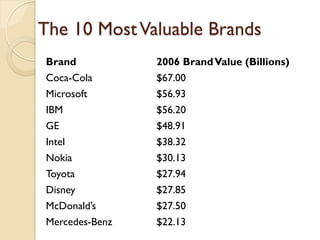
The 10 Most Valuable Brands Brand 2006 Brand Value  (Billions) Coca-Cola $67.00 Microsoft $56.93 IBM $56.20 GE $48.91 Intel $38.32 Nokia $30.13 Toyota $27.94 Disney $27.85 McDonald’s $27.50 Mercedes-Benz $22.13
Measuring Brand Equity Brand Audits Comprehensive examination of a brand to assess the health of the brand Suggest ways to improve its equity. Brand Tracking Collecting information about the brand  performance Brand valuation Determining financial value of the brand
Managing Brand Equity Brand reinforcement Continuous product improvement and innovation. Brand revitalization Change in Positioning Overhaul the brand image
Brand Portfolios A set of brands a company offers Advantages Increasing shelf presence and retailer dependence in the store Attracting consumers seeking variety Increasing internal competition within the firm Yielding economies of scale in advertising, sales, merchandising, and distribution
Brand Roles in a Brand Portfolio Flankers Cash cows Low-end, entry-level High-end prestige
Strategic Brand Management Identifying & establishing brand positioning Planning & implementing brand marketing Measuring & interpreting brand performance Growing & sustaining brand value
What is Positioning? The act of designing the company’s offering and image to occupy a distinctive place in the mind of the target market.  Value Proposition A good  hot pizza , delivered to your door within  30 minutes  of ordering, at a  moderate price
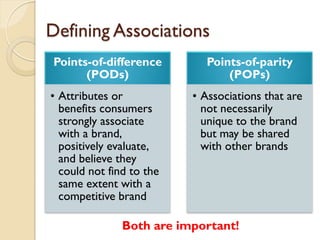
Defining Associations Both are important!
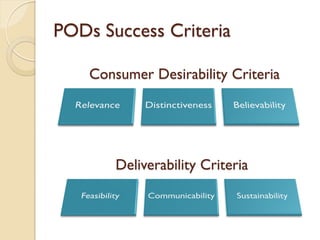
PODs Success Criteria Deliverability Criteria Consumer Desirability Criteria
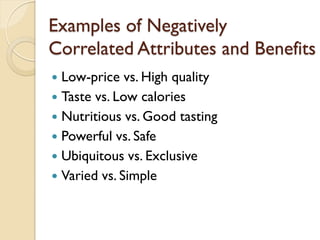
Examples of Negatively Correlated Attributes and Benefits Low-price vs. High quality Taste vs. Low calories Nutritious vs. Good tasting Powerful vs. Safe Ubiquitous vs. Exclusive Varied vs. Simple
Differentiation Strategies Product Distribution Channel Personnel Image
Product Differentiation Product form Features Performance Conformance Durability Reliability Reparability Style Design Ordering ease Delivery Installation Customer training Customer consulting Maintenance
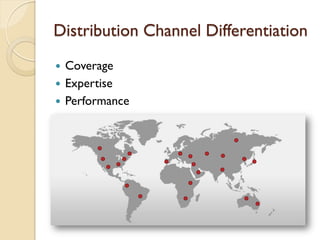
Distribution Channel Differentiation Coverage Expertise Performance
Personnel Differentiation Better-trained staff Competent (skill and knowledge) Trustworthy Friendly and respectful Reliable (perform consistently & accurately) Responsive Good communicators (understand customer and communicate clearly)
Image Differentiation Establish character and value proposition  Convey in a distinctive way Deliver emotional power عندما تعشق الشوكولاتة
Product Life Cycles
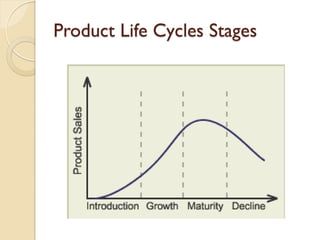
Claims of Product Life Cycles Products have a  limited   life Product sales pass through  distinct stages  each with different challenges and opportunities Profits rise and fall  at different stages  Products require  different strategies  in each life cycle stage
Product Life Cycles Stages
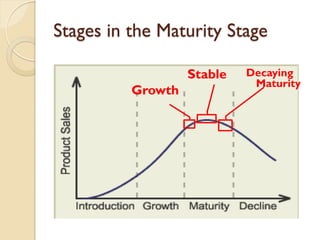
Stages in the Maturity Stage Growth Stable Decaying Maturity
Strategies for Sustaining  Rapid Market Growth Improve product  quality , add  new   features , and  improve styling Add new models and flanker products Enter  new market segments Increase  distribution coverage Shift from product-awareness advertising to product-preference advertising Lower prices  to attract the next layer of price-sensitive buyers
Ways to Increase Sales Volume Convert nonusers Enter new market segments Attract competitors’ customers Have consumers use The product on more occasions More of the product on each occasion The product in new ways
Market Evolution
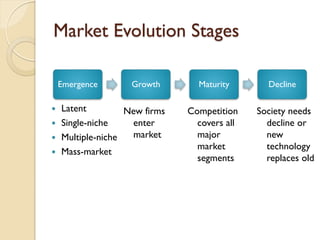
Market Evolution Stages Latent Single-niche Multiple-niche Mass-market New firms enter market Competition covers all major market segments Society needs decline or new technology replaces old
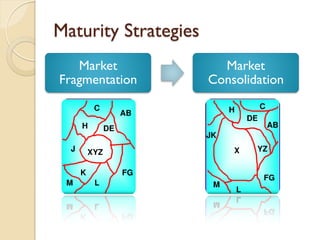
Maturity Strategies
References Philip Kotler, Marketing Management, 11 th  Edition. Prentice Hall, 2002.

Branding & Brand Positioning

  • 1.
    Branding & Brand Positioning Prepared by: Samer Meqdad
  • 2.
    Outline What isa Brand? Brand Elements Brand Role and Advantages Brand Equity Brand Portfolios Strategic Brand Management Brand Positioning PODs & POPs Product Lifecycle Market Evolution
  • 3.
    What is aBrand? A name , term , sign , symbol or design , or a combination of them, intended to identify the goods or services of one seller or group of sellers and to differentiate them from those of competitors. What is Branding? Providing goods and services with the power of the brand .
  • 4.
  • 5.
    Brand Element ChoiceCriteria – How to choose good elements? Memorable Meaningful Likeable Transferable Adaptable Protectable
  • 6.
    Brand Naming Individualnames Blanket family names Separate family names Corporate name/individual name combo
  • 7.
    Slogans – Examplesعندما تعشق الشوكولاتة
  • 8.
  • 9.
    Advantages of StrongBrands Improved perceptions of product performance Greater loyalty Less vulnerability to competitive marketing actions Less vulnerability to crises Larger margins More inelastic consumer response Greater trade cooperation Increased marketing communications effectiveness Possible licensing opportunities
  • 10.
    What is BrandEquity? The added value given to goods and services, through branding which may be reflected in the way consumers, think, feel, and act with respect to the brand.
  • 11.
    The 10 MostValuable Brands Brand 2006 Brand Value (Billions) Coca-Cola $67.00 Microsoft $56.93 IBM $56.20 GE $48.91 Intel $38.32 Nokia $30.13 Toyota $27.94 Disney $27.85 McDonald’s $27.50 Mercedes-Benz $22.13
  • 12.
    Measuring Brand EquityBrand Audits Comprehensive examination of a brand to assess the health of the brand Suggest ways to improve its equity. Brand Tracking Collecting information about the brand performance Brand valuation Determining financial value of the brand
  • 13.
    Managing Brand EquityBrand reinforcement Continuous product improvement and innovation. Brand revitalization Change in Positioning Overhaul the brand image
  • 14.
    Brand Portfolios Aset of brands a company offers Advantages Increasing shelf presence and retailer dependence in the store Attracting consumers seeking variety Increasing internal competition within the firm Yielding economies of scale in advertising, sales, merchandising, and distribution
  • 15.
    Brand Roles ina Brand Portfolio Flankers Cash cows Low-end, entry-level High-end prestige
  • 16.
    Strategic Brand ManagementIdentifying & establishing brand positioning Planning & implementing brand marketing Measuring & interpreting brand performance Growing & sustaining brand value
  • 17.
    What is Positioning?The act of designing the company’s offering and image to occupy a distinctive place in the mind of the target market. Value Proposition A good hot pizza , delivered to your door within 30 minutes of ordering, at a moderate price
  • 18.
  • 19.
    PODs Success CriteriaDeliverability Criteria Consumer Desirability Criteria
  • 20.
    Examples of NegativelyCorrelated Attributes and Benefits Low-price vs. High quality Taste vs. Low calories Nutritious vs. Good tasting Powerful vs. Safe Ubiquitous vs. Exclusive Varied vs. Simple
  • 21.
    Differentiation Strategies ProductDistribution Channel Personnel Image
  • 22.
    Product Differentiation Productform Features Performance Conformance Durability Reliability Reparability Style Design Ordering ease Delivery Installation Customer training Customer consulting Maintenance
  • 23.
    Distribution Channel DifferentiationCoverage Expertise Performance
  • 24.
    Personnel Differentiation Better-trainedstaff Competent (skill and knowledge) Trustworthy Friendly and respectful Reliable (perform consistently & accurately) Responsive Good communicators (understand customer and communicate clearly)
  • 25.
    Image Differentiation Establishcharacter and value proposition Convey in a distinctive way Deliver emotional power عندما تعشق الشوكولاتة
  • 26.
  • 27.
    Claims of ProductLife Cycles Products have a limited life Product sales pass through distinct stages each with different challenges and opportunities Profits rise and fall at different stages Products require different strategies in each life cycle stage
  • 28.
  • 29.
    Stages in theMaturity Stage Growth Stable Decaying Maturity
  • 30.
    Strategies for Sustaining Rapid Market Growth Improve product quality , add new features , and improve styling Add new models and flanker products Enter new market segments Increase distribution coverage Shift from product-awareness advertising to product-preference advertising Lower prices to attract the next layer of price-sensitive buyers
  • 31.
    Ways to IncreaseSales Volume Convert nonusers Enter new market segments Attract competitors’ customers Have consumers use The product on more occasions More of the product on each occasion The product in new ways
  • 32.
  • 33.
    Market Evolution StagesLatent Single-niche Multiple-niche Mass-market New firms enter market Competition covers all major market segments Society needs decline or new technology replaces old
  • 34.
  • 35.
    References Philip Kotler,Marketing Management, 11 th Edition. Prentice Hall, 2002.