Presented By:
SHAHBAZ ABDULLAH
MBA 3rd Sem.
12MBAK-02
Types of Retail Formats
 Store retail

 Non-Store Retail
Types of Store Retail
 Department Stores
 Specialist Stores
 Categories Killers

 Convenience Stores
 Supermarkets, Superstores and Hypermarkets
 Catalogue Shops

 Discount Stores
 Factory Outlets
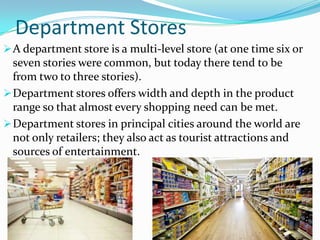
Department Stores
 A department store is a multi-level store (at one time six or

seven stories were common, but today there tend to be
from two to three stories).
 Department stores offers width and depth in the product
range so that almost every shopping need can be met.
 Department stores in principal cities around the world are
not only retailers; they also act as tourist attractions and
sources of entertainment.
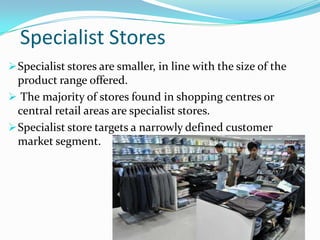
Specialist Stores
 Specialist stores are smaller, in line with the size of the

product range offered.
 The majority of stores found in shopping centres or
central retail areas are specialist stores.
 Specialist store targets a narrowly defined customer
market segment.
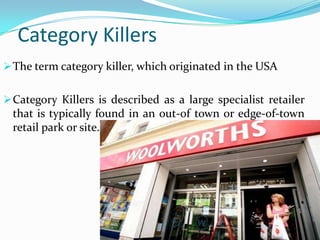
Category Killers
 The term category killer, which originated in the USA
 Category Killers is described as a large specialist retailer

that is typically found in an out-of town or edge-of-town
retail park or site.
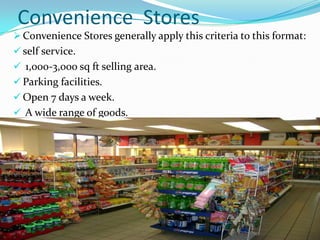
Convenience Stores
 Convenience Stores generally apply this criteria to this format:
 self service.
 1,000-3,000 sq ft selling area.

 Parking facilities.
 Open 7 days a week.
 A wide range of goods.
Supermarkets, Superstores and
Hypermarkets
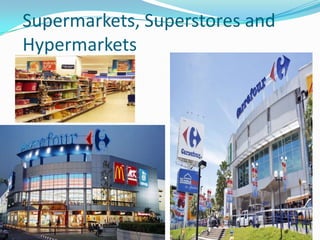
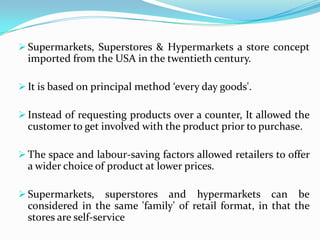
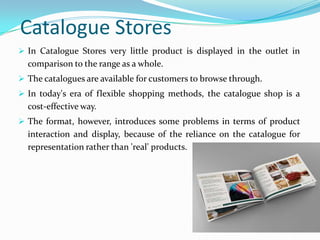
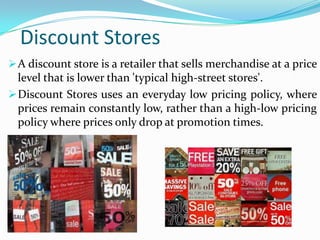
 Supermarkets, Superstores & Hypermarkets a store concept

imported from the USA in the twentieth century.
 It is based on principal method ‘every day goods'.
 Instead of requesting products over a counter, It allowed the

customer to get involved with the product prior to purchase.
 The space and labour-saving factors allowed retailers to offer

a wider choice of product at lower prices.
 Supermarkets,

superstores and hypermarkets can be
considered in the same 'family' of retail format, in that the
stores are self-service
Catalogue Stores
 In Catalogue Stores very little product is displayed in the outlet in

comparison to the range as a whole.
 The catalogues are available for customers to browse through.
 In today's era of flexible shopping methods, the catalogue shop is a

cost-effective way.
 The format, however, introduces some problems in terms of product

interaction and display, because of the reliance on the catalogue for
representation rather than 'real' products.
Discount Stores
 A discount store is a retailer that sells merchandise at a price

level that is lower than 'typical high-street stores'.
 Discount Stores uses an everyday low pricing policy, where
prices remain constantly low, rather than a high-low pricing
policy where prices only drop at promotion times.
Factory Outlets
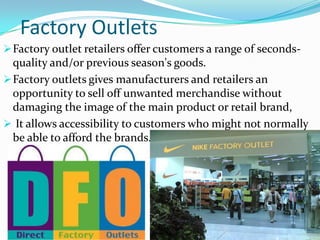
 Factory outlet retailers offer customers a range of seconds-

quality and/or previous season's goods.
 Factory outlets gives manufacturers and retailers an
opportunity to sell off unwanted merchandise without
damaging the image of the main product or retail brand,
 It allows accessibility to customers who might not normally
be able to afford the brands.
Types of Non-Store Retail
 Mail Order

 Direct Selling
 Personal Retailing
 Telesales
 Internet Retailing
Mail Order
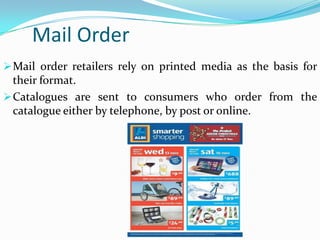
 Mail order retailers rely on printed media as the basis for

their format.
 Catalogues are sent to consumers who order from the
catalogue either by telephone, by post or online.
Direct Selling
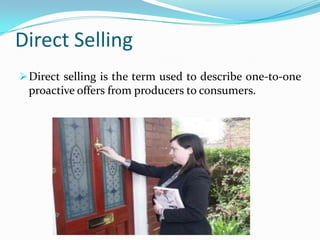
 Direct selling is the term used to describe one-to-one

proactive offers from producers to consumers.
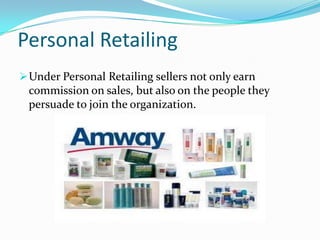
Personal Retailing
 Under Personal Retailing sellers not only earn

commission on sales, but also on the people they
persuade to join the organization.
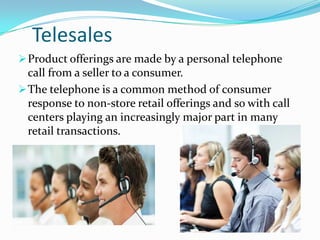
Telesales
 Product offerings are made by a personal telephone

call from a seller to a consumer.
 The telephone is a common method of consumer
response to non-store retail offerings and so with call
centers playing an increasingly major part in many
retail transactions.
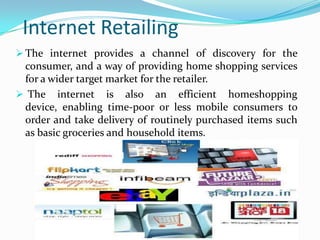
Internet Retailing
 The internet provides a channel of discovery for the

consumer, and a way of providing home shopping services
for a wider target market for the retailer.
 The internet is also an efficient homeshopping
device, enabling time-poor or less mobile consumers to
order and take delivery of routinely purchased items such
as basic groceries and household items.
Retail format

Retail format

  • 1.
  • 2.
    Types of RetailFormats  Store retail  Non-Store Retail
  • 3.
    Types of StoreRetail  Department Stores  Specialist Stores  Categories Killers  Convenience Stores  Supermarkets, Superstores and Hypermarkets  Catalogue Shops  Discount Stores  Factory Outlets
  • 4.
    Department Stores  Adepartment store is a multi-level store (at one time six or seven stories were common, but today there tend to be from two to three stories).  Department stores offers width and depth in the product range so that almost every shopping need can be met.  Department stores in principal cities around the world are not only retailers; they also act as tourist attractions and sources of entertainment.
  • 5.
    Specialist Stores  Specialiststores are smaller, in line with the size of the product range offered.  The majority of stores found in shopping centres or central retail areas are specialist stores.  Specialist store targets a narrowly defined customer market segment.
  • 6.
    Category Killers  Theterm category killer, which originated in the USA  Category Killers is described as a large specialist retailer that is typically found in an out-of town or edge-of-town retail park or site.
  • 7.
    Convenience Stores  ConvenienceStores generally apply this criteria to this format:  self service.  1,000-3,000 sq ft selling area.  Parking facilities.  Open 7 days a week.  A wide range of goods.
  • 8.
  • 9.
     Supermarkets, Superstores& Hypermarkets a store concept imported from the USA in the twentieth century.  It is based on principal method ‘every day goods'.  Instead of requesting products over a counter, It allowed the customer to get involved with the product prior to purchase.  The space and labour-saving factors allowed retailers to offer a wider choice of product at lower prices.  Supermarkets, superstores and hypermarkets can be considered in the same 'family' of retail format, in that the stores are self-service
  • 10.
    Catalogue Stores  InCatalogue Stores very little product is displayed in the outlet in comparison to the range as a whole.  The catalogues are available for customers to browse through.  In today's era of flexible shopping methods, the catalogue shop is a cost-effective way.  The format, however, introduces some problems in terms of product interaction and display, because of the reliance on the catalogue for representation rather than 'real' products.
  • 11.
    Discount Stores  Adiscount store is a retailer that sells merchandise at a price level that is lower than 'typical high-street stores'.  Discount Stores uses an everyday low pricing policy, where prices remain constantly low, rather than a high-low pricing policy where prices only drop at promotion times.
  • 12.
    Factory Outlets  Factoryoutlet retailers offer customers a range of seconds- quality and/or previous season's goods.  Factory outlets gives manufacturers and retailers an opportunity to sell off unwanted merchandise without damaging the image of the main product or retail brand,  It allows accessibility to customers who might not normally be able to afford the brands.
  • 13.
    Types of Non-StoreRetail  Mail Order  Direct Selling  Personal Retailing  Telesales  Internet Retailing
  • 14.
    Mail Order  Mailorder retailers rely on printed media as the basis for their format.  Catalogues are sent to consumers who order from the catalogue either by telephone, by post or online.
  • 15.
    Direct Selling  Directselling is the term used to describe one-to-one proactive offers from producers to consumers.
  • 16.
    Personal Retailing  UnderPersonal Retailing sellers not only earn commission on sales, but also on the people they persuade to join the organization.
  • 17.
    Telesales  Product offeringsare made by a personal telephone call from a seller to a consumer.  The telephone is a common method of consumer response to non-store retail offerings and so with call centers playing an increasingly major part in many retail transactions.
  • 18.
    Internet Retailing  Theinternet provides a channel of discovery for the consumer, and a way of providing home shopping services for a wider target market for the retailer.  The internet is also an efficient homeshopping device, enabling time-poor or less mobile consumers to order and take delivery of routinely purchased items such as basic groceries and household items.