Downloaded 1,106 times


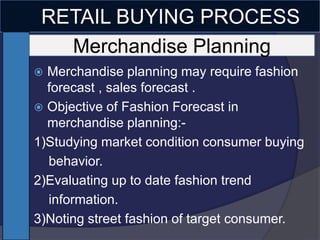


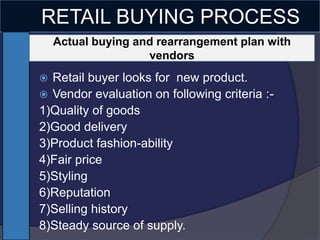


The document discusses the challenges of demand forecasting in the textile industry due to factors like complicated SKUs, fashion trends, and retailer influence over manufacturers. It states that integrating qualitative and quantitative data is key to reducing risk from uncertain demand predictions. The use of systems like quick response, EDI, POS, and MIS can help with order scheduling, inventory costs, sourcing, and assortment planning. The retail buying process involves merchandise planning, assortment planning, and arranging actual purchases with vendors based on evaluation criteria. Forecasting sales and selecting products/styles/colors/sizes uses methods like decomposition, regression analysis, and expert opinions. Rules for product selection include compensatory, lexicographic, and conjunctive


