Chandan Vichoray B.E. MBA, Ph.D Thesis Submitted Shri Ramdeobaba Kamla Nehru Engineering College, Nagpur
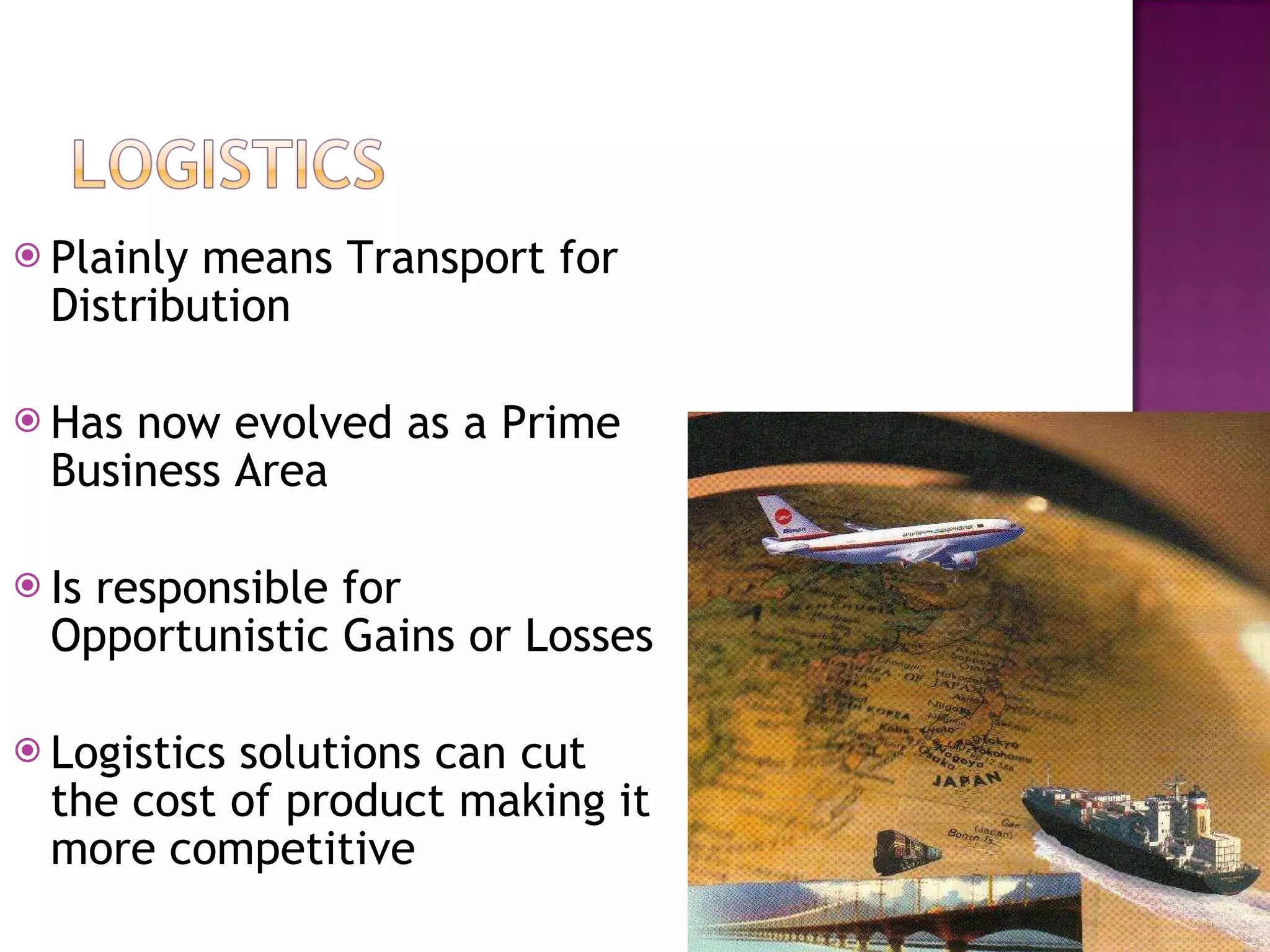
Plainly means Transport for Distribution Has now evolved as a Prime Business Area Is responsible for Opportunistic Gains or Losses Logistics solutions can cut the cost of product making it more competitive
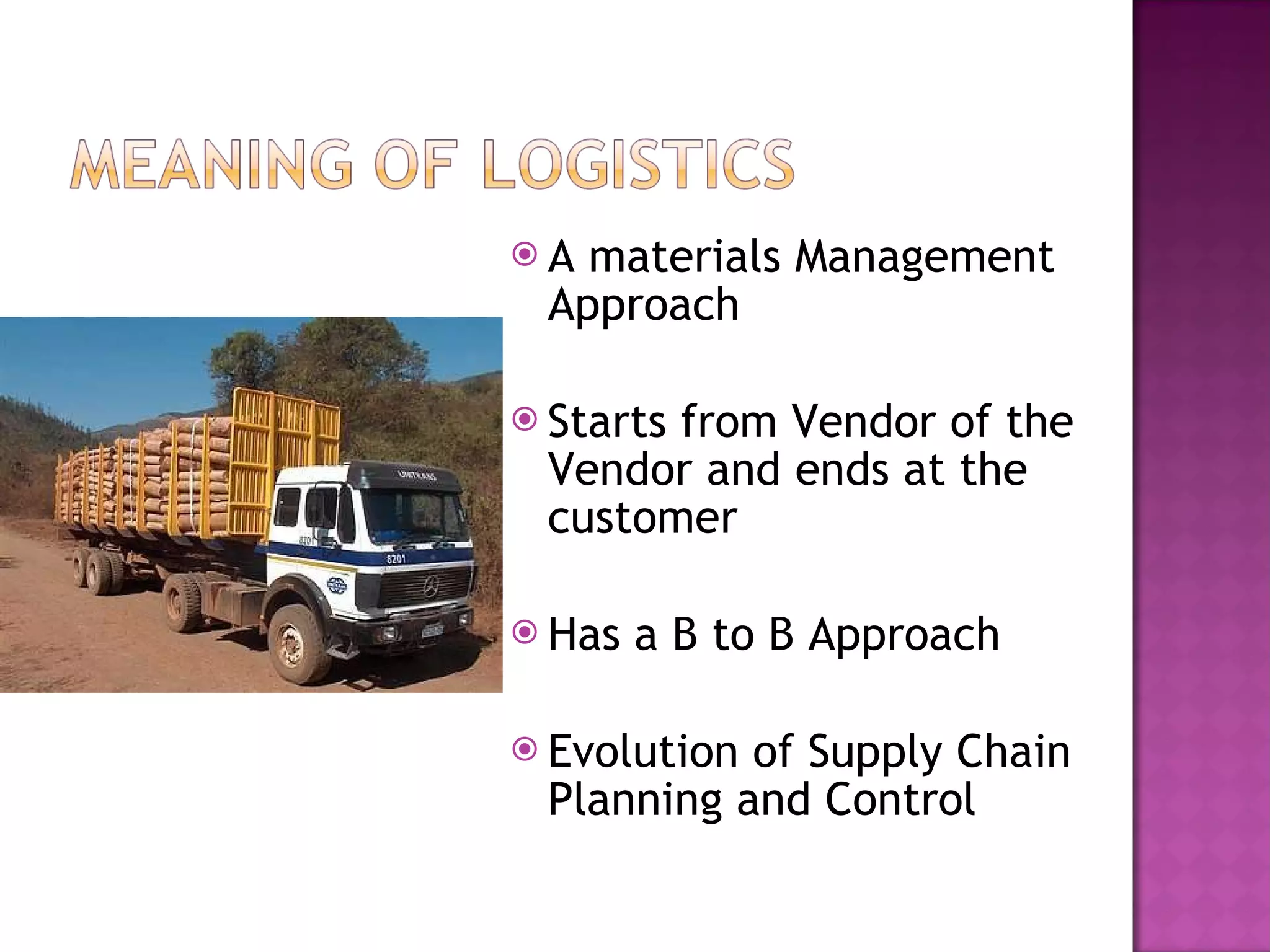
A materials Management Approach Starts from Vendor of the Vendor and ends at the customer Has a B to B Approach Evolution of Supply Chain Planning and Control
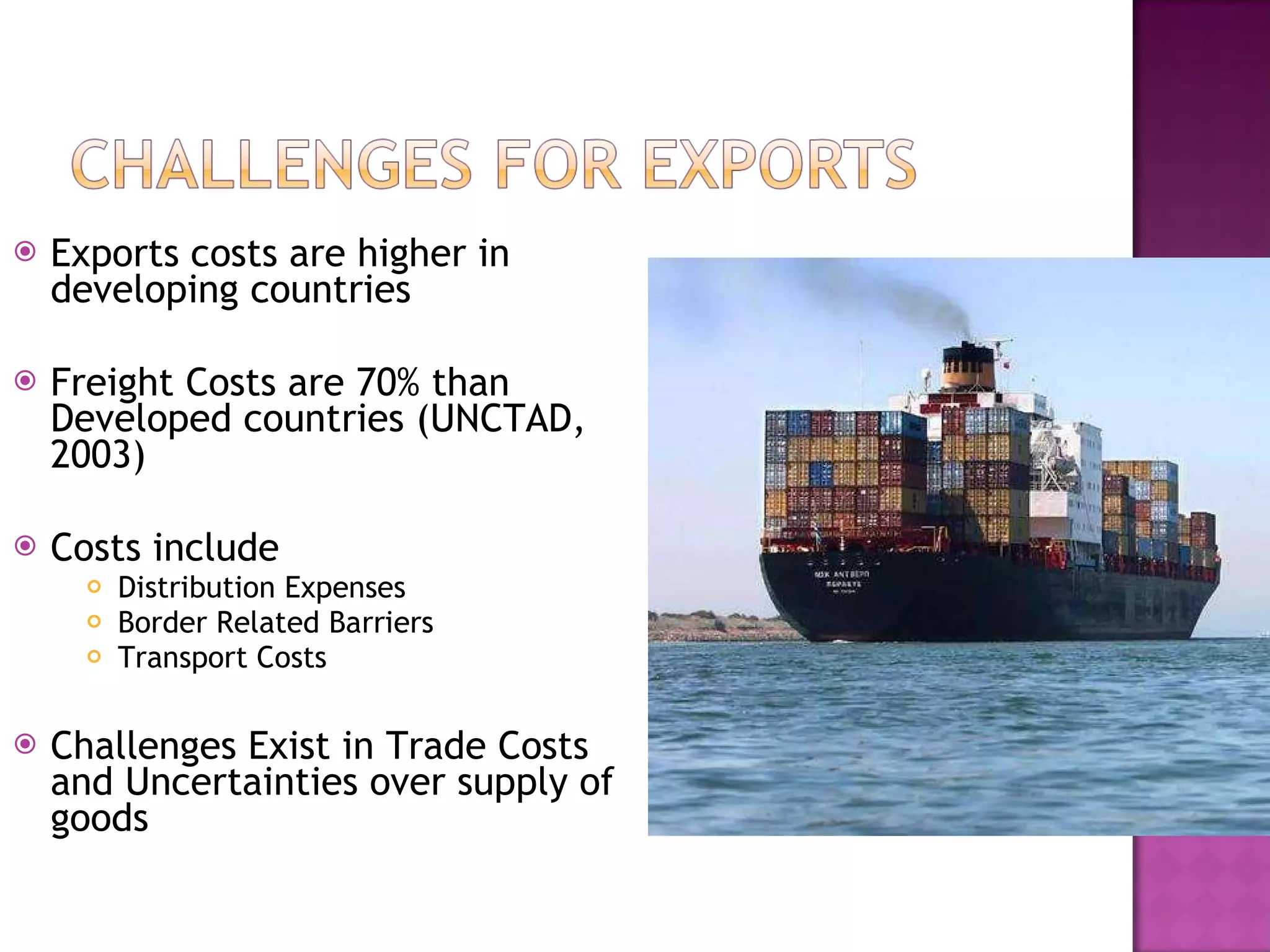
Exports costs are higher in developing countries Freight Costs are 70% than Developed countries (UNCTAD, 2003) Costs include  Distribution Expenses Border Related Barriers Transport Costs Challenges Exist in Trade Costs and Uncertainties over supply of goods
Ships Cargo Planes Trains and Road Transport (in Some Cross border cases)
Transport costs in Landlocked countries higher by 55% A delay of one day in Customs Clearance is equivalent to 70 kms of Bilateral Distance Port facilities, Customs, Regulatory Environment and Service Facilities like Cold Storages for Food are four major points of contentions.
Stated by World Bank and measured on a scale of 1-5 Calculated using 6 different indicators such as: Efficiency of the Clearance process by Customs & other border agencies (18%) Transport & Information Technology Infrastructure (15%) Local Logistics Industry Competence (16%) Ease & Affordability of International Shipments (20%) Facility to Track and Trace Shipments (16%) Timeliness with Which Shipments reach their Destination (15%)
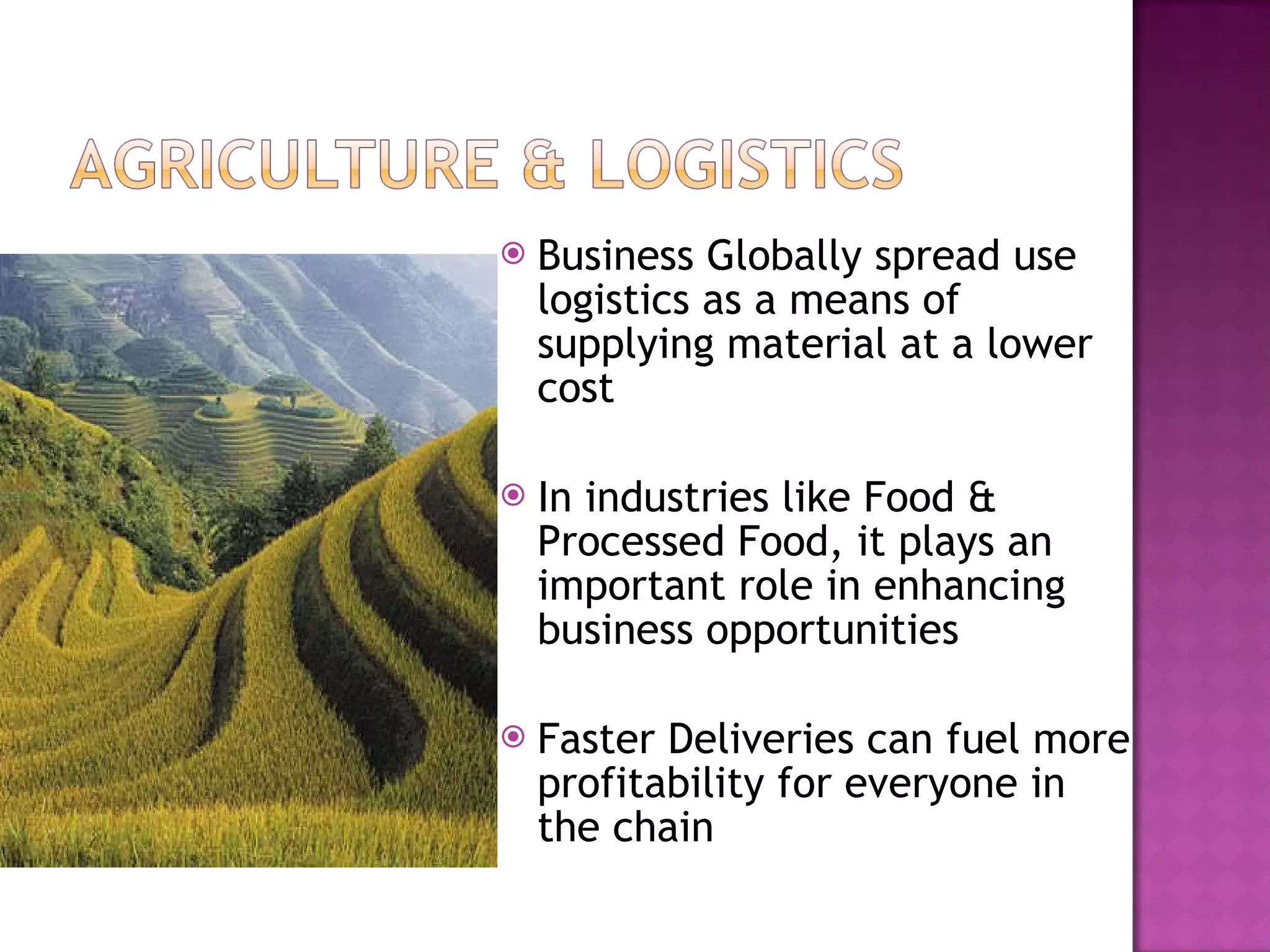
Business Globally spread use logistics as a means of supplying material at a lower cost In industries like Food & Processed Food, it plays an important role in enhancing business opportunities Faster Deliveries can fuel more profitability for everyone in the chain
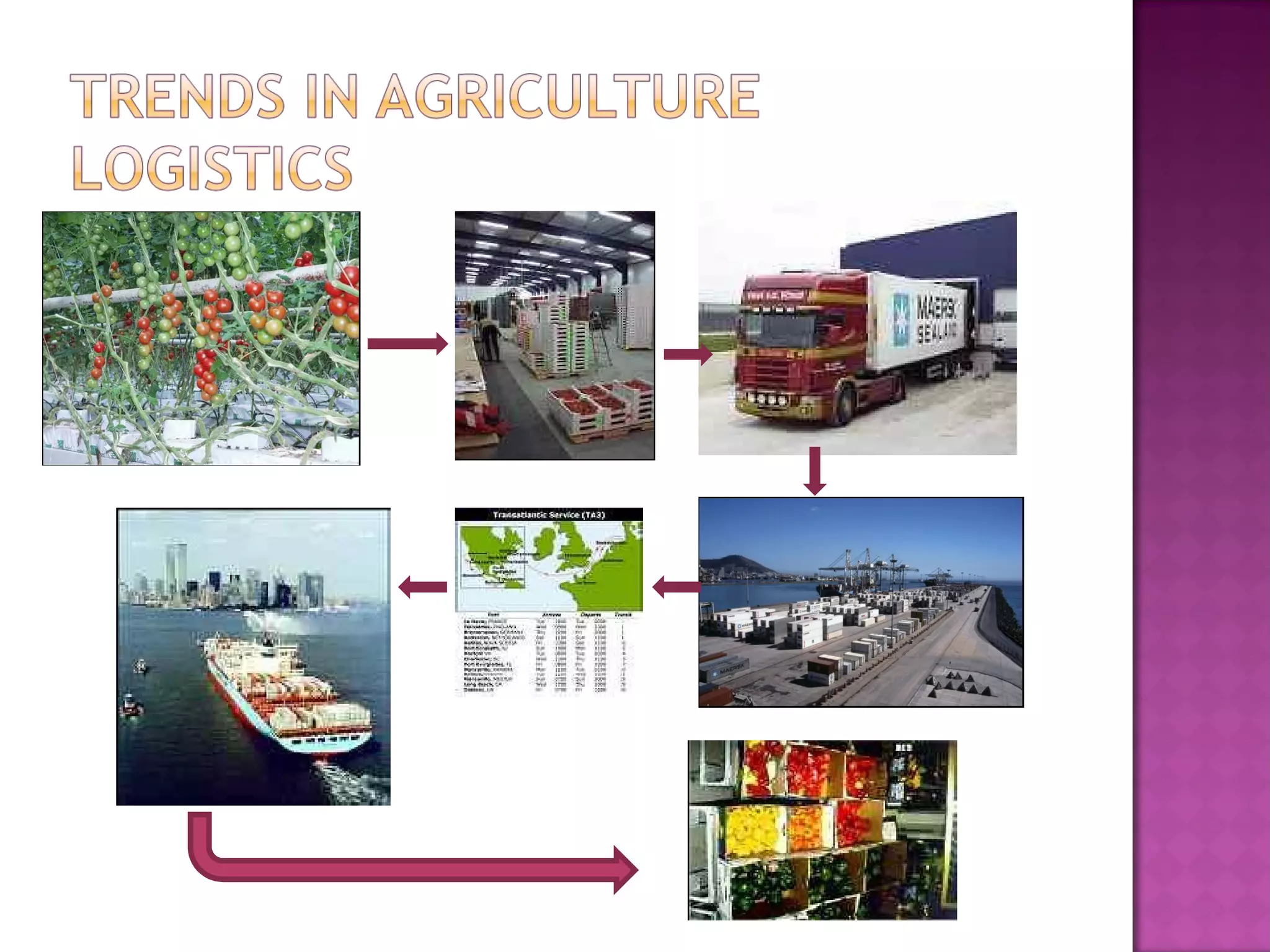
Mode of Transport Warehouses Cold Storages Material handling Equipment Containers Technical Support for Tracing and Tracking
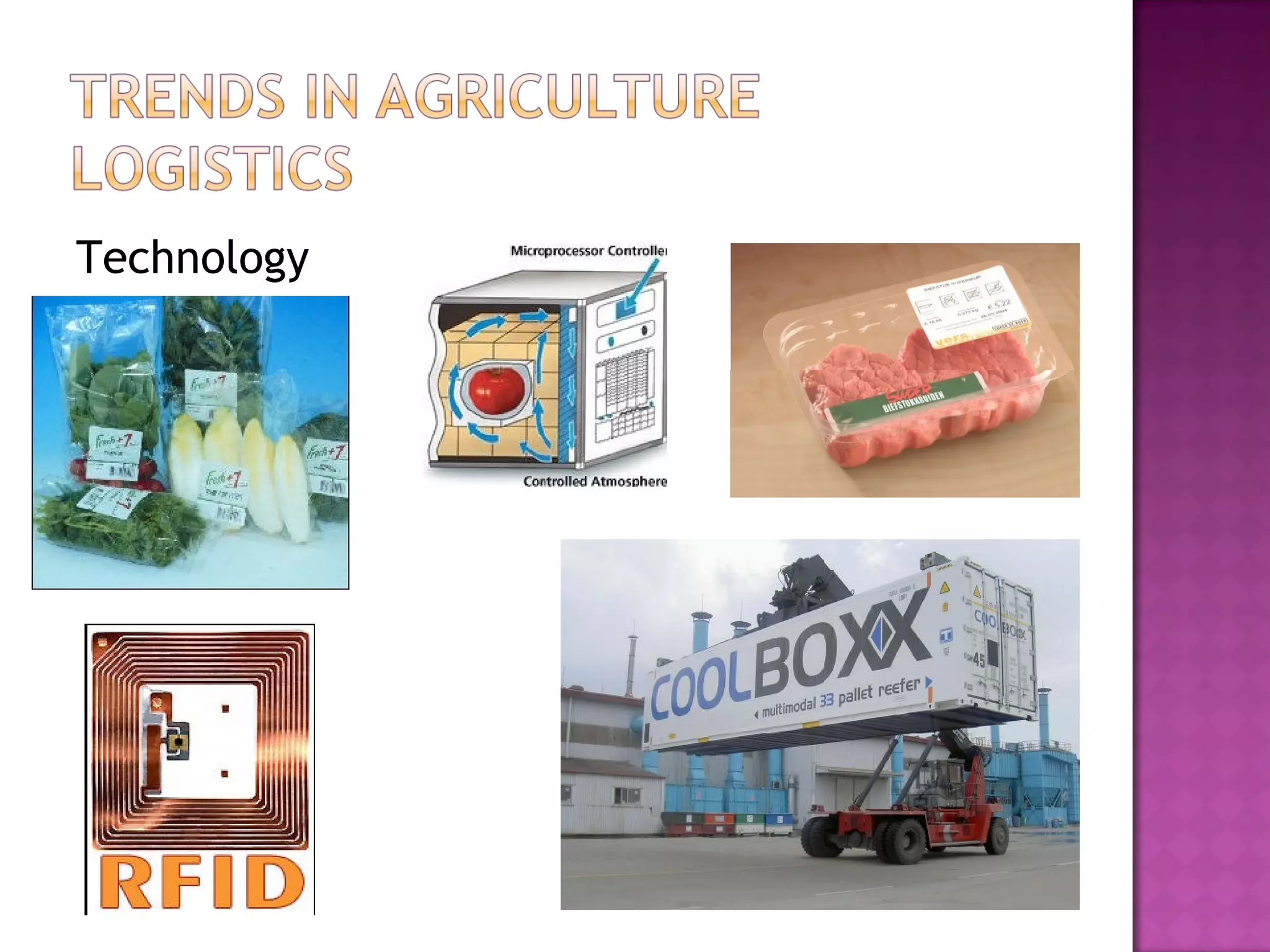
Technology
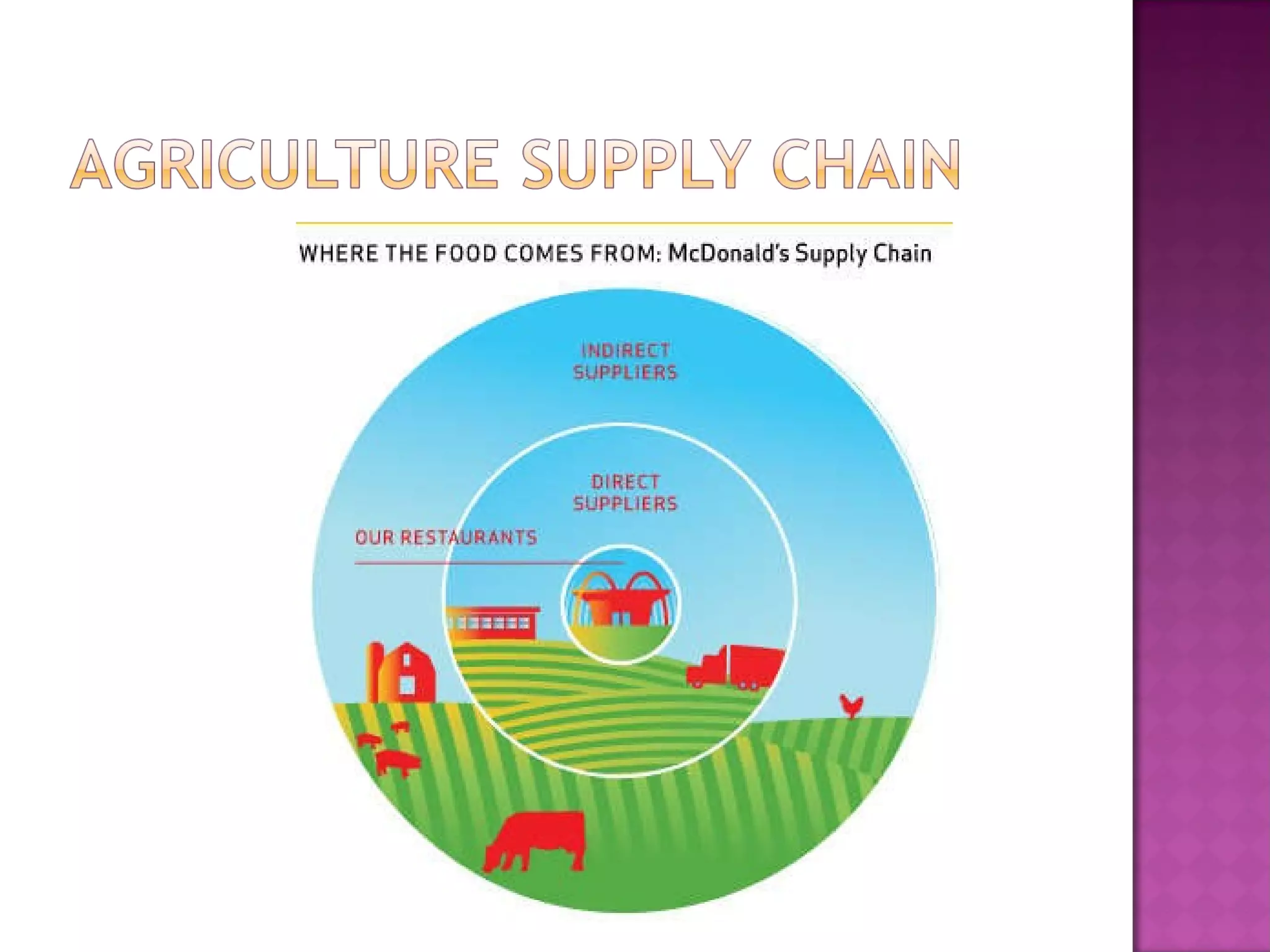
Dominant power of big retailing companies Supply Chain Consolidation Outsourcing Increased focus on traceability Wider sourcing of supplies: more and more globally Lower prices (low cost countries) Diversification of the product range beyond what can be produced locally Year round product availability Advances in IT have increased the visibility of long supply chain and therefore easier to manage
 
 
Spatial clustering of different agro-production chains Spatial combination of agro-processing and non-agro functions (building, industrial estate or region) Scale increase in production further enables industrial processing Application of principles of industrial ecology, i.e. mutual use of waste and by-products Reduction of transport and veterinary risks CRUX: clustering provides context for sustainable Innovations Enhancing
Planning 3PL System
3 rd  Party Logistics The Vital link in the Supply chain Onus of Regular Supplies alongwith Storage Capabilities Insurance liability shifted from Company to 3PL More Focus on Assured Business and Ancillarization
A Vital link in Exports Missing Logistics support can dilute Opportunities Logistics is like the Blood Vessels in the Human beings carrying Oxygen throughout the body and shunting out Carbon Dioxide
http://exportlogisticsguide.com/ http://www.economics.ox.ac.uk/Research/wp/pdf/paper439.pdf www.unapcaem.org/Activities%20Files/.../022_ThailandLogistics.pdf  www.agricultureinformation.com http://www.agricultureinformation.com/mag/?p=841

Logistics approach to export

  • 1.
    Chandan Vichoray B.E.MBA, Ph.D Thesis Submitted Shri Ramdeobaba Kamla Nehru Engineering College, Nagpur
  • 2.
    Plainly means Transportfor Distribution Has now evolved as a Prime Business Area Is responsible for Opportunistic Gains or Losses Logistics solutions can cut the cost of product making it more competitive
  • 3.
    A materials ManagementApproach Starts from Vendor of the Vendor and ends at the customer Has a B to B Approach Evolution of Supply Chain Planning and Control
  • 4.
    Exports costs arehigher in developing countries Freight Costs are 70% than Developed countries (UNCTAD, 2003) Costs include Distribution Expenses Border Related Barriers Transport Costs Challenges Exist in Trade Costs and Uncertainties over supply of goods
  • 5.
    Ships Cargo PlanesTrains and Road Transport (in Some Cross border cases)
  • 6.
    Transport costs inLandlocked countries higher by 55% A delay of one day in Customs Clearance is equivalent to 70 kms of Bilateral Distance Port facilities, Customs, Regulatory Environment and Service Facilities like Cold Storages for Food are four major points of contentions.
  • 7.
    Stated by WorldBank and measured on a scale of 1-5 Calculated using 6 different indicators such as: Efficiency of the Clearance process by Customs & other border agencies (18%) Transport & Information Technology Infrastructure (15%) Local Logistics Industry Competence (16%) Ease & Affordability of International Shipments (20%) Facility to Track and Trace Shipments (16%) Timeliness with Which Shipments reach their Destination (15%)
  • 8.
    Business Globally spreaduse logistics as a means of supplying material at a lower cost In industries like Food & Processed Food, it plays an important role in enhancing business opportunities Faster Deliveries can fuel more profitability for everyone in the chain
  • 9.
    Mode of TransportWarehouses Cold Storages Material handling Equipment Containers Technical Support for Tracing and Tracking
  • 10.
  • 11.
    Dominant power ofbig retailing companies Supply Chain Consolidation Outsourcing Increased focus on traceability Wider sourcing of supplies: more and more globally Lower prices (low cost countries) Diversification of the product range beyond what can be produced locally Year round product availability Advances in IT have increased the visibility of long supply chain and therefore easier to manage
  • 12.
  • 13.
  • 14.
    Spatial clustering ofdifferent agro-production chains Spatial combination of agro-processing and non-agro functions (building, industrial estate or region) Scale increase in production further enables industrial processing Application of principles of industrial ecology, i.e. mutual use of waste and by-products Reduction of transport and veterinary risks CRUX: clustering provides context for sustainable Innovations Enhancing
  • 15.
  • 16.
    3 rd Party Logistics The Vital link in the Supply chain Onus of Regular Supplies alongwith Storage Capabilities Insurance liability shifted from Company to 3PL More Focus on Assured Business and Ancillarization
  • 17.
    A Vital linkin Exports Missing Logistics support can dilute Opportunities Logistics is like the Blood Vessels in the Human beings carrying Oxygen throughout the body and shunting out Carbon Dioxide
  • 18.