
StudsPlanet
Leading Education consultant in India

      www.StudsPlanet.com
BRANDS


Brands just don’t exist….they are an integral
part of our lives!
Defined as the name, logo, or other
outward symbols that distinguish a product
or service from others in its category
The brand is not the product but it gives the
product meaning
BRAND


A Premium Quality Pure & Gentle Soap…
                              …to give a Soft Skin
The functions of the brand for the consumer

Function           Consumer benefit
Identification     To be clearly seen, to make sense of the offer to
                   quickly identify the sought-after products
Practicality       To allow savings of time and energy through identical
                   repurchasing and loyalty
Guarantee          To be sure of finding the same quality no matter
                   where or when you buy the product or service
Optimisation       To be sure of buying the best product in its category,
                   the best performer for a particular purpose
Characterization   To have confirmation of your self-image or the image
                   that you present to others
Continuity         through familiarity and intimacy with the brand that
                   you have been consuming for years
-How many brands do you need ?
-How do you manage brands over time ?
-How do you keep brands up to date as technology, products and customers
change ?
-How do you manage coherently and benefit from the synergy of a range of
products sold under a single brand ?
-How far can a brand be extended geographically?
Does it have the potential to become a homogeneous global brand in all countries ?
-Several companies have the same name as their brand (e.g. Nestle) so what is the
difference between managing a brand image, a corporate image and an institutional
image ?
-Finally, given that brands have a value, how can this be measured so as to survey
and control it ?
Branding: Key Terms
 Brand
    An identifying name, term, design, or symbol
    One item, family of items, or all items of a seller
 Brand Mark
    The part of a brand not made up of words
    Symbols or designs
       Nike swoosh, Mercedes star, McDonald’s arches
 Trademark
    A legal designation of exclusive use of a brand
      Coca-Cola®, Hewlett-Packard®

 Trade Name
    Full legal name of an organization
      American Telephone and Telegraph Corporation (AT&T)
Branding
 Value of Branding for Consumers
    Helps speed consumer purchases by identifying specific preferred
     products
    Provides a form of self-expression and status
    Evaluates product quality to reduce the risk of purchase


 Value of Branding for Marketers
    Identifies and differentiates a firm’s products from competing
     products
    Helps in the introduction of new products
    Facilitates the promotion of all same-brand products
    Fosters the development of brand loyalty
    Can create valuable intangible assets
Branding
Brand Loyalty
  A customer’s favorable attitude toward a specific brand
Brand Recognition
  A customer’s awareness that a brand exists and is an
   alternative purchase
Brand Preference
  The degree of brand loyalty in which a customer prefers
   one brand over competitive offerings
Brand Insistence
  The degree of brand loyalty in which a customer
   strongly prefers a specific brand and will accept no
   substitute
Selecting a Brand Name
The name should
  be easy to say, spell, and recall.
  indicate the product’s major benefits.
  suggest the product’s major uses and special
   characteristics.
  be distinctive, setting it apart from competing brands.
  be compatible with all products in line.
  be designed for use and recognition
   in all types of media.
Packaging
Packaging
  Involves the development of a container and a graphic
   design for a product
Packaging Functions
  Protect the product from damage
  Offer convenience to consumers
  Prevent waste and make storage easier
  Promote the product by communicating
   its features, uses, benefits, and image
Major Packaging Considerations
Cost of Packaging
  Limited consumer willingness to pay for better
   packaging
Tamper-Resistant Packaging
  Government regulations and consumer safety concerns
Family Packaging
  Similar packaging for all of a firm’s products or
   packaging that has one common design element
Major Packaging Considerations
Promotional Role (Informing the Consumer)
  Verbal and nonverbal symbols
  Size, shape, texture, color, and graphics
Reseller Needs
  Transportation, storage, and handling
Environmentally Responsible
  Biodegradable and recyclable
Packaging and Marketing Strategy
Altering the Package
  To update style and to meet increased competition
  To highlight new features
  To take advantage of new packaging materials
  To make the product safer or easier to use
  To reduce packaging costs
Secondary-Use Packaging
  Reusable packaging adds customer value
Category-Consistent Packaging
  Packaging reflects customer expectations for the
    expected appearance of products in a category
Packaging and Marketing Strategy
Innovative Packaging
  Unique features or ways of packaging that make a
   product more distinct from its competitors
Multiple Packaging
  Bundling multiple units of a product together to
   encourage usage and to increase demand
Handling-Improved Packaging
  Packaging that has been changed to facilitate product
   handling in the distribution channel
Claims of Product Life Cycles
Products have a limited life
Product sales pass through distinct stages each with
 different challenges and opportunities
Profits rise and fall at different stages
Products require different strategies in each life cycle
 stage
Sales and Product Life Cycle
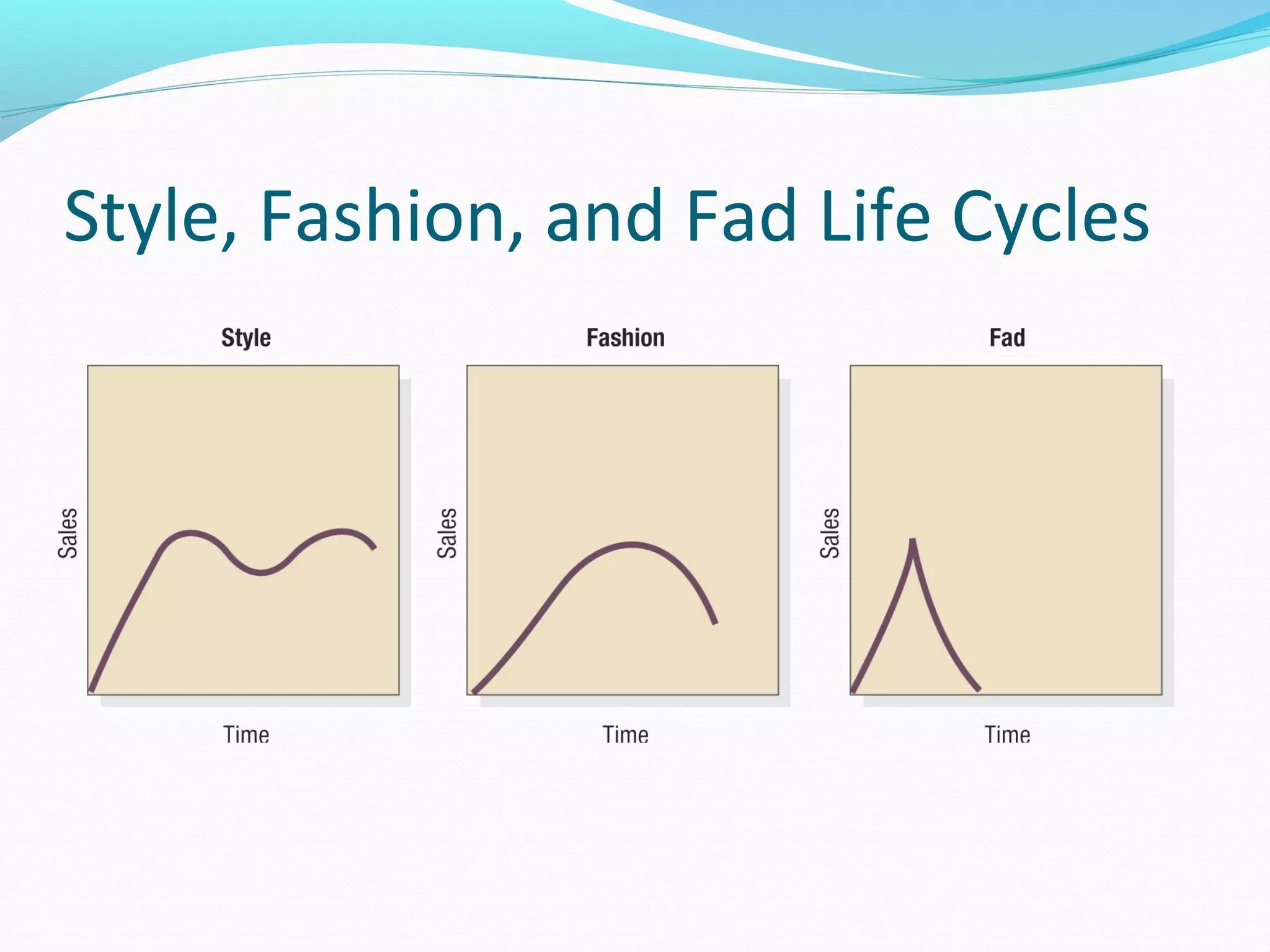
Style, Fashion, and Fad Life Cycles
Strategies for Sustaining Rapid Market Growth
Improve product quality, add new features, and
 improve styling
Add new models
Enter new market segments
Increase distribution coverage
Shift from product-awareness advertising to
 product-preference advertising
Lower prices to attract the next layer of price-
 sensitive buyers
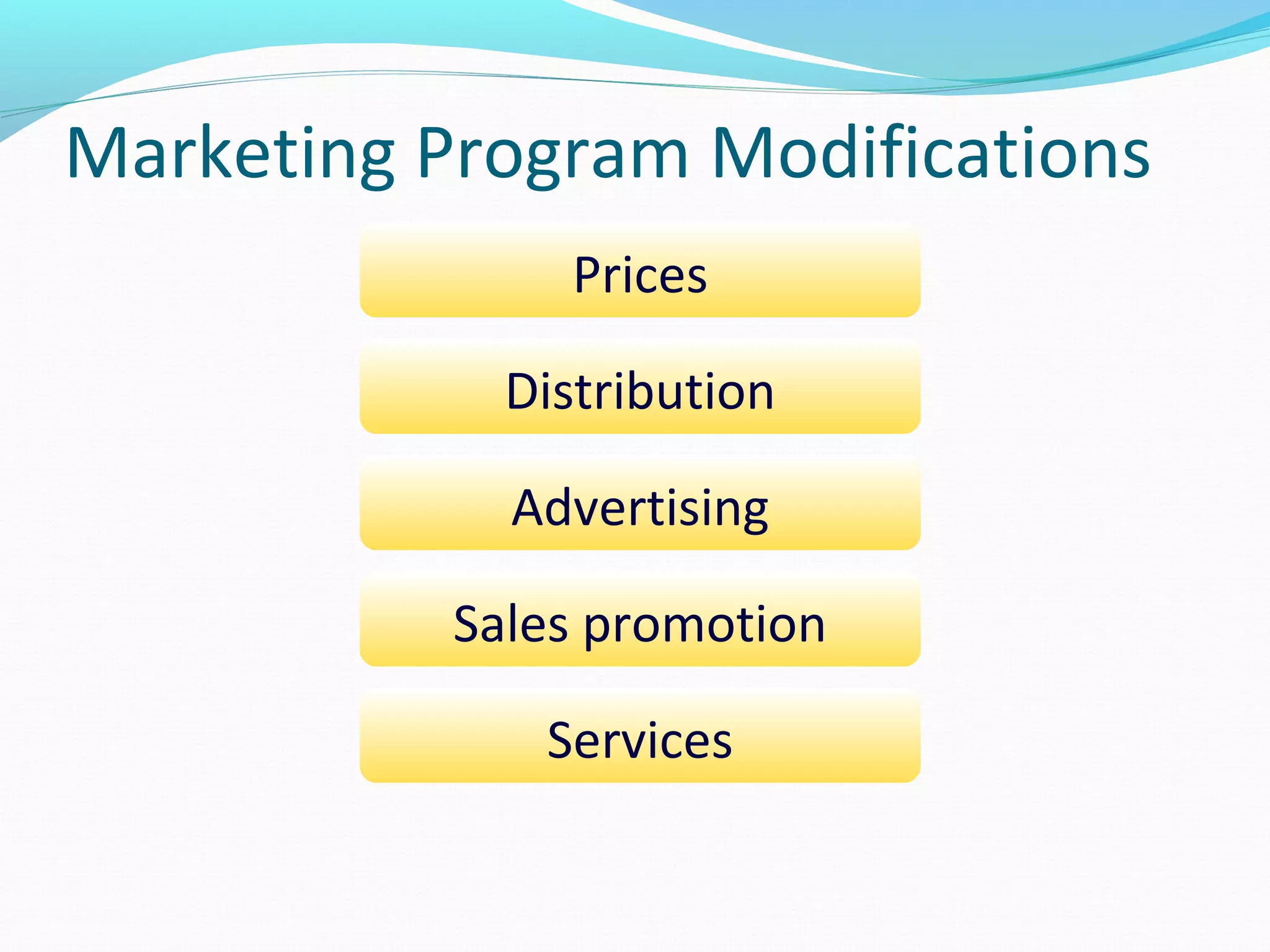
Marketing Program Modifications
                Prices

             Distribution

             Advertising

           Sales promotion

              Services
Ways to Increase Sales Volume
Convert nonusers
Enter new market segments
Attract competitors’ customers
Have consumers use the product on more occasions
Have consumers use more of the product on each
 occasion
Have consumers use the product in new ways

Branding and packaging

  • 1.
    StudsPlanet Leading Education consultantin India www.StudsPlanet.com
  • 3.
    BRANDS Brands just don’texist….they are an integral part of our lives!
  • 4.
    Defined as thename, logo, or other outward symbols that distinguish a product or service from others in its category The brand is not the product but it gives the product meaning
  • 5.
    BRAND A Premium QualityPure & Gentle Soap… …to give a Soft Skin
  • 6.
    The functions ofthe brand for the consumer Function Consumer benefit Identification To be clearly seen, to make sense of the offer to quickly identify the sought-after products Practicality To allow savings of time and energy through identical repurchasing and loyalty Guarantee To be sure of finding the same quality no matter where or when you buy the product or service Optimisation To be sure of buying the best product in its category, the best performer for a particular purpose Characterization To have confirmation of your self-image or the image that you present to others Continuity through familiarity and intimacy with the brand that you have been consuming for years
  • 7.
    -How many brandsdo you need ? -How do you manage brands over time ? -How do you keep brands up to date as technology, products and customers change ? -How do you manage coherently and benefit from the synergy of a range of products sold under a single brand ? -How far can a brand be extended geographically? Does it have the potential to become a homogeneous global brand in all countries ? -Several companies have the same name as their brand (e.g. Nestle) so what is the difference between managing a brand image, a corporate image and an institutional image ? -Finally, given that brands have a value, how can this be measured so as to survey and control it ?
  • 8.
    Branding: Key Terms Brand  An identifying name, term, design, or symbol  One item, family of items, or all items of a seller  Brand Mark  The part of a brand not made up of words  Symbols or designs  Nike swoosh, Mercedes star, McDonald’s arches  Trademark  A legal designation of exclusive use of a brand  Coca-Cola®, Hewlett-Packard®  Trade Name  Full legal name of an organization  American Telephone and Telegraph Corporation (AT&T)
  • 9.
    Branding  Value ofBranding for Consumers  Helps speed consumer purchases by identifying specific preferred products  Provides a form of self-expression and status  Evaluates product quality to reduce the risk of purchase  Value of Branding for Marketers  Identifies and differentiates a firm’s products from competing products  Helps in the introduction of new products  Facilitates the promotion of all same-brand products  Fosters the development of brand loyalty  Can create valuable intangible assets
  • 10.
    Branding Brand Loyalty A customer’s favorable attitude toward a specific brand Brand Recognition A customer’s awareness that a brand exists and is an alternative purchase Brand Preference The degree of brand loyalty in which a customer prefers one brand over competitive offerings Brand Insistence The degree of brand loyalty in which a customer strongly prefers a specific brand and will accept no substitute
  • 11.
    Selecting a BrandName The name should be easy to say, spell, and recall. indicate the product’s major benefits. suggest the product’s major uses and special characteristics. be distinctive, setting it apart from competing brands. be compatible with all products in line. be designed for use and recognition in all types of media.
  • 12.
    Packaging Packaging Involvesthe development of a container and a graphic design for a product Packaging Functions Protect the product from damage Offer convenience to consumers Prevent waste and make storage easier Promote the product by communicating its features, uses, benefits, and image
  • 13.
    Major Packaging Considerations Costof Packaging Limited consumer willingness to pay for better packaging Tamper-Resistant Packaging Government regulations and consumer safety concerns Family Packaging Similar packaging for all of a firm’s products or packaging that has one common design element
  • 14.
    Major Packaging Considerations PromotionalRole (Informing the Consumer) Verbal and nonverbal symbols Size, shape, texture, color, and graphics Reseller Needs Transportation, storage, and handling Environmentally Responsible Biodegradable and recyclable
  • 15.
    Packaging and MarketingStrategy Altering the Package To update style and to meet increased competition To highlight new features To take advantage of new packaging materials To make the product safer or easier to use To reduce packaging costs Secondary-Use Packaging Reusable packaging adds customer value Category-Consistent Packaging Packaging reflects customer expectations for the expected appearance of products in a category
  • 16.
    Packaging and MarketingStrategy Innovative Packaging Unique features or ways of packaging that make a product more distinct from its competitors Multiple Packaging Bundling multiple units of a product together to encourage usage and to increase demand Handling-Improved Packaging Packaging that has been changed to facilitate product handling in the distribution channel
  • 17.
    Claims of ProductLife Cycles Products have a limited life Product sales pass through distinct stages each with different challenges and opportunities Profits rise and fall at different stages Products require different strategies in each life cycle stage
  • 18.
  • 19.
    Style, Fashion, andFad Life Cycles
  • 20.
    Strategies for SustainingRapid Market Growth Improve product quality, add new features, and improve styling Add new models Enter new market segments Increase distribution coverage Shift from product-awareness advertising to product-preference advertising Lower prices to attract the next layer of price- sensitive buyers
  • 21.
    Marketing Program Modifications Prices Distribution Advertising Sales promotion Services
  • 22.
    Ways to IncreaseSales Volume Convert nonusers Enter new market segments Attract competitors’ customers Have consumers use the product on more occasions Have consumers use more of the product on each occasion Have consumers use the product in new ways