Ataxia-Telangiectasia:
A.   Definition (other name)
B.   Signs and Symptoms
C.   Dental Correlation
D.   Classification
Ataxia - telangiectasia
Louis-Bar syndrome


     Is a rare childhood disease that affects the
    brain and other parts of the body.
   Ataxia refers to uncoordinated movements,
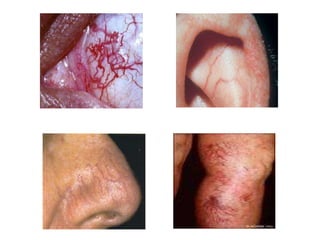
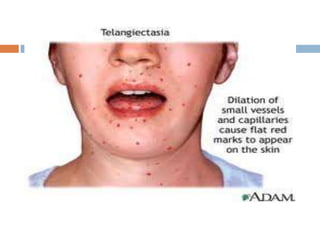
    such as walking. Telangiectasias are enlarged
    blood vessels (capillaries) just below the
    surface of the skin. Telangiectasias appear as
    tiny, red, spider-like veins.
Causes, incidence, and risk
factors
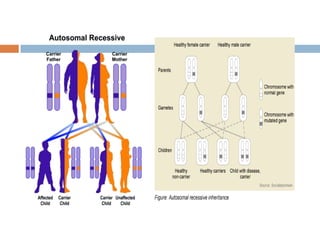
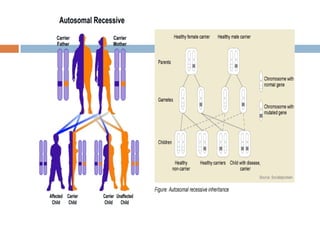
   Ataxia-telangiectasia is inherited, which means it is
    passed down through families. It is an autosomal
    recessive trait. This means that both parents must
    provide a defective gene for the child to have
    symptoms of the disorder.

   The disease results from defects in the ataxia
    telangiectasia mutated (ATM) gene. Defects in this
    gene can lead to abnormal cell death in various
    places of the body, including the part of the brain
    that helps coordinate movement.

   Boys and girls are equally affected.
Symptoms
   Decreased coordination of movements (ataxia) in late
    childhood
   Ataxic gait (cerebellar ataxia)
   Jerky gait
   Unsteady
   Decreasing mental development, slows or stops after age 10 -
    12
   Delayed walking
   Discoloration of skin areas exposed to sunlight
   Discoloration of skin (coffee-with-milk-colored spots)
   Enlarged blood vessels in skin of nose, ears, and inside of the
    elbow and knee
   Enlarged blood vessels in the whites of the eyes
   Jerky or abnormal eye movements (nystagmus) late in the
    disease
   Premature graying of the hair
   Seizures
   Sensitivity to radiation, including medical x-rays
Signs and tests

   The doctor will perform a physical exam.
    Examination may show signs of the following:
   Below normal sized tonsils, lymph nodes, and
    spleen
   Decreased to absent deep tendon reflexes
   Delayed or absent physical and sexual
    development
   Growth Failure
   Mask-like face
   Multiple skin coloring and texture changes
Possible tests include:

   Alpha fetoprotein
   B and T cell screen
   Carcinoembryonic antigen
   Genetic testing to look for mutations in the ATM
    gene
   Glucose tolerance test
   Serum immunoglobulin levels (IgE, IgA)
   X-rays to look at the size of the thymus gland
Expectations (prognosis)

   Early death is common, but life expectancy
    varies.
   Because persons with this condition are very
    sensitive to radiation, they should never be
    given radiation therapy, and no unnecessary x-
    rays should be done.
Complications

   Cancer such as lymphoma
   Diabetes
   Kyphosis
   Progressive movement disorder that leads to
    wheelchair use
   Scoliosis
   Severe, recurrent lung infections
Ataxia Telangiectasia
Oral
Effects
   Ataxia telangiectasia is a rare childhood disorder.
    It causes damage in the part of the brain that
    controls movement and speech. People with this
    condition have:
         Ataxia -- difficulty controlling voluntary
    muscles
         Telangiectasias -- lesions of the skin or eyes
         Immune system malfunction
   The immune system problems are caused by
    abnormalities in two types of white blood cells —
    T cells and B cells. As a result, people with ataxia
    telangiectasia are more likely to get bacterial,
    fungal and viral infections.
Dental Correlation
   At the Dentist
If you have ataxia
    telangiectasia, your dentist should make every
    effort to minimize the risk of infection. You will
    be given antibiotics before, during, and after
    the treatment. You will also be given antifungal
    medications before, during, and after your
    treatment as well. This will minimize the risk of
    infection and minimize the risk of spreading
    previous infections.
Classification
   In addition to the hallmark neurodegeneration,
    there are a number of other features that typify
    this debilitating disease. These include:
    immune dysfunction, sterility, radiosensitivity
    and lymphoid cancer. The immunodeficiency
    phenotype in AT is variable and usually
    manifests as decreased or absent IgA, IgE and
    IgG2.
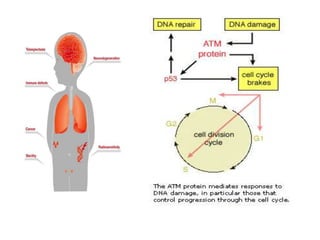
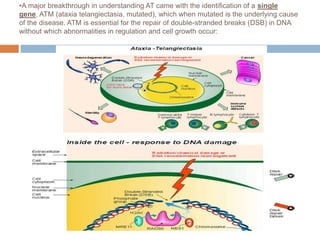
•A major breakthrough in understanding AT came with the identification of a single
gene, ATM (ataxia telangiectasia, mutated), which when mutated is the underlying cause
of the disease. ATM is essential for the repair of double-stranded breaks (DSB) in DNA
without which abnormalities in regulation and cell growth occur:
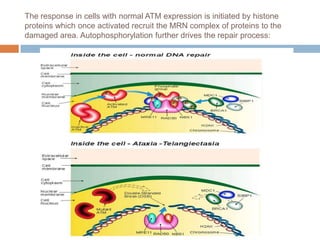
The response in cells with normal ATM expression is initiated by histone
proteins which once activated recruit the MRN complex of proteins to the
damaged area. Autophosphorylation further drives the repair process:
Treatment

   There is no specific treatment for ataxia-
    telangiectasia. Treatment is directed at specific
    symptoms.
Prevention

   Couples with a family history of this condition
    who are considering pregnancy may consider
    genetic counseling.
   Parents of a child with this disorder may have
    a slight increased risk of cancer. They should
    have genetic counseling and more intensive
    cancer screenings.
REFERENCE
   http://www.immunopaedia.org.za/index.php?id
    =469
   http://www.colgate.com/app/CP/US/EN/OC/Inf
    ormation/Articles/Oral-and-Dental-Health-
    Basics/Medical-Conditions/Physical-Disorder-
    Oral-Effects/article/Immune-Disorders.cvsp
   http://www.cosmeticdentistryguide.co.uk/article
    s/ataxia-telangiectasia.html

17. parrocha ataxia

  • 2.
    Ataxia-Telangiectasia: A. Definition (other name) B. Signs and Symptoms C. Dental Correlation D. Classification
  • 3.
    Ataxia - telangiectasia Louis-Barsyndrome Is a rare childhood disease that affects the brain and other parts of the body.  Ataxia refers to uncoordinated movements, such as walking. Telangiectasias are enlarged blood vessels (capillaries) just below the surface of the skin. Telangiectasias appear as tiny, red, spider-like veins.
  • 7.
    Causes, incidence, andrisk factors  Ataxia-telangiectasia is inherited, which means it is passed down through families. It is an autosomal recessive trait. This means that both parents must provide a defective gene for the child to have symptoms of the disorder.  The disease results from defects in the ataxia telangiectasia mutated (ATM) gene. Defects in this gene can lead to abnormal cell death in various places of the body, including the part of the brain that helps coordinate movement.  Boys and girls are equally affected.
  • 8.
    Symptoms  Decreased coordination of movements (ataxia) in late childhood  Ataxic gait (cerebellar ataxia)  Jerky gait  Unsteady  Decreasing mental development, slows or stops after age 10 - 12  Delayed walking  Discoloration of skin areas exposed to sunlight  Discoloration of skin (coffee-with-milk-colored spots)  Enlarged blood vessels in skin of nose, ears, and inside of the elbow and knee  Enlarged blood vessels in the whites of the eyes  Jerky or abnormal eye movements (nystagmus) late in the disease  Premature graying of the hair  Seizures  Sensitivity to radiation, including medical x-rays
  • 10.
    Signs and tests  The doctor will perform a physical exam. Examination may show signs of the following:  Below normal sized tonsils, lymph nodes, and spleen  Decreased to absent deep tendon reflexes  Delayed or absent physical and sexual development  Growth Failure  Mask-like face  Multiple skin coloring and texture changes
  • 11.
    Possible tests include:  Alpha fetoprotein  B and T cell screen  Carcinoembryonic antigen  Genetic testing to look for mutations in the ATM gene  Glucose tolerance test  Serum immunoglobulin levels (IgE, IgA)  X-rays to look at the size of the thymus gland
  • 12.
    Expectations (prognosis)  Early death is common, but life expectancy varies.  Because persons with this condition are very sensitive to radiation, they should never be given radiation therapy, and no unnecessary x- rays should be done.
  • 13.
    Complications  Cancer such as lymphoma  Diabetes  Kyphosis  Progressive movement disorder that leads to wheelchair use  Scoliosis  Severe, recurrent lung infections
  • 14.
    Ataxia Telangiectasia
Oral Effects  Ataxia telangiectasia is a rare childhood disorder. It causes damage in the part of the brain that controls movement and speech. People with this condition have: Ataxia -- difficulty controlling voluntary muscles Telangiectasias -- lesions of the skin or eyes Immune system malfunction  The immune system problems are caused by abnormalities in two types of white blood cells — T cells and B cells. As a result, people with ataxia telangiectasia are more likely to get bacterial, fungal and viral infections.
  • 15.
    Dental Correlation  At the Dentist
If you have ataxia telangiectasia, your dentist should make every effort to minimize the risk of infection. You will be given antibiotics before, during, and after the treatment. You will also be given antifungal medications before, during, and after your treatment as well. This will minimize the risk of infection and minimize the risk of spreading previous infections.
  • 16.
    Classification  In addition to the hallmark neurodegeneration, there are a number of other features that typify this debilitating disease. These include: immune dysfunction, sterility, radiosensitivity and lymphoid cancer. The immunodeficiency phenotype in AT is variable and usually manifests as decreased or absent IgA, IgE and IgG2.
  • 17.
    •A major breakthroughin understanding AT came with the identification of a single gene, ATM (ataxia telangiectasia, mutated), which when mutated is the underlying cause of the disease. ATM is essential for the repair of double-stranded breaks (DSB) in DNA without which abnormalities in regulation and cell growth occur:
  • 18.
    The response incells with normal ATM expression is initiated by histone proteins which once activated recruit the MRN complex of proteins to the damaged area. Autophosphorylation further drives the repair process:
  • 20.
    Treatment  There is no specific treatment for ataxia- telangiectasia. Treatment is directed at specific symptoms.
  • 21.
    Prevention  Couples with a family history of this condition who are considering pregnancy may consider genetic counseling.  Parents of a child with this disorder may have a slight increased risk of cancer. They should have genetic counseling and more intensive cancer screenings.
  • 22.
    REFERENCE  http://www.immunopaedia.org.za/index.php?id =469  http://www.colgate.com/app/CP/US/EN/OC/Inf ormation/Articles/Oral-and-Dental-Health- Basics/Medical-Conditions/Physical-Disorder- Oral-Effects/article/Immune-Disorders.cvsp  http://www.cosmeticdentistryguide.co.uk/article s/ataxia-telangiectasia.html