GENETIC DISORDERS
M.S.RISHIKESH
B.P.O II YEAR
NIEPMD, CHENNAI
DEFINITION-
• A genetic disorder is a health problem caused by one or more abnormalities in
the genome.
• It can be caused by a mutation in a single gene (monogenic) or multiple genes
(polygenic) or by a chromosomal abnormality.
• Although polygenic disorders are the most common, the term is mostly used
when discussing disorders with a single genetic cause, either in a gene
or chromosome.
TYPES OF GENETIC DISORDERS-
Single Gene Defects (Mendelian disorders)
Multi-Factorial Inheritance
Chromosomal Abnormality
SINGLE GENE DEFECTS (MENDELIAN DISORDERS)
• Mendelian Disorders can be defined as a type of genetic disorder that arises
due to alterations in one gene or as a result of abnormalities in the genome.
Such a condition can be seen from birth and be found based on family ancestry
utilizing the genealogical record.
• Classification-
• AUTOSOMAL RECESSIVE INHERITANCE
• AUTOSOMAL CODOMINANT INHERITANCE
• AUTOSOMAL DOMINANT INHERITANCE
• SEX-(X-) LINKED RECESSIVE INHERITANCE
• SEX-(X-) LINKED DOMINANT INHERITANCE
IMPORTANT EXAMPLES OF MENDELIAN
DISORDERS (SINGLE GENE DEFECTS)
• I. AUTOSOMAL RECESSIVE INHERITANCE-
• In autosomal recessive inheritance, both copies of genes are mutated. Usually, it occurs
when both parents are carriers of the defective gene, i.e. having one normal allele and
one defective allele in each parent, and each parent passes on their defective gene to
the next progeny causing disease. There is 25% chance of transmission of autosomal
recessive disease when both parents are carriers.
• β-thalassaemia
• Sickle cell anaemia
• Cystic fibrosis of pancreas
• Albinism
• Wilson’s disease
Β-THALASSAEMIA
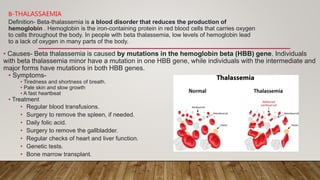
Definition- Beta-thalassemia is a blood disorder that reduces the production of
hemoglobin . Hemoglobin is the iron-containing protein in red blood cells that carries oxygen
to cells throughout the body. In people with beta thalassemia, low levels of hemoglobin lead
to a lack of oxygen in many parts of the body.
• Causes- Beta thalassemia is caused by mutations in the hemoglobin beta (HBB) gene. Individuals
with beta thalassemia minor have a mutation in one HBB gene, while individuals with the intermediate and
major forms have mutations in both HBB genes.
• Symptoms-
• Tiredness and shortness of breath.
• Pale skin and slow growth
• A fast heartbeat
• Treatment
• Regular blood transfusions.
• Surgery to remove the spleen, if needed.
• Daily folic acid.
• Surgery to remove the gallbladder.
• Regular checks of heart and liver function.
• Genetic tests.
• Bone marrow transplant.
•
SICKLE CELL ANAEMIA
DEFINITION-A SEVERE HEREDITARY FORM OF ANAEMIA IN WHICH A MUTATED FORM OF HAEMOGLOBIN
DISTORTS THE RED BLOOD CELLS INTO A CRESCENT SHAPE AT LOW OXYGEN LEVELS. IT IS COMMONEST AMONG
THOSE OF AFRICAN DESCENT.
• Causes
•Sickle cell anemia is caused by a mutation in the gene that tells your body to make the iron-rich compound that makes blood red and enables red blood
cells to carry oxygen from your lungs throughout your body (hemoglobin).
•Both mother and father must pass the defective form of the gene for a child to be affected.
•If only one parent passes the sickle cell gene to the child, that child will have the sickle cell trait. With one normal hemoglobin gene and one defective
form of the gene, people with the sickle cell trait make both normal hemoglobin and sickle cell hemoglobin.
•Their blood might contain some sickle cells, but they generally don't have symptoms. They're carriers of the disease, however, which means they can
pass the gene to their children.
• Symptoms
•Blood clots and Joint pain that resembles arthritis.
•Swelling in hands and feet.
•Chronic neuropathic pain (nerve pain).
•Life-threatening infections.
•Anemia (decrease in red blood cells).
• Treatments
• Treatments might include medications and blood transfusions and and rarely a bone-marrow transplant. For some children and teenagers, a stem cell
transplant might cure the disease.
CYSTIC FIBROSIS
Definition CYSTIC FIBROSIS (CF) IS AN INHERITED DISORDER THAT CAUSES SEVERE DAMAGE TO
THE LUNGS, DIGESTIVE SYSTEM AND OTHER ORGANS IN THE BODY. CYSTIC FIBROSIS AFFECTS
THE CELLS THAT PRODUCE MUCUS, SWEAT AND DIGESTIVE JUICES. THESE SECRETED FLUIDS
ARE NORMALLY THIN AND SLIPPERY.
•Causes Cystic fibrosis is caused by a change, or mutation in a gene called CFTR (cystic fibrosis transmembrane
conductance regulator). This gene controls the flow of salt and fluids in and out of your cells. If the CFTR gene
doesn't work the way it should, a sticky mucus builds up in your body.
• Symptoms
•lung infections or pneumonia and wheezing.
•coughing with thick mucus.
•bulky, greasy bowel movements.
•constipation or diarrhea.
•trouble gaining weight or poor height growth.
•very salty sweat.
• Treatment
•antibiotics to prevent and treat chest infections.
•medicines to make the mucus in the lungs thinner and easier to cough up.
•medicines to widen the airways and reduce inflammation.
•special techniques and devices to help clear mucus from the lungs.
ALBINISM
Definition
A group of inherited disorders characterised by little or no melanin production.
This condition increases the risk of skin cancer.
Most people with albinism have pale skin, eye conditions and are sensitive to the sun.
No cure exists, but skin can be protected and eye conditions can be treated.
• Cause
•Albinism, caused by a deficiency of melanin pigment in the skin, hair, and eye (oculocutaneous albinism
[OCA]), or primarily in the eye (ocular albinism [OA]), results from mutations in genes involved in the
biosynthesis of melanin pigment.
•Symptoms
•Very pale skin, hair and eyes.
•Patches of missing skin pigment.
•Crossed eyes (strabismus).
•Rapid eye movements (nystagmus).
•Vision problems and Light sensitivity (photophobia).
•Treatment
•Treatment focuses on getting proper eye care and monitoring skin for signs of abnormalities. Your care team may involve your
primary care doctor and doctors specializing in eye care (ophthalmologist), skin care (dermatologist) and genetics.
•Gene therapy can include use of such as retrovirus vectors, adenovirus vectors, and CRISPR/Cas9 system
WILSON’S DISEASE
Definition
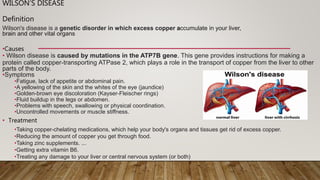
Wilson's disease is a genetic disorder in which excess copper accumulate in your liver,
brain and other vital organs
•Causes
• Wilson disease is caused by mutations in the ATP7B gene. This gene provides instructions for making a
protein called copper-transporting ATPase 2, which plays a role in the transport of copper from the liver to other
parts of the body.
•Symptoms
•Fatigue, lack of appetite or abdominal pain.
•A yellowing of the skin and the whites of the eye (jaundice)
•Golden-brown eye discoloration (Kayser-Fleischer rings)
•Fluid buildup in the legs or abdomen.
•Problems with speech, swallowing or physical coordination.
•Uncontrolled movements or muscle stiffness.
• Treatment
•Taking copper-chelating medications, which help your body's organs and tissues get rid of excess copper.
•Reducing the amount of copper you get through food.
•Taking zinc supplements. ...
•Getting extra vitamin B6.
•Treating any damage to your liver or central nervous system (or both)
•
AUTOSOMAL CODOMINANT INHERITANCE
• Defintion
• Autosomal codominant inheritance refers to two alleles of an autosomal gene where each allele
contributes to the phenotype. For example, the ABO blood group system has three alleles that affect
the expression of antigens on the surface of red blood cells: alleles A, B, and O.
• ABO Blood group Antigens
• Alpha 1-antrypsin deficiency
• HLA Antigens
ABO BLOOD GROUP ANTIGENS
Definition
The ABO blood group antigens are encoded by one genetic locus, the ABO locus, which has three alternative (allelic) forms—a, B, and
child receives one of the three alleles from each parent, giving rise to six possible genotypes and four possible blood types (phenotypes
• Sympyoms
•Low back pain.
•Blood in urine.
•Chills.
•Feeling of "impending doom"
•Fever.
•Nausea and vomiting.
•Shortness of breath.
•Increased heart rate.
ALPHA 1-ANTRYPSIN DEFICIENCY
Definition
Alpha-1 antitrypsin deficiency (AAT deficiency) is an inherited condition that raises your risk for lung and liver
disease. Alpha-1 antitrypsin (AAT) is a protein that protects the lungs. The liver makes it. If the AAT proteins aren't the
right shape, they get stuck in the liver cells and can't reach the lungs
•Causes
• Mutations (changes) in the gene that produces the AAT protein cause Alpha-1. In people with the most
common abnormal type of Alpha-1 (called ZZ type), AAT proteins are misshapen.
• Symptoms
•Shortness of breath.
•Excessive cough with phlegm/sputum production.
•Wheezing.
•Decrease in exercise capacity and a persistent low energy state or tiredness.
•Chest pain that increases when breathing in.
• Treatment
• treatment called augmentation therapy may help slow lung damage. You may also need oxygen therapy,
pulmonary rehabilitation, or medicines to treat complications.
HLA ANTIGENS
Definition
Human leukocyte antigens (HLA) are genes in major histocompatibility complexes (MHC) that help code for proteins that
differentiate between self and non-self. They play a significant role in disease and immune defense. They are beneficial to the
immune system but can also have detrimental effects
•Causes
•Human leukocyte antigen (HLA) sensitisation occurs after transfusion of blood products and
transplantation. It can also happen spontaneously through cross-sensitisation from infection and pro-
inflammatory events.
•Symptoms
•joint pain.
•stiffness or swelling of your spine, neck, or chest.
•inflammation of your joints or urethra accompanied by skin lesions.
•recurring inflammation in your eye.
AUTOSOMAL DOMINANT INHERITANCE
• Definition
Autosomal dominant inheritance pattern is characterised by one faulty copy of gene (i.e. mutant allele) in
any autosome and one copy of normal allele; disease phenotype is seen in all such individuals. Patients
having autosomal dominant inheritance disease have 50% chance of passing on the disease
to the next generation.
• Adult Polycystic Kidney
• Marfan’s Syndrome
• Von Willebrand’s diseases
ADULT POLYCYSTIC KIDNEY
DEFINITION
Polycystic kidney disease (PKD) is an inherited disorder in which clusters of cysts develop primarily within
your kidneys, causing your kidneys to enlarge and lose function over time. Cysts are noncancerous round
sacs containing fluid. The cysts vary in size, and they can grow very large
• Symptoms
•High blood pressure.
•Back or side pain.
•Blood in your urine.
•A feeling of fullness in your abdomen.
•Increased size of your abdomen due to enlarged kidneys.
•Headaches.
•Kidney stones.
•Kidney failure.
• Treatment
•Some potentially useful medications, such as tolvaptan, that can sometimes be used to reduce the growth
rate of cysts.
MARFAN’S SYNDROME
Definition
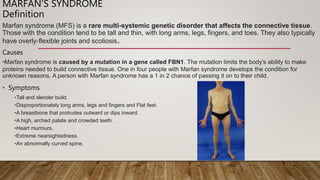
Marfan syndrome (MFS) is a rare multi-systemic genetic disorder that affects the connective tissue.
Those with the condition tend to be tall and thin, with long arms, legs, fingers, and toes. They also typically
have overly-flexible joints and scoliosis.
Causes
•Marfan syndrome is caused by a mutation in a gene called FBN1. The mutation limits the body's ability to make
proteins needed to build connective tissue. One in four people with Marfan syndrome develops the condition for
unknown reasons. A person with Marfan syndrome has a 1 in 2 chance of passing it on to their child.
• Symptoms
•Tall and slender build.
•Disproportionately long arms, legs and fingers and Flat feet.
•A breastbone that protrudes outward or dips inward.
•A high, arched palate and crowded teeth.
•Heart murmurs.
•Extreme nearsightedness.
•An abnormally curved spine.
VON WILLEBRAND’S DISEASES
Definition
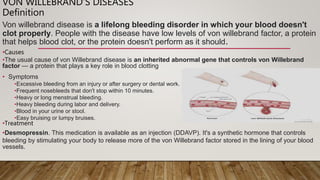
Von willebrand disease is a lifelong bleeding disorder in which your blood doesn't
clot properly. People with the disease have low levels of von willebrand factor, a protein
that helps blood clot, or the protein doesn't perform as it should.
•Causes
•The usual cause of von Willebrand disease is an inherited abnormal gene that controls von Willebrand
factor — a protein that plays a key role in blood clotting
• Symptoms
•Excessive bleeding from an injury or after surgery or dental work.
•Frequent nosebleeds that don't stop within 10 minutes.
•Heavy or long menstrual bleeding.
•Heavy bleeding during labor and delivery.
•Blood in your urine or stool.
•Easy bruising or lumpy bruises.
•Treatment
•Desmopressin. This medication is available as an injection (DDAVP). It's a synthetic hormone that controls
bleeding by stimulating your body to release more of the von Willebrand factor stored in the lining of your blood
vessels.
SEX-(X-) LINKED RECESSIVE INHERITANCE
• Definition
X-linked recessive inheritance refers to genetic conditions associated with mutations in genes on
the X chromosome. A male carrying such a mutation will be affected, because he carries only one X
chromosome. A female carrying a mutation in one gene, with a normal gene on the other X chromosome,
is generally unaffected.
Examples
•Heamophilia A
•Diabetes Insipidus
•Colour Blindness
•Muscular Dystropies
HEAMOPHILIA A
DEFINITION
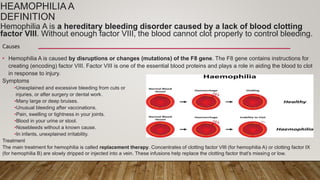
Hemophilia A is a hereditary bleeding disorder caused by a lack of blood clotting
factor VIII. Without enough factor VIII, the blood cannot clot properly to control bleeding.
Causes
• Hemophilia A is caused by disruptions or changes (mutations) of the F8 gene. The F8 gene contains instructions for
creating (encoding) factor VIII. Factor VIII is one of the essential blood proteins and plays a role in aiding the blood to clot
in response to injury.
Symptoms
•Unexplained and excessive bleeding from cuts or
injuries, or after surgery or dental work.
•Many large or deep bruises.
•Unusual bleeding after vaccinations.
•Pain, swelling or tightness in your joints.
•Blood in your urine or stool.
•Nosebleeds without a known cause.
•In infants, unexplained irritability.
Treatment
The main treatment for hemophilia is called replacement therapy. Concentrates of clotting factor VIII (for hemophilia A) or clotting factor IX
(for hemophilia B) are slowly dripped or injected into a vein. These infusions help replace the clotting factor that's missing or low.
DIABETES INSIPIDUS
Definition
Diabetes insipidus (die-uh-bee-teze in-sip-uh-dus) is an uncommon disorder that
causes an imbalance of fluids in the body. This imbalance leads you to produce large
amounts of urine. It also makes you very thirsty even if you have something to drink
Causes
•Diabetes insipidus is caused by problems with a chemical called vasopressin (AVP), which is also
known as antidiuretic hormone (ADH). AVP is produced by the hypothalamus and stored in the pituitary
gland until needed. The hypothalamus is an area of the brain that controls mood and appetite.
Symptoms
•Heavy, wet diapers and Constipation.
•Trouble sleeping Bed-wetting.
•Vomiting and Fever
•Delayed growth and Weight loss
Treatment
Typically, this form is treated with a synthetic hormone called desmopressin (DDAVP, Nocdurna). This
medication replaces the missing anti-diuretic hormone (ADH) and decreases urination. You can take
desmopressin in a tablet, as a nasal spray or by injection.
COLOUR BLINDNESS
Definition
Color blindness occurs when you are unable to see colors in a normal way. It is also
known as color deficiency. Color blindness often happens when someone cannot
distinguish between certain colors
Causes
•Inherited disorder. Inherited color deficiencies are much more common in males than in females. ...
•Diseases and Certain medications
•Aging and Chemicals
Symptoms
•trouble seeing colors and the brightness of colors in the usual way;
•inability to tell the difference between shades of the same or similar colors. This happens most with red
and green, or blue and yellow.
• Treatment
Contact lenses and glasses are available with filters to help color deficiencies, if needed.
MUSCULAR DYSTROPIES
Definition
Muscular dystrophy is a group of diseases that cause progressive weakness and loss of muscle
mass. In muscular dystrophy, abnormal genes (mutations) interfere with the production of proteins needed
to form healthy muscle.
Causes
•In muscular dystrophies, abnormal genes (mutations) lead to muscle degeneration. Most forms begin in
childhood. Damaged muscles become progressively weaker. It usually comes on later in life, between
ages 40 and 60.
•Symptoms
•Frequent falls and Walking on the toes.
•Difficulty rising from a lying or sitting position.
•Trouble running and jumping.
•Muscle pain and stiffness.
•Learning disabilities.
Treatment
Medication, therapy, breathing aids or surgery may help maintain function, but life span is often shortened.
SEX-(X-) LINKED DOMINANT INHERITANCE
• Definition
• Sex-linked diseases are inherited through one of the sex chromosomes, which are the X and Y
chromosomes. Dominant inheritance occurs when an abnormal gene from one parent can cause a
disease, even though a matching gene from the other parent is normal. The abnormal gene
dominates the gene pair
• Examples
• Hypo-phosphataemic Rickets
• Incontinentia pigmenti
Hypophosphatemic rickets
Definition
Hypophosphatemic rickets (previously called vitamin d-resistant rickets) is a disorder in which
the bones become painfully soft and bend easily, due to low levels of phosphate in the blood.
Symptoms usually begin in early childhood and can range in severity.
Causes
•Most commonly, it is caused by a mutation in the PHEX gene. Other genes that can be responsible for
the condition include the CLCN5, DMP1, ENPP1, FGF23, and SLC34A3 genes. The genes associated
with hereditary hypophosphatemic rickets are involved in keeping a proper balance of phosphate in the
body.
•Symptoms
•muscle weakness,
• short stature,
•skeletal deformities, and
•bone pain.
Treatment
Standard protocol for treatment of familial hypophosphatemic rickets includes the use of 1,25-dihydroxy-vitamin
D (calcitriol). The use of calcitriol in place of standard vitamin D obviates near-toxic dosage of the latter, avoids
fat storage of parent vitamin D, and diminishes the danger of hypercalcemia.
INCONTINENTIA PIGMENTI
DEFINITION
Incontinentia pigmenti is a condition that can affect many body systems, particularly the skin .
this condition occurs much more often in females than in males. Incontinentia pigmenti is
characterized by skin abnormalities that evolve throughout childhood and young adulthood.
• Causes
• Incontinentia pigmenti is caused by a mutation in the IKBKG gene, which encodes the NEMO protein, which serves to
protect cells against TNF-alpha-induced apoptosis. This condition is inherited in an X-linked dominant pattern . The
gene associated with this condition is located on the X chromosome, which is one of the two sex chromosomes . In
females (who have two X chromosomes), a mutation in one of the two copies of the gene in each cell is sufficient to cause
the disorder.
• Symptoms
• Incontinentia pigmenti (IP) is a genetic condition that affects the skin and other body systems. Skin symptoms change
with time and begin with a blistering rash in infancy, followed by wart-like skin growths. The growths become swirled
grey or brown patches in childhood, and then swirled light patches in adulthood.
• Treatment
• The main goal is to prevent secondary bacterial infection of skin lesions and to monitor closely the development of related
problems.
MULTI-FACTORIAL INHERITANCE
• Some normal phenotypic characteristics have also multifactorial inheritance e.g. colour of hair, eye, skin,
height and intelligence. Multifactorial disorders are those disorders which result from the combined
effect of genetic composition and environmental influences. Some common examples of such disorders
in which environmental influences mask the mutant genes are as under:
Pyloric stenosis
Diabetes mellitus
Hypertension
Congenital heart disease
Coronary heart disease.
PYLORIC STENOSIS
Definition
Pyloric stenosis is a condition that affects an infant's pylorus, a muscle at the end of
the stomach. When the pylorus thickens, food can't pass through. Pyloric stenosis
symptoms include forceful vomiting, which may cause dehydration.
Causes
•Smoking during pregnancy.
•Early antibiotic use.
•Bottle-feeding.
Symptoms
•Stomach contractions.
•Dehydration.
•Changes in bowel movements.
•Weight problems
•severe vomiting, baby colic, failure to thrive, insufficient urine production, lump in the abdomen, or weight loss
• Treatment
• Pyloric stenosis is always treated with surgery, which almost always cures the condition permanently. The operation,
called a pyloromyotomy, divides the thickened outer muscle, while leaving the internal layers of the pylorus intact.
DIABETES MELLITUS
DEFINITION
Diabetes mellitus refers to a group of diseases that affect how your body uses blood
sugar (glucose). Glucose is vital to your health because it's an important source of
energy for the cells that make up your muscles and tissues.
• Symptoms
•Increased thirst.
•Frequent urination.
•Extreme hunger.
•Unexplained weight loss.
•Presence of ketones in the urine (ketones are a byproduct of the breakdown of muscle and fat that happens when there's not enough available insulin)
•Fatigue.
•Irritability.
•Blurred vision.
•Treatment
•Healthy eating.
•Regular exercise.
•Weight loss.
•Possibly, diabetes medication or insulin therapy.
•Blood sugar monitoring.
HYPERTENSION
DEFINITION
High blood pressure (hypertension) is a common condition in which the long-term force
of the blood against your artery walls is high enough that it may eventually cause health
problems, such as heart disease.
• Causes
•Smoking.
•Being overweight or obese.
•Lack of physical activity.
•Too much salt in the diet.
•Too much alcohol consumption (more than 1 to 2 drinks per day)
•Stress.
•Older age.
•Genetics.
• Symptoms
•Severe headaches and Nosebleed.
•Fatigue or confusion.
•Vision problems and Chest pain and Difficulty breathing.
•Irregular heartbeat.
•Blood in the urine.
•
Congenital heart disease
Definition
Congenital heart disease is one or more problems with the heart's structure that exist since birth. Congenital means
that you're born with the defect. Congenital heart disease, also called congenital heart defect, can change the way
blood flows through your heart.
• Causes
•Your genes. Congenital heart disease appears to run in families (inherited) and is associated with many genetic
syndromes.
•German measles (rubella).
•Diabetes.
•Medications.
•Alcohol.
•Smoking.
• Symptoms
•Abnormal heart rhythms (arrhythmias)
•A bluish tint to the skin, lips and fingernails (cyanosis)
•Shortness of breath
•Tiring quickly upon exertion
•Swelling of body tissue or organs (edema)
CHROMOSOMAL ABNORMALITY
DEFINITION
A chromosomal anomaly is a change to a child's genetic material or DNA, which
alters the baby's development before birth. This can include extra, missing or irregular
chromosomes.
•Down’s syndrome
•Klinefelter’s syndrome
•Turner’s syndrome
DOWN’S SYNDROME
• There is trisomy 21 in about 95% cases of Down’s syndrome due to
nondisjunction during meiosis in one of the parents. Down’s syndrome is the
most common chromosomal disorder and is the commonest cause of mental
retardation. The incidence of producing offspring with Down’s syndrome rises in
mothers over 35 years of age.
KLINEFELTER’S SYNDROME
• Klinefelter’s syndrome is the most important example of sex chromosome
trisomy. About 80% cases have 47, XXY karyotype while others are
mosaics.Typically, these patients have testicular dysgenesis. In general, sex
chromosome trisomies are more common than trisomies of autosomes.
TURNER’S SYNDROME
• Turner’s syndrome is an example of monosomy (45, X0) most often due to loss of
X chromosome in paternal meiosis.

Genetic disorders

  • 1.
  • 2.
    DEFINITION- • A geneticdisorder is a health problem caused by one or more abnormalities in the genome. • It can be caused by a mutation in a single gene (monogenic) or multiple genes (polygenic) or by a chromosomal abnormality. • Although polygenic disorders are the most common, the term is mostly used when discussing disorders with a single genetic cause, either in a gene or chromosome.
  • 3.
    TYPES OF GENETICDISORDERS- Single Gene Defects (Mendelian disorders) Multi-Factorial Inheritance Chromosomal Abnormality
  • 4.
    SINGLE GENE DEFECTS(MENDELIAN DISORDERS) • Mendelian Disorders can be defined as a type of genetic disorder that arises due to alterations in one gene or as a result of abnormalities in the genome. Such a condition can be seen from birth and be found based on family ancestry utilizing the genealogical record. • Classification- • AUTOSOMAL RECESSIVE INHERITANCE • AUTOSOMAL CODOMINANT INHERITANCE • AUTOSOMAL DOMINANT INHERITANCE • SEX-(X-) LINKED RECESSIVE INHERITANCE • SEX-(X-) LINKED DOMINANT INHERITANCE
  • 5.
    IMPORTANT EXAMPLES OFMENDELIAN DISORDERS (SINGLE GENE DEFECTS) • I. AUTOSOMAL RECESSIVE INHERITANCE- • In autosomal recessive inheritance, both copies of genes are mutated. Usually, it occurs when both parents are carriers of the defective gene, i.e. having one normal allele and one defective allele in each parent, and each parent passes on their defective gene to the next progeny causing disease. There is 25% chance of transmission of autosomal recessive disease when both parents are carriers. • β-thalassaemia • Sickle cell anaemia • Cystic fibrosis of pancreas • Albinism • Wilson’s disease
  • 6.
    Β-THALASSAEMIA Definition- Beta-thalassemia isa blood disorder that reduces the production of hemoglobin . Hemoglobin is the iron-containing protein in red blood cells that carries oxygen to cells throughout the body. In people with beta thalassemia, low levels of hemoglobin lead to a lack of oxygen in many parts of the body. • Causes- Beta thalassemia is caused by mutations in the hemoglobin beta (HBB) gene. Individuals with beta thalassemia minor have a mutation in one HBB gene, while individuals with the intermediate and major forms have mutations in both HBB genes. • Symptoms- • Tiredness and shortness of breath. • Pale skin and slow growth • A fast heartbeat • Treatment • Regular blood transfusions. • Surgery to remove the spleen, if needed. • Daily folic acid. • Surgery to remove the gallbladder. • Regular checks of heart and liver function. • Genetic tests. • Bone marrow transplant. •
  • 7.
    SICKLE CELL ANAEMIA DEFINITION-ASEVERE HEREDITARY FORM OF ANAEMIA IN WHICH A MUTATED FORM OF HAEMOGLOBIN DISTORTS THE RED BLOOD CELLS INTO A CRESCENT SHAPE AT LOW OXYGEN LEVELS. IT IS COMMONEST AMONG THOSE OF AFRICAN DESCENT. • Causes •Sickle cell anemia is caused by a mutation in the gene that tells your body to make the iron-rich compound that makes blood red and enables red blood cells to carry oxygen from your lungs throughout your body (hemoglobin). •Both mother and father must pass the defective form of the gene for a child to be affected. •If only one parent passes the sickle cell gene to the child, that child will have the sickle cell trait. With one normal hemoglobin gene and one defective form of the gene, people with the sickle cell trait make both normal hemoglobin and sickle cell hemoglobin. •Their blood might contain some sickle cells, but they generally don't have symptoms. They're carriers of the disease, however, which means they can pass the gene to their children. • Symptoms •Blood clots and Joint pain that resembles arthritis. •Swelling in hands and feet. •Chronic neuropathic pain (nerve pain). •Life-threatening infections. •Anemia (decrease in red blood cells). • Treatments • Treatments might include medications and blood transfusions and and rarely a bone-marrow transplant. For some children and teenagers, a stem cell transplant might cure the disease.
  • 8.
    CYSTIC FIBROSIS Definition CYSTICFIBROSIS (CF) IS AN INHERITED DISORDER THAT CAUSES SEVERE DAMAGE TO THE LUNGS, DIGESTIVE SYSTEM AND OTHER ORGANS IN THE BODY. CYSTIC FIBROSIS AFFECTS THE CELLS THAT PRODUCE MUCUS, SWEAT AND DIGESTIVE JUICES. THESE SECRETED FLUIDS ARE NORMALLY THIN AND SLIPPERY. •Causes Cystic fibrosis is caused by a change, or mutation in a gene called CFTR (cystic fibrosis transmembrane conductance regulator). This gene controls the flow of salt and fluids in and out of your cells. If the CFTR gene doesn't work the way it should, a sticky mucus builds up in your body. • Symptoms •lung infections or pneumonia and wheezing. •coughing with thick mucus. •bulky, greasy bowel movements. •constipation or diarrhea. •trouble gaining weight or poor height growth. •very salty sweat. • Treatment •antibiotics to prevent and treat chest infections. •medicines to make the mucus in the lungs thinner and easier to cough up. •medicines to widen the airways and reduce inflammation. •special techniques and devices to help clear mucus from the lungs.
  • 9.
    ALBINISM Definition A group ofinherited disorders characterised by little or no melanin production. This condition increases the risk of skin cancer. Most people with albinism have pale skin, eye conditions and are sensitive to the sun. No cure exists, but skin can be protected and eye conditions can be treated. • Cause •Albinism, caused by a deficiency of melanin pigment in the skin, hair, and eye (oculocutaneous albinism [OCA]), or primarily in the eye (ocular albinism [OA]), results from mutations in genes involved in the biosynthesis of melanin pigment. •Symptoms •Very pale skin, hair and eyes. •Patches of missing skin pigment. •Crossed eyes (strabismus). •Rapid eye movements (nystagmus). •Vision problems and Light sensitivity (photophobia). •Treatment •Treatment focuses on getting proper eye care and monitoring skin for signs of abnormalities. Your care team may involve your primary care doctor and doctors specializing in eye care (ophthalmologist), skin care (dermatologist) and genetics. •Gene therapy can include use of such as retrovirus vectors, adenovirus vectors, and CRISPR/Cas9 system
  • 10.
    WILSON’S DISEASE Definition Wilson's diseaseis a genetic disorder in which excess copper accumulate in your liver, brain and other vital organs •Causes • Wilson disease is caused by mutations in the ATP7B gene. This gene provides instructions for making a protein called copper-transporting ATPase 2, which plays a role in the transport of copper from the liver to other parts of the body. •Symptoms •Fatigue, lack of appetite or abdominal pain. •A yellowing of the skin and the whites of the eye (jaundice) •Golden-brown eye discoloration (Kayser-Fleischer rings) •Fluid buildup in the legs or abdomen. •Problems with speech, swallowing or physical coordination. •Uncontrolled movements or muscle stiffness. • Treatment •Taking copper-chelating medications, which help your body's organs and tissues get rid of excess copper. •Reducing the amount of copper you get through food. •Taking zinc supplements. ... •Getting extra vitamin B6. •Treating any damage to your liver or central nervous system (or both) •
  • 11.
    AUTOSOMAL CODOMINANT INHERITANCE •Defintion • Autosomal codominant inheritance refers to two alleles of an autosomal gene where each allele contributes to the phenotype. For example, the ABO blood group system has three alleles that affect the expression of antigens on the surface of red blood cells: alleles A, B, and O. • ABO Blood group Antigens • Alpha 1-antrypsin deficiency • HLA Antigens
  • 12.
    ABO BLOOD GROUPANTIGENS Definition The ABO blood group antigens are encoded by one genetic locus, the ABO locus, which has three alternative (allelic) forms—a, B, and child receives one of the three alleles from each parent, giving rise to six possible genotypes and four possible blood types (phenotypes • Sympyoms •Low back pain. •Blood in urine. •Chills. •Feeling of "impending doom" •Fever. •Nausea and vomiting. •Shortness of breath. •Increased heart rate.
  • 13.
    ALPHA 1-ANTRYPSIN DEFICIENCY Definition Alpha-1antitrypsin deficiency (AAT deficiency) is an inherited condition that raises your risk for lung and liver disease. Alpha-1 antitrypsin (AAT) is a protein that protects the lungs. The liver makes it. If the AAT proteins aren't the right shape, they get stuck in the liver cells and can't reach the lungs •Causes • Mutations (changes) in the gene that produces the AAT protein cause Alpha-1. In people with the most common abnormal type of Alpha-1 (called ZZ type), AAT proteins are misshapen. • Symptoms •Shortness of breath. •Excessive cough with phlegm/sputum production. •Wheezing. •Decrease in exercise capacity and a persistent low energy state or tiredness. •Chest pain that increases when breathing in. • Treatment • treatment called augmentation therapy may help slow lung damage. You may also need oxygen therapy, pulmonary rehabilitation, or medicines to treat complications.
  • 14.
    HLA ANTIGENS Definition Human leukocyteantigens (HLA) are genes in major histocompatibility complexes (MHC) that help code for proteins that differentiate between self and non-self. They play a significant role in disease and immune defense. They are beneficial to the immune system but can also have detrimental effects •Causes •Human leukocyte antigen (HLA) sensitisation occurs after transfusion of blood products and transplantation. It can also happen spontaneously through cross-sensitisation from infection and pro- inflammatory events. •Symptoms •joint pain. •stiffness or swelling of your spine, neck, or chest. •inflammation of your joints or urethra accompanied by skin lesions. •recurring inflammation in your eye.
  • 15.
    AUTOSOMAL DOMINANT INHERITANCE •Definition Autosomal dominant inheritance pattern is characterised by one faulty copy of gene (i.e. mutant allele) in any autosome and one copy of normal allele; disease phenotype is seen in all such individuals. Patients having autosomal dominant inheritance disease have 50% chance of passing on the disease to the next generation. • Adult Polycystic Kidney • Marfan’s Syndrome • Von Willebrand’s diseases
  • 16.
    ADULT POLYCYSTIC KIDNEY DEFINITION Polycystickidney disease (PKD) is an inherited disorder in which clusters of cysts develop primarily within your kidneys, causing your kidneys to enlarge and lose function over time. Cysts are noncancerous round sacs containing fluid. The cysts vary in size, and they can grow very large • Symptoms •High blood pressure. •Back or side pain. •Blood in your urine. •A feeling of fullness in your abdomen. •Increased size of your abdomen due to enlarged kidneys. •Headaches. •Kidney stones. •Kidney failure. • Treatment •Some potentially useful medications, such as tolvaptan, that can sometimes be used to reduce the growth rate of cysts.
  • 17.
    MARFAN’S SYNDROME Definition Marfan syndrome(MFS) is a rare multi-systemic genetic disorder that affects the connective tissue. Those with the condition tend to be tall and thin, with long arms, legs, fingers, and toes. They also typically have overly-flexible joints and scoliosis. Causes •Marfan syndrome is caused by a mutation in a gene called FBN1. The mutation limits the body's ability to make proteins needed to build connective tissue. One in four people with Marfan syndrome develops the condition for unknown reasons. A person with Marfan syndrome has a 1 in 2 chance of passing it on to their child. • Symptoms •Tall and slender build. •Disproportionately long arms, legs and fingers and Flat feet. •A breastbone that protrudes outward or dips inward. •A high, arched palate and crowded teeth. •Heart murmurs. •Extreme nearsightedness. •An abnormally curved spine.
  • 18.
    VON WILLEBRAND’S DISEASES Definition Vonwillebrand disease is a lifelong bleeding disorder in which your blood doesn't clot properly. People with the disease have low levels of von willebrand factor, a protein that helps blood clot, or the protein doesn't perform as it should. •Causes •The usual cause of von Willebrand disease is an inherited abnormal gene that controls von Willebrand factor — a protein that plays a key role in blood clotting • Symptoms •Excessive bleeding from an injury or after surgery or dental work. •Frequent nosebleeds that don't stop within 10 minutes. •Heavy or long menstrual bleeding. •Heavy bleeding during labor and delivery. •Blood in your urine or stool. •Easy bruising or lumpy bruises. •Treatment •Desmopressin. This medication is available as an injection (DDAVP). It's a synthetic hormone that controls bleeding by stimulating your body to release more of the von Willebrand factor stored in the lining of your blood vessels.
  • 19.
    SEX-(X-) LINKED RECESSIVEINHERITANCE • Definition X-linked recessive inheritance refers to genetic conditions associated with mutations in genes on the X chromosome. A male carrying such a mutation will be affected, because he carries only one X chromosome. A female carrying a mutation in one gene, with a normal gene on the other X chromosome, is generally unaffected. Examples •Heamophilia A •Diabetes Insipidus •Colour Blindness •Muscular Dystropies
  • 20.
    HEAMOPHILIA A DEFINITION Hemophilia Ais a hereditary bleeding disorder caused by a lack of blood clotting factor VIII. Without enough factor VIII, the blood cannot clot properly to control bleeding. Causes • Hemophilia A is caused by disruptions or changes (mutations) of the F8 gene. The F8 gene contains instructions for creating (encoding) factor VIII. Factor VIII is one of the essential blood proteins and plays a role in aiding the blood to clot in response to injury. Symptoms •Unexplained and excessive bleeding from cuts or injuries, or after surgery or dental work. •Many large or deep bruises. •Unusual bleeding after vaccinations. •Pain, swelling or tightness in your joints. •Blood in your urine or stool. •Nosebleeds without a known cause. •In infants, unexplained irritability. Treatment The main treatment for hemophilia is called replacement therapy. Concentrates of clotting factor VIII (for hemophilia A) or clotting factor IX (for hemophilia B) are slowly dripped or injected into a vein. These infusions help replace the clotting factor that's missing or low.
  • 21.
    DIABETES INSIPIDUS Definition Diabetes insipidus(die-uh-bee-teze in-sip-uh-dus) is an uncommon disorder that causes an imbalance of fluids in the body. This imbalance leads you to produce large amounts of urine. It also makes you very thirsty even if you have something to drink Causes •Diabetes insipidus is caused by problems with a chemical called vasopressin (AVP), which is also known as antidiuretic hormone (ADH). AVP is produced by the hypothalamus and stored in the pituitary gland until needed. The hypothalamus is an area of the brain that controls mood and appetite. Symptoms •Heavy, wet diapers and Constipation. •Trouble sleeping Bed-wetting. •Vomiting and Fever •Delayed growth and Weight loss Treatment Typically, this form is treated with a synthetic hormone called desmopressin (DDAVP, Nocdurna). This medication replaces the missing anti-diuretic hormone (ADH) and decreases urination. You can take desmopressin in a tablet, as a nasal spray or by injection.
  • 22.
    COLOUR BLINDNESS Definition Color blindnessoccurs when you are unable to see colors in a normal way. It is also known as color deficiency. Color blindness often happens when someone cannot distinguish between certain colors Causes •Inherited disorder. Inherited color deficiencies are much more common in males than in females. ... •Diseases and Certain medications •Aging and Chemicals Symptoms •trouble seeing colors and the brightness of colors in the usual way; •inability to tell the difference between shades of the same or similar colors. This happens most with red and green, or blue and yellow. • Treatment Contact lenses and glasses are available with filters to help color deficiencies, if needed.
  • 23.
    MUSCULAR DYSTROPIES Definition Muscular dystrophyis a group of diseases that cause progressive weakness and loss of muscle mass. In muscular dystrophy, abnormal genes (mutations) interfere with the production of proteins needed to form healthy muscle. Causes •In muscular dystrophies, abnormal genes (mutations) lead to muscle degeneration. Most forms begin in childhood. Damaged muscles become progressively weaker. It usually comes on later in life, between ages 40 and 60. •Symptoms •Frequent falls and Walking on the toes. •Difficulty rising from a lying or sitting position. •Trouble running and jumping. •Muscle pain and stiffness. •Learning disabilities. Treatment Medication, therapy, breathing aids or surgery may help maintain function, but life span is often shortened.
  • 24.
    SEX-(X-) LINKED DOMINANTINHERITANCE • Definition • Sex-linked diseases are inherited through one of the sex chromosomes, which are the X and Y chromosomes. Dominant inheritance occurs when an abnormal gene from one parent can cause a disease, even though a matching gene from the other parent is normal. The abnormal gene dominates the gene pair • Examples • Hypo-phosphataemic Rickets • Incontinentia pigmenti
  • 25.
    Hypophosphatemic rickets Definition Hypophosphatemic rickets(previously called vitamin d-resistant rickets) is a disorder in which the bones become painfully soft and bend easily, due to low levels of phosphate in the blood. Symptoms usually begin in early childhood and can range in severity. Causes •Most commonly, it is caused by a mutation in the PHEX gene. Other genes that can be responsible for the condition include the CLCN5, DMP1, ENPP1, FGF23, and SLC34A3 genes. The genes associated with hereditary hypophosphatemic rickets are involved in keeping a proper balance of phosphate in the body. •Symptoms •muscle weakness, • short stature, •skeletal deformities, and •bone pain. Treatment Standard protocol for treatment of familial hypophosphatemic rickets includes the use of 1,25-dihydroxy-vitamin D (calcitriol). The use of calcitriol in place of standard vitamin D obviates near-toxic dosage of the latter, avoids fat storage of parent vitamin D, and diminishes the danger of hypercalcemia.
  • 26.
    INCONTINENTIA PIGMENTI DEFINITION Incontinentia pigmentiis a condition that can affect many body systems, particularly the skin . this condition occurs much more often in females than in males. Incontinentia pigmenti is characterized by skin abnormalities that evolve throughout childhood and young adulthood. • Causes • Incontinentia pigmenti is caused by a mutation in the IKBKG gene, which encodes the NEMO protein, which serves to protect cells against TNF-alpha-induced apoptosis. This condition is inherited in an X-linked dominant pattern . The gene associated with this condition is located on the X chromosome, which is one of the two sex chromosomes . In females (who have two X chromosomes), a mutation in one of the two copies of the gene in each cell is sufficient to cause the disorder. • Symptoms • Incontinentia pigmenti (IP) is a genetic condition that affects the skin and other body systems. Skin symptoms change with time and begin with a blistering rash in infancy, followed by wart-like skin growths. The growths become swirled grey or brown patches in childhood, and then swirled light patches in adulthood. • Treatment • The main goal is to prevent secondary bacterial infection of skin lesions and to monitor closely the development of related problems.
  • 27.
    MULTI-FACTORIAL INHERITANCE • Somenormal phenotypic characteristics have also multifactorial inheritance e.g. colour of hair, eye, skin, height and intelligence. Multifactorial disorders are those disorders which result from the combined effect of genetic composition and environmental influences. Some common examples of such disorders in which environmental influences mask the mutant genes are as under: Pyloric stenosis Diabetes mellitus Hypertension Congenital heart disease Coronary heart disease.
  • 28.
    PYLORIC STENOSIS Definition Pyloric stenosisis a condition that affects an infant's pylorus, a muscle at the end of the stomach. When the pylorus thickens, food can't pass through. Pyloric stenosis symptoms include forceful vomiting, which may cause dehydration. Causes •Smoking during pregnancy. •Early antibiotic use. •Bottle-feeding. Symptoms •Stomach contractions. •Dehydration. •Changes in bowel movements. •Weight problems •severe vomiting, baby colic, failure to thrive, insufficient urine production, lump in the abdomen, or weight loss • Treatment • Pyloric stenosis is always treated with surgery, which almost always cures the condition permanently. The operation, called a pyloromyotomy, divides the thickened outer muscle, while leaving the internal layers of the pylorus intact.
  • 29.
    DIABETES MELLITUS DEFINITION Diabetes mellitusrefers to a group of diseases that affect how your body uses blood sugar (glucose). Glucose is vital to your health because it's an important source of energy for the cells that make up your muscles and tissues. • Symptoms •Increased thirst. •Frequent urination. •Extreme hunger. •Unexplained weight loss. •Presence of ketones in the urine (ketones are a byproduct of the breakdown of muscle and fat that happens when there's not enough available insulin) •Fatigue. •Irritability. •Blurred vision. •Treatment •Healthy eating. •Regular exercise. •Weight loss. •Possibly, diabetes medication or insulin therapy. •Blood sugar monitoring.
  • 30.
    HYPERTENSION DEFINITION High blood pressure(hypertension) is a common condition in which the long-term force of the blood against your artery walls is high enough that it may eventually cause health problems, such as heart disease. • Causes •Smoking. •Being overweight or obese. •Lack of physical activity. •Too much salt in the diet. •Too much alcohol consumption (more than 1 to 2 drinks per day) •Stress. •Older age. •Genetics. • Symptoms •Severe headaches and Nosebleed. •Fatigue or confusion. •Vision problems and Chest pain and Difficulty breathing. •Irregular heartbeat. •Blood in the urine. •
  • 31.
    Congenital heart disease Definition Congenitalheart disease is one or more problems with the heart's structure that exist since birth. Congenital means that you're born with the defect. Congenital heart disease, also called congenital heart defect, can change the way blood flows through your heart. • Causes •Your genes. Congenital heart disease appears to run in families (inherited) and is associated with many genetic syndromes. •German measles (rubella). •Diabetes. •Medications. •Alcohol. •Smoking. • Symptoms •Abnormal heart rhythms (arrhythmias) •A bluish tint to the skin, lips and fingernails (cyanosis) •Shortness of breath •Tiring quickly upon exertion •Swelling of body tissue or organs (edema)
  • 32.
    CHROMOSOMAL ABNORMALITY DEFINITION A chromosomalanomaly is a change to a child's genetic material or DNA, which alters the baby's development before birth. This can include extra, missing or irregular chromosomes. •Down’s syndrome •Klinefelter’s syndrome •Turner’s syndrome
  • 33.
    DOWN’S SYNDROME • Thereis trisomy 21 in about 95% cases of Down’s syndrome due to nondisjunction during meiosis in one of the parents. Down’s syndrome is the most common chromosomal disorder and is the commonest cause of mental retardation. The incidence of producing offspring with Down’s syndrome rises in mothers over 35 years of age.
  • 34.
    KLINEFELTER’S SYNDROME • Klinefelter’ssyndrome is the most important example of sex chromosome trisomy. About 80% cases have 47, XXY karyotype while others are mosaics.Typically, these patients have testicular dysgenesis. In general, sex chromosome trisomies are more common than trisomies of autosomes.
  • 35.
    TURNER’S SYNDROME • Turner’ssyndrome is an example of monosomy (45, X0) most often due to loss of X chromosome in paternal meiosis.