comics, cartoons and animation
lesson objectives
one 
Identify the codes and 
conventions of comics, 
cartoons and animations.
two 
Understand how comics, 
cartoons and animations 
attract target audiences.
three 
Identify types of animation 
and their effects on 
audiences.
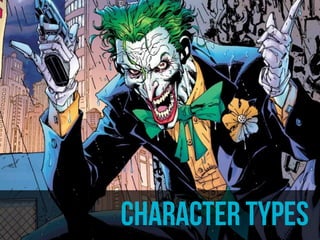
character types
vladimir propp (1928) 
Suggested that in any story 
there are only a limited 
number of character types.
hero 
The central protagonist of 
the narrative who drives it 
forward and has some kind of 
quest or mission.
heroine or princess 
Acts as a reward for the 
hero for succeeding the quest.
villain 
Seeks to stop the hero from 
succeeding in the quest, while 
presenting a genuine threat.
donor or mentor 
Gives the hero important 
information or equipment to 
help him or her in the quest.
helper 
Accompanies the hero on the 
quest, and can even help the 
hero to succeed, but cannot 
themselves complete the quest.
Some characters can fulfil 
two or more functions. For 
example, the heroine can also 
be the helper.
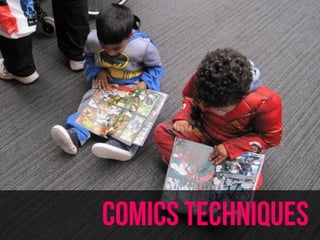
comics techniques
text boxes 
Small boxes of text which give 
details that would be hard 
to show in pictures alone.
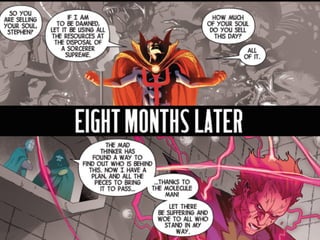
frame links 
Text placed between the frames 
to help reader understand 
events which may have 
happened after the last frame 
and before the next.
speech bubbles 
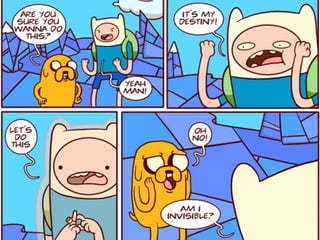
Words of speech placed in a 
bubble pointing towards the 
mouth of the character.
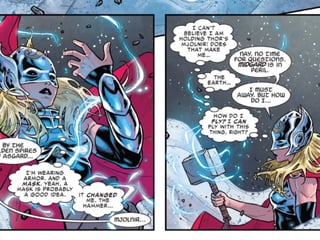
thought bubbles 
Like speech bubbles, but 
words are placed in cloud-shaped 
bubbles to show what 
character is thinking.
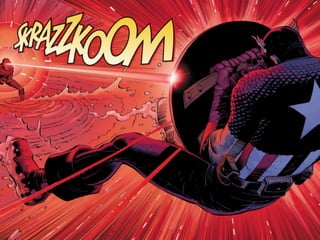
sound words 
comics give the impression of 
sounds by using inventive 
onomapthopeic words like 
‘pow’ and ‘zapp!!’.
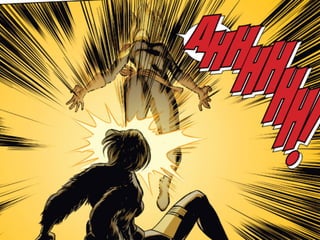
emotion words 
Like sound words, comics 
also use words to show 
exactly how a character is 
feeling.
facial expressions 
Simple alterations to a 
character’s face to show 
emotion.
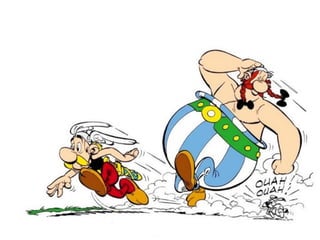
movement lines 
Comic frames give the 
impression of movement by 
adding small lines around 
edges of characters.
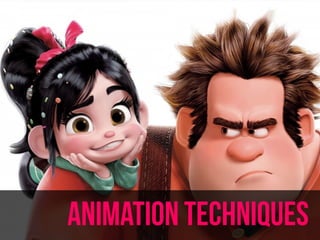
animation techniques
line drawing 
This technique was used by 
the first animators.
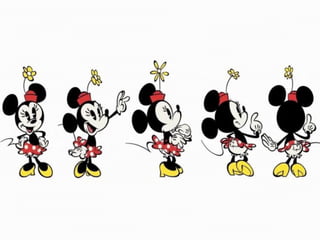
They drew a figure, framed 
in a background, many 
times, each time making 
tiny adjustments.
They filmed each picture for 
just a frame or two. When 
the film was shown at 
normal speed the figure 
appeared to move.
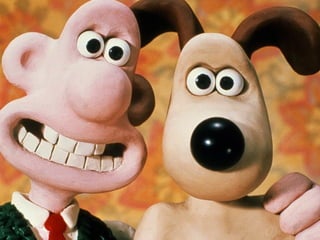
model animation 
A scale model of a character 
is moved and filmed in very 
small stages.
This technique uses 
software that allows the 
camera to film single 
frames to crate the effect of 
start-stop motion.
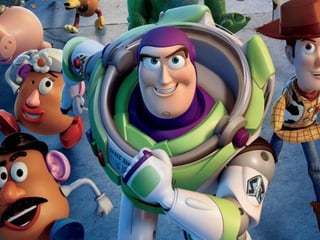
computer-generated 
imagery (CGI) 
Uses computer graphics to 
generate special effects.
13. comics, cartoons and animation

13. comics, cartoons and animation