COMICS

1
MANGA

( Japanese
Comics)

2
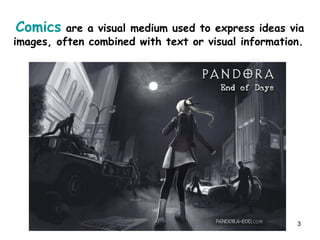
Comics

are a visual medium used to express ideas via
images, often combined with text or visual information.

3
The language of comics
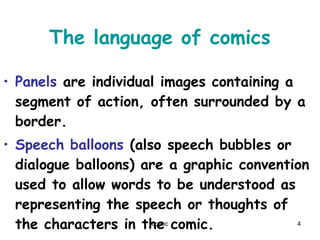
• Panels are individual images containing a
segment of action, often surrounded by a
border.
• Speech balloons (also speech bubbles or
dialogue balloons) are a graphic convention
used to allow words to be understood as
representing the speech or thoughts of
comic
4
the characters in the comic.
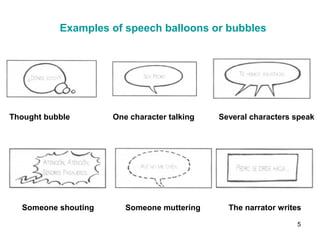
Examples of speech balloons or bubbles

Thought bubble

Someone shouting

One character talking

Someone muttering

Several characters speak

The narrator writes
5
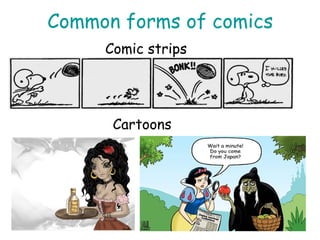
Common forms of comics
Comic strips

Cartoons
• Comic books
Fumetti or Photonovels

8
Storyboards (pre-visualizing a motion picture)
Online Web Comics
Types of Formats (Grammar of Films and TV)

11
XLS- Extra Long Shot

MCU-Medium Close-Up

LS- Long Shot CU- Close-Up
MLS- Medium Long Shot
MS- Medium Shot

BCU-Big Close-Up

XCU- Extra Close-Up
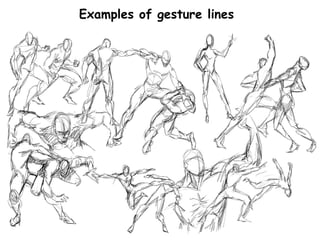
There are also artistic resources like
gesture lines to capture the movement of
an object or character

13
Examples of gesture lines

14
15
16
ACTIVITY nº 1
Observe the following Corkscrew, can
you think of a comic character?

17
Design a character based on the
corkscrew. Personificate the
object (give it human
characteristics). It is important
to work on previous sketches.
Create a short six-frame comic
strip based on this character
18
 

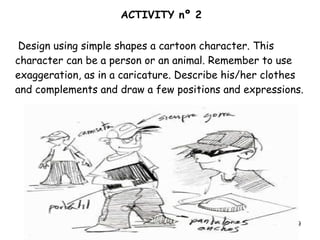
ACTIVITY nº 2
 Design using simple shapes a cartoon character. This
character can be a person or an animal. Remember to use
exaggeration, as in a caricature. Describe his/her clothes
and complements and draw a few positions and expressions.

19
20
ACTIVITY Nº 3
Draw a short six-frame comic strip.
Frame 1- Design using simple shapes a cartoon character, face, neck and shoulders
only, with ears. This character can be a person or an animal. Remember to use
exaggeration, as in a caricature.
Frame 2- A repeat of the first box, with the addition of an insect, who has flown
into the box. Use lines to show the motion of the flying.
Frame 3- Repeat the image, only here the insect flies into the character’s ear, and
the expression on the face of the character changes appropiately.

21
Frame 4- The character’s face should get more upset
with lines and symbols showing the upset around his/her
face.
Frame 5- The insect exits the other ear, and the facial
expression of the character should change again.
Frame 6- Shows the insect gone and the character
feeling… relief, joy, whatever you want, with a dialogue
balloon overhead to write and appropiate “whew!!!” or
other suitable words.
Finally go over the pencil lines with a fine black marker,
and add color with colored pencils.
22

Comics

  • 1.
  • 2.
  • 3.
    Comics are a visualmedium used to express ideas via images, often combined with text or visual information. 3
  • 4.
    The language ofcomics • Panels are individual images containing a segment of action, often surrounded by a border. • Speech balloons (also speech bubbles or dialogue balloons) are a graphic convention used to allow words to be understood as representing the speech or thoughts of comic 4 the characters in the comic.
  • 5.
    Examples of speechballoons or bubbles Thought bubble Someone shouting One character talking Someone muttering Several characters speak The narrator writes 5
  • 6.
    Common forms ofcomics Comic strips Cartoons
  • 7.
  • 8.
  • 9.
  • 10.
  • 11.
    Types of Formats(Grammar of Films and TV) 11
  • 12.
    XLS- Extra LongShot MCU-Medium Close-Up LS- Long Shot CU- Close-Up MLS- Medium Long Shot MS- Medium Shot BCU-Big Close-Up XCU- Extra Close-Up
  • 13.
    There are alsoartistic resources like gesture lines to capture the movement of an object or character 13
  • 14.
  • 15.
  • 16.
  • 17.
    ACTIVITY nº 1 Observethe following Corkscrew, can you think of a comic character? 17
  • 18.
    Design a characterbased on the corkscrew. Personificate the object (give it human characteristics). It is important to work on previous sketches. Create a short six-frame comic strip based on this character 18
  • 19.
      ACTIVITY nº 2  Designusing simple shapes a cartoon character. This character can be a person or an animal. Remember to use exaggeration, as in a caricature. Describe his/her clothes and complements and draw a few positions and expressions. 19
  • 20.
  • 21.
    ACTIVITY Nº 3 Drawa short six-frame comic strip. Frame 1- Design using simple shapes a cartoon character, face, neck and shoulders only, with ears. This character can be a person or an animal. Remember to use exaggeration, as in a caricature. Frame 2- A repeat of the first box, with the addition of an insect, who has flown into the box. Use lines to show the motion of the flying. Frame 3- Repeat the image, only here the insect flies into the character’s ear, and the expression on the face of the character changes appropiately. 21
  • 22.
    Frame 4- Thecharacter’s face should get more upset with lines and symbols showing the upset around his/her face. Frame 5- The insect exits the other ear, and the facial expression of the character should change again. Frame 6- Shows the insect gone and the character feeling… relief, joy, whatever you want, with a dialogue balloon overhead to write and appropiate “whew!!!” or other suitable words. Finally go over the pencil lines with a fine black marker, and add color with colored pencils. 22