MEASUREMENT
AND
EVALUATION
MR.NAGESH V A
Assistant professor
SDMIONS
INTRODUCTION
 Basic and difficulty task
 It includes observation of students
 Class room and clinical
CONCEPT AND NATURE OF ASSESSMENT
MEASUREMENT AND EVALUATION
 Systematic process of collecting data and analyzing
those data to make decisions.
 Some differences
cont….
CONT…
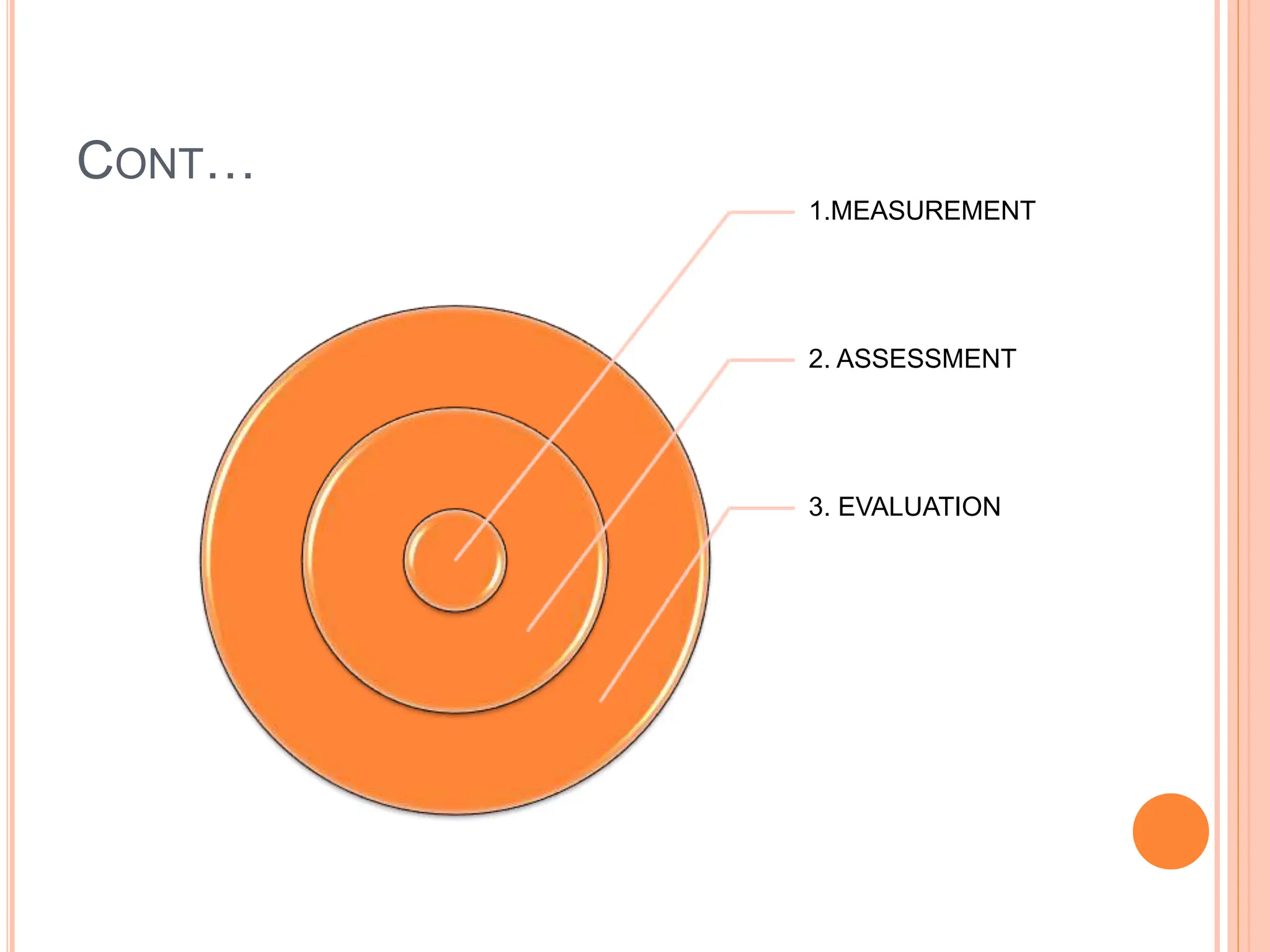
1.MEASUREMENT
2. ASSESSMENT
3. EVALUATION
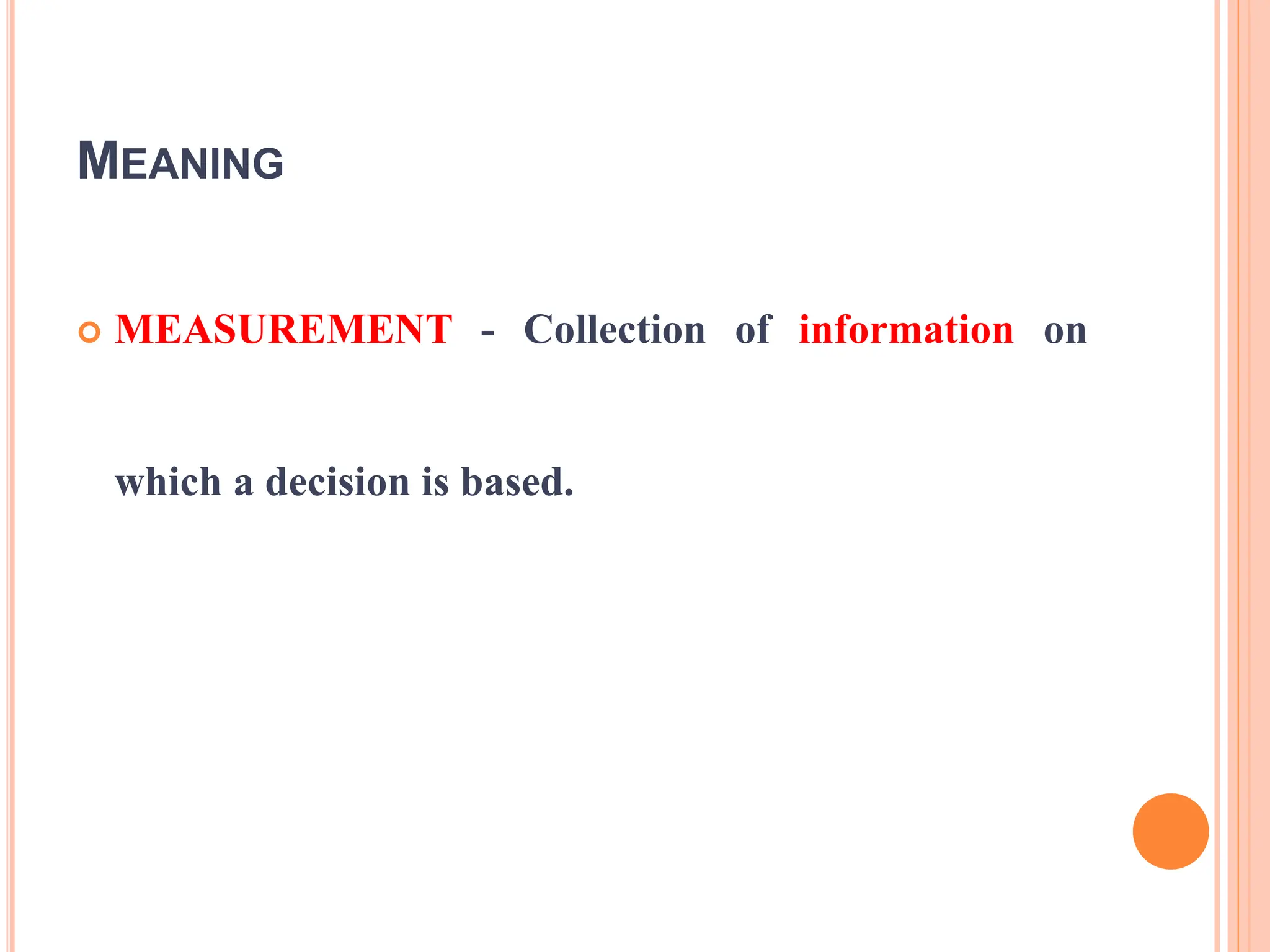
MEANING
 MEASUREMENT - Collection of information on
which a decision is based.
DEFINITIONS
MEASUREMENT
 The process of gathering information about learning and
quantifying .(weight, heart rate, marks )
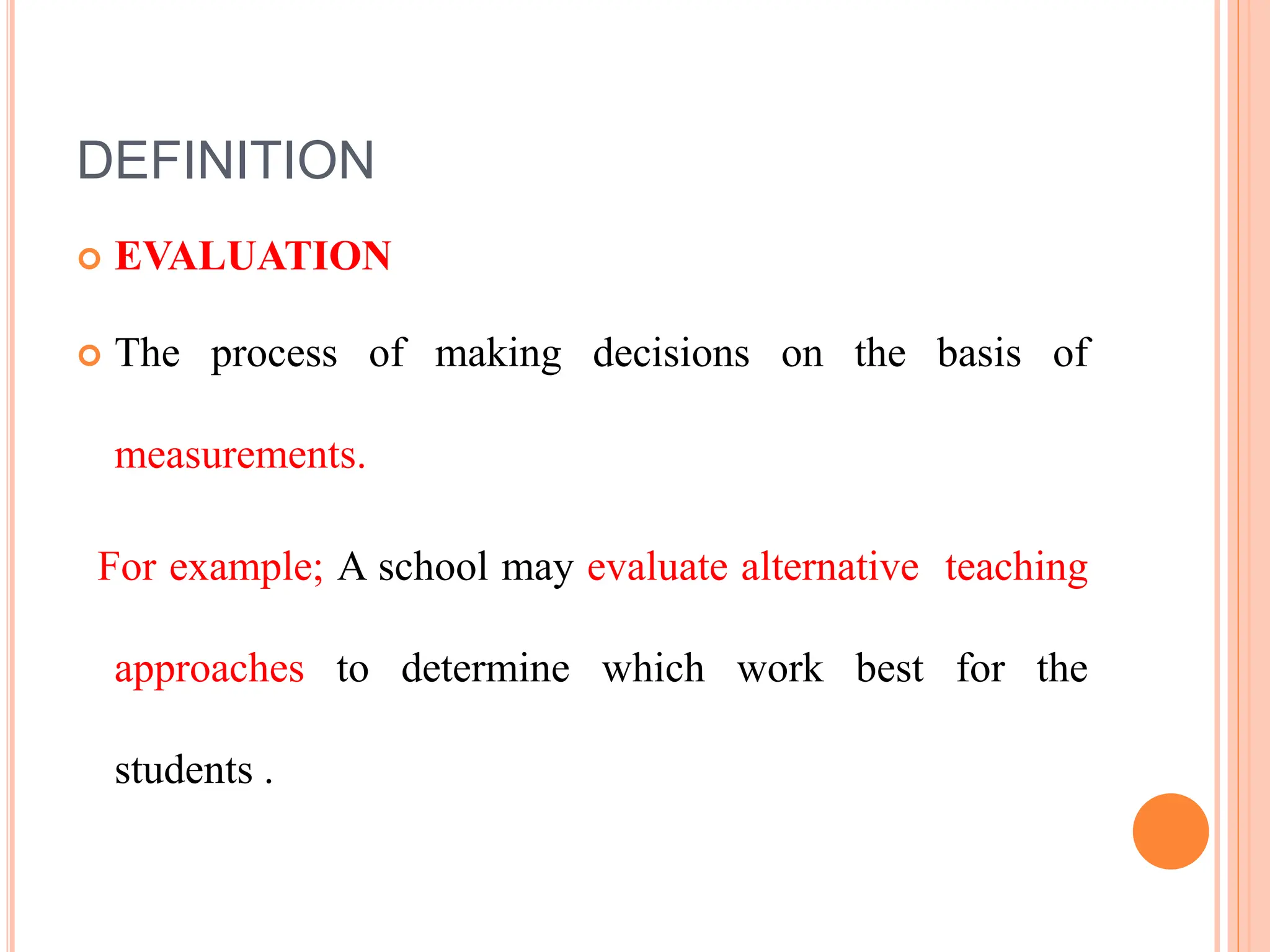
DEFINITION
 EVALUATION
 The process of making decisions on the basis of
measurements.
For example; A school may evaluate alternative teaching
approaches to determine which work best for the
students .
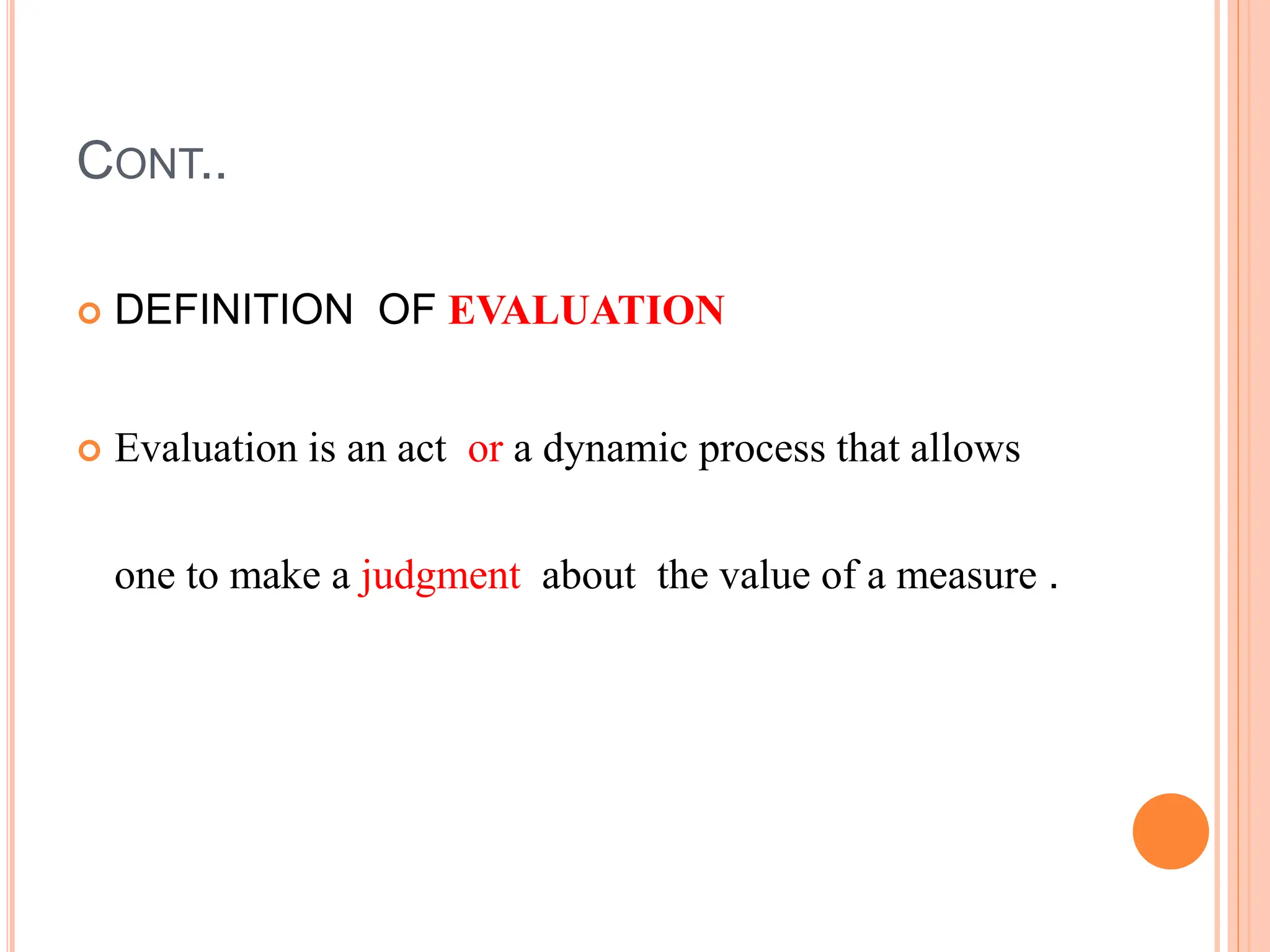
CONT..
 DEFINITION OF EVALUATION
 Evaluation is an act or a dynamic process that allows
one to make a judgment about the value of a measure .
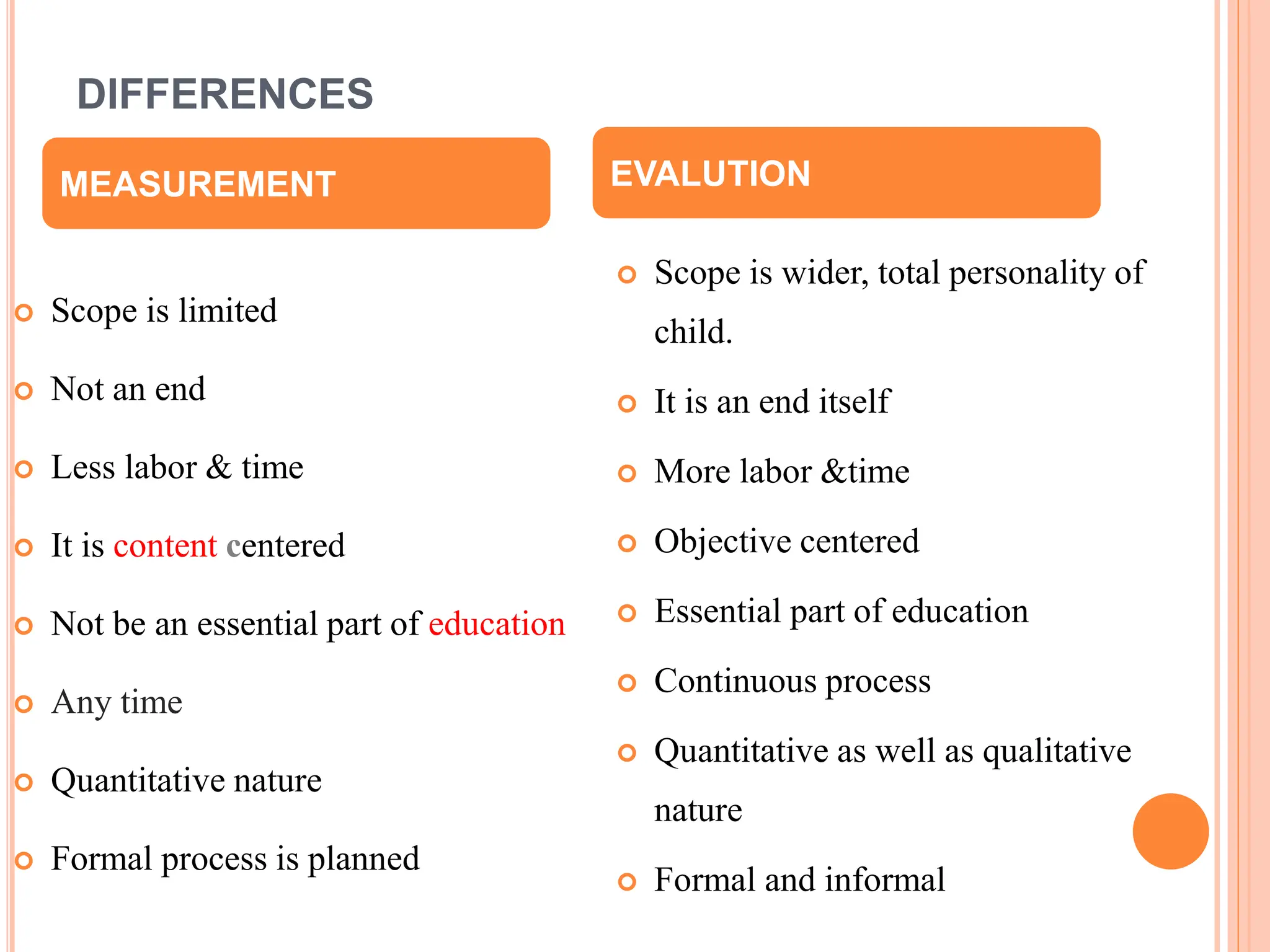
DIFFERENCES
 Scope is limited
 Not an end
 Less labor & time
 It is content centered
 Not be an essential part of education
 Any time
 Quantitative nature
 Formal process is planned
 Scope is wider, total personality of
child.
 It is an end itself
 More labor &time
 Objective centered
 Essential part of education
 Continuous process
 Quantitative as well as qualitative
nature
 Formal and informal
MEASUREMENT EVALUTION
PURPOSE AND NEED OF EVALUATION
 Discloses pupils/ students needs and possibilities
 Improving school and community relation
 Appraises the teacher and supervisor competence
 Serves as a method of self improvement and guide for the
selection of methods and techniques .
 To make reliable decisions about educational planning .
 To encourage students to develop a sense of discipline and
systematic study habits .
 The development of teaching and learning process
CONT…
 To gather information for administration purpose
 It provides opportunity to practice critical thinking .
 To become aware of the specific difficulties of individual
students.
 For certification that student has achieved set goals.
 To help teachers determine the effectiveness of their teaching
techniques and learning materials.
CHARACTERISTICS OF EVALUATION
It includes
academic and
non academic
subjects
Improve in
product
Discovering
needs of
individual
Purpose and
designing
learning
experiences
Continuous
process
PROCESS OF EVALUATION
 1. IDENTIFYING AND DEFINING GENERAL
OBJECTIVES
- what to evaluate
- -General objectives should be stated
- in terms of knowledge, comprehensive, attitudes.
Skills. Application.
2. IDENTIFYING AND DEFINING SPECIFIC
OBJECTIVES
 Each unit should have specific objectives ,
 provide direction to teaching learning process.
 It helps Planning and organizing appraisal procedure.
3.SELECTING TEACHING POINTS
 The Objectives Can Be Realized
 Framing content
4. PLANING AND IMPLEMENTATION OF SUITABLE
LEARNING PROGRAMS AND ACTIVITIES
 Teacher plans various learning activities for facilitating better
learning
ex. Demo, project method ,discussion. field visit etc.
5. APPRAISING AND ASSESSING THE ACHIEVEMENTS
 The teacher may plan an oral or written test or practical test .
 Types of tests may vary from essay type question to multiple
choice questions .
6. USING THE RESULTS AS FEEDBACK
 The results of evaluation will enable teachers to introspect
and reorganize teaching learning activities.
PROBLEMS IN EVALUATION AND
MEASUREMENT
 LACK OF TIME .
For not evaluating the students regularly.
may Result of poor time management skills
 LACK OF THE SKILLS TO CARRY OUT
EVALUATION
 Teachers may not be competent enough to plan and
execute the evaluation schedule
Ex in-service education
CONT..
 Continuous evaluation is not cost effective
the budgets should be explored and employed .
 Problem of workloads of the teachers
 Problems of lack of curriculum guidelines for internal
assessment
 Lack of uniform standards of evaluation
THE END

1. MEASUREMENT &EVALUTION.pptx

  • 1.
  • 2.
    INTRODUCTION  Basic anddifficulty task  It includes observation of students  Class room and clinical
  • 3.
    CONCEPT AND NATUREOF ASSESSMENT MEASUREMENT AND EVALUATION  Systematic process of collecting data and analyzing those data to make decisions.  Some differences cont….
  • 4.
  • 5.
    MEANING  MEASUREMENT -Collection of information on which a decision is based.
  • 6.
    DEFINITIONS MEASUREMENT  The processof gathering information about learning and quantifying .(weight, heart rate, marks )
  • 7.
    DEFINITION  EVALUATION  Theprocess of making decisions on the basis of measurements. For example; A school may evaluate alternative teaching approaches to determine which work best for the students .
  • 8.
    CONT..  DEFINITION OFEVALUATION  Evaluation is an act or a dynamic process that allows one to make a judgment about the value of a measure .
  • 9.
    DIFFERENCES  Scope islimited  Not an end  Less labor & time  It is content centered  Not be an essential part of education  Any time  Quantitative nature  Formal process is planned  Scope is wider, total personality of child.  It is an end itself  More labor &time  Objective centered  Essential part of education  Continuous process  Quantitative as well as qualitative nature  Formal and informal MEASUREMENT EVALUTION
  • 10.
    PURPOSE AND NEEDOF EVALUATION  Discloses pupils/ students needs and possibilities  Improving school and community relation  Appraises the teacher and supervisor competence  Serves as a method of self improvement and guide for the selection of methods and techniques .  To make reliable decisions about educational planning .  To encourage students to develop a sense of discipline and systematic study habits .  The development of teaching and learning process
  • 11.
    CONT…  To gatherinformation for administration purpose  It provides opportunity to practice critical thinking .  To become aware of the specific difficulties of individual students.  For certification that student has achieved set goals.  To help teachers determine the effectiveness of their teaching techniques and learning materials.
  • 12.
    CHARACTERISTICS OF EVALUATION Itincludes academic and non academic subjects Improve in product Discovering needs of individual Purpose and designing learning experiences Continuous process
  • 13.
    PROCESS OF EVALUATION 1. IDENTIFYING AND DEFINING GENERAL OBJECTIVES - what to evaluate - -General objectives should be stated - in terms of knowledge, comprehensive, attitudes. Skills. Application.
  • 14.
    2. IDENTIFYING ANDDEFINING SPECIFIC OBJECTIVES  Each unit should have specific objectives ,  provide direction to teaching learning process.  It helps Planning and organizing appraisal procedure. 3.SELECTING TEACHING POINTS  The Objectives Can Be Realized  Framing content
  • 15.
    4. PLANING ANDIMPLEMENTATION OF SUITABLE LEARNING PROGRAMS AND ACTIVITIES  Teacher plans various learning activities for facilitating better learning ex. Demo, project method ,discussion. field visit etc.
  • 16.
    5. APPRAISING ANDASSESSING THE ACHIEVEMENTS  The teacher may plan an oral or written test or practical test .  Types of tests may vary from essay type question to multiple choice questions . 6. USING THE RESULTS AS FEEDBACK  The results of evaluation will enable teachers to introspect and reorganize teaching learning activities.
  • 17.
    PROBLEMS IN EVALUATIONAND MEASUREMENT  LACK OF TIME . For not evaluating the students regularly. may Result of poor time management skills  LACK OF THE SKILLS TO CARRY OUT EVALUATION  Teachers may not be competent enough to plan and execute the evaluation schedule Ex in-service education
  • 18.
    CONT..  Continuous evaluationis not cost effective the budgets should be explored and employed .  Problem of workloads of the teachers  Problems of lack of curriculum guidelines for internal assessment  Lack of uniform standards of evaluation
  • 19.