Blood Types
Blood Types
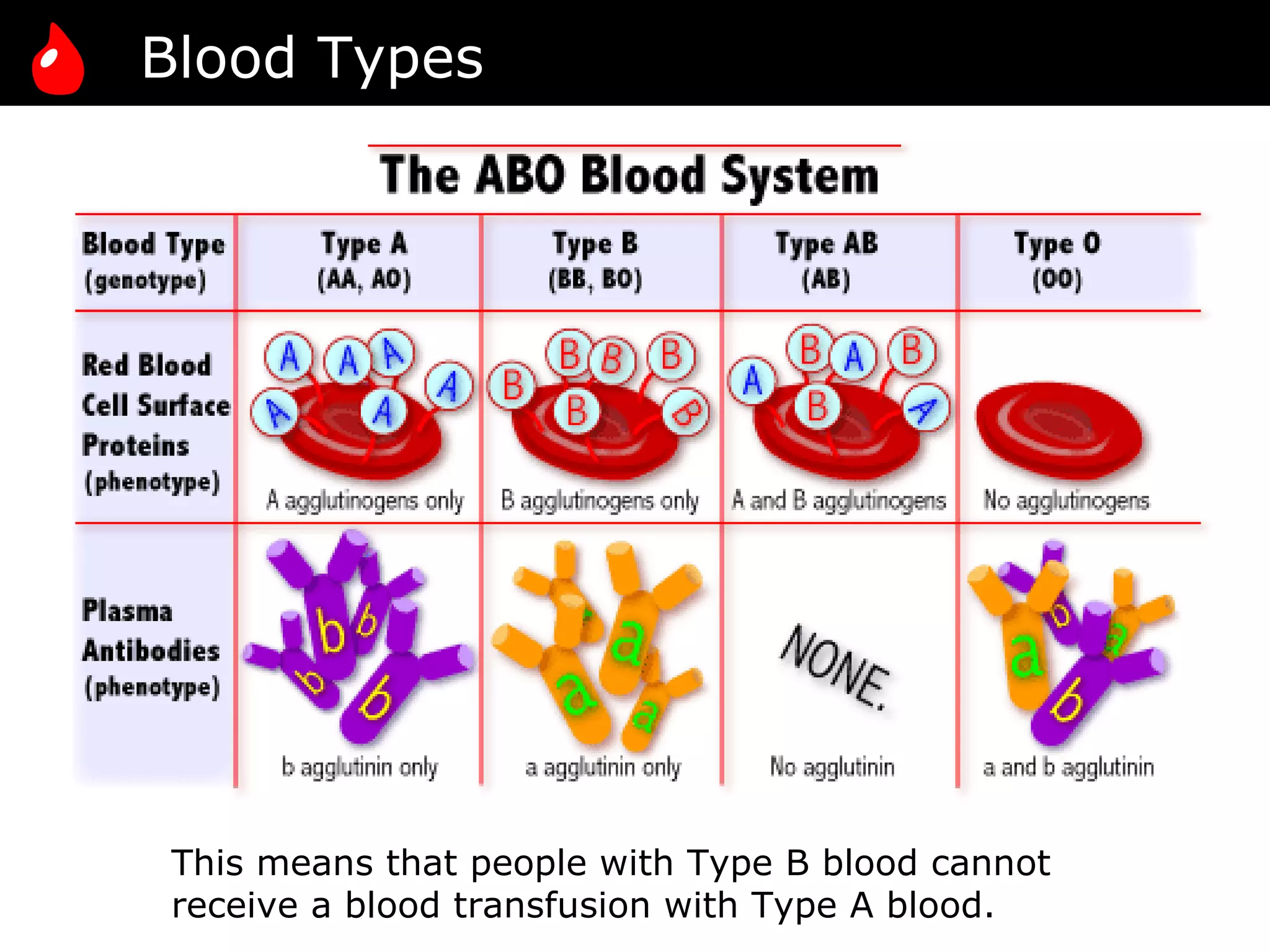
Blood Types Blood cells have different markers on their surface. These markers are called  antigens . Common antigens: A B Different combinations of these antigens result in different  blood types .
Blood Types Another antigen of clinical significance is  D   antigen This antigen is used to identify the  Rhesus factor  ( Rh ) of the blood. Rh+  = presence of D antigen Rh-  = lack of D antigen
Blood Types Along with antigens on the surface of red blood cells, the body contains specific  antibodies  dissolved in the blood. These antibodies  bind  to foreign blood and cause the blood to  clump  together. These antibodies  attack foreign blood  types (i.e. Type A blood has Anti-B antibodies)
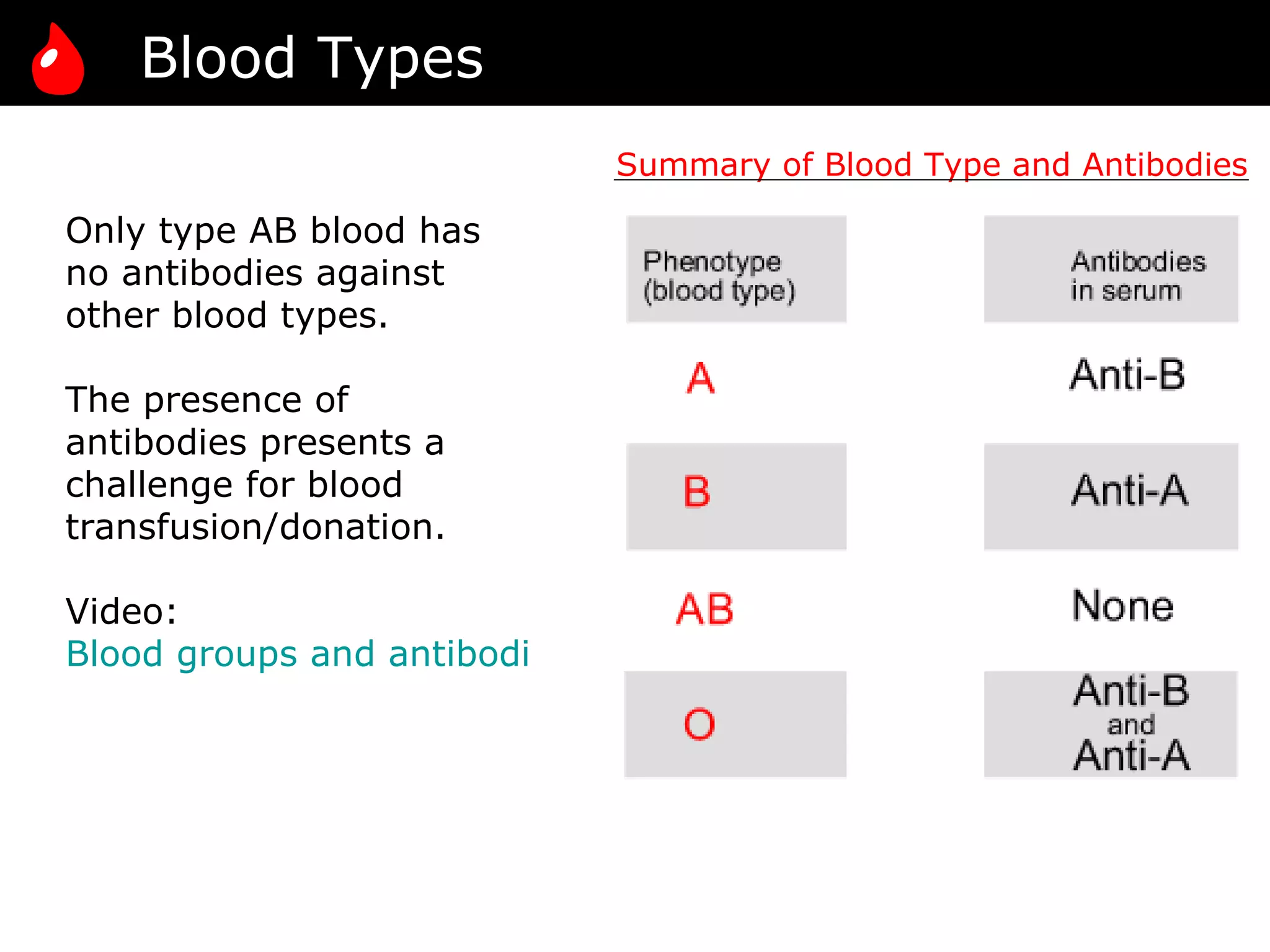
Blood Types Summary of  blood types  and  antibodies
Blood Types This means that people with Type B blood cannot receive a blood transfusion with Type A blood.
Blood Types Only type AB blood has no antibodies against other blood types. The presence of antibodies presents a challenge for blood transfusion/donation. Video: Blood groups and antibodies Summary of Blood Type and Antibodies
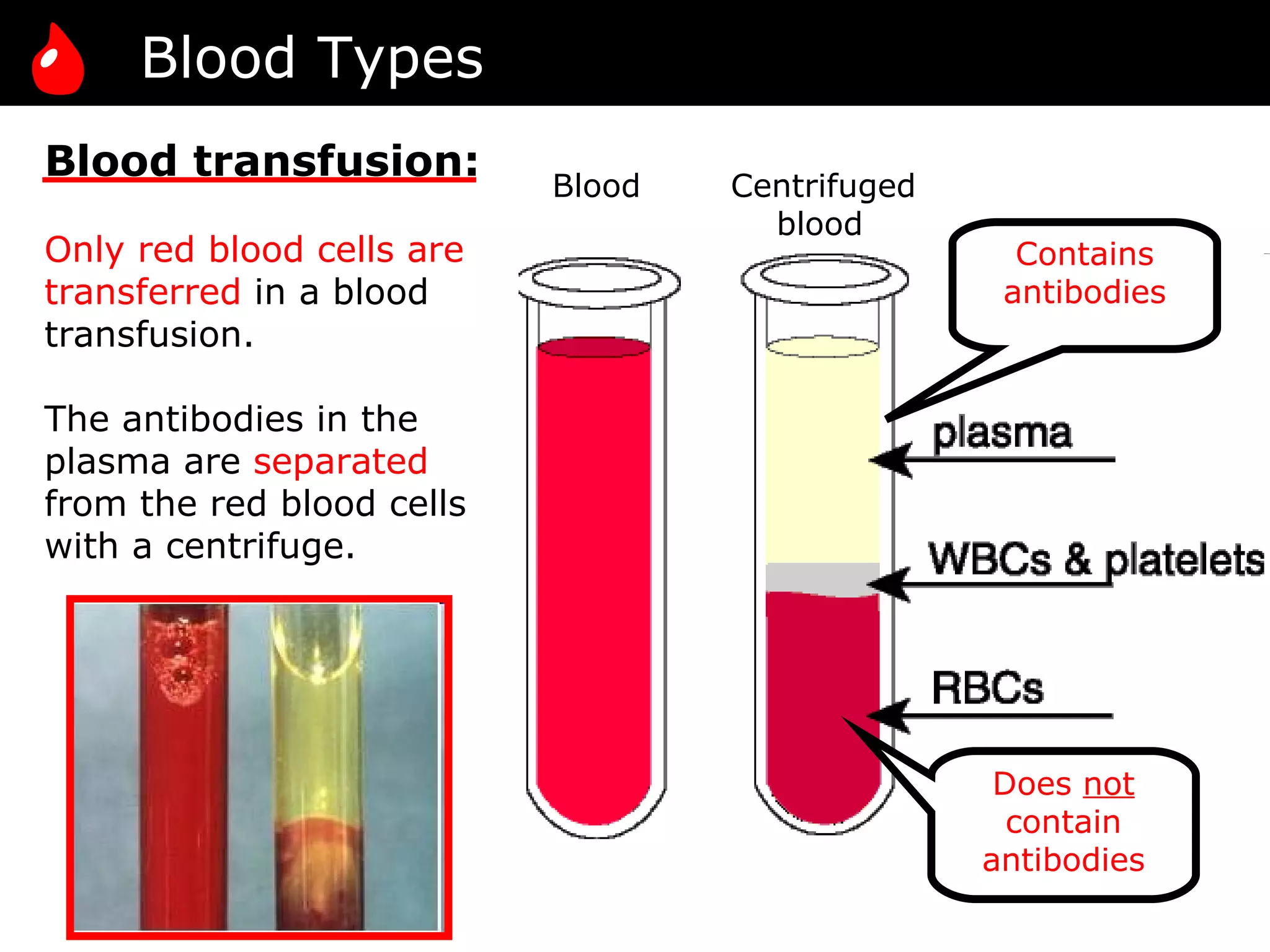
Blood Types Blood transfusion: Only red blood cells are transferred  in a blood transfusion.  The antibodies in the plasma are  separated  from the red blood cells with a centrifuge. Blood  Centrifuged blood Contains antibodies Does  not  contain antibodies
Blood Types Blood transfusion: The antibodies in the recipient (the person receiving the blood) will  attack  other types of blood. Example: If Type A blood was given to a Type O recipient, the recipient’s Anti-A and Anti-B antibodies will attack the foreign blood and cause it to clump. Type O recipient Type A transfusion Antibodies bind to the blood cells and cause them to clump A A A A A A A A A A A A
Blood Types Blood transfusion: Blood transfusions with the inappropriate blood type causes  systemic blood clumping ( agglutination )  and potentially  death . antibodies
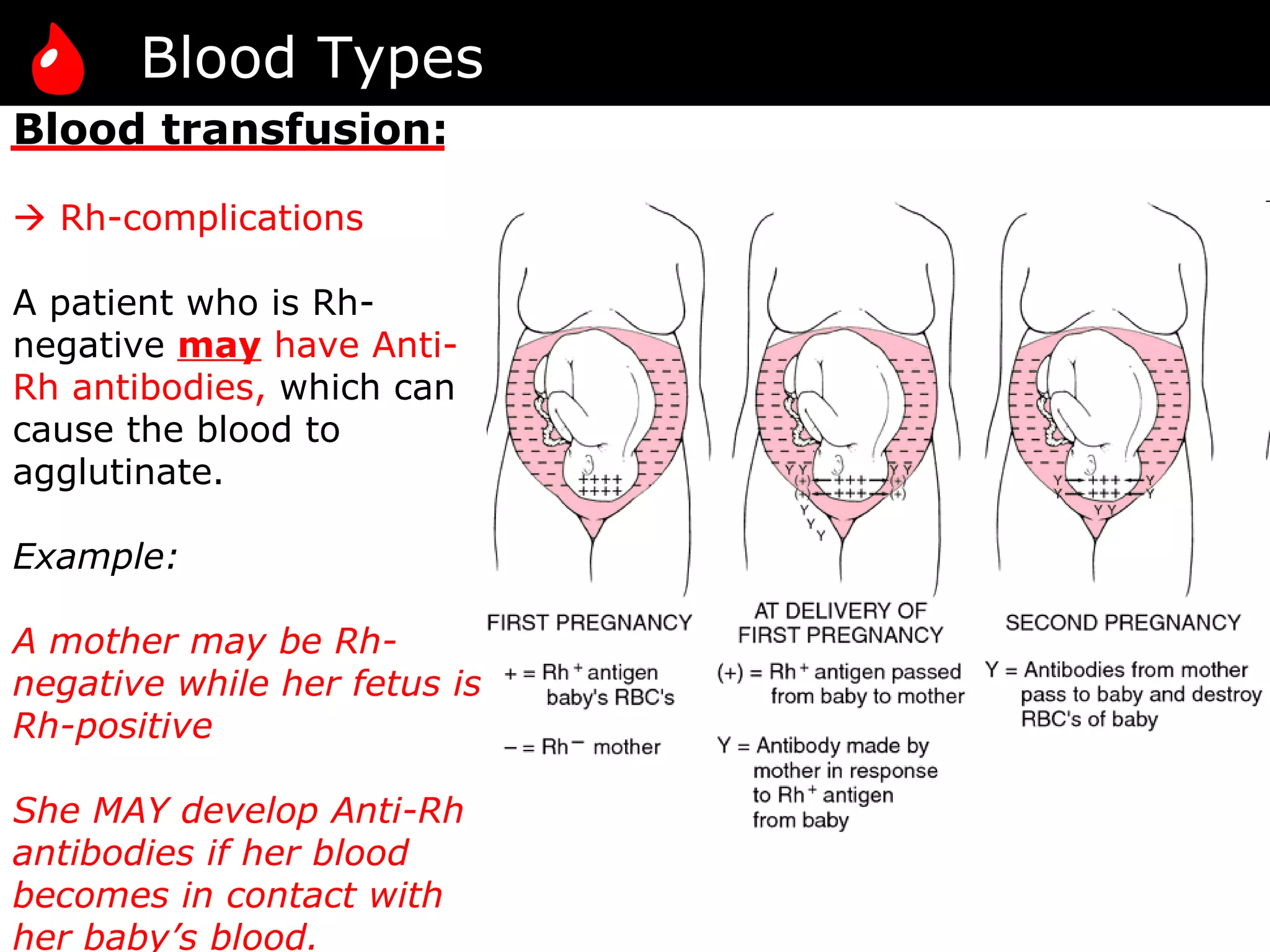
Blood Types Blood transfusion:    Rh-complications A patient who is Rh-negative  may  have Anti-Rh antibodies,  which can cause the blood to agglutinate. Example: A mother may be Rh-negative while her fetus is Rh-positive She MAY develop Anti-Rh antibodies if her blood becomes in contact with her baby’s blood.
Blood Types Blood transfusion:    Rh-complications If the Rh-negative mother develops Anti-Rh antibodies, then her next pregnancy may be  terminated  if her new antibodies reach her Rh-positive fetus.
Blood Types Blood transfusion game: Blood Typing Game

08 blood types

  • 1.
  • 2.
  • 3.
    Blood Types Bloodcells have different markers on their surface. These markers are called antigens . Common antigens: A B Different combinations of these antigens result in different blood types .
  • 4.
    Blood Types Anotherantigen of clinical significance is D antigen This antigen is used to identify the Rhesus factor ( Rh ) of the blood. Rh+ = presence of D antigen Rh- = lack of D antigen
  • 5.
    Blood Types Alongwith antigens on the surface of red blood cells, the body contains specific antibodies dissolved in the blood. These antibodies bind to foreign blood and cause the blood to clump together. These antibodies attack foreign blood types (i.e. Type A blood has Anti-B antibodies)
  • 6.
    Blood Types Summaryof blood types and antibodies
  • 7.
    Blood Types Thismeans that people with Type B blood cannot receive a blood transfusion with Type A blood.
  • 8.
    Blood Types Onlytype AB blood has no antibodies against other blood types. The presence of antibodies presents a challenge for blood transfusion/donation. Video: Blood groups and antibodies Summary of Blood Type and Antibodies
  • 9.
    Blood Types Bloodtransfusion: Only red blood cells are transferred in a blood transfusion. The antibodies in the plasma are separated from the red blood cells with a centrifuge. Blood Centrifuged blood Contains antibodies Does not contain antibodies
  • 10.
    Blood Types Bloodtransfusion: The antibodies in the recipient (the person receiving the blood) will attack other types of blood. Example: If Type A blood was given to a Type O recipient, the recipient’s Anti-A and Anti-B antibodies will attack the foreign blood and cause it to clump. Type O recipient Type A transfusion Antibodies bind to the blood cells and cause them to clump A A A A A A A A A A A A
  • 11.
    Blood Types Bloodtransfusion: Blood transfusions with the inappropriate blood type causes systemic blood clumping ( agglutination ) and potentially death . antibodies
  • 12.
    Blood Types Bloodtransfusion:  Rh-complications A patient who is Rh-negative may have Anti-Rh antibodies, which can cause the blood to agglutinate. Example: A mother may be Rh-negative while her fetus is Rh-positive She MAY develop Anti-Rh antibodies if her blood becomes in contact with her baby’s blood.
  • 13.
    Blood Types Bloodtransfusion:  Rh-complications If the Rh-negative mother develops Anti-Rh antibodies, then her next pregnancy may be terminated if her new antibodies reach her Rh-positive fetus.
  • 14.
    Blood Types Bloodtransfusion game: Blood Typing Game

Editor's Notes

  • #9 http://www.youtube.com/watch?v=H4qkwW-Fl3E