Downloaded 917 times



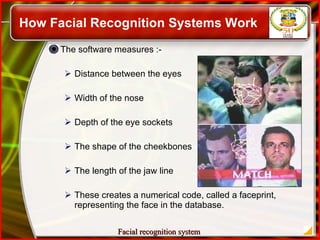
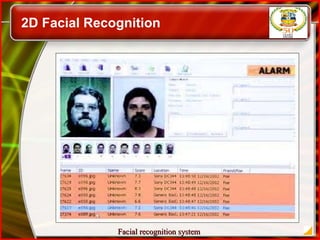
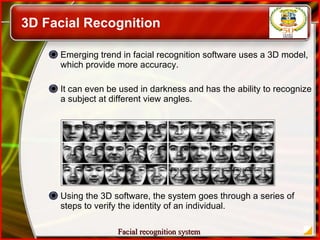
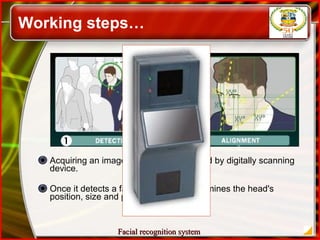


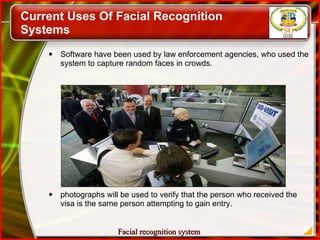


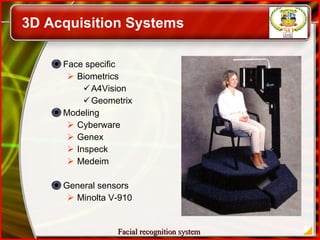


Facial recognition systems have advanced significantly since first being developed in the 1960s. The software measures distinguishing landmarks on faces such as distance between eyes, nose width, and jawline to create a unique "faceprint". Emerging 3D facial recognition is more accurate as it can recognize faces from different angles. Current uses include law enforcement matching faces in crowds and at borders. Future applications may include employee time tracking and prison visitor screening.


![SSII2021 [SS2] Deepfake Generation and Detection – An Overview (ディープフェイクの生成と検出)](https://cdn.slidesharecdn.com/ss_thumbnails/ss2-01-210607043612-thumbnail.jpg?width=640&height=640&fit=bounds)


![face-recognition-technology-ppt[1].pptx](https://cdn.slidesharecdn.com/ss_thumbnails/face-recognition-technology-ppt1-230606141845-8592cffe-thumbnail.jpg?width=640&height=640&fit=bounds)


