

Presentation by:

              Sandeep Sharma
              CSE
 Introduction
 Types of face recognition
 How it works
 Working steps
 Algorithms used
 Problems faced
 Future uses
 Conclusion
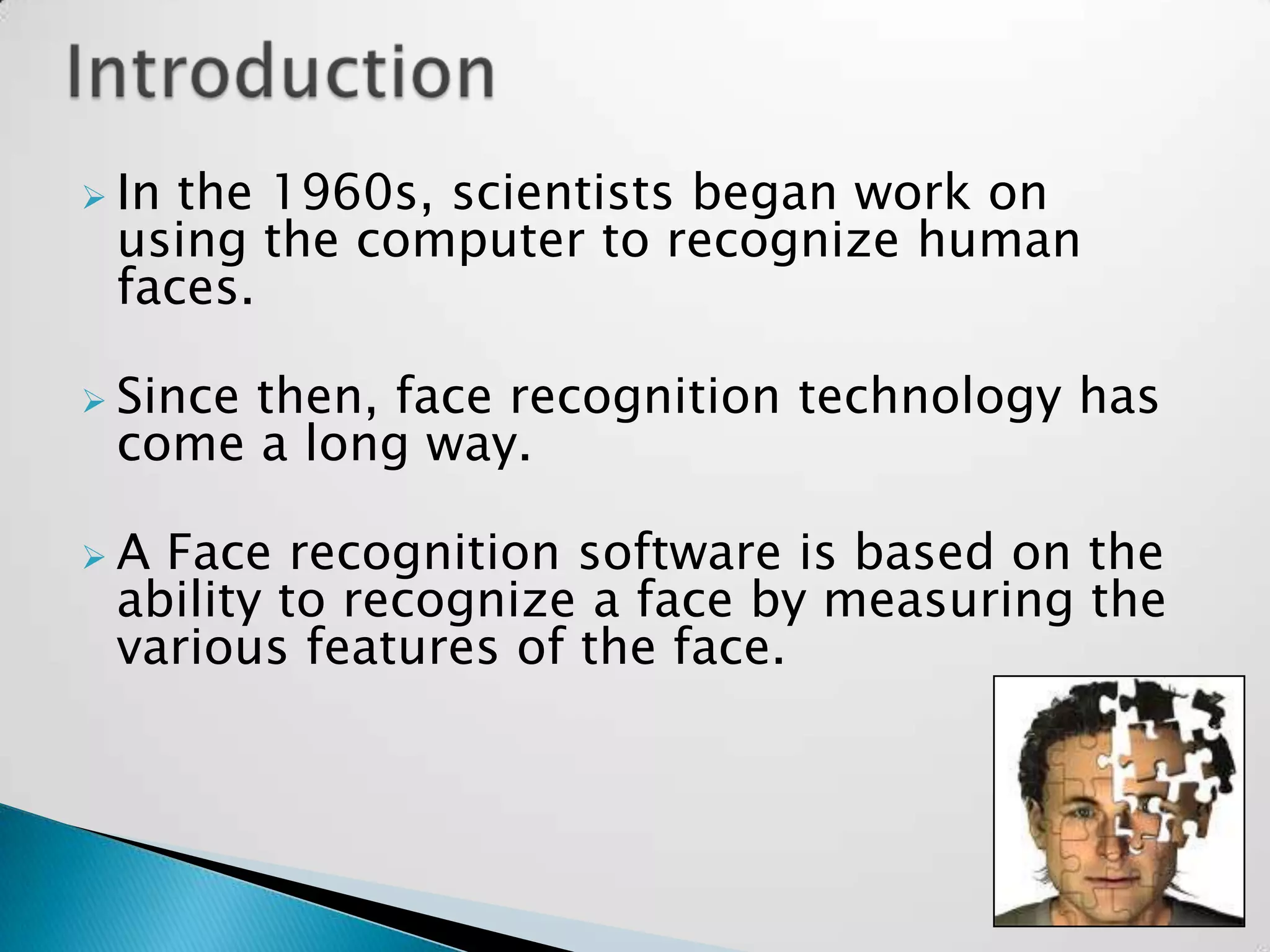
 Inthe 1960s, scientists began work on
 using the computer to recognize human
 faces.

 Since
      then, face recognition technology has
 come a long way.

A Face recognition software is based on the
 ability to recognize a face by measuring the
 various features of the face.
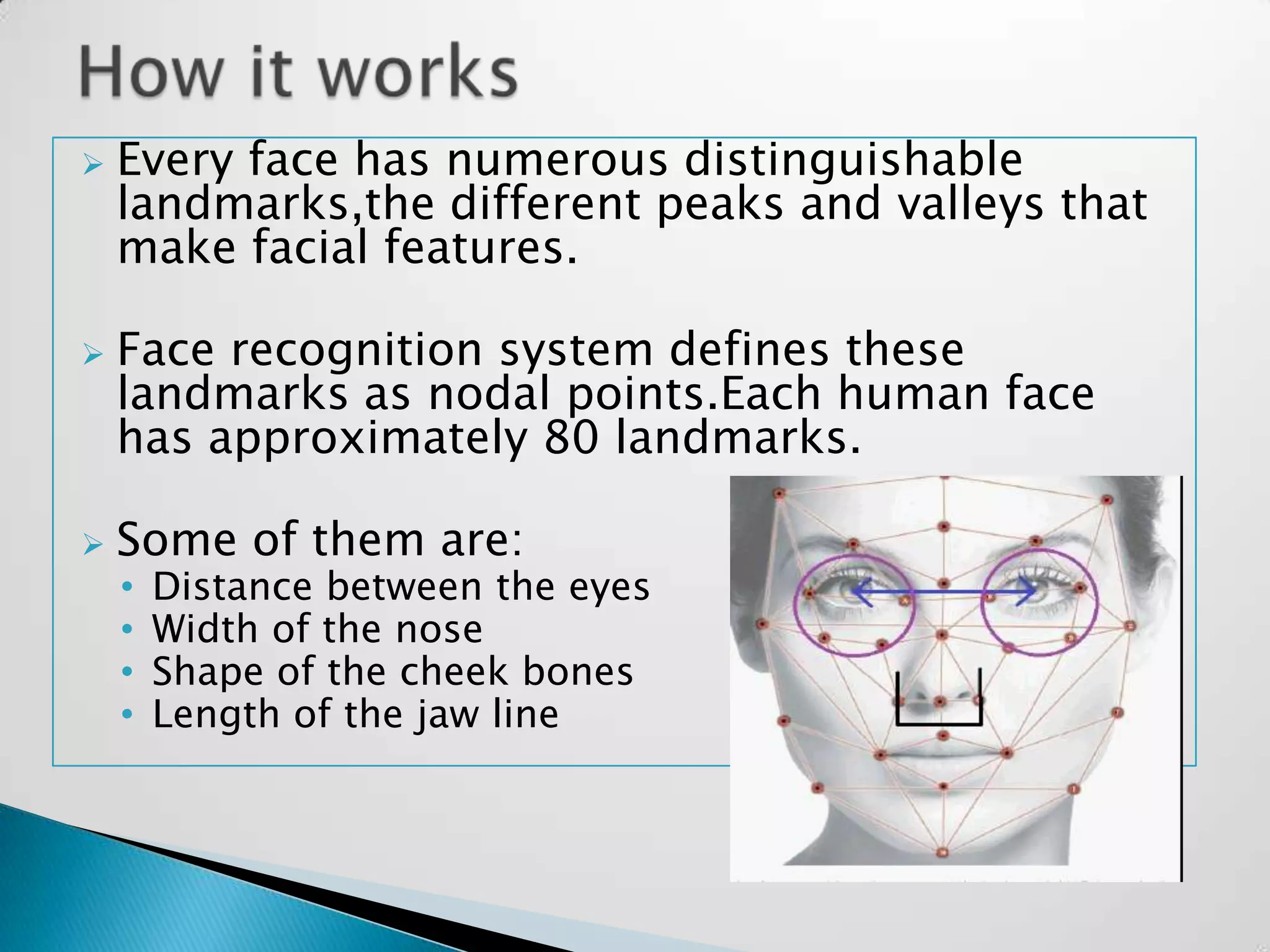
   Every face has numerous distinguishable
    landmarks,the different peaks and valleys that
    make facial features.

   Face recognition system defines these
    landmarks as nodal points.Each human face
    has approximately 80 landmarks.

   Some of them are:
    •   Distance between the eyes
    •   Width of the nose
    •   Shape of the cheek bones
    •   Length of the jaw line
   2D Face Recognition


   3D Face Recognition
   In past,face recognition system relied on
    comparing 2D images with another 2D
    images in data base.

   Person should be looking towards the
    camera.

   Even the slight variance in light or smile of a
    person creates the problem.

   This makes the system less effective.
   Capturing the real time images of the person.

   Uses distinctive features of face.

   Can be used in darkness.

   Has the ability to recognize the person
    through different angles.
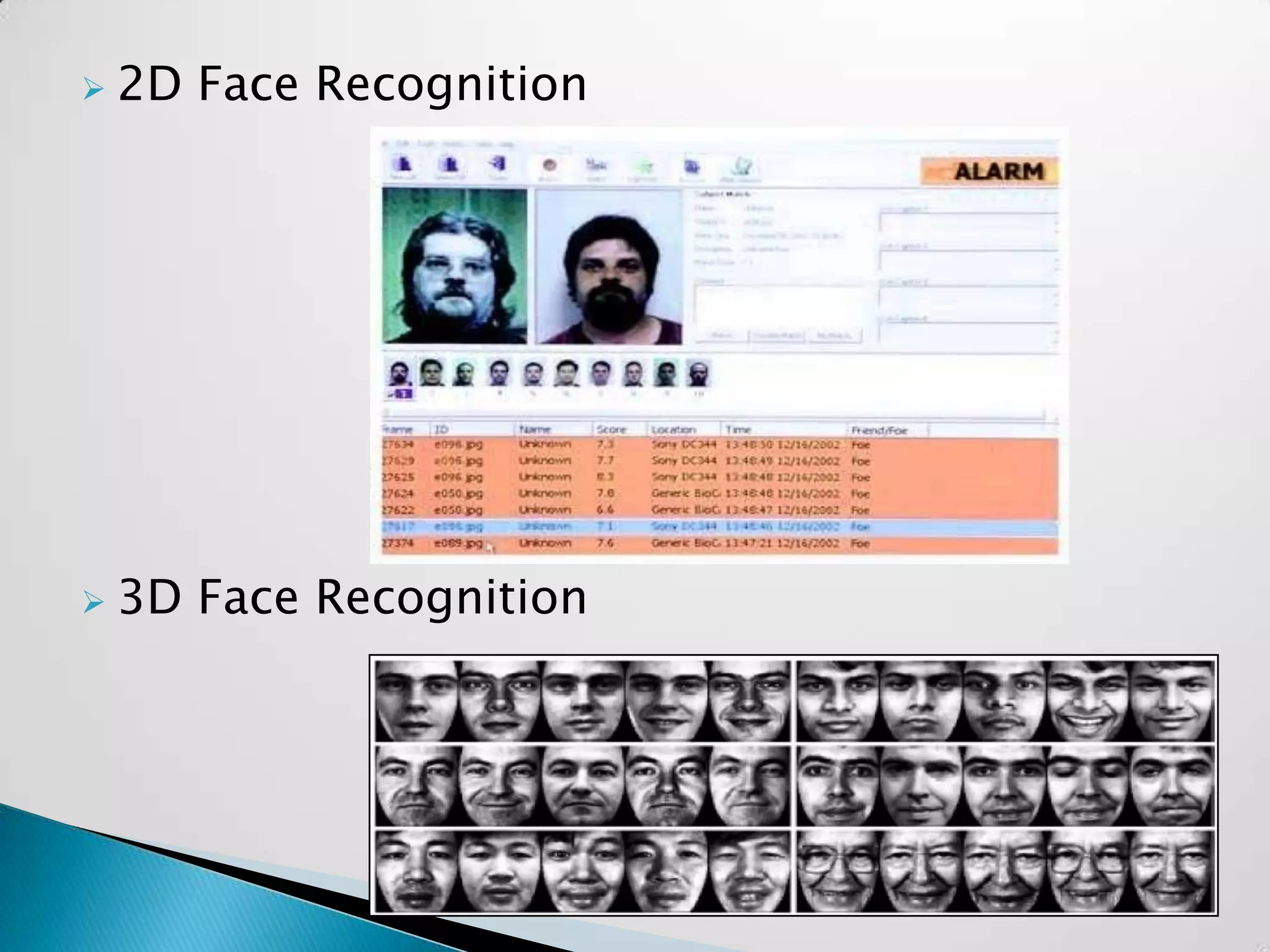
   2D Face Recognition


   3D Face Recognition
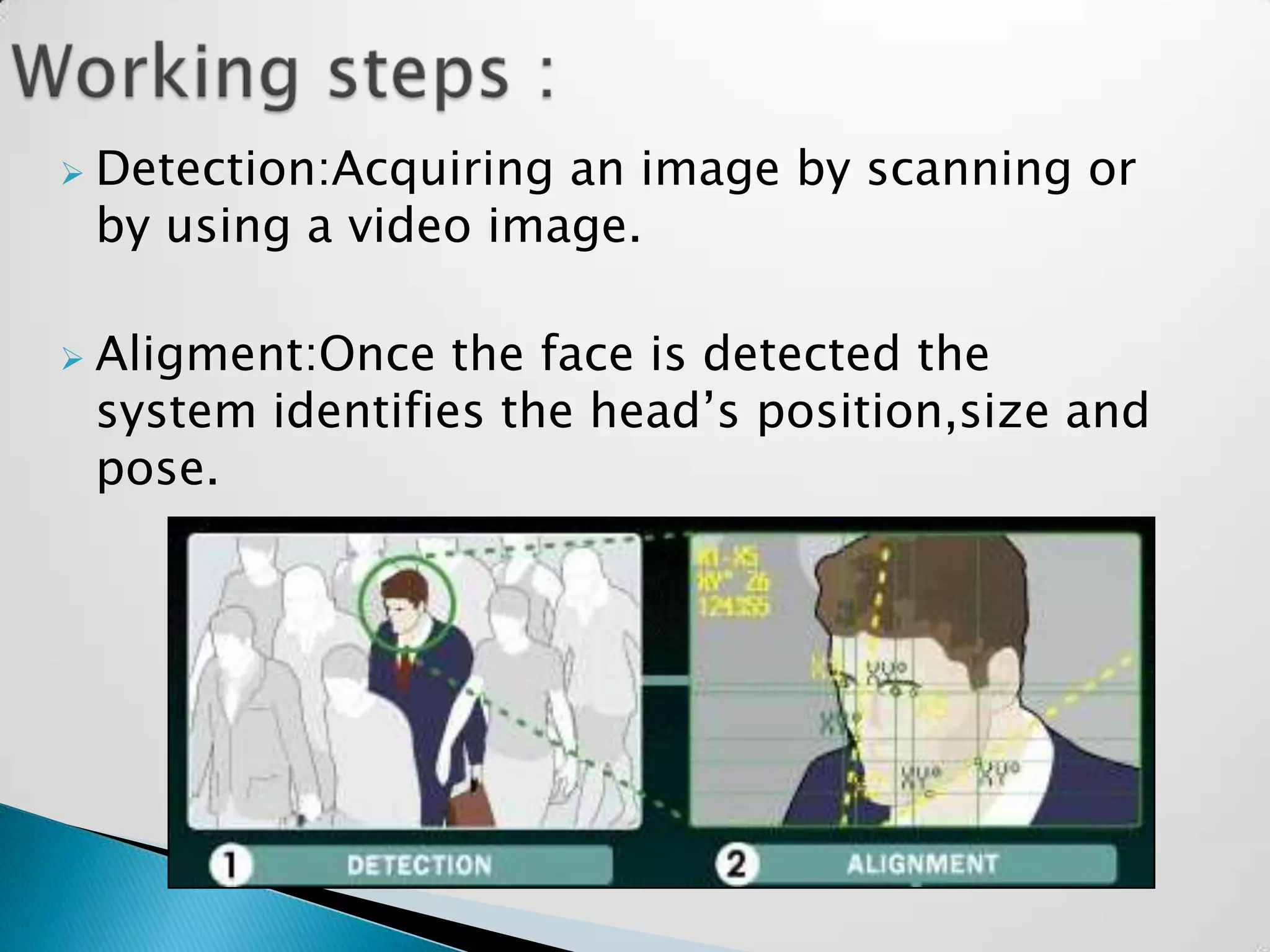
   Detection:Acquiring an image by scanning or
    by using a video image.

   Aligment:Once the face is detected the
    system identifies the head’s position,size and
    pose.
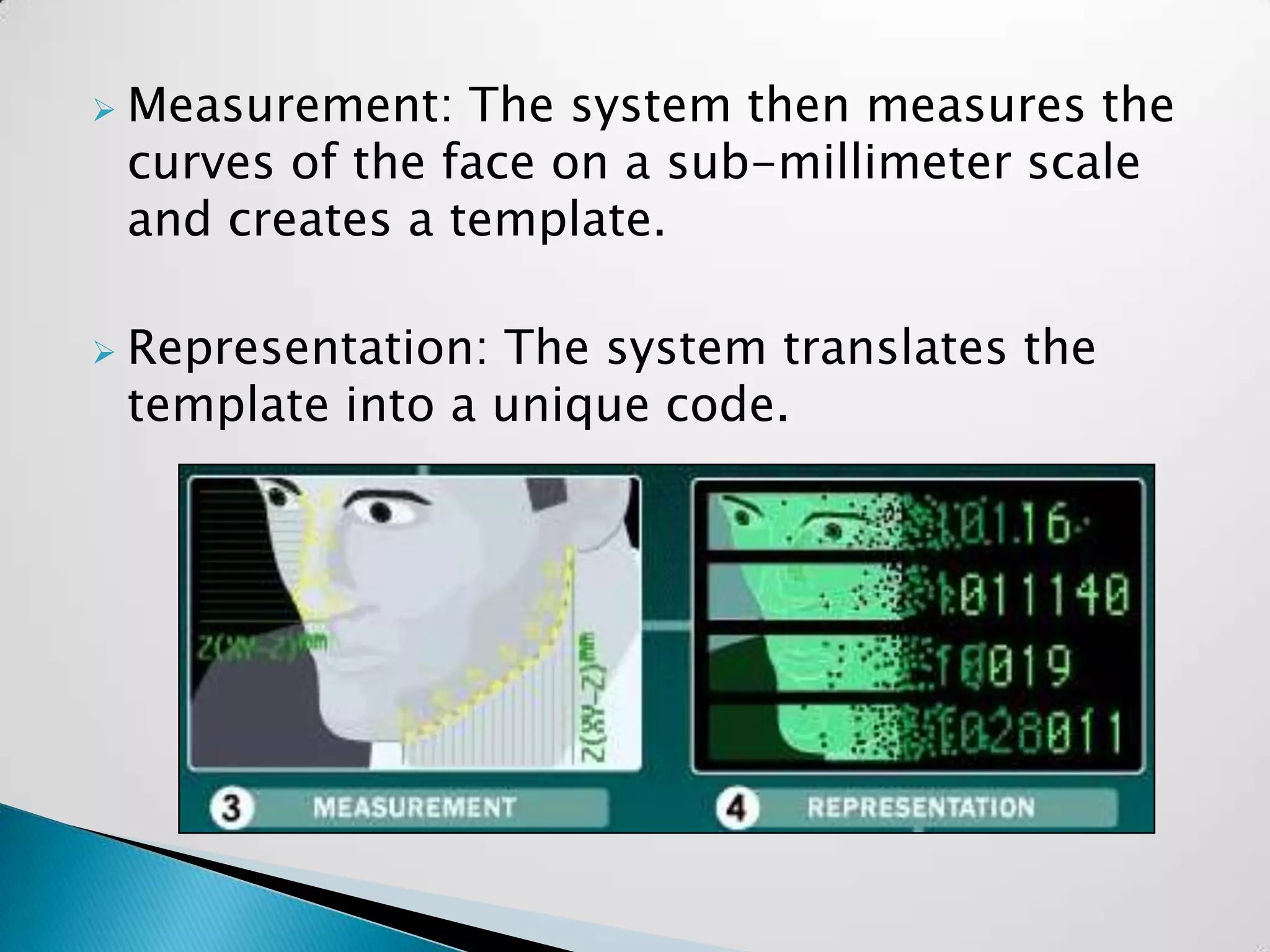
   Measurement: The system then measures the
    curves of the face on a sub-millimeter scale
    and creates a template.

   Representation: The system translates the
    template into a unique code.
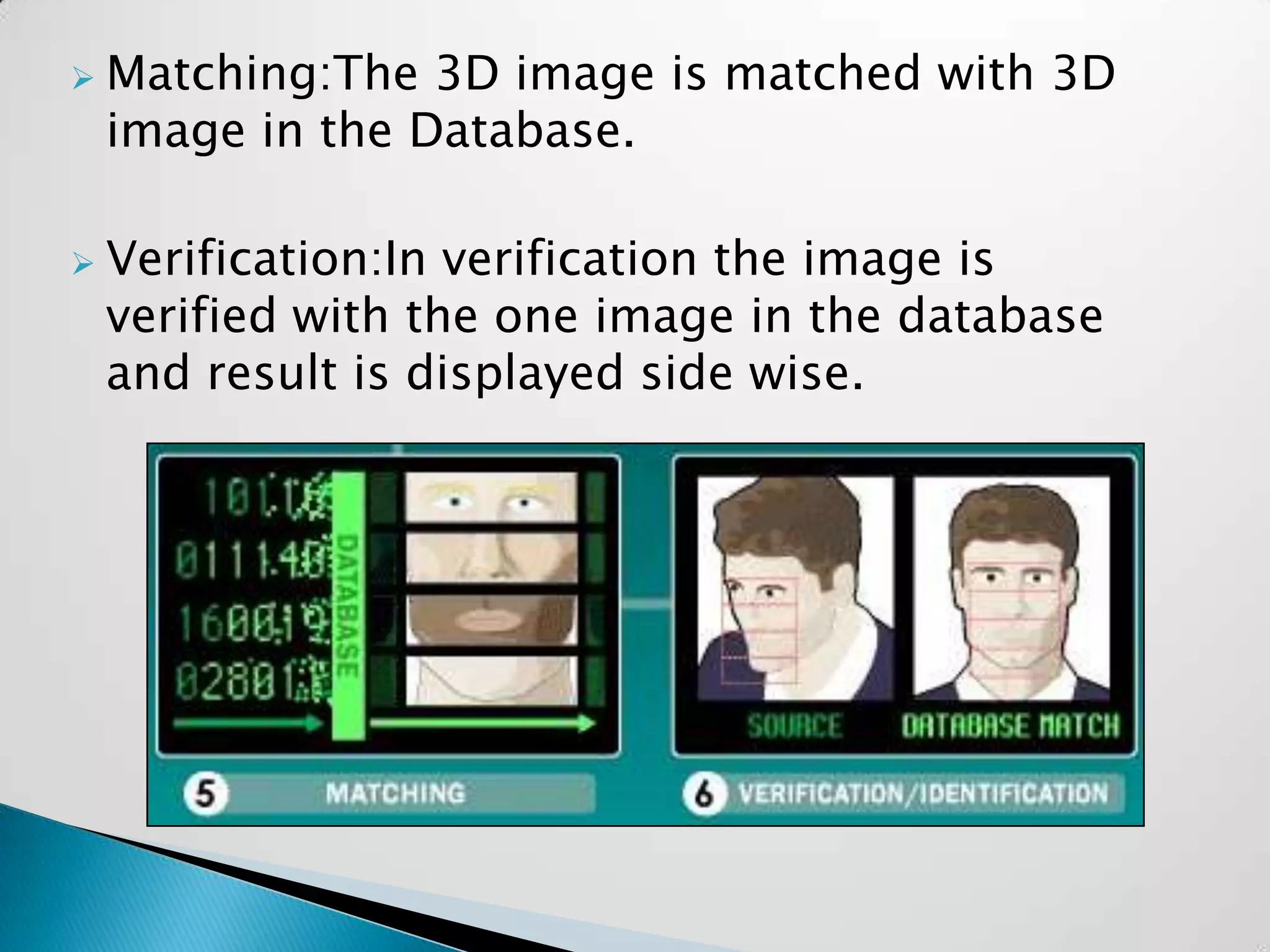
   Matching:The 3D image is matched with 3D
    image in the Database.

   Verification:In verification the image is
    verified with the one image in the database
    and result is displayed side wise.
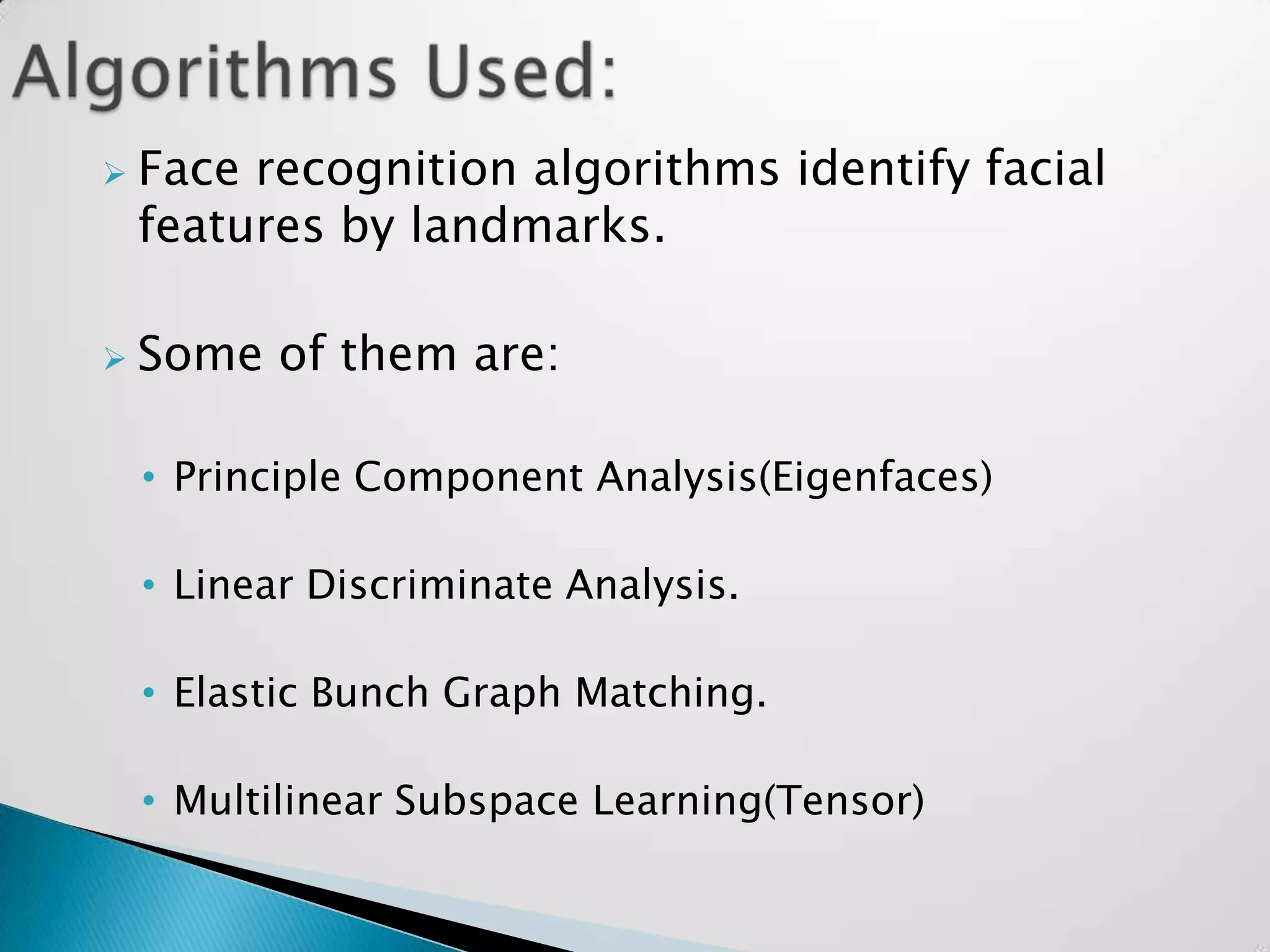
   Face recognition algorithms identify facial
    features by landmarks.

   Some of them are:

    • Principle Component Analysis(Eigenfaces)

    • Linear Discriminate Analysis.

    • Elastic Bunch Graph Matching.

    • Multilinear Subspace Learning(Tensor)
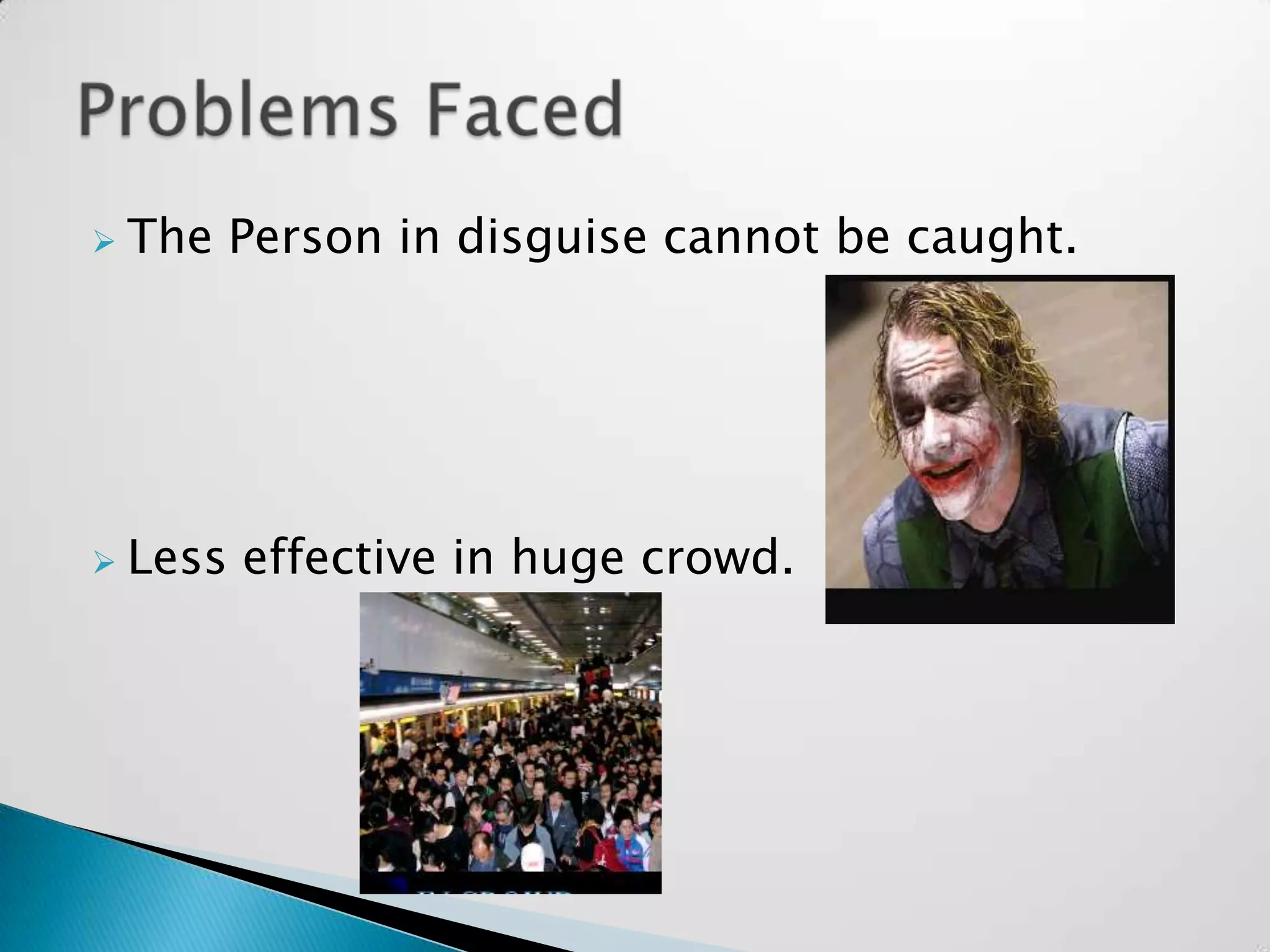
   The Person in disguise cannot be caught.


   Less effective in huge crowd.
   Technology is used by Law Enforcement
    Agencies.

   Can be used in Banking for identification.


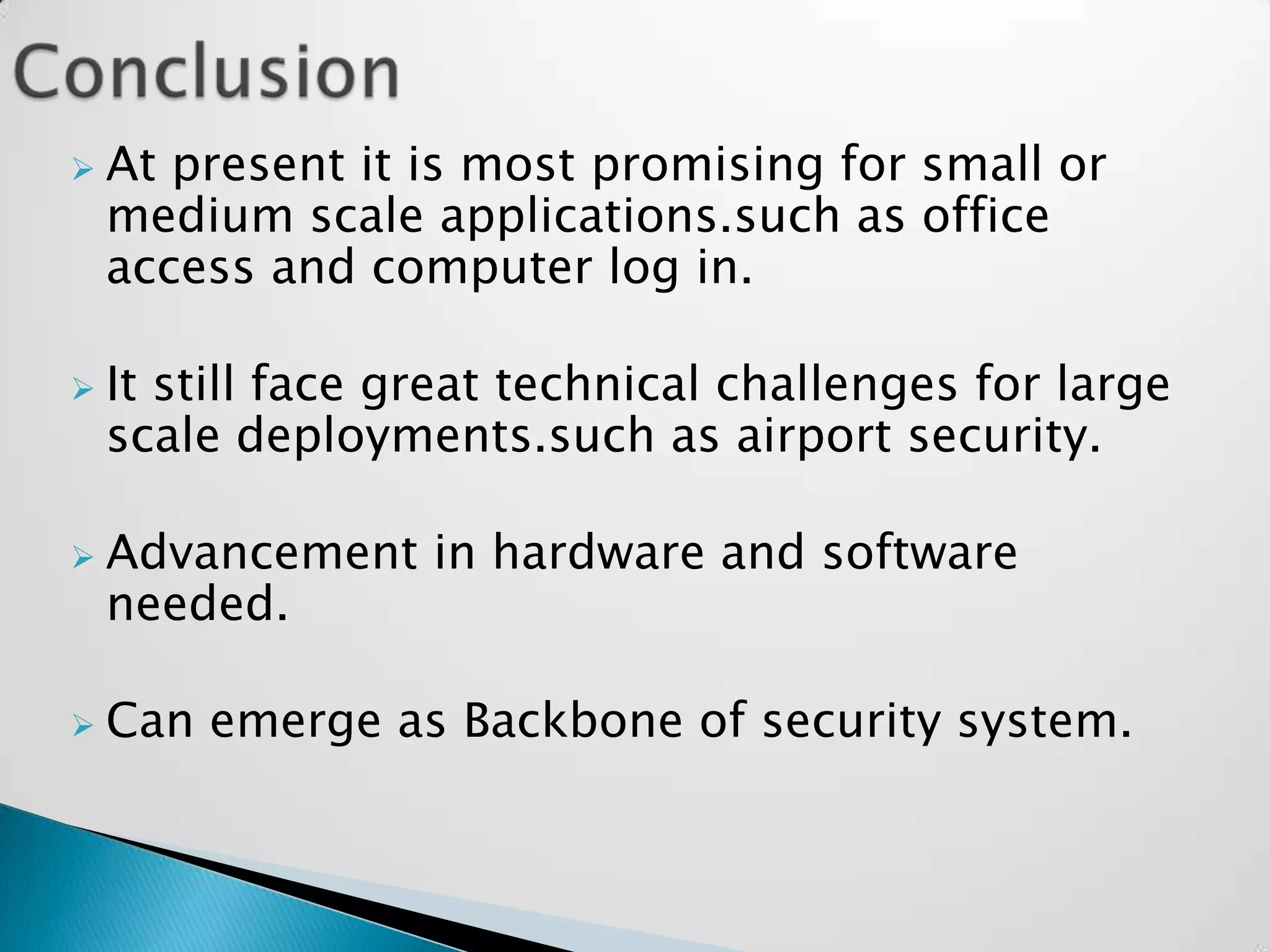
   Can be used on airport for security purpose.
   At present it is most promising for small or
    medium scale applications.such as office
    access and computer log in.

   It still face great technical challenges for large
    scale deployments.such as airport security.

   Advancement in hardware and software
    needed.

   Can emerge as Backbone of security system.
Face recognition
Face recognition

Face recognition

  • 1.
    Presentation by: Sandeep Sharma CSE
  • 2.
     Introduction  Typesof face recognition  How it works  Working steps  Algorithms used  Problems faced  Future uses  Conclusion
  • 3.
     Inthe 1960s,scientists began work on using the computer to recognize human faces.  Since then, face recognition technology has come a long way. A Face recognition software is based on the ability to recognize a face by measuring the various features of the face.
  • 4.
    Every face has numerous distinguishable landmarks,the different peaks and valleys that make facial features.  Face recognition system defines these landmarks as nodal points.Each human face has approximately 80 landmarks.  Some of them are: • Distance between the eyes • Width of the nose • Shape of the cheek bones • Length of the jaw line
  • 5.
    2D Face Recognition  3D Face Recognition
  • 6.
    In past,face recognition system relied on comparing 2D images with another 2D images in data base.  Person should be looking towards the camera.  Even the slight variance in light or smile of a person creates the problem.  This makes the system less effective.
  • 7.
    Capturing the real time images of the person.  Uses distinctive features of face.  Can be used in darkness.  Has the ability to recognize the person through different angles.
  • 8.
    2D Face Recognition  3D Face Recognition
  • 9.
    Detection:Acquiring an image by scanning or by using a video image.  Aligment:Once the face is detected the system identifies the head’s position,size and pose.
  • 10.
    Measurement: The system then measures the curves of the face on a sub-millimeter scale and creates a template.  Representation: The system translates the template into a unique code.
  • 11.
    Matching:The 3D image is matched with 3D image in the Database.  Verification:In verification the image is verified with the one image in the database and result is displayed side wise.
  • 12.
    Face recognition algorithms identify facial features by landmarks.  Some of them are: • Principle Component Analysis(Eigenfaces) • Linear Discriminate Analysis. • Elastic Bunch Graph Matching. • Multilinear Subspace Learning(Tensor)
  • 13.
    The Person in disguise cannot be caught.  Less effective in huge crowd.
  • 14.
    Technology is used by Law Enforcement Agencies.  Can be used in Banking for identification.  Can be used on airport for security purpose.
  • 15.
    At present it is most promising for small or medium scale applications.such as office access and computer log in.  It still face great technical challenges for large scale deployments.such as airport security.  Advancement in hardware and software needed.  Can emerge as Backbone of security system.