Face Recognition
Under the Supervision of
Md. Shakir khan
Supervisor
Md. Nazmus Sadat
Co-supervisor
Group Members
Morshada AhkterMd. Atiqur Rahman Nurun Nahar Nisha
Outline
 Biometrics
 Why we choose face recognition over other biometric
 Applications of face recognition
 Face recognition
 Working process
 Our current working progress
 Advantages & limitations
 Future work
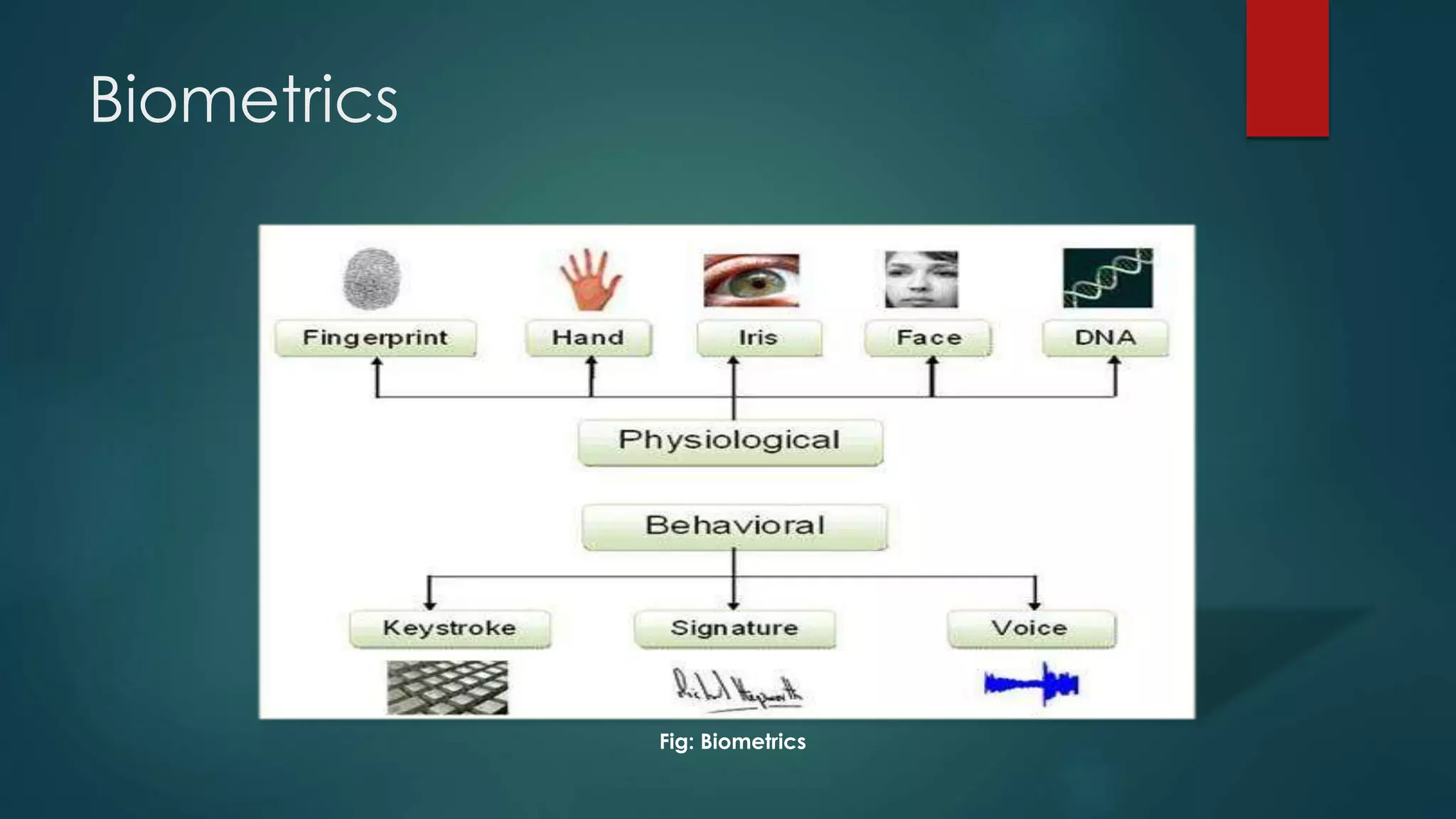
Biometrics
Fig: Biometrics
Why we choose face recognition
over other biometric
 It requires no physical interaction on behalf of the user.
 It is accurate and allows for high enrolment and verification rates.
 It does not require an expert to interpret the comparison result.
 It can use our existing hardware infrastructure, existing cameras and
image capture Devices will work with no problems
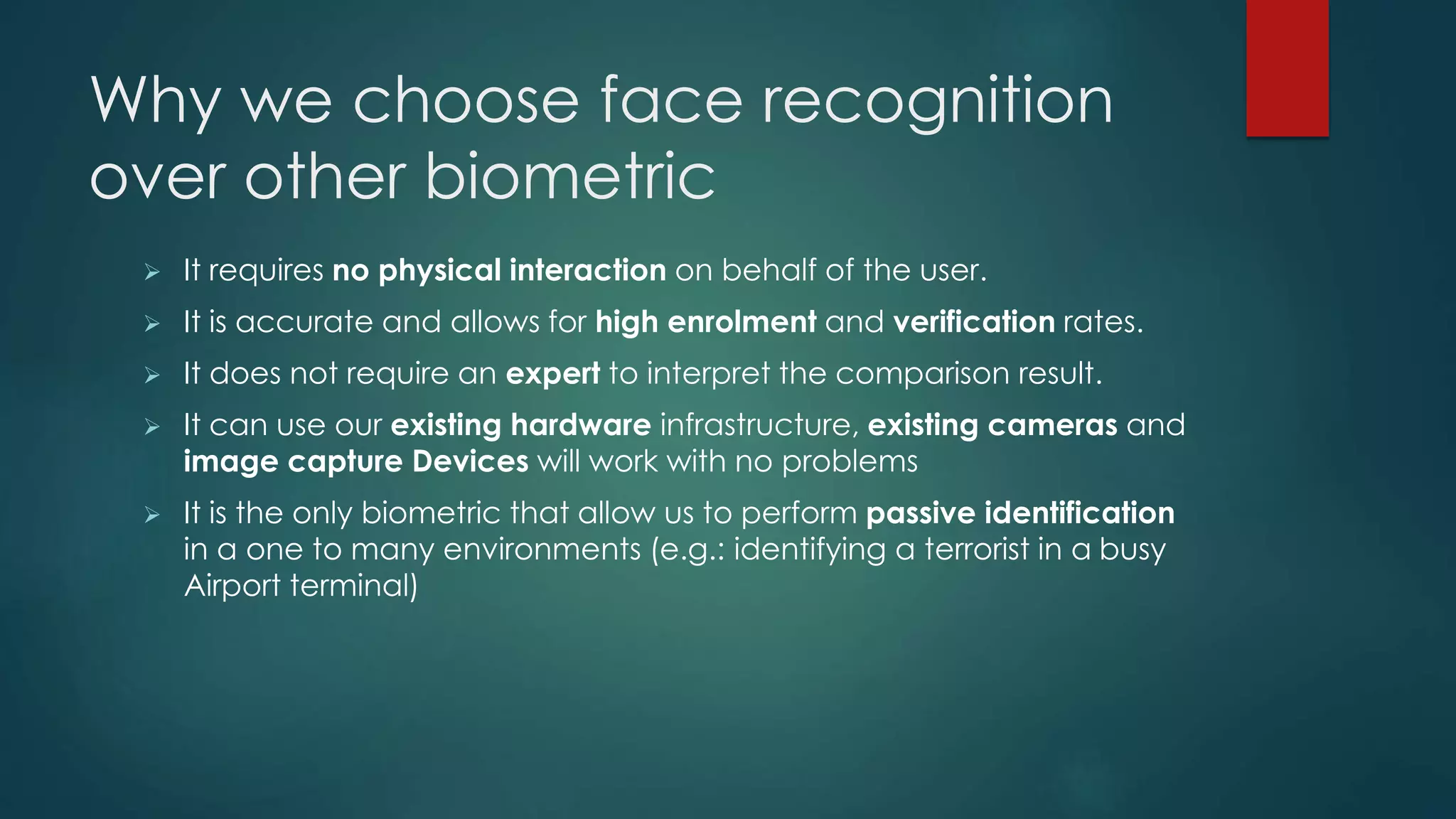
 It is the only biometric that allow us to perform passive identification
in a one to many environments (e.g.: identifying a terrorist in a busy
Airport terminal)
Applications
Fig: Law Enforcement Fig: Security/Counterterrorism Fig: Immigration
Applications
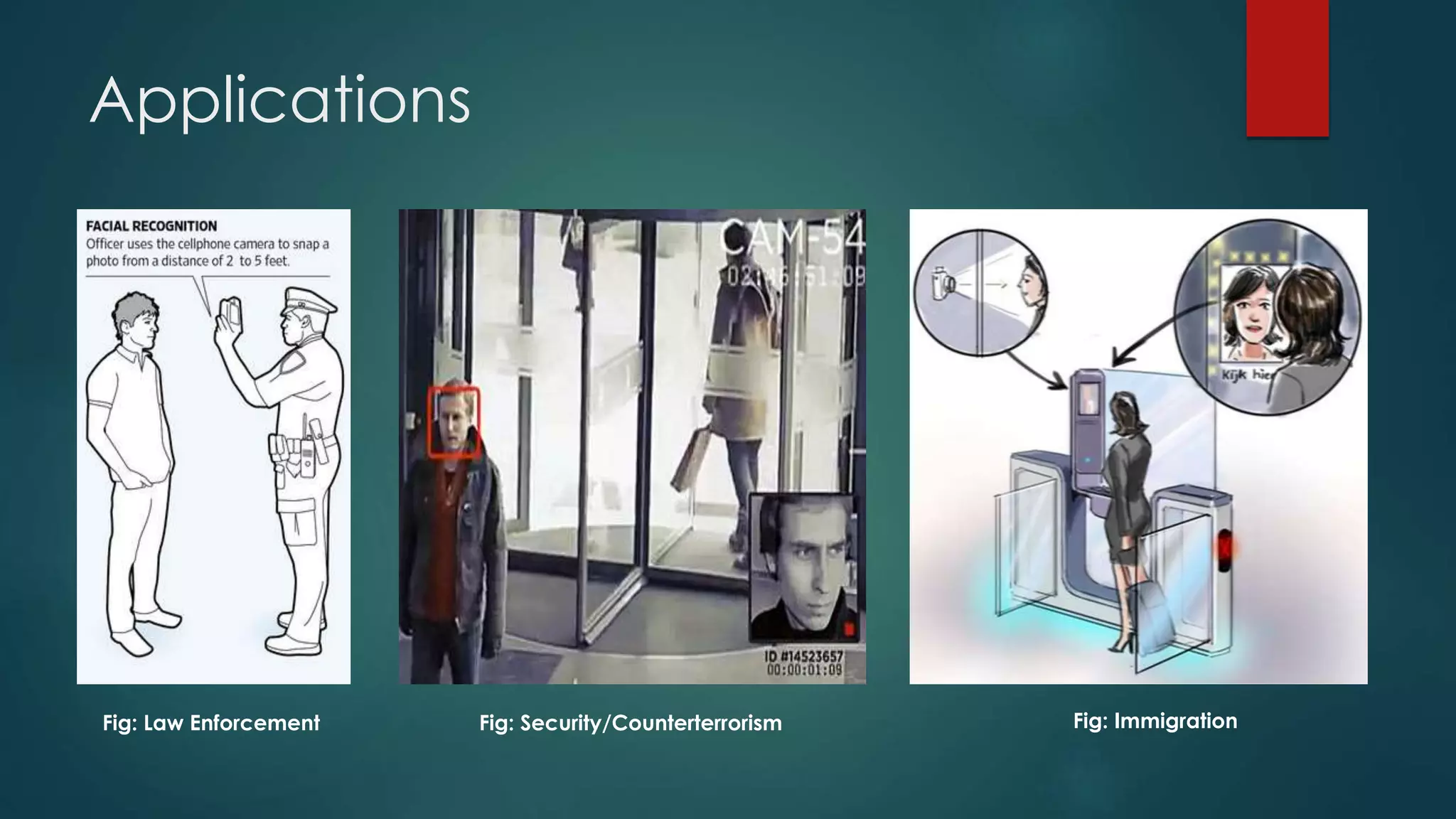
Fig: Residential Security Fig: Banking using ATM Fig: Mobile unlocking
Face Recognition
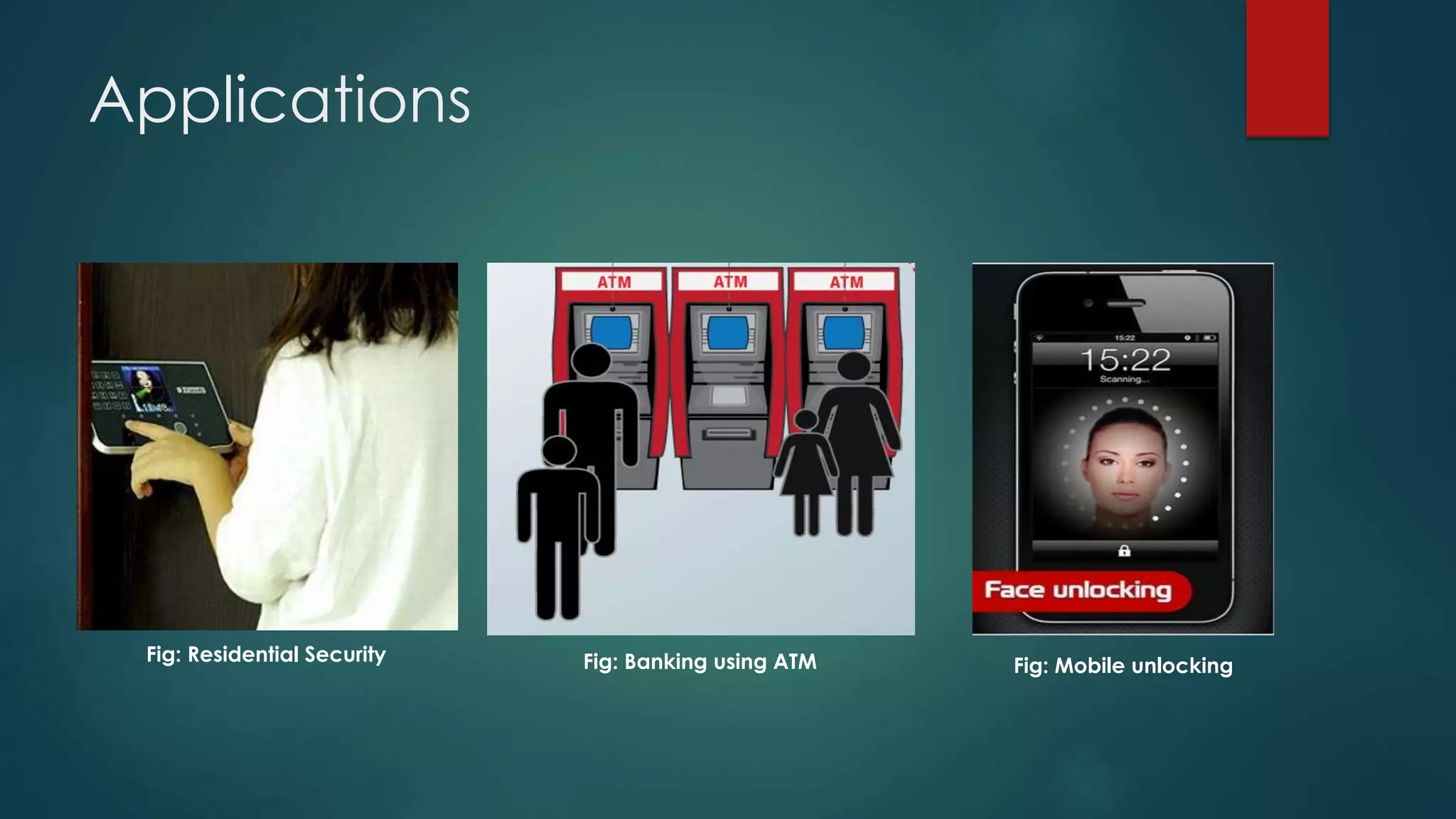
Fig: Verification Fig: Identification
Advantages & Limitation
 Advantages:
 Its convenience and Social acceptability. all we need is our picture taken for it to
work.
 Face recognition is easy to use and in many cases it can be performed without a
Person even knowing.
 Face recognition is also one of the most inexpensive biometric in the market and Its
price should continue to go down.
 Limitation:
 Face recognition systems can’t tell the difference between identical twins.
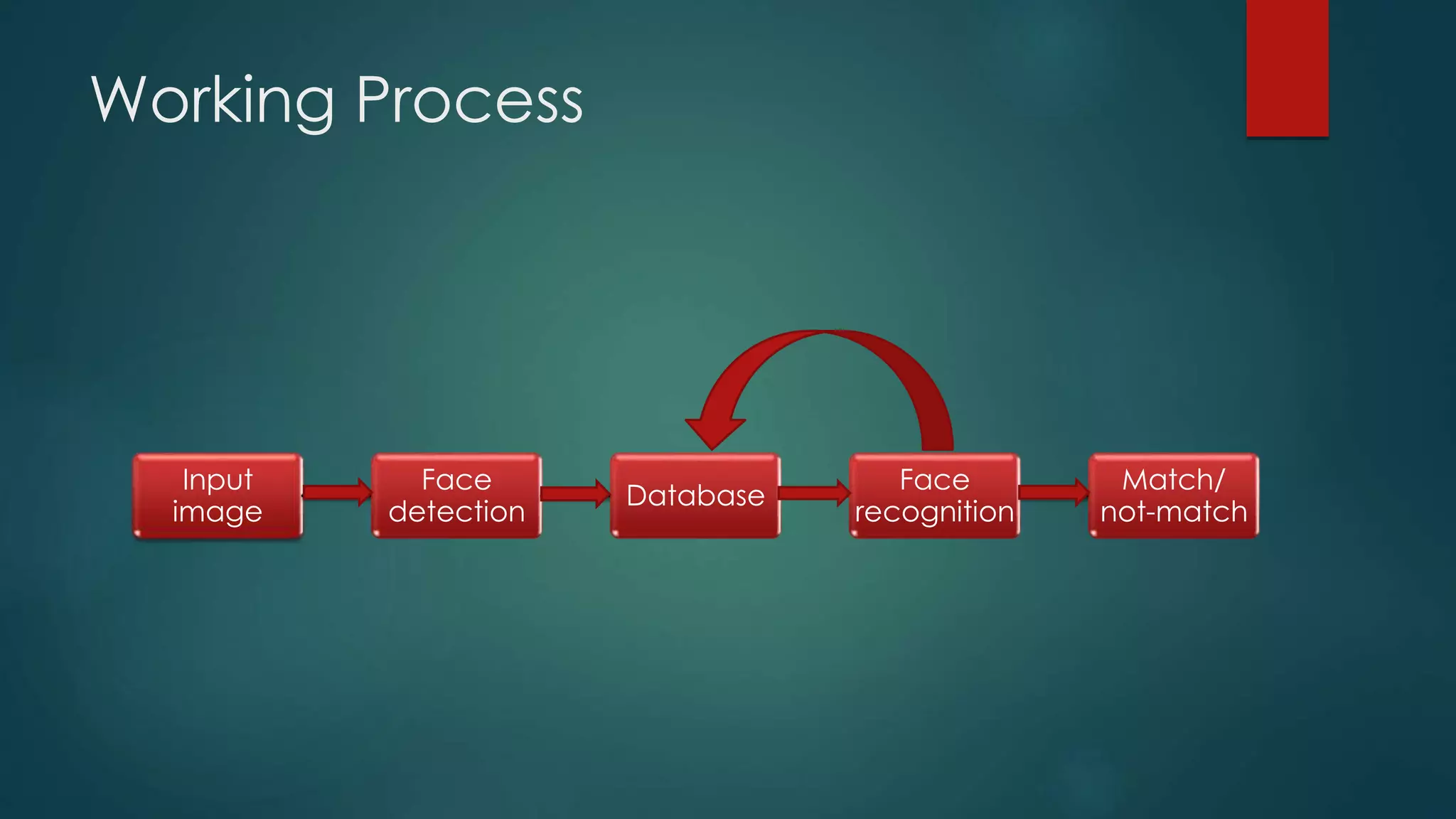
Working Process
Input
image
Face
detection
Database
Face
recognition
Match/
not-match
Required Elements
 Using software
 MATLAB 8.1 (R2013a)
 Hardware
 USB PC Camera-168
 Required products
 Image Acquisition Toolbox
 Image Processing Toolbox
 Computer Vision System Toolbox
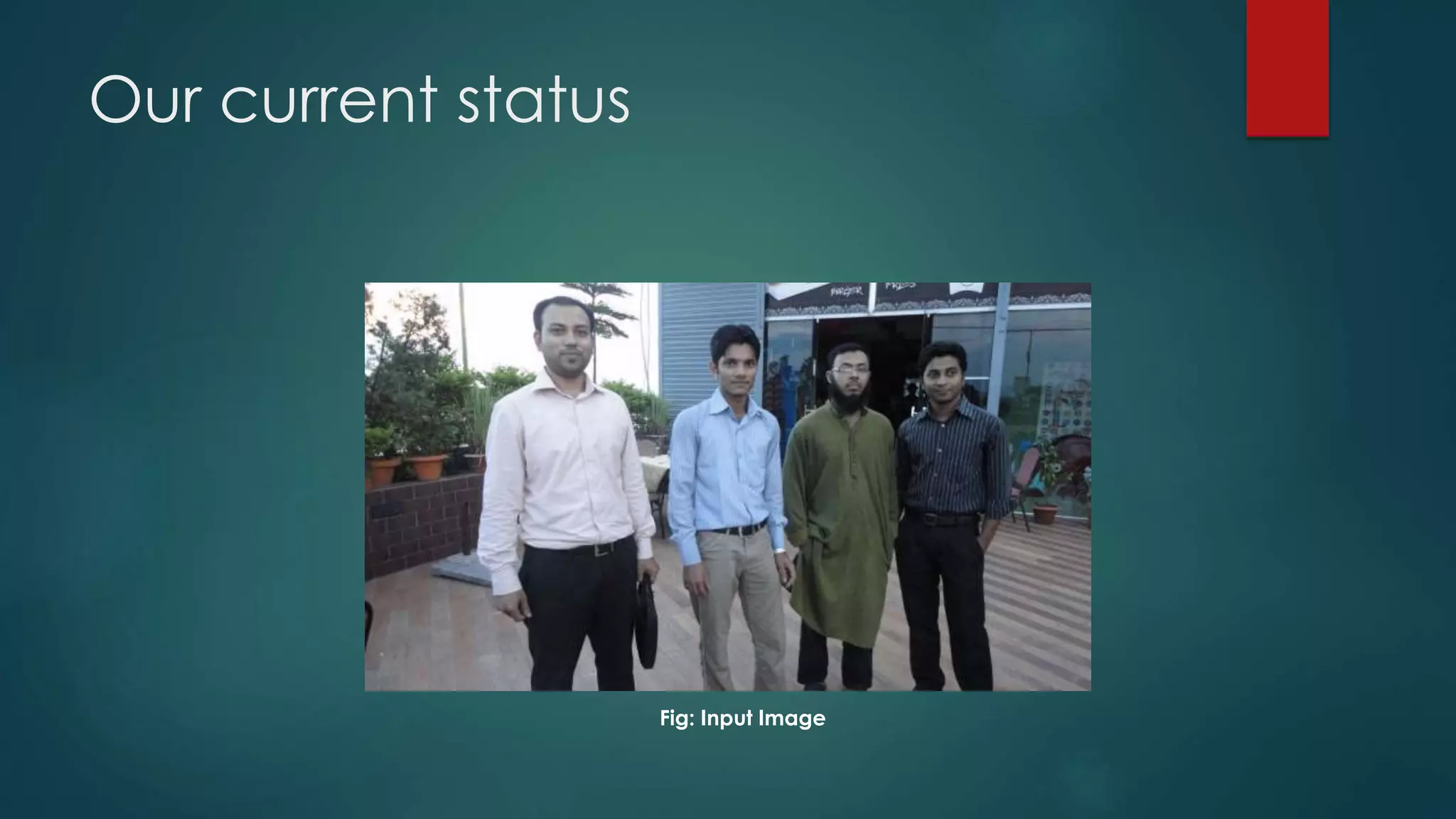
Our current status
Fig: Input Image
Face Detection
 Algorithm used:
 viola-jones algorithm (CascadeObjectDetector)
 Working parameters:
 detect FrontalFaceCART, LeftEye, RightEye, Mouth, and Nose simultaneously
 Toolbox
 Image Processing Toolbox
 Computer Vision System Toolbox
 Main functions:
 detectFaceParts: Detects frontal faces with parts.
 detectRotFaceParts: Detects faces with parts rotating an input image
 Advantage:
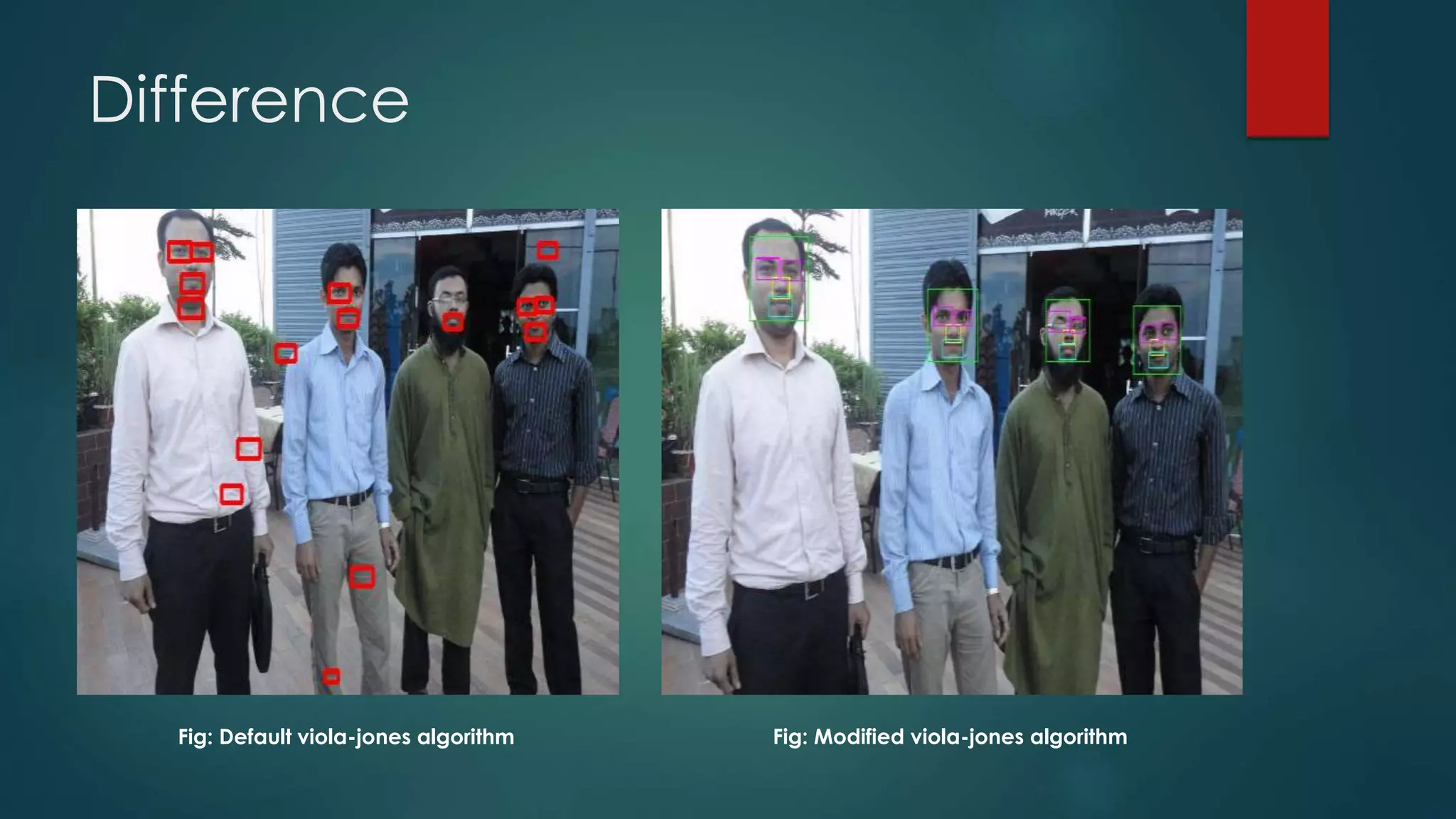
 The performance is improved compared to the default usage of the face
detection
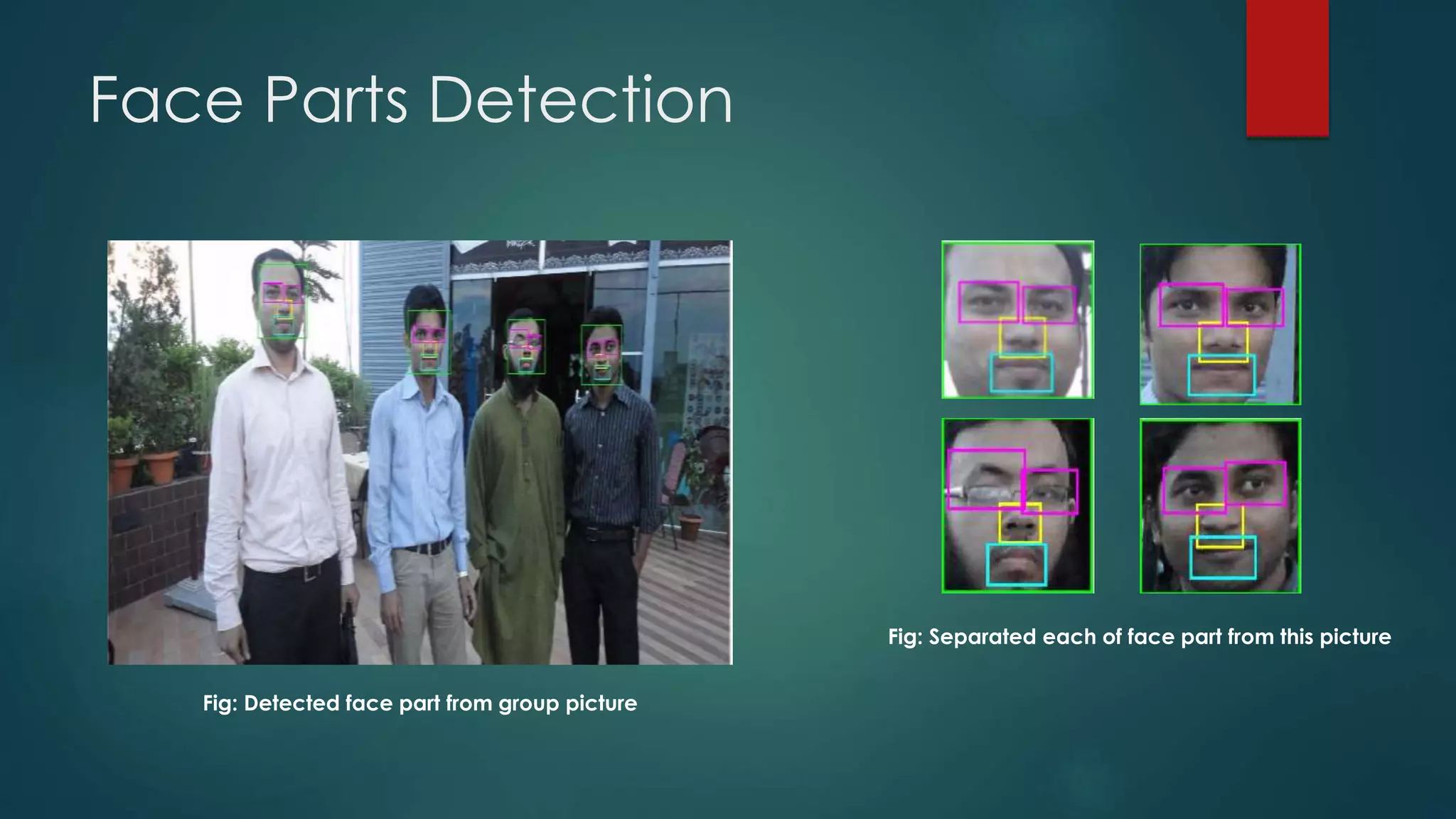
Face Parts Detection
Fig: Detected face part from group picture
Fig: Separated each of face part from this picture
Difference
Fig: Default viola-jones algorithm Fig: Modified viola-jones algorithm
Our Future work
 After detection part we will match the detected image with a test
image.
 We are also working to create a database for our input images.
 Then we do the Recognition Part
Thank you

Face Recognition Proposal Presentation

  • 1.
  • 2.
    Under the Supervisionof Md. Shakir khan Supervisor Md. Nazmus Sadat Co-supervisor
  • 3.
    Group Members Morshada AhkterMd.Atiqur Rahman Nurun Nahar Nisha
  • 4.
    Outline  Biometrics  Whywe choose face recognition over other biometric  Applications of face recognition  Face recognition  Working process  Our current working progress  Advantages & limitations  Future work
  • 5.
  • 6.
    Why we chooseface recognition over other biometric  It requires no physical interaction on behalf of the user.  It is accurate and allows for high enrolment and verification rates.  It does not require an expert to interpret the comparison result.  It can use our existing hardware infrastructure, existing cameras and image capture Devices will work with no problems  It is the only biometric that allow us to perform passive identification in a one to many environments (e.g.: identifying a terrorist in a busy Airport terminal)
  • 7.
    Applications Fig: Law EnforcementFig: Security/Counterterrorism Fig: Immigration
  • 8.
    Applications Fig: Residential SecurityFig: Banking using ATM Fig: Mobile unlocking
  • 9.
  • 10.
    Advantages & Limitation Advantages:  Its convenience and Social acceptability. all we need is our picture taken for it to work.  Face recognition is easy to use and in many cases it can be performed without a Person even knowing.  Face recognition is also one of the most inexpensive biometric in the market and Its price should continue to go down.  Limitation:  Face recognition systems can’t tell the difference between identical twins.
  • 11.
  • 12.
    Required Elements  Usingsoftware  MATLAB 8.1 (R2013a)  Hardware  USB PC Camera-168  Required products  Image Acquisition Toolbox  Image Processing Toolbox  Computer Vision System Toolbox
  • 13.
  • 14.
    Face Detection  Algorithmused:  viola-jones algorithm (CascadeObjectDetector)  Working parameters:  detect FrontalFaceCART, LeftEye, RightEye, Mouth, and Nose simultaneously  Toolbox  Image Processing Toolbox  Computer Vision System Toolbox  Main functions:  detectFaceParts: Detects frontal faces with parts.  detectRotFaceParts: Detects faces with parts rotating an input image  Advantage:  The performance is improved compared to the default usage of the face detection
  • 15.
    Face Parts Detection Fig:Detected face part from group picture Fig: Separated each of face part from this picture
  • 16.
    Difference Fig: Default viola-jonesalgorithm Fig: Modified viola-jones algorithm
  • 17.
    Our Future work After detection part we will match the detected image with a test image.  We are also working to create a database for our input images.  Then we do the Recognition Part
  • 18.