Psychoanalytical
             FREUD
Psychoanalytic Approach To Personality

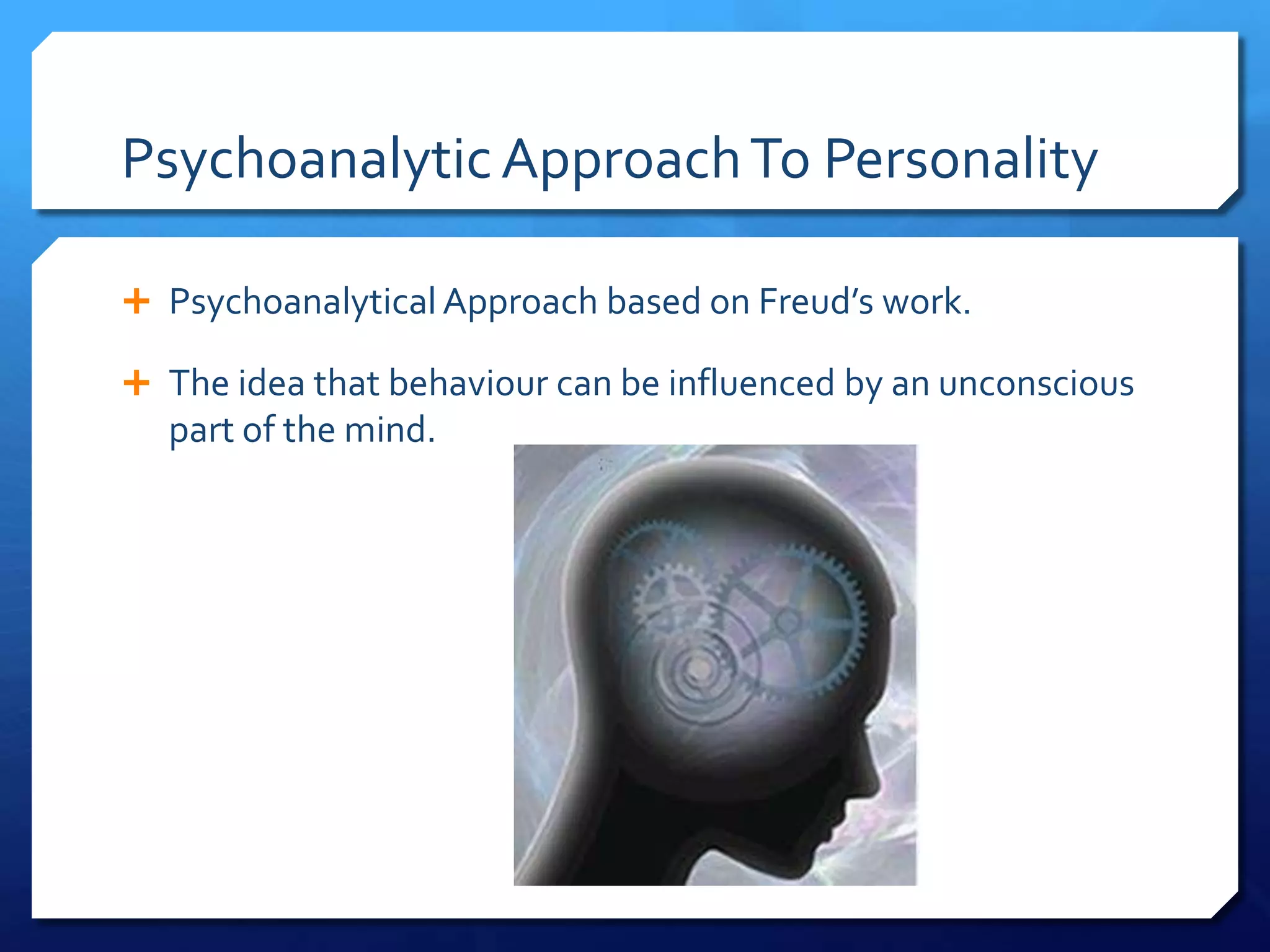
 Psychoanalytical Approach based on Freud’s work.

 The idea that behaviour can be influenced by an unconscious
  part of the mind.
Freudian Theory of Personality

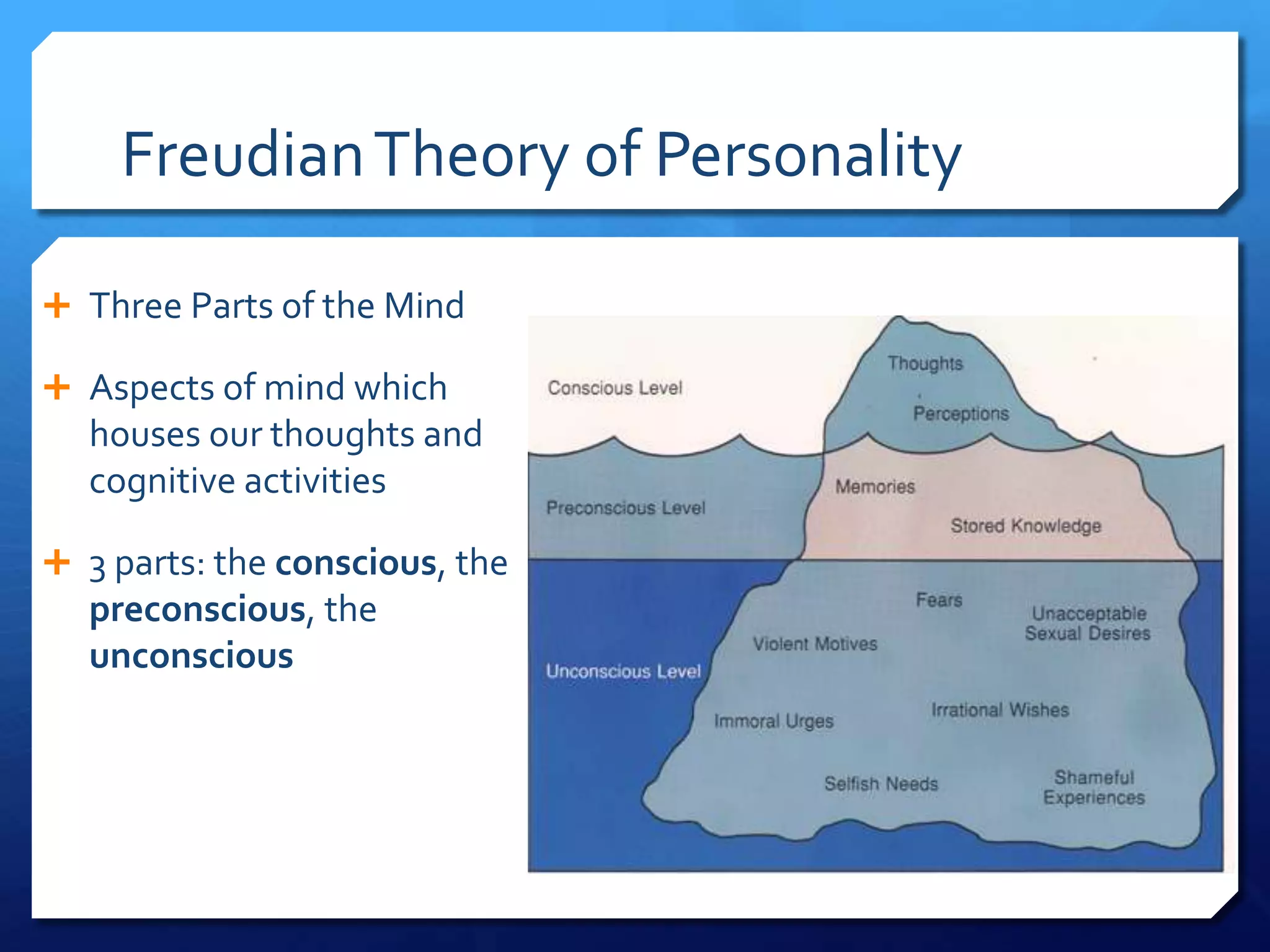
 Three Parts of the Mind

 Aspects of mind which
  houses our thoughts and
  cognitive activities

 3 parts: the conscious, the
  preconscious, the
  unconscious
The Conscious

                 Contains thoughts of
                  which you are currently
                  aware

                 Constantly changing as
                  new thoughts enter the
                  mind and others pass out
                  of awareness
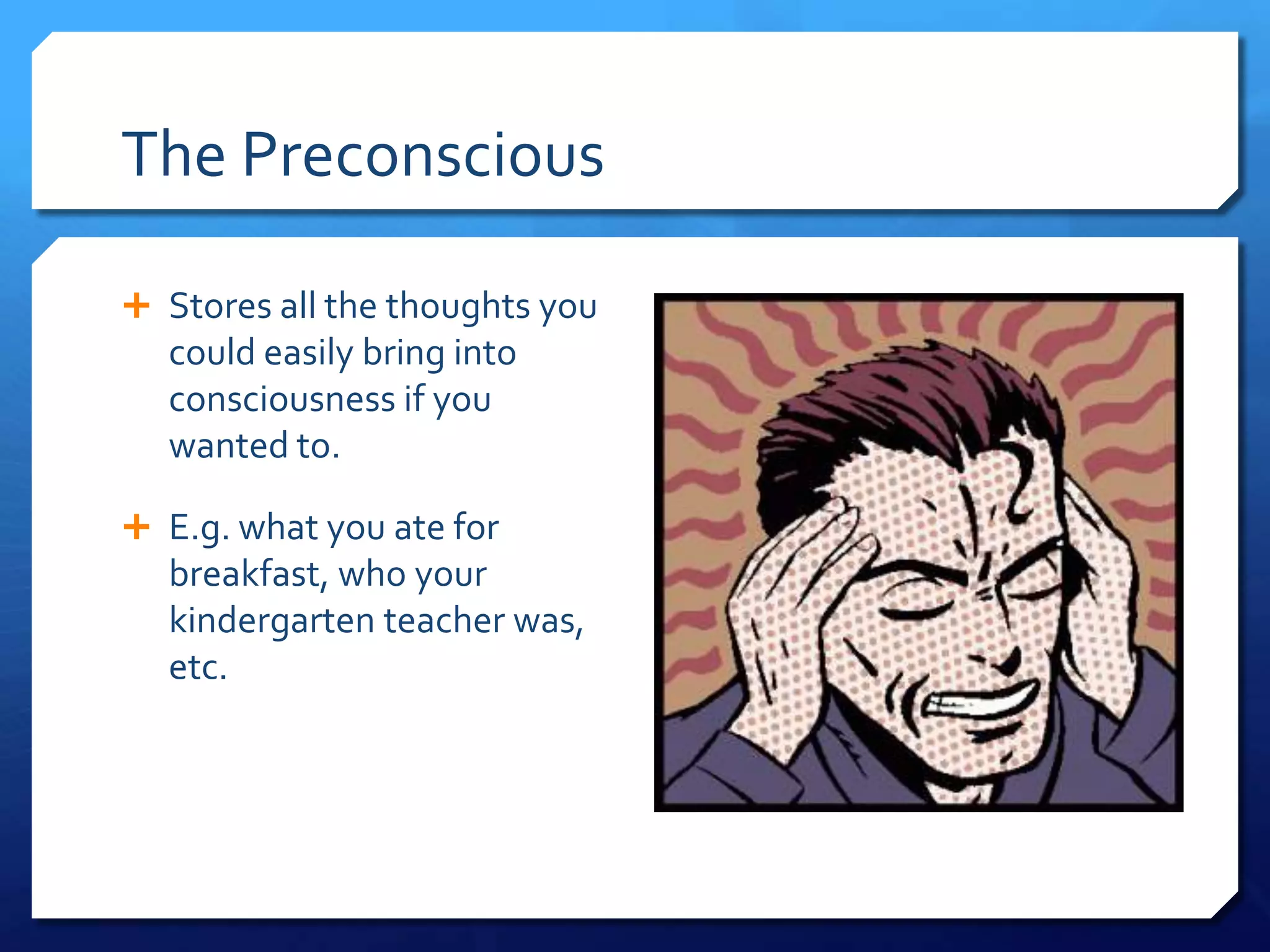
The Preconscious

 Stores all the thoughts you
  could easily bring into
  consciousness if you
  wanted to.

 E.g. what you ate for
  breakfast, who your
  kindergarten teacher was,
  etc.
The Unconscious

                   According to Freud, vast
                    majority of our thoughts
                    are in the unconscious
                   No immediate access to

                   Cannot bring into
                    consciousness except
                    under certain extreme
                    situations.
                   Responsible for much of
                    our everyday behaviour.
Three parts of the Personality

 In Freud’s view, the human personality could be divided into
  three parts:

 Id, ego and superego

 According to Freud, these parts are often not at peace with
  one another
Id
 The one and only part to the human personality AT BIRTH.

 Actions based on pleasure principle – the id is only concerned with
   satisfying personal desires, regardless of limitations or
   consequence.
 These reflexive actions are still present as adults, but held in check
   by other parts of the personality.
 Id uses wish fulfillment to satisfy its needs: if a baby is hungry with
   no food nearby, the id imagines the food and temporarily satisfies
   the need.
 Id impulses are unconscious, therefore we are unaware of all the
   impulses we might wish to act upon.
Ego

 0-2yrs + interaction with environment = ego

 Ego’s actions based on the reality principle – that is, the
   primary job of the ego is to satisfy the id impulse, but in a
   realistic way.

 Keeps unacceptable and dangerous id impulses in the
   unconscious
Superego
 About five years = superego

 Represents society’s and parents’ values and standards

 Places more restrictions on what one can and cannot do.

 Primary weapon – guilt!

 According to Freud, some children fail to fully develop the
   superego due to poor child-rearing practices.
 Can also become too powerful (“supermoral”), with
   impossible standards of perfection.
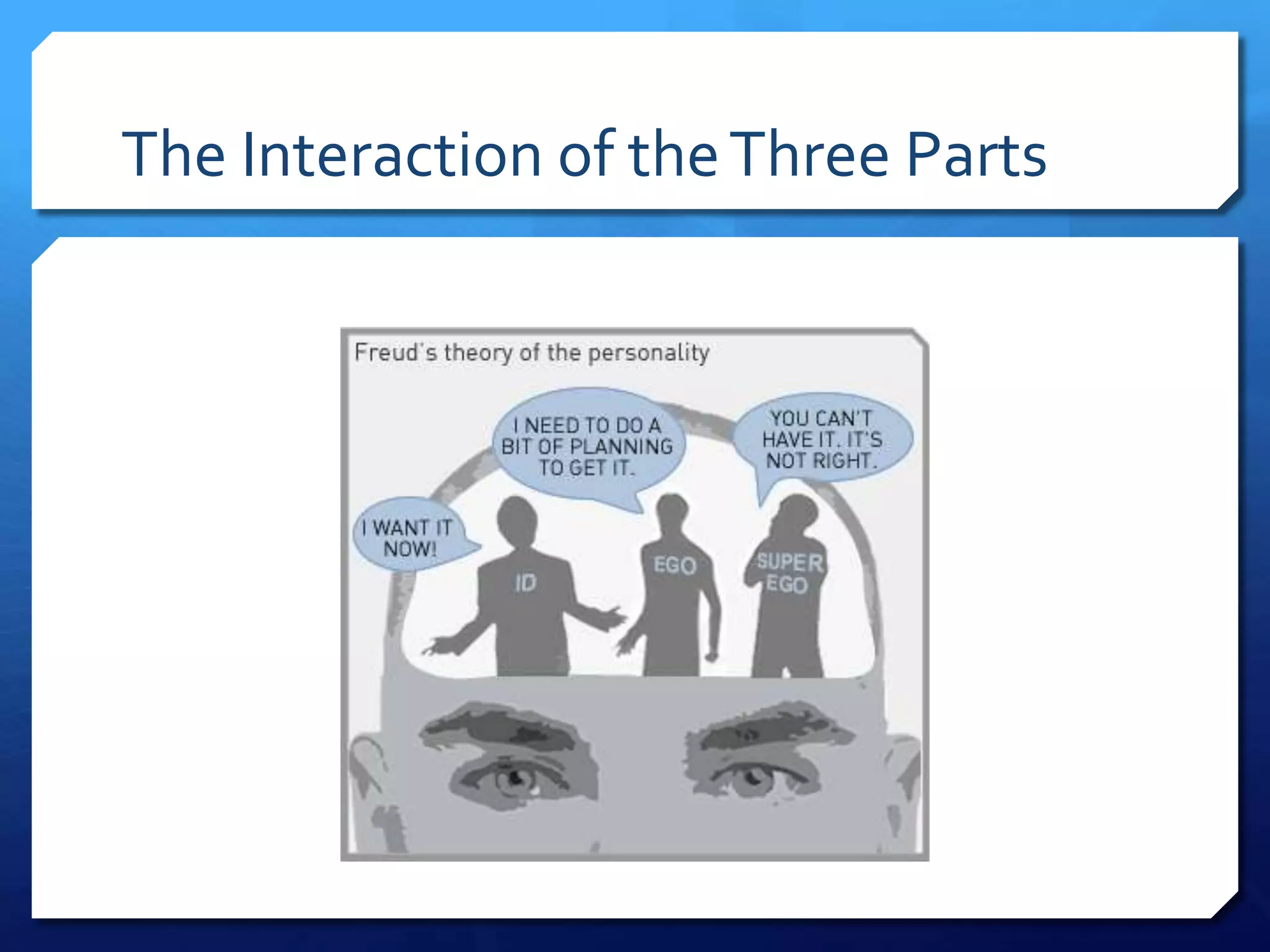
The Interaction of the Three Parts
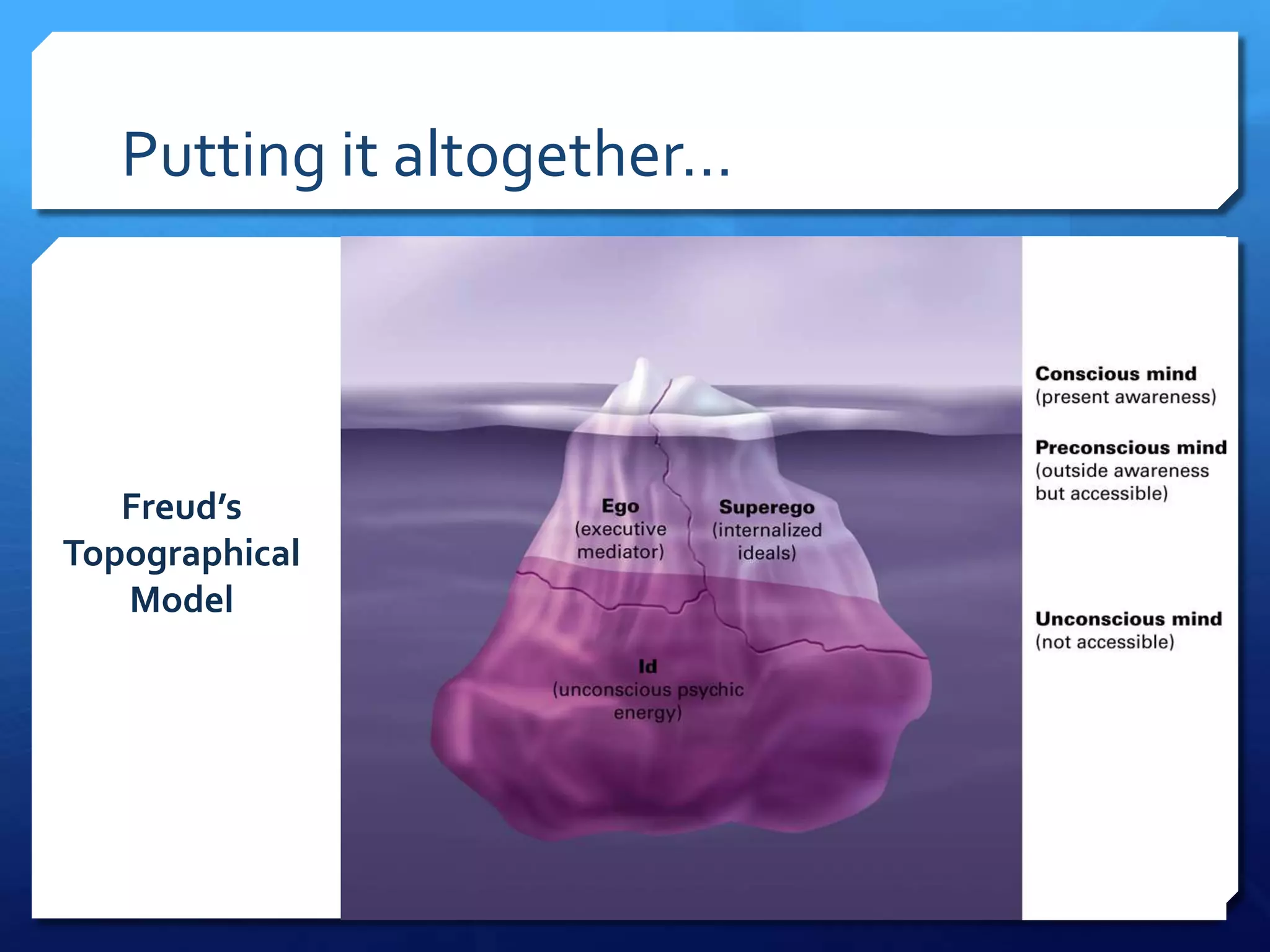
Putting it altogether…


   Freud’s
Topographical
   Model
Instincts and Tension Reduction
 Freud maintained that human behaviour is motivated by strong
   internal forces – drives/instincts

 Two major categories of instincts:
   1) life/sexual instincts - Eros
   2) death/aggressive instincts - Thanatos

 The two types combine to motivate behaviours.

 Freud attributed most human behaviour to the life/sexual instinct.
   Note: sexual includes anything resulting in pleasure.

 Death instinct: the desire we all have to die and return to the earth.
   Mostly unconscious.

 Expression: self destruction, aggression against others.
Instinct Activation

 Increased psychological tension is created.

 Comparable to feelings of excitation, nervousness and
   arousal.

 Tension remains until the particular need is satisfied.

 Undesirable state = goal of most human behaviour to reduce
   the tension and return to a state of no tension.

04 - Psychoanalytical

  • 1.
  • 2.
    Psychoanalytic Approach ToPersonality  Psychoanalytical Approach based on Freud’s work.  The idea that behaviour can be influenced by an unconscious part of the mind.
  • 3.
    Freudian Theory ofPersonality  Three Parts of the Mind  Aspects of mind which houses our thoughts and cognitive activities  3 parts: the conscious, the preconscious, the unconscious
  • 4.
    The Conscious  Contains thoughts of which you are currently aware  Constantly changing as new thoughts enter the mind and others pass out of awareness
  • 5.
    The Preconscious  Storesall the thoughts you could easily bring into consciousness if you wanted to.  E.g. what you ate for breakfast, who your kindergarten teacher was, etc.
  • 6.
    The Unconscious  According to Freud, vast majority of our thoughts are in the unconscious  No immediate access to  Cannot bring into consciousness except under certain extreme situations.  Responsible for much of our everyday behaviour.
  • 7.
    Three parts ofthe Personality  In Freud’s view, the human personality could be divided into three parts:  Id, ego and superego  According to Freud, these parts are often not at peace with one another
  • 8.
    Id  The oneand only part to the human personality AT BIRTH.  Actions based on pleasure principle – the id is only concerned with satisfying personal desires, regardless of limitations or consequence.  These reflexive actions are still present as adults, but held in check by other parts of the personality.  Id uses wish fulfillment to satisfy its needs: if a baby is hungry with no food nearby, the id imagines the food and temporarily satisfies the need.  Id impulses are unconscious, therefore we are unaware of all the impulses we might wish to act upon.
  • 9.
    Ego  0-2yrs +interaction with environment = ego  Ego’s actions based on the reality principle – that is, the primary job of the ego is to satisfy the id impulse, but in a realistic way.  Keeps unacceptable and dangerous id impulses in the unconscious
  • 10.
    Superego  About fiveyears = superego  Represents society’s and parents’ values and standards  Places more restrictions on what one can and cannot do.  Primary weapon – guilt!  According to Freud, some children fail to fully develop the superego due to poor child-rearing practices.  Can also become too powerful (“supermoral”), with impossible standards of perfection.
  • 11.
    The Interaction ofthe Three Parts
  • 12.
    Putting it altogether… Freud’s Topographical Model
  • 13.
    Instincts and TensionReduction  Freud maintained that human behaviour is motivated by strong internal forces – drives/instincts  Two major categories of instincts: 1) life/sexual instincts - Eros 2) death/aggressive instincts - Thanatos  The two types combine to motivate behaviours.  Freud attributed most human behaviour to the life/sexual instinct. Note: sexual includes anything resulting in pleasure.  Death instinct: the desire we all have to die and return to the earth. Mostly unconscious.  Expression: self destruction, aggression against others.
  • 14.
    Instinct Activation  Increasedpsychological tension is created.  Comparable to feelings of excitation, nervousness and arousal.  Tension remains until the particular need is satisfied.  Undesirable state = goal of most human behaviour to reduce the tension and return to a state of no tension.