Context of Health Care 
Financial Management 
Chapter 1
Learning Objectives 
• Identify key elements that are driving changes in health care 
delivery 
• Identify key approaches to controlling health care costs and 
resulting ethical issues 
• Identify key changes in reimbursement mechanisms to 
providers
Lowering Costs 
• Patient Protection and Affordable Care Act (ACA) 
The Affordable Care Act puts consumers back in charge of their 
health care. Under the law, a new “Patient’s Bill of Rights” gives 
the American people the stability and flexibility they need to 
make informed choices about their health. 
• CMS trying to control rising costs 
• Center for Medicare and Medicaid Services (CMS) 
demonstrate definitively that private insurance is increasingly 
less efficient than Medicare. 
• Value Based Purchasing (VBP) 
• Payment methodology that rewards quality of care through 
payment incentives and transparency in health care.
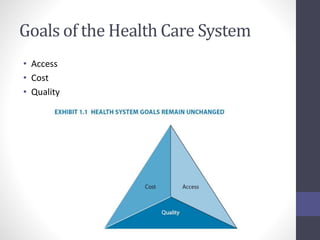
Goals of the Health Care System 
• Access 
• Cost 
• Quality
1. Access 
• Help establish Health Insurance Marketplaces in every state to 
expand access to coverage for individuals and small 
businesses, reduce administrative expenses, and increase 
competition; 
• Work with states to expand Medicaid coverage to more low-income 
Americans; 
• Enhance HealthCare gov, which empowers consumers to make 
informed choices about health care options
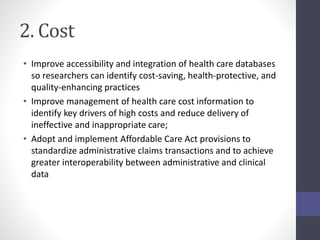
2. Cost 
• Improve accessibility and integration of health care databases 
so researchers can identify cost-saving, health-protective, and 
quality-enhancing practices 
• Improve management of health care cost information to 
identify key drivers of high costs and reduce delivery of 
ineffective and inappropriate care; 
• Adopt and implement Affordable Care Act provisions to 
standardize administrative claims transactions and to achieve 
greater interoperability between administrative and clinical 
data
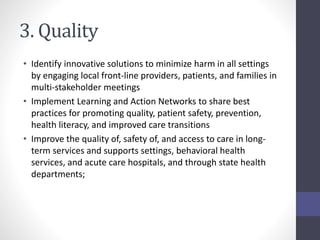
3. Quality 
• Identify innovative solutions to minimize harm in all settings 
by engaging local front-line providers, patients, and families in 
multi-stakeholder meetings 
• Implement Learning and Action Networks to share best 
practices for promoting quality, patient safety, prevention, 
health literacy, and improved care transitions 
• Improve the quality of, safety of, and access to care in long-term 
services and supports settings, behavioral health 
services, and acute care hospitals, and through state health 
departments;
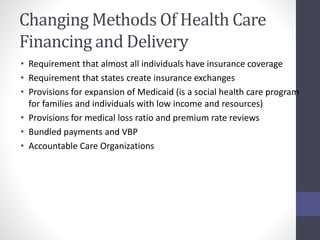
Changing Methods Of Health Care 
Financing and Delivery 
• Requirement that almost all individuals have insurance coverage 
• Requirement that states create insurance exchanges 
• Provisions for expansion of Medicaid (is a social health care program 
for families and individuals with low income and resources) 
• Provisions for medical loss ratio and premium rate reviews 
• Bundled payments and VBP 
• Accountable Care Organizations
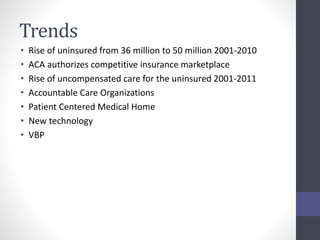
Trends 
• Rise of uninsured from 36 million to 50 million 2001-2010 
• ACA authorizes competitive insurance marketplace 
• Rise of uncompensated care for the uninsured 2001-2011 
• Accountable Care Organizations 
• Patient Centered Medical Home 
• New technology 
• VBP
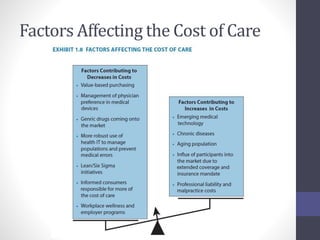
Factors Affecting the Cost of Care
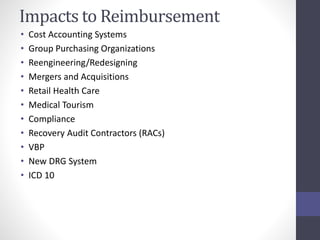
Impacts to Reimbursement 
• Cost Accounting Systems 
• Group Purchasing Organizations 
• Reengineering/Redesigning 
• Mergers and Acquisitions 
• Retail Health Care 
• Medical Tourism 
• Compliance 
• Recovery Audit Contractors (RACs) 
• VBP 
• New DRG System 
• ICD 10
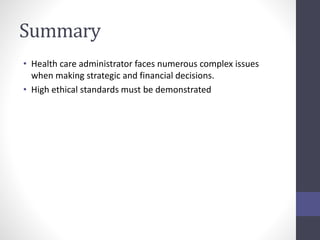
Summary 
• Health care administrator faces numerous complex issues 
when making strategic and financial decisions. 
• High ethical standards must be demonstrated

Chapter 1: Context of Health Care Financial Management

  • 1.
    Context of HealthCare Financial Management Chapter 1
  • 2.
    Learning Objectives •Identify key elements that are driving changes in health care delivery • Identify key approaches to controlling health care costs and resulting ethical issues • Identify key changes in reimbursement mechanisms to providers
  • 3.
    Lowering Costs •Patient Protection and Affordable Care Act (ACA) The Affordable Care Act puts consumers back in charge of their health care. Under the law, a new “Patient’s Bill of Rights” gives the American people the stability and flexibility they need to make informed choices about their health. • CMS trying to control rising costs • Center for Medicare and Medicaid Services (CMS) demonstrate definitively that private insurance is increasingly less efficient than Medicare. • Value Based Purchasing (VBP) • Payment methodology that rewards quality of care through payment incentives and transparency in health care.
  • 4.
    Goals of theHealth Care System • Access • Cost • Quality
  • 5.
    1. Access •Help establish Health Insurance Marketplaces in every state to expand access to coverage for individuals and small businesses, reduce administrative expenses, and increase competition; • Work with states to expand Medicaid coverage to more low-income Americans; • Enhance HealthCare gov, which empowers consumers to make informed choices about health care options
  • 6.
    2. Cost •Improve accessibility and integration of health care databases so researchers can identify cost-saving, health-protective, and quality-enhancing practices • Improve management of health care cost information to identify key drivers of high costs and reduce delivery of ineffective and inappropriate care; • Adopt and implement Affordable Care Act provisions to standardize administrative claims transactions and to achieve greater interoperability between administrative and clinical data
  • 7.
    3. Quality •Identify innovative solutions to minimize harm in all settings by engaging local front-line providers, patients, and families in multi-stakeholder meetings • Implement Learning and Action Networks to share best practices for promoting quality, patient safety, prevention, health literacy, and improved care transitions • Improve the quality of, safety of, and access to care in long-term services and supports settings, behavioral health services, and acute care hospitals, and through state health departments;
  • 8.
    Changing Methods OfHealth Care Financing and Delivery • Requirement that almost all individuals have insurance coverage • Requirement that states create insurance exchanges • Provisions for expansion of Medicaid (is a social health care program for families and individuals with low income and resources) • Provisions for medical loss ratio and premium rate reviews • Bundled payments and VBP • Accountable Care Organizations
  • 9.
    Trends • Riseof uninsured from 36 million to 50 million 2001-2010 • ACA authorizes competitive insurance marketplace • Rise of uncompensated care for the uninsured 2001-2011 • Accountable Care Organizations • Patient Centered Medical Home • New technology • VBP
  • 10.
  • 11.
    Impacts to Reimbursement • Cost Accounting Systems • Group Purchasing Organizations • Reengineering/Redesigning • Mergers and Acquisitions • Retail Health Care • Medical Tourism • Compliance • Recovery Audit Contractors (RACs) • VBP • New DRG System • ICD 10
  • 12.
    Summary • Healthcare administrator faces numerous complex issues when making strategic and financial decisions. • High ethical standards must be demonstrated