1
Digital Image Processing
Image
 Practically every scene around us involves images or image
processing.
 An image can be defined as a two dimensional signal analog or
digital that contains intensity or color information arranged
along x and y spatial axis.
 It can be defined as a two dimensional function f(x,y) where
the x and y are spatial co-ordinates. Here the amplitude of
function “ f ” at any pair of co-ordinates (x,y) is called the
intensity or gray level or the color of the image at that point.
2
Image Types
 There are two types of images, analog and digital.
 Simple example, let 1 represent white and 0 represent black
color.
3
Analog Image
 Analog image is a two dimensional function of f(s,t) considered
in the continuous time domain.
 An image can be defined as a two dimensional function f(x,y)
where the x and y are spatial co-ordinates. Here the amplitude
of function “ f ” at any pair of co-ordinates (x,y) is called the
intensity or gray level or the color of the image at that point.
 When x, y and the amplitude values of f are continuous
quantities then the image is referred as analog image.
4
Analog Image
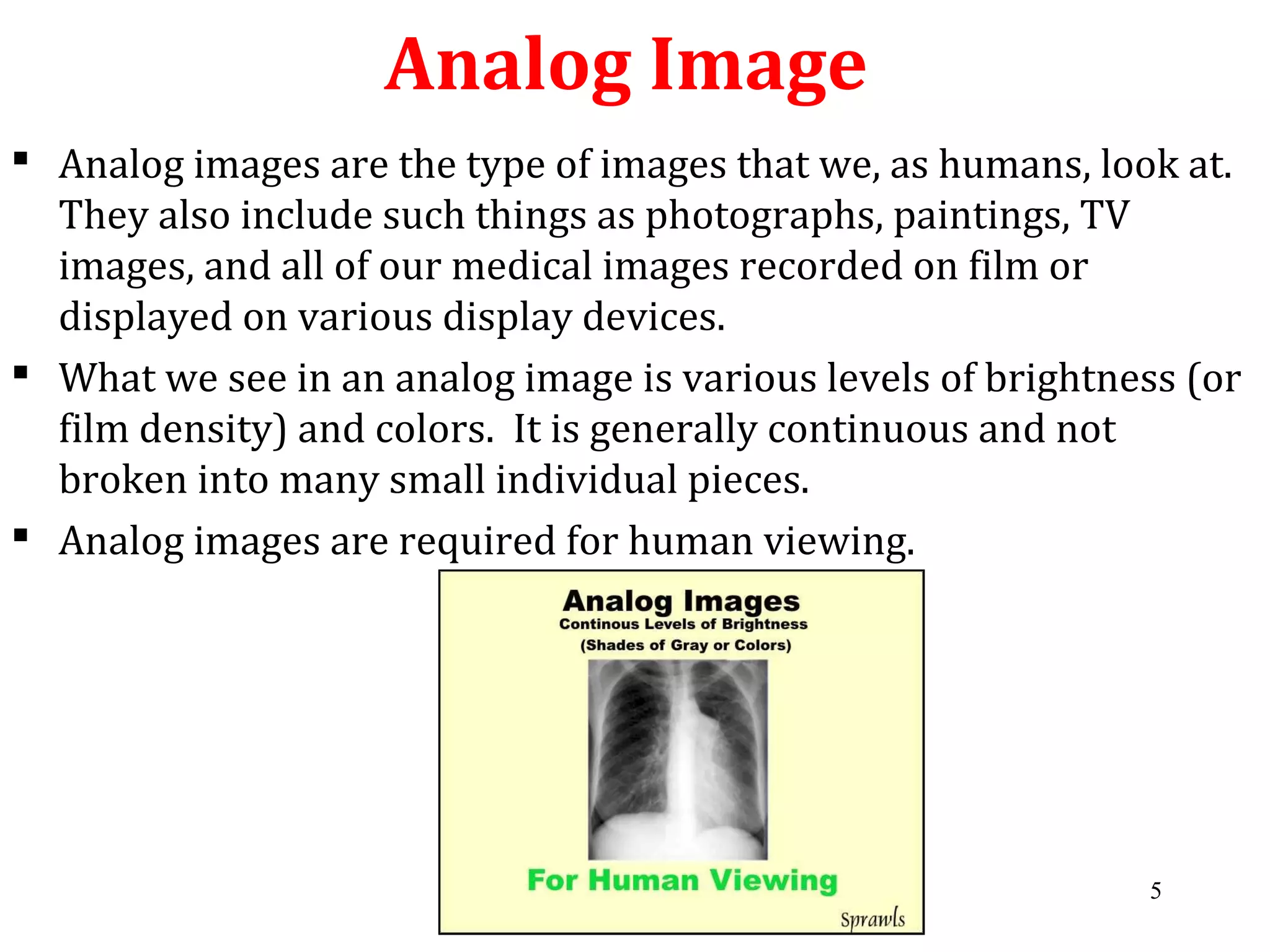
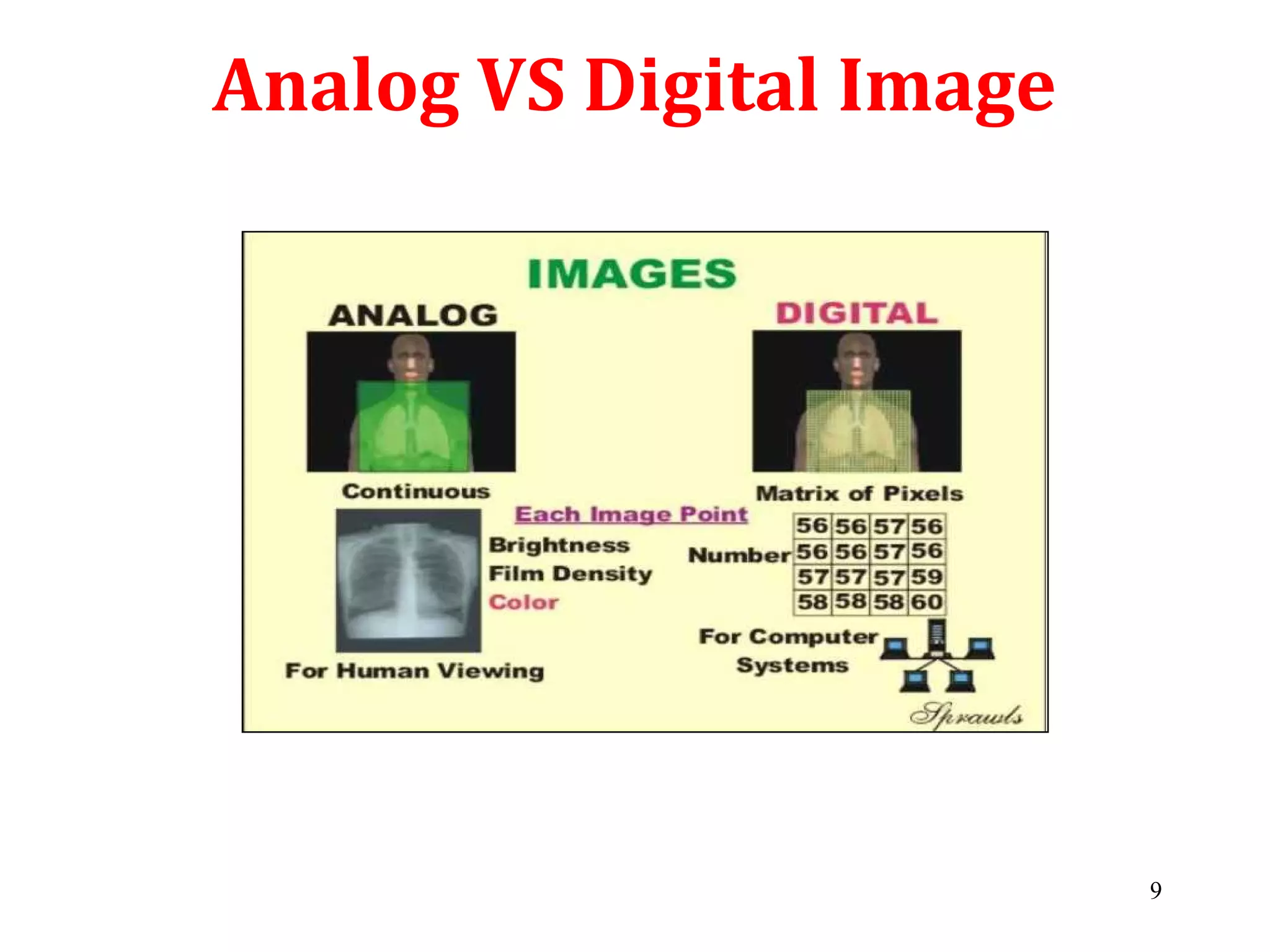
 Analog images are the type of images that we, as humans, look at.
They also include such things as photographs, paintings, TV
images, and all of our medical images recorded on film or
displayed on various display devices.
 What we see in an analog image is various levels of brightness (or
film density) and colors. It is generally continuous and not
broken into many small individual pieces.
 Analog images are required for human viewing.
5
Digital Image
 An image can be defined as a two dimensional function f(x,y)
where the x and y are spatial co-ordinates. Here the amplitude
of function “ f ” at any pair of co-ordinates (x,y) is called the
intensity or gray level or the color of the image at that point.
 When x, y and the amplitude values of f are all finite and discrete
quantities then the image is referred as digital image. Digital
image processing refers to the processing of digital images by
means of digital computer.
 A digital image is composed of a finite number of elements, each
of which has a particular location and value. These elements are
referred to as pels, pixels, picture elements or image elements
6
Digital Image
 A digital image is a matrix of many small elements, or
pixels.
 Each pixel is represented by a numerical value. In general, the
pixel value is related to the brightness or color that we will see
when the digital image is converted into an analog image for
display and viewing.
7
Impact Digital Image
 Digital images are necessary in all modern medical imaging
methods. Because of the following functions that can be performed
with digital images :
1. Image reconstruction (CT, MRI, SPECT, PET, etc)
2. Image reformatting (Multi-plane, multi-view reconstructions)
3. Wide (dynamic) range image data acquisition (CT, digital
radiography, etc)
4. Image processing (to change contrast and other quality
characteristics)
5. Fast image storage and retrieval
6. Fast and high-quality image distribution (teleradiology)
7. Controlled viewing (windowing, zooming, etc)
8. Image analysis (measurements, calculation of various parameters,
computer aided diagonisis)
8
Analog VS Digital Image
9
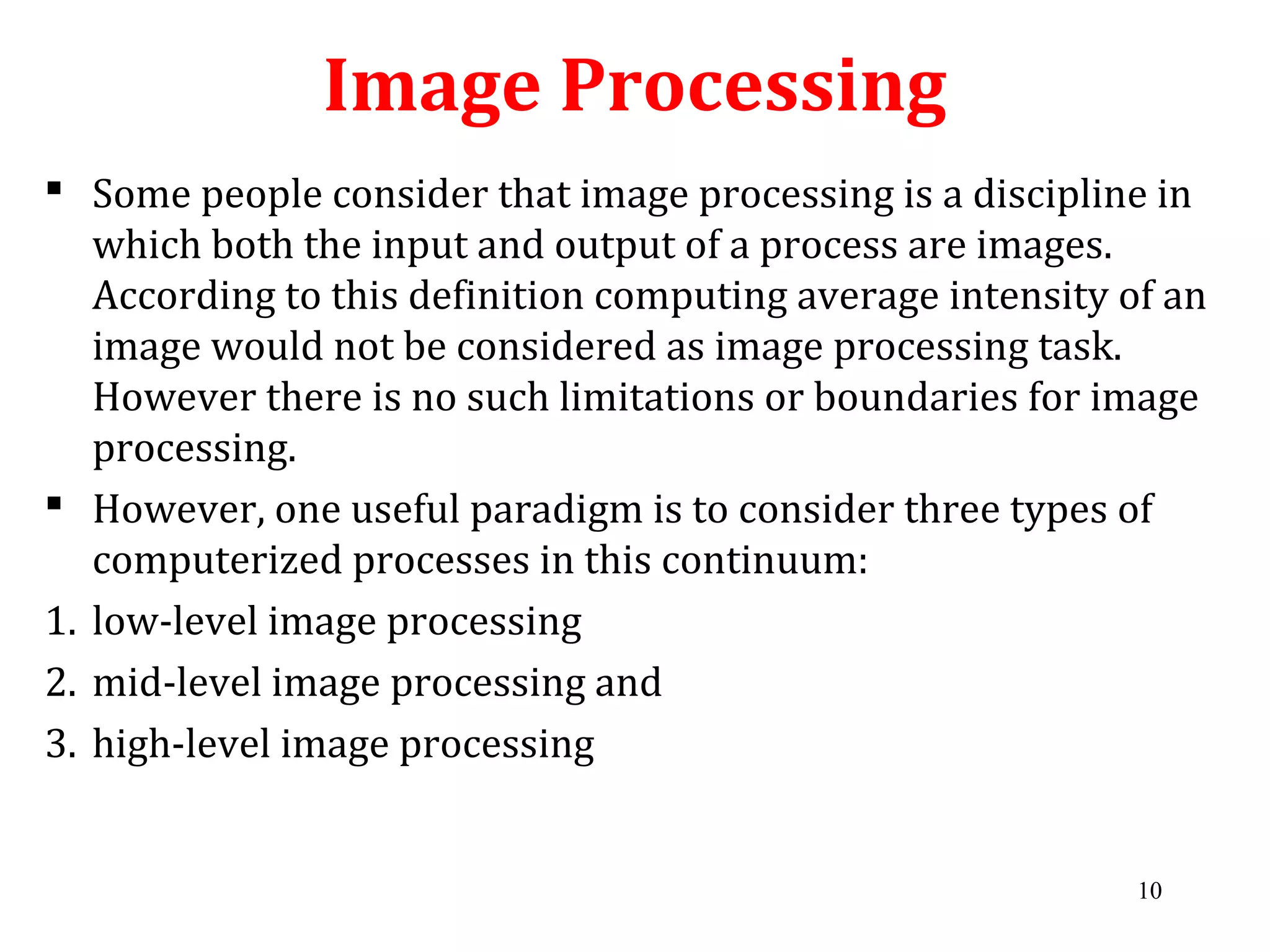
Image Processing
 Some people consider that image processing is a discipline in
which both the input and output of a process are images.
According to this definition computing average intensity of an
image would not be considered as image processing task.
However there is no such limitations or boundaries for image
processing.
 However, one useful paradigm is to consider three types of
computerized processes in this continuum:
1. low-level image processing
2. mid-level image processing and
3. high-level image processing
10
Level of Image Processing
 A low-level process is characterized by the fact that both its
inputs and outputs are images such as image preprocessing to
reduce noise, contrast enhancement, and image sharpening.
 A mid-level process is characterized by the fact that its inputs
generally are images, but its outputs are attributes extracted
from those images. Such as segmentation (partitioning an image
into regions or objects).
 A high-level process is characterized by the fact that its inputs
generally are attributes extracted from images, but its outputs
are images. higher-level processing involves an ensemble of
recognized objects, as in image analysis
11
Origins of Digital Image
Processing
 One of the first applications of digital images was in the
newspaper industry, when pictures were first sent by submarine
cable between London and New York.
 Introduction of the Bartlane cable picture transmission system in
the early 1920s reduced the time required to transport a picture
across the Atlantic from more than a week to less than three
hours.
 Specialized printing equipment was used to code pictures for
transmitting it via cable and then reconstruct the image from the
codes at the receiving end.
12
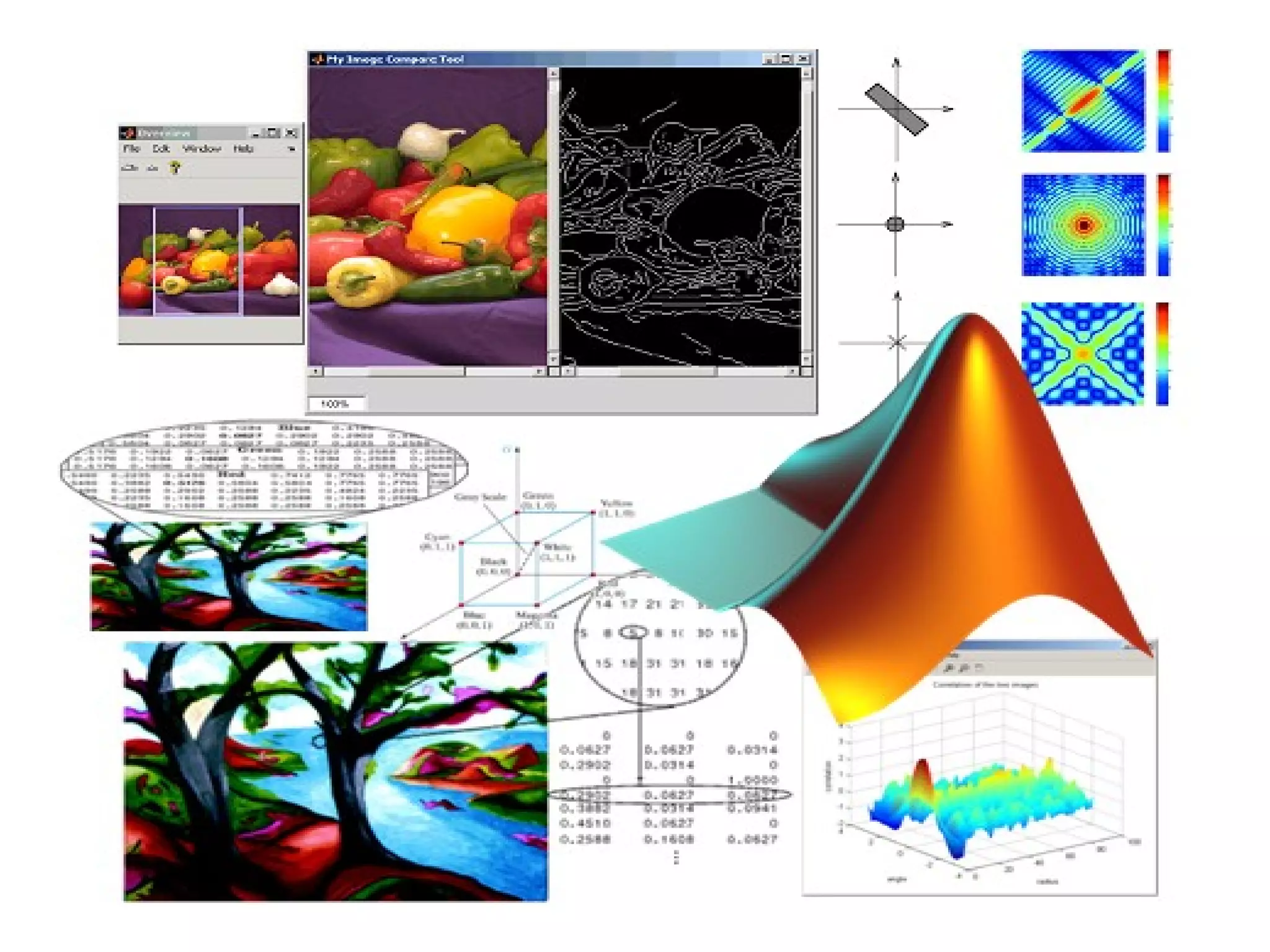
Digital Image Processing
 Digital image processing can be defined as processing of
digital image in a digital manner meaning that using a
digital device like computer or others.
 The digital image processing is getting more and more
importance now a days because of its two major
application areas:
1. Improvement of pictorial information for human
interpretation.
2. Processing of image data for storage, transmission and
representation for autonomous machine perception
13
14
Advantages of DIP
1. It improves the visual quality of an image and the distribution of
intensity.
2. It can easily process an degraded image of uncoverable objects
3. It can process an image in such a way that the result is more
suitable than the original image
4. An image can be easily modified using a number of techniques
5. The image compression technique reduces the amount of data
required to represent a digital image.
6. Mathematical and logical operations can be performed on an
image like addition subtraction, OR etc
7. The image segmentation is used to detect discontinuity, the
presence or absence of specific anomalies like missing
components or broken connection path.
15
Limitations of DIP
1. Digital image processing requires so much storage and
processing power. Progress in the field of digital image
processing is dependant on the development of digital
computers and supporting technology including data
storage, display and transmission
2. Effect of environmental conditions may degrade the image
quality
3. It involves various types of redundancy like data
redundancy, interpixel redundancy etc
4. Segmentation of nontrivial image is one of the most difficult
task in digital image processing
16
Fields that Use Digital Image
Processing
 Unlike humans, who are limited to the visual band of the
electromagnetic (EM) spectrum, imaging machines cover almost
the entire EM spectrum, ranging from gamma to radio waves.
They can operate on images generated by sources that humans
are not accustomed to associating with images.
1. Gamma ray imaging
2. X-ray imaging
3. Imaging in an ultraviolet band
4. Imaging in the visible and infrared bands
5. Imaging in the microwave band
6. Imaging in the radio band
17
 Gamma ray imaging : imaging based on gamma rays
include nuclear medicine and astronomical observations.
In nuclear medicine the approach is to inject a patient
with a radioactive isotope that emits gamma rays as it
decays. Images are produced from these emissions
collected by gamma ray detectors.
 PET : another major modality of nuclear imaging is
positron emission tomography. When a positron meets
an electron both an annihilated and two gamma rays are
given off. These are detected and a tomographic image is
created using the principles of tomography
18
 X-ray imaging : X-rays are the oldest sources of EM radiation
used for imaging. The best known use of X-ray is medical
diagnostics, but they are used extensively in industry and
others areas like astronomy. In digital radiography, digital
images are obtained by one of the two methods:
1. By digitizing x-ray films
2. By having the x-rays that pass through the patient and
fall onto a device such as phosphor screen that convert x-
rays into light
 Imaging in the ultraviolet band : the major application of
imaging in ultraviolet band includes lithography, industrial
inspection, microscopy, lasers, biological imaging and
astronomical observations. Ultraviolet light is used in
fluorescence microscopy, one of the fastest growing areas of
microscopy
19
 Imaging in the visible and infrared bands : the infrared
band is used in conjunction with visual imaging. Another
major area of visual processing is remote sensing
 Imaging in the microwave band : the major application of
imaging in the microwave band is radar. Its unique ability is
to collect data over virtually any region at any time without
regarding the weather or ambient light conditions
 Imaging in the radio band : the major application of
imaging in the radio band include medicine and astronomy.
In medicine radio waves are used in MRI(magnetic
resonance imaging). It places a patient in a powerful magnet
and passes radio waves through the body in short pulses
20
Ultrasound Image
 The ultrasound imaging is used to determine the development
of health and to determine the sex of unborn babies in the
womb. Ultrasound images are generated using the following
procedure:
1. The ultrasound system transmits a high frequency sound pulse
into the body usually 1 to 5 MHz
2. The sound wave travel through the body and hit a boundary
between tissues.
3. Some of the waves are reflected back to the probe and relayed to
the computer.
4. The machine calculates the distance from probe to the tissue
boundaries by using the speed of the sound and the time required
for each echo’s to return.
5. The system displays the distances and intensities of the echoes on
the screen, forming a two dimensional image
21
 Transmission electron microscopy (TEM) is a microscopy
technique in which a beam of electrons is transmitted through
an ultra-thin specimen, interacting with the specimen as it
passes through.
 An image is formed from the interaction of the electrons
transmitted through the specimen.
 The image is magnified and focused onto an imaging device, such
as a fluorescent screen, on a layer of photographic film
 Or to be detected by a sensor such as a CCD camera.
 TEMs are capable of imaging at a significantly higher resolution
than light microscopes. TEMs find application in cancer research,
virology, materials science as well as pollution, nanotechnology,
and semiconductor research.
Transmission Electron
Microscopy
22
Transmission Electron
Microscopy
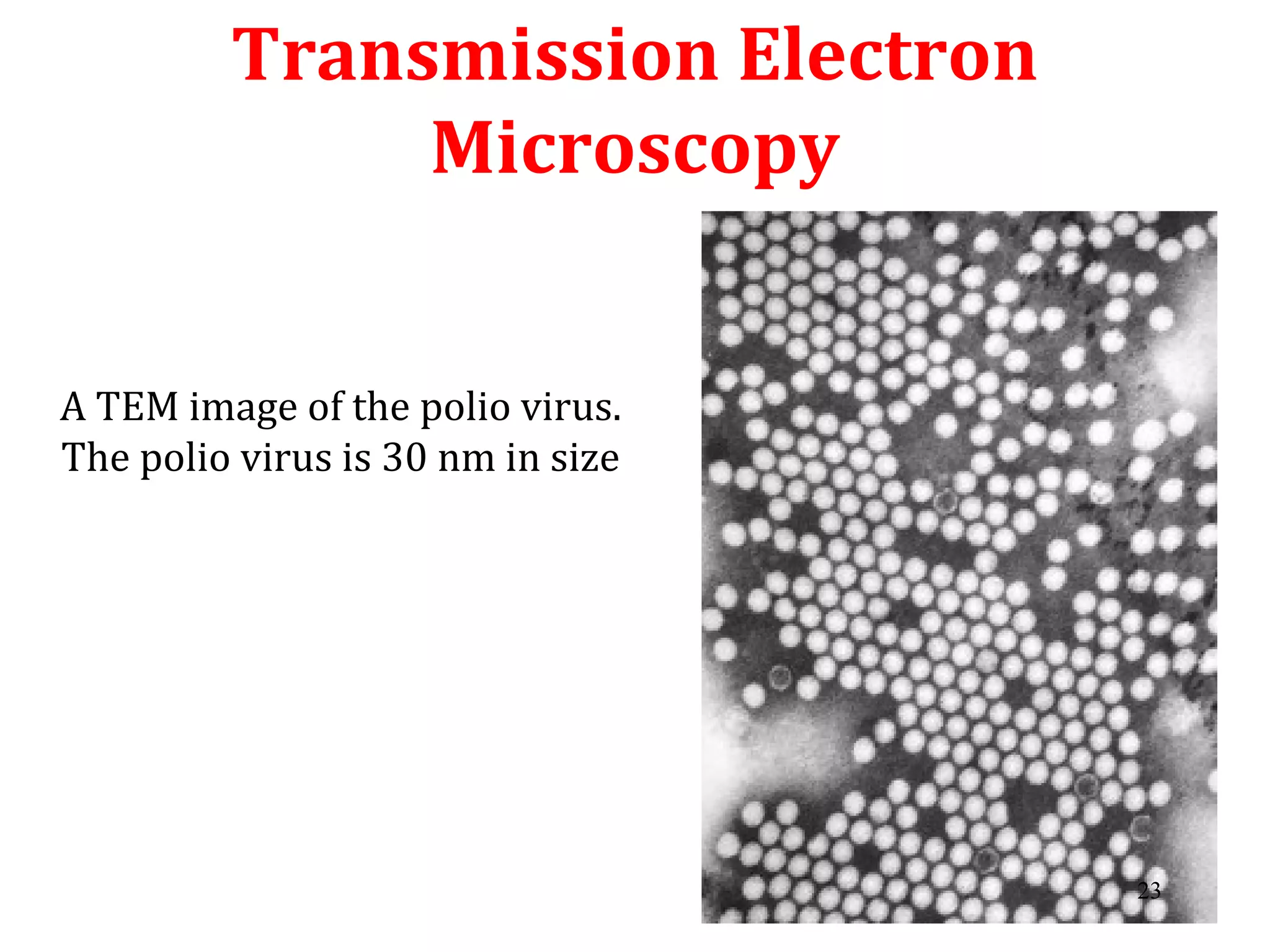
A TEM image of the polio virus.
The polio virus is 30 nm in size
23
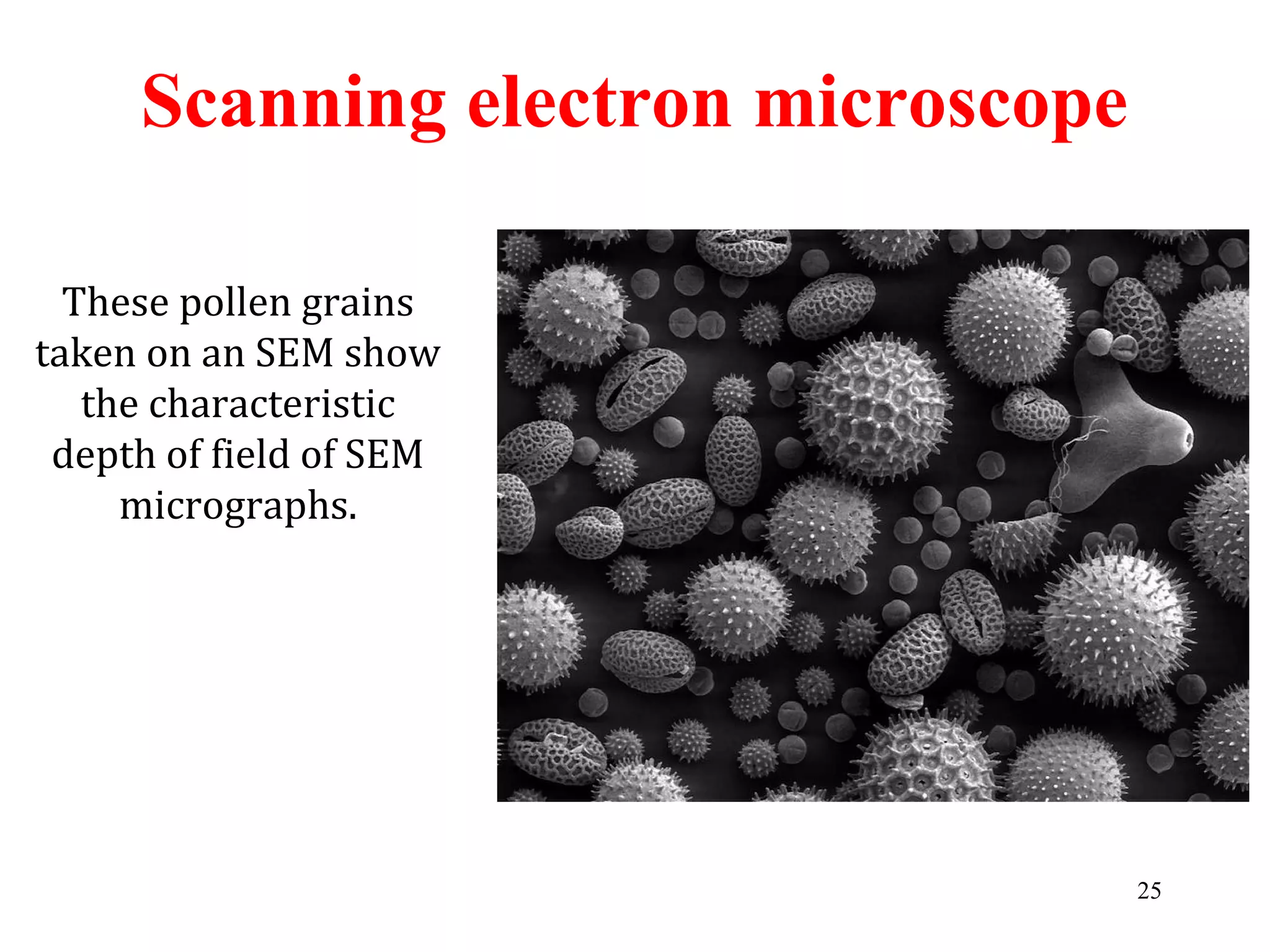
 A scanning electron microscope (SEM) is a type of electron
microscope that produces images of a sample by scanning it with
a focused beam of electrons. The electrons interact with atoms in
the sample, producing various signals that can be detected and
that contain information about the sample's surface topography
and composition
 SEM can achieve resolution better than 1 nanometer. Specimens
can be observed in high vacuum, in low vacuum, in wet
conditions (in environmental SEM), and at a wide range of
cryogenic or elevated temperatures.
Scanning electron microscope
24
Scanning electron microscope
These pollen grains
taken on an SEM show
the characteristic
depth of field of SEM
micrographs.
25
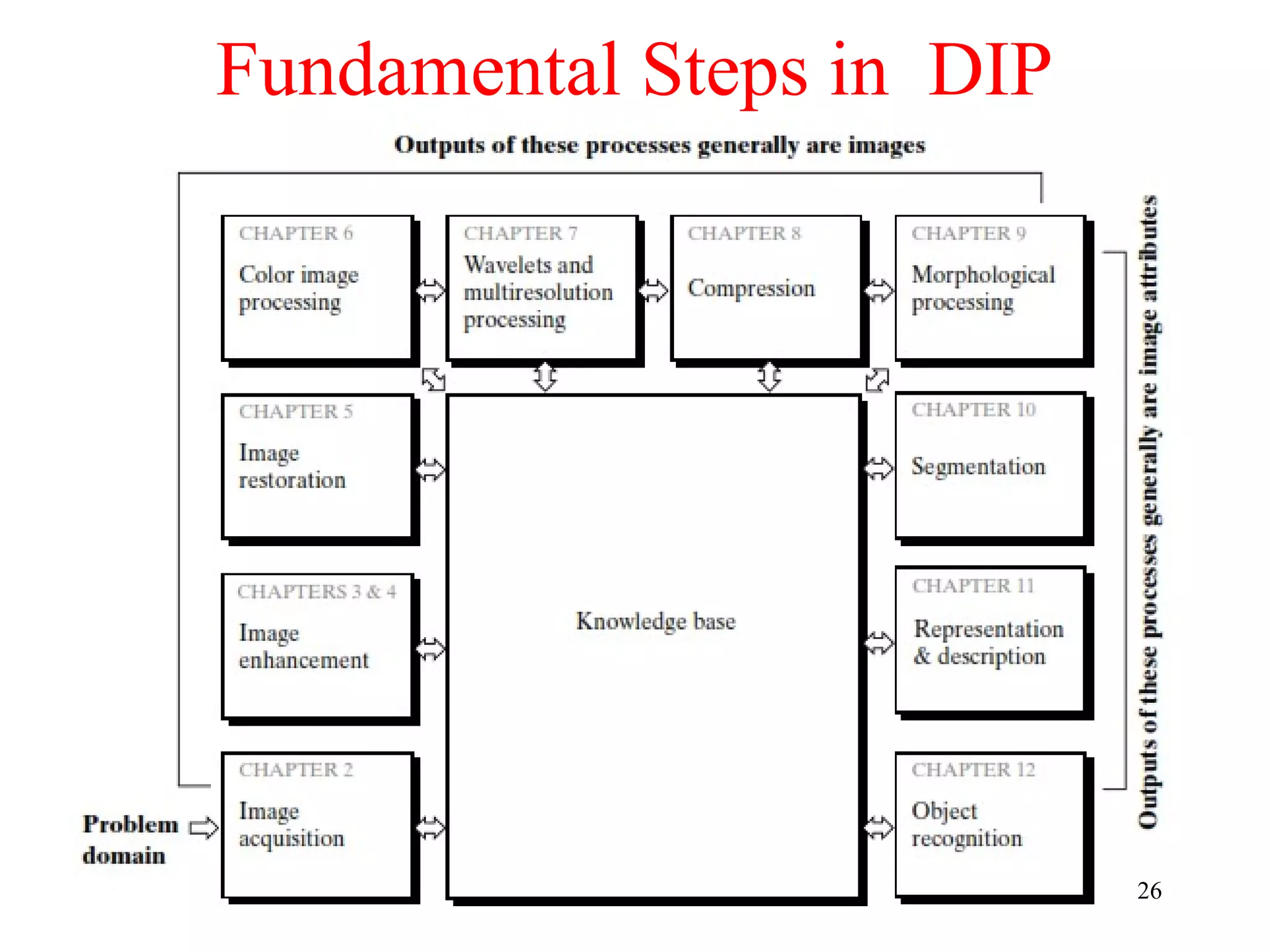
Fundamental Steps in DIP
26
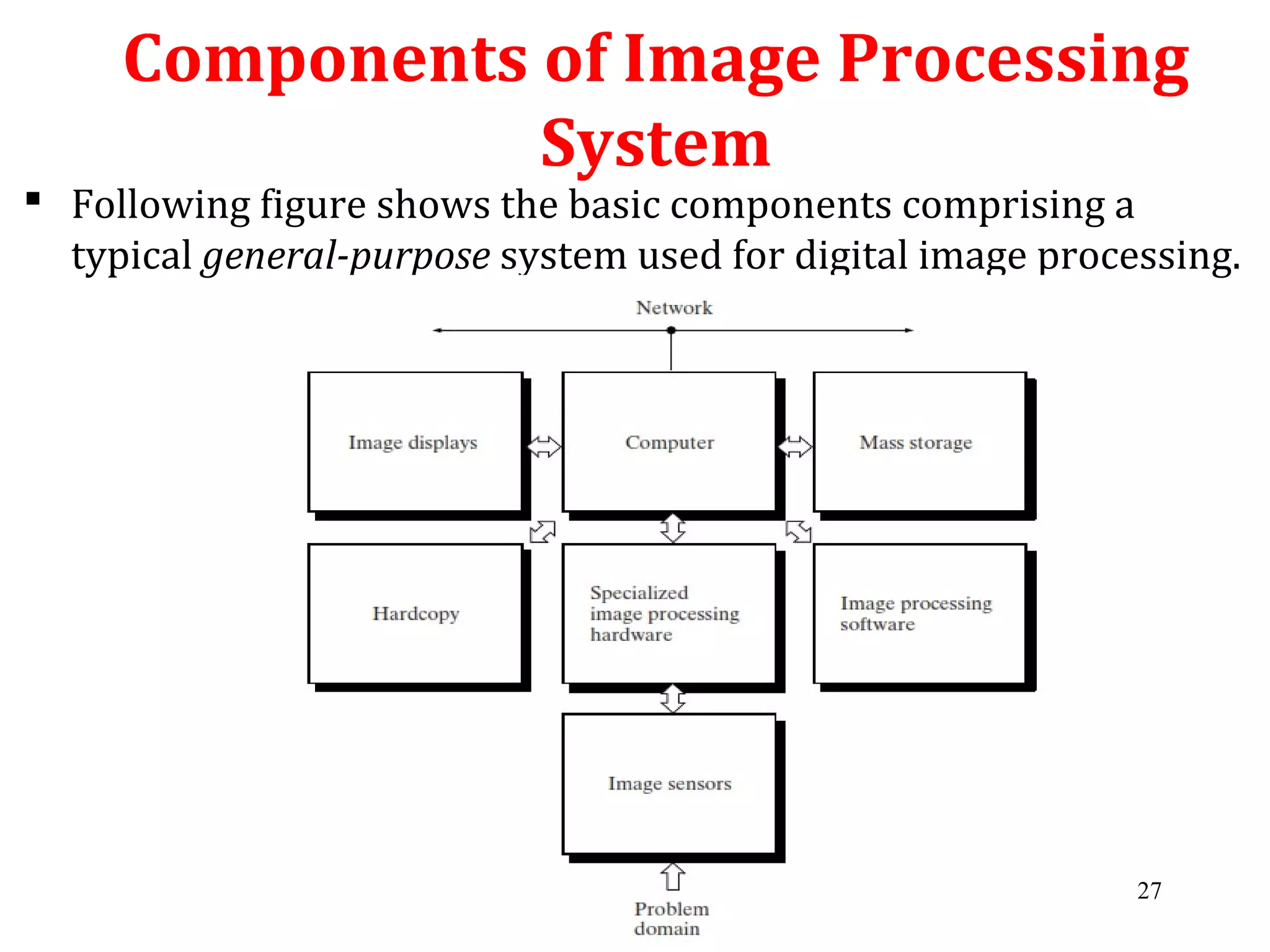
Components of Image Processing
System
 Following figure shows the basic components comprising a
typical general-purpose system used for digital image processing.
27
Components of the System
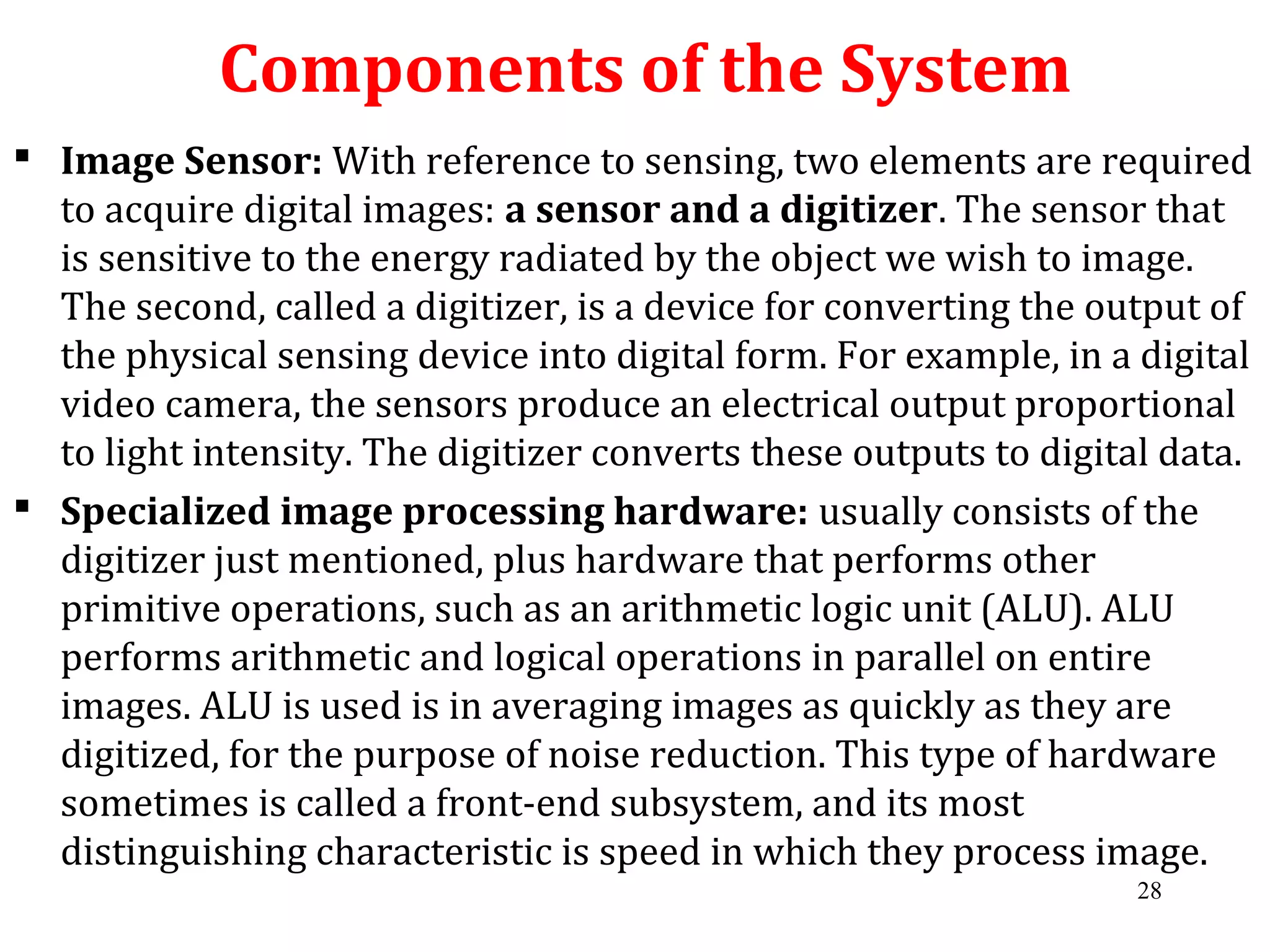
 Image Sensor: With reference to sensing, two elements are required
to acquire digital images: a sensor and a digitizer. The sensor that
is sensitive to the energy radiated by the object we wish to image.
The second, called a digitizer, is a device for converting the output of
the physical sensing device into digital form. For example, in a digital
video camera, the sensors produce an electrical output proportional
to light intensity. The digitizer converts these outputs to digital data.
 Specialized image processing hardware: usually consists of the
digitizer just mentioned, plus hardware that performs other
primitive operations, such as an arithmetic logic unit (ALU). ALU
performs arithmetic and logical operations in parallel on entire
images. ALU is used is in averaging images as quickly as they are
digitized, for the purpose of noise reduction. This type of hardware
sometimes is called a front-end subsystem, and its most
distinguishing characteristic is speed in which they process image.
28
Components of the System
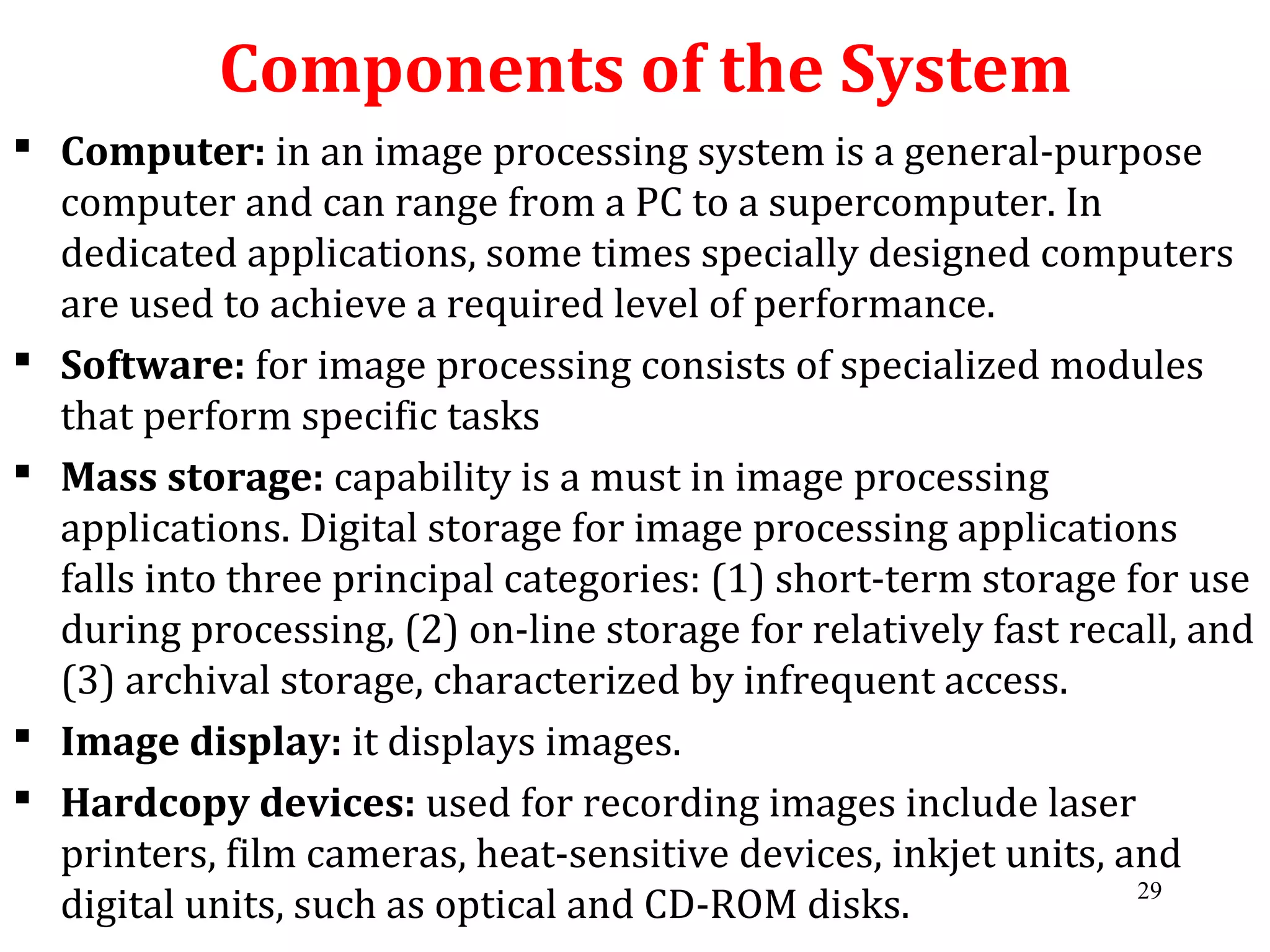
 Computer: in an image processing system is a general-purpose
computer and can range from a PC to a supercomputer. In
dedicated applications, some times specially designed computers
are used to achieve a required level of performance.
 Software: for image processing consists of specialized modules
that perform specific tasks
 Mass storage: capability is a must in image processing
applications. Digital storage for image processing applications
falls into three principal categories: (1) short-term storage for use
during processing, (2) on-line storage for relatively fast recall, and
(3) archival storage, characterized by infrequent access.
 Image display: it displays images.
 Hardcopy devices: used for recording images include laser
printers, film cameras, heat-sensitive devices, inkjet units, and
digital units, such as optical and CD-ROM disks. 29
References
 http://en.wikipedia.org/wiki/
 Digital Image Processing (3rd Edition): Rafael C. Gonzalez
31
Md. Shakhawat Hossain
Student of Department of Computer Science &
Engineering
University of Rajshahi
E-mail: mshimul86@gmail.com

Introduction to digital image processing

  • 1.
  • 2.
    Image  Practically everyscene around us involves images or image processing.  An image can be defined as a two dimensional signal analog or digital that contains intensity or color information arranged along x and y spatial axis.  It can be defined as a two dimensional function f(x,y) where the x and y are spatial co-ordinates. Here the amplitude of function “ f ” at any pair of co-ordinates (x,y) is called the intensity or gray level or the color of the image at that point. 2
  • 3.
    Image Types  Thereare two types of images, analog and digital.  Simple example, let 1 represent white and 0 represent black color. 3
  • 4.
    Analog Image  Analogimage is a two dimensional function of f(s,t) considered in the continuous time domain.  An image can be defined as a two dimensional function f(x,y) where the x and y are spatial co-ordinates. Here the amplitude of function “ f ” at any pair of co-ordinates (x,y) is called the intensity or gray level or the color of the image at that point.  When x, y and the amplitude values of f are continuous quantities then the image is referred as analog image. 4
  • 5.
    Analog Image  Analogimages are the type of images that we, as humans, look at. They also include such things as photographs, paintings, TV images, and all of our medical images recorded on film or displayed on various display devices.  What we see in an analog image is various levels of brightness (or film density) and colors. It is generally continuous and not broken into many small individual pieces.  Analog images are required for human viewing. 5
  • 6.
    Digital Image  Animage can be defined as a two dimensional function f(x,y) where the x and y are spatial co-ordinates. Here the amplitude of function “ f ” at any pair of co-ordinates (x,y) is called the intensity or gray level or the color of the image at that point.  When x, y and the amplitude values of f are all finite and discrete quantities then the image is referred as digital image. Digital image processing refers to the processing of digital images by means of digital computer.  A digital image is composed of a finite number of elements, each of which has a particular location and value. These elements are referred to as pels, pixels, picture elements or image elements 6
  • 7.
    Digital Image  Adigital image is a matrix of many small elements, or pixels.  Each pixel is represented by a numerical value. In general, the pixel value is related to the brightness or color that we will see when the digital image is converted into an analog image for display and viewing. 7
  • 8.
    Impact Digital Image Digital images are necessary in all modern medical imaging methods. Because of the following functions that can be performed with digital images : 1. Image reconstruction (CT, MRI, SPECT, PET, etc) 2. Image reformatting (Multi-plane, multi-view reconstructions) 3. Wide (dynamic) range image data acquisition (CT, digital radiography, etc) 4. Image processing (to change contrast and other quality characteristics) 5. Fast image storage and retrieval 6. Fast and high-quality image distribution (teleradiology) 7. Controlled viewing (windowing, zooming, etc) 8. Image analysis (measurements, calculation of various parameters, computer aided diagonisis) 8
  • 9.
  • 10.
    Image Processing  Somepeople consider that image processing is a discipline in which both the input and output of a process are images. According to this definition computing average intensity of an image would not be considered as image processing task. However there is no such limitations or boundaries for image processing.  However, one useful paradigm is to consider three types of computerized processes in this continuum: 1. low-level image processing 2. mid-level image processing and 3. high-level image processing 10
  • 11.
    Level of ImageProcessing  A low-level process is characterized by the fact that both its inputs and outputs are images such as image preprocessing to reduce noise, contrast enhancement, and image sharpening.  A mid-level process is characterized by the fact that its inputs generally are images, but its outputs are attributes extracted from those images. Such as segmentation (partitioning an image into regions or objects).  A high-level process is characterized by the fact that its inputs generally are attributes extracted from images, but its outputs are images. higher-level processing involves an ensemble of recognized objects, as in image analysis 11
  • 12.
    Origins of DigitalImage Processing  One of the first applications of digital images was in the newspaper industry, when pictures were first sent by submarine cable between London and New York.  Introduction of the Bartlane cable picture transmission system in the early 1920s reduced the time required to transport a picture across the Atlantic from more than a week to less than three hours.  Specialized printing equipment was used to code pictures for transmitting it via cable and then reconstruct the image from the codes at the receiving end. 12
  • 13.
    Digital Image Processing Digital image processing can be defined as processing of digital image in a digital manner meaning that using a digital device like computer or others.  The digital image processing is getting more and more importance now a days because of its two major application areas: 1. Improvement of pictorial information for human interpretation. 2. Processing of image data for storage, transmission and representation for autonomous machine perception 13
  • 14.
  • 15.
    Advantages of DIP 1.It improves the visual quality of an image and the distribution of intensity. 2. It can easily process an degraded image of uncoverable objects 3. It can process an image in such a way that the result is more suitable than the original image 4. An image can be easily modified using a number of techniques 5. The image compression technique reduces the amount of data required to represent a digital image. 6. Mathematical and logical operations can be performed on an image like addition subtraction, OR etc 7. The image segmentation is used to detect discontinuity, the presence or absence of specific anomalies like missing components or broken connection path. 15
  • 16.
    Limitations of DIP 1.Digital image processing requires so much storage and processing power. Progress in the field of digital image processing is dependant on the development of digital computers and supporting technology including data storage, display and transmission 2. Effect of environmental conditions may degrade the image quality 3. It involves various types of redundancy like data redundancy, interpixel redundancy etc 4. Segmentation of nontrivial image is one of the most difficult task in digital image processing 16
  • 17.
    Fields that UseDigital Image Processing  Unlike humans, who are limited to the visual band of the electromagnetic (EM) spectrum, imaging machines cover almost the entire EM spectrum, ranging from gamma to radio waves. They can operate on images generated by sources that humans are not accustomed to associating with images. 1. Gamma ray imaging 2. X-ray imaging 3. Imaging in an ultraviolet band 4. Imaging in the visible and infrared bands 5. Imaging in the microwave band 6. Imaging in the radio band 17
  • 18.
     Gamma rayimaging : imaging based on gamma rays include nuclear medicine and astronomical observations. In nuclear medicine the approach is to inject a patient with a radioactive isotope that emits gamma rays as it decays. Images are produced from these emissions collected by gamma ray detectors.  PET : another major modality of nuclear imaging is positron emission tomography. When a positron meets an electron both an annihilated and two gamma rays are given off. These are detected and a tomographic image is created using the principles of tomography 18
  • 19.
     X-ray imaging: X-rays are the oldest sources of EM radiation used for imaging. The best known use of X-ray is medical diagnostics, but they are used extensively in industry and others areas like astronomy. In digital radiography, digital images are obtained by one of the two methods: 1. By digitizing x-ray films 2. By having the x-rays that pass through the patient and fall onto a device such as phosphor screen that convert x- rays into light  Imaging in the ultraviolet band : the major application of imaging in ultraviolet band includes lithography, industrial inspection, microscopy, lasers, biological imaging and astronomical observations. Ultraviolet light is used in fluorescence microscopy, one of the fastest growing areas of microscopy 19
  • 20.
     Imaging inthe visible and infrared bands : the infrared band is used in conjunction with visual imaging. Another major area of visual processing is remote sensing  Imaging in the microwave band : the major application of imaging in the microwave band is radar. Its unique ability is to collect data over virtually any region at any time without regarding the weather or ambient light conditions  Imaging in the radio band : the major application of imaging in the radio band include medicine and astronomy. In medicine radio waves are used in MRI(magnetic resonance imaging). It places a patient in a powerful magnet and passes radio waves through the body in short pulses 20
  • 21.
    Ultrasound Image  Theultrasound imaging is used to determine the development of health and to determine the sex of unborn babies in the womb. Ultrasound images are generated using the following procedure: 1. The ultrasound system transmits a high frequency sound pulse into the body usually 1 to 5 MHz 2. The sound wave travel through the body and hit a boundary between tissues. 3. Some of the waves are reflected back to the probe and relayed to the computer. 4. The machine calculates the distance from probe to the tissue boundaries by using the speed of the sound and the time required for each echo’s to return. 5. The system displays the distances and intensities of the echoes on the screen, forming a two dimensional image 21
  • 22.
     Transmission electronmicroscopy (TEM) is a microscopy technique in which a beam of electrons is transmitted through an ultra-thin specimen, interacting with the specimen as it passes through.  An image is formed from the interaction of the electrons transmitted through the specimen.  The image is magnified and focused onto an imaging device, such as a fluorescent screen, on a layer of photographic film  Or to be detected by a sensor such as a CCD camera.  TEMs are capable of imaging at a significantly higher resolution than light microscopes. TEMs find application in cancer research, virology, materials science as well as pollution, nanotechnology, and semiconductor research. Transmission Electron Microscopy 22
  • 23.
    Transmission Electron Microscopy A TEMimage of the polio virus. The polio virus is 30 nm in size 23
  • 24.
     A scanningelectron microscope (SEM) is a type of electron microscope that produces images of a sample by scanning it with a focused beam of electrons. The electrons interact with atoms in the sample, producing various signals that can be detected and that contain information about the sample's surface topography and composition  SEM can achieve resolution better than 1 nanometer. Specimens can be observed in high vacuum, in low vacuum, in wet conditions (in environmental SEM), and at a wide range of cryogenic or elevated temperatures. Scanning electron microscope 24
  • 25.
    Scanning electron microscope Thesepollen grains taken on an SEM show the characteristic depth of field of SEM micrographs. 25
  • 26.
  • 27.
    Components of ImageProcessing System  Following figure shows the basic components comprising a typical general-purpose system used for digital image processing. 27
  • 28.
    Components of theSystem  Image Sensor: With reference to sensing, two elements are required to acquire digital images: a sensor and a digitizer. The sensor that is sensitive to the energy radiated by the object we wish to image. The second, called a digitizer, is a device for converting the output of the physical sensing device into digital form. For example, in a digital video camera, the sensors produce an electrical output proportional to light intensity. The digitizer converts these outputs to digital data.  Specialized image processing hardware: usually consists of the digitizer just mentioned, plus hardware that performs other primitive operations, such as an arithmetic logic unit (ALU). ALU performs arithmetic and logical operations in parallel on entire images. ALU is used is in averaging images as quickly as they are digitized, for the purpose of noise reduction. This type of hardware sometimes is called a front-end subsystem, and its most distinguishing characteristic is speed in which they process image. 28
  • 29.
    Components of theSystem  Computer: in an image processing system is a general-purpose computer and can range from a PC to a supercomputer. In dedicated applications, some times specially designed computers are used to achieve a required level of performance.  Software: for image processing consists of specialized modules that perform specific tasks  Mass storage: capability is a must in image processing applications. Digital storage for image processing applications falls into three principal categories: (1) short-term storage for use during processing, (2) on-line storage for relatively fast recall, and (3) archival storage, characterized by infrequent access.  Image display: it displays images.  Hardcopy devices: used for recording images include laser printers, film cameras, heat-sensitive devices, inkjet units, and digital units, such as optical and CD-ROM disks. 29
  • 30.
    References  http://en.wikipedia.org/wiki/  DigitalImage Processing (3rd Edition): Rafael C. Gonzalez
  • 31.
    31 Md. Shakhawat Hossain Studentof Department of Computer Science & Engineering University of Rajshahi E-mail: mshimul86@gmail.com