Genetic Diversity
Prepared by: Karyl Marie Fabricante-Dagoc
What should we study?
• Levels of genetic variety
• Population structure
• Importance of Genetic diversity
• Causes and Impacts of genetic loss
• Current genetic technologies
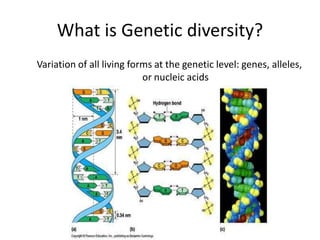
What is Genetic diversity?
Variation of all living forms at the genetic level: genes, alleles,
or nucleic acids
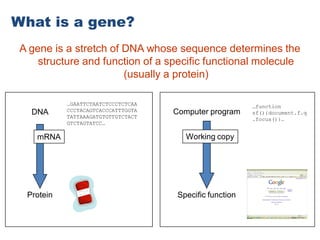
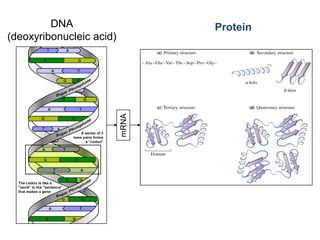
What is a gene?
A gene is a stretch of DNA whose sequence determines the
structure and function of a specific functional molecule
(usually a protein)
DNA
Protein
…GAATTCTAATCTCCCTCTCAA
CCCTACAGTCACCCATTTGGTA
TATTAAAGATGTGTTGTCTACT
GTCTAGTATCC…
Computer program
Specific function
…function
sf(){document.f.q
.focus()}…
Working copymRNA
DNA
(deoxyribonucleic acid)
mRNA
Protein
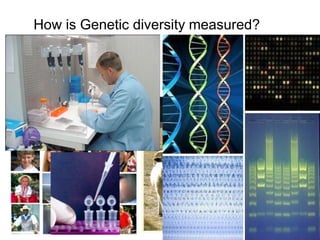
How is Genetic diversity measured?
• Examining variation in phenotype
• Molecular sequencing of DNA
“Molcular/genetic techniques have been commonly available for
only about 20 years, little information is available for most
species”
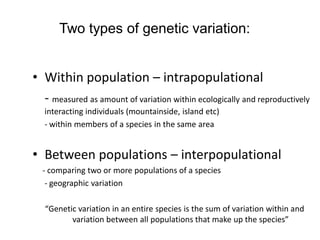
Two types of genetic variation:
• Within population – intrapopulational
- measured as amount of variation within ecologically and reproductively
interacting individuals (mountainside, island etc)
- within members of a species in the same area
• Between populations – interpopulational
- comparing two or more populations of a species
- geographic variation
“Genetic variation in an entire species is the sum of variation within and
variation between all populations that make up the species”
Evolutionary Processes
• Natural Selection
• Gene Flow
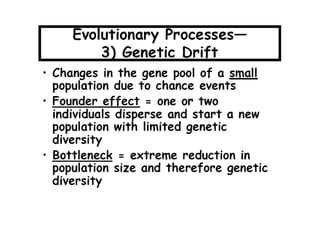
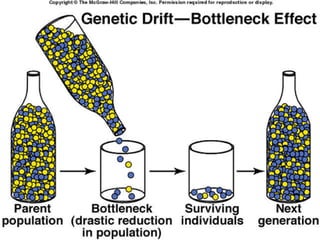
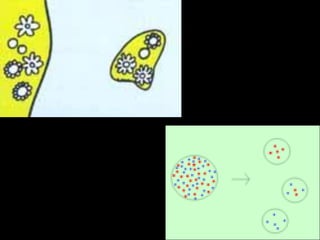
• Genetic Drift
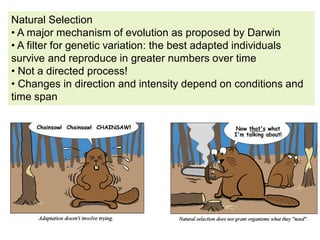
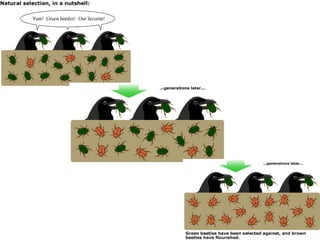
Natural Selection
• A major mechanism of evolution as proposed by Darwin
• A filter for genetic variation: the best adapted individuals
survive and reproduce in greater numbers over time
• Not a directed process!
• Changes in direction and intensity depend on conditions and
time span
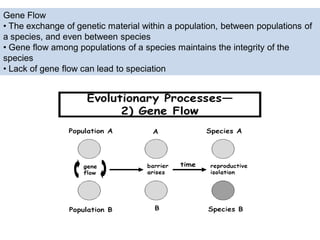
Gene Flow
• The exchange of genetic material within a population, between populations of
a species, and even between species
• Gene flow among populations of a species maintains the integrity of the
species
• Lack of gene flow can lead to speciation
What gives rise to diversity?
• Mutations – any alteration of a gene
• Creates variation within a gene pool
• Acted upon by natural selection
• Neutral mutations – do not affect an organism’s fitness
• DNA repair mechanisms mend changes before becoming
permanent mutations
What gives rise to diversity?
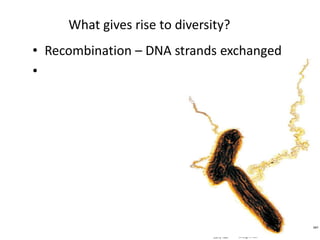
• Recombination – DNA strands exchanged
•
What gives rise to diversity?
• Genetic technologies / engineering
“creation of new and improved varieties
through insertion of new genes increases
diversity”
Importance of Diversity
Assures possible adaptations to environmental
changes and potential survival of species!
At least some individuals have a better chance to inherit
genetic characteristics that are vital for their survival
Dr. Richard Lankau, “Diversity within a species is
necessary to maintain diversity among species.
If any one type is removed from the system, the
cycle can break down, and the community
becomes dominated by a single species
(National Science Foundation, 2007)
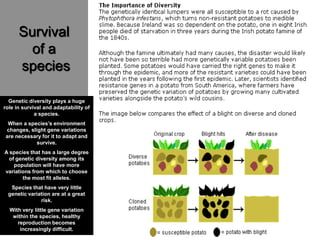
Survival
of a
species
Genetic diversity plays a huge
role in survival and adaptability of
a species.
When a species’s environment
changes, slight gene variations
are necessary for it to adapt and
survive.
A species that has a large degree
of genetic diversity among its
population will have more
variations from which to choose
the most fit alleles.
Species that have very little
genetic variation are at a great
risk.
With very little gene variation
within the species, healthy
reproduction becomes
increasingly difficult.
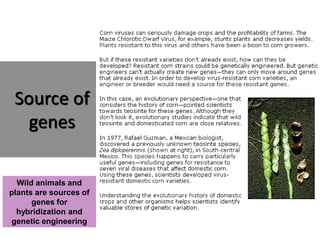
Source of
genes
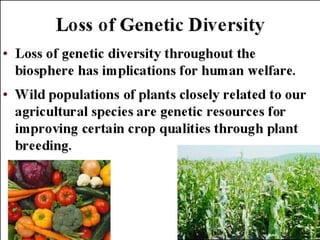
Wild animals and
plants are sources of
genes for
hybridization and
genetic engineering
Source of
genes
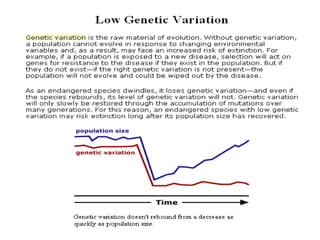
The loss of genetic diversity is difficult to see or measure.
In contrast, the reduction and extinction of populations is far
easier to see.
Extinction is not only the loss of whole species, but is also
preceded by a loss of genetic diversity within the species.
This loss reduces the species ability to perform its inherent
role in the whole ecosystem.
Furthermore, the loss of genetic diversity within a species can
result in the loss of useful and desirable traits (e.g.
resistance to parasites).
Reduced diversity may eliminate options to use untapped
resources for food production, industry and medicine.
Wild animals and
plants are sources of
genes for
hybridization and
genetic engineering
Loss of Diversity
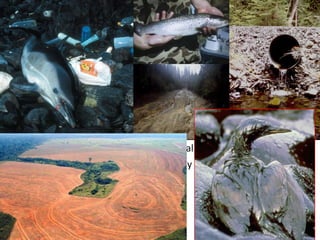
While some individuals might be able to tolerate an increased
load of pollutants in their environment, others, carrying
different genes, might suffer from infertility or even die
under the exact same environmental conditions.
Whilst the former will continue to live in the environment the
latter will either have to leave it or die.
This process is called natural selection and it leads to the loss
of genetic diversity in certain habitats. However, the
individuals that are no longer present might have carried
genes for faster growth or for the ability to cope better with
other stress factors.
Loss of Diversity
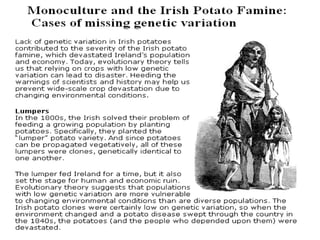
• Monoculture, monocropping
Did you know that more than 7 000 varieties of
tomatoes existed in 1900 ?
Today, the European Union counts approximately 150
when 70 varieties are marketed but only 2 or 3 are found
on stall, a manner of standardizing our food to the
detriment of biodiversity.
The principal cause is the expansion of the commercial
agriculture which encourages monoculture. The new
varieties often used by commercial agriculture replaced
the traditional agricultural varieties and led to their
disappearance.
Up to 90 percent of the varieties of cabbage, corn and of
tomato, for example, disappeared relatively recently and
with them we lost essential knowledge on the production
of various varieties and races and on the soils where they
were growing.
Loss of Diversity
• Habitat degradation
- direct loss of diversity
Any change in the environment - natural or human induced
causes a selection of events that only the fittest survive.
Loss of Diversity
• Habitat degradation
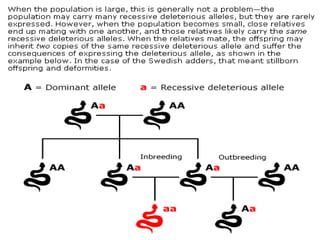
- increases risk of inbreeding
Habitat fragmentation and destruction now produce and will continue to
produce small, isolated populations
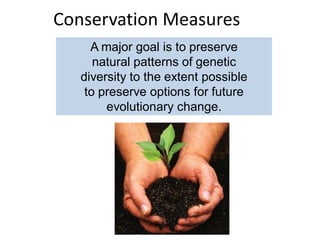
Conservation Measures
A major goal is to preserve
natural patterns of genetic
diversity to the extent possible
to preserve options for future
evolutionary change.
The worst thing that can happen….is not energy depletion,
economic collapses, limited nuclear war, or conquest by a
totalitarian government.
As terrible as these catastrophes would be for us, they can
be repaired within a few generations.
The one process ongoing… that will take millions of years
to correct is the loss of genetic and species diversity by the
destruction of natural habitats.
This is the folly that our descendants are least likely to
forgive us for."
Edward O. Wilson, Harvard’s Pulitzer Prize-winning
Biologist
What
lies ahead
for me?

Genetic diversity lecture notes

  • 1.
    Genetic Diversity Prepared by:Karyl Marie Fabricante-Dagoc
  • 2.
    What should westudy? • Levels of genetic variety • Population structure • Importance of Genetic diversity • Causes and Impacts of genetic loss • Current genetic technologies
  • 3.
    What is Geneticdiversity? Variation of all living forms at the genetic level: genes, alleles, or nucleic acids
  • 4.
    What is agene? A gene is a stretch of DNA whose sequence determines the structure and function of a specific functional molecule (usually a protein) DNA Protein …GAATTCTAATCTCCCTCTCAA CCCTACAGTCACCCATTTGGTA TATTAAAGATGTGTTGTCTACT GTCTAGTATCC… Computer program Specific function …function sf(){document.f.q .focus()}… Working copymRNA
  • 5.
  • 6.
    How is Geneticdiversity measured? • Examining variation in phenotype • Molecular sequencing of DNA “Molcular/genetic techniques have been commonly available for only about 20 years, little information is available for most species”
  • 7.
    Two types ofgenetic variation: • Within population – intrapopulational - measured as amount of variation within ecologically and reproductively interacting individuals (mountainside, island etc) - within members of a species in the same area • Between populations – interpopulational - comparing two or more populations of a species - geographic variation “Genetic variation in an entire species is the sum of variation within and variation between all populations that make up the species”
  • 8.
    Evolutionary Processes • NaturalSelection • Gene Flow • Genetic Drift
  • 9.
    Natural Selection • Amajor mechanism of evolution as proposed by Darwin • A filter for genetic variation: the best adapted individuals survive and reproduce in greater numbers over time • Not a directed process! • Changes in direction and intensity depend on conditions and time span
  • 11.
    Gene Flow • Theexchange of genetic material within a population, between populations of a species, and even between species • Gene flow among populations of a species maintains the integrity of the species • Lack of gene flow can lead to speciation
  • 15.
    What gives riseto diversity? • Mutations – any alteration of a gene • Creates variation within a gene pool • Acted upon by natural selection • Neutral mutations – do not affect an organism’s fitness • DNA repair mechanisms mend changes before becoming permanent mutations
  • 16.
    What gives riseto diversity? • Recombination – DNA strands exchanged •
  • 17.
    What gives riseto diversity? • Genetic technologies / engineering “creation of new and improved varieties through insertion of new genes increases diversity”
  • 18.
    Importance of Diversity Assurespossible adaptations to environmental changes and potential survival of species! At least some individuals have a better chance to inherit genetic characteristics that are vital for their survival Dr. Richard Lankau, “Diversity within a species is necessary to maintain diversity among species. If any one type is removed from the system, the cycle can break down, and the community becomes dominated by a single species (National Science Foundation, 2007)
  • 19.
    Survival of a species Genetic diversityplays a huge role in survival and adaptability of a species. When a species’s environment changes, slight gene variations are necessary for it to adapt and survive. A species that has a large degree of genetic diversity among its population will have more variations from which to choose the most fit alleles. Species that have very little genetic variation are at a great risk. With very little gene variation within the species, healthy reproduction becomes increasingly difficult.
  • 21.
    Source of genes Wild animalsand plants are sources of genes for hybridization and genetic engineering
  • 22.
    Source of genes The lossof genetic diversity is difficult to see or measure. In contrast, the reduction and extinction of populations is far easier to see. Extinction is not only the loss of whole species, but is also preceded by a loss of genetic diversity within the species. This loss reduces the species ability to perform its inherent role in the whole ecosystem. Furthermore, the loss of genetic diversity within a species can result in the loss of useful and desirable traits (e.g. resistance to parasites). Reduced diversity may eliminate options to use untapped resources for food production, industry and medicine. Wild animals and plants are sources of genes for hybridization and genetic engineering
  • 23.
    Loss of Diversity Whilesome individuals might be able to tolerate an increased load of pollutants in their environment, others, carrying different genes, might suffer from infertility or even die under the exact same environmental conditions. Whilst the former will continue to live in the environment the latter will either have to leave it or die. This process is called natural selection and it leads to the loss of genetic diversity in certain habitats. However, the individuals that are no longer present might have carried genes for faster growth or for the ability to cope better with other stress factors.
  • 24.
    Loss of Diversity •Monoculture, monocropping Did you know that more than 7 000 varieties of tomatoes existed in 1900 ? Today, the European Union counts approximately 150 when 70 varieties are marketed but only 2 or 3 are found on stall, a manner of standardizing our food to the detriment of biodiversity. The principal cause is the expansion of the commercial agriculture which encourages monoculture. The new varieties often used by commercial agriculture replaced the traditional agricultural varieties and led to their disappearance. Up to 90 percent of the varieties of cabbage, corn and of tomato, for example, disappeared relatively recently and with them we lost essential knowledge on the production of various varieties and races and on the soils where they were growing.
  • 27.
    Loss of Diversity •Habitat degradation - direct loss of diversity Any change in the environment - natural or human induced causes a selection of events that only the fittest survive.
  • 28.
    Loss of Diversity •Habitat degradation - increases risk of inbreeding Habitat fragmentation and destruction now produce and will continue to produce small, isolated populations
  • 29.
    Conservation Measures A majorgoal is to preserve natural patterns of genetic diversity to the extent possible to preserve options for future evolutionary change.
  • 30.
    The worst thingthat can happen….is not energy depletion, economic collapses, limited nuclear war, or conquest by a totalitarian government. As terrible as these catastrophes would be for us, they can be repaired within a few generations. The one process ongoing… that will take millions of years to correct is the loss of genetic and species diversity by the destruction of natural habitats. This is the folly that our descendants are least likely to forgive us for." Edward O. Wilson, Harvard’s Pulitzer Prize-winning Biologist
  • 31.