HEMODYNAMIC DISORDERS
The health and well-being of cells & tissues
depend not only on an intact circulation to
deliver nutrients but also on normal fluid
hemostasis.
HEMODYNAMICS
An important part of cardiovascular physiology
dealing with the forces the pump (the heart) has to
develop to circulate blood through the
cardiovascular system.
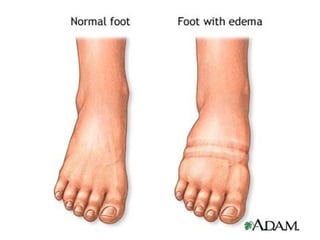
EDEMA
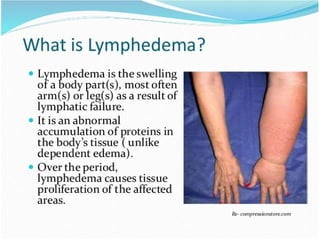
• palpable swelling produced by expansion
of the interstitial fluid volume
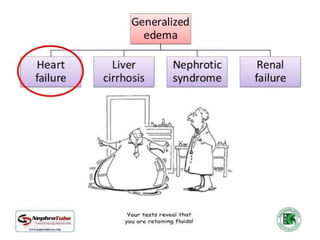
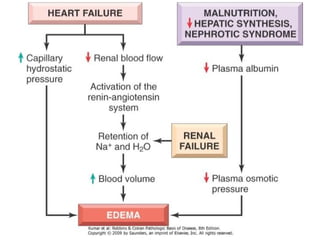
• medical term for swelling caused by fluid
in the small spaces that surround the
body's tissues and organs
• it becomes eviden with the interstitial fluid
increases by 1.5 to 2 liters
CLASSIFICATION OF EDEMA
• According to site:
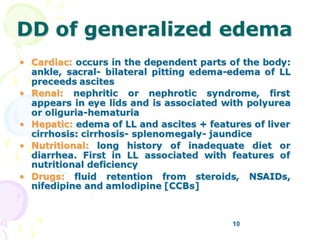
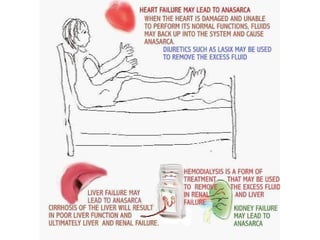
a. generalized (anasarca)
b. localized
• According to consistency:
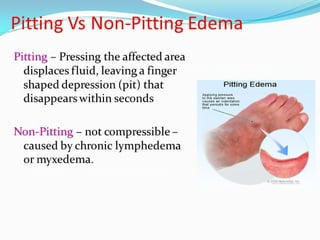
a. pitting (soft edema)
b. non-pitting (hard edema)
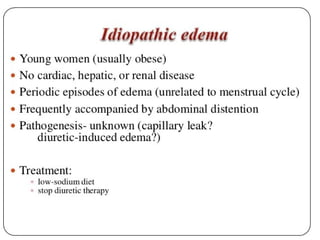
• According to pathophysiological mechanism
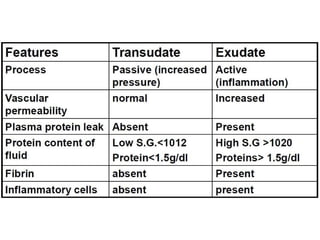
a. transudate (low protein content)
b. exudate (high protein content)
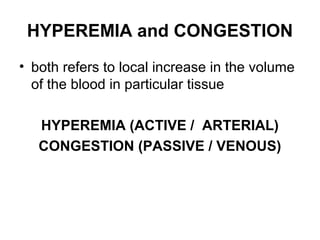
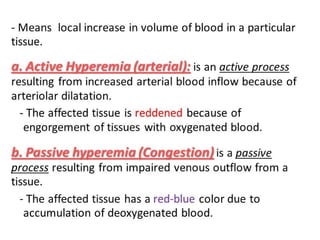
HYPEREMIA and CONGESTION
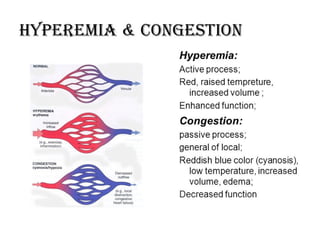
• both refers to local increase in the volume
of the blood in particular tissue
HYPEREMIA (ACTIVE / ARTERIAL)
CONGESTION (PASSIVE / VENOUS)
ACTIVE HYPEREMIA
• active increase in the volume of blood in
the tissues
• CAUSES:
a. physiological - muscular exercise
blushing
b. pathological - acute inflammation
CONGESTION
• impaired venous flow from the tissues
such as cardiac failure, venous obstruction
• cause is always pathological
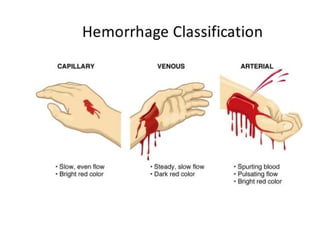
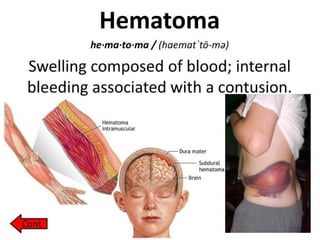
HEMORRHAGE
• loss of blood or blood escape from circulatory
system
• bleeding can occur internally and externally
• causes:
a. physical trauma - stabbing, gunshot,
vehicular accident
b. inadequacies of blood clotting - too few
or poorly functioning platelets, missing or
low amount of clotting factors
Pathology Bio 134 Hemodynamic disorders

Pathology Bio 134 Hemodynamic disorders

  • 1.
    HEMODYNAMIC DISORDERS The healthand well-being of cells & tissues depend not only on an intact circulation to deliver nutrients but also on normal fluid hemostasis.
  • 2.
    HEMODYNAMICS An important partof cardiovascular physiology dealing with the forces the pump (the heart) has to develop to circulate blood through the cardiovascular system.
  • 3.
    EDEMA • palpable swellingproduced by expansion of the interstitial fluid volume • medical term for swelling caused by fluid in the small spaces that surround the body's tissues and organs • it becomes eviden with the interstitial fluid increases by 1.5 to 2 liters
  • 5.
    CLASSIFICATION OF EDEMA •According to site: a. generalized (anasarca) b. localized • According to consistency: a. pitting (soft edema) b. non-pitting (hard edema) • According to pathophysiological mechanism a. transudate (low protein content) b. exudate (high protein content)
  • 18.
    HYPEREMIA and CONGESTION •both refers to local increase in the volume of the blood in particular tissue HYPEREMIA (ACTIVE / ARTERIAL) CONGESTION (PASSIVE / VENOUS)
  • 21.
    ACTIVE HYPEREMIA • activeincrease in the volume of blood in the tissues • CAUSES: a. physiological - muscular exercise blushing b. pathological - acute inflammation
  • 22.
    CONGESTION • impaired venousflow from the tissues such as cardiac failure, venous obstruction • cause is always pathological
  • 23.
    HEMORRHAGE • loss ofblood or blood escape from circulatory system • bleeding can occur internally and externally • causes: a. physical trauma - stabbing, gunshot, vehicular accident b. inadequacies of blood clotting - too few or poorly functioning platelets, missing or low amount of clotting factors