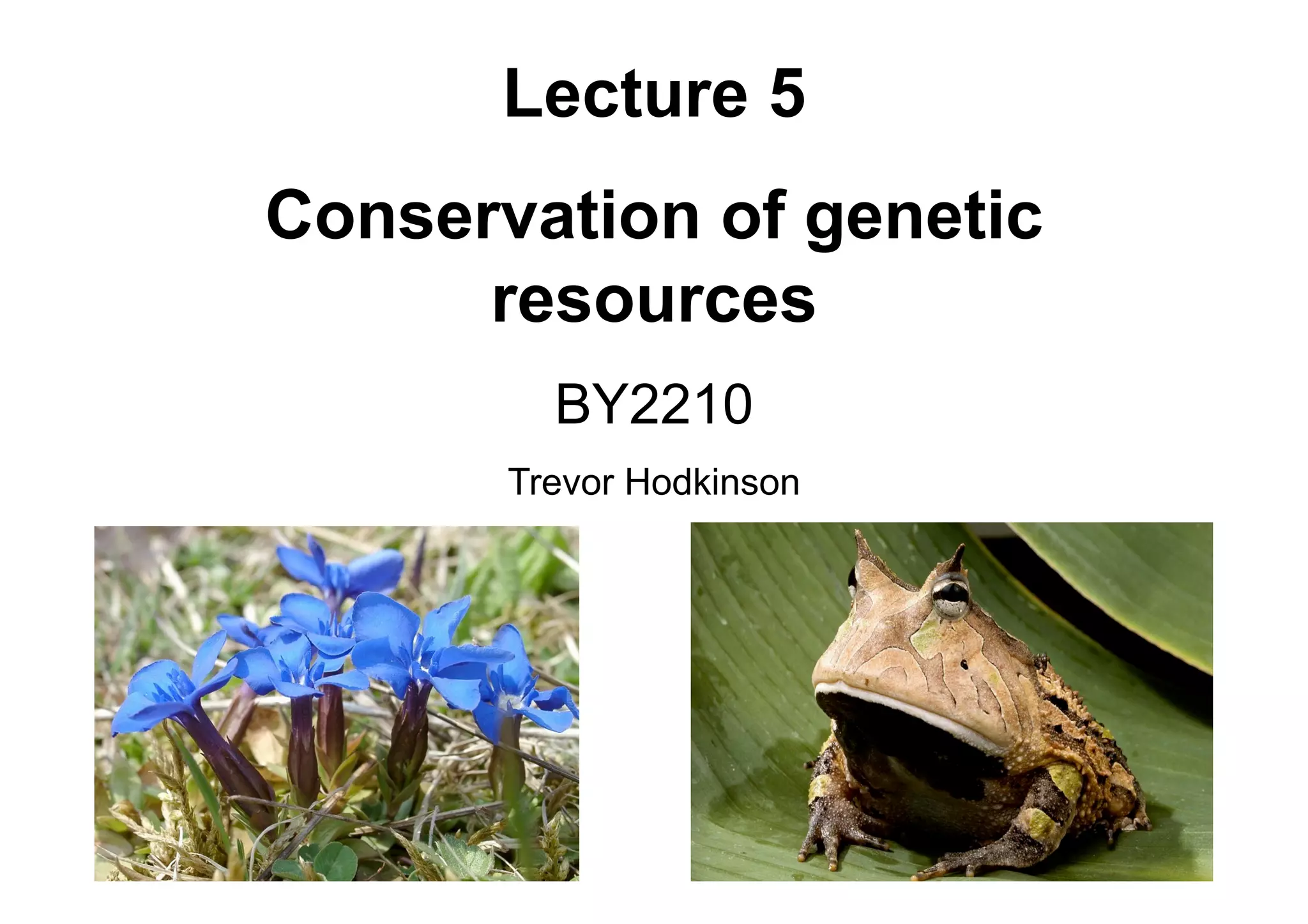
Lecture 5
Conservation of genetic
resources
BY2210
Trevor Hodkinson
Biological conservation
“Maintain the diversity of living
organisms, their habitats and
the inter-relationships between
organisms and their
environment”
Spellerberg & Hardes 1992
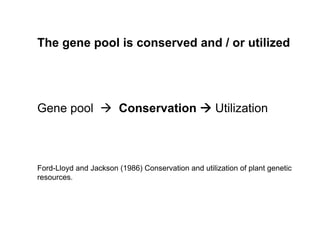
The gene pool is conserved and / or utilized
Gene pool à Conservation  Utilization
Ford-Lloyd and Jackson (1986) Conservation and utilization of plant genetic
resources.
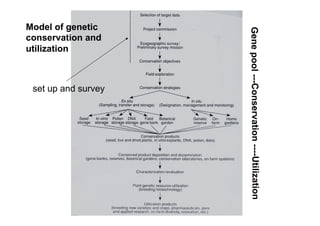
Genepool---Conservation----Utilization
Model of genetic
conservation and
utilization
set up and survey
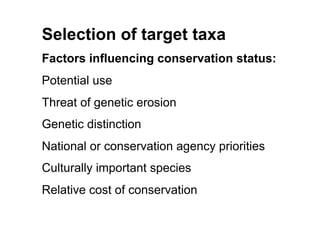
Selection of target taxa
Factors influencing conservation status:
Potential use
Threat of genetic erosion
Genetic distinction
National or conservation agency priorities
Culturally important species
Relative cost of conservation
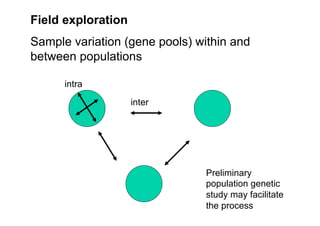
inter
intra
Field exploration
Sample variation (gene pools) within and
between populations
Preliminary
population genetic
study may facilitate
the process
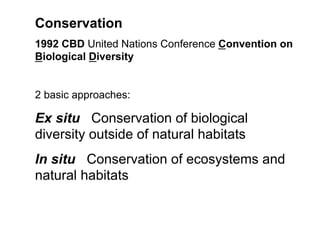
Conservation
1992 CBD United Nations Conference Convention on
Biological Diversity
2 basic approaches:
Ex situ Conservation of biological
diversity outside of natural habitats
In situ Conservation of ecosystems and
natural habitats
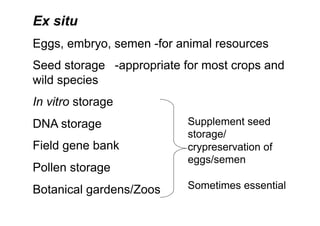
Ex situ
Eggs, embryo, semen -for animal resources
Seed storage -appropriate for most crops and
wild species
In vitro storage
DNA storage
Field gene bank
Pollen storage
Botanical gardens/Zoos
Supplement seed
storage/
crypreservation of
eggs/semen
Sometimes essential
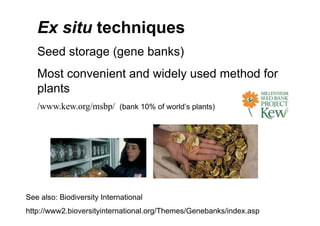
Ex situ techniques
Seed storage (gene banks)
Most convenient and widely used method for
plants
/www.kew.org/msbp/ (bank 10% of world’s plants)
See also: Biodiversity International
http://www2.bioversityinternational.org/Themes/Genebanks/index.asp
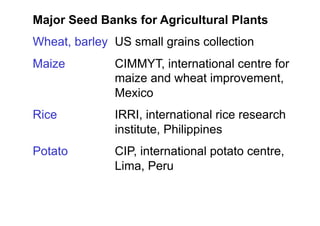
Major Seed Banks for Agricultural Plants
Wheat, barley US small grains collection
Maize CIMMYT, international centre for
maize and wheat improvement,
Mexico
Rice IRRI, international rice research
institute, Philippines
Potato CIP, international potato centre,
Lima, Peru
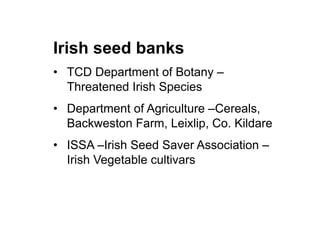
Irish seed banks
•  TCD Department of Botany –
Threatened Irish Species
•  Department of Agriculture –Cereals,
Backweston Farm, Leixlip, Co. Kildare
•  ISSA –Irish Seed Saver Association –
Irish Vegetable cultivars
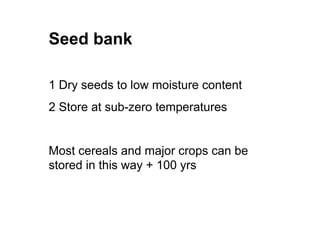
Seed bank
1 Dry seeds to low moisture content
2 Store at sub-zero temperatures
Most cereals and major crops can be
stored in this way + 100 yrs
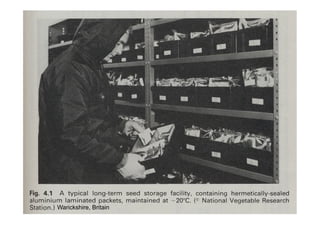
Warickshire, Britain
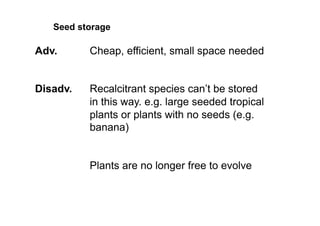
Adv. Cheap, efficient, small space needed
Disadv. Recalcitrant species can’t be stored
in this way. e.g. large seeded tropical
plants or plants with no seeds (e.g.
banana)
Plants are no longer free to evolve
Seed storage
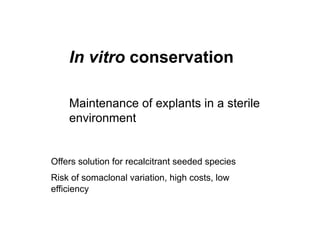
In vitro conservation
Maintenance of explants in a sterile
environment
Offers solution for recalcitrant seeded species
Risk of somaclonal variation, high costs, low
efficiency
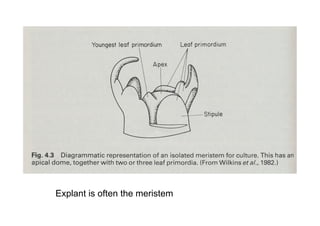
Explant is often the meristem
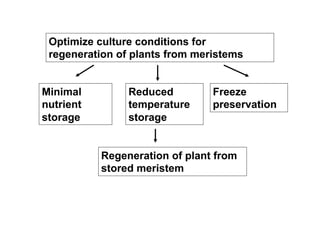
Optimize culture conditions for
regeneration of plants from meristems
Minimal
nutrient
storage
Reduced
temperature
storage
Freeze
preservation
Regeneration of plant from
stored meristem
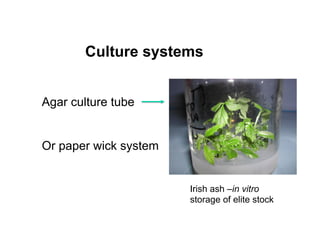
Agar culture tube
Or paper wick system
Culture systems
Irish ash –in vitro
storage of elite stock
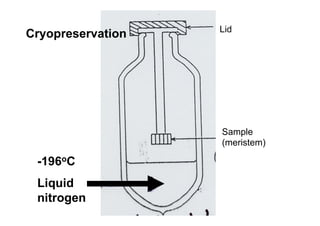
Lid
Sample
(meristem)
-196oC
Liquid
nitrogen
Cryopreservation
Technique needs to be perfected to
reduce freeze thaw damage (DMSO-
cryoprotectant in plants).
Offers a long term solution.
It may be possible to store material
indefinately
Pollen storage
Possible but only conserves
paternal material
Haploid plants can be generated for
breeding purposes
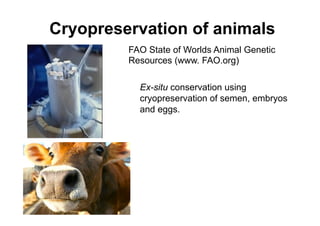
Cryopreservation of animals
FAO State of Worlds Animal Genetic
Resources (www. FAO.org)
Ex-situ conservation using
cryopreservation of semen, embryos
and eggs.
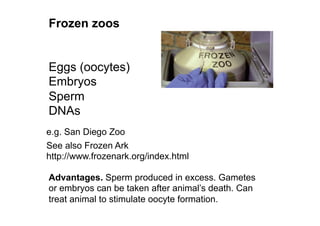
Frozen zoos
Eggs (oocytes)
Embryos
Sperm
DNAs
e.g. San Diego Zoo
See also Frozen Ark
http://www.frozenark.org/index.html
Advantages. Sperm produced in excess. Gametes
or embryos can be taken after animal’s death. Can
treat animal to stimulate oocyte formation.
DNA storage
• Extract DNA
• Store -dry (DNA book
technology)
-in buffer –80oC
• Genes can be utilized
• Plants or animals can’t be
regenerated (yet)
Department of Botany
Trinity College Dublin
DNA BANK
Extract &
store DNA
Field gene bank conservation
Collect material from the wild and keep it in
another location
Field gene banks used for:
Cocoa Coffee
Rubber Banana
Coconut Sweet potato
Mango Ash -Ireland (TEAGASC)
Field gene banks
Easily accessible for use
Can evaluate while conserving
Restricted in the numbers that can be
conserved because of space
Open to pests and disease and vandalism
Botanic gardens/zoos
Only a few specimens per species
can be maintained
However, gardens/zoos often have
conservation units and associated
seed banks or cryopreservation
units (e.g. Glasnevin, Dublin)
www.botanicgardens.ie/conserve/consnews.htm
Important for education
In situ conservation
Maintain genetic variation on site (wild or
traditional farming systems)
Genetic reserve conservation
Conservation of wild species in situ
This is the most appropriate strategy for
most wild species
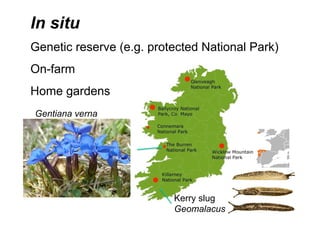
In situ
Genetic reserve (e.g. protected National Park)
On-farm
Home gardens
Gentiana verna
Kerry slug
Geomalacus
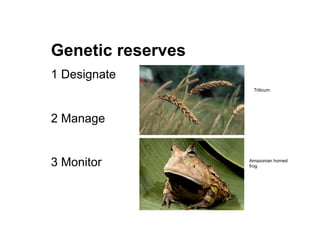
Genetic reserves
1 Designate
2 Manage
3 Monitor
Triticum
Amazonian horned
frog
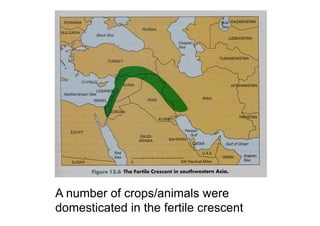
A number of crops/animals were
domesticated in the fertile crescent
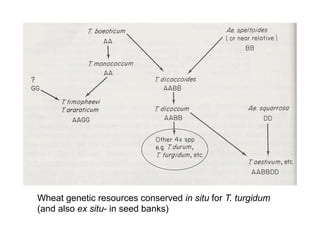
Wheat genetic resources conserved in situ for T. turgidum
(and also ex situ- in seed banks)
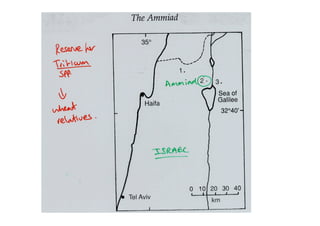
Ammiad reserve (Israel)
Established to conserve wild relatives of
cereals
T. turgidum var. dicoccoides (wild emmer) –
the progenitor of durum & common wheat
Reserve is also important community for
non-target taxa such as genetically
important legume species
On farm conservation
The maintenance of traditional crop varieties (land-
races) or animal breeds
Landraces are sown and harvested; breeds are
maintained
(subsidise farmers to farm old varieties/breeds)
Home garden conservation
Smaller scale, generally more species diverse
Mainly medicinal, flavouring, or vegetable spp.
Eg. Chelsea Physic Garden, London
Conclusions
-Conservation strategies
should be seen as being
complementary
-Complementary conservation
CBD 1992
Next lecture –Utilization
Gene pool àConservation à Utilization

Conservation of Genetic Resources

  • 1.
    Lecture 5 Conservation ofgenetic resources BY2210 Trevor Hodkinson
  • 2.
    Biological conservation “Maintain thediversity of living organisms, their habitats and the inter-relationships between organisms and their environment” Spellerberg & Hardes 1992
  • 3.
    The gene poolis conserved and / or utilized Gene pool à Conservation  Utilization Ford-Lloyd and Jackson (1986) Conservation and utilization of plant genetic resources.
  • 4.
  • 5.
    Selection of targettaxa Factors influencing conservation status: Potential use Threat of genetic erosion Genetic distinction National or conservation agency priorities Culturally important species Relative cost of conservation
  • 6.
    inter intra Field exploration Sample variation(gene pools) within and between populations Preliminary population genetic study may facilitate the process
  • 7.
    Conservation 1992 CBD UnitedNations Conference Convention on Biological Diversity 2 basic approaches: Ex situ Conservation of biological diversity outside of natural habitats In situ Conservation of ecosystems and natural habitats
  • 8.
    Ex situ Eggs, embryo,semen -for animal resources Seed storage -appropriate for most crops and wild species In vitro storage DNA storage Field gene bank Pollen storage Botanical gardens/Zoos Supplement seed storage/ crypreservation of eggs/semen Sometimes essential
  • 9.
    Ex situ techniques Seedstorage (gene banks) Most convenient and widely used method for plants /www.kew.org/msbp/ (bank 10% of world’s plants) See also: Biodiversity International http://www2.bioversityinternational.org/Themes/Genebanks/index.asp
  • 10.
    Major Seed Banksfor Agricultural Plants Wheat, barley US small grains collection Maize CIMMYT, international centre for maize and wheat improvement, Mexico Rice IRRI, international rice research institute, Philippines Potato CIP, international potato centre, Lima, Peru
  • 11.
    Irish seed banks • TCD Department of Botany – Threatened Irish Species •  Department of Agriculture –Cereals, Backweston Farm, Leixlip, Co. Kildare •  ISSA –Irish Seed Saver Association – Irish Vegetable cultivars
  • 12.
    Seed bank 1 Dryseeds to low moisture content 2 Store at sub-zero temperatures Most cereals and major crops can be stored in this way + 100 yrs
  • 13.
  • 14.
    Adv. Cheap, efficient,small space needed Disadv. Recalcitrant species can’t be stored in this way. e.g. large seeded tropical plants or plants with no seeds (e.g. banana) Plants are no longer free to evolve Seed storage
  • 15.
    In vitro conservation Maintenanceof explants in a sterile environment Offers solution for recalcitrant seeded species Risk of somaclonal variation, high costs, low efficiency
  • 16.
    Explant is oftenthe meristem
  • 17.
    Optimize culture conditionsfor regeneration of plants from meristems Minimal nutrient storage Reduced temperature storage Freeze preservation Regeneration of plant from stored meristem
  • 18.
    Agar culture tube Orpaper wick system Culture systems Irish ash –in vitro storage of elite stock
  • 19.
  • 20.
    Technique needs tobe perfected to reduce freeze thaw damage (DMSO- cryoprotectant in plants). Offers a long term solution. It may be possible to store material indefinately
  • 21.
    Pollen storage Possible butonly conserves paternal material Haploid plants can be generated for breeding purposes
  • 22.
    Cryopreservation of animals FAOState of Worlds Animal Genetic Resources (www. FAO.org) Ex-situ conservation using cryopreservation of semen, embryos and eggs.
  • 23.
    Frozen zoos Eggs (oocytes) Embryos Sperm DNAs e.g.San Diego Zoo See also Frozen Ark http://www.frozenark.org/index.html Advantages. Sperm produced in excess. Gametes or embryos can be taken after animal’s death. Can treat animal to stimulate oocyte formation.
  • 24.
    DNA storage • Extract DNA • Store-dry (DNA book technology) -in buffer –80oC • Genes can be utilized • Plants or animals can’t be regenerated (yet)
  • 25.
    Department of Botany TrinityCollege Dublin DNA BANK Extract & store DNA
  • 26.
    Field gene bankconservation Collect material from the wild and keep it in another location Field gene banks used for: Cocoa Coffee Rubber Banana Coconut Sweet potato Mango Ash -Ireland (TEAGASC)
  • 27.
    Field gene banks Easilyaccessible for use Can evaluate while conserving Restricted in the numbers that can be conserved because of space Open to pests and disease and vandalism
  • 28.
    Botanic gardens/zoos Only afew specimens per species can be maintained However, gardens/zoos often have conservation units and associated seed banks or cryopreservation units (e.g. Glasnevin, Dublin) www.botanicgardens.ie/conserve/consnews.htm Important for education
  • 29.
    In situ conservation Maintaingenetic variation on site (wild or traditional farming systems) Genetic reserve conservation Conservation of wild species in situ This is the most appropriate strategy for most wild species
  • 30.
    In situ Genetic reserve(e.g. protected National Park) On-farm Home gardens Gentiana verna Kerry slug Geomalacus
  • 31.
    Genetic reserves 1 Designate 2Manage 3 Monitor Triticum Amazonian horned frog
  • 32.
    A number ofcrops/animals were domesticated in the fertile crescent
  • 34.
    Wheat genetic resourcesconserved in situ for T. turgidum (and also ex situ- in seed banks)
  • 35.
    Ammiad reserve (Israel) Establishedto conserve wild relatives of cereals T. turgidum var. dicoccoides (wild emmer) – the progenitor of durum & common wheat Reserve is also important community for non-target taxa such as genetically important legume species
  • 36.
    On farm conservation Themaintenance of traditional crop varieties (land- races) or animal breeds Landraces are sown and harvested; breeds are maintained (subsidise farmers to farm old varieties/breeds) Home garden conservation Smaller scale, generally more species diverse Mainly medicinal, flavouring, or vegetable spp. Eg. Chelsea Physic Garden, London
  • 37.
    Conclusions -Conservation strategies should beseen as being complementary -Complementary conservation CBD 1992
  • 38.
    Next lecture –Utilization Genepool àConservation à Utilization