 Laryngitis is an
which may 
lead to complete loss of voice. 
which is 
worse at night
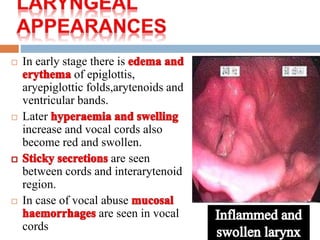
 In early stage there is 
of epiglottis, 
aryepiglottic folds,arytenoids and 
ventricular bands. 
 Later 
increase and vocal cords also 
become red and swollen. 
are seen 
between cords and interarytenoid 
region. 
 In case of vocal abuse 
are seen in vocal 
cords
Vocal rest 
Avoidance of smoking and alcohol 
Steam inhalation: with oil of eucalyptus or pine 
Cough sedatives 
Antibiotics and steroids.
 It is an condition 
confined to supraglottic structures 
 There is marked of these 
structures which may obstruct the airway
is the most 
common organism responsible 
 Sore throat 
 Dysphagia 
 Dyspnoea and stridor 
 Fever upto 40 degree Celsius which is 
due to septicemia
 Depressing the 
tongue with a 
tongue depressor 
may show 
may 
show edema and 
Congestion of 
structure 
Swollen 
epiglottis 
Normal 
epiglottis
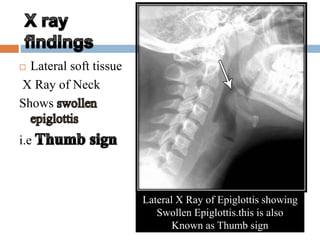
 Lateral soft tissue 
X Ray of Neck 
Shows 
i.e 
Lateral X Ray of Epiglottis showing 
Swollen Epiglottis.this is also 
Known as Thumb sign
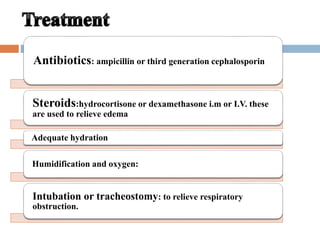
Antibiotics: ampicillin or third generation cephalosporin 
Steroids:hydrocortisone or dexamethasone i.m or I.V. these 
are used to relieve edema 
Adequate hydration 
Humidification and oxygen: 
Intubation or tracheostomy: to relieve respiratory 
obstruction.
 It is an inflammatory condition of 
:mostly it is a viral infection 
( affecting children 
between age 6 months and 3 years 
: the loose areolar tissue in subglottic 
region swells up and causes
and 
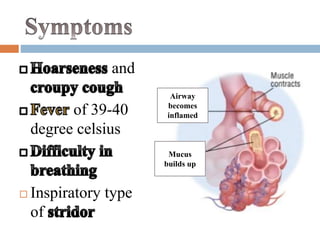
of 39-40 
degree celsius 
 Inspiratory type 
of 
Airway 
becomes 
inflamed 
Mucus 
builds up
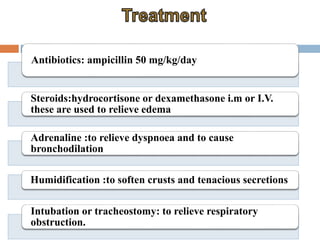
Antibiotics: ampicillin 50 mg/kg/day 
Steroids:hydrocortisone or dexamethasone i.m or I.V. 
these are used to relieve edema 
Adrenaline :to relieve dyspnoea and to cause 
bronchodilation 
Humidification :to soften crusts and tenacious secretions 
Intubation or tracheostomy: to relieve respiratory 
obstruction.
Acute epiglottitis

Acute epiglottitis

  • 3.
  • 4.
    which may leadto complete loss of voice. which is worse at night
  • 5.
     In earlystage there is of epiglottis, aryepiglottic folds,arytenoids and ventricular bands.  Later increase and vocal cords also become red and swollen. are seen between cords and interarytenoid region.  In case of vocal abuse are seen in vocal cords
  • 6.
    Vocal rest Avoidanceof smoking and alcohol Steam inhalation: with oil of eucalyptus or pine Cough sedatives Antibiotics and steroids.
  • 7.
     It isan condition confined to supraglottic structures  There is marked of these structures which may obstruct the airway
  • 8.
    is the most common organism responsible  Sore throat  Dysphagia  Dyspnoea and stridor  Fever upto 40 degree Celsius which is due to septicemia
  • 9.
     Depressing the tongue with a tongue depressor may show may show edema and Congestion of structure Swollen epiglottis Normal epiglottis
  • 10.
     Lateral softtissue X Ray of Neck Shows i.e Lateral X Ray of Epiglottis showing Swollen Epiglottis.this is also Known as Thumb sign
  • 11.
    Antibiotics: ampicillin orthird generation cephalosporin Steroids:hydrocortisone or dexamethasone i.m or I.V. these are used to relieve edema Adequate hydration Humidification and oxygen: Intubation or tracheostomy: to relieve respiratory obstruction.
  • 12.
     It isan inflammatory condition of :mostly it is a viral infection ( affecting children between age 6 months and 3 years : the loose areolar tissue in subglottic region swells up and causes
  • 13.
    and of 39-40 degree celsius  Inspiratory type of Airway becomes inflamed Mucus builds up
  • 14.
    Antibiotics: ampicillin 50mg/kg/day Steroids:hydrocortisone or dexamethasone i.m or I.V. these are used to relieve edema Adrenaline :to relieve dyspnoea and to cause bronchodilation Humidification :to soften crusts and tenacious secretions Intubation or tracheostomy: to relieve respiratory obstruction.