OXYGEN THERAPY The Facts We Need To Know Midzraina Lyne A. Mohamad ADZU-SOM II
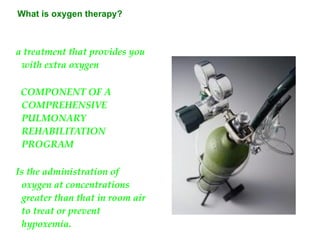
a treatment that provides you with extra oxygen
COMPONENT OF A COMPREHENSIVE PULMONARY REHABILITATION PROGRAM
Is the administration of oxygen at concentrations greater than that in room air to treat or prevent hypoxemia. What is oxygen therapy?
Primary Goal: correct alveolar and/or tissue hypoxia can be done in a hospital, another medical setting, or at home.
Indications: The chief criterion or indication for oxygen therapy is s ignificant level of  hypoxemia( resting arterial Po 2  of 55 mm Hg or less while breathing air.)
Other  indications: Treat hypoxia
Decrease the work of breathing
Decrease myocardial work
Severe trauma
Short term, post operative
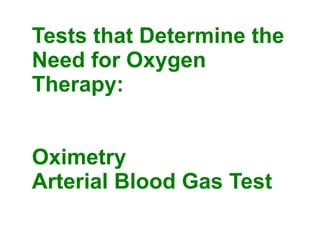
Tests that Determine the Need for Oxygen Therapy: Oximetry
Arterial Blood Gas Test
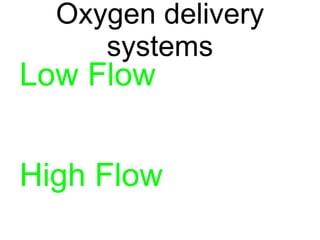
Oxygen delivery systems Low Flow
High Flow
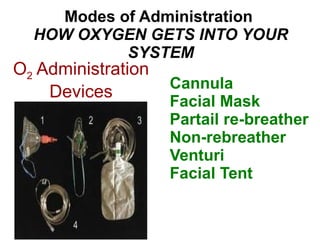
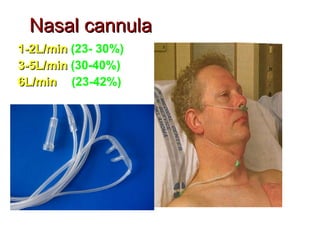
Modes of Administration  HOW OXYGEN GETS INTO YOUR SYSTEM O 2  Administration Devices Cannula
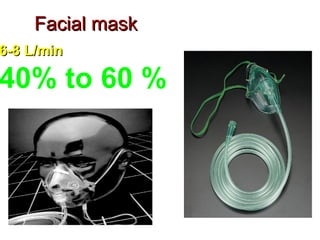
Facial Mask
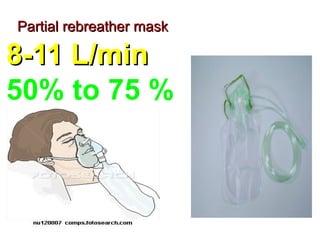
Partail re-breather
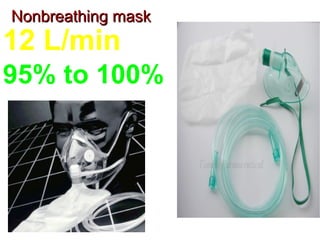
Non-rebreather
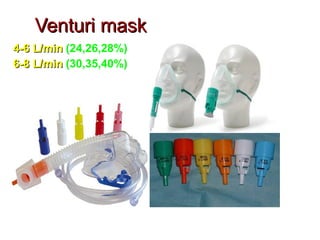
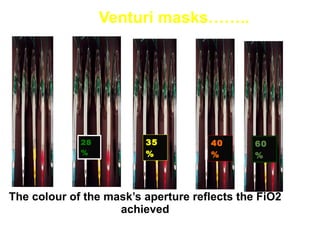
Venturi
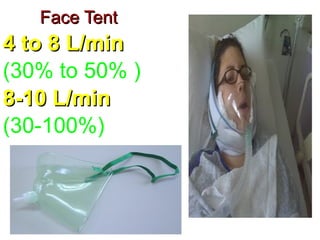
Facial Tent
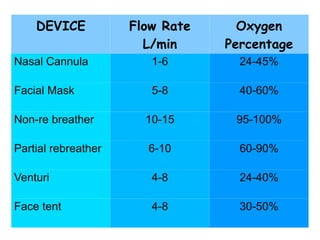
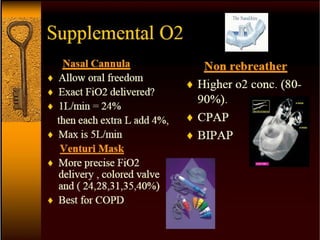
DEVICE Flow Rate L/min Oxygen Percentage Nasal Cannula 1-6 24-45% Facial Mask 5-8 40-60% Non-re breather 10-15 95-100% Partial rebreather 6-10 60-90% Venturi 4-8 24-40% Face tent 4-8 30-50%
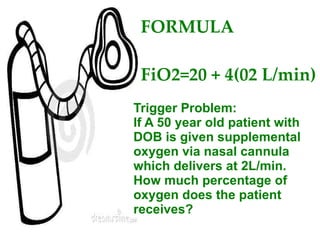
FORMULA FiO2=20 + 4(02 L/min) Trigger Problem: If A 50 year old patient with DOB is given supplemental oxygen via nasal cannula which delivers at 2L/min. How much percentage of oxygen does the patient receives?
 

Oxygen therapy presentation by midz