Oxygen therapy
Josfeena Bashir
Lecturer, BGSBU
By
Oxygen therapy
Definition:
 Oxygen is a colorless, odorless, tasteless gas
that is essential for the body to function properly
and to survive.
Oxygen therapy is a treatment that
delivers oxygen gas to breathe. The oxygen
therapy is received from tubes resting in nose, a
face mask, or a tube placed n your trachea, or
windpipe. This treatment increases the amount
of oxygen in lungs to receive and deliver to blood.
What is meaning of O2 therapy
Oxygen therapy is the administration of
oxygen at a concentration of pressure greater
than that found in the environmental
atmosphere
The air that we breathe contain approximately
21% oxygen
the heart relies on oxygen to pump blood.
Purpose
Oxygen therapy is a key treatment in
respiratory care.
The purpose is to increase oxygen
saturation in tissues where the
saturation levels are too low due to
illness or injury.
What are the signs that a person
needs oxygen
• shortness of breath.
• headache.
• restlessness.
• dizziness.
• rapid breathing.
• chest pain.
• confusion.
• high blood pressure.
Contd…..
 Pulmonary hypertension
 Acute myocardial infarction (heart attack)
 Short-term therapy, such as post-anesthesia
recovery
 Oxygen may also be used to treat chronic
lung disease patients during exercise .
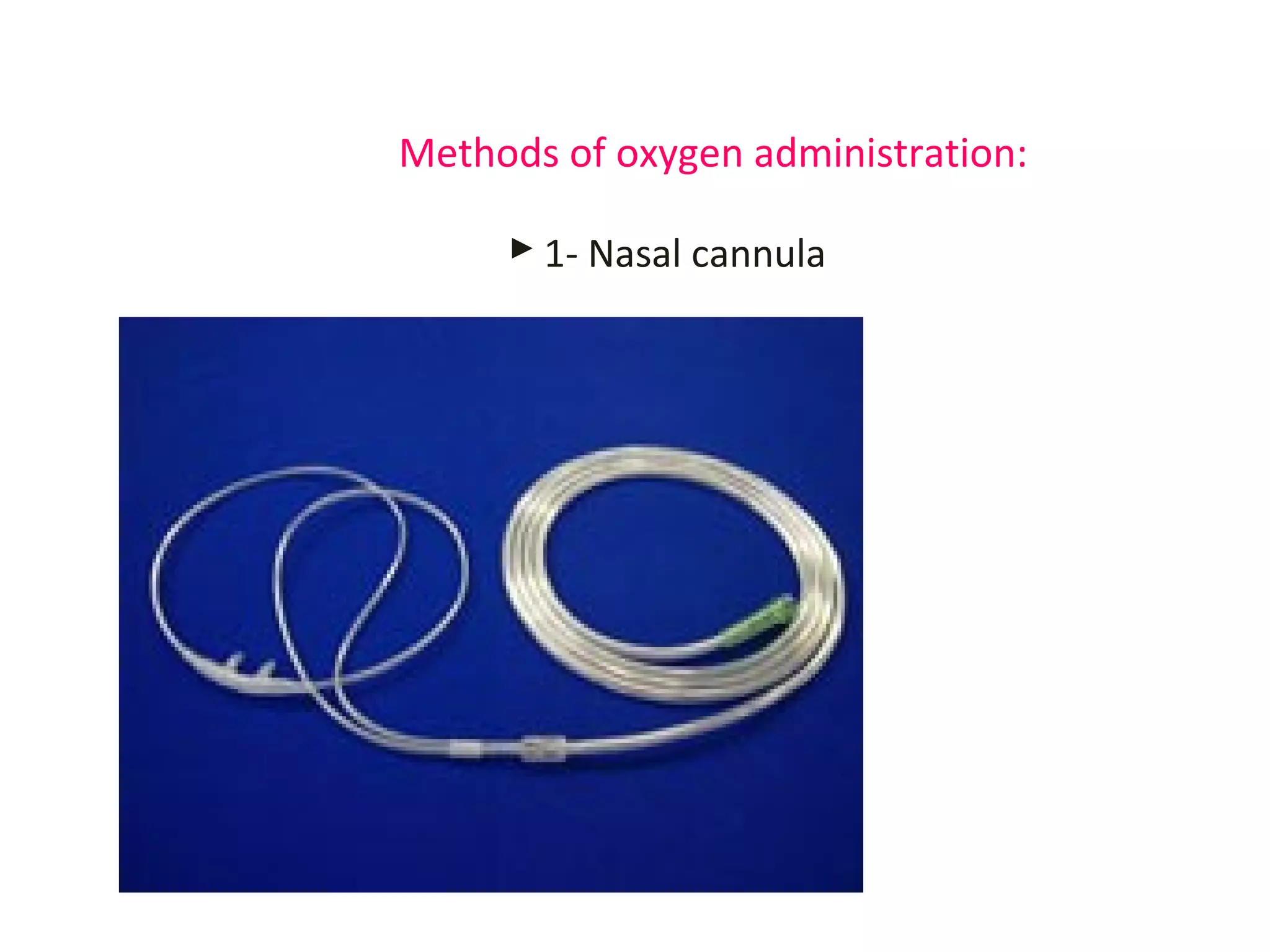
Methods of oxygen administration:
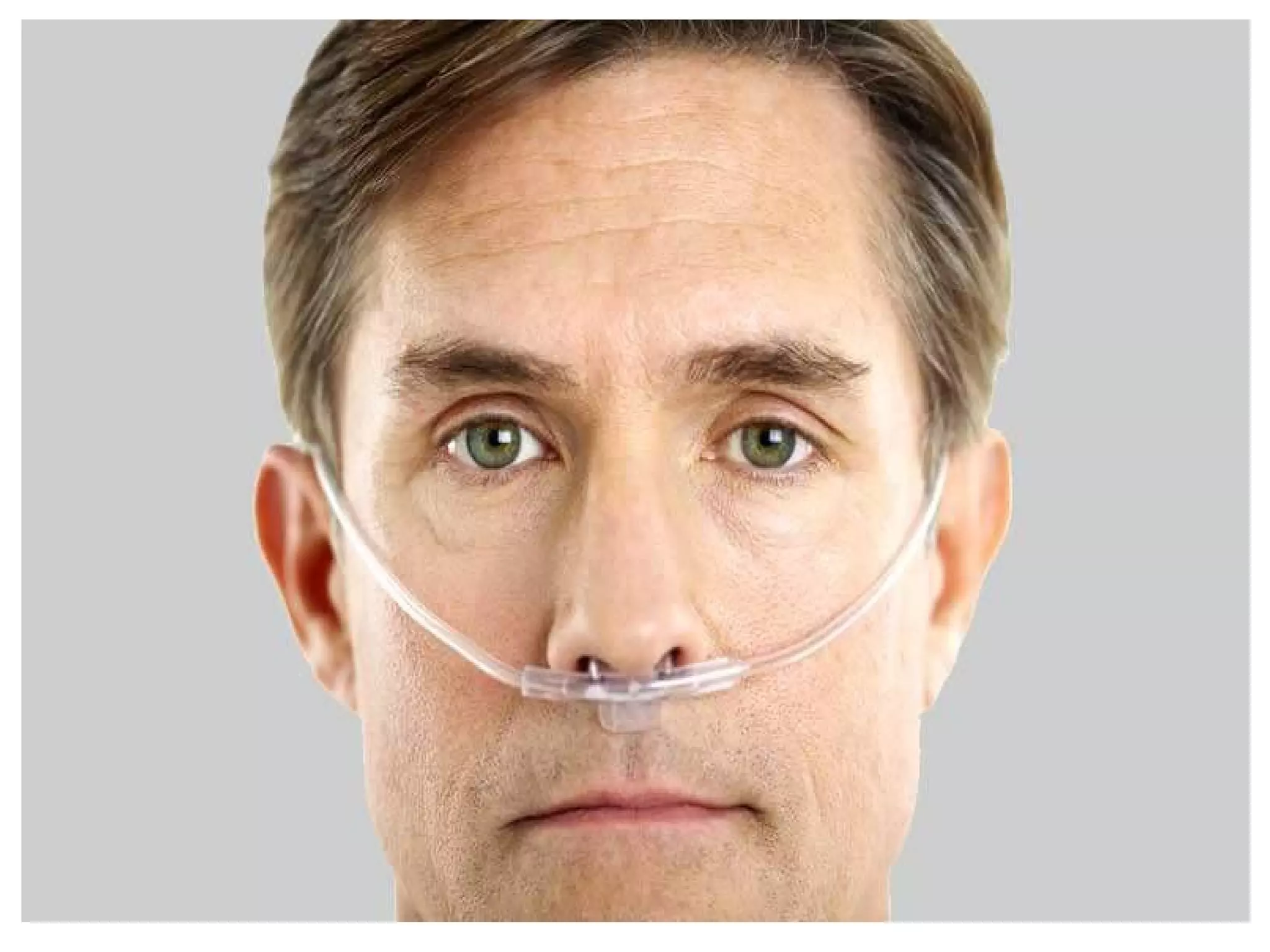
 1- Nasal cannula
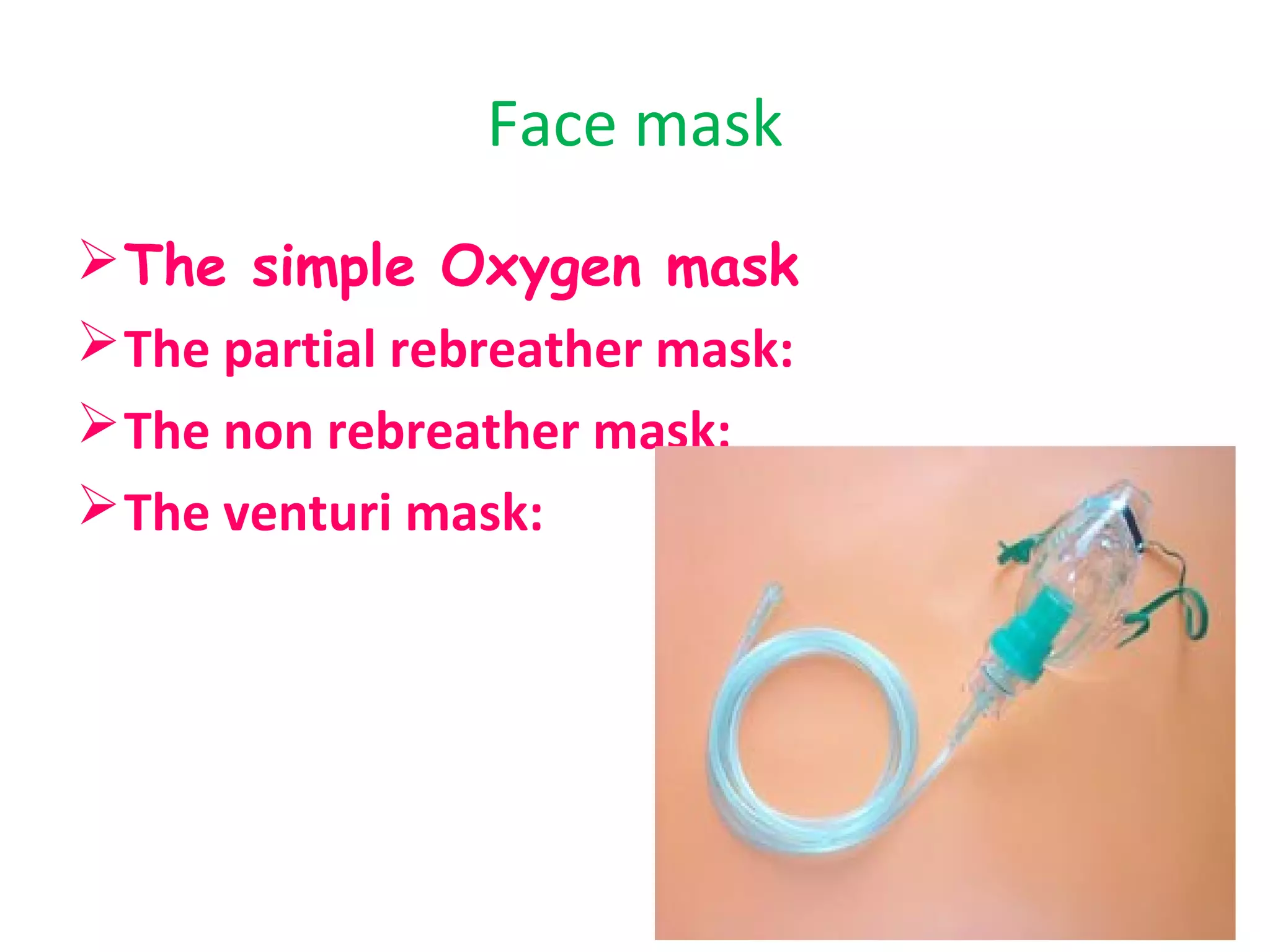
Face mask
The simple Oxygen mask
The partial rebreather mask:
The non rebreather mask:
The venturi mask:
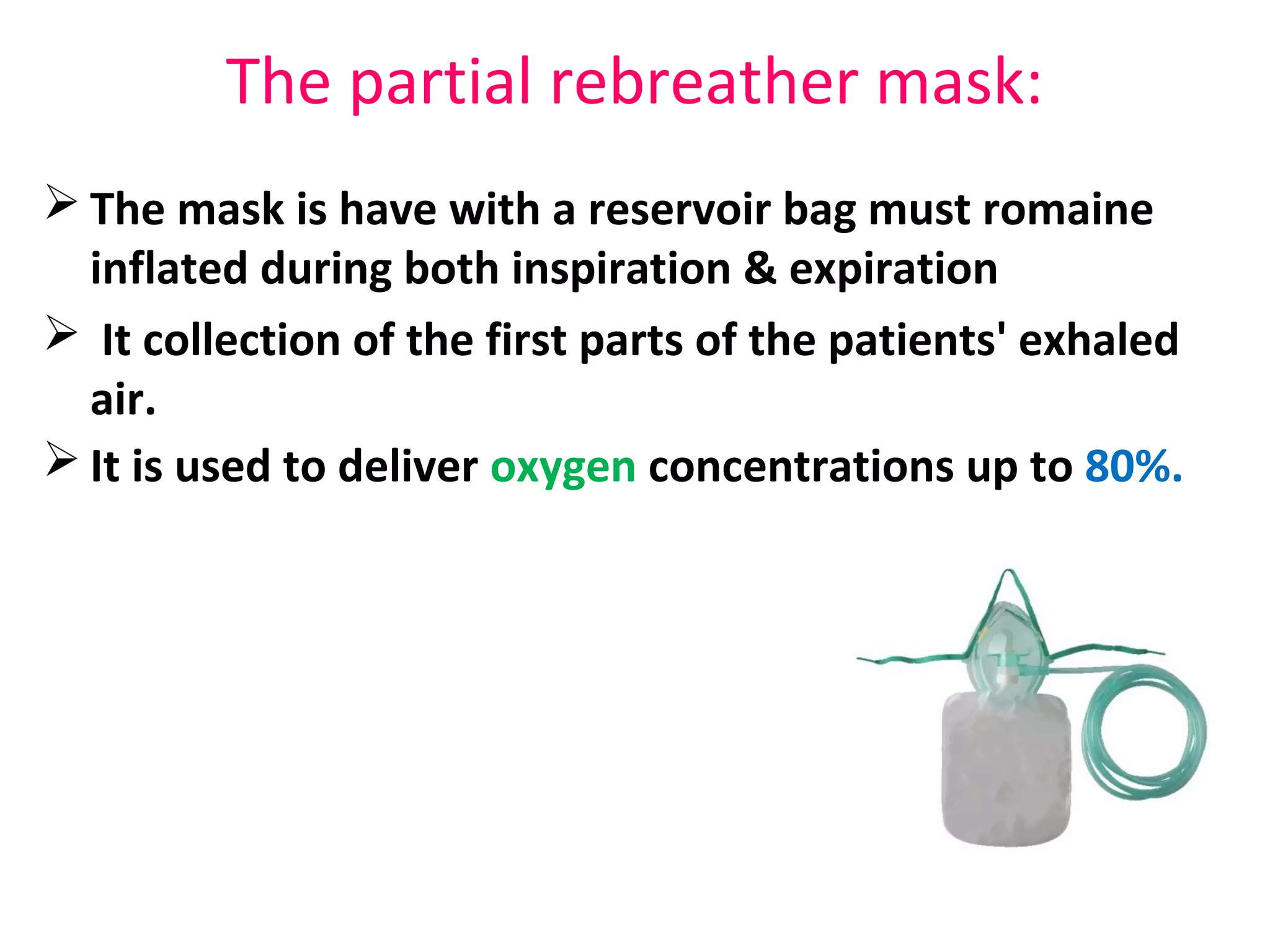
The partial rebreather mask:
 The mask is have with a reservoir bag must romaine
inflated during both inspiration & expiration
 It collection of the first parts of the patients' exhaled
air.
 It is used to deliver oxygen concentrations up to 80%.
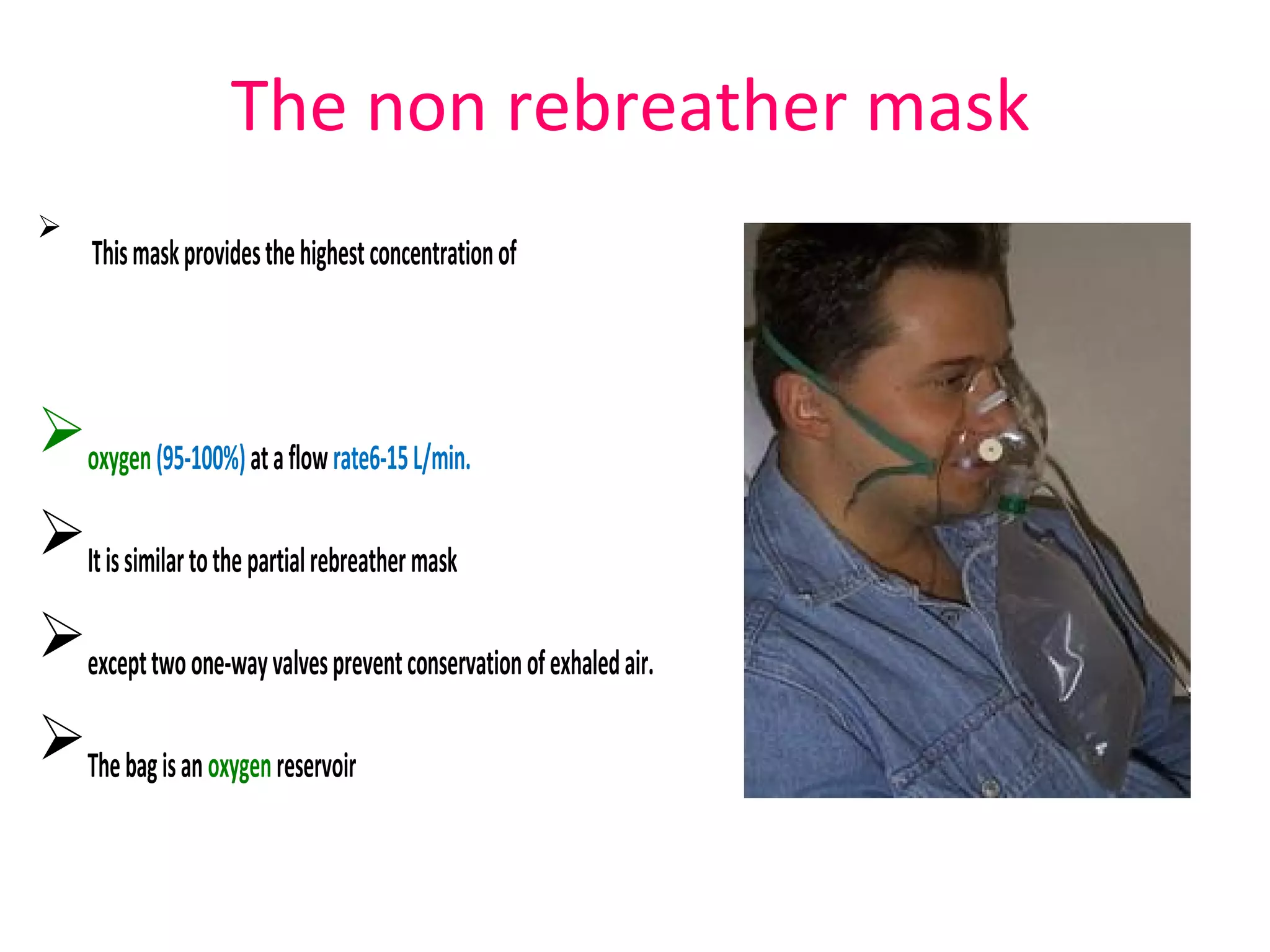
The non rebreather mask

Thismaskprovidesthehighestconcentrationof
oxygen(95-100%)ataflowrate6-15L/min.
Itissimilartothepartialrebreathermask
excepttwoone-wayvalvespreventconservationofexhaledair.
Thebagisanoxygenreservoir
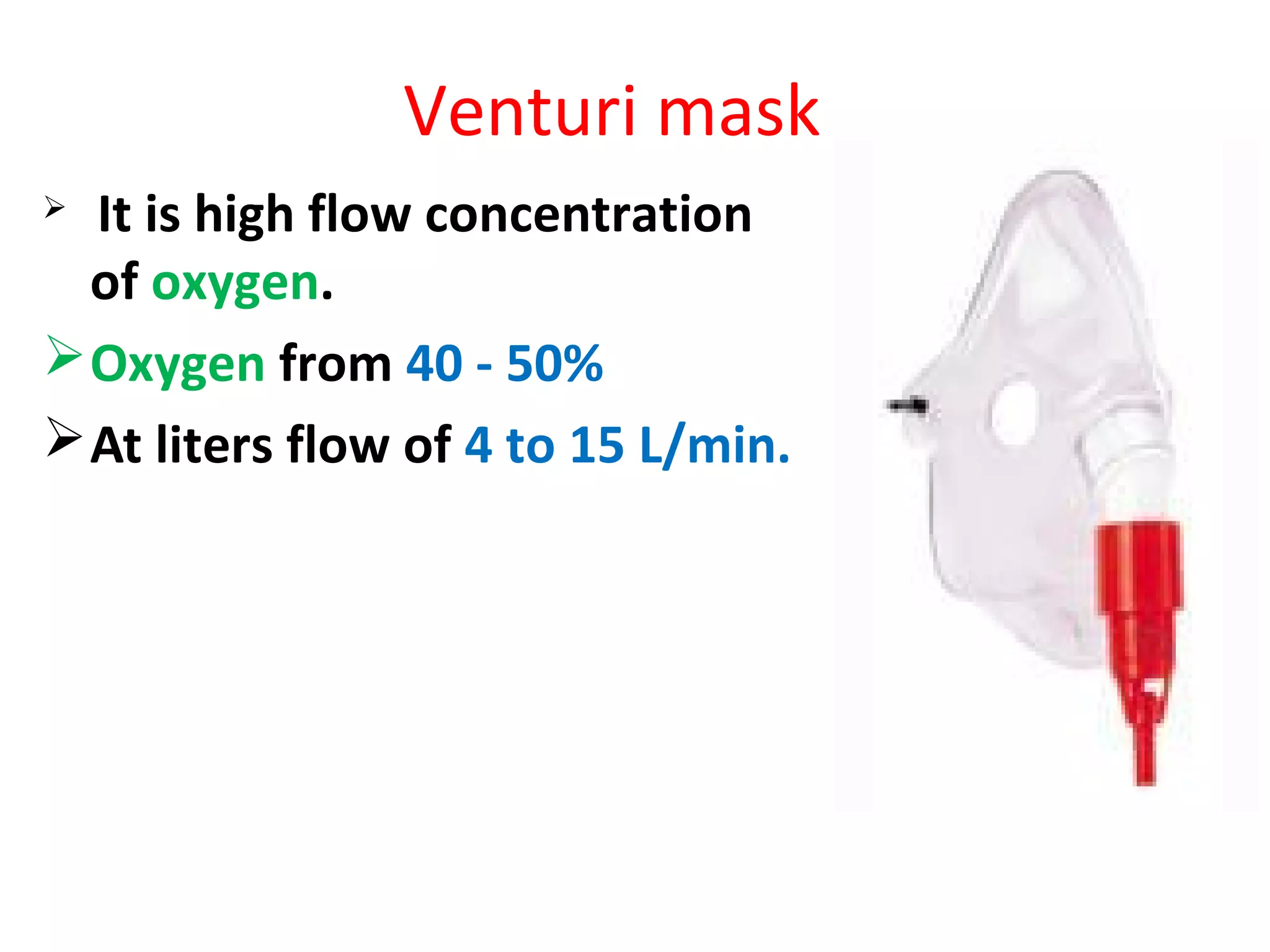
Venturi mask
 It is high flow concentration
of oxygen.
Oxygen from 40 - 50%
At liters flow of 4 to 15 L/min.
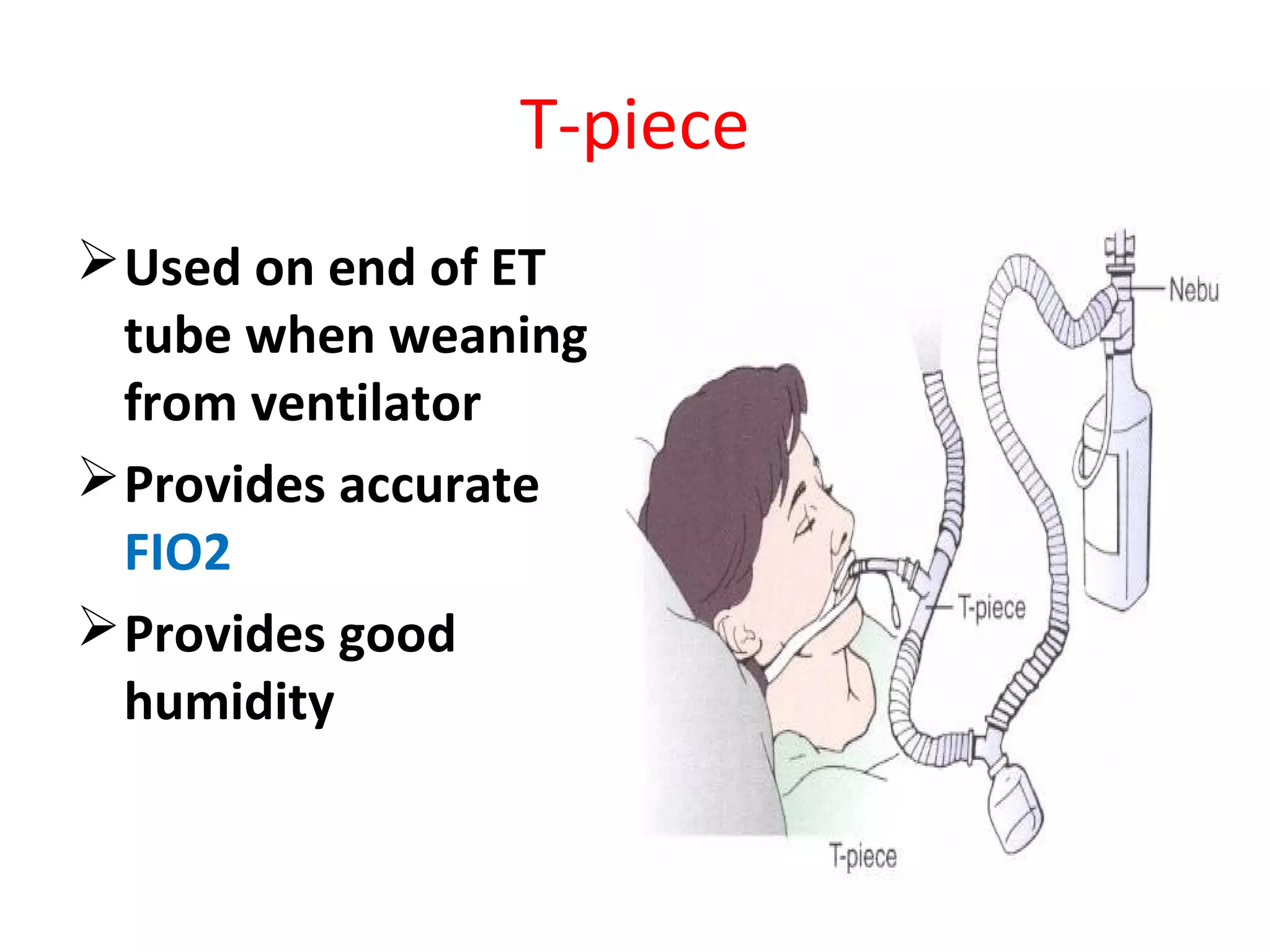
T-piece
Used on end of ET
tube when weaning
from ventilator
Provides accurate
FIO2
Provides good
humidity
Documentation:
Date and time oxygen started.
Method of delivery.
Oxygen concentration and flow rate.
Patient observation.
Add oronasal care to the nursing care plan
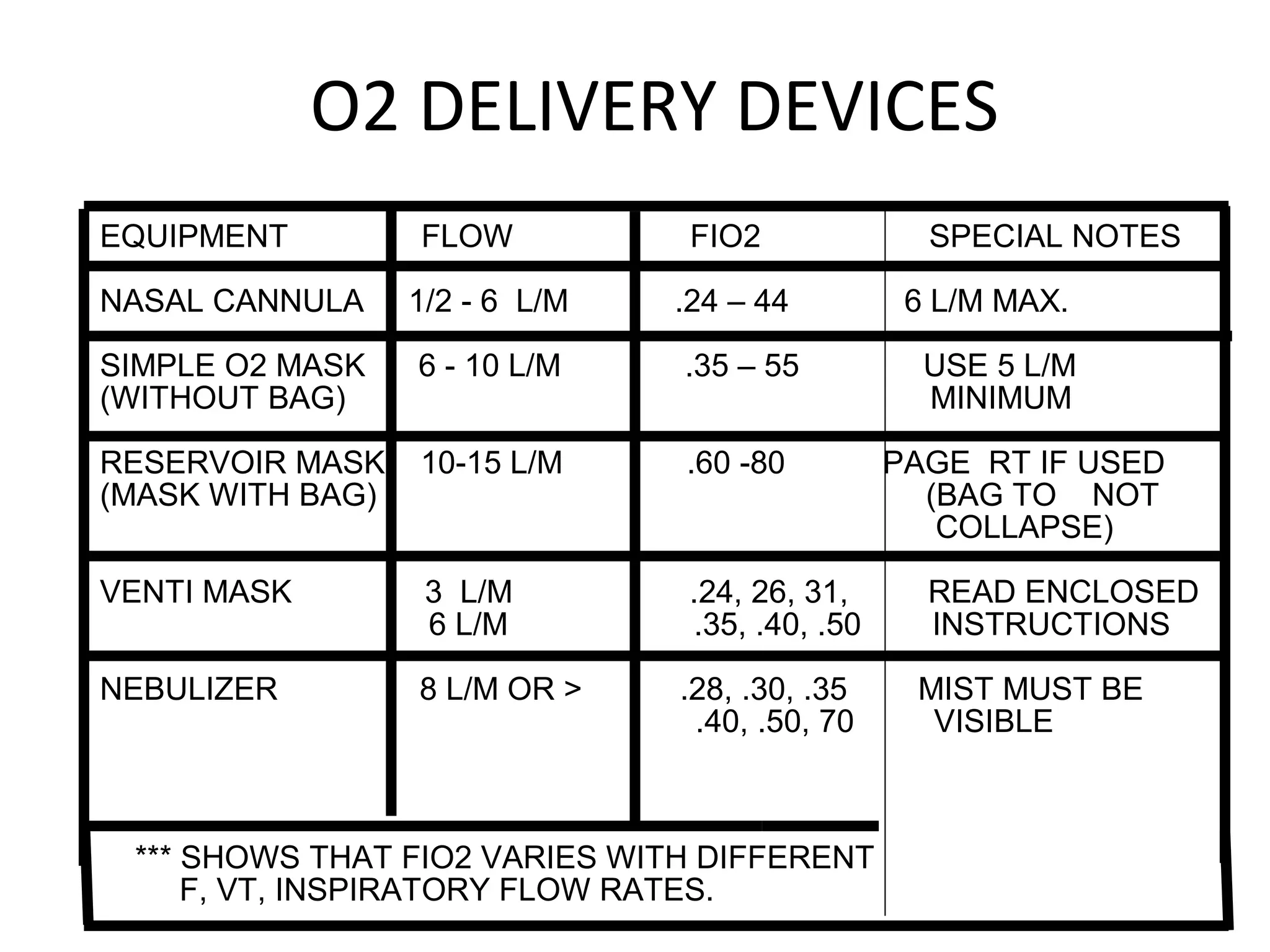
O2 DELIVERY DEVICES
EQUIPMENT FLOW FIO2 SPECIAL NOTES
NASAL CANNULA 1/2 - 6 L/M .24 – 44 6 L/M MAX.
SIMPLE O2 MASK 6 - 10 L/M .35 – 55 USE 5 L/M
(WITHOUT BAG) MINIMUM
RESERVOIR MASK 10-15 L/M .60 -80 PAGE RT IF USED
(MASK WITH BAG) (BAG TO NOT
COLLAPSE)
VENTI MASK 3 L/M .24, 26, 31, READ ENCLOSED
6 L/M .35, .40, .50 INSTRUCTIONS
NEBULIZER 8 L/M OR > .28, .30, .35 MIST MUST BE
.40, .50, 70 VISIBLE
*** SHOWS THAT FIO2 VARIES WITH DIFFERENT
F, VT, INSPIRATORY FLOW RATES.
Methods of oxygen administration

Methods of oxygen administration

  • 1.
  • 2.
    Oxygen therapy Definition:  Oxygenis a colorless, odorless, tasteless gas that is essential for the body to function properly and to survive. Oxygen therapy is a treatment that delivers oxygen gas to breathe. The oxygen therapy is received from tubes resting in nose, a face mask, or a tube placed n your trachea, or windpipe. This treatment increases the amount of oxygen in lungs to receive and deliver to blood.
  • 3.
    What is meaningof O2 therapy Oxygen therapy is the administration of oxygen at a concentration of pressure greater than that found in the environmental atmosphere The air that we breathe contain approximately 21% oxygen the heart relies on oxygen to pump blood.
  • 4.
    Purpose Oxygen therapy isa key treatment in respiratory care. The purpose is to increase oxygen saturation in tissues where the saturation levels are too low due to illness or injury.
  • 5.
    What are thesigns that a person needs oxygen • shortness of breath. • headache. • restlessness. • dizziness. • rapid breathing. • chest pain. • confusion. • high blood pressure.
  • 6.
    Contd…..  Pulmonary hypertension Acute myocardial infarction (heart attack)  Short-term therapy, such as post-anesthesia recovery  Oxygen may also be used to treat chronic lung disease patients during exercise .
  • 8.
    Methods of oxygenadministration:  1- Nasal cannula
  • 10.
    Face mask The simpleOxygen mask The partial rebreather mask: The non rebreather mask: The venturi mask:
  • 11.
    The partial rebreathermask:  The mask is have with a reservoir bag must romaine inflated during both inspiration & expiration  It collection of the first parts of the patients' exhaled air.  It is used to deliver oxygen concentrations up to 80%.
  • 12.
    The non rebreathermask  Thismaskprovidesthehighestconcentrationof oxygen(95-100%)ataflowrate6-15L/min. Itissimilartothepartialrebreathermask excepttwoone-wayvalvespreventconservationofexhaledair. Thebagisanoxygenreservoir
  • 13.
    Venturi mask  Itis high flow concentration of oxygen. Oxygen from 40 - 50% At liters flow of 4 to 15 L/min.
  • 14.
    T-piece Used on endof ET tube when weaning from ventilator Provides accurate FIO2 Provides good humidity
  • 15.
    Documentation: Date and timeoxygen started. Method of delivery. Oxygen concentration and flow rate. Patient observation. Add oronasal care to the nursing care plan
  • 16.
    O2 DELIVERY DEVICES EQUIPMENTFLOW FIO2 SPECIAL NOTES NASAL CANNULA 1/2 - 6 L/M .24 – 44 6 L/M MAX. SIMPLE O2 MASK 6 - 10 L/M .35 – 55 USE 5 L/M (WITHOUT BAG) MINIMUM RESERVOIR MASK 10-15 L/M .60 -80 PAGE RT IF USED (MASK WITH BAG) (BAG TO NOT COLLAPSE) VENTI MASK 3 L/M .24, 26, 31, READ ENCLOSED 6 L/M .35, .40, .50 INSTRUCTIONS NEBULIZER 8 L/M OR > .28, .30, .35 MIST MUST BE .40, .50, 70 VISIBLE *** SHOWS THAT FIO2 VARIES WITH DIFFERENT F, VT, INSPIRATORY FLOW RATES.