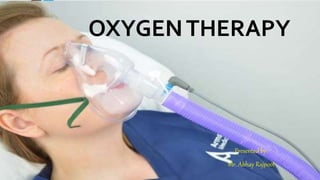


OXYGENTHERAPY
Presented by:
Mr. Abhay Rajpoot
INDICATIONS
CONTRAINDICATIONS
•Administer with caution to patients with COPD
•Atelectasis
•Oxygen toxicity
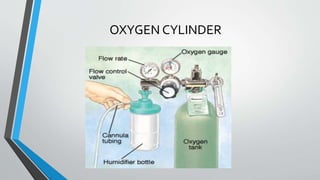
OXYGEN CYLINDER
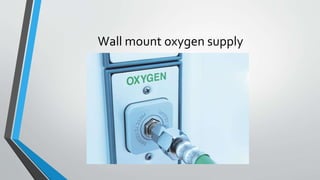
Wall mount oxygen supply
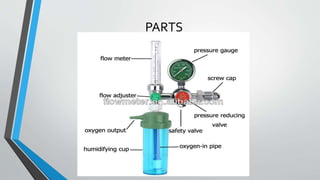
PARTS
METHODS OF OXYGEN
DELIVERY
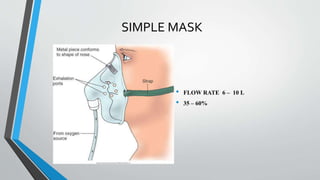
SIMPLE MASK
• FLOW RATE 6 – 10 L
• 35 – 60%
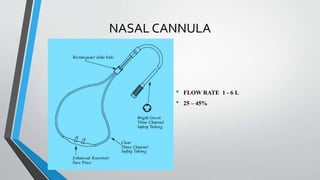
NASAL CANNULA
• FLOW RATE 1 - 6 L
• 25 – 45%
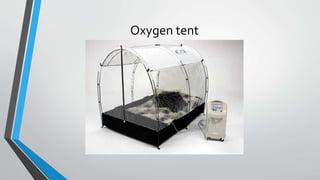
Oxygen tent
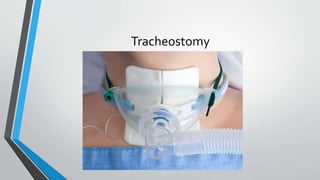
Tracheostomy
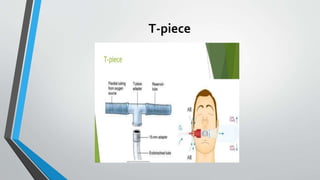
T-piece
PROCEDURE
• Determine need for oxygen therapy in patient
• Check physician order for rate , device used for concentration.
• Perform an assessment of vital signs, level of consciousness , lab values
etc. and record.
• Assess risk factors of oxygen therapy in patients and environment such
as patient with hypoxia drive, faulty electrical connections
• Explain procedure to the patient and relative and inform them how to
cooperate.
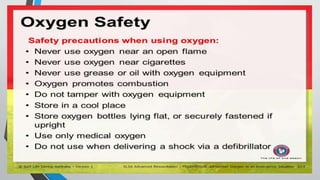
• Post “no smoking” sign on the patient’s door in view of patient and
visitors and explain to them the dangers of smoking when oxygen is on
flow.
• Wash hands
• Set up oxygen equipment and humidifier
• Fill humidifier up to the level marked on it with sterile water.
• Attach flow meter to the source, set flow meter in off position
• Attach humidifier to base of flow meter
• Attach tubing and nasal canula/ face mask to humidifier( if venture mask
is used attach the the color coded ventruri adapter to mask as
appropriate .
• Regulate flowmeter to prescribed level
• Ensure proper functioning by checking for bubbles in humidifier or
feeling oxygen at the outlet.
MASK METHOD
• Guide mask to patient’s face and apply it from nose downward.
• Fit the metal piece of mask to conform to shape of nose.
• Secure elastic band around around patient’s head
• Apply padding behind ears as well as scalp where elastic band passes.
• Ensure that safety precautions are followed
• Inspect patient and equipment frequently for flow rate, clinical condition, level of
water in humidifier
• Wash hands
• Remove the mask and dry the skin every 2-3 hrs if oxygen is administered
continuously.
• Document relevant data in patients record
AFTER CARE
• Stay with the patient till is at ease
• keep the patient warm and comfortable
• evaluate patient progress
• watch for signs of deteriorating condition
• record procedure with date, time
• perform ABG
• Replace all articles
SUMMARY
• Oxygen therapy refers to the administration of supplemental oxygen as part
of managing illness. In healthy individuals, oxygen is absorbed from the air
in adequate amounts, but certain diseases and conditions can prevent some
people from absorbing enough oxygen.
Oxygen Therapy

Oxygen Therapy

  • 1.
  • 3.
  • 4.
    CONTRAINDICATIONS •Administer with cautionto patients with COPD •Atelectasis •Oxygen toxicity
  • 5.
  • 6.
  • 7.
  • 8.
  • 9.
    SIMPLE MASK • FLOWRATE 6 – 10 L • 35 – 60%
  • 10.
    NASAL CANNULA • FLOWRATE 1 - 6 L • 25 – 45%
  • 11.
  • 12.
  • 13.
  • 15.
    PROCEDURE • Determine needfor oxygen therapy in patient • Check physician order for rate , device used for concentration. • Perform an assessment of vital signs, level of consciousness , lab values etc. and record. • Assess risk factors of oxygen therapy in patients and environment such as patient with hypoxia drive, faulty electrical connections • Explain procedure to the patient and relative and inform them how to cooperate. • Post “no smoking” sign on the patient’s door in view of patient and visitors and explain to them the dangers of smoking when oxygen is on flow.
  • 16.
    • Wash hands •Set up oxygen equipment and humidifier • Fill humidifier up to the level marked on it with sterile water. • Attach flow meter to the source, set flow meter in off position • Attach humidifier to base of flow meter • Attach tubing and nasal canula/ face mask to humidifier( if venture mask is used attach the the color coded ventruri adapter to mask as appropriate . • Regulate flowmeter to prescribed level • Ensure proper functioning by checking for bubbles in humidifier or feeling oxygen at the outlet.
  • 17.
    MASK METHOD • Guidemask to patient’s face and apply it from nose downward. • Fit the metal piece of mask to conform to shape of nose. • Secure elastic band around around patient’s head • Apply padding behind ears as well as scalp where elastic band passes. • Ensure that safety precautions are followed • Inspect patient and equipment frequently for flow rate, clinical condition, level of water in humidifier • Wash hands • Remove the mask and dry the skin every 2-3 hrs if oxygen is administered continuously. • Document relevant data in patients record
  • 19.
    AFTER CARE • Staywith the patient till is at ease • keep the patient warm and comfortable • evaluate patient progress • watch for signs of deteriorating condition • record procedure with date, time • perform ABG • Replace all articles
  • 20.
    SUMMARY • Oxygen therapyrefers to the administration of supplemental oxygen as part of managing illness. In healthy individuals, oxygen is absorbed from the air in adequate amounts, but certain diseases and conditions can prevent some people from absorbing enough oxygen.