OXYGEN ADMINISTRATION
DEFINITION
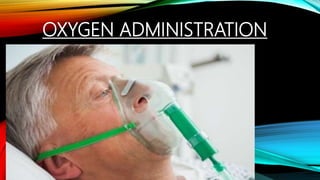
Oxygen administration is the process
by which supplemented oxygen is
administered in high concentration
than that of atmospheric air.
OXYGEN SOURCES
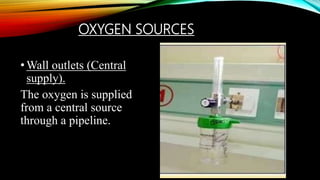
•Wall outlets (Central
supply).
The oxygen is supplied
from a central source
through a pipeline.
OXYGEN CYLINDER
PAO2 AS AN INDICATOR FOR
OXYGEN THERAPY
 PaO2 : 80 – 100 mm Hg : Normal
60 – 80 mm Hg : cold, clammy
extremities
< 60 mm Hg : cyanosis
< 40 mm Hg : mental deficiency
memory loss
< 30 mm Hg : bradycardia
cardiac arrest
PaO2 < 60 mm Hg is a strong indicator for oxygen therapy
INDICATIONS
• Cyanosis
• Dyspnoea
• Hypoxemia
• Hypoxia
• Respiratory distress
• Shock
• Anaemia
• Acute myocardial infraction
• During anaesthesia for surgery
OXYGEN DELIVERY
•These contribute partially to the inspired gas the
patient breathes
•These provide total amount of inspired air. A specific
percentage of oxygen is delivered independent of the
patients breathing
High flow delivery system
NASAL CANNULA (PRONGS)
SUGGESTED
FLOW RATE
(L/min)
O2 %
SETTI
NG
1 L/mnt 24
2 L/mnt 28
3 L/mnt 32
4 L/mnt 36
5 L/mnt 40
6 L/mnt 44
ADVANTAGES DISADVANTAGES
Client able to talk and eat
with oxygen in place
Easily used in home settings
Safe and simple
Easily tolerated
Delivers low concentrations
Unable to use with nasal
obstruction
Drying to mucous membranes so
flow greater than 6L/mnt needs
to be humidified
Can dislodge from nares easily
Causes skin irritation or
breakdown over ears or at nares
Not good for mouth breathers
Patients breathing pattern affects
exact Fio2
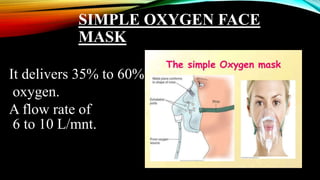
SIMPLE OXYGEN FACE
MASK
It delivers 35% to 60%
oxygen.
A flow rate of
6 to 10 L/mnt.
ADVANTAGES DISADVANTAGES
 Simple to use
 Inexpensive
 Can provide
increased
delivery of
oxygen for short
period of time.
 Difficult to keep
mask in position
over nose and
mouth
 Potential for skin
breakdown
 Uncomfortable
for patient while
eating or talking
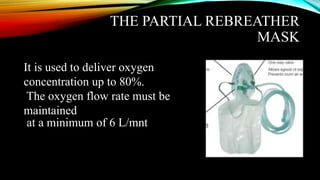
THE PARTIAL REBREATHER
MASK
It is used to deliver oxygen
concentration up to 80%.
The oxygen flow rate must be
maintained
at a minimum of 6 L/mnt
ADVANTAGES
•Client can inhale room air through openings in mask if
oxygen supply is briefly interrupted
•Delivers moderate oxygen concentration
DISADVANTAGES
•Requires tight seal ( eating and talk difficult,
uncomfortable)
THE NON RE -BREATHER
MASK
This mask provides the
highest
concentration
of oxygen ( 80%- 100%)
at a flow rate 6-15 L/mnt.
ADVANTAGES
• Delivers the highest possible oxygen concentration
• Suitable for patient breathing spontaneous with severe
hypoxemia
DISADVANTAGE
• Impractical for the long term therapy
• Malfunction can cause co2 build-up
• Suffocation
• Expensive
• Uncomfortable
HIGH FLOW DELIVERY SYSTEM
VENTURI MASK
It is a high flow oxygen delivery
delivery device. Oxygen from
40-50% At litters flow of 4 to 15
L/ mint. The mask is constructed
so that there is a constant flow of
room air blended with a fixed
concentration of oxygen.
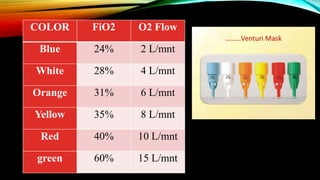
COLOR FiO2 O2 Flow
Blue 24% 2 L/mnt
White 28% 4 L/mnt
Orange 31% 6 L/mnt
Yellow 35% 8 L/mnt
Red 40% 10 L/mnt
green 60% 15 L/mnt
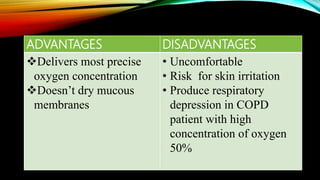
ADVANTAGES DISADVANTAGES
Delivers most precise
oxygen concentration
Doesn’t dry mucous
membranes
• Uncomfortable
• Risk for skin irritation
• Produce respiratory
depression in COPD
patient with high
concentration of oxygen
50%
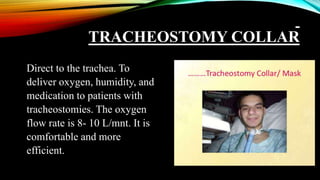
TRACHEOSTOMY COLLAR
Direct to the trachea. To
deliver oxygen, humidity, and
medication to patients with
tracheostomies. The oxygen
flow rate is 8- 10 L/mnt. It is
comfortable and more
efficient.
ADVANTAGES
•deliver high concentration of oxygen
•maintain saturation level
•stable and not moved
•good humidity
DISADVANTAGES
•Heavy with tubing
•Regular cleaning
•Chance for infection
T- PIECE
T- Piece adaptor is used on end
of endotracheal tube to provide
humidification and oxygen
therapy. The oxygen flow rate is
8 – 10 L/mnt . And 30% - 100%
oxygen can be given
OXYGEN HOOD
It covers only the head
allowing access to the lower
body. Ideal for short term use
for neonates and infants. O2
and air premixed passed
through heated humidifiers.
Oxygen flow rate is 8-10 L/mnt
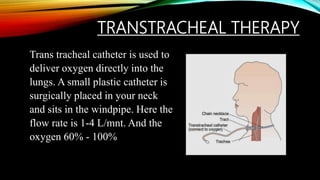
TRANSTRACHEAL THERAPY
Trans tracheal catheter is used to
deliver oxygen directly into the
lungs. A small plastic catheter is
surgically placed in your neck
and sits in the windpipe. Here the
flow rate is 1-4 L/mnt. And the
oxygen 60% - 100%
ADVANTAGES DISADVANTAGES
• Lower O2 use
• Eliminates nasal and skin
irritation
• Increased exercise tolerance
• Increased mobility
• HIGH COST
• Surgical complications
• Infections
• Frequent regular cleaning
Oxygen administration

Oxygen administration

  • 1.
  • 2.
    DEFINITION Oxygen administration isthe process by which supplemented oxygen is administered in high concentration than that of atmospheric air.
  • 3.
    OXYGEN SOURCES •Wall outlets(Central supply). The oxygen is supplied from a central source through a pipeline.
  • 4.
  • 5.
    PAO2 AS ANINDICATOR FOR OXYGEN THERAPY  PaO2 : 80 – 100 mm Hg : Normal 60 – 80 mm Hg : cold, clammy extremities < 60 mm Hg : cyanosis < 40 mm Hg : mental deficiency memory loss < 30 mm Hg : bradycardia cardiac arrest PaO2 < 60 mm Hg is a strong indicator for oxygen therapy
  • 6.
    INDICATIONS • Cyanosis • Dyspnoea •Hypoxemia • Hypoxia • Respiratory distress • Shock • Anaemia • Acute myocardial infraction • During anaesthesia for surgery
  • 8.
  • 9.
    •These contribute partiallyto the inspired gas the patient breathes •These provide total amount of inspired air. A specific percentage of oxygen is delivered independent of the patients breathing High flow delivery system
  • 10.
    NASAL CANNULA (PRONGS) SUGGESTED FLOWRATE (L/min) O2 % SETTI NG 1 L/mnt 24 2 L/mnt 28 3 L/mnt 32 4 L/mnt 36 5 L/mnt 40 6 L/mnt 44
  • 11.
    ADVANTAGES DISADVANTAGES Client ableto talk and eat with oxygen in place Easily used in home settings Safe and simple Easily tolerated Delivers low concentrations Unable to use with nasal obstruction Drying to mucous membranes so flow greater than 6L/mnt needs to be humidified Can dislodge from nares easily Causes skin irritation or breakdown over ears or at nares Not good for mouth breathers Patients breathing pattern affects exact Fio2
  • 12.
    SIMPLE OXYGEN FACE MASK Itdelivers 35% to 60% oxygen. A flow rate of 6 to 10 L/mnt.
  • 13.
    ADVANTAGES DISADVANTAGES  Simpleto use  Inexpensive  Can provide increased delivery of oxygen for short period of time.  Difficult to keep mask in position over nose and mouth  Potential for skin breakdown  Uncomfortable for patient while eating or talking
  • 14.
    THE PARTIAL REBREATHER MASK Itis used to deliver oxygen concentration up to 80%. The oxygen flow rate must be maintained at a minimum of 6 L/mnt
  • 15.
    ADVANTAGES •Client can inhaleroom air through openings in mask if oxygen supply is briefly interrupted •Delivers moderate oxygen concentration DISADVANTAGES •Requires tight seal ( eating and talk difficult, uncomfortable)
  • 16.
    THE NON RE-BREATHER MASK This mask provides the highest concentration of oxygen ( 80%- 100%) at a flow rate 6-15 L/mnt.
  • 17.
    ADVANTAGES • Delivers thehighest possible oxygen concentration • Suitable for patient breathing spontaneous with severe hypoxemia DISADVANTAGE • Impractical for the long term therapy • Malfunction can cause co2 build-up • Suffocation • Expensive • Uncomfortable
  • 18.
    HIGH FLOW DELIVERYSYSTEM VENTURI MASK It is a high flow oxygen delivery delivery device. Oxygen from 40-50% At litters flow of 4 to 15 L/ mint. The mask is constructed so that there is a constant flow of room air blended with a fixed concentration of oxygen.
  • 19.
    COLOR FiO2 O2Flow Blue 24% 2 L/mnt White 28% 4 L/mnt Orange 31% 6 L/mnt Yellow 35% 8 L/mnt Red 40% 10 L/mnt green 60% 15 L/mnt
  • 20.
    ADVANTAGES DISADVANTAGES Delivers mostprecise oxygen concentration Doesn’t dry mucous membranes • Uncomfortable • Risk for skin irritation • Produce respiratory depression in COPD patient with high concentration of oxygen 50%
  • 21.
    TRACHEOSTOMY COLLAR Direct tothe trachea. To deliver oxygen, humidity, and medication to patients with tracheostomies. The oxygen flow rate is 8- 10 L/mnt. It is comfortable and more efficient.
  • 22.
    ADVANTAGES •deliver high concentrationof oxygen •maintain saturation level •stable and not moved •good humidity DISADVANTAGES •Heavy with tubing •Regular cleaning •Chance for infection
  • 23.
    T- PIECE T- Pieceadaptor is used on end of endotracheal tube to provide humidification and oxygen therapy. The oxygen flow rate is 8 – 10 L/mnt . And 30% - 100% oxygen can be given
  • 24.
    OXYGEN HOOD It coversonly the head allowing access to the lower body. Ideal for short term use for neonates and infants. O2 and air premixed passed through heated humidifiers. Oxygen flow rate is 8-10 L/mnt
  • 25.
    TRANSTRACHEAL THERAPY Trans trachealcatheter is used to deliver oxygen directly into the lungs. A small plastic catheter is surgically placed in your neck and sits in the windpipe. Here the flow rate is 1-4 L/mnt. And the oxygen 60% - 100%
  • 26.
    ADVANTAGES DISADVANTAGES • LowerO2 use • Eliminates nasal and skin irritation • Increased exercise tolerance • Increased mobility • HIGH COST • Surgical complications • Infections • Frequent regular cleaning