This document discusses the treatment of polytrauma patients with airway and circulatory problems. It defines polytrauma as trauma to two or more body systems. It notes that mortality from major vascular or neurological trauma can occur within minutes or hours. The document outlines the ABCDE approach to assessment and treatment - Airway, Breathing, Circulation, Disability, Exposure. It provides examples of treatments for different injuries including tension pneumothorax, chest trauma, hemorrhage control, and neurological assessment.
Introduction to polytrauma focusing on airway and circulatory issues; trauma affecting multiple body systems.
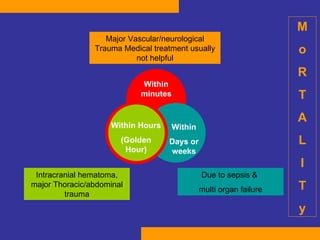
Discusses intracranial hematoma and major thoracic/abdominal trauma, highlighting mortality risks in different time frames.
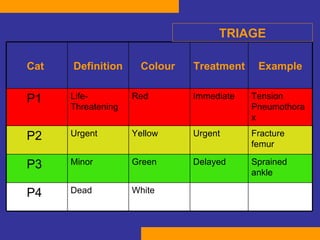
Introduction to triage principles, categorizing patients based on the severity of injuries, indicating treatment urgency.
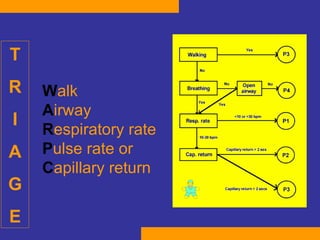
Outlines assessment indicators like walk, airway, respiratory rate, pulse rate, and capillary refill for triage.
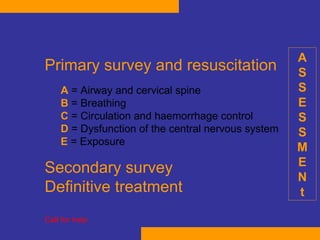
Details the primary survey process; airway management, breathing, circulation, CNS dysfunction, and exposure.
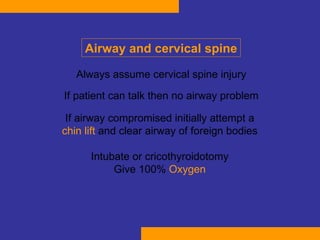
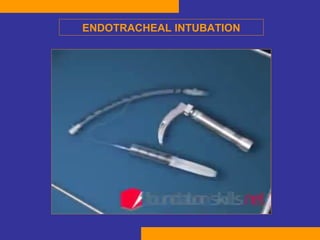
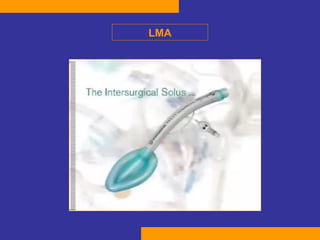
Different techniques for airway management including oropharyngeal airway, endotracheal intubation, and LMA.
Addressing breathing issues like tension pneumothorax, flail chest, emergency decompression, and chest drain placement.
Focus on assessing circulation, managing hemorrhages, and intravenous fluid administration.Assessing consciousness levels and ensuring patients are protected from hypothermia during treatment.
Treating patients in their found position and ensuring life-threatening injuries are prioritized.
POLYTRAUMA WITH AIRWAYAND CIRCULATORY PROBLEMS Dr. Mansoor Khan MBBS, FCPS I, Resident, Surgical “C”, KTH Peshawar. Sep 29 th , 2009
2.
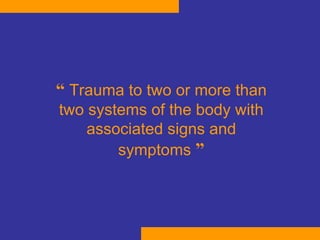
“ Traumato two or more than two systems of the body with associated signs and symptoms ”
3.
Intracranial hematoma, majorThoracic/abdominal trauma Due to sepsis & multi organ failure M o R T A L I T y Within minutes Within Hours (Golden Hour) Within Days or weeks Major Vascular/neurological Trauma Medical treatment usually not helpful
TRIAGE White Dead P4 Sprained ankle Delayed Green Minor P3 Fracture femur Urgent Yellow Urgent P2 Tension Pneumothorax Immediate Red Life-Threatening P1 Example Treatment Colour Definition Cat
6.
W alk A irway R espiratory rate P ulse rate or C apillary return T R I A G E
Primary survey andresuscitation A = Airway and cervical spine B = Breathing C = Circulation and haemorrhage control D = Dysfunction of the central nervous system E = Exposure Secondary survey Definitive treatment Call for help A S S E S S M E N t
9.
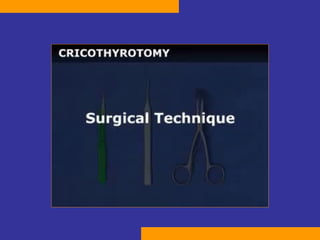
Always assume cervicalspine injury If patient can talk then no airway problem If airway compromised initially attempt a chin lift and clear airway of foreign bodies Intubate or cricothyroidotomy Give 100% Oxygen Airway and cervical spine
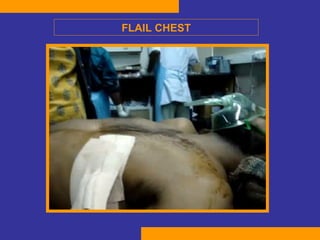
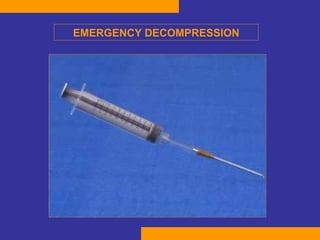
Check positionof trachea, respiratory rate and air entry T ension pneumothorax will need immediate relief Place venous cannula through second intercostal space in the mid-clavicular line If open chest wound seal with occlusive dressing BREATHING
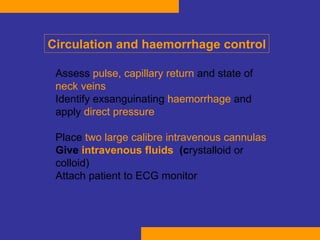
Assess pulse,capillary return and state of neck veins Identify exsanguinating haemorrhage and apply direct pressure Place two large calibre intravenous cannulas Give intravenous fluids (c rystalloid or colloid) Attach patient to ECG monitor Circulation and haemorrhage control
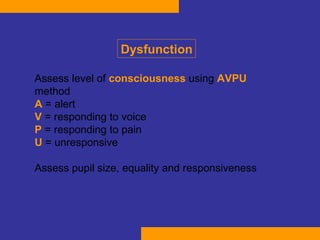
Assess level of consciousness using AVPU method A = alert V = responding to voice P = responding to pain U = unresponsive Assess pupil size, equality and responsiveness Dysfunction