ENGINE
EFFICIENCIES
Prof. (Dr.) M P Poonia
Director
NITTTR, Chandigarh
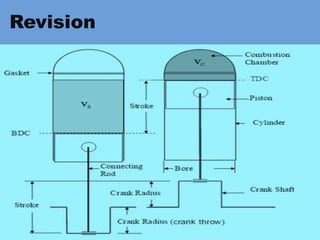
Revision
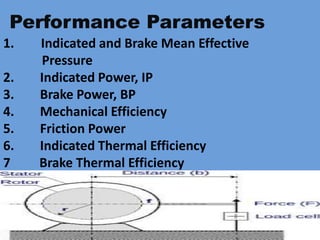
1. Indicated and Brake Mean Effective
Pressure
2. Indicated Power, IP
3. Brake Power, BP
4. Mechanical Efficiency
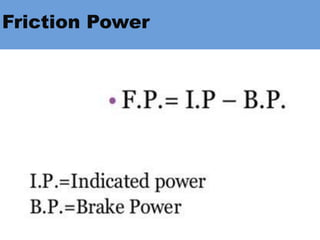
5. Friction Power
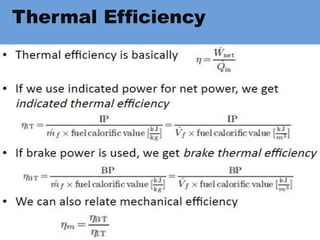
6. Indicated Thermal Efficiency
7 Brake Thermal Efficiency
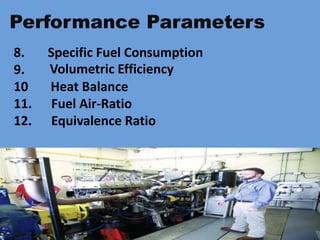
Performance Parameters
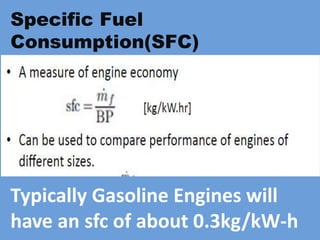
8. Specific Fuel Consumption
9.
10 Heat Balance
11. Fuel Air-Ratio
12. Equivalence Ratio
Performance Parameters
Volumetric Efficiency
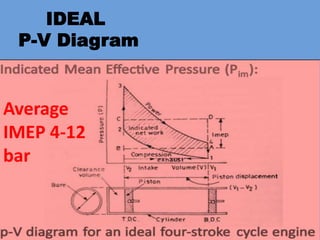
IDEAL
P-V Diagram
Average
IMEP 4-12
bar
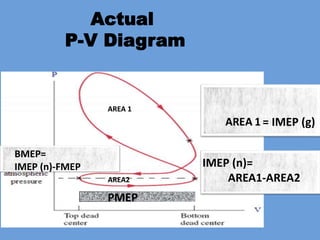
Actual
P-V Diagram
PMEP
= IMEP (g)
AREA 1
AREA2
IMEP (n)=
AREA1-AREA2
BMEP=
IMEP (n)-FMEP
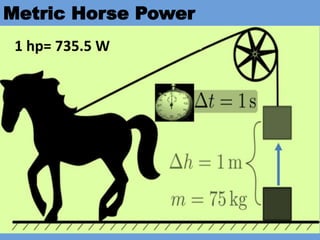
Metric Horse Power
1 hp= 735.5 W
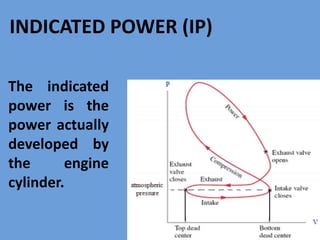
The indicated
power is the
power actually
developed by
the engine
cylinder.
INDICATED POWER (IP)
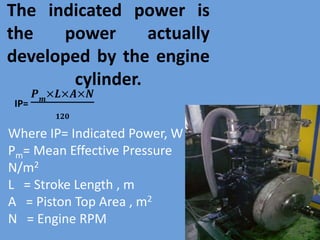
The indicated power is
the power actually
developed by the engine
cylinder.
IP=
𝑷 𝒎
×𝑳×𝑨×𝑵
𝟏𝟐𝟎
Where IP= Indicated Power, W
Pm= Mean Effective Pressure
N/m2
L = Stroke Length , m
A = Piston Top Area , m2
N = Engine RPM
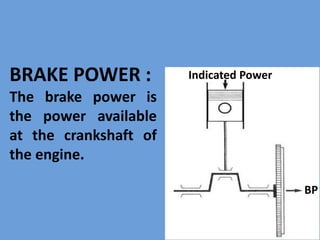
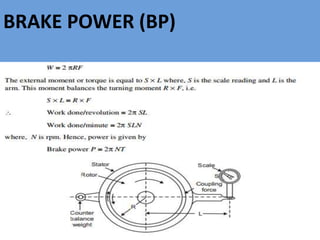
BRAKE POWER :
The brake power is
the power available
at the crankshaft of
the engine.
Indicated Power
BP
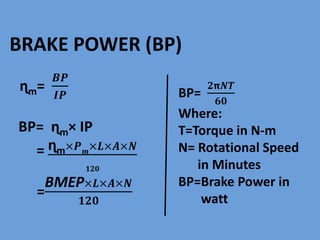
BRAKE POWER (BP)
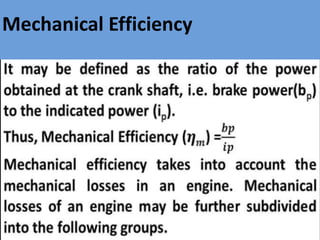
ɳm=
𝑩𝑷
𝑰𝑷
BP= ɳm× IP
= ɳm×𝑷 𝒎
×𝑳×𝑨×𝑵
𝟏𝟐𝟎
=
BMEP×𝑳×𝑨×𝑵
𝟏𝟐𝟎
BP=
𝟐𝝿𝑵𝑻
𝟔𝟎
Where:
T=Torque in N-m
N= Rotational Speed
in Minutes
BP=Brake Power in
watt
BRAKE POWER (BP)
Mechanical Efficiency
(i)
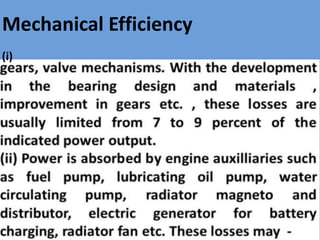
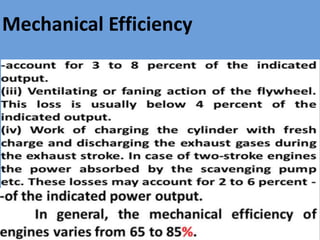
Mechanical Efficiency
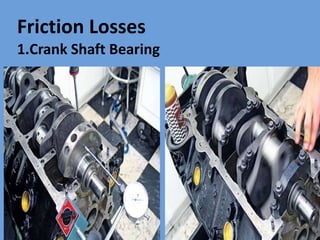
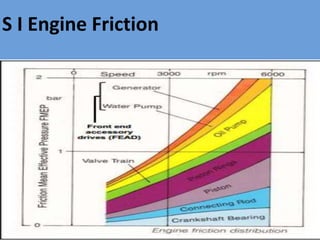
Friction Losses
1.Crank Shaft Bearing
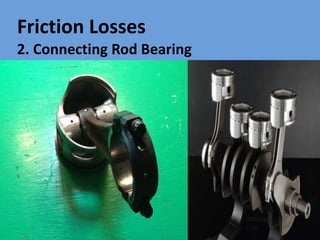
Friction Losses
2. Connecting Rod Bearing
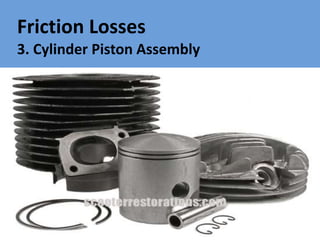
Friction Losses
3. Cylinder Piston Assembly
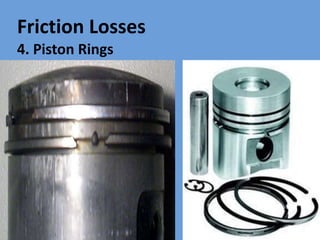
Friction Losses
4. Piston Rings
Friction Losses
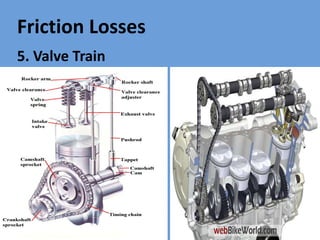
5. Valve Train
Friction Losses
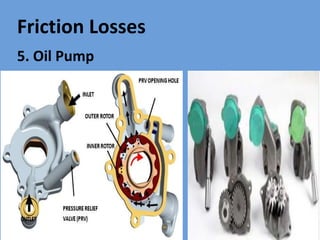
5. Oil Pump
Friction Losses
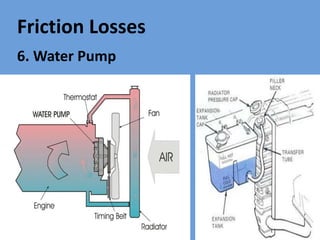
6. Water Pump
Friction Losses
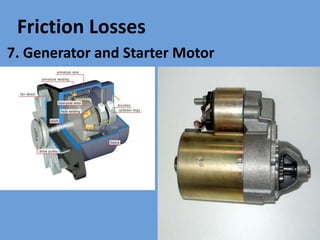
7. Generator and Starter Motor
S I Engine Friction
Friction Power
Thermal Efficiency
Typically Gasoline Engines will
have an sfc of about 0.3kg/kW-h
Specific Fuel
Consumption(SFC)
Volumetric Efficiency
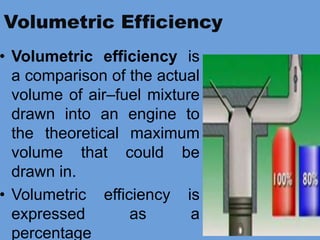
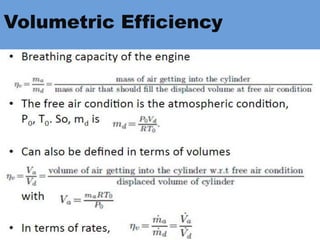
• Volumetric efficiency is
a comparison of the actual
volume of air–fuel mixture
drawn into an engine to
the theoretical maximum
volume that could be
drawn in.
• Volumetric efficiency is
expressed as a
percentage
Volumetric Efficiency
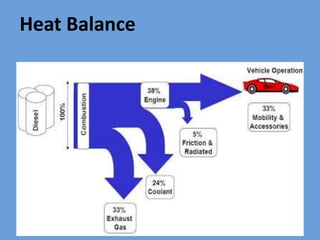
Heat Balance
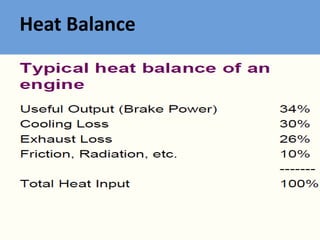
Heat Balance
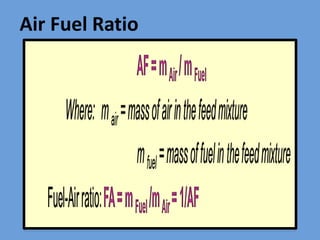
Air Fuel Ratio
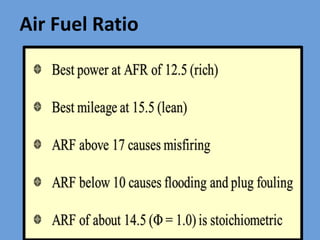
Air Fuel Ratio
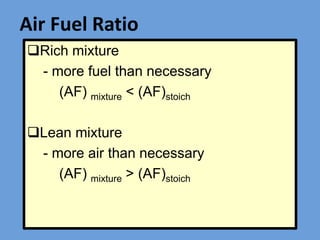
Air Fuel Ratio
Rich mixture
- more fuel than necessary
(AF) mixture < (AF)stoich
Lean mixture
- more air than necessary
(AF) mixture > (AF)stoich
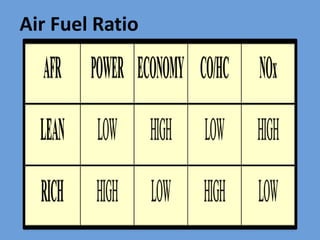
Air Fuel Ratio
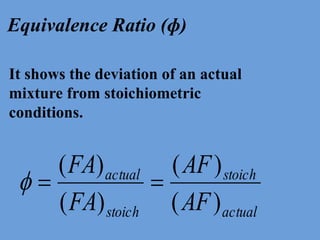
It shows the deviation of an actual
mixture from stoichiometric
conditions.
Equivalence Ratio (ɸ)
actual
stoich
stoich
actual
AF
AF
FA
FA
)(
)(
)(
)(

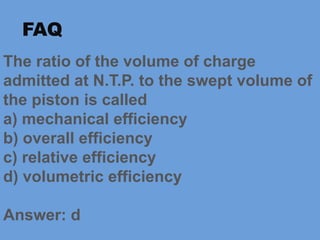
The ratio of the volume of charge
admitted at N.T.P. to the swept volume of
the piston is called
a) mechanical efficiency
b) overall efficiency
c) relative efficiency
d) volumetric efficiency
Answer: d
FAQ
FAQ
Explanation: Volumetric efficiency is the ratio
of the volume of charge admitted at N.T.P. to
the swept volume of the piston while
mechanical efficiency is the ratio of the brake
power to the indicated power and relative
efficiency is the ratio of the indicated thermal
efficiency to the air standard efficiency
whereas overall efficiency is the ratio of the
work obtained at the crankshaft in a given
time to the energy supplied during the same
time.
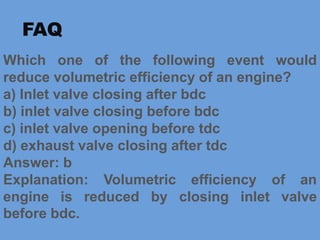
Which one of the following event would
reduce volumetric efficiency of an engine?
a) Inlet valve closing after bdc
b) inlet valve closing before bdc
c) inlet valve opening before tdc
d) exhaust valve closing after tdc
Answer: b
Explanation: Volumetric efficiency of an
engine is reduced by closing inlet valve
before bdc.
FAQ
Thanks

i c engines efficiencies