ENGINE PERFORMANCE PARAMETERS
Designed by:
BHAWESH PRAJAPATI
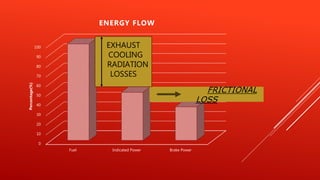
0
10
20
30
40
50
60
70
80
90
100
Fuel Indicated Power Brake Power
Percentage(%)
ENERGY FLOW
FRICTIONAL
LOSS
EXHAUST
COOLING
RADIATION
LOSSES
Indicated Thermal Efficiency
ith =
Indicated Power (W)
Energy of Fuel / sec.
Indicated Power(IP) = Power produced in cylinder
IP = (Pimep*l*a*n*k)/60 n=N/2
Energy of Fuel / sec. = ṁ * calorific value of fuel in KJ/KG
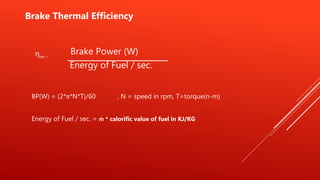
Brake Thermal Efficiency
bth =
Brake Power (W)
Energy of Fuel / sec.
BP(W) = (2*π*N*T)/60 , N = speed in rpm, T=torque(n-m)
Energy of Fuel / sec. = ṁ * calorific value of fuel in KJ/KG
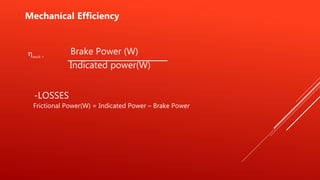
Mechanical Efficiency
mech =
Brake Power (W)
Indicated power(W)
-LOSSES
Frictional Power(W) = Indicated Power – Brake Power
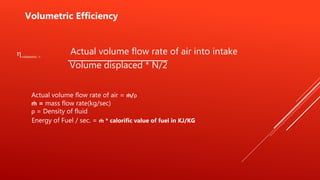
Volumetric Efficiency
volumetric =
Actual volume flow rate of air into intake
Volume displaced * N/2
Actual volume flow rate of air = ṁ/ρ
ṁ = mass flow rate(kg/sec)
ρ = Density of fluid
Energy of Fuel / sec. = ṁ * calorific value of fuel in KJ/KG
Mean Effective Pressure
Average pressure inside cylinder based on measured or calculated power output.
imep = Indicated mean effective pressure
bmep = Brake mean effective pressure
These both terms are used to compare the different engines.
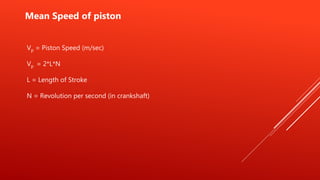
Mean Speed of piston
Vp = Piston Speed (m/sec)
Vp = 2*L*N
L = Length of Stroke
N = Revolution per second (in crankshaft)
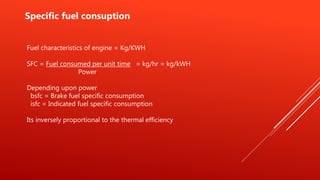
Specific fuel consuption
Fuel characteristics of engine = Kg/KWH
SFC = Fuel consumed per unit time = kg/hr = kg/kWH
Power
Depending upon power
bsfc = Brake fuel specific consumption
isfc = Indicated fuel specific consumption
Its inversely proportional to the thermal efficiency
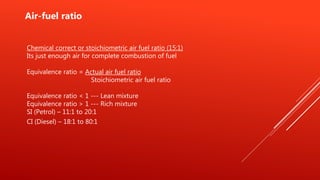
Air-fuel ratio
Chemical correct or stoichiometric air fuel ratio (15:1)
Its just enough air for complete combustion of fuel
Equivalence ratio = Actual air fuel ratio
Stoichiometric air fuel ratio
Equivalence ratio < 1 --- Lean mixture
Equivalence ratio > 1 --- Rich mixture
SI (Petrol) – 11:1 to 20:1
CI (Diesel) – 18:1 to 80:1
Calorific value
Calorific Value of the IC Engine Fuels. The calorific value of the fuel is also
called as the heat value of the fuel. It is defined as the amount of heat released by
burning of unit quantity of the fuel.
HCV - If the fuel has higher calorific value it will have tendency to produce
more power in the engine.
THANKYOU
REFERENCE
1. www.google.com
2. www.wikipedia.com
3. Automobile Engineering Vol.1/Vol.2 (Dr. Kirpal Singh)

Engine performance parameters

  • 1.
  • 2.
    0 10 20 30 40 50 60 70 80 90 100 Fuel Indicated PowerBrake Power Percentage(%) ENERGY FLOW FRICTIONAL LOSS EXHAUST COOLING RADIATION LOSSES
  • 3.
    Indicated Thermal Efficiency ith= Indicated Power (W) Energy of Fuel / sec. Indicated Power(IP) = Power produced in cylinder IP = (Pimep*l*a*n*k)/60 n=N/2 Energy of Fuel / sec. = ṁ * calorific value of fuel in KJ/KG
  • 4.
    Brake Thermal Efficiency bth= Brake Power (W) Energy of Fuel / sec. BP(W) = (2*π*N*T)/60 , N = speed in rpm, T=torque(n-m) Energy of Fuel / sec. = ṁ * calorific value of fuel in KJ/KG
  • 5.
    Mechanical Efficiency mech = BrakePower (W) Indicated power(W) -LOSSES Frictional Power(W) = Indicated Power – Brake Power
  • 6.
    Volumetric Efficiency volumetric = Actualvolume flow rate of air into intake Volume displaced * N/2 Actual volume flow rate of air = ṁ/ρ ṁ = mass flow rate(kg/sec) ρ = Density of fluid Energy of Fuel / sec. = ṁ * calorific value of fuel in KJ/KG
  • 7.
    Mean Effective Pressure Averagepressure inside cylinder based on measured or calculated power output. imep = Indicated mean effective pressure bmep = Brake mean effective pressure These both terms are used to compare the different engines.
  • 8.
    Mean Speed ofpiston Vp = Piston Speed (m/sec) Vp = 2*L*N L = Length of Stroke N = Revolution per second (in crankshaft)
  • 9.
    Specific fuel consuption Fuelcharacteristics of engine = Kg/KWH SFC = Fuel consumed per unit time = kg/hr = kg/kWH Power Depending upon power bsfc = Brake fuel specific consumption isfc = Indicated fuel specific consumption Its inversely proportional to the thermal efficiency
  • 10.
    Air-fuel ratio Chemical corrector stoichiometric air fuel ratio (15:1) Its just enough air for complete combustion of fuel Equivalence ratio = Actual air fuel ratio Stoichiometric air fuel ratio Equivalence ratio < 1 --- Lean mixture Equivalence ratio > 1 --- Rich mixture SI (Petrol) – 11:1 to 20:1 CI (Diesel) – 18:1 to 80:1
  • 11.
    Calorific value Calorific Valueof the IC Engine Fuels. The calorific value of the fuel is also called as the heat value of the fuel. It is defined as the amount of heat released by burning of unit quantity of the fuel. HCV - If the fuel has higher calorific value it will have tendency to produce more power in the engine.
  • 12.
    THANKYOU REFERENCE 1. www.google.com 2. www.wikipedia.com 3.Automobile Engineering Vol.1/Vol.2 (Dr. Kirpal Singh)