SURVEY OF MUSIC FUNDAMENTAL ELEMENTS Listening to Music , Chapters 2 & 3
FUNDAMENTAL ELEMENTS OF MUSIC Rhythm Pitch Timbre Texture Dynamics (Form)
RHYTHM Rhythm:  The organization of time in music We listen for regular  beats We listen for  accents  among the beats to define  meter  and  measure We listen for strength of accents to determine  phrase
RHYTHM Tempo  governs the rhythm’s pace or speed Tempo may be steady or uneven ( rubato ) Syncopation  is accenting weak beats rather than strong Rhythm can be dominant or subtle – implicit or explicit
RHYTHM Time Signatures Rhythmic notation
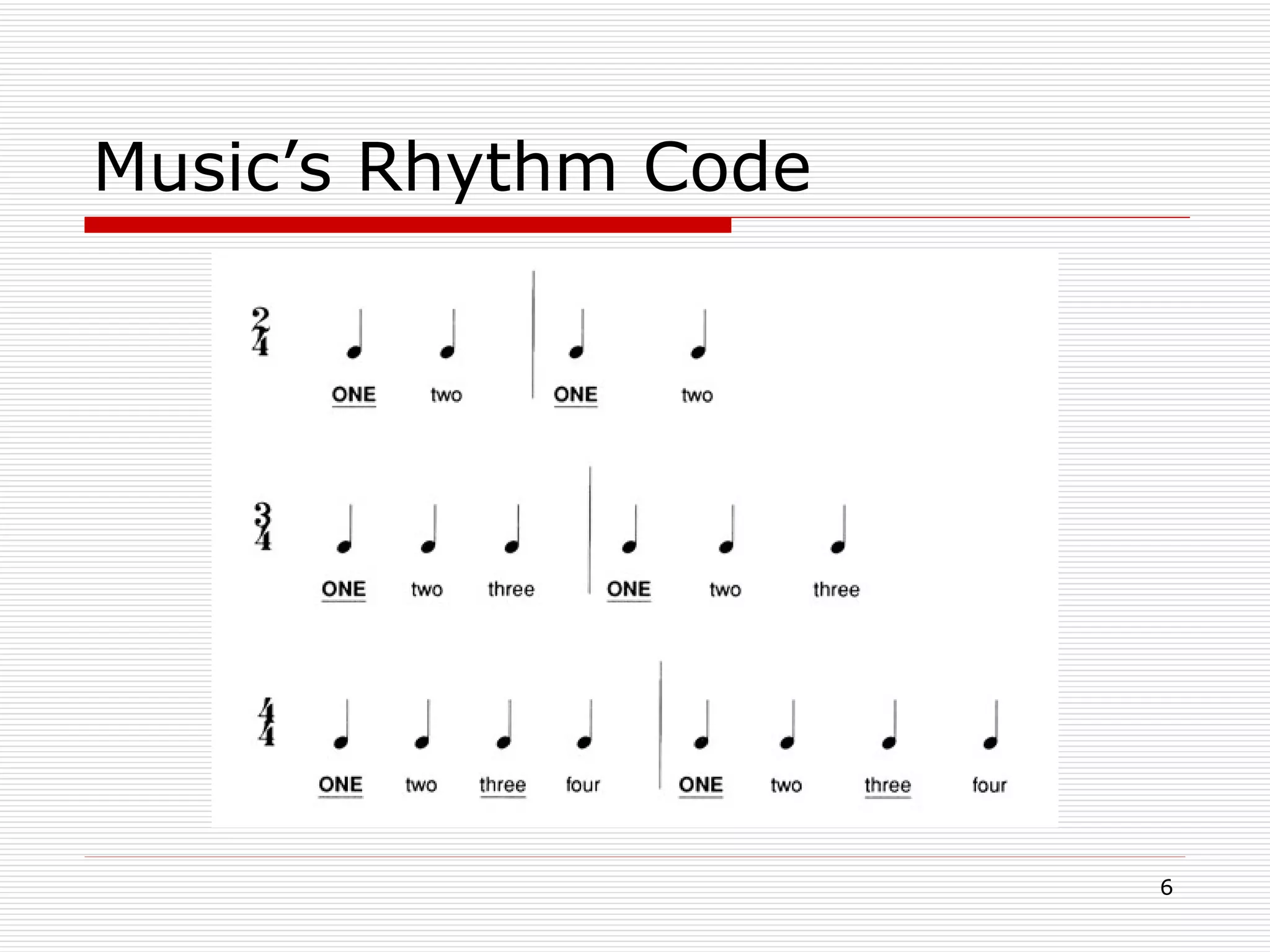
Music’s Rhythm Code
Music’s Rhythm Code
PITCH Pitch:  The highness or lowness of a tone in music Most instruments, including the human voice, are designed to produce various  pitches Pitches in rhythm are called  notes A sequence of notes in music is a  melody
PITCH Two or more pitches sounding together create  harmony Pitches perceived to sound good together are  consonant Pitches perceived to sound bad together are  dissonant
PITCH: KEYS Pitches are organized in musical  scales , and scales define  keys In Western music we have 12  major  and 12  minor  keys Within each key, there are positions: some at rest and some in tension
PITCH: KEYS Positions  within  keys are: Tonic Supertonic Mediant Sub-Dominant Dominant Sub-Mediant, and Leading Tone
PITCH: KEYS Key Signatures Modes:  Ionian Dorian Phrygian Lydian Mixolydian Aeolian Locrian
Music’s Pitch Code Clefs anchor the note locations on the staff This is how performers know what note is supposed to be produced.
Music’s Pitch Code
TIMBRE Timbre:  The characteristics of the sound itself We often use terms from the visual arts to describe musical timbre Timbres often hold strong associations in our minds
TIMBRE The sound of solo or section instruments is also an aspect of timbre Certain composers were so good at creating and combining tone colors, we say their “instrument” was the orchestra
TEXTURE Texture:  The consistency of musical sounds Monophonic  texture means only one line of music sounding alone Homophonic  means one line leads and the others support it Multiple independent lines happening together is called  polyphonic  texture
FORM Form:  The structure of a musical composition The primary elements of form are  repetition ,  contrast,  and  variation Forms range in  scale  from very small to very large
FORM Eight Basic Categories of Form: Strophic Binary Ternary Rondo Theme & Variations Sonata Fugue Through-composed
DYNAMICS Dynamics:  The volume or loudness of the music This may refer to  contrast  among sections of a piece, the  mix  within a piece, or the overall presentation
FUNDAMENTAL ELEMENTS OF MUSIC Rhythm Pitch Timbre Texture Dynamics (Form)

Fundamental Elements Of Music

  • 1.
    SURVEY OF MUSICFUNDAMENTAL ELEMENTS Listening to Music , Chapters 2 & 3
  • 2.
    FUNDAMENTAL ELEMENTS OFMUSIC Rhythm Pitch Timbre Texture Dynamics (Form)
  • 3.
    RHYTHM Rhythm: The organization of time in music We listen for regular beats We listen for accents among the beats to define meter and measure We listen for strength of accents to determine phrase
  • 4.
    RHYTHM Tempo governs the rhythm’s pace or speed Tempo may be steady or uneven ( rubato ) Syncopation is accenting weak beats rather than strong Rhythm can be dominant or subtle – implicit or explicit
  • 5.
    RHYTHM Time SignaturesRhythmic notation
  • 6.
  • 7.
  • 8.
    PITCH Pitch: The highness or lowness of a tone in music Most instruments, including the human voice, are designed to produce various pitches Pitches in rhythm are called notes A sequence of notes in music is a melody
  • 9.
    PITCH Two ormore pitches sounding together create harmony Pitches perceived to sound good together are consonant Pitches perceived to sound bad together are dissonant
  • 10.
    PITCH: KEYS Pitchesare organized in musical scales , and scales define keys In Western music we have 12 major and 12 minor keys Within each key, there are positions: some at rest and some in tension
  • 11.
    PITCH: KEYS Positions within keys are: Tonic Supertonic Mediant Sub-Dominant Dominant Sub-Mediant, and Leading Tone
  • 12.
    PITCH: KEYS KeySignatures Modes: Ionian Dorian Phrygian Lydian Mixolydian Aeolian Locrian
  • 13.
    Music’s Pitch CodeClefs anchor the note locations on the staff This is how performers know what note is supposed to be produced.
  • 14.
  • 15.
    TIMBRE Timbre: The characteristics of the sound itself We often use terms from the visual arts to describe musical timbre Timbres often hold strong associations in our minds
  • 16.
    TIMBRE The soundof solo or section instruments is also an aspect of timbre Certain composers were so good at creating and combining tone colors, we say their “instrument” was the orchestra
  • 17.
    TEXTURE Texture: The consistency of musical sounds Monophonic texture means only one line of music sounding alone Homophonic means one line leads and the others support it Multiple independent lines happening together is called polyphonic texture
  • 18.
    FORM Form: The structure of a musical composition The primary elements of form are repetition , contrast, and variation Forms range in scale from very small to very large
  • 19.
    FORM Eight BasicCategories of Form: Strophic Binary Ternary Rondo Theme & Variations Sonata Fugue Through-composed
  • 20.
    DYNAMICS Dynamics: The volume or loudness of the music This may refer to contrast among sections of a piece, the mix within a piece, or the overall presentation
  • 21.
    FUNDAMENTAL ELEMENTS OFMUSIC Rhythm Pitch Timbre Texture Dynamics (Form)

Editor's Notes