Embed presentation
Downloaded 13 times


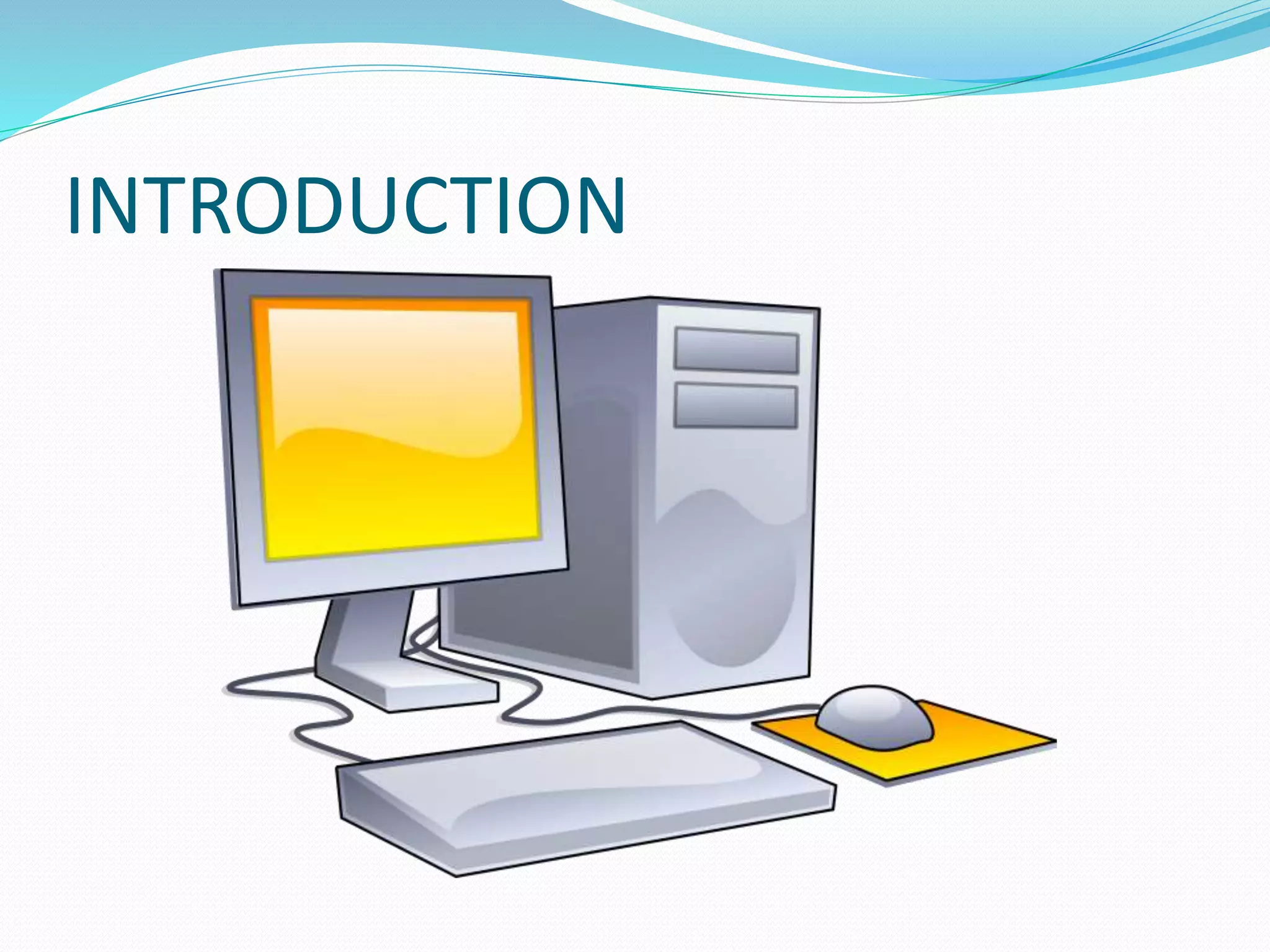
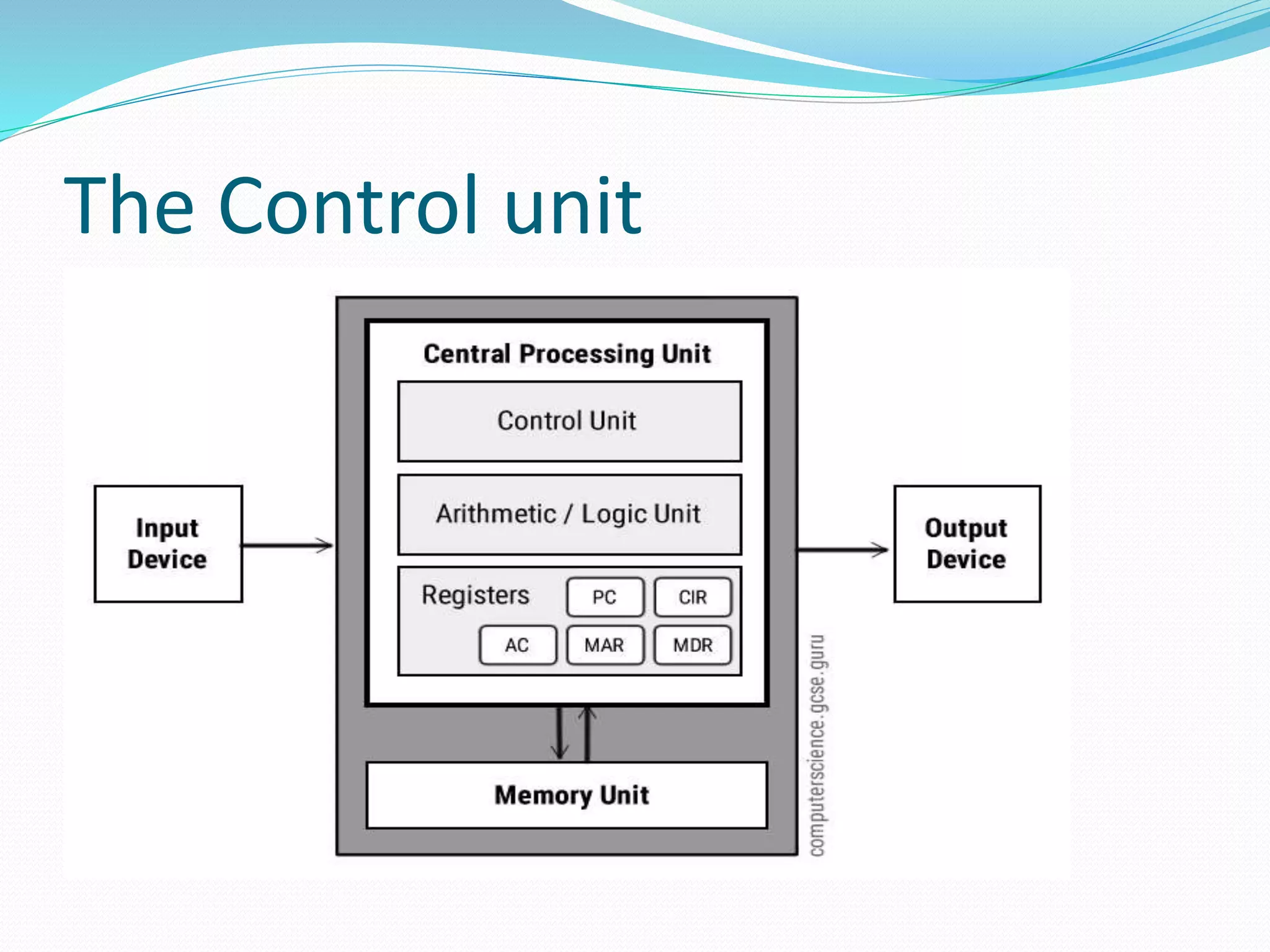
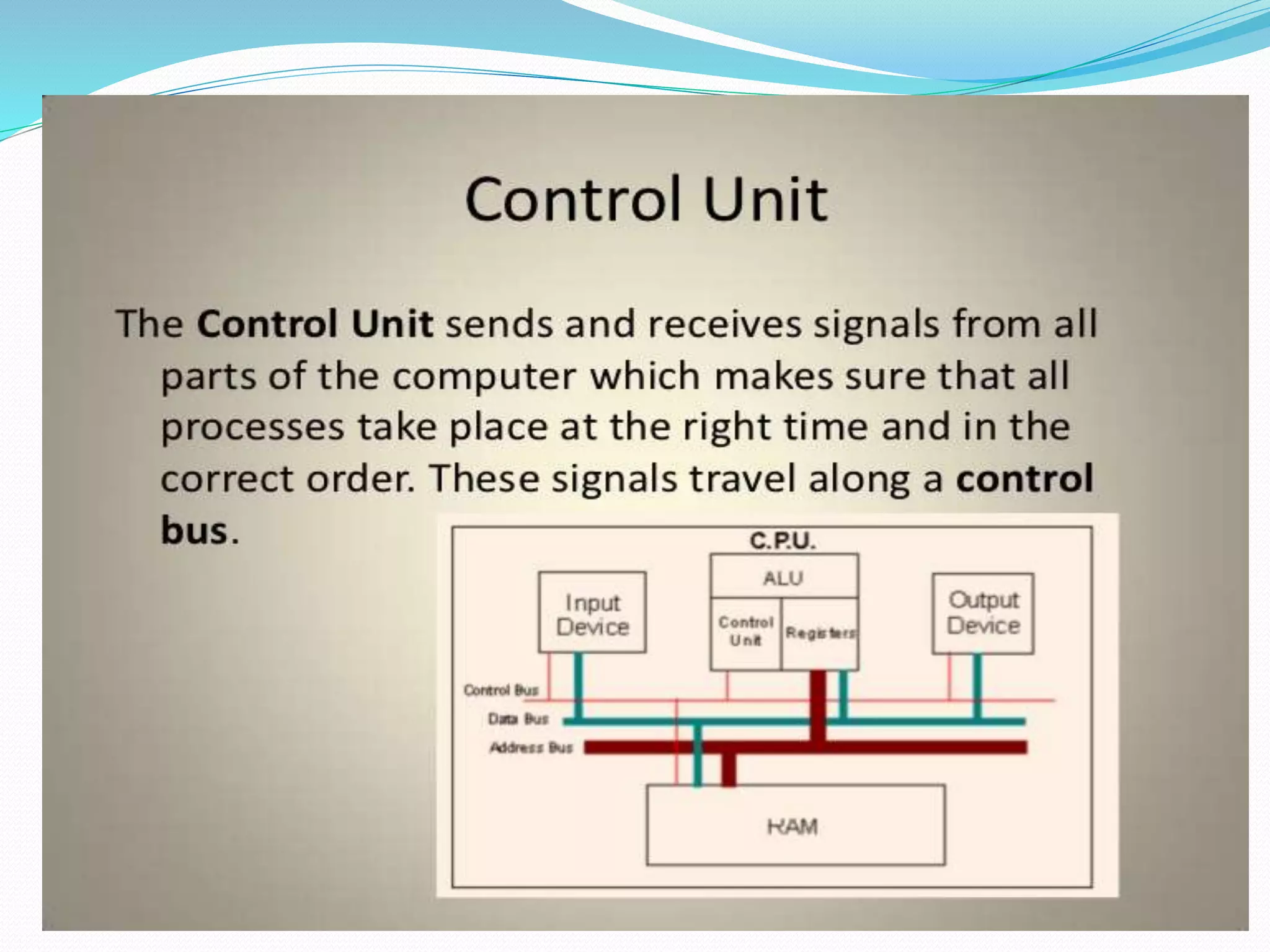
This document discusses the basic components and functions of a computer system. It describes a computer as a device that responds to specific instructions to perform well-defined tasks like adding numbers. The three main units are the CPU, input devices, and output devices. The CPU contains the control unit, ALU, and memory to process data. Input devices like keyboards and mice feed data into the computer. Output devices such as monitors, printers, and speakers send processed information from the CPU out of the computer.
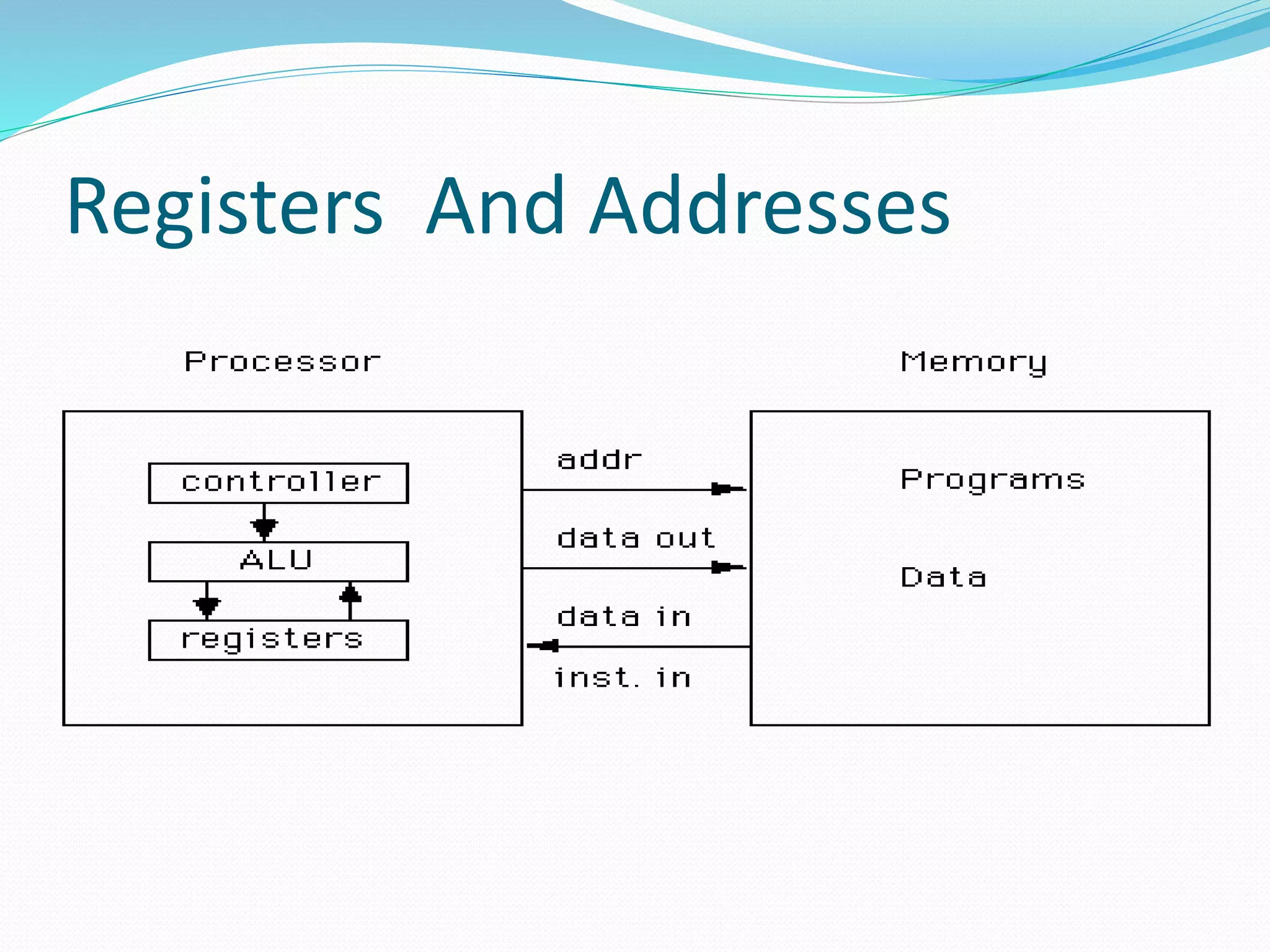
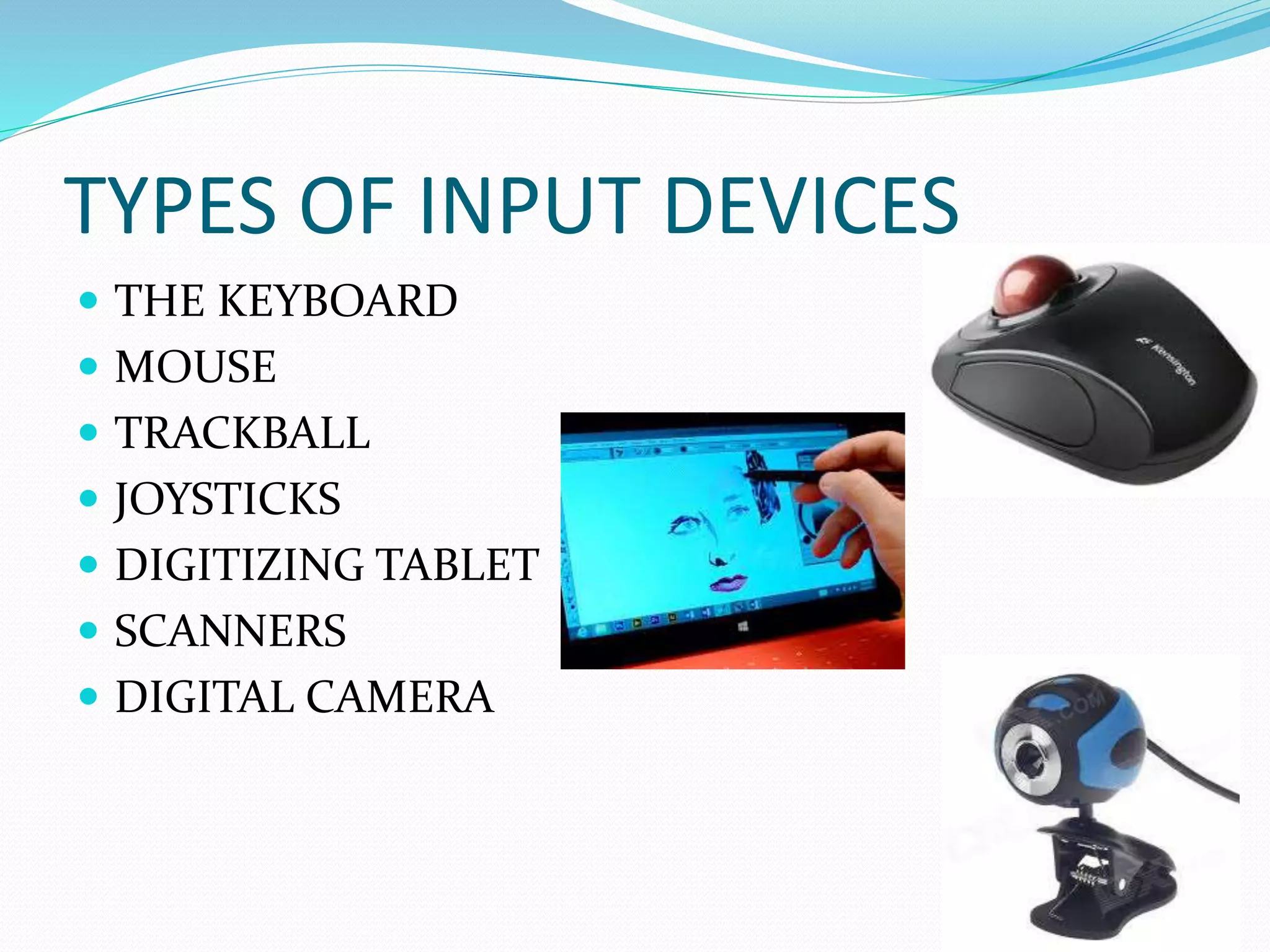
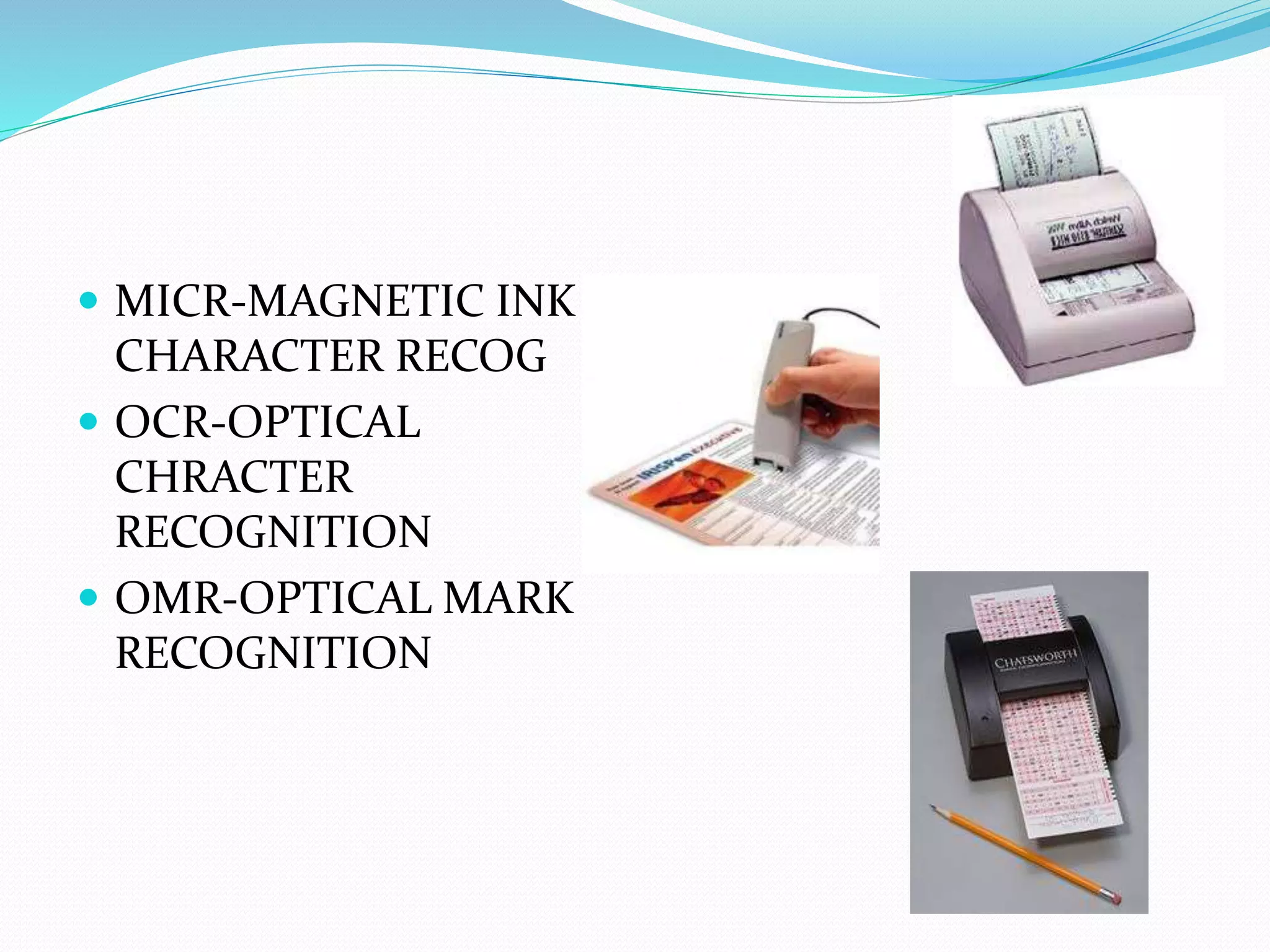
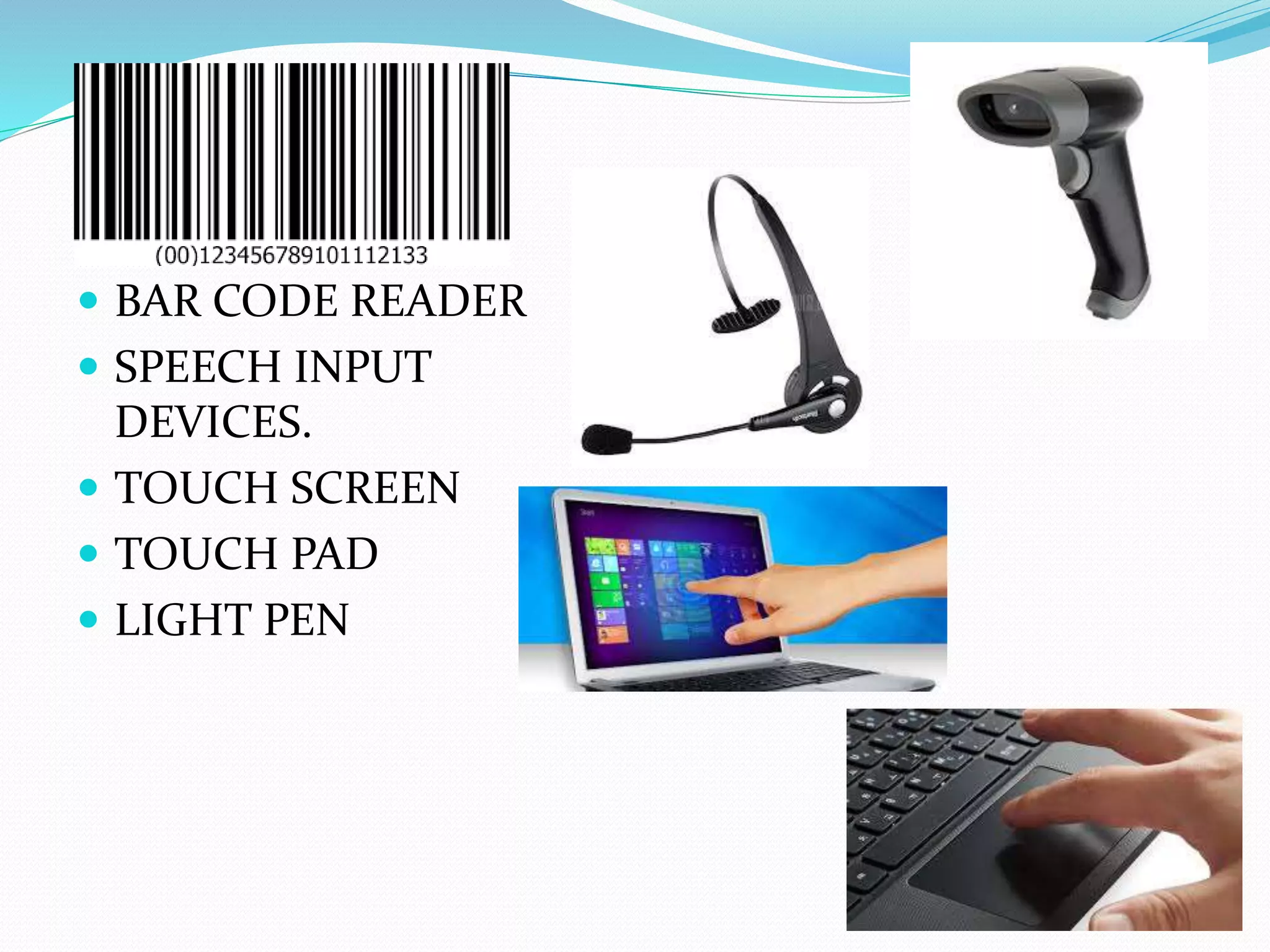
Introduction to the topic of computer architecture and its fundamental components.
Highlights that computers respond to specific instructions through software programs, such as adding numbers.
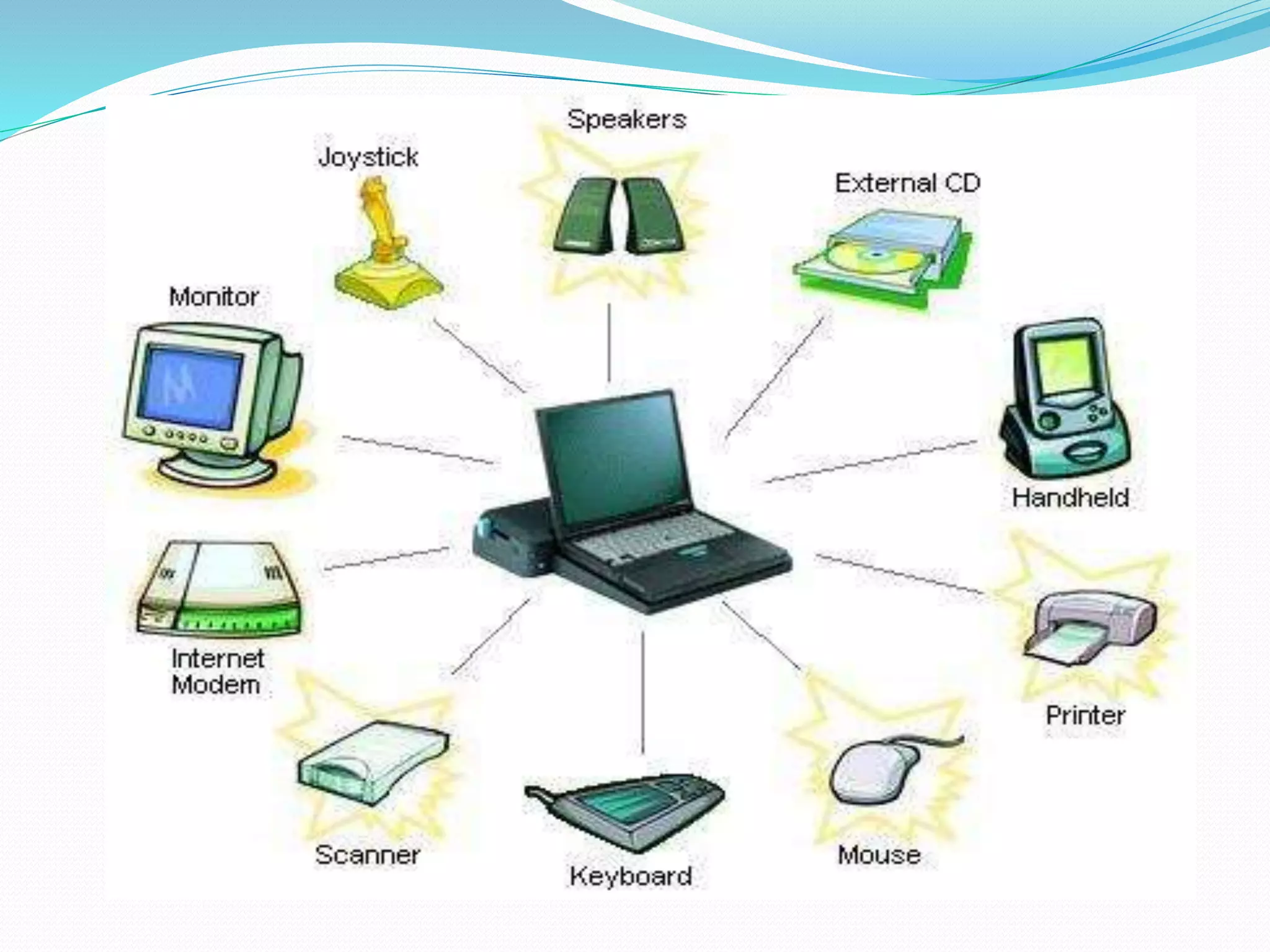
Describes three primary units of a computer: CPU, input devices, and output devices.
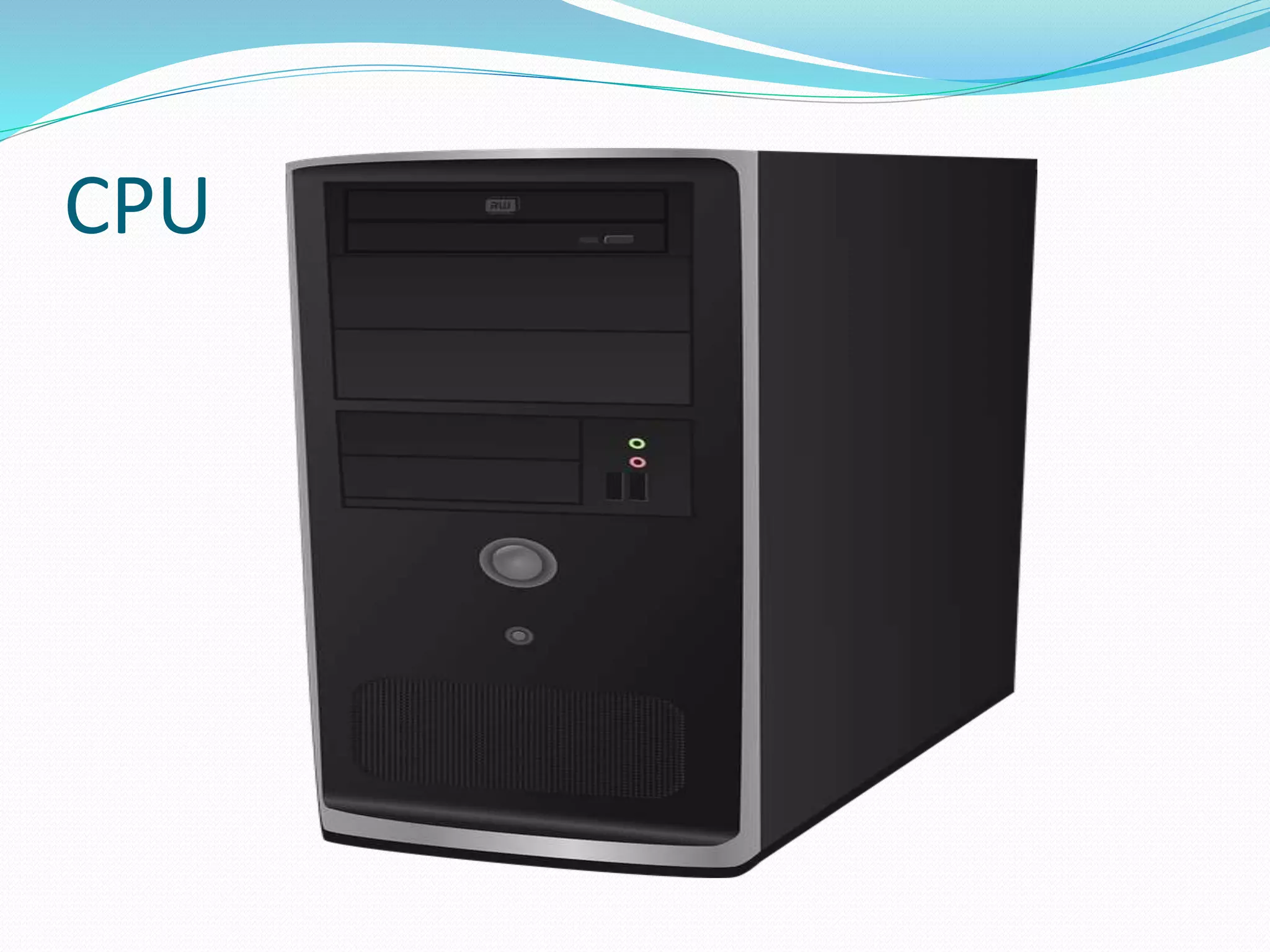
Focuses solely on the Central Processing Unit, the core component of computing.
Defines data processing as the manipulation of data including conversion, flow through CPU, and formatting.
Introduces the control unit as a component of the CPU.
Details the functions of the ALU in performing arithmetic, logic operations, and controlling calculation speed.
Describes internal memory as primary storage or main memory of a computer.
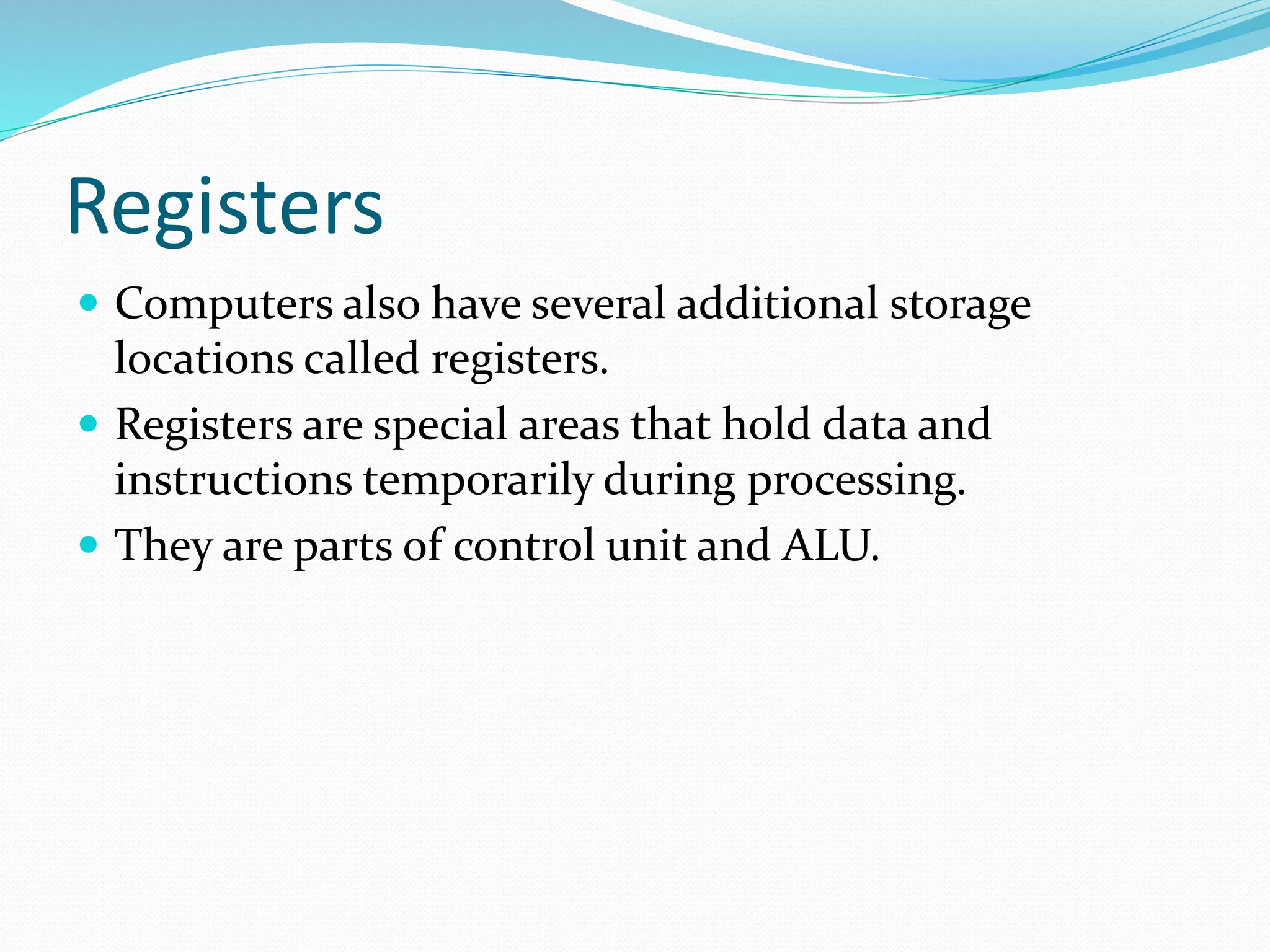
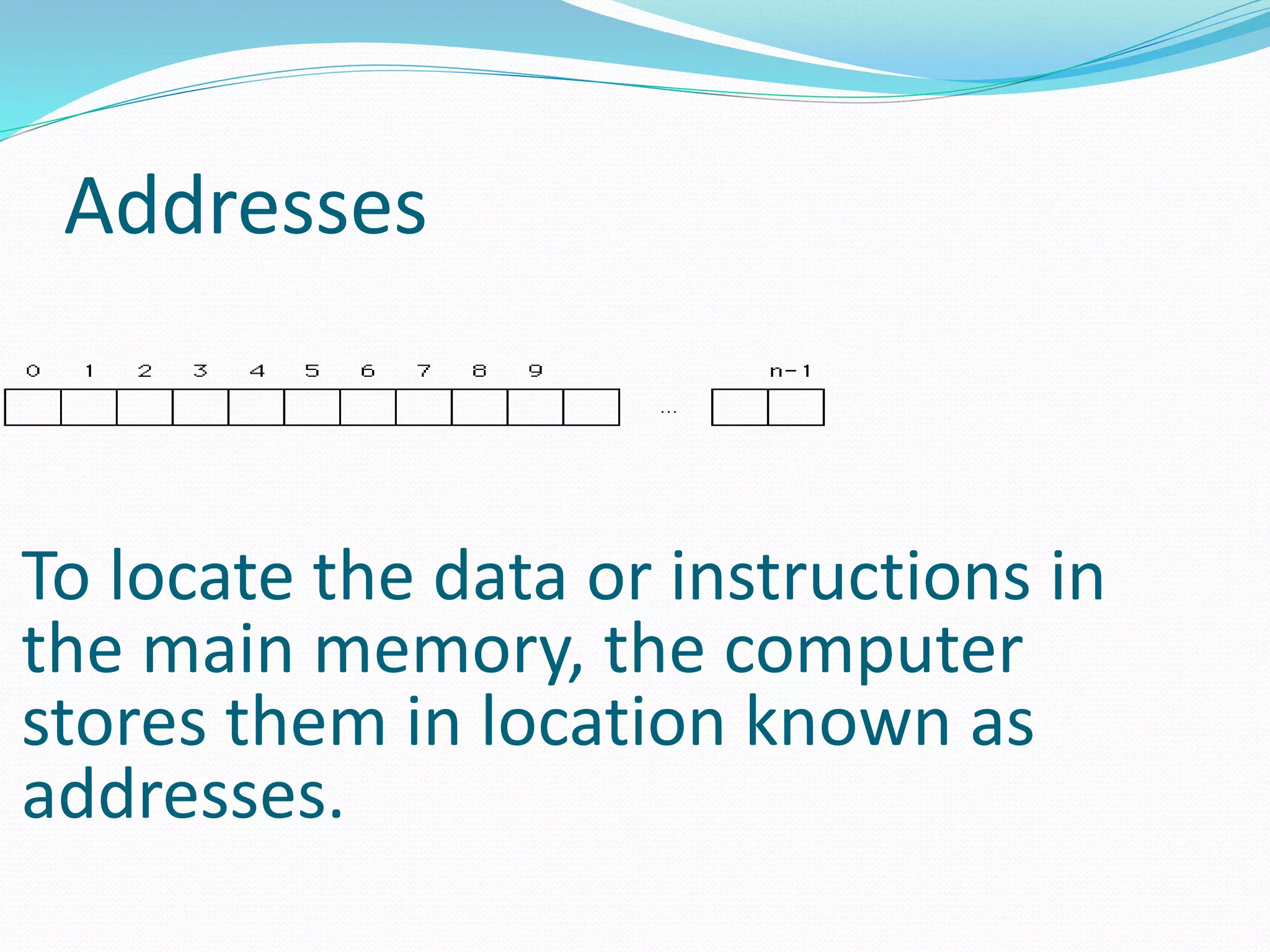
Discusses registers as temporary storage during processing and addresses for locating data in memory.
Defines input devices that feed data into the computer and send information to the CPU, primarily keyboard and mouse.
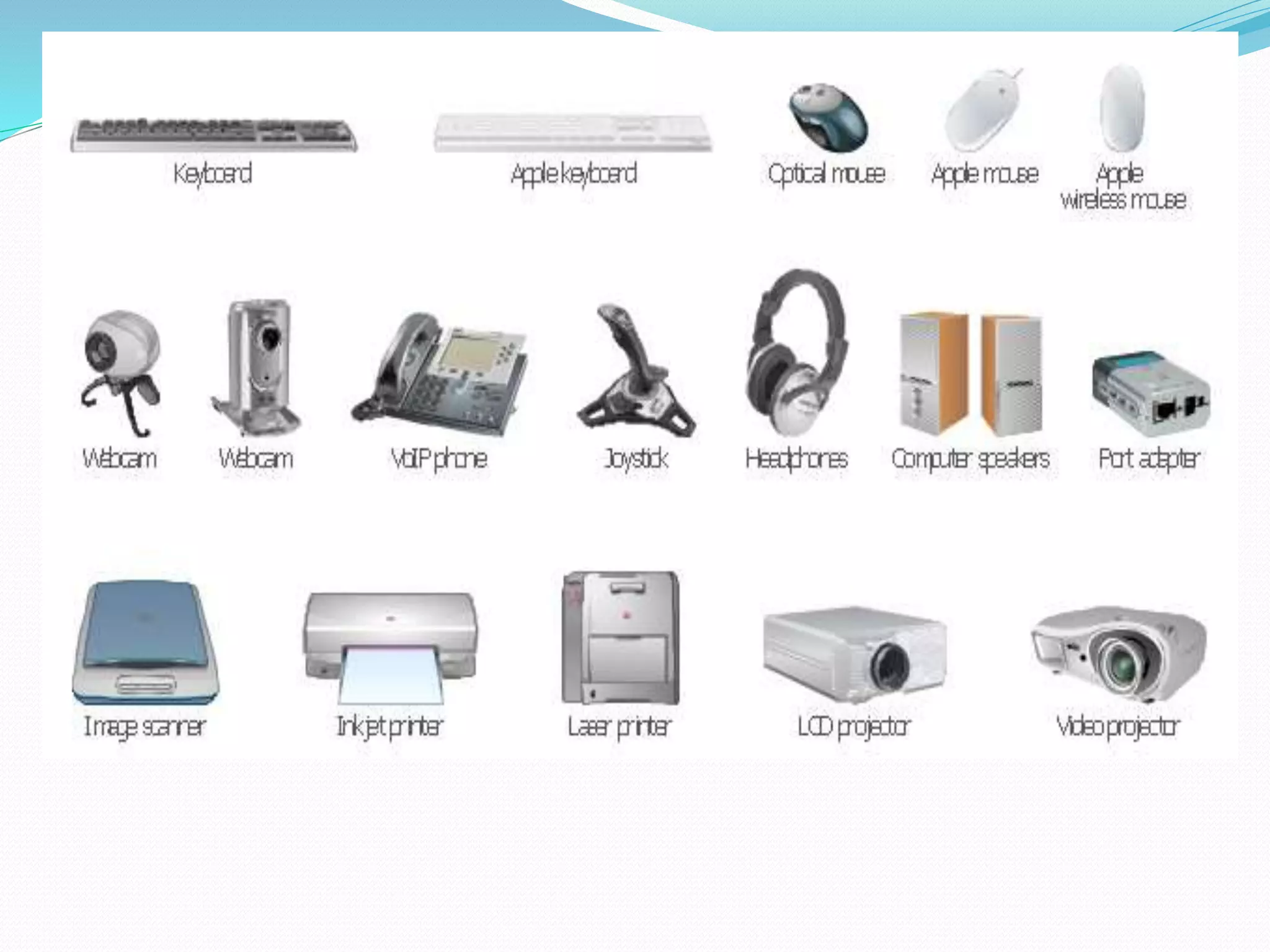
Lists various input devices like keyboard, mouse, trackball, and advanced inputs like OCR and speech input devices.
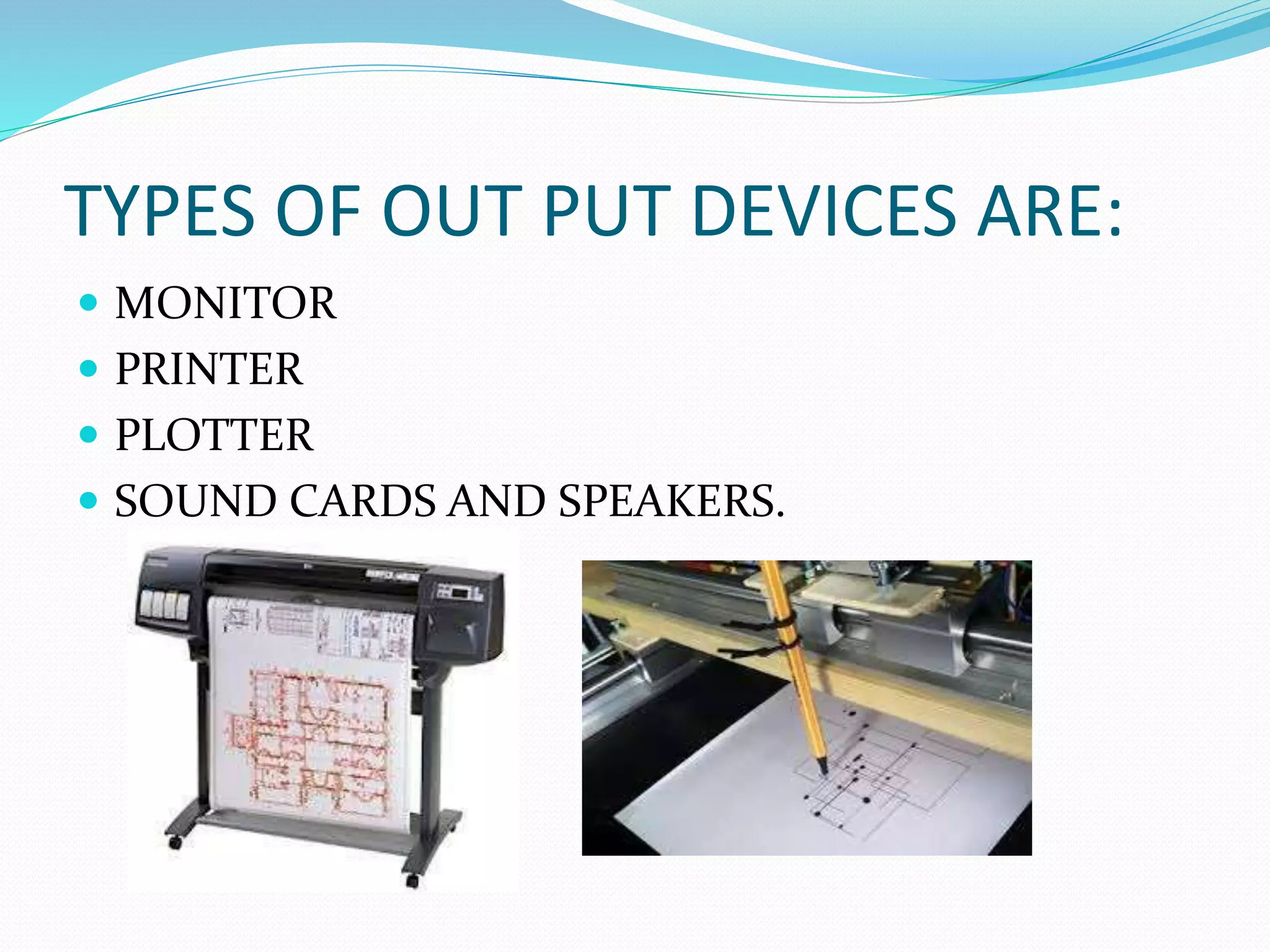
Defines output devices as those that provide information from the computer.
Lists various output devices including monitor, printer, plotter, and sound cards.