

Project Management
What is a Project?
 It is a group of unique, inter-related activities that
  are planned and executed in a certain sequence to
  create a unique product and services within a
  specific time frame, scope and budget.

 The Project Management Institute (U.S.A.) has
  defined project as,
 ‘’a combination of human and non - human
  resources, pooled together in a temporary
  organization to achieve a specific purpose’’.
What is Project Management?
• Project management is a system of procedures, practices,
  technologies and know-how that enables the planning,
  organizing, staffing, directing and controlling necessary
  to successfully manage a project.

• The primary challenge of project management is to
  achieve all of the project goals and objectives while
  honoring the preconceived constraints.

• Typical constraints are scope, time and budget. The
  secondary—and more ambitious—challenge is
  to optimize the allocation and integrate the inputs
  necessary to meet pre-defined objectives.
Project Manager:
• A project manager is the person responsible for
  supervising a systems project from initiation to
  conclusion.
Project characteristics:
 Objective
 Unique activities
 Attainment of specific goal
 Specified time
 Interrelated activities
 Life-cycle
 Sequences of activities
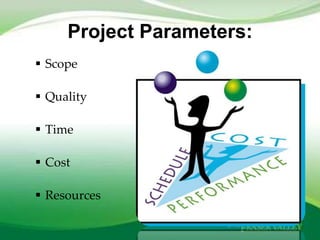
Project Parameters:
 Scope

 Quality

 Time

 Cost

 Resources
Functions of Project
             Management:
• Scoping – setting the boundaries of the project

• Planning – identifying the tasks required to complete
  the project

• Estimating – identifying resources required to complete
  the project

• Scheduling – developing a plan to complete the project

• Organizing – making sure members understand their
  roles and responsibilities
Functions of Project
           Management:
• Directing – coordinating the project

• Controlling – monitoring progress

• Closing – assessing success and failure
Measures of project success:

 The resulting information system is acceptable
  to the customers (e.g. users, managers).

  The system was delivered ‚on time.‛
  The system was delivered ‚within budget.‛
Measures of project failure:
 Failure    to   establish upper-management
  commitment to the project
 Lack of organization’s commitment to the
  methodology
 Taking shortcuts through or around the
  methodology
 Poor Project management:
   Feature creep
   Scope creep
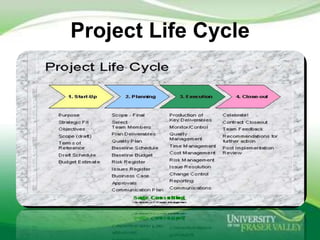
Project Life Cycle
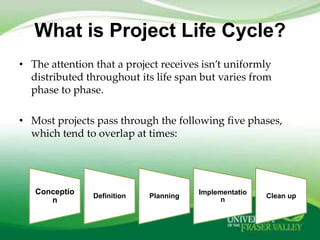
What is Project Life Cycle?
• The attention that a project receives isn’t uniformly
  distributed throughout its life span but varies from
  phase to phase.

• Most projects pass through the following five phases,
  which tend to overlap at times:


   Conceptio    Definition   Planning
                                        Implementatio
                                                        Clean up
      n                                       n
Significance of Project Life
          Cycle:
It defines:

The phases of the project (time)

The work performed in each phase (work)

The input and output of each phase (result)

The milestone of each phase (end sign)
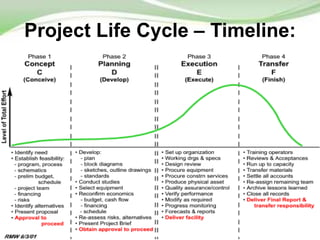
Project Life Cycle – Timeline:
Conception/Initiation Phase:
• Conception is the phase during which the project
  idea finds genesis and germinates, out of:
 the need to solve a problem,
 the observance of one’s environment,
 the drive to innovate something new.

• This phase is essential and if flawed, it may lead to
  defective and dysfunctional projects.

• A well conceived project goes a long way towards
  successful implementation and operation.
Definition Phase:
• The definition phase of the project involves
  developing the idea generated during Conception
  phase.

• It produces a document describing the project in
  sufficient detail, covering all necessary aspects
  like the manpower, materials, machinery, layout,
  utilities and feasibility.

• It clears most of the ambiguities and
  uncertainties about the formation made in the
  previous phase.
Planning Phase:
• This phase starts almost immediately after the
  conception phase and overlaps with both
  definition and implementation phases.

• This phase involves the preparation for the
  project to take – off smoothly and effects many
  decisions related to the ‘project basics’.

• It involves both Core planning and facilitating
  planning.
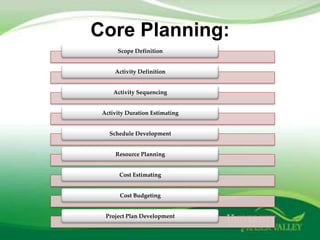
Core Planning:
      Scope Definition


     Activity Definition


     Activity Sequencing


 Activity Duration Estimating


   Schedule Development


     Resource Planning


       Cost Estimating


       Cost Budgeting


  Project Plan Development
Facilitating Planning:

Quality Planning

Organizational Planning

Staff Acquisition

Communications Planning
Implementation Phase:
• This phase is a period of ‘’hectic activity’’. During this
  period, the idea starts materializing physically and
  tangibly and for the first time, the project can be seen off
  the paper.

• Usually, 80-85 percent of the project work is done in this
  phase using all techniques of project management.

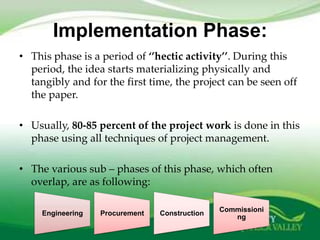
• The various sub – phases of this phase, which often
  overlap, are as following:

                                                Commissioni
     Engineering   Procurement   Construction
                                                   ng
Implementation Phase: (Contd)
  Project Plan Execution
  Complete Work Packages
  Information Distribution
  Scope Verification
  Quality Assurance Team Development
  Progress Meetings

  Information Distribution

  Source Selection

  Contract Administration
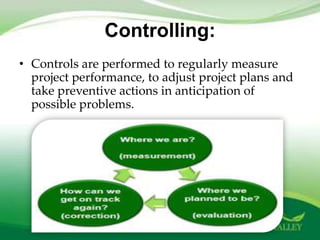
Controlling:
• Controls are performed to regularly measure
  project performance, to adjust project plans and
  take preventive actions in anticipation of
  possible problems.
Clean – up/Termination
              Phase:
• This is the transition phase in which the project is
  handed over to the operators and/or agencies
  responsible for maintaining it.

• This phase is a clean – up task in which all project
  accounts are closed, Outstanding payments are
  settled and dues are collected.

• All previous phases involve compartmentalized
  disposition of the project personnel and that task
  is winded - down in this phase.
Clean – up Phase: (Contd)
• Administrative Closure – generating necessary
  information to formally recognize phase or project
  completion.

• Contract Close-out – completion and delivery of
  project deliverables and resolving open issues. It
  includes:
      Purchase Audits
      Product Verification
      Formal Acceptance
      Lessons Learnt
      Update of Records
      Archives of Records
      Releasing the Project Team
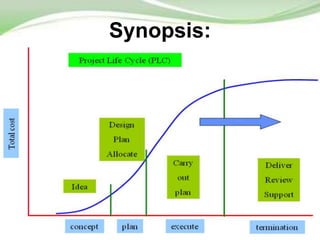
Synopsis:
Presented By:


PGDBM
– Sec ‘A’
Queries:

Project management and project life cycle

  • 1.
  • 2.
    What is aProject?  It is a group of unique, inter-related activities that are planned and executed in a certain sequence to create a unique product and services within a specific time frame, scope and budget.  The Project Management Institute (U.S.A.) has defined project as, ‘’a combination of human and non - human resources, pooled together in a temporary organization to achieve a specific purpose’’.
  • 3.
    What is ProjectManagement? • Project management is a system of procedures, practices, technologies and know-how that enables the planning, organizing, staffing, directing and controlling necessary to successfully manage a project. • The primary challenge of project management is to achieve all of the project goals and objectives while honoring the preconceived constraints. • Typical constraints are scope, time and budget. The secondary—and more ambitious—challenge is to optimize the allocation and integrate the inputs necessary to meet pre-defined objectives.
  • 4.
    Project Manager: • Aproject manager is the person responsible for supervising a systems project from initiation to conclusion.
  • 5.
    Project characteristics:  Objective Unique activities  Attainment of specific goal  Specified time  Interrelated activities  Life-cycle  Sequences of activities
  • 6.
    Project Parameters:  Scope Quality  Time  Cost  Resources
  • 7.
    Functions of Project Management: • Scoping – setting the boundaries of the project • Planning – identifying the tasks required to complete the project • Estimating – identifying resources required to complete the project • Scheduling – developing a plan to complete the project • Organizing – making sure members understand their roles and responsibilities
  • 8.
    Functions of Project Management: • Directing – coordinating the project • Controlling – monitoring progress • Closing – assessing success and failure
  • 9.
    Measures of projectsuccess: The resulting information system is acceptable to the customers (e.g. users, managers).  The system was delivered ‚on time.‛  The system was delivered ‚within budget.‛
  • 10.
    Measures of projectfailure:  Failure to establish upper-management commitment to the project  Lack of organization’s commitment to the methodology  Taking shortcuts through or around the methodology  Poor Project management: Feature creep Scope creep
  • 11.
  • 12.
    What is ProjectLife Cycle? • The attention that a project receives isn’t uniformly distributed throughout its life span but varies from phase to phase. • Most projects pass through the following five phases, which tend to overlap at times: Conceptio Definition Planning Implementatio Clean up n n
  • 13.
    Significance of ProjectLife Cycle: It defines: The phases of the project (time) The work performed in each phase (work) The input and output of each phase (result) The milestone of each phase (end sign)
  • 14.
    Project Life Cycle– Timeline:
  • 15.
    Conception/Initiation Phase: • Conceptionis the phase during which the project idea finds genesis and germinates, out of:  the need to solve a problem,  the observance of one’s environment,  the drive to innovate something new. • This phase is essential and if flawed, it may lead to defective and dysfunctional projects. • A well conceived project goes a long way towards successful implementation and operation.
  • 16.
    Definition Phase: • Thedefinition phase of the project involves developing the idea generated during Conception phase. • It produces a document describing the project in sufficient detail, covering all necessary aspects like the manpower, materials, machinery, layout, utilities and feasibility. • It clears most of the ambiguities and uncertainties about the formation made in the previous phase.
  • 17.
    Planning Phase: • Thisphase starts almost immediately after the conception phase and overlaps with both definition and implementation phases. • This phase involves the preparation for the project to take – off smoothly and effects many decisions related to the ‘project basics’. • It involves both Core planning and facilitating planning.
  • 18.
    Core Planning: Scope Definition Activity Definition Activity Sequencing Activity Duration Estimating Schedule Development Resource Planning Cost Estimating Cost Budgeting Project Plan Development
  • 19.
    Facilitating Planning: Quality Planning OrganizationalPlanning Staff Acquisition Communications Planning
  • 20.
    Implementation Phase: • Thisphase is a period of ‘’hectic activity’’. During this period, the idea starts materializing physically and tangibly and for the first time, the project can be seen off the paper. • Usually, 80-85 percent of the project work is done in this phase using all techniques of project management. • The various sub – phases of this phase, which often overlap, are as following: Commissioni Engineering Procurement Construction ng
  • 21.
    Implementation Phase: (Contd)  Project Plan Execution  Complete Work Packages  Information Distribution  Scope Verification  Quality Assurance Team Development  Progress Meetings  Information Distribution  Source Selection  Contract Administration
  • 22.
    Controlling: • Controls areperformed to regularly measure project performance, to adjust project plans and take preventive actions in anticipation of possible problems.
  • 23.
    Clean – up/Termination Phase: • This is the transition phase in which the project is handed over to the operators and/or agencies responsible for maintaining it. • This phase is a clean – up task in which all project accounts are closed, Outstanding payments are settled and dues are collected. • All previous phases involve compartmentalized disposition of the project personnel and that task is winded - down in this phase.
  • 24.
    Clean – upPhase: (Contd) • Administrative Closure – generating necessary information to formally recognize phase or project completion. • Contract Close-out – completion and delivery of project deliverables and resolving open issues. It includes: Purchase Audits Product Verification Formal Acceptance Lessons Learnt Update of Records Archives of Records Releasing the Project Team
  • 25.
  • 27.
  • 28.