Project Formulation
Workshop on Strengthening Capacity for Strategic Agricultural Policy
     and Investment Planning and Implementation in Africa
        Safari Park Hotel, Nairobi on 25th- 26th June 2012


                   Stella Clara Massawe
                    ReSAKSS-ECA, ILRI
A project

• activities aimed at bringing about clearly specified
  objectives within a defined time-period and with a
  defined budget

• Hierarchy of objectives (inputs, activities, outputs,
  purpose and goal) & assumptions
A programme

• Series of several projects

• Projects that strategically combined to
  achieve a common program objective
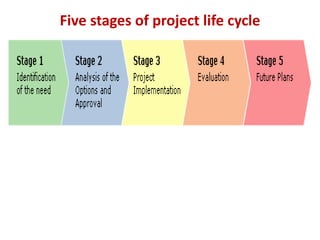
Five stages of project life cycle
Situation Analysis and Project Design

• Three main components:
  – Stakeholder analysis

  – Problem analysis

  – Objectives/Strategies Analysis
Who is a Stakeholder? ….(1)

• Any individual, community, group or
  organization with an interest in the
  outputs/outcomes of a project,

• Either as a result of being affected by it
  positively or negatively, or by being able to
  influence project activities.
Who is a Stakeholder? …(2)
• Key stakeholders: Those who can significantly
  influence or are important to the success of an
  activity.

• Primary stakeholders: Those who are ultimately
  affected by an activity.

• Secondary stakeholders: All other stakeholders than
  Primary stakeholders.
The importance of Stakeholder Analysis
• To Know:
  – Those around a project, who may affect or be affected
    by a project

  – Opportunities and relationships to build upon in
    implementing a project to help make it a success

  – Who should be encouraged to participate in a project

  – Potential conflicts and risks that could jeopardize a
    project, etc.
Problems Analysis

• is a central tool for the project design, showing issues
  which need to be dealt with

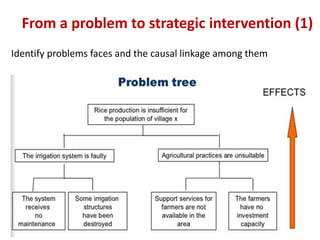
• Problems Tree Analysis: an effective technique used
  for Problems Analysis

• In the Problems Tree, problems are connected by
  “cause-effect” logic.
From a problem to strategic intervention (1)
Identify problems faces and the causal linkage among them
Objectives/Strategies Analysis
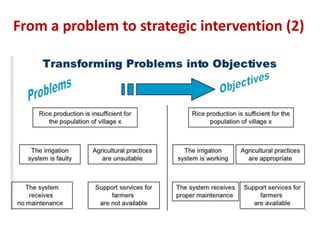
• Is a tool to understand what objectives to address
  the problems identified in Problems Analysis.

• It also shows what strategies will be taken to solve
  the problems identified in Problems Analysis.

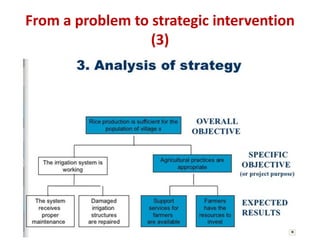
• In Objectives Tree, objectives/strategies are
  connected by “if-then” logic.
From a problem to strategic intervention (2)
From a problem to strategic intervention
                  (3)
Project Formulation
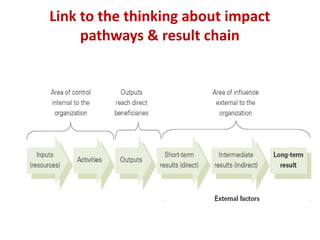
Link to the thinking about impact
     pathways & result chain
Logic model…
• Is a systematic and visual way to present and share
  your understanding of the relationships among the
  resources you have to operate your program

• The activities you plan, and the changes or results
  you hope to achieve

• Input and activities = Your planned work

• Output, outcome and impacts=Your intended results
Prepare project Management Plan

• Need to prepare a detailed project management plan
  which specifies the key tasks, targets and timescales

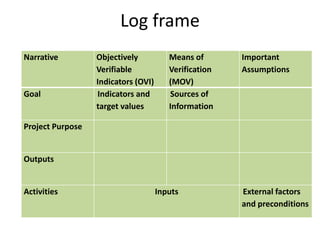
• Logical Framework (Logframe)/ Project Design Matrix
  (PDM)

• A four-by-four matrix which shows the design of a
  project and functions as a base of management after
  the project commencement
Log frame
Narrative         Objectively           Means of       Important
                  Verifiable            Verification   Assumptions
                  Indicators (OVI)      (MOV)
Goal              Indicators and        Sources of
                  target values         Information

Project Purpose


Outputs


Activities                           Inputs            External factors
                                                       and preconditions
Learning from the past agricultural
             projects
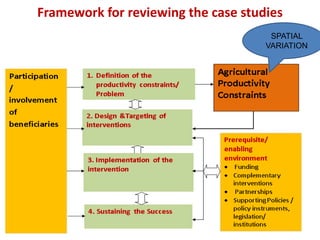
Framework for reviewing the case studies
                                      SPATIAL
                                     VARIATION
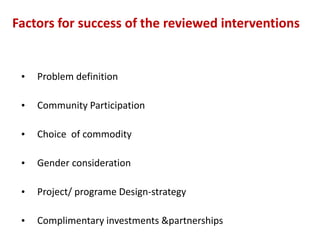
Factors for success of the reviewed interventions


 •   Problem definition

 •   Community Participation

 •   Choice of commodity

 •   Gender consideration

 •   Project/ programe Design-strategy

 •   Complimentary investments &partnerships
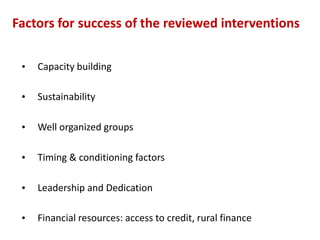
Factors for success of the reviewed interventions

 •   Capacity building

 •   Sustainability

 •   Well organized groups

 •   Timing & conditioning factors

 •   Leadership and Dedication

 •   Financial resources: access to credit, rural finance
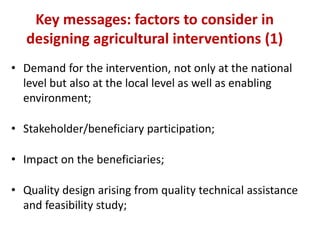
Key messages: factors to consider in
   designing agricultural interventions (1)
• Demand for the intervention, not only at the national
  level but also at the local level as well as enabling
  environment;

• Stakeholder/beneficiary participation;

• Impact on the beneficiaries;

• Quality design arising from quality technical assistance
  and feasibility study;
Key messages: factors to consider in
  designing agricultural interventions (2)
• Quality of implementation

• Government support and commitment

• Performance of the executing agency and effective
  quality control system

• Exogenous factors.
THANK YOU
Exercise 1
                          Constructing and Using a Theory of Change
Task objective: to enable the participants practice how to develop a theory of change for their
                                          programme
                                  Estimated time: 30 minutes
Task 1
• Consider a programme you are currently working with or one
  which you are familiar but not directly involved. Develop a
  graphic showing of the theory of change for this programme
  or project.

• Be sure to identify the assumptions underlying the
  programme or project

• Use simple theory of change template (please only include a
  few outputs and activities)

• Reference pages 150-171

Project formulation

  • 1.
    Project Formulation Workshop onStrengthening Capacity for Strategic Agricultural Policy and Investment Planning and Implementation in Africa Safari Park Hotel, Nairobi on 25th- 26th June 2012 Stella Clara Massawe ReSAKSS-ECA, ILRI
  • 2.
    A project • activitiesaimed at bringing about clearly specified objectives within a defined time-period and with a defined budget • Hierarchy of objectives (inputs, activities, outputs, purpose and goal) & assumptions
  • 3.
    A programme • Seriesof several projects • Projects that strategically combined to achieve a common program objective
  • 4.
    Five stages ofproject life cycle
  • 5.
    Situation Analysis andProject Design • Three main components: – Stakeholder analysis – Problem analysis – Objectives/Strategies Analysis
  • 6.
    Who is aStakeholder? ….(1) • Any individual, community, group or organization with an interest in the outputs/outcomes of a project, • Either as a result of being affected by it positively or negatively, or by being able to influence project activities.
  • 7.
    Who is aStakeholder? …(2) • Key stakeholders: Those who can significantly influence or are important to the success of an activity. • Primary stakeholders: Those who are ultimately affected by an activity. • Secondary stakeholders: All other stakeholders than Primary stakeholders.
  • 8.
    The importance ofStakeholder Analysis • To Know: – Those around a project, who may affect or be affected by a project – Opportunities and relationships to build upon in implementing a project to help make it a success – Who should be encouraged to participate in a project – Potential conflicts and risks that could jeopardize a project, etc.
  • 9.
    Problems Analysis • isa central tool for the project design, showing issues which need to be dealt with • Problems Tree Analysis: an effective technique used for Problems Analysis • In the Problems Tree, problems are connected by “cause-effect” logic.
  • 10.
    From a problemto strategic intervention (1) Identify problems faces and the causal linkage among them
  • 11.
    Objectives/Strategies Analysis • Isa tool to understand what objectives to address the problems identified in Problems Analysis. • It also shows what strategies will be taken to solve the problems identified in Problems Analysis. • In Objectives Tree, objectives/strategies are connected by “if-then” logic.
  • 12.
    From a problemto strategic intervention (2)
  • 13.
    From a problemto strategic intervention (3)
  • 14.
  • 15.
    Link to thethinking about impact pathways & result chain
  • 16.
    Logic model… • Isa systematic and visual way to present and share your understanding of the relationships among the resources you have to operate your program • The activities you plan, and the changes or results you hope to achieve • Input and activities = Your planned work • Output, outcome and impacts=Your intended results
  • 17.
    Prepare project ManagementPlan • Need to prepare a detailed project management plan which specifies the key tasks, targets and timescales • Logical Framework (Logframe)/ Project Design Matrix (PDM) • A four-by-four matrix which shows the design of a project and functions as a base of management after the project commencement
  • 18.
    Log frame Narrative Objectively Means of Important Verifiable Verification Assumptions Indicators (OVI) (MOV) Goal Indicators and Sources of target values Information Project Purpose Outputs Activities Inputs External factors and preconditions
  • 19.
    Learning from thepast agricultural projects
  • 20.
    Framework for reviewingthe case studies SPATIAL VARIATION
  • 21.
    Factors for successof the reviewed interventions • Problem definition • Community Participation • Choice of commodity • Gender consideration • Project/ programe Design-strategy • Complimentary investments &partnerships
  • 22.
    Factors for successof the reviewed interventions • Capacity building • Sustainability • Well organized groups • Timing & conditioning factors • Leadership and Dedication • Financial resources: access to credit, rural finance
  • 23.
    Key messages: factorsto consider in designing agricultural interventions (1) • Demand for the intervention, not only at the national level but also at the local level as well as enabling environment; • Stakeholder/beneficiary participation; • Impact on the beneficiaries; • Quality design arising from quality technical assistance and feasibility study;
  • 24.
    Key messages: factorsto consider in designing agricultural interventions (2) • Quality of implementation • Government support and commitment • Performance of the executing agency and effective quality control system • Exogenous factors.
  • 25.
  • 26.
    Exercise 1 Constructing and Using a Theory of Change Task objective: to enable the participants practice how to develop a theory of change for their programme Estimated time: 30 minutes
  • 27.
    Task 1 • Considera programme you are currently working with or one which you are familiar but not directly involved. Develop a graphic showing of the theory of change for this programme or project. • Be sure to identify the assumptions underlying the programme or project • Use simple theory of change template (please only include a few outputs and activities) • Reference pages 150-171