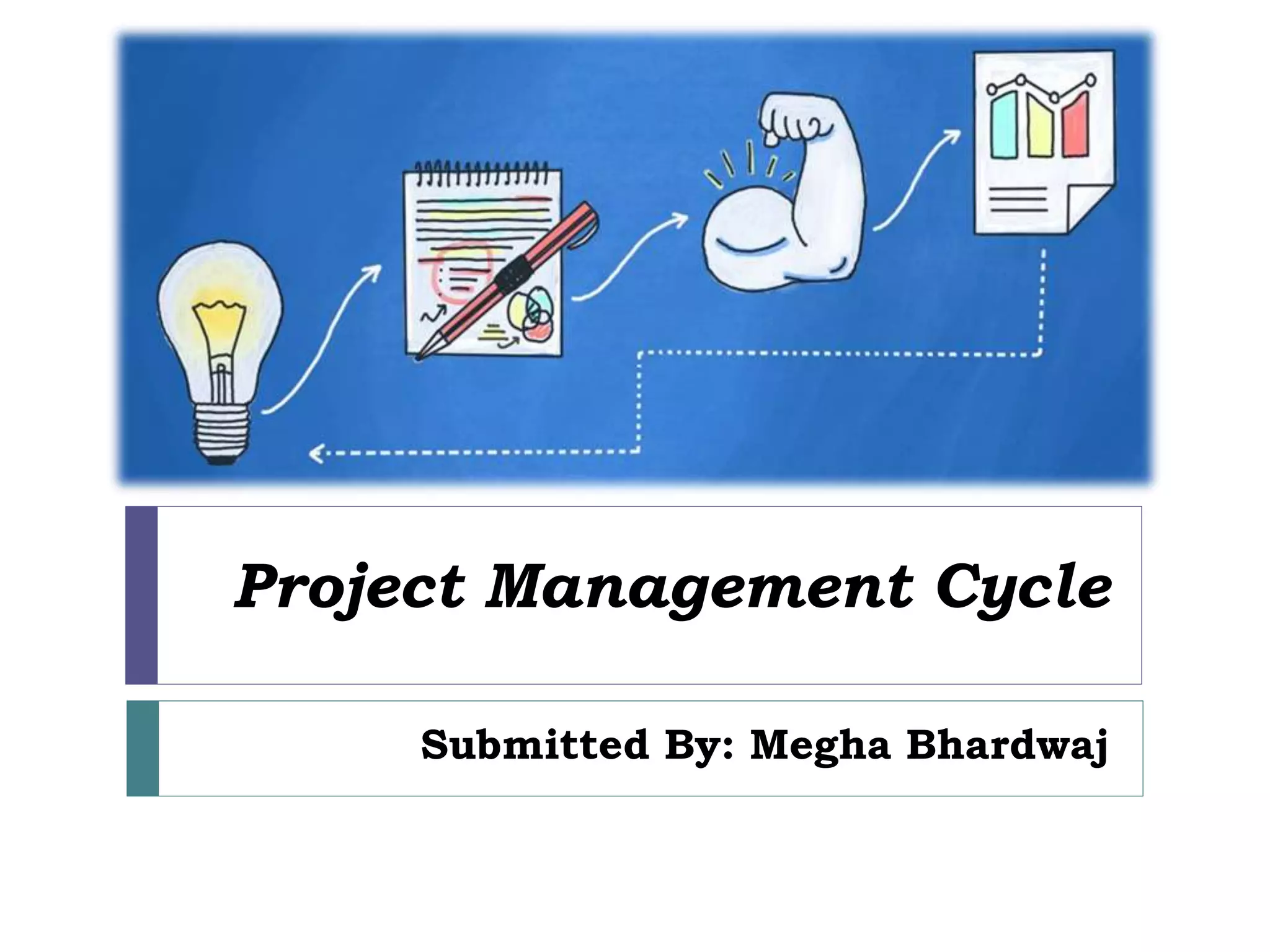
Project Management Cycle
Submitted By: Megha Bhardwaj
Content
 Project
 Project Management Cycle
 Phases of Project Management Cycle
 Initiation Phase
 Planning phase
 Execution Phase
 Closure/Termination phase
 Characteristics of PMC
 Advantages & Disadvantages of PMC
 References
Project
 A project consists of a temporary endeavor undertaken to
create a unique product, services or results.
 Project is the sequence of task to achieve the pre-set goal
and objectives in a given time frame.
 Project management is discipline of organizing and
managing resources in such a way that project is completed
with in defined scope, time and cost.
Project Management Cycle
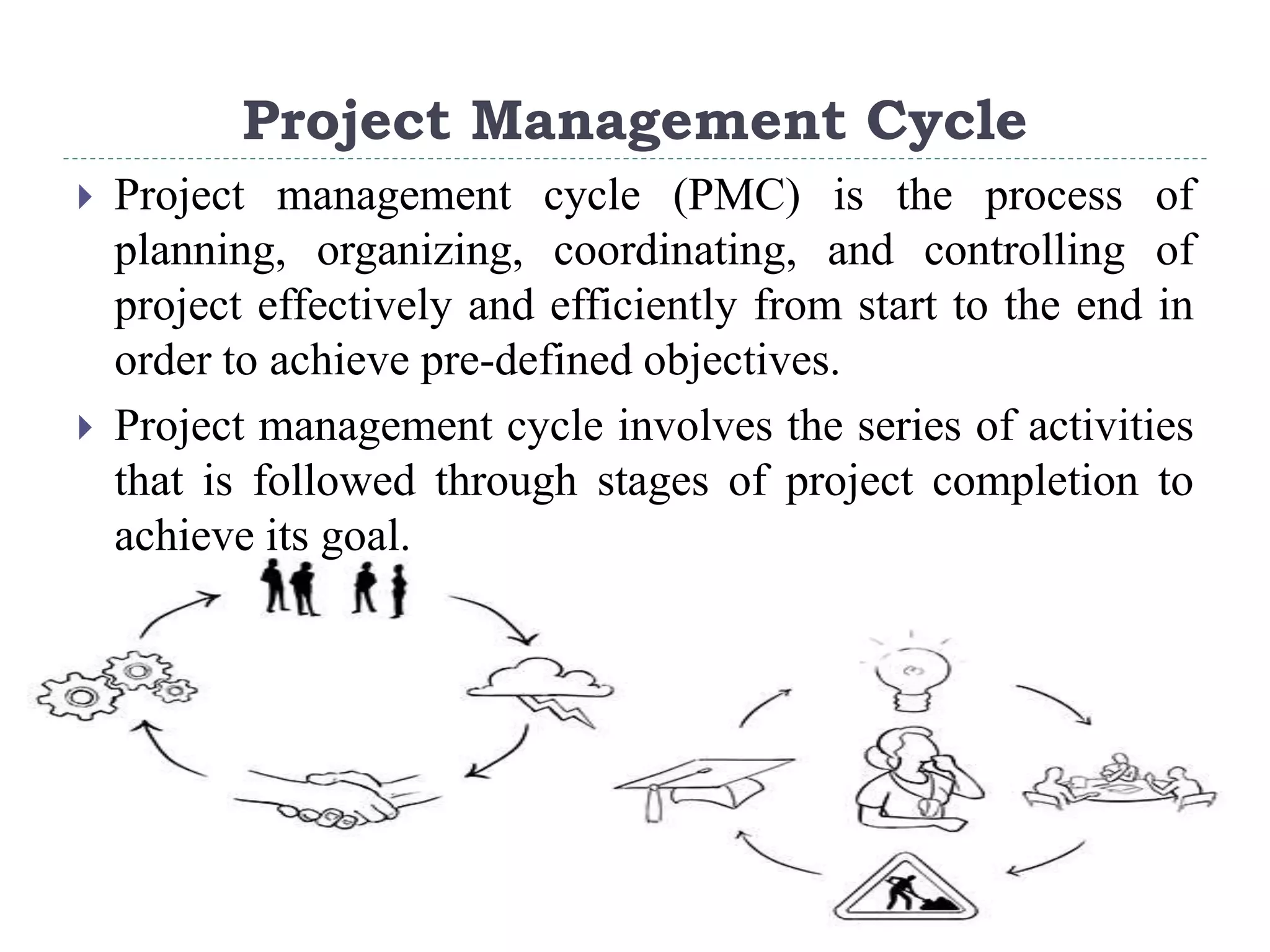
 Project management cycle (PMC) is the process of
planning, organizing, coordinating, and controlling of
project effectively and efficiently from start to the end in
order to achieve pre-defined objectives.
 Project management cycle involves the series of activities
that is followed through stages of project completion to
achieve its goal.
Phases of Project Management Cycle
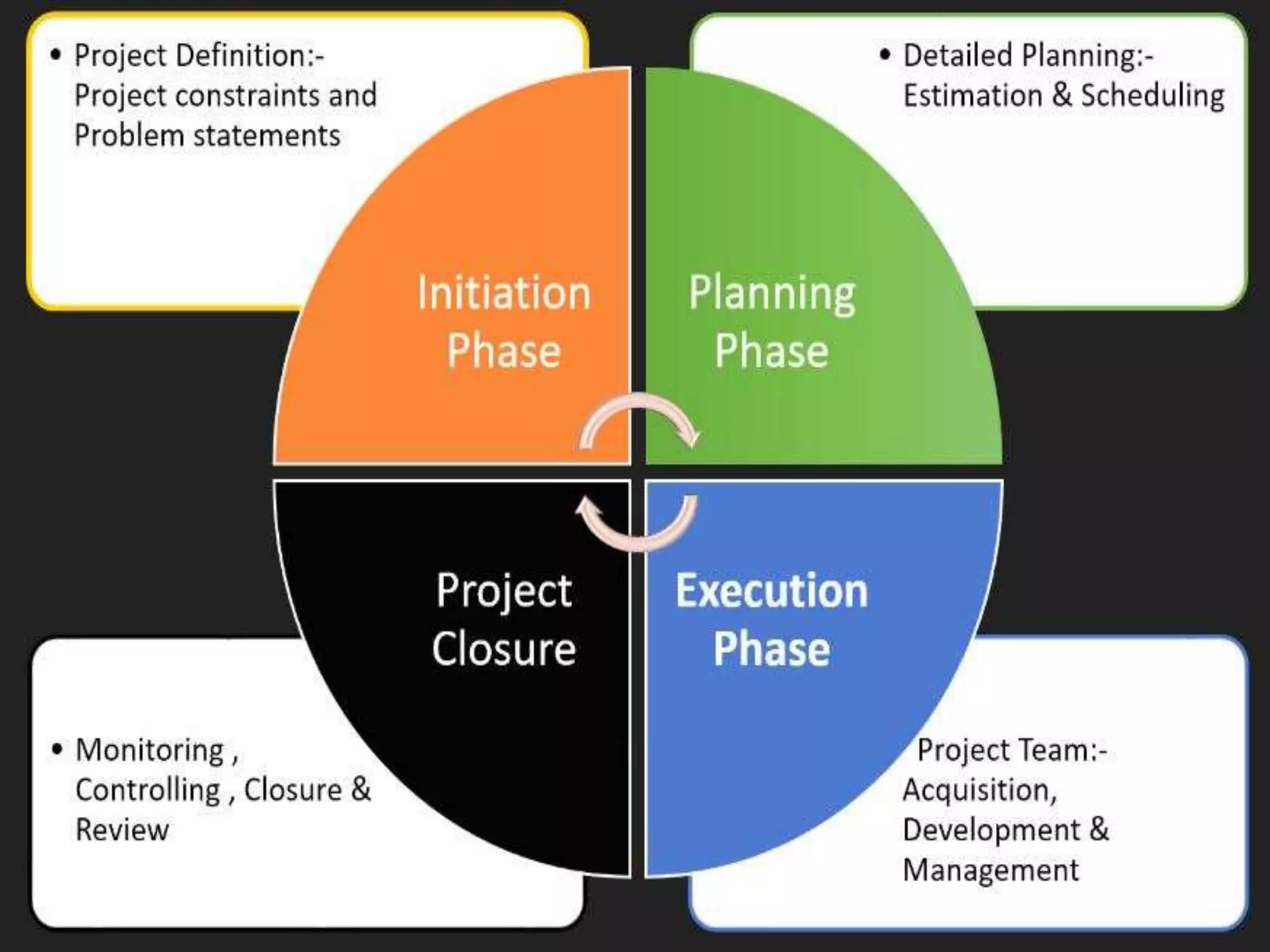
 In general, Project Management Cycle consists of four
major phases.
 Some methodology also uses the fifth phase, known as
monitoring.
 Here, this fifth phase is included under the execution and
closure phase.
 Four phases of PMC are:
 Initiation Phase
 Planning Phase
 Execution Phase
 Closure/Termination Phase
1. Initiation Phase
 This is the beginning phase of the project.
 Project has not been formed yet.
 This is the phase where literature review and secondary data
analysis is done.
 It includes information such as:
 Purpose, vision and mission of the project
 High level project description
 Summary milestones of the project
 The problem is identified and checked if the project can solve it.
 Basically, the feasibility of the project is assessed and identified.
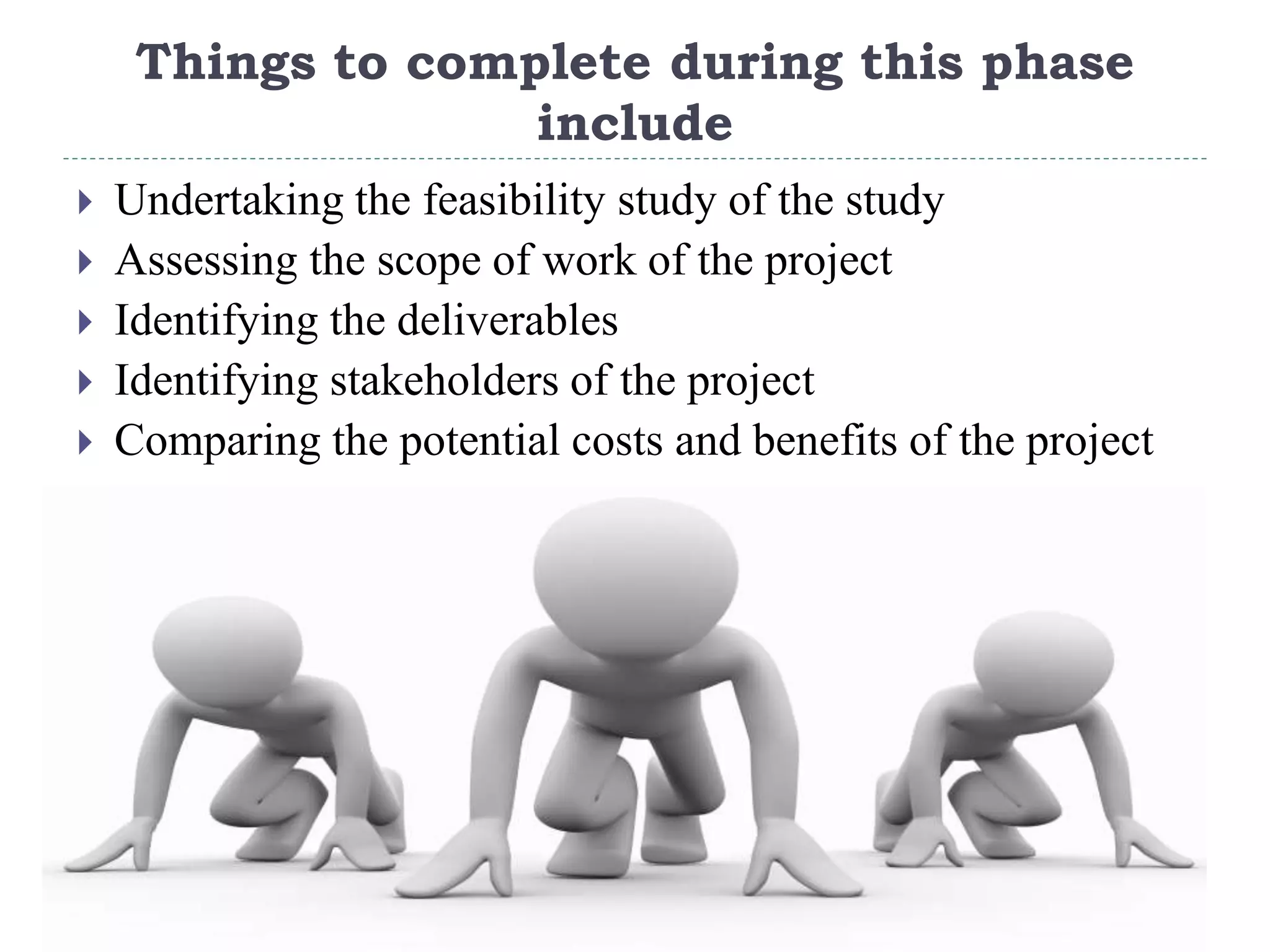
Things to complete during this phase
include
 Undertaking the feasibility study of the study
 Assessing the scope of work of the project
 Identifying the deliverables
 Identifying stakeholders of the project
 Comparing the potential costs and benefits of the project
2. Planning phase
 Planning phase is an important phase of project. The better
the plan, easier will be the execution.
 In this phase, we need to break down larger activities into
smaller tasks.
 Plans for conducting the project are formed in detail.
 SMART (Specific, Measurable, Achievable, Realistic and
Time bound) goals and objectives are set.
 It includes planning of resources, risk, finances etc.
 Roles and responsibilities of the staffs are clearly defined.
 At the end of this phase, the plan is documented for the
future purpose.
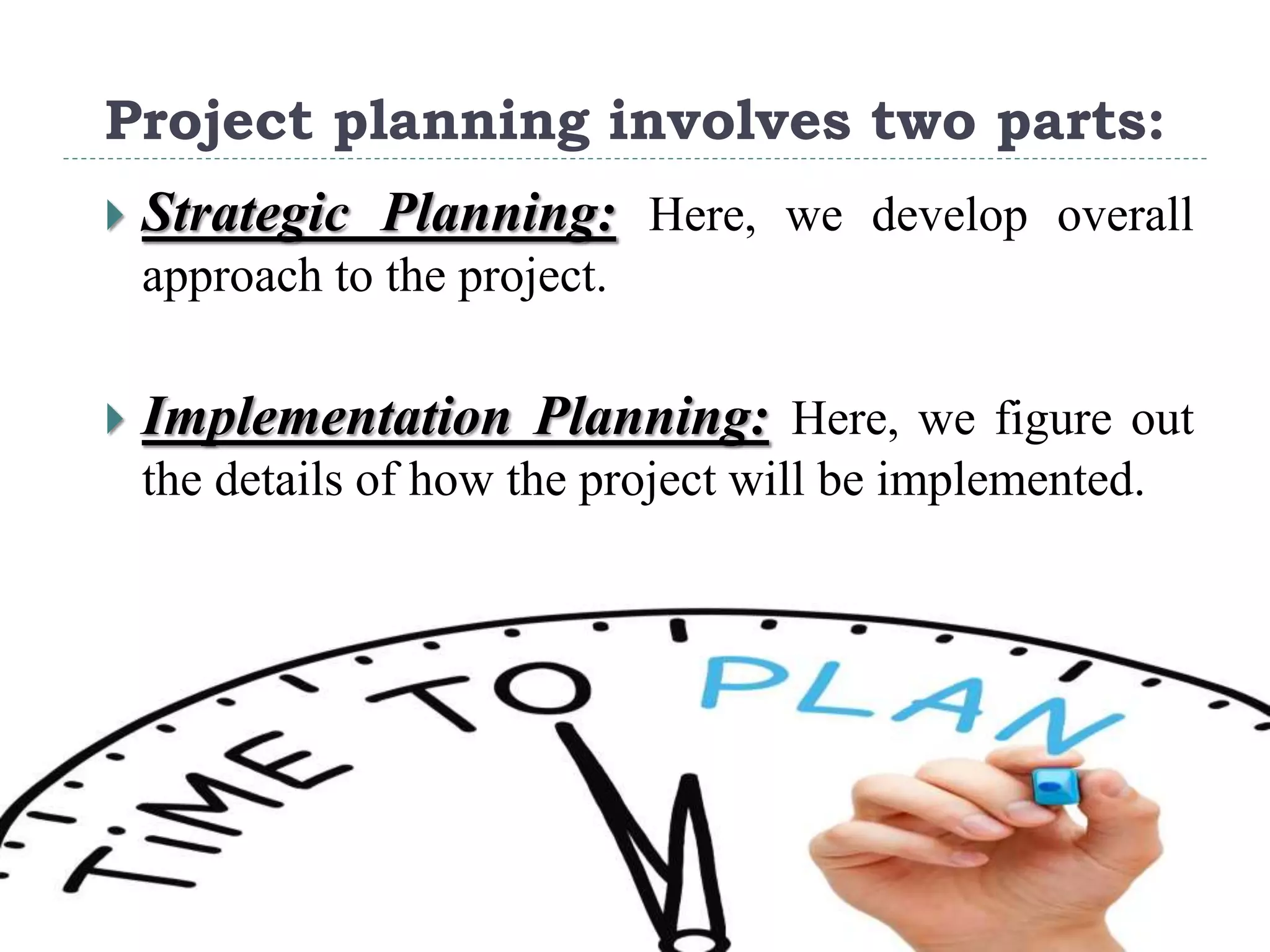
Project planning involves two parts:
 Strategic Planning: Here, we develop overall
approach to the project.
 Implementation Planning: Here, we figure out
the details of how the project will be implemented.
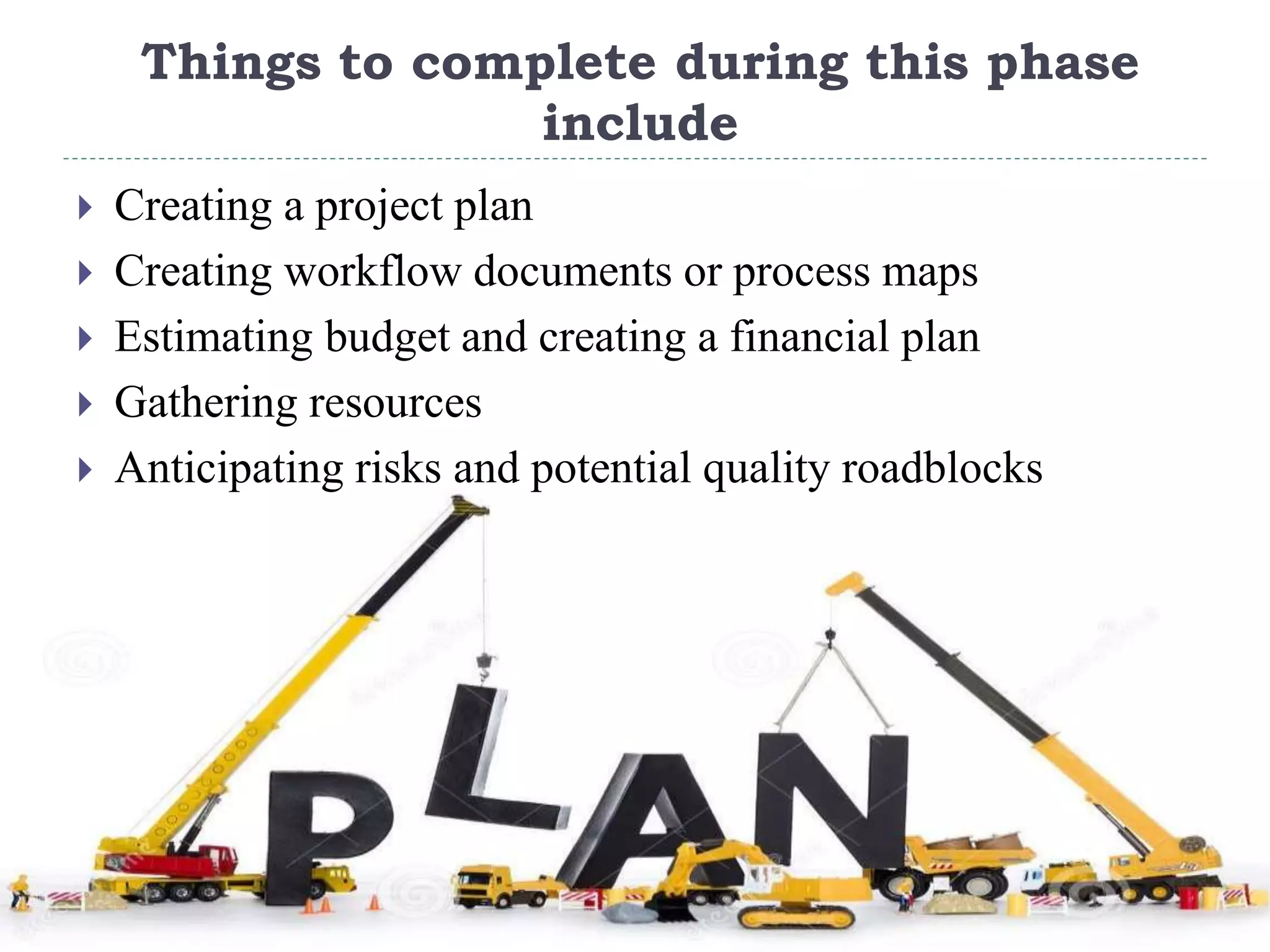
Things to complete during this phase
include
 Creating a project plan
 Creating workflow documents or process maps
 Estimating budget and creating a financial plan
 Gathering resources
 Anticipating risks and potential quality roadblocks
3. Execution Phase
 Project execution is the phase where plan is now brought into
action, after the final approval and completion of all planning.
 A series of activities is carried out to meet the goals.
 Monitoring of the work goes side by side during execution.
 Monitoring is done to ensure that the activities are moving on
track, as planned.
 Moreover, it will also involve immediate rectification and
changes required to meet the overall goal and objective of the
project
 This phase also involves mid-term evaluation of the project.
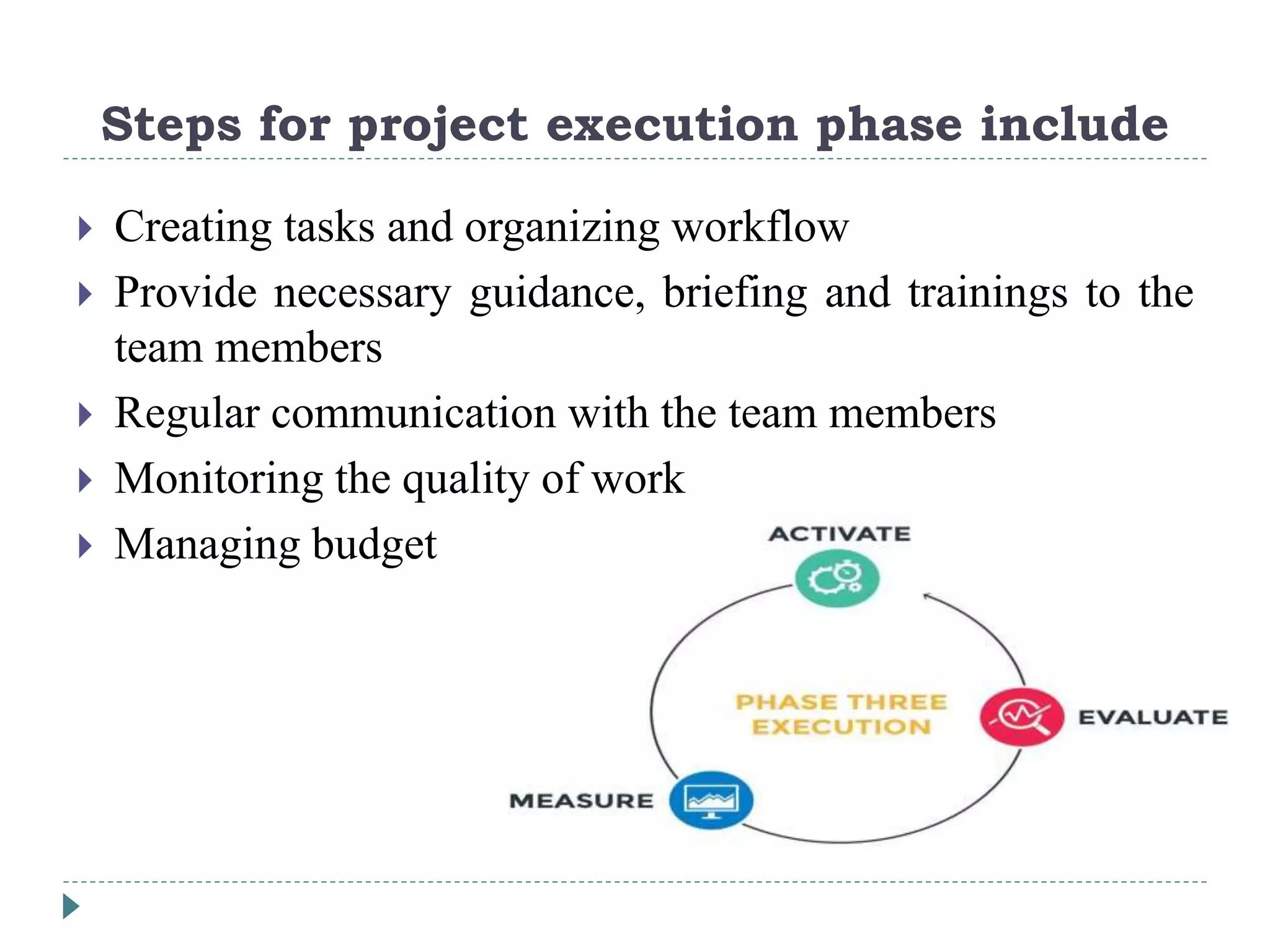
Steps for project execution phase include
 Creating tasks and organizing workflow
 Provide necessary guidance, briefing and trainings to the
team members
 Regular communication with the team members
 Monitoring the quality of work
 Managing budget
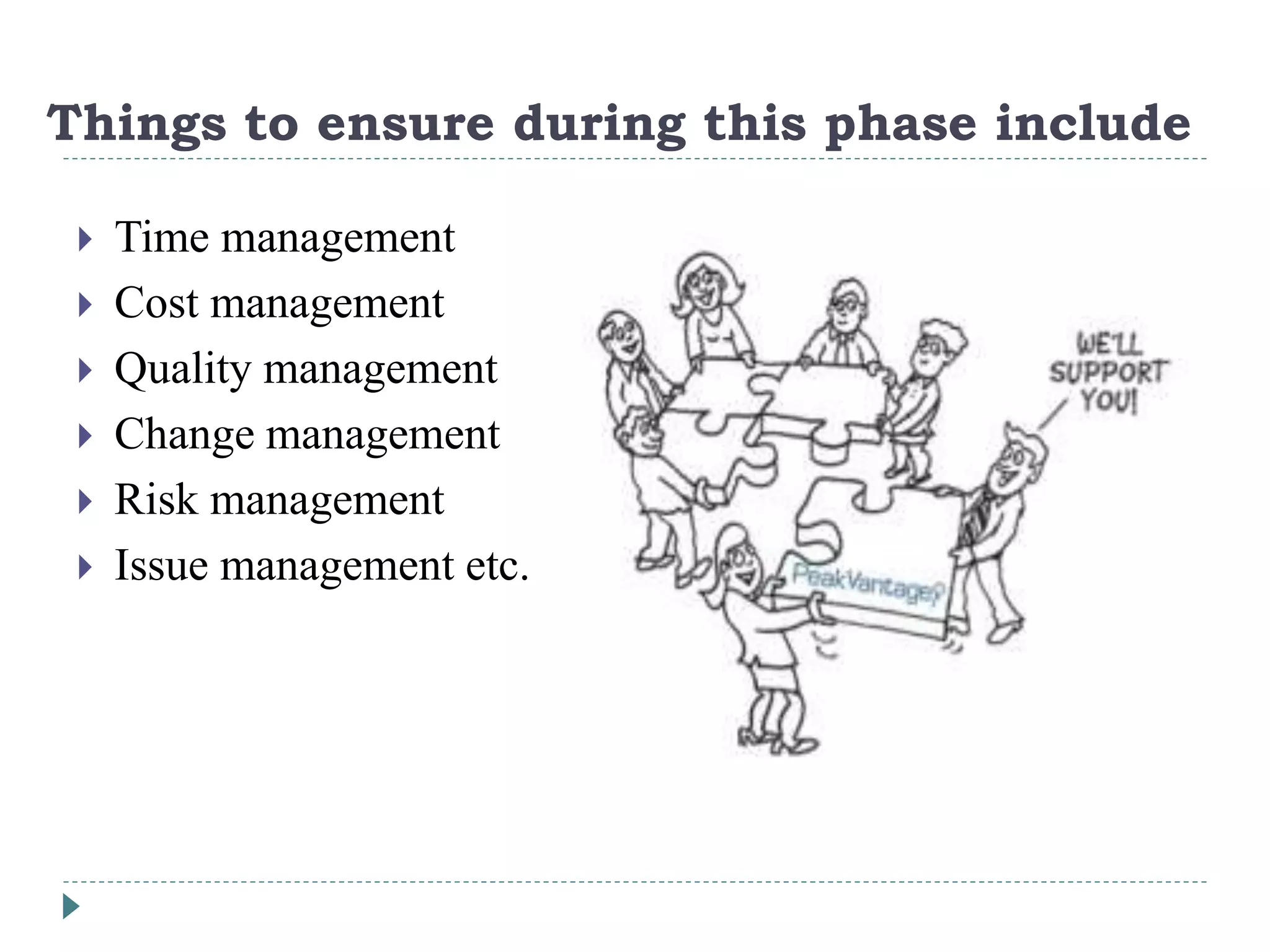
Things to ensure during this phase include
 Time management
 Cost management
 Quality management
 Change management
 Risk management
 Issue management etc.
4. Termination Phase
 This phase is also known as the closure step or closure
phase.
 As the project is temporary it has to come to an end.
 closure phase provide final deliverables, release project
resources, and determine the success of the project.
 At the end evaluation report is created that would evaluate
the overall success of the project and are useful for future
reference as well.
Things to ensure during this phase include
 Analysis of project performance regarding its goals and
objectives.
 Analysis of team performance.
 Documentation of project closure.
 Conducting a final analysis of the project.
 Closing the finances and budgetary aspects of the project.
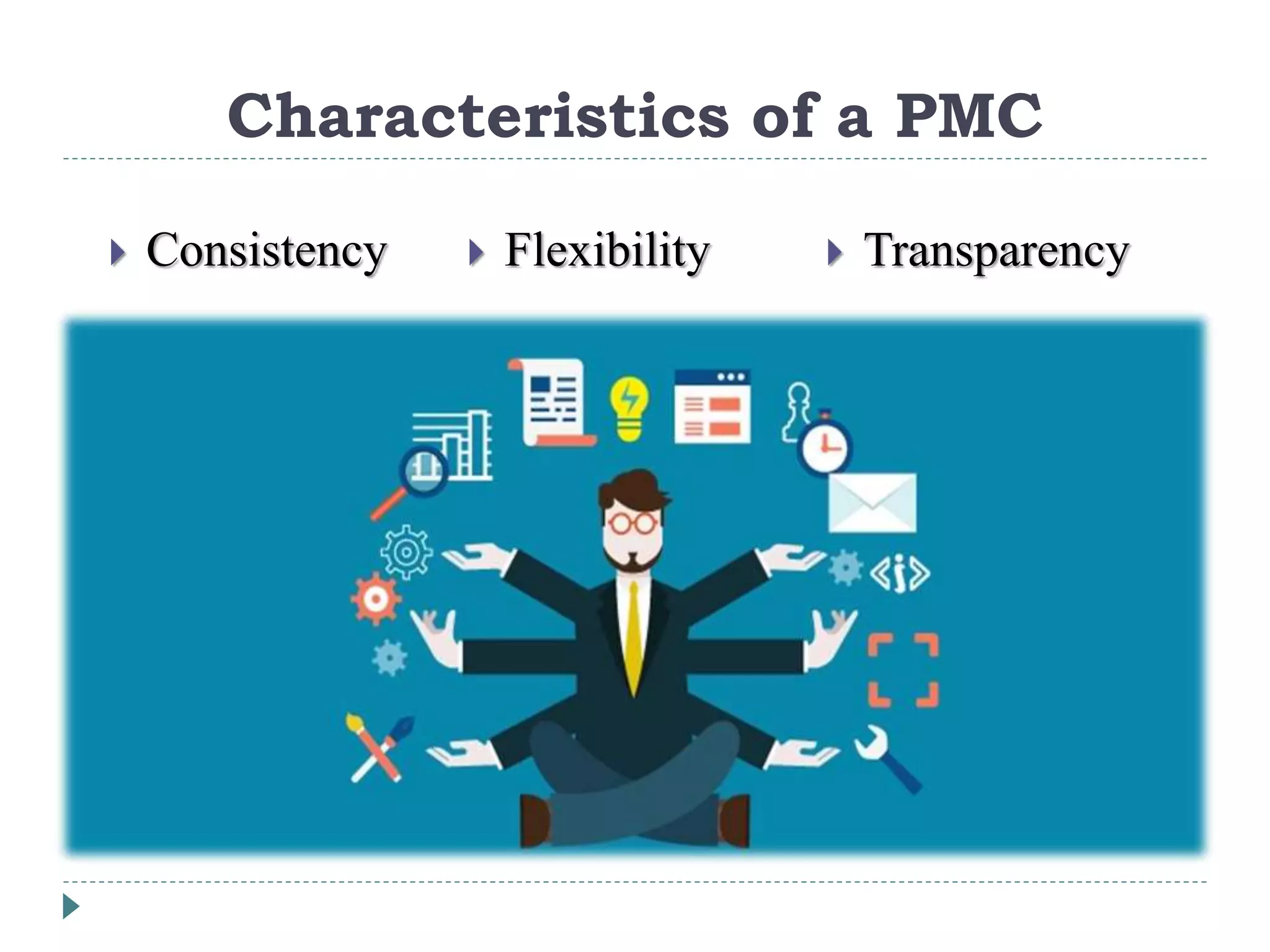
Characteristics of a PMC
 Consistency  Flexibility  Transparency
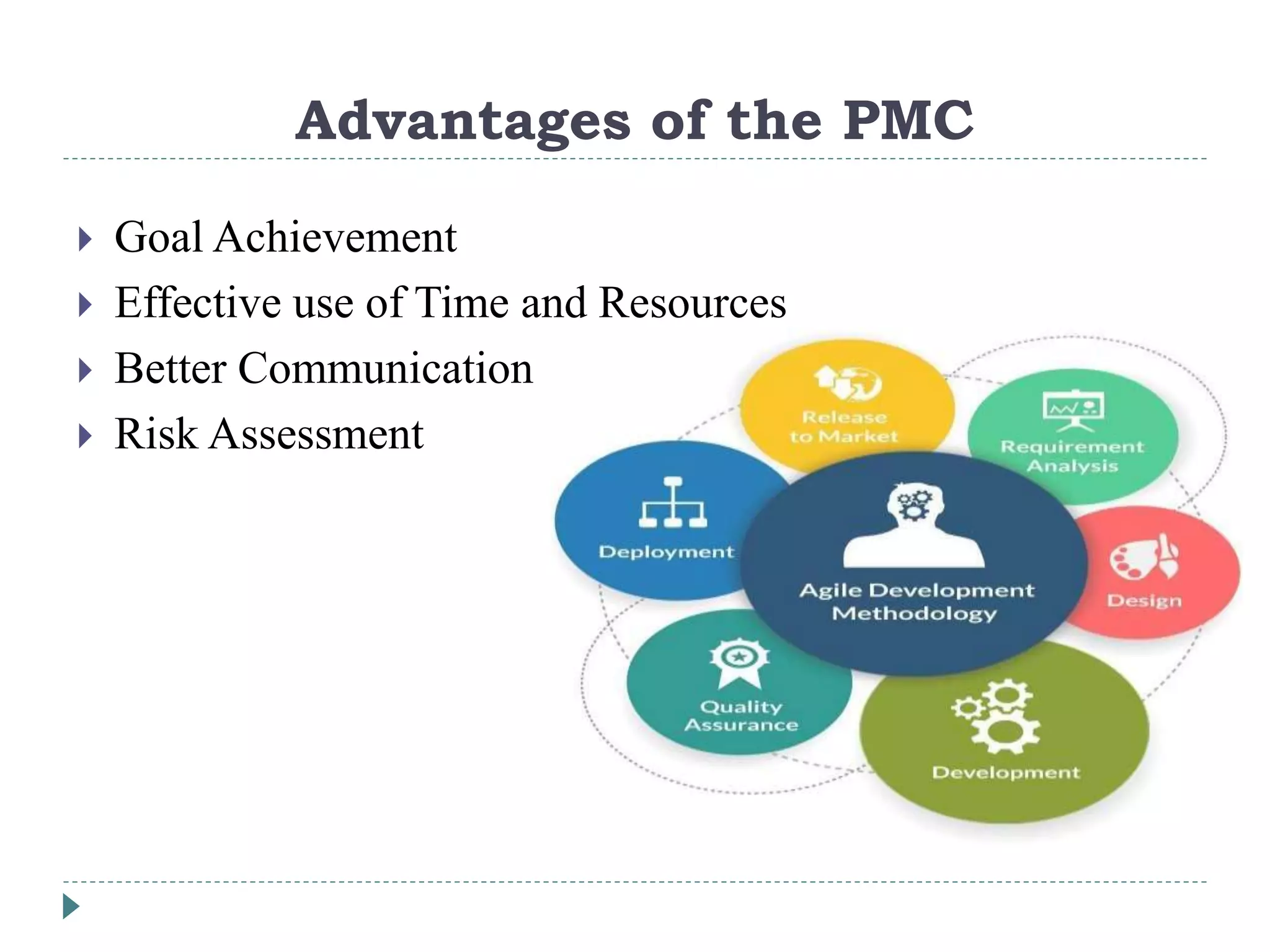
Advantages of the PMC
 Goal Achievement
 Effective use of Time and Resources
 Better Communication
 Risk Assessment
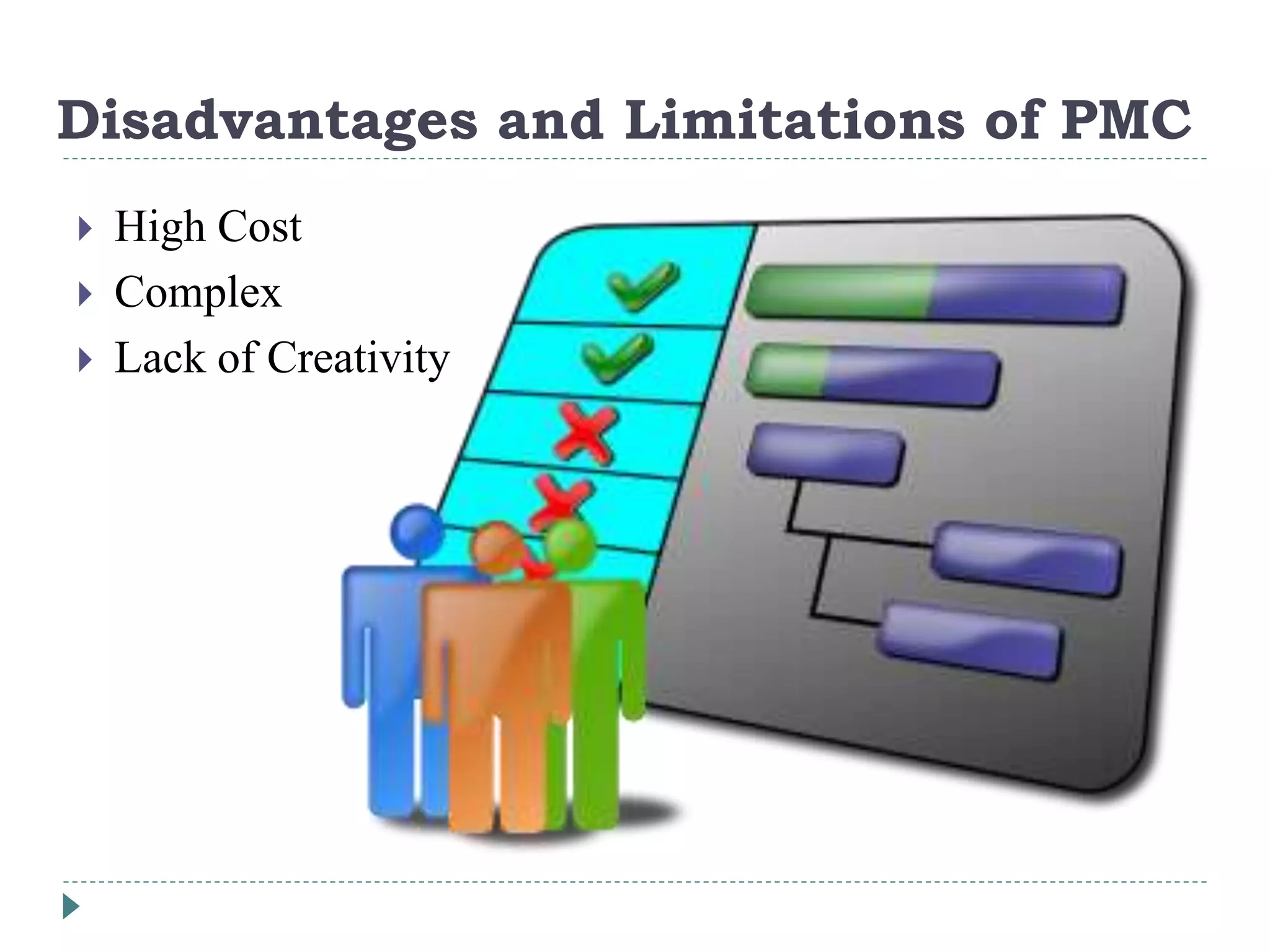
Disadvantages and Limitations of PMC
 High Cost
 Complex
 Lack of Creativity
References
 http://www.pmclounge.com/2017/03/types-of-project-
management-life-cycle/
 http://www.publichealthnotes.com/project-
management-cycle-pmc-its-phases-and-
characteristics/
 https://www.lucidchart.com/blog/the-4-phases-of-the-
project-management-life-cycle
Project management  cycle

Project management cycle

  • 1.
  • 2.
    Content  Project  ProjectManagement Cycle  Phases of Project Management Cycle  Initiation Phase  Planning phase  Execution Phase  Closure/Termination phase  Characteristics of PMC  Advantages & Disadvantages of PMC  References
  • 3.
    Project  A projectconsists of a temporary endeavor undertaken to create a unique product, services or results.  Project is the sequence of task to achieve the pre-set goal and objectives in a given time frame.  Project management is discipline of organizing and managing resources in such a way that project is completed with in defined scope, time and cost.
  • 4.
    Project Management Cycle Project management cycle (PMC) is the process of planning, organizing, coordinating, and controlling of project effectively and efficiently from start to the end in order to achieve pre-defined objectives.  Project management cycle involves the series of activities that is followed through stages of project completion to achieve its goal.
  • 5.
    Phases of ProjectManagement Cycle  In general, Project Management Cycle consists of four major phases.  Some methodology also uses the fifth phase, known as monitoring.  Here, this fifth phase is included under the execution and closure phase.  Four phases of PMC are:  Initiation Phase  Planning Phase  Execution Phase  Closure/Termination Phase
  • 7.
    1. Initiation Phase This is the beginning phase of the project.  Project has not been formed yet.  This is the phase where literature review and secondary data analysis is done.  It includes information such as:  Purpose, vision and mission of the project  High level project description  Summary milestones of the project  The problem is identified and checked if the project can solve it.  Basically, the feasibility of the project is assessed and identified.
  • 8.
    Things to completeduring this phase include  Undertaking the feasibility study of the study  Assessing the scope of work of the project  Identifying the deliverables  Identifying stakeholders of the project  Comparing the potential costs and benefits of the project
  • 9.
    2. Planning phase Planning phase is an important phase of project. The better the plan, easier will be the execution.  In this phase, we need to break down larger activities into smaller tasks.  Plans for conducting the project are formed in detail.  SMART (Specific, Measurable, Achievable, Realistic and Time bound) goals and objectives are set.  It includes planning of resources, risk, finances etc.  Roles and responsibilities of the staffs are clearly defined.  At the end of this phase, the plan is documented for the future purpose.
  • 10.
    Project planning involvestwo parts:  Strategic Planning: Here, we develop overall approach to the project.  Implementation Planning: Here, we figure out the details of how the project will be implemented.
  • 11.
    Things to completeduring this phase include  Creating a project plan  Creating workflow documents or process maps  Estimating budget and creating a financial plan  Gathering resources  Anticipating risks and potential quality roadblocks
  • 12.
    3. Execution Phase Project execution is the phase where plan is now brought into action, after the final approval and completion of all planning.  A series of activities is carried out to meet the goals.  Monitoring of the work goes side by side during execution.  Monitoring is done to ensure that the activities are moving on track, as planned.  Moreover, it will also involve immediate rectification and changes required to meet the overall goal and objective of the project  This phase also involves mid-term evaluation of the project.
  • 13.
    Steps for projectexecution phase include  Creating tasks and organizing workflow  Provide necessary guidance, briefing and trainings to the team members  Regular communication with the team members  Monitoring the quality of work  Managing budget
  • 14.
    Things to ensureduring this phase include  Time management  Cost management  Quality management  Change management  Risk management  Issue management etc.
  • 15.
    4. Termination Phase This phase is also known as the closure step or closure phase.  As the project is temporary it has to come to an end.  closure phase provide final deliverables, release project resources, and determine the success of the project.  At the end evaluation report is created that would evaluate the overall success of the project and are useful for future reference as well.
  • 16.
    Things to ensureduring this phase include  Analysis of project performance regarding its goals and objectives.  Analysis of team performance.  Documentation of project closure.  Conducting a final analysis of the project.  Closing the finances and budgetary aspects of the project.
  • 17.
    Characteristics of aPMC  Consistency  Flexibility  Transparency
  • 18.
    Advantages of thePMC  Goal Achievement  Effective use of Time and Resources  Better Communication  Risk Assessment
  • 19.
    Disadvantages and Limitationsof PMC  High Cost  Complex  Lack of Creativity
  • 20.