Artifacts OF THE PROCESS


           Presented By :
             o   Nitin Nirmal       25
             o   Hitesh Shetty      44
             o   Mahesh Tawde       52
             o   Mayuresh Wadekar   64

                                         1
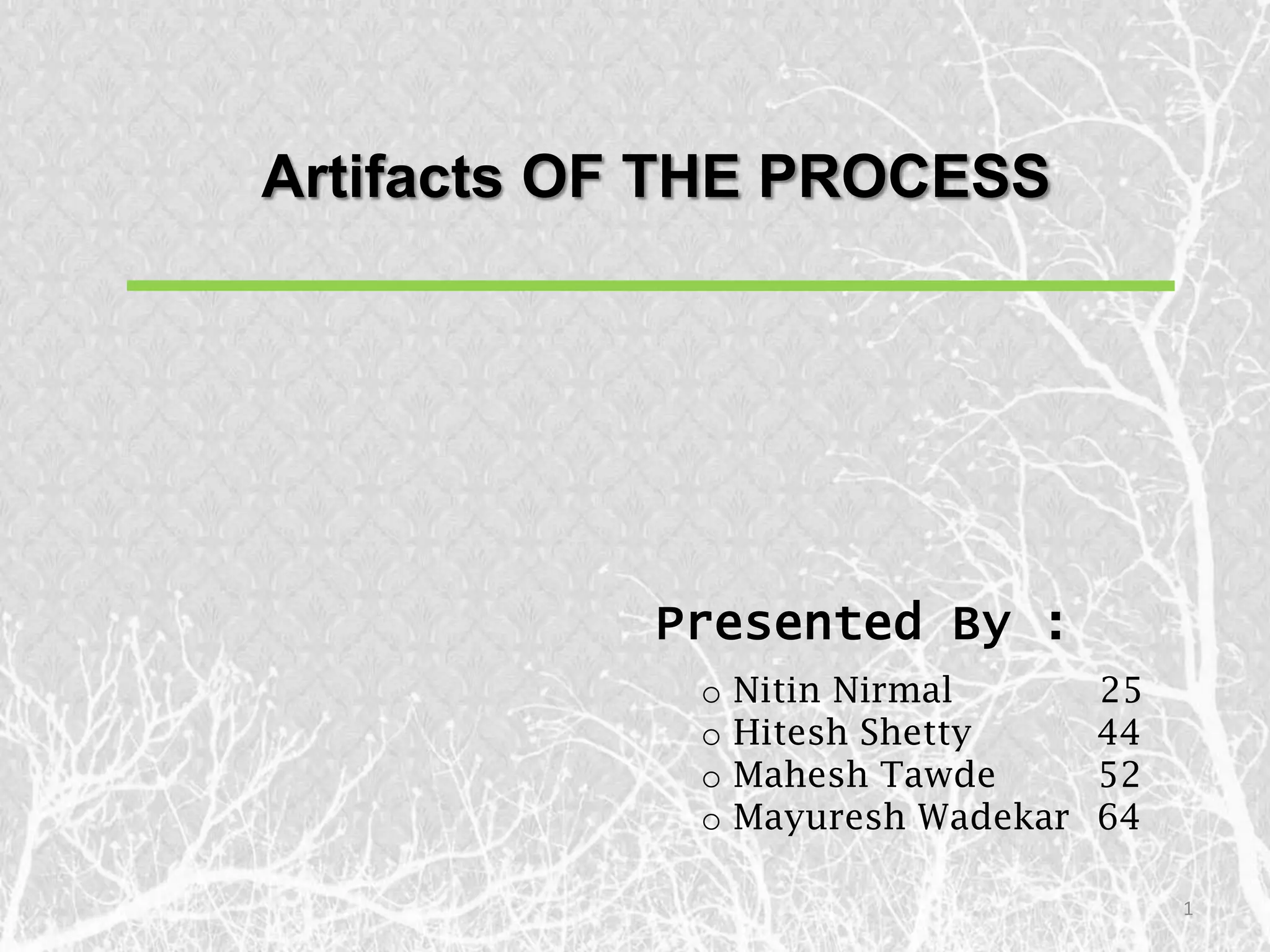
Artifact Sets


     Fig. Overview of Artifact Sets   2
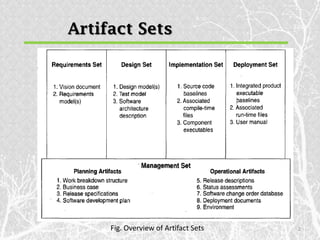
Engineering sets

 Requirement Set:
          This is primary engineering context for evaluating other three
  artifact sets.

 Design Set:
        The design set contains varying levels of abstraction that
  represent component of solution space

 Implementation Set:
         The implementation set includes source code that represents
   tangible information of components

 Deployment Set:
         Deployment set includes user deliverables and machine
   language notations ,executable software, build scripts and I
   installation scripts to use product in target environment.

                                                                           3
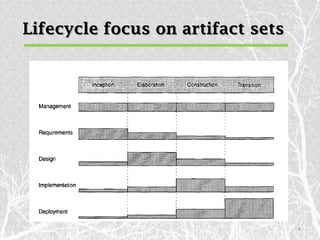
Lifecycle focus on artifact sets


                                   4
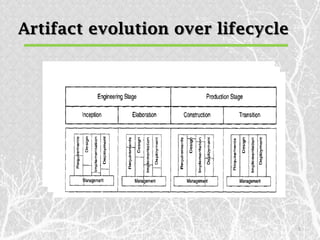
Artifact evolution over lifecycle


                                    5
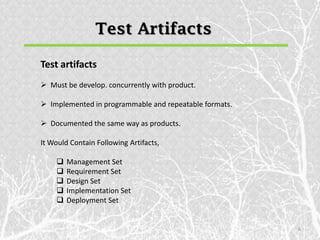
Test Artifacts

Test artifacts
 Must be develop. concurrently with product.

 Implemented in programmable and repeatable formats.

 Documented the same way as products.

It Would Contain Following Artifacts,

       Management Set
       Requirement Set
       Design Set
       Implementation Set
       Deployment Set


                                                        6
Management Artifacts
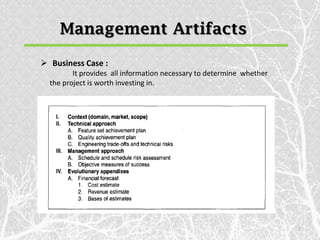
 Business Case :
         It provides all information necessary to determine whether
  the project is worth investing in.


                                                                      7
Management Artifacts
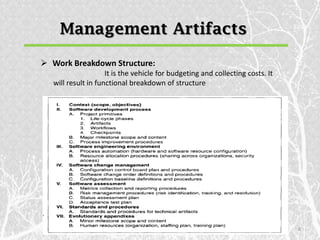
 Work Breakdown Structure:
                     It is the vehicle for budgeting and collecting costs. It
   will result in functional breakdown of structure


                                                                                8
Management Artifacts
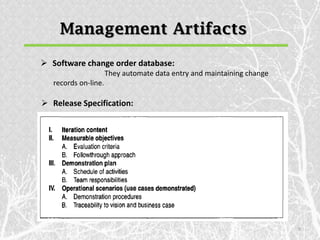
 Software change order database:
                      They automate data entry and maintaining change
   records on-line.

 Release Specification:


                                                                        9
Management Artifacts
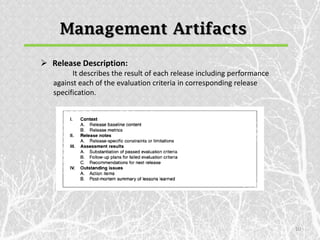
 Release Description:
         It describes the result of each release including performance
   against each of the evaluation criteria in corresponding release
   specification.


                                                                         10
Management Artifacts
 Status Assessment:
          It provides periodic snapshots of project health and status,
including software project manager’s risk assessment, quality indicators,
and management indicators.

 Environment:
         Important emphasis of a modern approach is to define the
development and maintenance environment as a first class artifact of the
process.


 Deployment:
          This includes several document subsets for transitioning the
product into operational status


                                                                            11
Engineering Artifacts

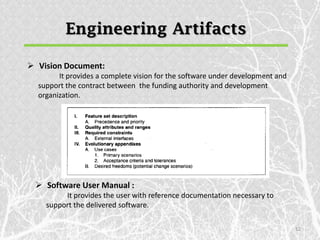
 Vision Document:
        It provides a complete vision for the software under development and
  support the contract between the funding authority and development
  organization.


  Software User Manual :
         It provides the user with reference documentation necessary to
    support the delivered software.

                                                                               12
Engineering Artifacts

 Architecture Description:
        It provides an organized view of software architecture under
  development


                                                                       13
Pragmatic Artifacts

This philosophy raises the following cultural issues:

 People want to review information but don't understand the language of the
  artifact.

 People want to review the information but don't have access to the tools.

 Human-readable engineering artifacts should use rigorous notations that
  are complete, consistent, and used in a self-documenting manner.

 Useful documentation is self-defining: It is documentation that gets used.

 Paper is tangible; electronic artifacts are too easy to change.


                                                                               14
u


Thank
 You
        15

Artifacts

  • 1.
    Artifacts OF THEPROCESS Presented By : o Nitin Nirmal 25 o Hitesh Shetty 44 o Mahesh Tawde 52 o Mayuresh Wadekar 64 1
  • 2.
    Artifact Sets Fig. Overview of Artifact Sets 2
  • 3.
    Engineering sets  RequirementSet: This is primary engineering context for evaluating other three artifact sets.  Design Set: The design set contains varying levels of abstraction that represent component of solution space  Implementation Set: The implementation set includes source code that represents tangible information of components  Deployment Set: Deployment set includes user deliverables and machine language notations ,executable software, build scripts and I installation scripts to use product in target environment. 3
  • 4.
    Lifecycle focus onartifact sets 4
  • 5.
  • 6.
    Test Artifacts Test artifacts Must be develop. concurrently with product.  Implemented in programmable and repeatable formats.  Documented the same way as products. It Would Contain Following Artifacts,  Management Set  Requirement Set  Design Set  Implementation Set  Deployment Set 6
  • 7.
    Management Artifacts  BusinessCase : It provides all information necessary to determine whether the project is worth investing in. 7
  • 8.
    Management Artifacts  WorkBreakdown Structure: It is the vehicle for budgeting and collecting costs. It will result in functional breakdown of structure 8
  • 9.
    Management Artifacts  Softwarechange order database: They automate data entry and maintaining change records on-line.  Release Specification: 9
  • 10.
    Management Artifacts  ReleaseDescription: It describes the result of each release including performance against each of the evaluation criteria in corresponding release specification. 10
  • 11.
    Management Artifacts  StatusAssessment: It provides periodic snapshots of project health and status, including software project manager’s risk assessment, quality indicators, and management indicators.  Environment: Important emphasis of a modern approach is to define the development and maintenance environment as a first class artifact of the process.  Deployment: This includes several document subsets for transitioning the product into operational status 11
  • 12.
    Engineering Artifacts  VisionDocument: It provides a complete vision for the software under development and support the contract between the funding authority and development organization.  Software User Manual : It provides the user with reference documentation necessary to support the delivered software. 12
  • 13.
    Engineering Artifacts  ArchitectureDescription: It provides an organized view of software architecture under development 13
  • 14.
    Pragmatic Artifacts This philosophyraises the following cultural issues:  People want to review information but don't understand the language of the artifact.  People want to review the information but don't have access to the tools.  Human-readable engineering artifacts should use rigorous notations that are complete, consistent, and used in a self-documenting manner.  Useful documentation is self-defining: It is documentation that gets used.  Paper is tangible; electronic artifacts are too easy to change. 14
  • 15.