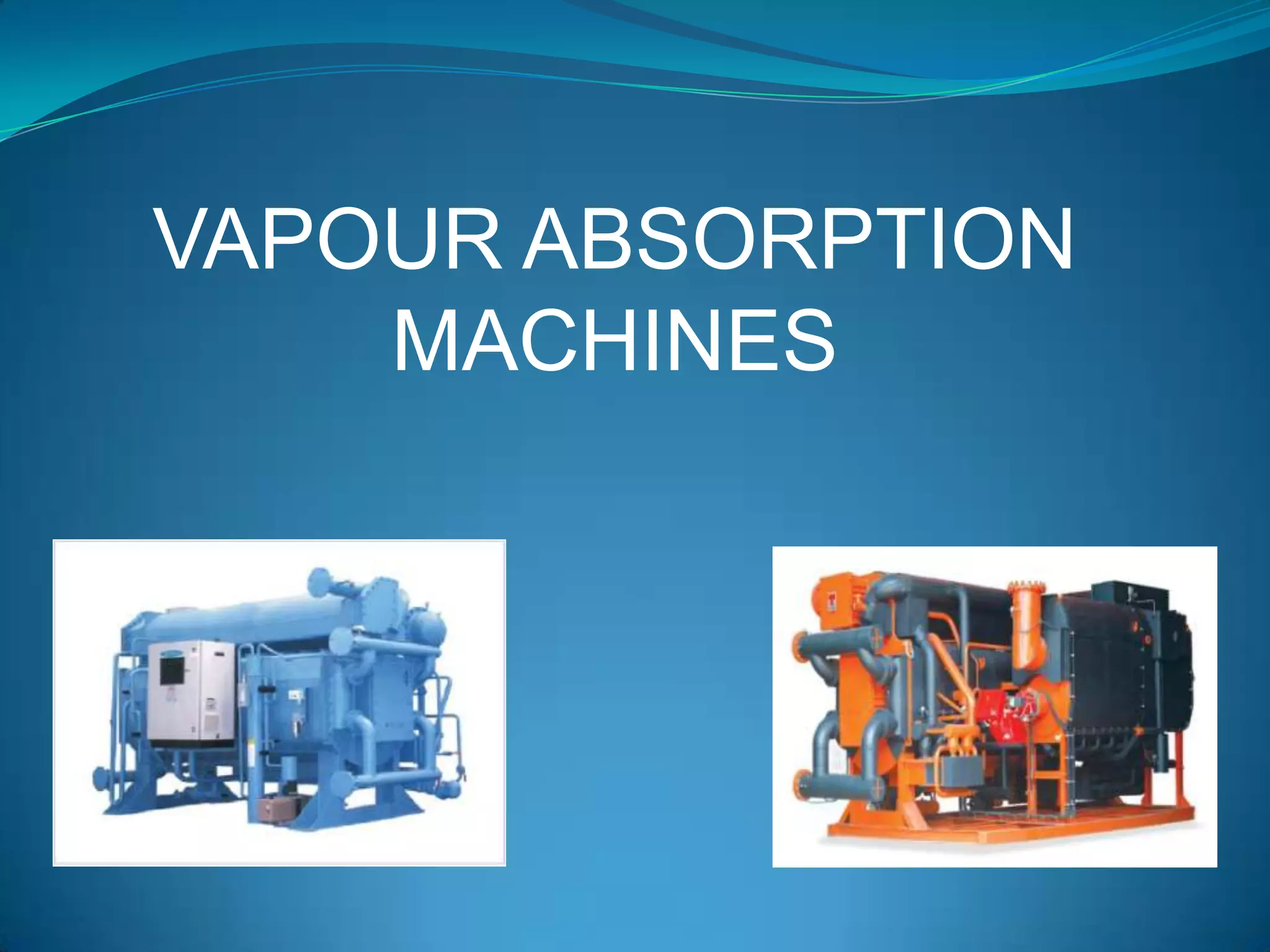
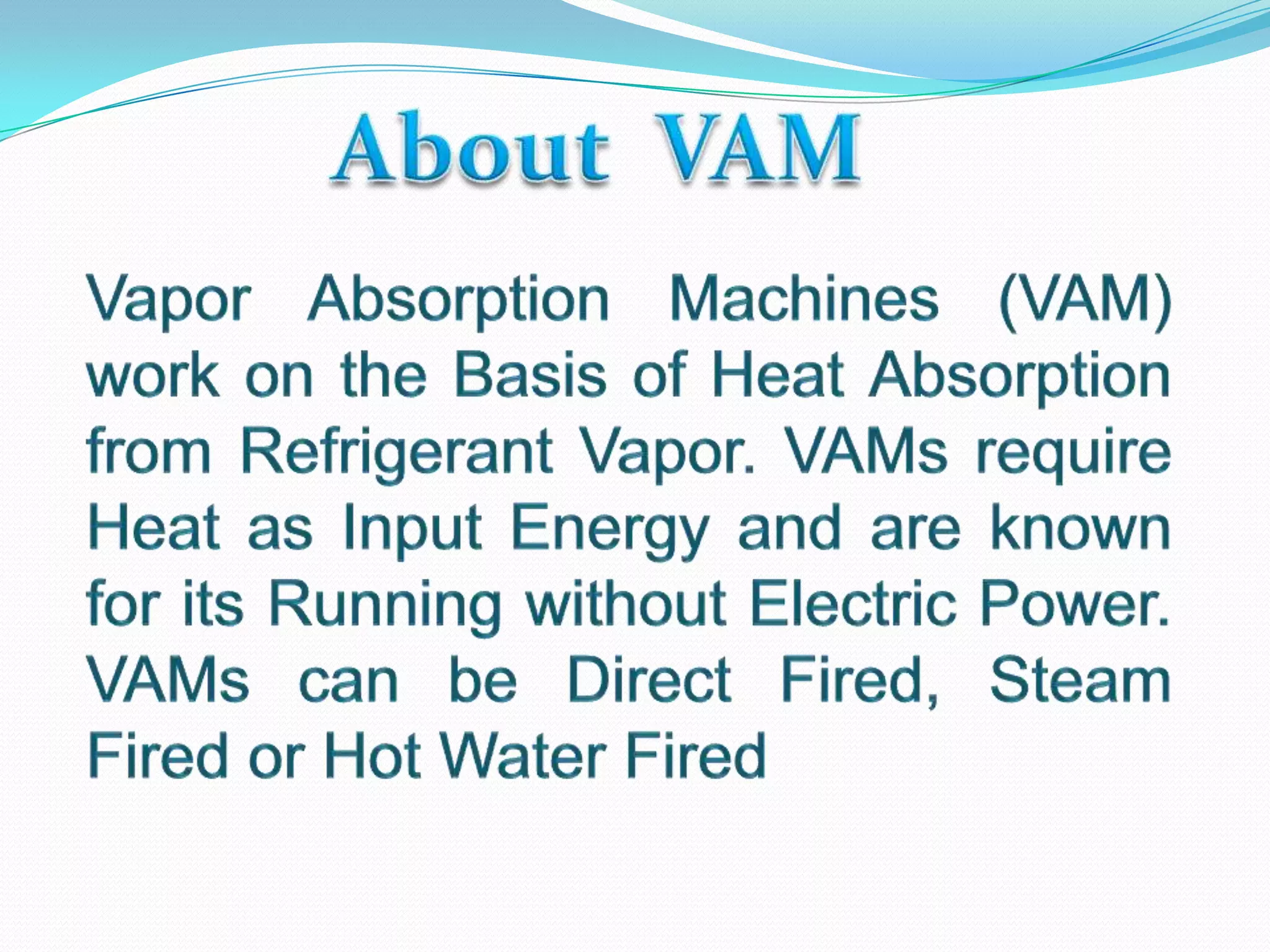
VAPOUR ABSORPTION
MACHINES
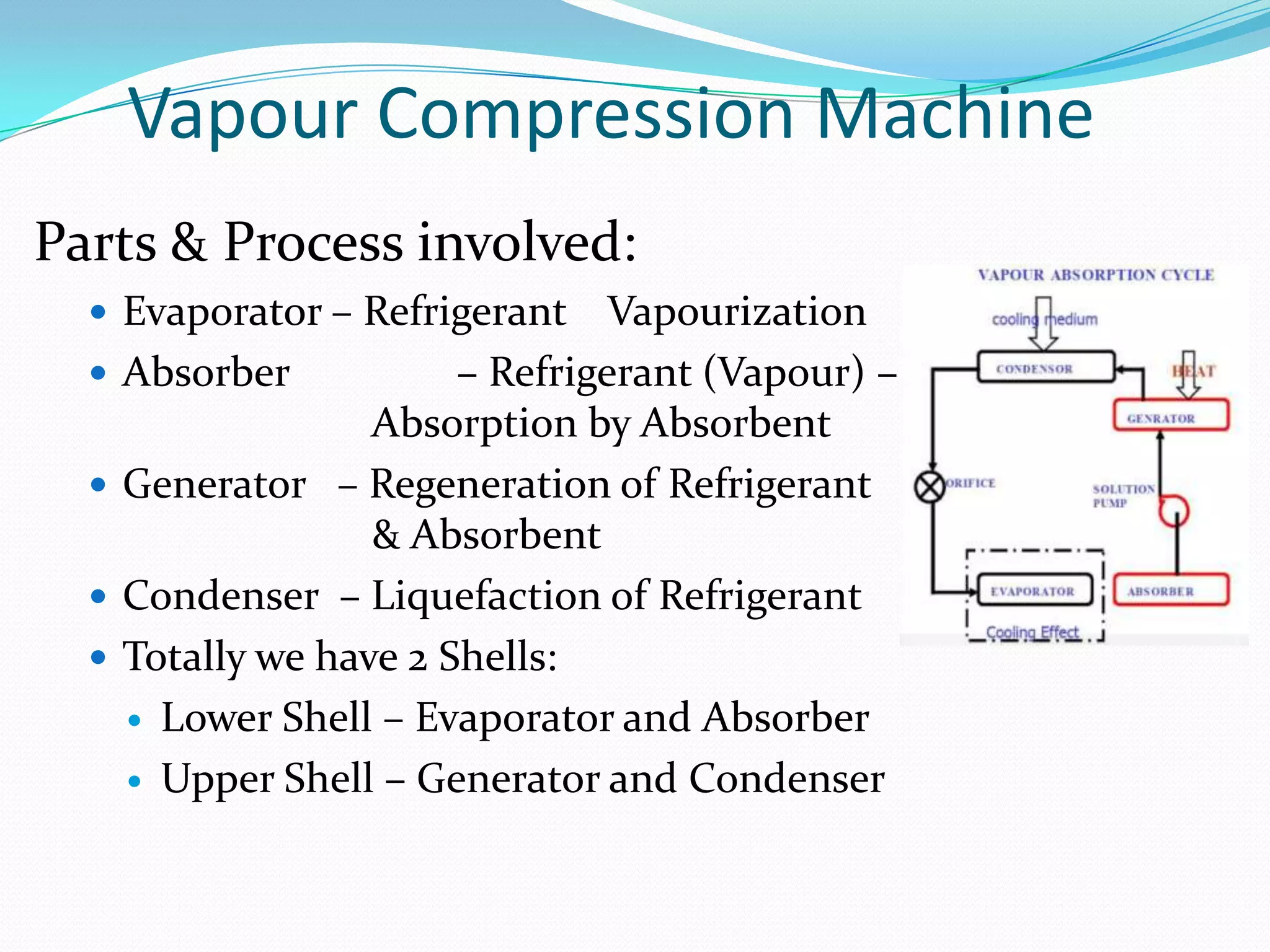
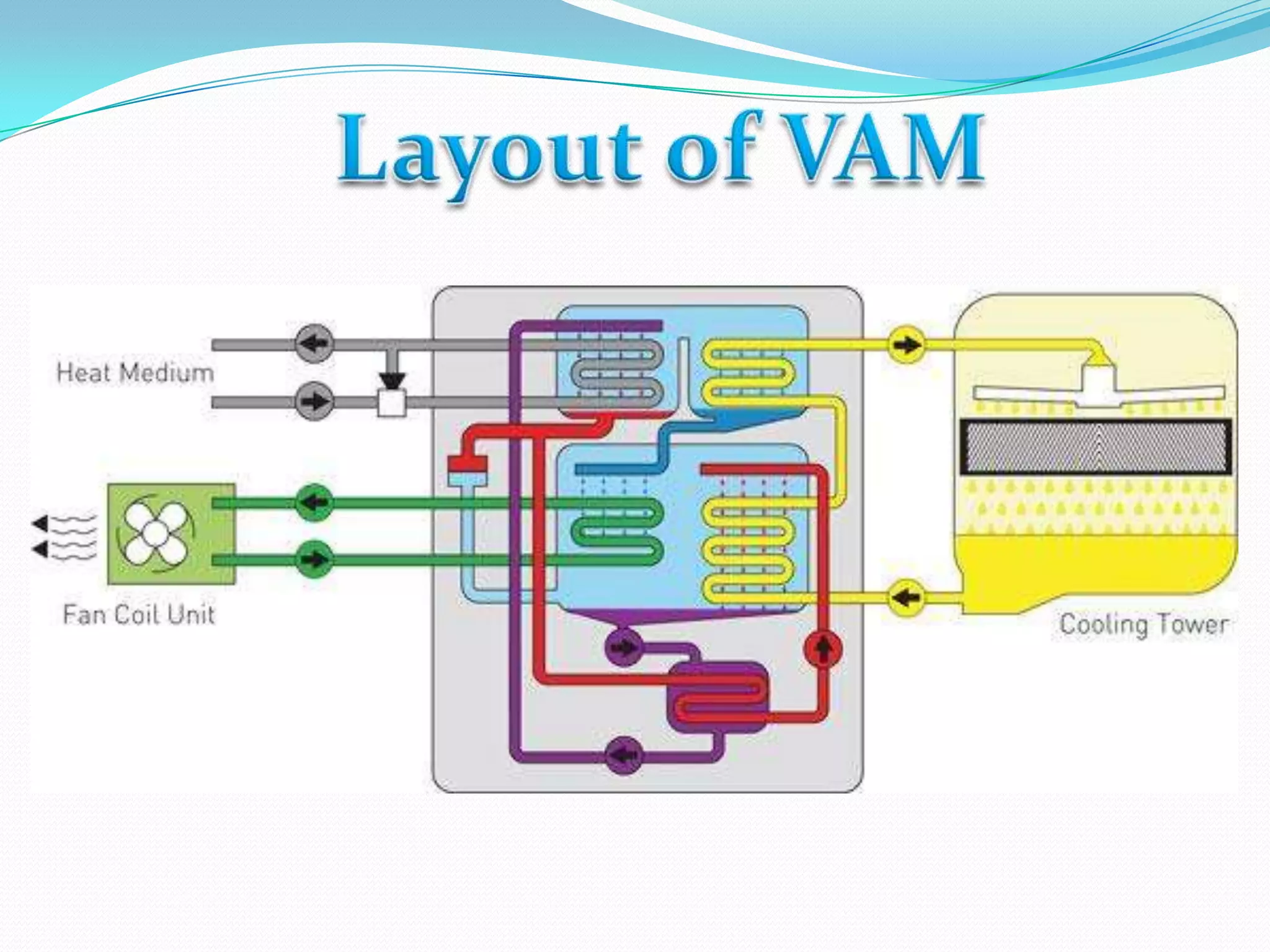
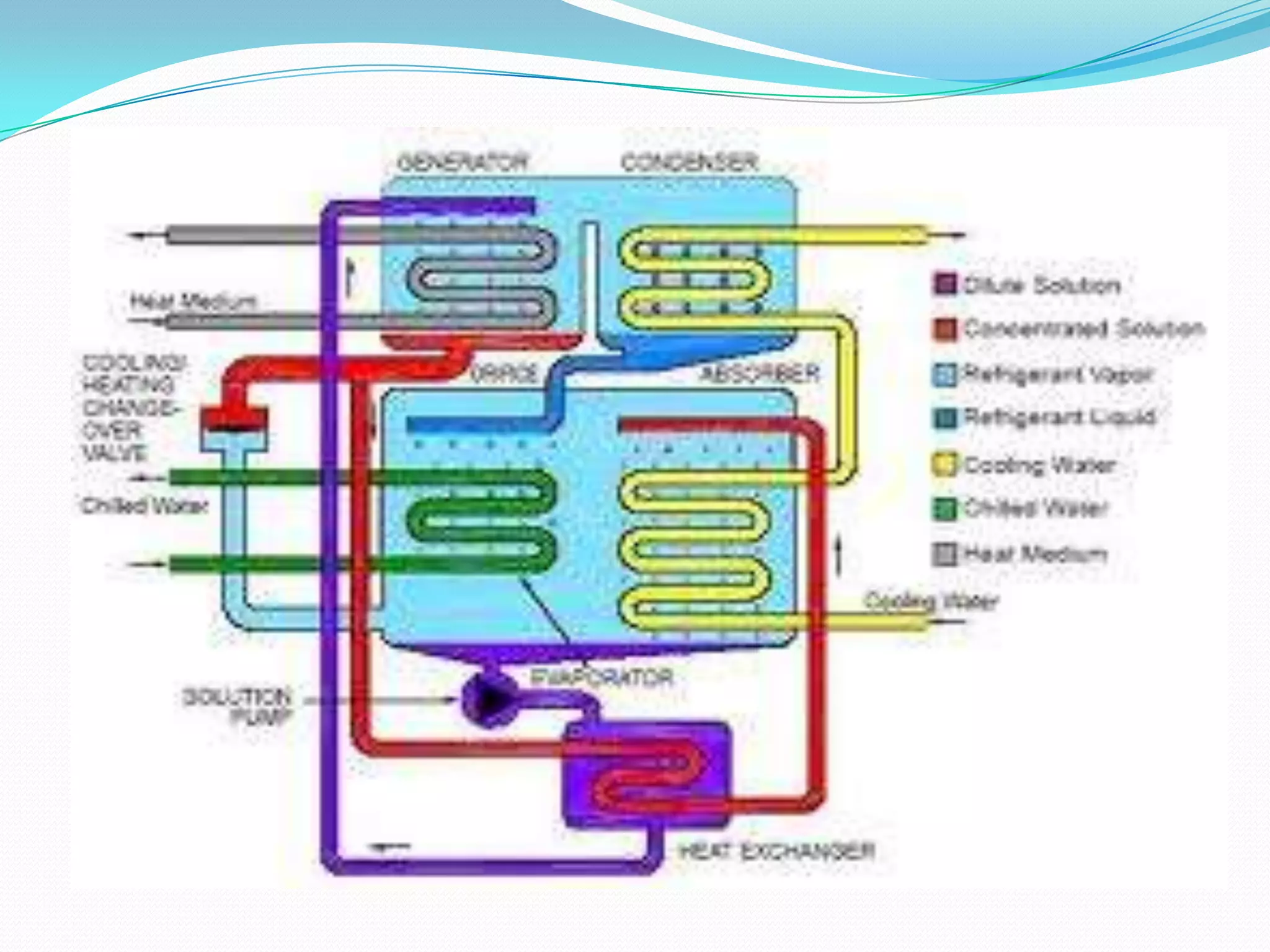
Parts & Process involved:
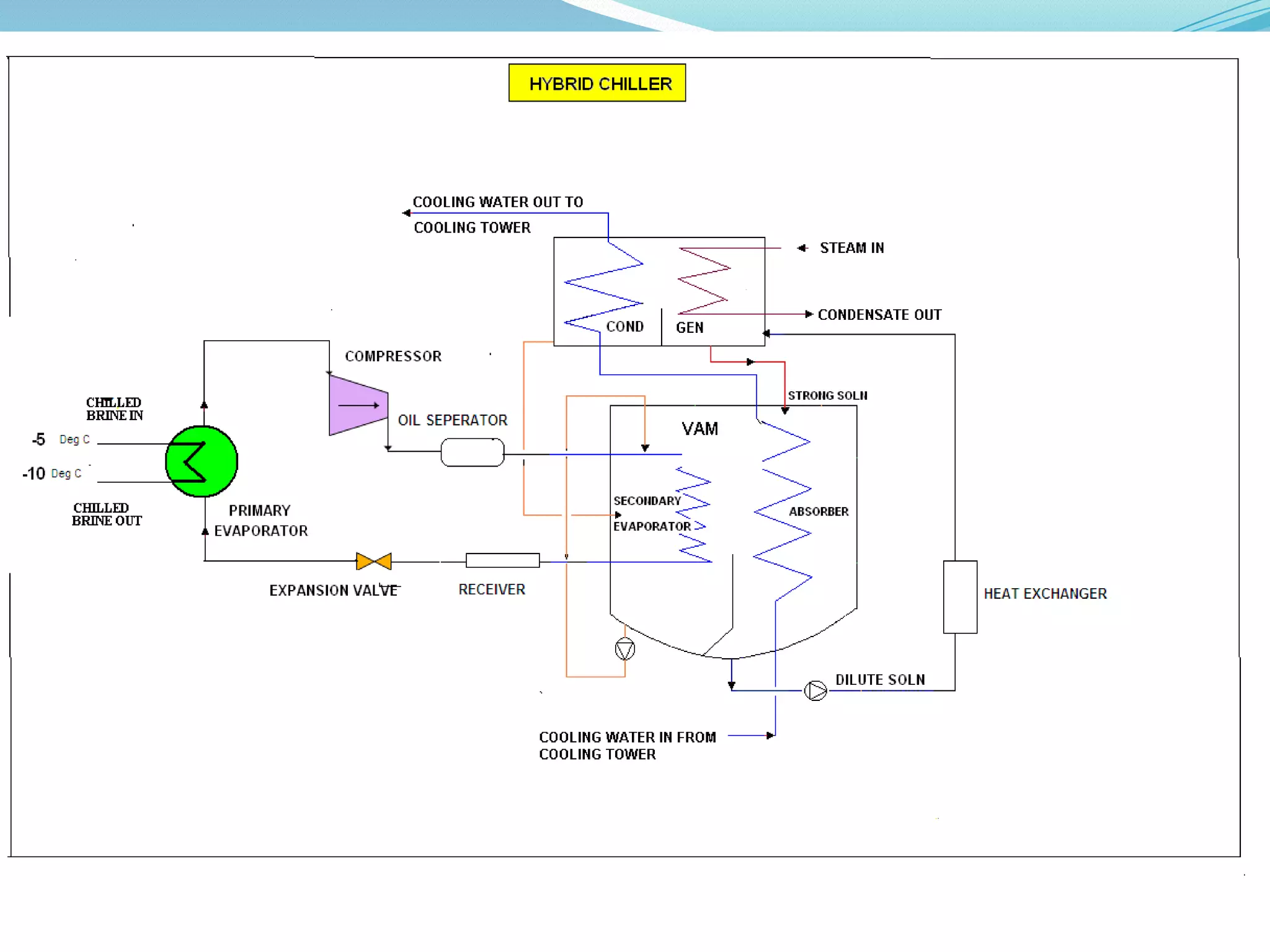
 Evaporator – Refrigerant Vapourization
 Absorber – Refrigerant (Vapour) –
Absorption by Absorbent
 Generator – Regeneration of Refrigerant
& Absorbent
 Condenser – Liquefaction of Refrigerant
 Totally we have 2 Shells:
 Lower Shell – Evaporator and Absorber
 Upper Shell – Generator and Condenser
Vapour Compression Machine
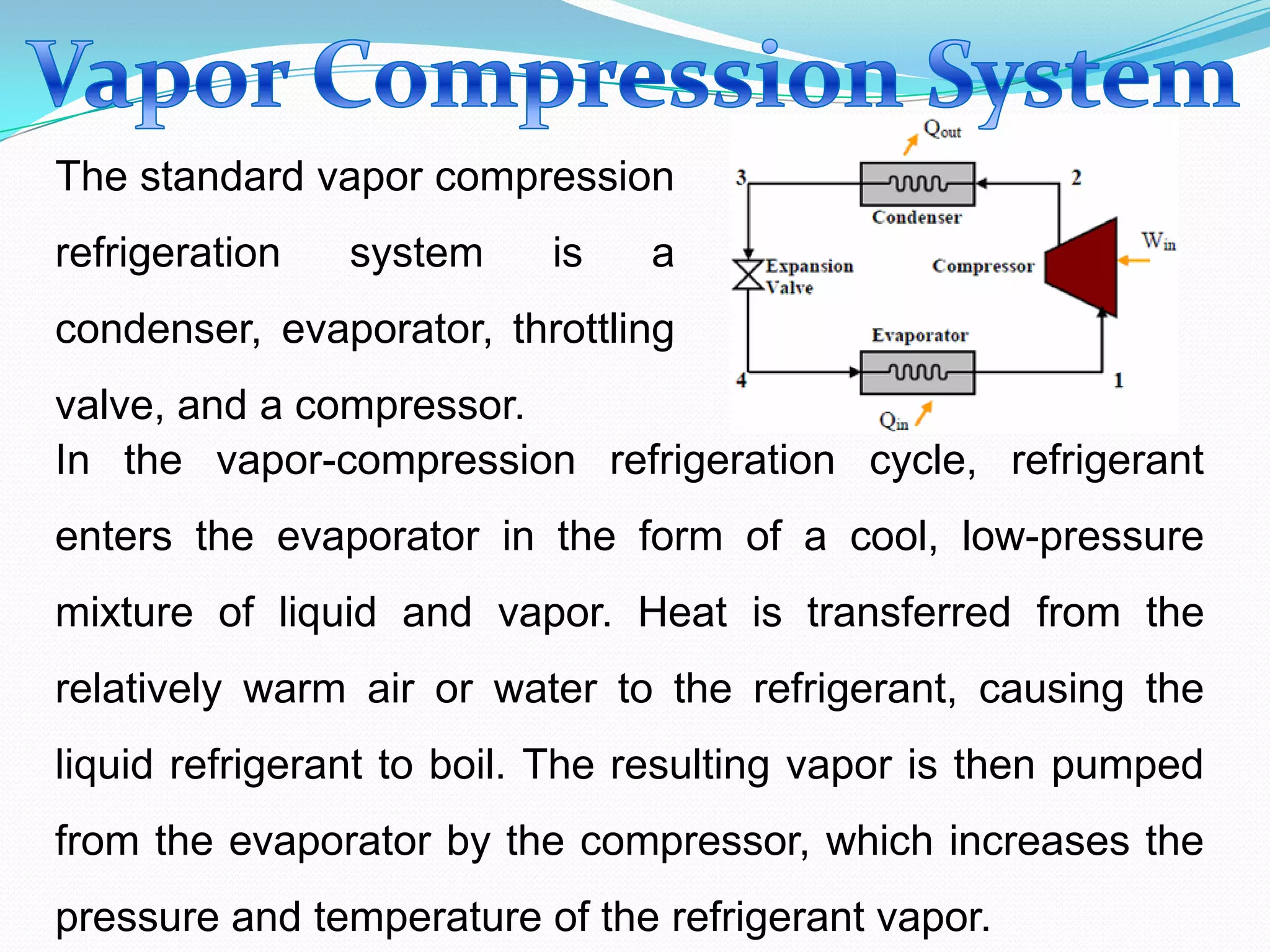
The standard vapor compression
refrigeration system is a
condenser, evaporator, throttling
valve, and a compressor.
In the vapor-compression refrigeration cycle, refrigerant
enters the evaporator in the form of a cool, low-pressure
mixture of liquid and vapor. Heat is transferred from the
relatively warm air or water to the refrigerant, causing the
liquid refrigerant to boil. The resulting vapor is then pumped
from the evaporator by the compressor, which increases the
pressure and temperature of the refrigerant vapor.
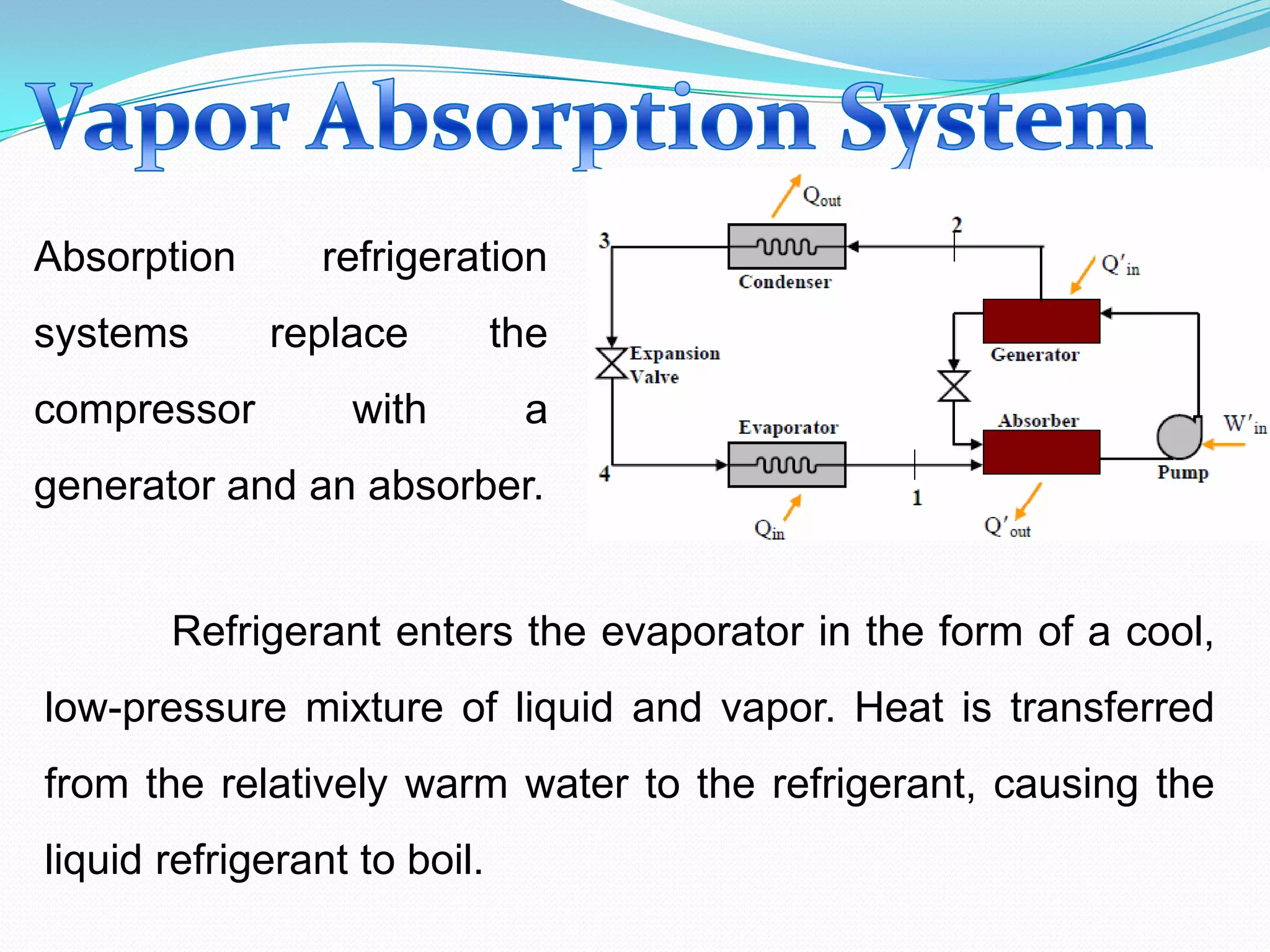
Absorption refrigeration
systems replace the
compressor with a
generator and an absorber.
Refrigerant enters the evaporator in the form of a cool,
low-pressure mixture of liquid and vapor. Heat is transferred
from the relatively warm water to the refrigerant, causing the
liquid refrigerant to boil.
Key Characteristics
1. Ammonia is a refrigerant and water is an absorbent;
2. Used for applications requiring temperatures in the range of -
40ºC to Generally +5ºC. The preferred heat source temperature
is 95ºC to 180ºC;
3. Available as very small pump-less systems to large
refrigeration capacities in applications ranging from domestic
refrigerators to large cold storages;
4. Unlike lithium bromide system, these chillers operate at
moderate pressures and NO vacuum is required till -30ºC;
5. Unlike lithium bromide system, these chillers do not suffer from
the problem of crystallization.
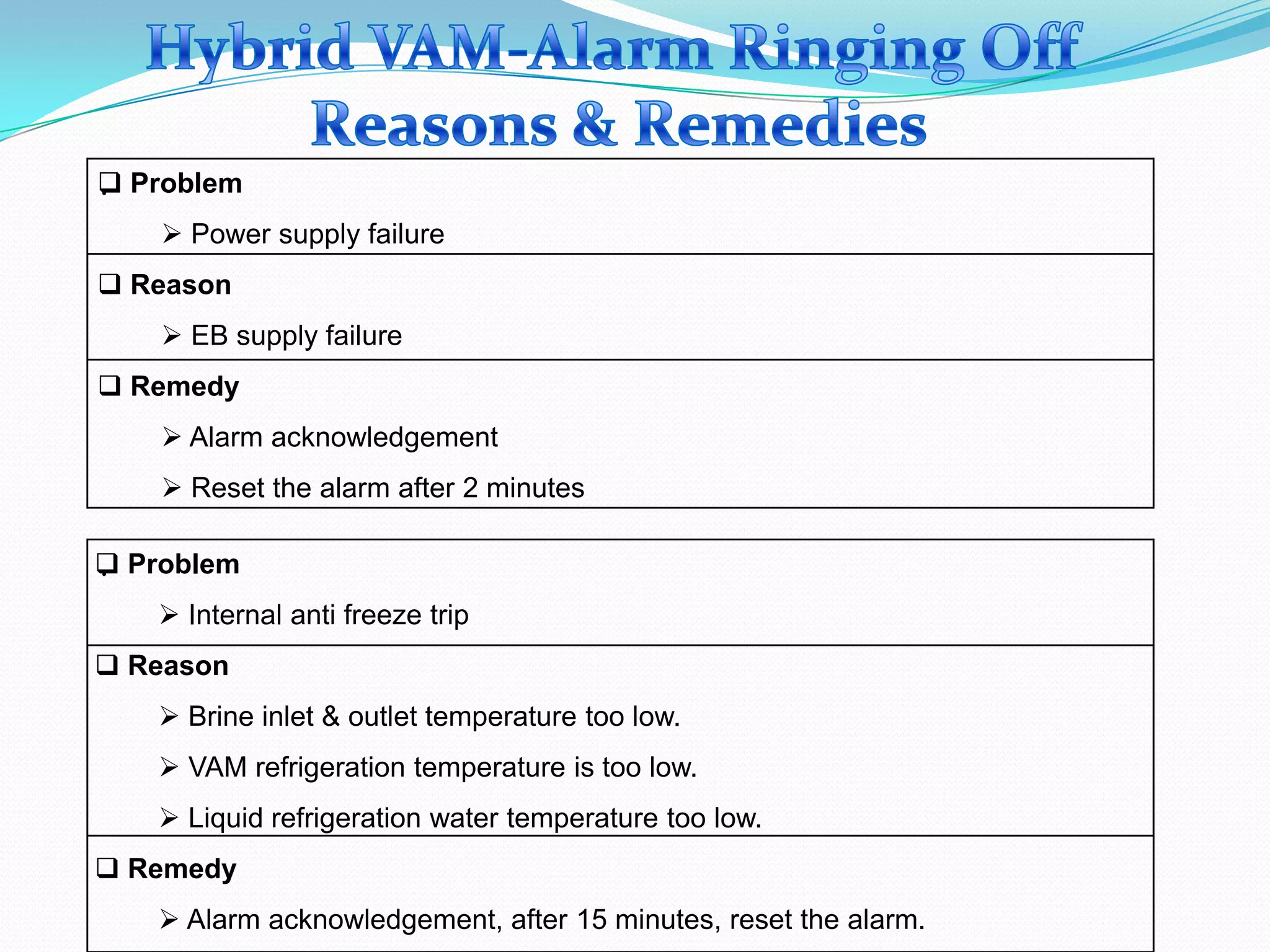
 Problem
 Power supply failure
 Reason
 EB supply failure
 Remedy
 Alarm acknowledgement
 Reset the alarm after 2 minutes
.
 Problem
 Internal anti freeze trip
 Reason
 Brine inlet & outlet temperature too low.
 VAM refrigeration temperature is too low.
 Liquid refrigeration water temperature too low.
 Remedy
 Alarm acknowledgement, after 15 minutes, reset the alarm.
.
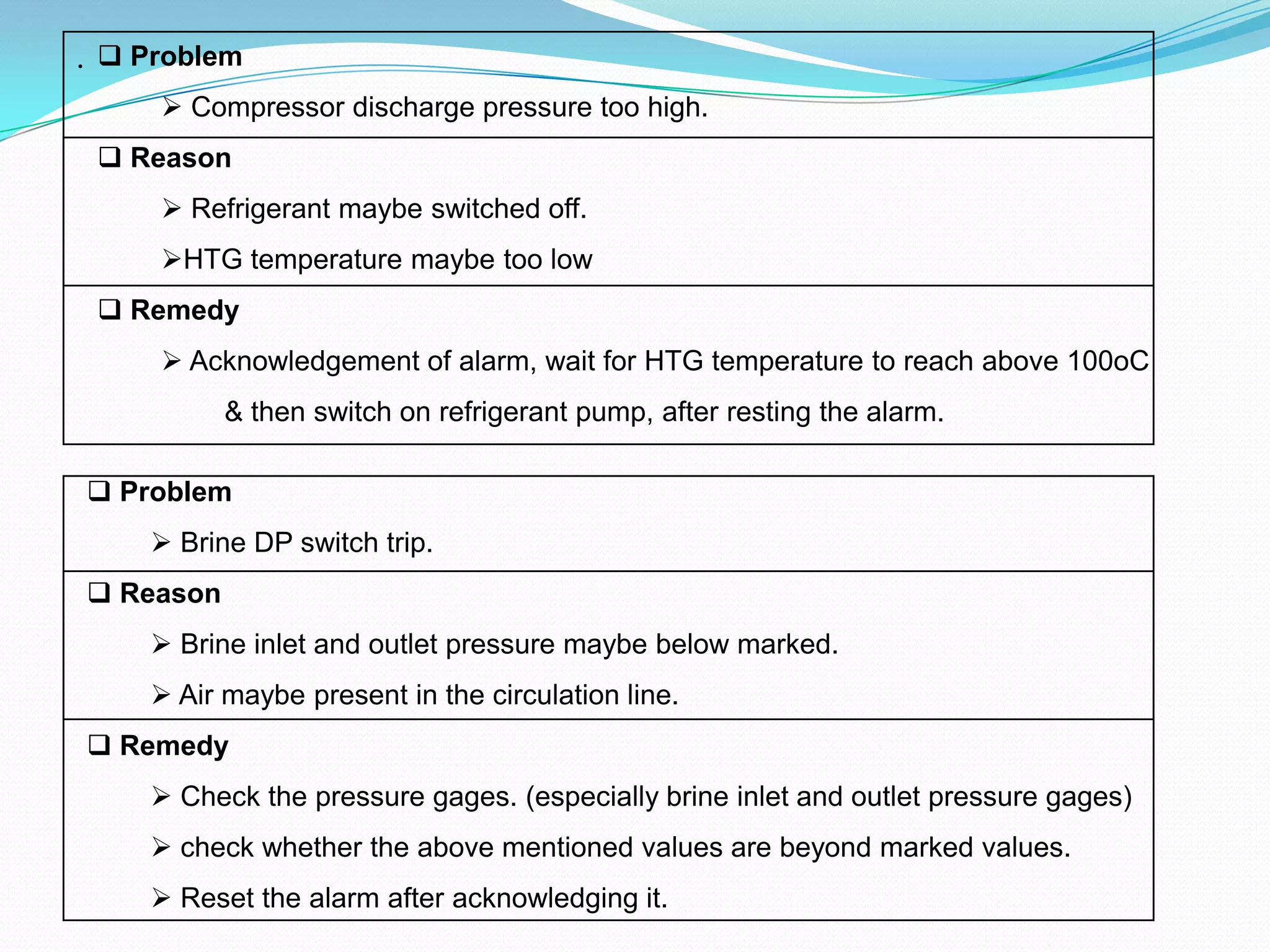
 Problem
 Compressor discharge pressure too high.
 Reason
 Refrigerant maybe switched off.
HTG temperature maybe too low
 Remedy
 Acknowledgement of alarm, wait for HTG temperature to reach above 100oC
& then switch on refrigerant pump, after resting the alarm.
 Problem
 Brine DP switch trip.
 Reason
 Brine inlet and outlet pressure maybe below marked.
 Air maybe present in the circulation line.
 Remedy
 Check the pressure gages. (especially brine inlet and outlet pressure gages)
 check whether the above mentioned values are beyond marked values.
 Reset the alarm after acknowledging it.
.
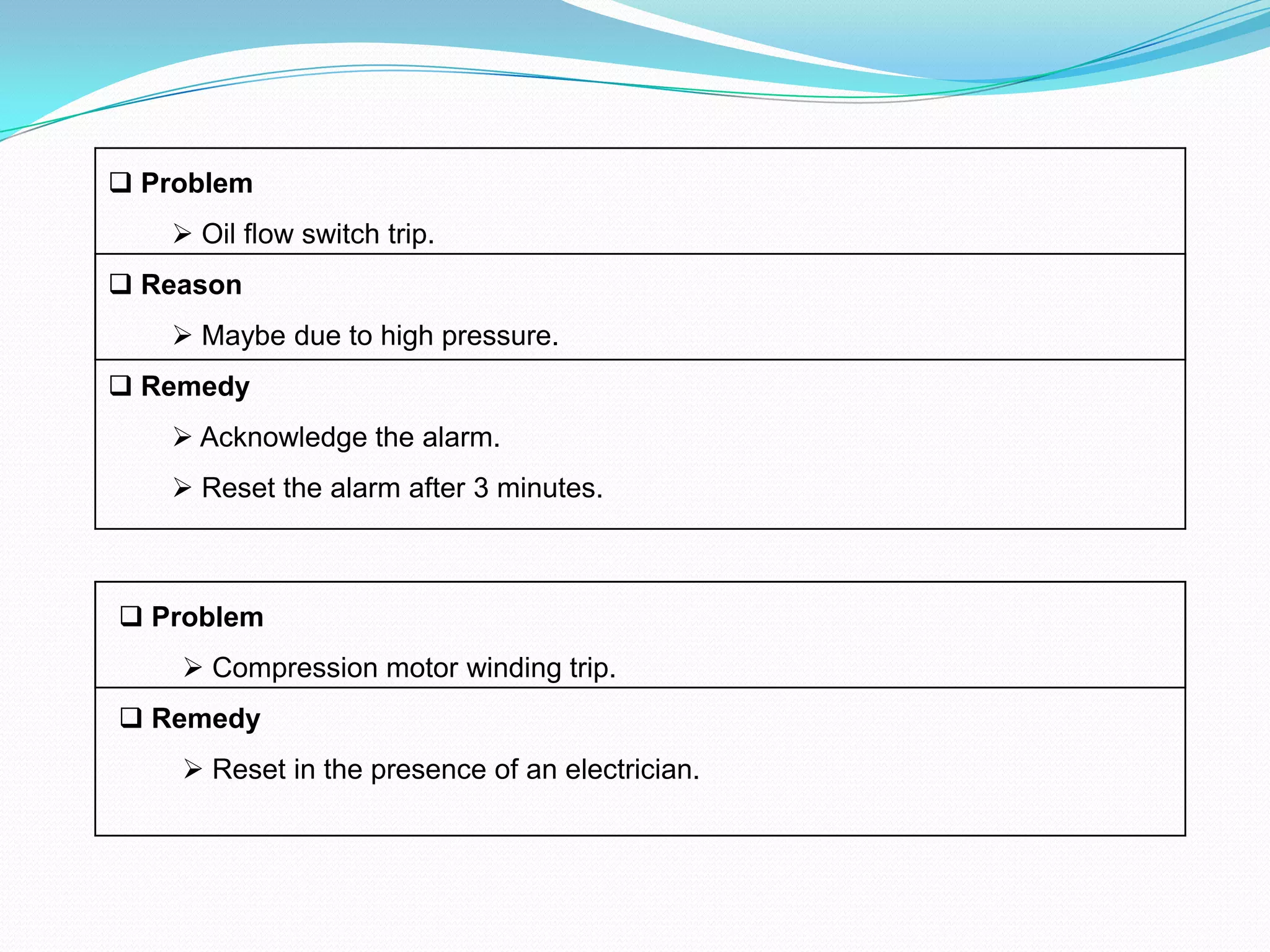
 Problem
 Oil flow switch trip.
 Reason
 Maybe due to high pressure.
 Remedy
 Acknowledge the alarm.
 Reset the alarm after 3 minutes.
 Problem
 Compression motor winding trip.
 Remedy
 Reset in the presence of an electrician.
 Problem
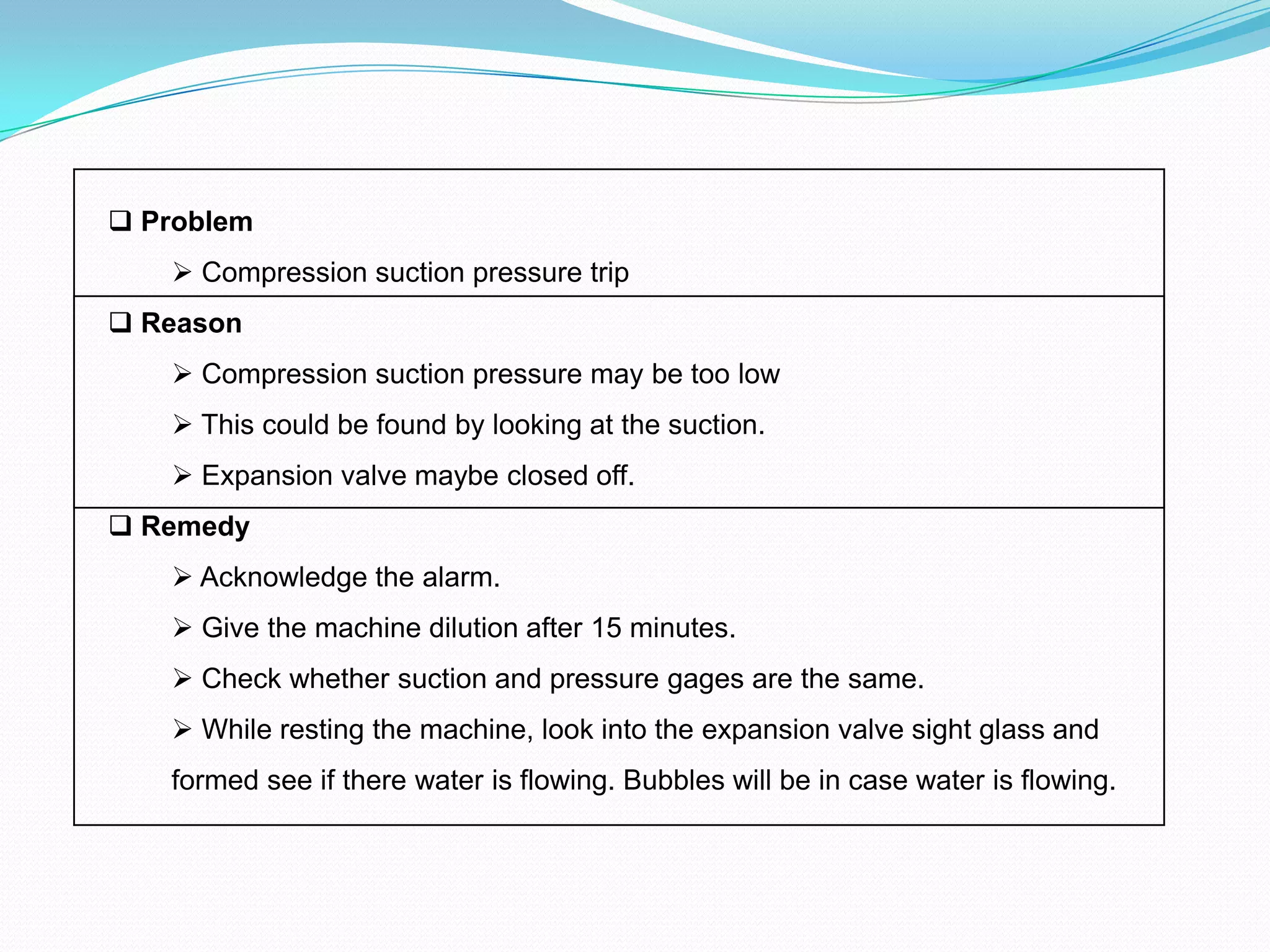
 Compression suction pressure trip
 Reason
 Compression suction pressure may be too low
 This could be found by looking at the suction.
 Expansion valve maybe closed off.
 Remedy
 Acknowledge the alarm.
 Give the machine dilution after 15 minutes.
 Check whether suction and pressure gages are the same.
 While resting the machine, look into the expansion valve sight glass and
formed see if there water is flowing. Bubbles will be in case water is flowing.
 Problem
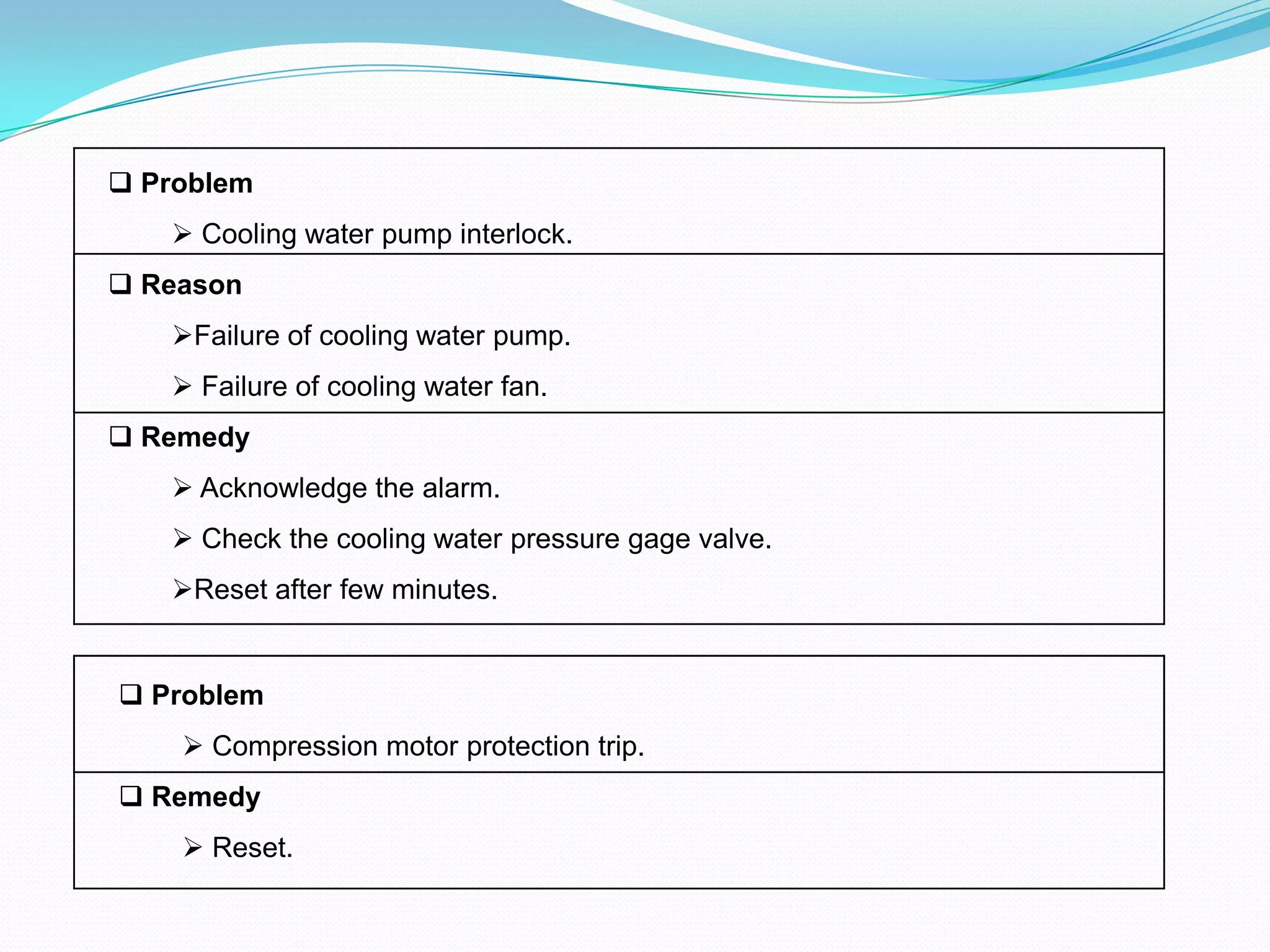
 Cooling water pump interlock.
 Reason
Failure of cooling water pump.
 Failure of cooling water fan.
 Remedy
 Acknowledge the alarm.
 Check the cooling water pressure gage valve.
Reset after few minutes.
 Problem
 Compression motor protection trip.
 Remedy
 Reset.
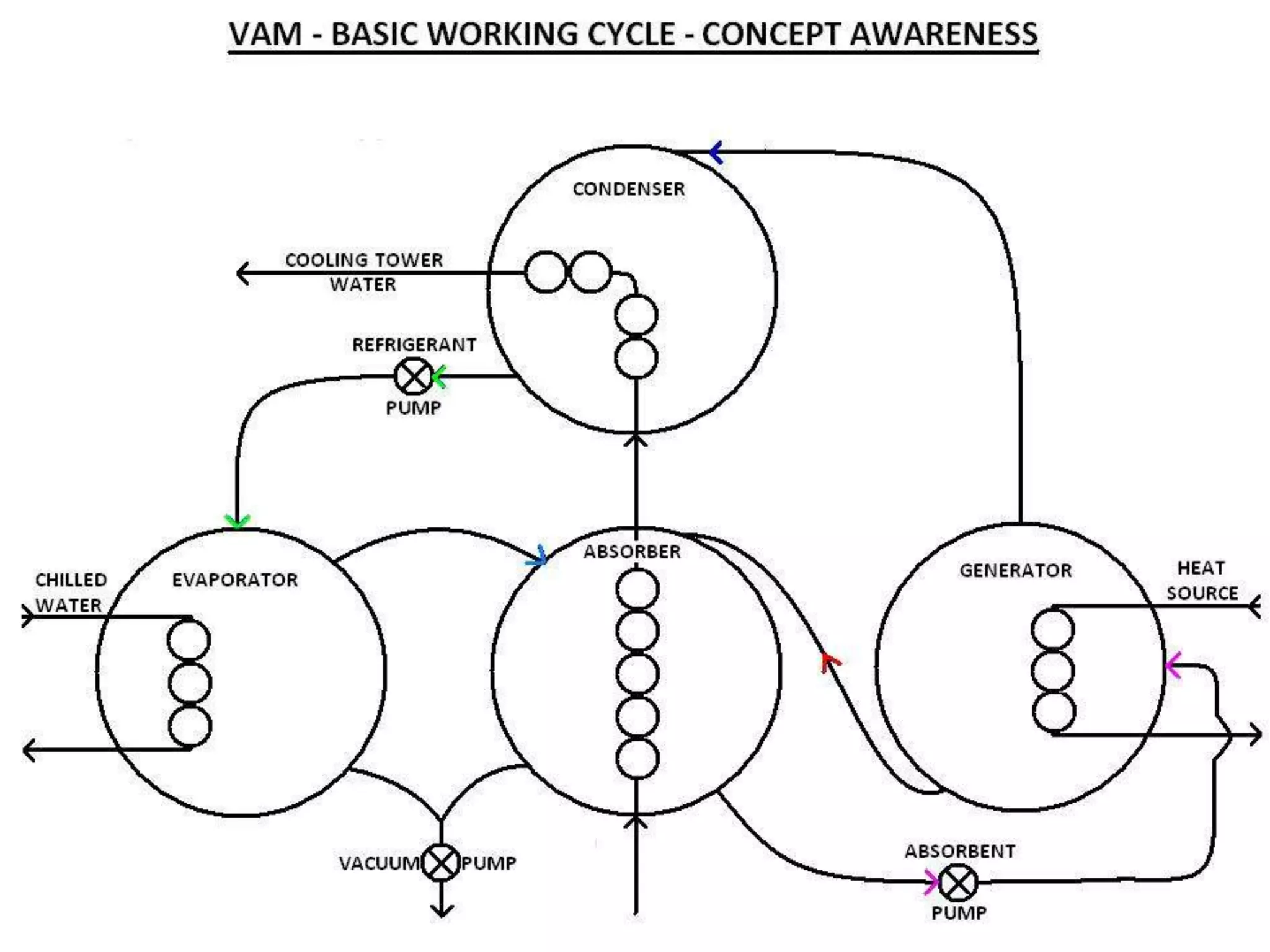
Generator:
The purpose of the generator is to deliver the refrigerant vapor to the
rest of the system. It accomplishes this by separating the water (refrigerant)
from the lithium bromide-and-water solution. In the generator, a high-
temperature energy source, typically steam or hot water, flows through tubes
that are immersed in a dilute solution of refrigerant and absorbent. The solution
absorbs heat from the warmer steam or water, causing the refrigerant to boil
(vaporize) and separate from the absorbent solution. As the refrigerant is boiled
away, the absorbent solution becomes more concentrated. The concentrated
absorbent solution returns to the absorber and the refrigerant vapor migrates to
the condenser.
Condenser:
The purpose of condenser is to condense the refrigerant vapors.
Inside the condenser, cooling water flows through tubes and the hot refrigerant
vapor fills the surrounding space. As heat transfers from the refrigerant vapor to
the water, refrigerant condenses on the tube surfaces. The condensed liquid
refrigerant collects in the bottom of the condenser before traveling to the
expansion device. The cooling water system is typically connected to a cooling
tower. Generally, the generator and condenser are contained inside of the
same shell.
Expansion Device:
From the condenser, the liquid refrigerant flows through an
expansion device into the evaporator. The expansion device is used to
maintain the pressure difference between the high-pressure (condenser)
and low-pressure (evaporator) sides of the refrigeration system by creating a
liquid seal that separates the high-pressure and low pressure sides of the
cycle. As the high-pressure liquid refrigerant flows through the expansion
device, it causes a pressure drop that reduces the refrigerant pressure to
that of the evaporator. This pressure reduction causes a small portion of the
liquid refrigerant to boil off, cooling the remaining refrigerant to the desired
evaporator temperature. The cooled mixture of liquid and vapor refrigerant
then flows into the evaporator.
Evaporator:
The purpose of evaporator is to cool the circulating water. The
evaporator contains a bundle of tubes that carry the system water to be
cooled/chilled. High pressure liquid condensate (refrigerant) is throttled down
to the evaporator pressure (typically around 6.5 mm Hg absolute).
At this low pressure, the refrigerant absorbs heat from the circulating
water and evaporates. The refrigerant vapors thus formed tend to increase the
pressure in the vessel. This will in turn increase the boiling temperature and
the desired cooling effect will not be obtained. So, it is necessary to remove
the refrigerant vapors from the vessel into the lower pressure absorber.
Physically, the evaporator and absorber are contained inside the same shell,
allowing refrigerant vapors generated in the evaporator to migrate continuously
to the absorber.
Absorber:
Inside the absorber, the refrigerant vapor is absorbed by the lithium
bromide solution. As the refrigerant vapor is absorbed, it condenses from a vapor
to a liquid, releasing the heat it acquired in the evaporator.
The absorption process creates a lower pressure within the absorber.
This lower pressure, along with the absorbent’s affinity for water, induces a
continuous flow of refrigerant vapor from the evaporator. In addition, the
absorption process condenses the refrigerant vapors and releases the heat
removed from the evaporator by the refrigerant. The heat released from the
condensation of refrigerant vapors and their absorption in the solution is
removed to the cooling water that is circulated through the absorber tube bundle.
VAM  ppt

VAM ppt

  • 1.
  • 3.
    Parts & Processinvolved:  Evaporator – Refrigerant Vapourization  Absorber – Refrigerant (Vapour) – Absorption by Absorbent  Generator – Regeneration of Refrigerant & Absorbent  Condenser – Liquefaction of Refrigerant  Totally we have 2 Shells:  Lower Shell – Evaporator and Absorber  Upper Shell – Generator and Condenser Vapour Compression Machine
  • 6.
    The standard vaporcompression refrigeration system is a condenser, evaporator, throttling valve, and a compressor. In the vapor-compression refrigeration cycle, refrigerant enters the evaporator in the form of a cool, low-pressure mixture of liquid and vapor. Heat is transferred from the relatively warm air or water to the refrigerant, causing the liquid refrigerant to boil. The resulting vapor is then pumped from the evaporator by the compressor, which increases the pressure and temperature of the refrigerant vapor.
  • 7.
    Absorption refrigeration systems replacethe compressor with a generator and an absorber. Refrigerant enters the evaporator in the form of a cool, low-pressure mixture of liquid and vapor. Heat is transferred from the relatively warm water to the refrigerant, causing the liquid refrigerant to boil.
  • 8.
    Key Characteristics 1. Ammoniais a refrigerant and water is an absorbent; 2. Used for applications requiring temperatures in the range of - 40ºC to Generally +5ºC. The preferred heat source temperature is 95ºC to 180ºC; 3. Available as very small pump-less systems to large refrigeration capacities in applications ranging from domestic refrigerators to large cold storages; 4. Unlike lithium bromide system, these chillers operate at moderate pressures and NO vacuum is required till -30ºC; 5. Unlike lithium bromide system, these chillers do not suffer from the problem of crystallization.
  • 10.
     Problem  Powersupply failure  Reason  EB supply failure  Remedy  Alarm acknowledgement  Reset the alarm after 2 minutes .  Problem  Internal anti freeze trip  Reason  Brine inlet & outlet temperature too low.  VAM refrigeration temperature is too low.  Liquid refrigeration water temperature too low.  Remedy  Alarm acknowledgement, after 15 minutes, reset the alarm. .
  • 11.
     Problem  Compressordischarge pressure too high.  Reason  Refrigerant maybe switched off. HTG temperature maybe too low  Remedy  Acknowledgement of alarm, wait for HTG temperature to reach above 100oC & then switch on refrigerant pump, after resting the alarm.  Problem  Brine DP switch trip.  Reason  Brine inlet and outlet pressure maybe below marked.  Air maybe present in the circulation line.  Remedy  Check the pressure gages. (especially brine inlet and outlet pressure gages)  check whether the above mentioned values are beyond marked values.  Reset the alarm after acknowledging it. .
  • 12.
     Problem  Oilflow switch trip.  Reason  Maybe due to high pressure.  Remedy  Acknowledge the alarm.  Reset the alarm after 3 minutes.  Problem  Compression motor winding trip.  Remedy  Reset in the presence of an electrician.
  • 13.
     Problem  Compressionsuction pressure trip  Reason  Compression suction pressure may be too low  This could be found by looking at the suction.  Expansion valve maybe closed off.  Remedy  Acknowledge the alarm.  Give the machine dilution after 15 minutes.  Check whether suction and pressure gages are the same.  While resting the machine, look into the expansion valve sight glass and formed see if there water is flowing. Bubbles will be in case water is flowing.
  • 14.
     Problem  Coolingwater pump interlock.  Reason Failure of cooling water pump.  Failure of cooling water fan.  Remedy  Acknowledge the alarm.  Check the cooling water pressure gage valve. Reset after few minutes.  Problem  Compression motor protection trip.  Remedy  Reset.
  • 16.
    Generator: The purpose ofthe generator is to deliver the refrigerant vapor to the rest of the system. It accomplishes this by separating the water (refrigerant) from the lithium bromide-and-water solution. In the generator, a high- temperature energy source, typically steam or hot water, flows through tubes that are immersed in a dilute solution of refrigerant and absorbent. The solution absorbs heat from the warmer steam or water, causing the refrigerant to boil (vaporize) and separate from the absorbent solution. As the refrigerant is boiled away, the absorbent solution becomes more concentrated. The concentrated absorbent solution returns to the absorber and the refrigerant vapor migrates to the condenser.
  • 17.
    Condenser: The purpose ofcondenser is to condense the refrigerant vapors. Inside the condenser, cooling water flows through tubes and the hot refrigerant vapor fills the surrounding space. As heat transfers from the refrigerant vapor to the water, refrigerant condenses on the tube surfaces. The condensed liquid refrigerant collects in the bottom of the condenser before traveling to the expansion device. The cooling water system is typically connected to a cooling tower. Generally, the generator and condenser are contained inside of the same shell.
  • 18.
    Expansion Device: From thecondenser, the liquid refrigerant flows through an expansion device into the evaporator. The expansion device is used to maintain the pressure difference between the high-pressure (condenser) and low-pressure (evaporator) sides of the refrigeration system by creating a liquid seal that separates the high-pressure and low pressure sides of the cycle. As the high-pressure liquid refrigerant flows through the expansion device, it causes a pressure drop that reduces the refrigerant pressure to that of the evaporator. This pressure reduction causes a small portion of the liquid refrigerant to boil off, cooling the remaining refrigerant to the desired evaporator temperature. The cooled mixture of liquid and vapor refrigerant then flows into the evaporator.
  • 19.
    Evaporator: The purpose ofevaporator is to cool the circulating water. The evaporator contains a bundle of tubes that carry the system water to be cooled/chilled. High pressure liquid condensate (refrigerant) is throttled down to the evaporator pressure (typically around 6.5 mm Hg absolute). At this low pressure, the refrigerant absorbs heat from the circulating water and evaporates. The refrigerant vapors thus formed tend to increase the pressure in the vessel. This will in turn increase the boiling temperature and the desired cooling effect will not be obtained. So, it is necessary to remove the refrigerant vapors from the vessel into the lower pressure absorber. Physically, the evaporator and absorber are contained inside the same shell, allowing refrigerant vapors generated in the evaporator to migrate continuously to the absorber.
  • 20.
    Absorber: Inside the absorber,the refrigerant vapor is absorbed by the lithium bromide solution. As the refrigerant vapor is absorbed, it condenses from a vapor to a liquid, releasing the heat it acquired in the evaporator. The absorption process creates a lower pressure within the absorber. This lower pressure, along with the absorbent’s affinity for water, induces a continuous flow of refrigerant vapor from the evaporator. In addition, the absorption process condenses the refrigerant vapors and releases the heat removed from the evaporator by the refrigerant. The heat released from the condensation of refrigerant vapors and their absorption in the solution is removed to the cooling water that is circulated through the absorber tube bundle.