Halala Rahman Qadir
Msc.Plant physiology
Water pollution
Salahaddin university
College of science
Environmental science department
Contents
Definition of water pollution
Types of water pollution
Causes of water pollution
Effects of water pollution
Control of water pollution
Definition of water pollution
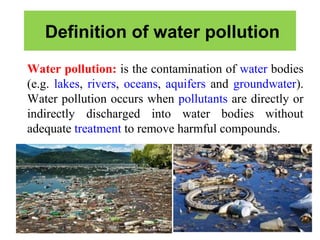
Water pollution: is the contamination of water bodies
(e.g. lakes, rivers, oceans, aquifers and groundwater).
Water pollution occurs when pollutants are directly or
indirectly discharged into water bodies without
adequate treatment to remove harmful compounds.
Types of water pollutionTypes of water pollution
Toxic Substance: The greatest contributors to toxic pollution are
herbicides, pesticides and industrial compounds.
Organic Substance: Organic pollution occurs when an excess
of organic matter, such as manure or sewage, enters the water.
Thermal Pollution: Thermal pollution can occur when water
is used as a coolant near a power or industrial plant and then is
returned to the aquatic environment at a higher temperature than
it was originally
Ecological Pollution: Ecological pollution takes place when
chemical pollution, organic pollution or thermal pollution are
caused by nature rather than by human activity.
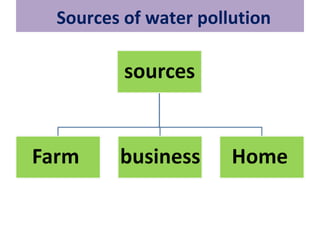
Sources of water pollution
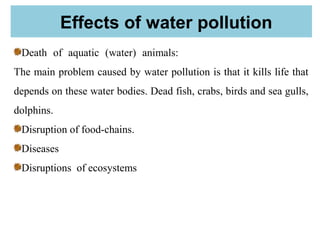
Effects of water pollution
Death of aquatic (water) animals:
The main problem caused by water pollution is that it kills life that
depends on these water bodies. Dead fish, crabs, birds and sea gulls,
dolphins.
Disruption of food-chains.
Diseases
Disruptions of ecosystems
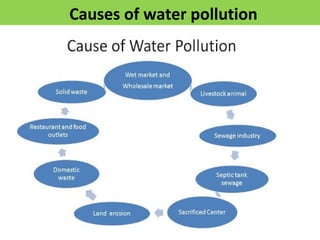
Causes of water pollution
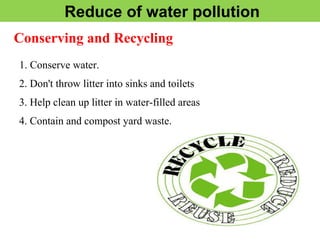
Reduce of water pollution
Conserving and Recycling
1. Conserve water.
2. Don't throw litter into sinks and toilets
3. Help clean up litter in water-filled areas
4. Contain and compost yard waste.
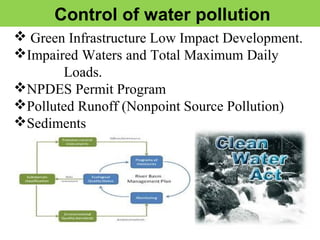
Control of water pollution
 Green Infrastructure Low Impact Development.
Impaired Waters and Total Maximum Daily
Loads.
NPDES Permit Program
Polluted Runoff (Nonpoint Source Pollution)
Sediments
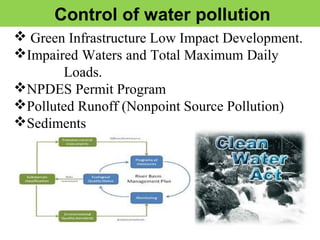
Control of water pollution
 Green Infrastructure Low Impact Development.
Impaired Waters and Total Maximum Daily
Loads.
NPDES Permit Program
Polluted Runoff (Nonpoint Source Pollution)
Sediments

Water pollution

  • 1.
    Halala Rahman Qadir Msc.Plantphysiology Water pollution Salahaddin university College of science Environmental science department
  • 2.
    Contents Definition of waterpollution Types of water pollution Causes of water pollution Effects of water pollution Control of water pollution
  • 3.
    Definition of waterpollution Water pollution: is the contamination of water bodies (e.g. lakes, rivers, oceans, aquifers and groundwater). Water pollution occurs when pollutants are directly or indirectly discharged into water bodies without adequate treatment to remove harmful compounds.
  • 4.
    Types of waterpollutionTypes of water pollution Toxic Substance: The greatest contributors to toxic pollution are herbicides, pesticides and industrial compounds. Organic Substance: Organic pollution occurs when an excess of organic matter, such as manure or sewage, enters the water. Thermal Pollution: Thermal pollution can occur when water is used as a coolant near a power or industrial plant and then is returned to the aquatic environment at a higher temperature than it was originally Ecological Pollution: Ecological pollution takes place when chemical pollution, organic pollution or thermal pollution are caused by nature rather than by human activity.
  • 5.
  • 6.
    Effects of waterpollution Death of aquatic (water) animals: The main problem caused by water pollution is that it kills life that depends on these water bodies. Dead fish, crabs, birds and sea gulls, dolphins. Disruption of food-chains. Diseases Disruptions of ecosystems
  • 7.
    Causes of waterpollution
  • 8.
    Reduce of waterpollution Conserving and Recycling 1. Conserve water. 2. Don't throw litter into sinks and toilets 3. Help clean up litter in water-filled areas 4. Contain and compost yard waste.
  • 9.
    Control of waterpollution  Green Infrastructure Low Impact Development. Impaired Waters and Total Maximum Daily Loads. NPDES Permit Program Polluted Runoff (Nonpoint Source Pollution) Sediments
  • 10.
    Control of waterpollution  Green Infrastructure Low Impact Development. Impaired Waters and Total Maximum Daily Loads. NPDES Permit Program Polluted Runoff (Nonpoint Source Pollution) Sediments