Water pollution
•Water pollution is the contamination of
water bodies (e.g. lakes, rivers, oceans and
groundwater). Water pollution occurs when
pollutants are discharged directly or indirectly
into water bodies without adequate treatment
to remove harmful compounds.
•Water pollution affects plants and organisms
living in these bodies of water; and, in almost
all cases the effect is damaging not only to
individual species and populations, but also to
the natural biological communities.
Sources of water pollution
We can classify major sources that lead to water pollution
to the following categories:
• petroleum products
• synthetic agricultural chemicals
• heavy metals
• hazardous wastes
• excess organic matter
• sediment
• infectious organisms
• air pollution
• thermal pollution
• soil pollution
Types Of Water Pollution
• Dumping of industrial wastes, containing heavy metals, harmful chemicals, by-
products, organic toxins and oils, into the nearby source of water is one of the
visible causes of water pollution.
• Another cause for the contamination of water is the improper disposal of human
and animal wastes.
• Effluents from factories, refineries, injection wells and sewage treatment plants are
dumped into urban water supplies, leading to water pollution.
• A number of pollutants, both harmful and poisonous, enter the groundwater systems
through rain water.
• The residue of agricultural practices, including fertilizers and pesticides, are some
of the major sources of water pollution.
• Untreated pollutants are drained into the nearest water body, such as stream, lake or
harbor, causing water pollution.
• Another major source of water pollution comprises of organic farm wastes. When
farm land, treated with pesticides and fertilizers, is irrigated, the excess nitrogen
and poisons get mixed into the water supply, thereby contaminating it.
• Pathogens, sediments and chemical pollutants are other sources of water pollution.
• The corporeal wastes produced by humans and farmed organisms pollute rivers,
lakes, oceans and other surface waters.
Harmful Effects Of Water Pollution on
Plant Life
• pH Levels- Pollution can also alter the pH of water, making it more acidic
or more alkaline. Many species of plants thrive only in certain conditions,
and a large shift in pH can kill them off or stunt their growth.
• Sediment-Runoff from mining operations can fill waterways with sediment,
cutting off water and drying out wetlands.
• Chain Reactions- In some cases, subtle sources of pollution might not kill
off large plants, but might affect micro-organisms and throw off the natural
balance over time.
• Organic Pollution- Sewage runoff and other organic matter can alter the
nutrient levels in a body of water, causing bacteria or algae to multiply.
This can alter the oxygen content of the water and kill not only plants but
animals as well.
• Toxic Spills- One of the most common forms of water pollution is the
introduction of toxins, such as pesticides, into the environment. These can
kill plant life directly as well as leach into the water table
Effect of Water Pollution on trees
and plants
• May disrupt photosynthesis in aquatic plants and thus
affecting ecosystems that depend on these plants
• Terrestrial and aquatic plants may absorb pollutants from
water (as their main nutrient source) and pass them up
the food chain to consumer animals and humans
• Plants may be killed by too much sodium chloride
(ordinary slat) in water
• Plants may be killed by mud from construction sites as
well as bits of wood and leaves, clay and other similar
materials
• Plants may be killed by herbicides in water; herbicides
are chemicals which are most harmful to plants
Water Pollution Management
Bioremediation
• Enhance the development of indigenous
microorganisms to accelerate biodegradation
of organic constituents in saturated zone
• Effective for full range petroleum hydrocarbon
(long chain, high molecular weight and
insoluble constituents)
• Accepted in combination with other saturated
zone remedial technology (e.g. air sparging)
and soil vapor extraction (bioventing)
Dual-Phase Extraction
• Elimination of every types of contaminants of groundwater,
separate-phase of petroleum products, hydrocarbon vapor from
subsurface, which are treated and collected for disposal or re-
injected to the subsurface
• Effective in removal of separate phase products from
subsurface, due to great efficiency of extraction rates which
increase biodegradation of petroleum constituents by
increasing supply of oxygen, similar to bioventing
• Mechanism criterion: vacuum, hydraulics and water
• Treatment modes
– Subsurface liquid(s) and soil vapor are extracted as a high
velocity dual phase stream using a single pump
– Subsurface liquid(s) and soil vapor are extracted separately
using 2 or more pumps
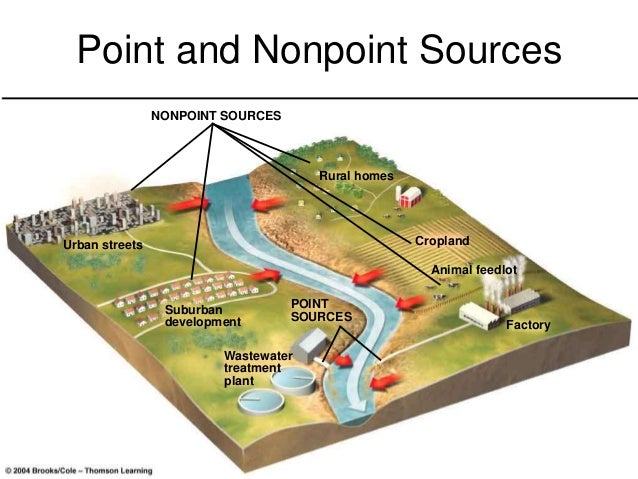
Point and Nonpoint Sources
NONPOINT SOURCES
Urban streets
Suburban
development
Wastewater
treatment
plant
Rural homes
Cropland
Factory
Animal feedlot
POINT
SOURCES
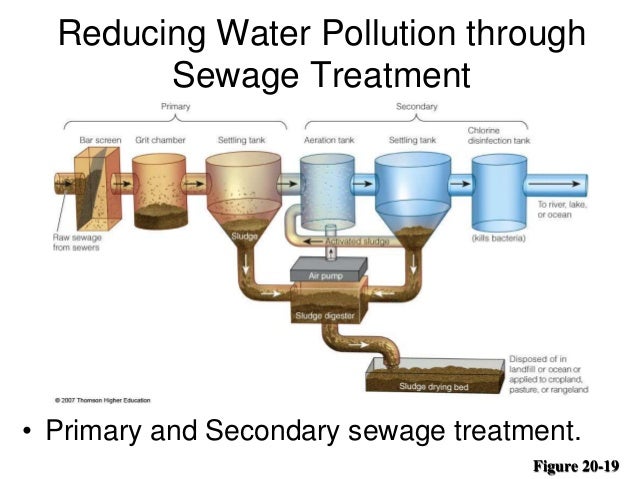
Reducing Water Pollution through
Sewage Treatment
• Primary and Secondary sewage treatment.
Figure 20-19
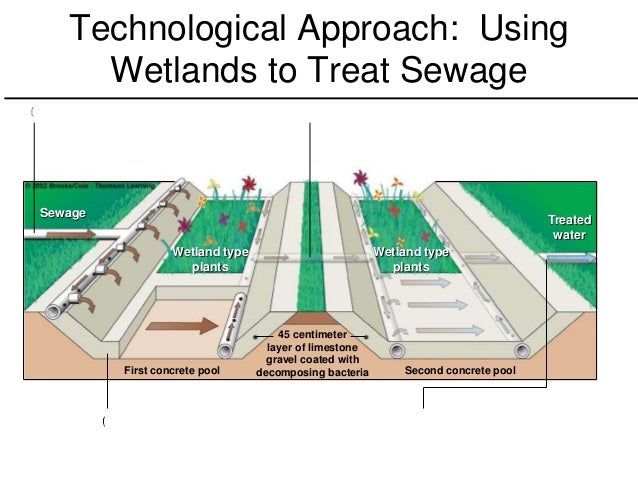
Technological Approach: Using
Wetlands to Treat Sewage
(
(
45 centimeter
layer of limestone
gravel coated with
decomposing bacteria
First concrete pool Second concrete pool
Sewage
Wetland type
plants
Wetland type
plants
Treated
water
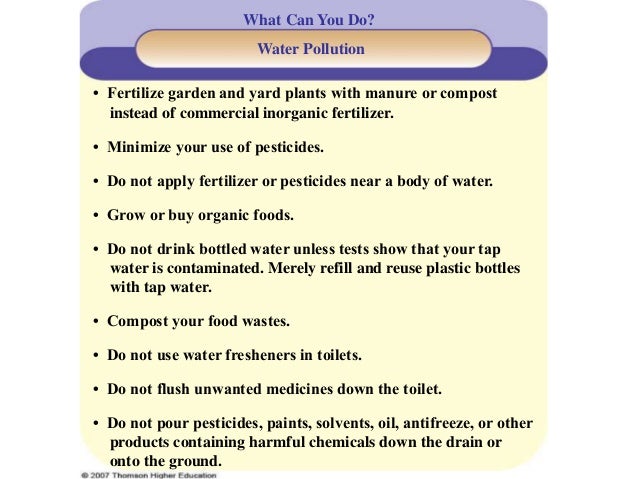
What Can You Do?
Water Pollution
• Fertilize garden and yard plants with manure or compost
instead of commercial inorganic fertilizer.
• Minimize your use of pesticides.
• Do not apply fertilizer or pesticides near a body of water.
• Grow or buy organic foods.
• Do not drink bottled water unless tests show that your tap
water is contaminated. Merely refill and reuse plastic bottles
with tap water.
• Compost your food wastes.
• Do not use water fresheners in toilets.
• Do not flush unwanted medicines down the toilet.
• Do not pour pesticides, paints, solvents, oil, antifreeze, or other
products containing harmful chemicals down the drain or
onto the ground.

194022606-Water-Pollution.ppt

  • 1.
    Water pollution •Water pollutionis the contamination of water bodies (e.g. lakes, rivers, oceans and groundwater). Water pollution occurs when pollutants are discharged directly or indirectly into water bodies without adequate treatment to remove harmful compounds. •Water pollution affects plants and organisms living in these bodies of water; and, in almost all cases the effect is damaging not only to individual species and populations, but also to the natural biological communities.
  • 2.
    Sources of waterpollution We can classify major sources that lead to water pollution to the following categories: • petroleum products • synthetic agricultural chemicals • heavy metals • hazardous wastes • excess organic matter • sediment • infectious organisms • air pollution • thermal pollution • soil pollution
  • 3.
    Types Of WaterPollution • Dumping of industrial wastes, containing heavy metals, harmful chemicals, by- products, organic toxins and oils, into the nearby source of water is one of the visible causes of water pollution. • Another cause for the contamination of water is the improper disposal of human and animal wastes. • Effluents from factories, refineries, injection wells and sewage treatment plants are dumped into urban water supplies, leading to water pollution. • A number of pollutants, both harmful and poisonous, enter the groundwater systems through rain water. • The residue of agricultural practices, including fertilizers and pesticides, are some of the major sources of water pollution. • Untreated pollutants are drained into the nearest water body, such as stream, lake or harbor, causing water pollution. • Another major source of water pollution comprises of organic farm wastes. When farm land, treated with pesticides and fertilizers, is irrigated, the excess nitrogen and poisons get mixed into the water supply, thereby contaminating it. • Pathogens, sediments and chemical pollutants are other sources of water pollution. • The corporeal wastes produced by humans and farmed organisms pollute rivers, lakes, oceans and other surface waters.
  • 4.
    Harmful Effects OfWater Pollution on Plant Life • pH Levels- Pollution can also alter the pH of water, making it more acidic or more alkaline. Many species of plants thrive only in certain conditions, and a large shift in pH can kill them off or stunt their growth. • Sediment-Runoff from mining operations can fill waterways with sediment, cutting off water and drying out wetlands. • Chain Reactions- In some cases, subtle sources of pollution might not kill off large plants, but might affect micro-organisms and throw off the natural balance over time. • Organic Pollution- Sewage runoff and other organic matter can alter the nutrient levels in a body of water, causing bacteria or algae to multiply. This can alter the oxygen content of the water and kill not only plants but animals as well. • Toxic Spills- One of the most common forms of water pollution is the introduction of toxins, such as pesticides, into the environment. These can kill plant life directly as well as leach into the water table
  • 5.
    Effect of WaterPollution on trees and plants • May disrupt photosynthesis in aquatic plants and thus affecting ecosystems that depend on these plants • Terrestrial and aquatic plants may absorb pollutants from water (as their main nutrient source) and pass them up the food chain to consumer animals and humans • Plants may be killed by too much sodium chloride (ordinary slat) in water • Plants may be killed by mud from construction sites as well as bits of wood and leaves, clay and other similar materials • Plants may be killed by herbicides in water; herbicides are chemicals which are most harmful to plants
  • 6.
    Water Pollution Management Bioremediation •Enhance the development of indigenous microorganisms to accelerate biodegradation of organic constituents in saturated zone • Effective for full range petroleum hydrocarbon (long chain, high molecular weight and insoluble constituents) • Accepted in combination with other saturated zone remedial technology (e.g. air sparging) and soil vapor extraction (bioventing)
  • 7.
    Dual-Phase Extraction • Eliminationof every types of contaminants of groundwater, separate-phase of petroleum products, hydrocarbon vapor from subsurface, which are treated and collected for disposal or re- injected to the subsurface • Effective in removal of separate phase products from subsurface, due to great efficiency of extraction rates which increase biodegradation of petroleum constituents by increasing supply of oxygen, similar to bioventing • Mechanism criterion: vacuum, hydraulics and water • Treatment modes – Subsurface liquid(s) and soil vapor are extracted as a high velocity dual phase stream using a single pump – Subsurface liquid(s) and soil vapor are extracted separately using 2 or more pumps
  • 8.
    Point and NonpointSources NONPOINT SOURCES Urban streets Suburban development Wastewater treatment plant Rural homes Cropland Factory Animal feedlot POINT SOURCES
  • 9.
    Reducing Water Pollutionthrough Sewage Treatment • Primary and Secondary sewage treatment. Figure 20-19
  • 10.
    Technological Approach: Using Wetlandsto Treat Sewage ( ( 45 centimeter layer of limestone gravel coated with decomposing bacteria First concrete pool Second concrete pool Sewage Wetland type plants Wetland type plants Treated water
  • 11.
    What Can YouDo? Water Pollution • Fertilize garden and yard plants with manure or compost instead of commercial inorganic fertilizer. • Minimize your use of pesticides. • Do not apply fertilizer or pesticides near a body of water. • Grow or buy organic foods. • Do not drink bottled water unless tests show that your tap water is contaminated. Merely refill and reuse plastic bottles with tap water. • Compost your food wastes. • Do not use water fresheners in toilets. • Do not flush unwanted medicines down the toilet. • Do not pour pesticides, paints, solvents, oil, antifreeze, or other products containing harmful chemicals down the drain or onto the ground.