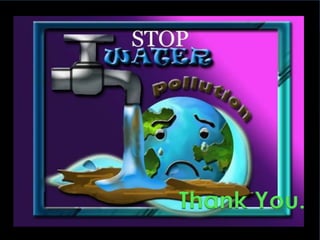
-By Shwetanshu
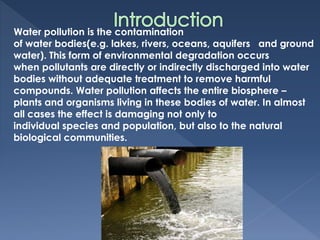
Water pollution is the contamination
of water bodies(e.g. lakes, rivers, oceans, aquifers and ground
water). This form of environmental degradation occurs
when pollutants are directly or indirectly discharged into water
bodies without adequate treatment to remove harmful
compounds. Water pollution affects the entire biosphere –
plants and organisms living in these bodies of water. In almost
all cases the effect is damaging not only to
individual species and population, but also to the natural
biological communities.
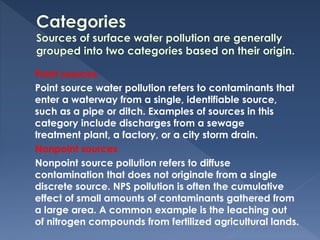
Point sources
Point source water pollution refers to contaminants that
enter a waterway from a single, identifiable source,
such as a pipe or ditch. Examples of sources in this
category include discharges from a sewage
treatment plant, a factory, or a city storm drain.
Nonpoint sources
Nonpoint source pollution refers to diffuse
contamination that does not originate from a single
discrete source. NPS pollution is often the cumulative
effect of small amounts of contaminants gathered from
a large area. A common example is the leaching out
of nitrogen compounds from fertilized agricultural lands.
Organic water pollutants include:
 Detergens
 Disinfection by-products found in
chemically disinfected drinking water, such as chloroform
 Food processing waste, which can include oxygen-
demanding substances, fats and grease
 Insecticides and herbicides, a huge range
of organohalides and other chemical compounds
 Petroleum hydrocarbons, including fuels (gasoline, diesel
fuel, jet fuels, and fuel oil) and lubricants (motor oil), and
fuel combustion byproducts, from storm water runoff
 Volatile organic compounds, such as industrial solvents, from
improper storage.
 Chlorinated solvents, which are dense non-aqueous phase
liquids, may fall to the bottom of reservoirs, since they don't
mix well with water and are denser.
Polychlorinated biphenyl (PCBs)
Trichloroethylene
 Perchlorate
 Various chemical compounds found in
personal hygiene and cosmetic products
 Drug pollution involving pharmaceutical drugs and
their metabolites
Inorganic water pollutants include:
 Acidity caused by industrial discharges (especially sulphur
dioxide from power plants)
 Ammonia from food processing waste
 Chemical waste as industrial by-products
 Fertilizers containing nutrients--nitrates and phosphates—
which are found in storm water runoff from agriculture, as well
as commercial and residential use
 Heavy metals from motor vehicles (via urban storm water
runoff)and acid mine drainage
 Silt (sediment) in runoff from construction sites, logging, slash
and burn practices or land clearing sites.
 Trash or garbage (e.g. paper, plastic, or food waste)
discarded by people on the ground, along with
accidental or intentional dumping of rubbish, that are
washed by rainfall into storm drains and eventually
discharged into surface waters
 Shipwrecks, large derelict ships.
Macroscopic pollution – large visible items polluting
the water – may be termed "floatables" in an urban
storm water context, or marine debris when found on
the open seas, and can include such items as:
Thermal pollution is the rise or fall in the temperature of
a natural body of water caused by human influence.
Thermal pollution, unlike chemical pollution, results in a
change in the physical properties of water. A common
cause of thermal pollution is the use of water as
a coolant by power plants and industrial manufacturers.
Elevated water temperatures decrease oxygen levels,
which can kill fish and alter food chain composition,
reduce species biodiversity.
We all drink water that comes from a source: this may be a lake
or local river. In countries that have poor screening and
purification practices, people often get water-borne disease
outbreaks such as cholera and tuberculosis. Every year, there are
an estimated 3–5 million cholera cases and 100,000–120,000
deaths due to cholera. (WHO estimates that only 5–10% of cases
are officially reported.)
In developed countries, even where there are better purification
methods, people still suffer from the health effects of water
pollution. Take toxins emitted by algae growth for instance: this
can cause stomach aches and rashes. Excess nitrogen in
drinking water also pose serious risks to infants. Animals, including
water animals die when water is poisoned for various reasons.
Other animals are stressed and their populations are
endangered. In a classic case of marine pollution in recent time,
16000 miles of a US coastline was affected by an oil spill. That
water pollution caused a lot of damage and deaths of many
animals. Over 8,000 animals (birds, turtles, mammals) were
reported dead just 6 months after the spill, including many that
are already on the endangered species list. Immediate impact
on the wildlife includes oil-coated birds and sea turtles, mammal
ingestion of oil, and dead or dying deep sea coral
Thank You.

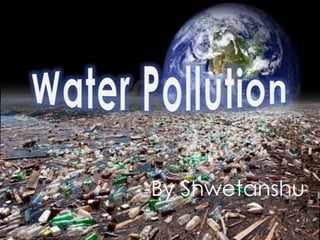
Water pollution

  • 1.
  • 2.
    Water pollution isthe contamination of water bodies(e.g. lakes, rivers, oceans, aquifers and ground water). This form of environmental degradation occurs when pollutants are directly or indirectly discharged into water bodies without adequate treatment to remove harmful compounds. Water pollution affects the entire biosphere – plants and organisms living in these bodies of water. In almost all cases the effect is damaging not only to individual species and population, but also to the natural biological communities.
  • 3.
    Point sources Point sourcewater pollution refers to contaminants that enter a waterway from a single, identifiable source, such as a pipe or ditch. Examples of sources in this category include discharges from a sewage treatment plant, a factory, or a city storm drain. Nonpoint sources Nonpoint source pollution refers to diffuse contamination that does not originate from a single discrete source. NPS pollution is often the cumulative effect of small amounts of contaminants gathered from a large area. A common example is the leaching out of nitrogen compounds from fertilized agricultural lands.
  • 4.
    Organic water pollutantsinclude:  Detergens  Disinfection by-products found in chemically disinfected drinking water, such as chloroform  Food processing waste, which can include oxygen- demanding substances, fats and grease  Insecticides and herbicides, a huge range of organohalides and other chemical compounds  Petroleum hydrocarbons, including fuels (gasoline, diesel fuel, jet fuels, and fuel oil) and lubricants (motor oil), and fuel combustion byproducts, from storm water runoff  Volatile organic compounds, such as industrial solvents, from improper storage.  Chlorinated solvents, which are dense non-aqueous phase liquids, may fall to the bottom of reservoirs, since they don't mix well with water and are denser. Polychlorinated biphenyl (PCBs) Trichloroethylene
  • 5.
     Perchlorate  Variouschemical compounds found in personal hygiene and cosmetic products  Drug pollution involving pharmaceutical drugs and their metabolites Inorganic water pollutants include:  Acidity caused by industrial discharges (especially sulphur dioxide from power plants)  Ammonia from food processing waste  Chemical waste as industrial by-products  Fertilizers containing nutrients--nitrates and phosphates— which are found in storm water runoff from agriculture, as well as commercial and residential use  Heavy metals from motor vehicles (via urban storm water runoff)and acid mine drainage  Silt (sediment) in runoff from construction sites, logging, slash and burn practices or land clearing sites.
  • 6.
     Trash orgarbage (e.g. paper, plastic, or food waste) discarded by people on the ground, along with accidental or intentional dumping of rubbish, that are washed by rainfall into storm drains and eventually discharged into surface waters  Shipwrecks, large derelict ships. Macroscopic pollution – large visible items polluting the water – may be termed "floatables" in an urban storm water context, or marine debris when found on the open seas, and can include such items as:
  • 7.
    Thermal pollution isthe rise or fall in the temperature of a natural body of water caused by human influence. Thermal pollution, unlike chemical pollution, results in a change in the physical properties of water. A common cause of thermal pollution is the use of water as a coolant by power plants and industrial manufacturers. Elevated water temperatures decrease oxygen levels, which can kill fish and alter food chain composition, reduce species biodiversity.
  • 8.
    We all drinkwater that comes from a source: this may be a lake or local river. In countries that have poor screening and purification practices, people often get water-borne disease outbreaks such as cholera and tuberculosis. Every year, there are an estimated 3–5 million cholera cases and 100,000–120,000 deaths due to cholera. (WHO estimates that only 5–10% of cases are officially reported.) In developed countries, even where there are better purification methods, people still suffer from the health effects of water pollution. Take toxins emitted by algae growth for instance: this can cause stomach aches and rashes. Excess nitrogen in drinking water also pose serious risks to infants. Animals, including water animals die when water is poisoned for various reasons. Other animals are stressed and their populations are endangered. In a classic case of marine pollution in recent time, 16000 miles of a US coastline was affected by an oil spill. That water pollution caused a lot of damage and deaths of many animals. Over 8,000 animals (birds, turtles, mammals) were reported dead just 6 months after the spill, including many that are already on the endangered species list. Immediate impact on the wildlife includes oil-coated birds and sea turtles, mammal ingestion of oil, and dead or dying deep sea coral
  • 9.