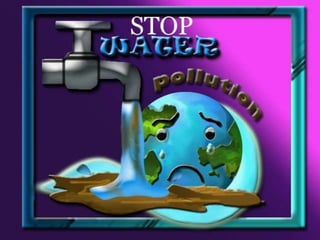
Presentation on
WATER POLLUTION
Dr. Vivek Kumar
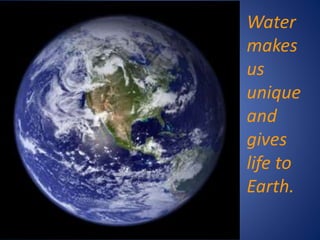
Water
makes
us
unique
and
gives
life to
Earth.
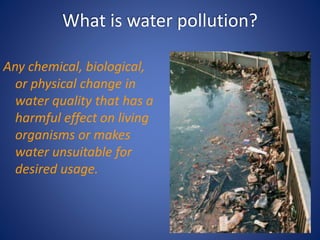
What is water pollution?
Any chemical, biological,
or physical change in
water quality that has a
harmful effect on living
organisms or makes
water unsuitable for
desired usage.
What is water pollution?
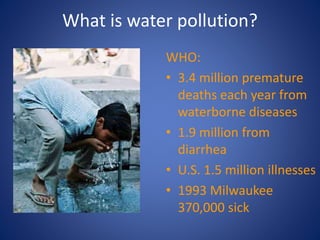
WHO:
• 3.4 million premature
deaths each year from
waterborne diseases
• 1.9 million from
diarrhea
• U.S. 1.5 million illnesses
• 1993 Milwaukee
370,000 sick
What is water pollution?
Need to study Table 22-1 Page 492
Infectious Agents: bacteria and viruses often
from animal wastes
Oxygen Demanding Wastes: organic waste that
needs oxygen often from animal waste, paper
mills and food processing.
Inorganic Chemicals: Acids and toxic chemicals
often from runoff, industries and household
cleaners
What is water pollution?
Organic Chemicals: oil, gasoline, plastics,
detergents often from surface runoff,
industries and cleaners
Plant Nutrients: water soluble nitrates, ammonia
and phosphates often from sewage,
agriculture and urban fertilizers
Sediment: soils and silts from land erosion can
disrupt photosynthesis, destroy spawning
grounds, clog rivers and streams
Heat Pollution and Radioactivity: mostly from
powerplants
How do we measure water quality
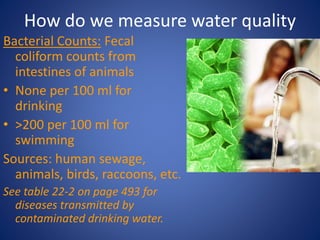
Bacterial Counts: Fecal
coliform counts from
intestines of animals
• None per 100 ml for
drinking
• >200 per 100 ml for
swimming
Sources: human sewage,
animals, birds, raccoons, etc.
See table 22-2 on page 493 for
diseases transmitted by
contaminated drinking water.
How do we measure water quality
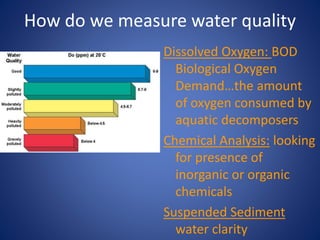
Dissolved Oxygen: BOD
Biological Oxygen
Demand…the amount
of oxygen consumed by
aquatic decomposers
Chemical Analysis: looking
for presence of
inorganic or organic
chemicals
Suspended Sediment
water clarity
How do we measure water quality
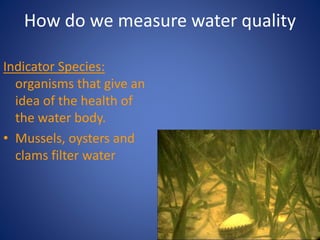
Indicator Species:
organisms that give an
idea of the health of
the water body.
• Mussels, oysters and
clams filter water
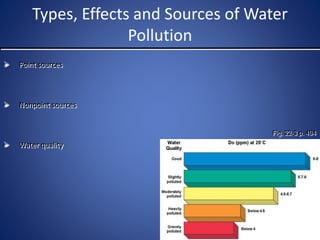
Types, Effects and Sources of Water
Pollution
 Point sources
 Nonpoint sources
 Water quality
Fig. 22-3 p. 494
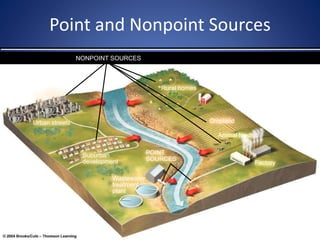
Point and Nonpoint Sources
NONPOINT SOURCES
Urban streets
Suburban
development
Wastewater
treatment
plant
Rural homes
Cropland
Factory
Animal feedlot
POINT
SOURCES
Fig. 22-4 p. 494
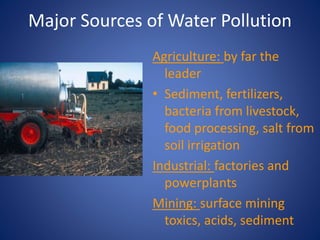
Major Sources of Water Pollution
Agriculture: by far the
leader
• Sediment, fertilizers,
bacteria from livestock,
food processing, salt from
soil irrigation
Industrial: factories and
powerplants
Mining: surface mining
toxics, acids, sediment
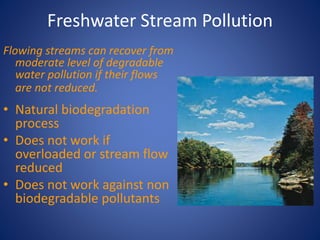
Freshwater Stream Pollution
Flowing streams can recover from
moderate level of degradable
water pollution if their flows
are not reduced.
• Natural biodegradation
process
• Does not work if
overloaded or stream flow
reduced
• Does not work against non
biodegradable pollutants
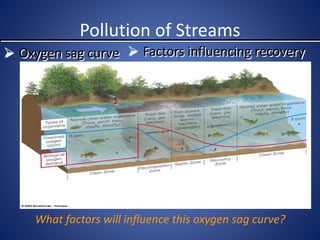
Pollution of Streams
 Oxygen sag curve  Factors influencing recovery
Fig. 22-5 p. 496
What factors will influence this oxygen sag curve?
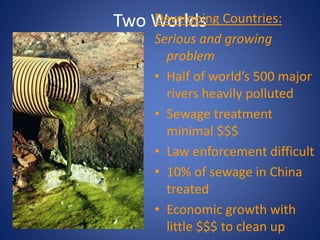
Two WorldsDeveloping Countries:
Serious and growing
problem
• Half of world’s 500 major
rivers heavily polluted
• Sewage treatment
minimal $$$
• Law enforcement difficult
• 10% of sewage in China
treated
• Economic growth with
little $$$ to clean up
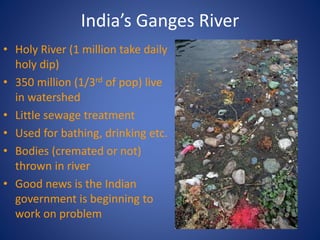
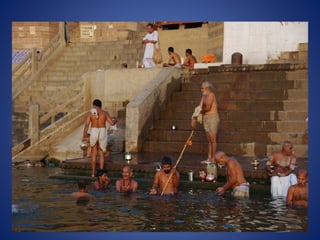
India’s Ganges River
• Holy River (1 million take daily
holy dip)
• 350 million (1/3rd of pop) live
in watershed
• Little sewage treatment
• Used for bathing, drinking etc.
• Bodies (cremated or not)
thrown in river
• Good news is the Indian
government is beginning to
work on problem
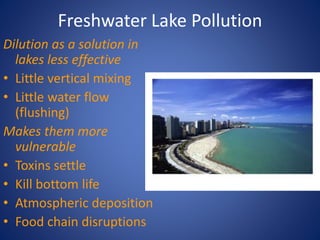
Freshwater Lake Pollution
Dilution as a solution in
lakes less effective
• Little vertical mixing
• Little water flow
(flushing)
Makes them more
vulnerable
• Toxins settle
• Kill bottom life
• Atmospheric deposition
• Food chain disruptions
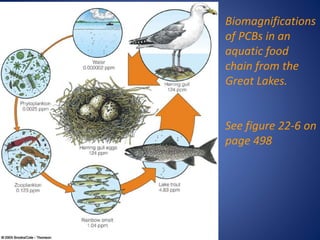
Biomagnifications
of PCBs in an
aquatic food
chain from the
Great Lakes.
See figure 22-6 on
page 498
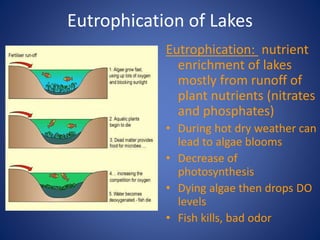
Eutrophication of Lakes
Eutrophication: nutrient
enrichment of lakes
mostly from runoff of
plant nutrients (nitrates
and phosphates)
• During hot dry weather can
lead to algae blooms
• Decrease of
photosynthesis
• Dying algae then drops DO
levels
• Fish kills, bad odor
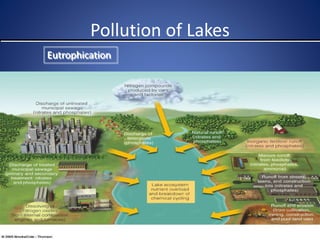
Pollution of Lakes
Eutrophication
Fig. 22-7 p. 499
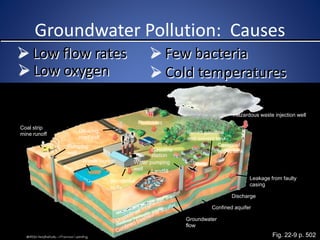
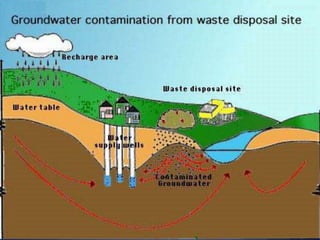
Groundwater Pollution: Causes
 Low flow rates  Few bacteria
 Cold temperatures
Coal strip
mine runoff
Pumping
well
Waste lagoon
Accidental
spills
Groundwater
flow
Confined aquifer
Discharge
Leakage from faulty
casing
Hazardous waste injection well
Pesticides
Gasoline
station
Buried gasoline
and solvent tank
Sewer
Cesspool
septic tank
De-icing
road salt
Water pumping
well Landfill
 Low oxygen
Fig. 22-9 p. 502
Groundwater Pollution Prevention
 Monitor aquifers
 Leak detection systems
 Strictly regulating hazardous waste disposal
 Store hazardous materials above ground
 Find less hazardous substitutes
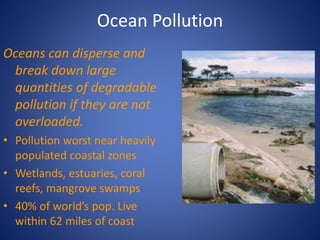
Ocean Pollution
Oceans can disperse and
break down large
quantities of degradable
pollution if they are not
overloaded.
• Pollution worst near heavily
populated coastal zones
• Wetlands, estuaries, coral
reefs, mangrove swamps
• 40% of world’s pop. Live
within 62 miles of coast
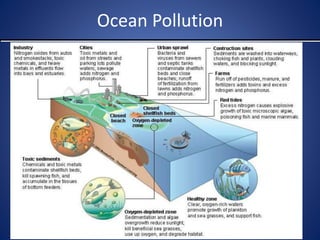
Ocean Pollution
Fig. 22-11 p. 504
Thank you

Ppt on water pollution

  • 1.
  • 2.
  • 3.
    What is waterpollution? Any chemical, biological, or physical change in water quality that has a harmful effect on living organisms or makes water unsuitable for desired usage.
  • 4.
    What is waterpollution? WHO: • 3.4 million premature deaths each year from waterborne diseases • 1.9 million from diarrhea • U.S. 1.5 million illnesses • 1993 Milwaukee 370,000 sick
  • 5.
    What is waterpollution? Need to study Table 22-1 Page 492 Infectious Agents: bacteria and viruses often from animal wastes Oxygen Demanding Wastes: organic waste that needs oxygen often from animal waste, paper mills and food processing. Inorganic Chemicals: Acids and toxic chemicals often from runoff, industries and household cleaners
  • 6.
    What is waterpollution? Organic Chemicals: oil, gasoline, plastics, detergents often from surface runoff, industries and cleaners Plant Nutrients: water soluble nitrates, ammonia and phosphates often from sewage, agriculture and urban fertilizers Sediment: soils and silts from land erosion can disrupt photosynthesis, destroy spawning grounds, clog rivers and streams Heat Pollution and Radioactivity: mostly from powerplants
  • 7.
    How do wemeasure water quality Bacterial Counts: Fecal coliform counts from intestines of animals • None per 100 ml for drinking • >200 per 100 ml for swimming Sources: human sewage, animals, birds, raccoons, etc. See table 22-2 on page 493 for diseases transmitted by contaminated drinking water.
  • 8.
    How do wemeasure water quality Dissolved Oxygen: BOD Biological Oxygen Demand…the amount of oxygen consumed by aquatic decomposers Chemical Analysis: looking for presence of inorganic or organic chemicals Suspended Sediment water clarity
  • 9.
    How do wemeasure water quality Indicator Species: organisms that give an idea of the health of the water body. • Mussels, oysters and clams filter water
  • 10.
    Types, Effects andSources of Water Pollution  Point sources  Nonpoint sources  Water quality Fig. 22-3 p. 494
  • 11.
    Point and NonpointSources NONPOINT SOURCES Urban streets Suburban development Wastewater treatment plant Rural homes Cropland Factory Animal feedlot POINT SOURCES Fig. 22-4 p. 494
  • 12.
    Major Sources ofWater Pollution Agriculture: by far the leader • Sediment, fertilizers, bacteria from livestock, food processing, salt from soil irrigation Industrial: factories and powerplants Mining: surface mining toxics, acids, sediment
  • 13.
    Freshwater Stream Pollution Flowingstreams can recover from moderate level of degradable water pollution if their flows are not reduced. • Natural biodegradation process • Does not work if overloaded or stream flow reduced • Does not work against non biodegradable pollutants
  • 14.
    Pollution of Streams Oxygen sag curve  Factors influencing recovery Fig. 22-5 p. 496 What factors will influence this oxygen sag curve?
  • 15.
    Two WorldsDeveloping Countries: Seriousand growing problem • Half of world’s 500 major rivers heavily polluted • Sewage treatment minimal $$$ • Law enforcement difficult • 10% of sewage in China treated • Economic growth with little $$$ to clean up
  • 16.
    India’s Ganges River •Holy River (1 million take daily holy dip) • 350 million (1/3rd of pop) live in watershed • Little sewage treatment • Used for bathing, drinking etc. • Bodies (cremated or not) thrown in river • Good news is the Indian government is beginning to work on problem
  • 18.
    Freshwater Lake Pollution Dilutionas a solution in lakes less effective • Little vertical mixing • Little water flow (flushing) Makes them more vulnerable • Toxins settle • Kill bottom life • Atmospheric deposition • Food chain disruptions
  • 19.
    Biomagnifications of PCBs inan aquatic food chain from the Great Lakes. See figure 22-6 on page 498
  • 20.
    Eutrophication of Lakes Eutrophication:nutrient enrichment of lakes mostly from runoff of plant nutrients (nitrates and phosphates) • During hot dry weather can lead to algae blooms • Decrease of photosynthesis • Dying algae then drops DO levels • Fish kills, bad odor
  • 21.
  • 22.
    Groundwater Pollution: Causes Low flow rates  Few bacteria  Cold temperatures Coal strip mine runoff Pumping well Waste lagoon Accidental spills Groundwater flow Confined aquifer Discharge Leakage from faulty casing Hazardous waste injection well Pesticides Gasoline station Buried gasoline and solvent tank Sewer Cesspool septic tank De-icing road salt Water pumping well Landfill  Low oxygen Fig. 22-9 p. 502
  • 23.
    Groundwater Pollution Prevention Monitor aquifers  Leak detection systems  Strictly regulating hazardous waste disposal  Store hazardous materials above ground  Find less hazardous substitutes
  • 25.
    Ocean Pollution Oceans candisperse and break down large quantities of degradable pollution if they are not overloaded. • Pollution worst near heavily populated coastal zones • Wetlands, estuaries, coral reefs, mangrove swamps • 40% of world’s pop. Live within 62 miles of coast
  • 26.
  • 29.