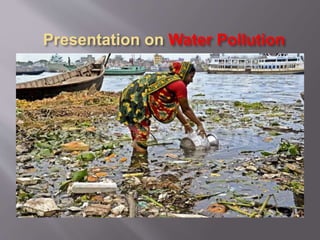
Presentation on Water Pollution
Water pollution is the contamination of Water
bodies(e.g. lakes, rivers, oceans, aquifers and
groundwater). This form of environmental
degradation occurs when pollutants are
directly or indirectly discharged into water
bodies without adequate treatment to remove
harmful compounds.
Types
1. Surface water pollution
2. Ground water pollution
3. Microbial pollution
4. Oxygen depletion
pollution
5. Nutrient pollution
6. Suspended matter
pollution
7. Chemical pollution
Sources
1. Direct Sources
2.Indirect Sources
o Direct Sources: Direct sources
include effluent outfalls from
factories, refineries, waste
treatment plants etc..
o Indirect Source: Indirect
sources include contaminants
that enter the water supply
from soils/groundwater
systems and from the
atmosphere via rain water.
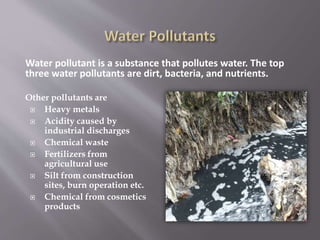
Water pollutant is a substance that pollutes water. The top
three water pollutants are dirt, bacteria, and nutrients.
Other pollutants are
 Heavy metals
 Acidity caused by
industrial discharges
 Chemical waste
 Fertilizers from
agricultural use
 Silt from construction
sites, burn operation etc.
 Chemical from cosmetics
products
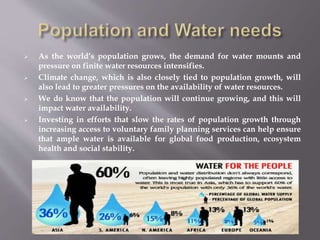
 As the world’s population grows, the demand for water mounts and
pressure on finite water resources intensifies.
 Climate change, which is also closely tied to population growth, will
also lead to greater pressures on the availability of water resources.
 We do know that the population will continue growing, and this will
impact water availability.
 Investing in efforts that slow the rates of population growth through
increasing access to voluntary family planning services can help ensure
that ample water is available for global food production, ecosystem
health and social stability.
Effects on Ecosystem
-Ecosystems can be severely affected or damaged
by water pollution.
-Contamination of groundwater from pesticides
causes damage to the reproductive system in the
wildlife ecosystem.
-Water pollution kills life that inhabits the water-
based ecosystem, disrupting the natural food
chain.
-The non-biodegradable pesticides and chemicals
cause mass destruction of aquatic life.
Effects on Animal Health
 Water pollution kills life that depends on these water
bodies.
 Fishes and the aquatic organisms are poisoned due to
industrial chemicals and agricultural pesticides.
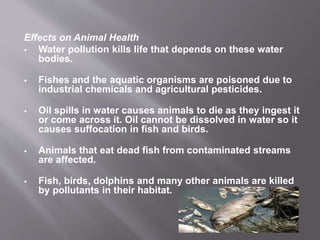
 Oil spills in water causes animals to die as they ingest it
or come across it. Oil cannot be dissolved in water so it
causes suffocation in fish and birds.
 Animals that eat dead fish from contaminated streams
are affected.
 Fish, birds, dolphins and many other animals are killed
by pollutants in their habitat.
Effects on Human Health
 Diseases like hepatitis are caused by eating
seafood that is poisoned or contaminated.
 In developing nations, there are frequent outbreaks
of cholera and diseases due to poor drinking water
quality from contaminated waters.
 Polluted drinking water causes cholera or typhoid
infections and also diarrheal.
 Chemicals like fluoride, arsenic, lead, chlorine and
petrochemicals in water can causes adverse effect
on human health.
 Arsenic poisoning cause serious liver and nervous
system damage, vascular disease and skin cancer.
• Encourage smart agricultural practices.
• Reduce urban/suburban runoff of lawn fertilizers and
pesticides...
• Prevent further destruction wetlands, and reestablish
them wherever possible..
• Improve sewage treatment.
More specifically, we should..
• Get going on fixing outdated municipal water treatment
plants.
• Fully fund the Clean Water State Revolving Fund.
• Help localities set up programs that ensure system
maintenance and monitoring
 Educating the public about its harmful effects to
human and the environment.
 Be careful about what you throw down your sink
or toilet. Do not throw paints, oil or other forms of
litter down the drain.
 Take precaution while using pesticides and
fertilizers. Do not overuse them.
 Do not throw litter into rivers or lakes. Make sure
to collect the litter and put it in a nearby dustbin.
 Implementing strong environmental laws.
 Refuse water pollution, recycle water, and reduce
use of water.
In this scenario, Water Pollution has become one of
the biggest concerns in many developing countries all
around the world.
Groundwater contamination, lack of knowledge on
how to use water properly and poor sanitation
systems are causes of water pollution. Moreover
wastes dumped from factories into the sea or river
body when drank or used by many people cause
arsenic damage which is very problematic for us.
There are ways to fix and even get rid of such a huge
problem once and for all. If preventive measures are
not taken, this will continue to be a very life
threatening problem all over the globe.
Water pollution

Water pollution

  • 1.
  • 2.
    Water pollution isthe contamination of Water bodies(e.g. lakes, rivers, oceans, aquifers and groundwater). This form of environmental degradation occurs when pollutants are directly or indirectly discharged into water bodies without adequate treatment to remove harmful compounds.
  • 3.
    Types 1. Surface waterpollution 2. Ground water pollution 3. Microbial pollution 4. Oxygen depletion pollution 5. Nutrient pollution 6. Suspended matter pollution 7. Chemical pollution Sources 1. Direct Sources 2.Indirect Sources o Direct Sources: Direct sources include effluent outfalls from factories, refineries, waste treatment plants etc.. o Indirect Source: Indirect sources include contaminants that enter the water supply from soils/groundwater systems and from the atmosphere via rain water.
  • 4.
    Water pollutant isa substance that pollutes water. The top three water pollutants are dirt, bacteria, and nutrients. Other pollutants are  Heavy metals  Acidity caused by industrial discharges  Chemical waste  Fertilizers from agricultural use  Silt from construction sites, burn operation etc.  Chemical from cosmetics products
  • 5.
     As theworld’s population grows, the demand for water mounts and pressure on finite water resources intensifies.  Climate change, which is also closely tied to population growth, will also lead to greater pressures on the availability of water resources.  We do know that the population will continue growing, and this will impact water availability.  Investing in efforts that slow the rates of population growth through increasing access to voluntary family planning services can help ensure that ample water is available for global food production, ecosystem health and social stability.
  • 6.
    Effects on Ecosystem -Ecosystemscan be severely affected or damaged by water pollution. -Contamination of groundwater from pesticides causes damage to the reproductive system in the wildlife ecosystem. -Water pollution kills life that inhabits the water- based ecosystem, disrupting the natural food chain. -The non-biodegradable pesticides and chemicals cause mass destruction of aquatic life.
  • 7.
    Effects on AnimalHealth  Water pollution kills life that depends on these water bodies.  Fishes and the aquatic organisms are poisoned due to industrial chemicals and agricultural pesticides.  Oil spills in water causes animals to die as they ingest it or come across it. Oil cannot be dissolved in water so it causes suffocation in fish and birds.  Animals that eat dead fish from contaminated streams are affected.  Fish, birds, dolphins and many other animals are killed by pollutants in their habitat.
  • 8.
    Effects on HumanHealth  Diseases like hepatitis are caused by eating seafood that is poisoned or contaminated.  In developing nations, there are frequent outbreaks of cholera and diseases due to poor drinking water quality from contaminated waters.  Polluted drinking water causes cholera or typhoid infections and also diarrheal.  Chemicals like fluoride, arsenic, lead, chlorine and petrochemicals in water can causes adverse effect on human health.  Arsenic poisoning cause serious liver and nervous system damage, vascular disease and skin cancer.
  • 9.
    • Encourage smartagricultural practices. • Reduce urban/suburban runoff of lawn fertilizers and pesticides... • Prevent further destruction wetlands, and reestablish them wherever possible.. • Improve sewage treatment. More specifically, we should.. • Get going on fixing outdated municipal water treatment plants. • Fully fund the Clean Water State Revolving Fund. • Help localities set up programs that ensure system maintenance and monitoring
  • 10.
     Educating thepublic about its harmful effects to human and the environment.  Be careful about what you throw down your sink or toilet. Do not throw paints, oil or other forms of litter down the drain.  Take precaution while using pesticides and fertilizers. Do not overuse them.  Do not throw litter into rivers or lakes. Make sure to collect the litter and put it in a nearby dustbin.  Implementing strong environmental laws.  Refuse water pollution, recycle water, and reduce use of water.
  • 11.
    In this scenario,Water Pollution has become one of the biggest concerns in many developing countries all around the world. Groundwater contamination, lack of knowledge on how to use water properly and poor sanitation systems are causes of water pollution. Moreover wastes dumped from factories into the sea or river body when drank or used by many people cause arsenic damage which is very problematic for us. There are ways to fix and even get rid of such a huge problem once and for all. If preventive measures are not taken, this will continue to be a very life threatening problem all over the globe.