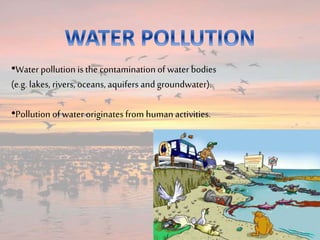
•Water pollution is the contamination of water bodies
(e.g. lakes, rivers, oceans, aquifers andgroundwater).
•Pollution of water originates from human activities.
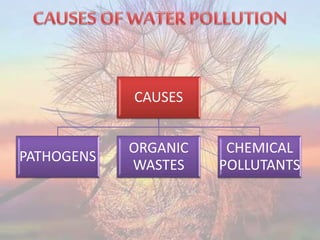
CAUSES
PATHOGENS
ORGANIC
WASTES
CHEMICAL
POLLUTANTS
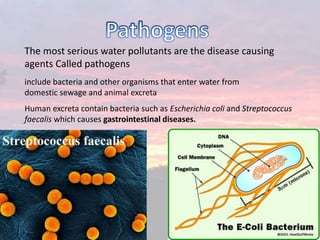
The most serious water pollutants are the disease causing
agents Called pathogens
include bacteria and other organisms that enter water from
domestic sewage and animal excreta
Human excreta contain bacteria such as Escherichia coli and Streptococcus
faecalis which causes gastrointestinal diseases.
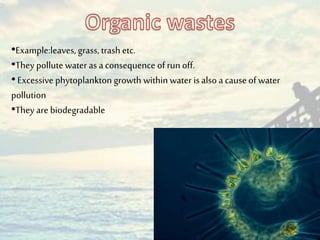
•Example:leaves, grass, trash etc.
•They pollute water as aconsequence of run off.
•Excessive phytoplankton growth within water isalso a cause of water
pollution
•They are biodegradable
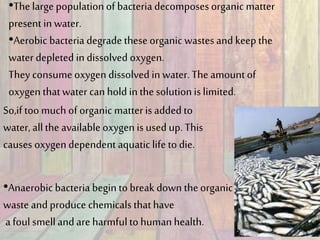
•The large populationof bacteria decomposes organic matter
present in water.
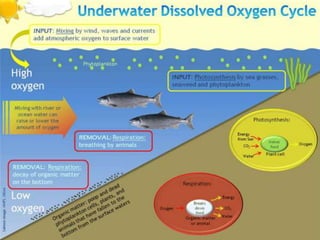
•Aerobic bacteria degrade theseorganic wastes and keep the
water depleted in dissolved oxygen.
They consumeoxygen dissolved in water. The amountof
oxygen thatwater can hold inthe solutionis limited.
So,if too much of organic matteris added to
water, allthe available oxygen is used up. This
causes oxygen dependent aquaticlife to die.
•Anaerobic bacteria begin to break down theorganic
waste and produce chemicals thathave
a foul smelland are harmfulto humanhealth.
Amount of oxygen required by bacteria to break down the
organic matter present in a certain volume of a sample of water,
is called Biochemical Oxygen Demand (BOD).
Clean water would have BOD value of less than 5 ppm whereas
highly polluted water could have a BOD value of 17 ppm or
more.
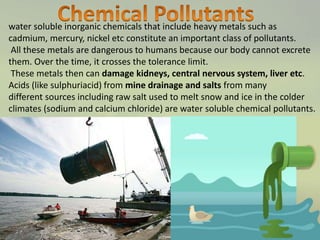
water soluble inorganic chemicals that include heavy metals such as
cadmium, mercury, nickel etc constitute an important class of pollutants.
All these metals are dangerous to humans because our body cannot excrete
them. Over the time, it crosses the tolerance limit.
These metals then can damage kidneys, central nervous system, liver etc.
Acids (like sulphuriacid) from mine drainage and salts from many
different sources including raw salt used to melt snow and ice in the colder
climates (sodium and calcium chloride) are water soluble chemical pollutants.
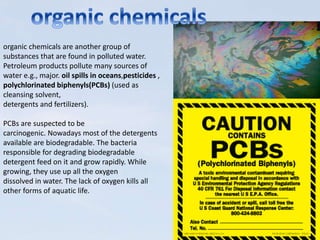
organic chemicals are another group of
substances that are found in polluted water.
Petroleum products pollute many sources of
water e.g., major. oil spills in oceans,pesticides ,
polychlorinated biphenyls(PCBs) (used as
cleansing solvent,
detergents and fertilizers).
PCBs are suspected to be
carcinogenic. Nowadays most of the detergents
available are biodegradable. The bacteria
responsible for degrading biodegradable
detergent feed on it and grow rapidly. While
growing, they use up all the oxygen
dissolved in water. The lack of oxygen kills all
other forms of aquatic life.
Fertilizers contain phosphates as
additives. The addition of phosphates in water
enhances algae growth. Such profuse growth
of algae, covers the water surface and reduces
the oxygen concentration in water. This leads
to anaerobic conditions, commonly with
accumulation of abnoxious decay and animal
death. Thus, bloom-infested water inhibits the
growth of other living organisms in the
water body. This process in which nutrient
enriched water bodies support a dense plant
population, which kills animal life by depriving
it of oxygen and results in subsequent loss of
biodiversity is known as Eutrophication.
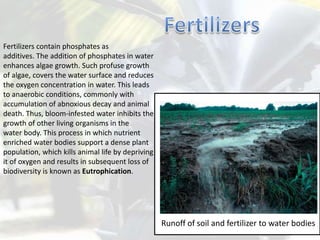
Runoff of soil and fertilizer to water bodies
deficiency in drinking water is harmful to
man and causes diseases such as tooth decay.
Soluble fluoride is often added to drinking
water to bring its concentration upto 1 ppm
or 1 mg dm–3. The F– ions make the enamel on
teeth much harder by converting
hydroxyapatite, [3(Ca3(PO4)2.Ca(OH)2], the
enamel on the surface of the teeth, into much
harder fluorapatite, [3(Ca3(PO4)2.CaF2].
However, F– ion concentration above 2 ppm
causes brown mottling of teeth. At the same
time, excess fluoride (over 10 ppm) causes
harmful effect to bones and teeth, as reported
from some parts of Rajasthan.
Lead: Drinking water gets contaminated with
lead when lead pipes are used for
transportation of water. The prescribed upper
limit concentration of lead in drinking water
is about 50 ppb. Lead can damage kidney,
liver, reproductive system etc.
Sulphate: Excessive sulphate (>500 ppm) in
drinking water causes laxative effect, otherwise
at moderate levels it is harmless.
Nitrate: The maximum limit of nitrate in
drinking water is 50 ppm. Excess nitrate in
drinking water can cause disease such as
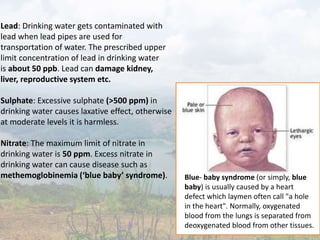
methemoglobinemia (‘blue baby’ syndrome). Blue- baby syndrome (or simply, blue
baby) is usually caused by a heart
defect which laymen often call "a hole
in the heart". Normally, oxygenated
blood from the lungs is separated from
deoxygenated blood from other tissues.
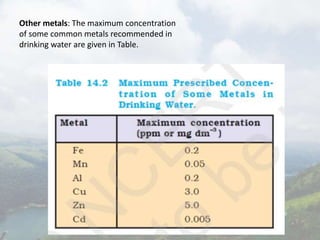
Other metals: The maximum concentration
of some common metals recommended in
drinking water are given in Table.
Water pollution

Water pollution

  • 2.
    •Water pollution isthe contamination of water bodies (e.g. lakes, rivers, oceans, aquifers andgroundwater). •Pollution of water originates from human activities.
  • 3.
  • 4.
    The most seriouswater pollutants are the disease causing agents Called pathogens include bacteria and other organisms that enter water from domestic sewage and animal excreta Human excreta contain bacteria such as Escherichia coli and Streptococcus faecalis which causes gastrointestinal diseases.
  • 5.
    •Example:leaves, grass, trashetc. •They pollute water as aconsequence of run off. •Excessive phytoplankton growth within water isalso a cause of water pollution •They are biodegradable
  • 6.
    •The large populationofbacteria decomposes organic matter present in water. •Aerobic bacteria degrade theseorganic wastes and keep the water depleted in dissolved oxygen. They consumeoxygen dissolved in water. The amountof oxygen thatwater can hold inthe solutionis limited. So,if too much of organic matteris added to water, allthe available oxygen is used up. This causes oxygen dependent aquaticlife to die. •Anaerobic bacteria begin to break down theorganic waste and produce chemicals thathave a foul smelland are harmfulto humanhealth.
  • 8.
    Amount of oxygenrequired by bacteria to break down the organic matter present in a certain volume of a sample of water, is called Biochemical Oxygen Demand (BOD). Clean water would have BOD value of less than 5 ppm whereas highly polluted water could have a BOD value of 17 ppm or more.
  • 9.
    water soluble inorganicchemicals that include heavy metals such as cadmium, mercury, nickel etc constitute an important class of pollutants. All these metals are dangerous to humans because our body cannot excrete them. Over the time, it crosses the tolerance limit. These metals then can damage kidneys, central nervous system, liver etc. Acids (like sulphuriacid) from mine drainage and salts from many different sources including raw salt used to melt snow and ice in the colder climates (sodium and calcium chloride) are water soluble chemical pollutants.
  • 10.
    organic chemicals areanother group of substances that are found in polluted water. Petroleum products pollute many sources of water e.g., major. oil spills in oceans,pesticides , polychlorinated biphenyls(PCBs) (used as cleansing solvent, detergents and fertilizers). PCBs are suspected to be carcinogenic. Nowadays most of the detergents available are biodegradable. The bacteria responsible for degrading biodegradable detergent feed on it and grow rapidly. While growing, they use up all the oxygen dissolved in water. The lack of oxygen kills all other forms of aquatic life.
  • 11.
    Fertilizers contain phosphatesas additives. The addition of phosphates in water enhances algae growth. Such profuse growth of algae, covers the water surface and reduces the oxygen concentration in water. This leads to anaerobic conditions, commonly with accumulation of abnoxious decay and animal death. Thus, bloom-infested water inhibits the growth of other living organisms in the water body. This process in which nutrient enriched water bodies support a dense plant population, which kills animal life by depriving it of oxygen and results in subsequent loss of biodiversity is known as Eutrophication. Runoff of soil and fertilizer to water bodies
  • 12.
    deficiency in drinkingwater is harmful to man and causes diseases such as tooth decay. Soluble fluoride is often added to drinking water to bring its concentration upto 1 ppm or 1 mg dm–3. The F– ions make the enamel on teeth much harder by converting hydroxyapatite, [3(Ca3(PO4)2.Ca(OH)2], the enamel on the surface of the teeth, into much harder fluorapatite, [3(Ca3(PO4)2.CaF2]. However, F– ion concentration above 2 ppm causes brown mottling of teeth. At the same time, excess fluoride (over 10 ppm) causes harmful effect to bones and teeth, as reported from some parts of Rajasthan.
  • 13.
    Lead: Drinking watergets contaminated with lead when lead pipes are used for transportation of water. The prescribed upper limit concentration of lead in drinking water is about 50 ppb. Lead can damage kidney, liver, reproductive system etc. Sulphate: Excessive sulphate (>500 ppm) in drinking water causes laxative effect, otherwise at moderate levels it is harmless. Nitrate: The maximum limit of nitrate in drinking water is 50 ppm. Excess nitrate in drinking water can cause disease such as methemoglobinemia (‘blue baby’ syndrome). Blue- baby syndrome (or simply, blue baby) is usually caused by a heart defect which laymen often call "a hole in the heart". Normally, oxygenated blood from the lungs is separated from deoxygenated blood from other tissues.
  • 14.
    Other metals: Themaximum concentration of some common metals recommended in drinking water are given in Table.