Biochemistry 
Dr Ayyub Patel (MBC222 -226-229) 
Lipids 
Structure & Function
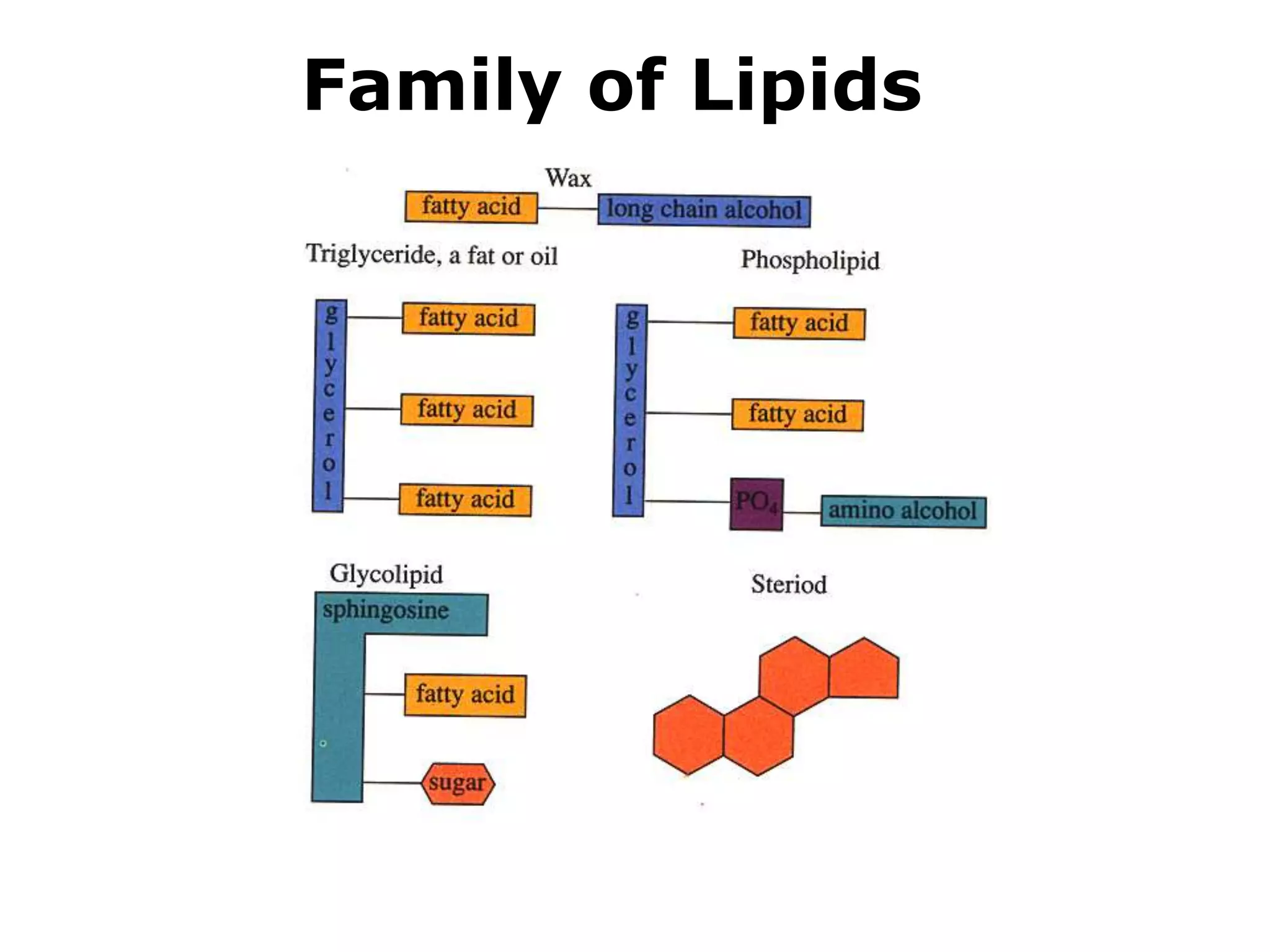
Family of Lipids
Lipids 
 Lipids: family of biochemicals that are 
soluble in organic solvents but not in water 
 Classes: 
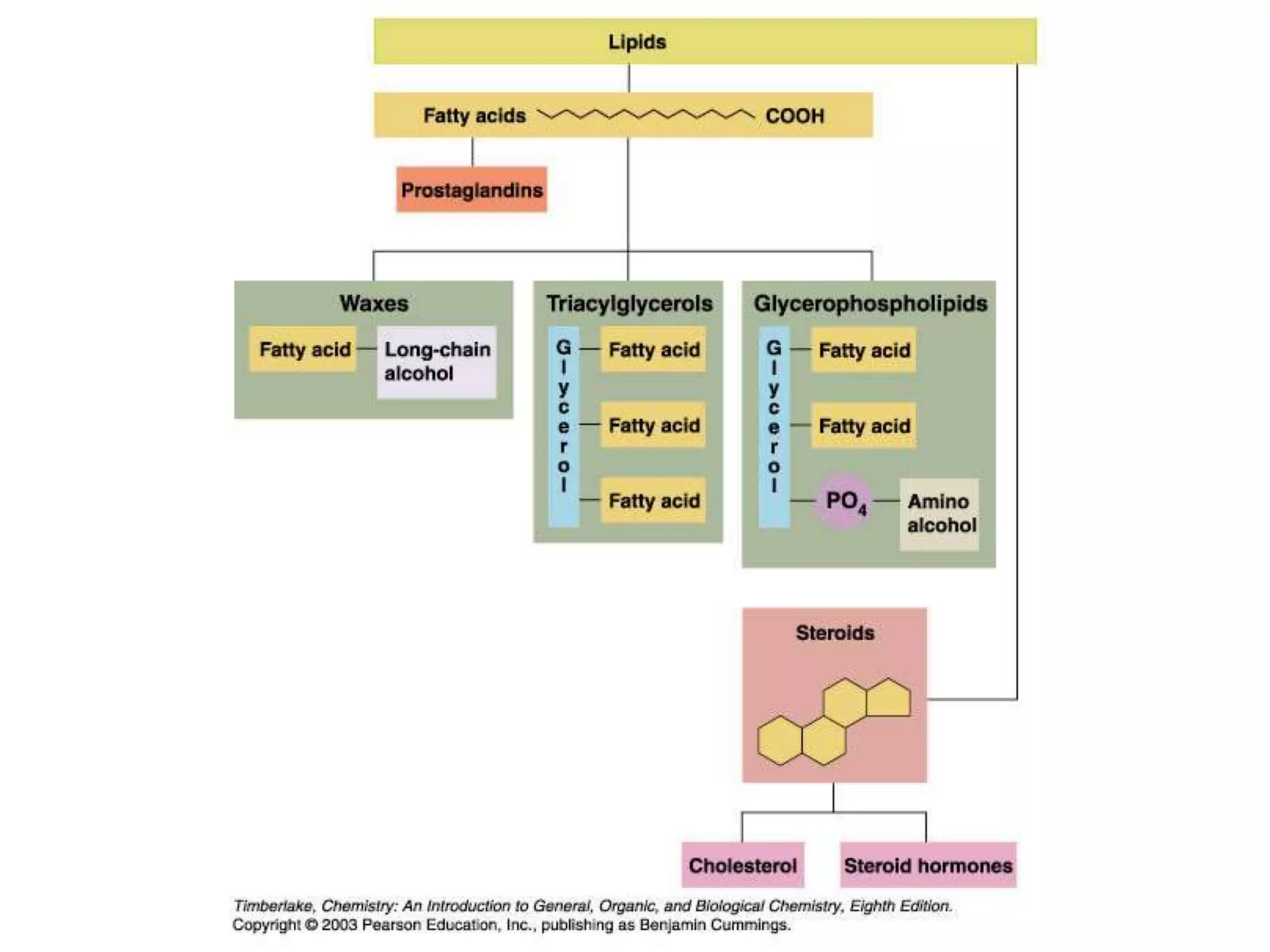
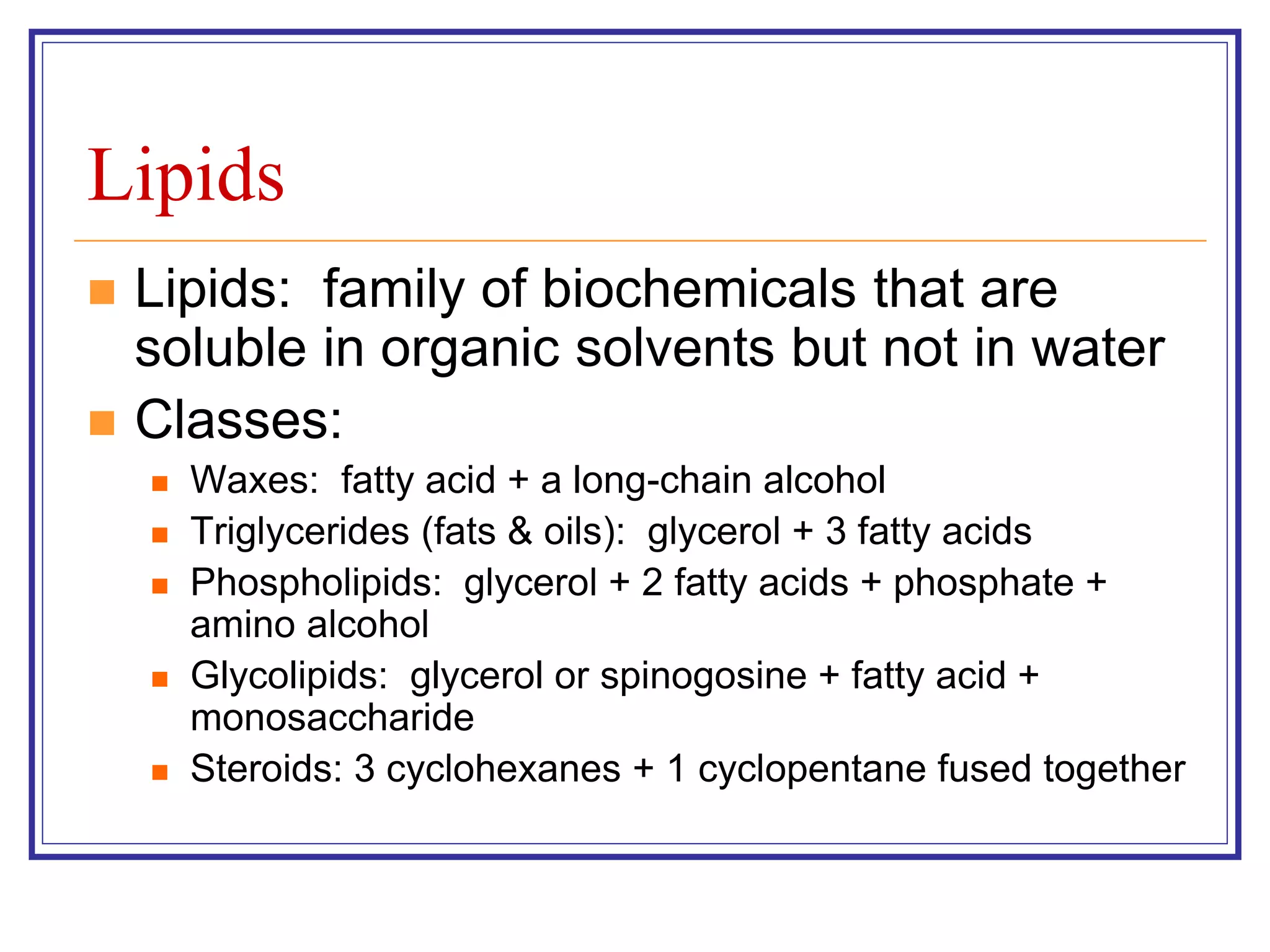
 Waxes: fatty acid + a long-chain alcohol 
 Triglycerides (fats & oils): glycerol + 3 fatty acids 
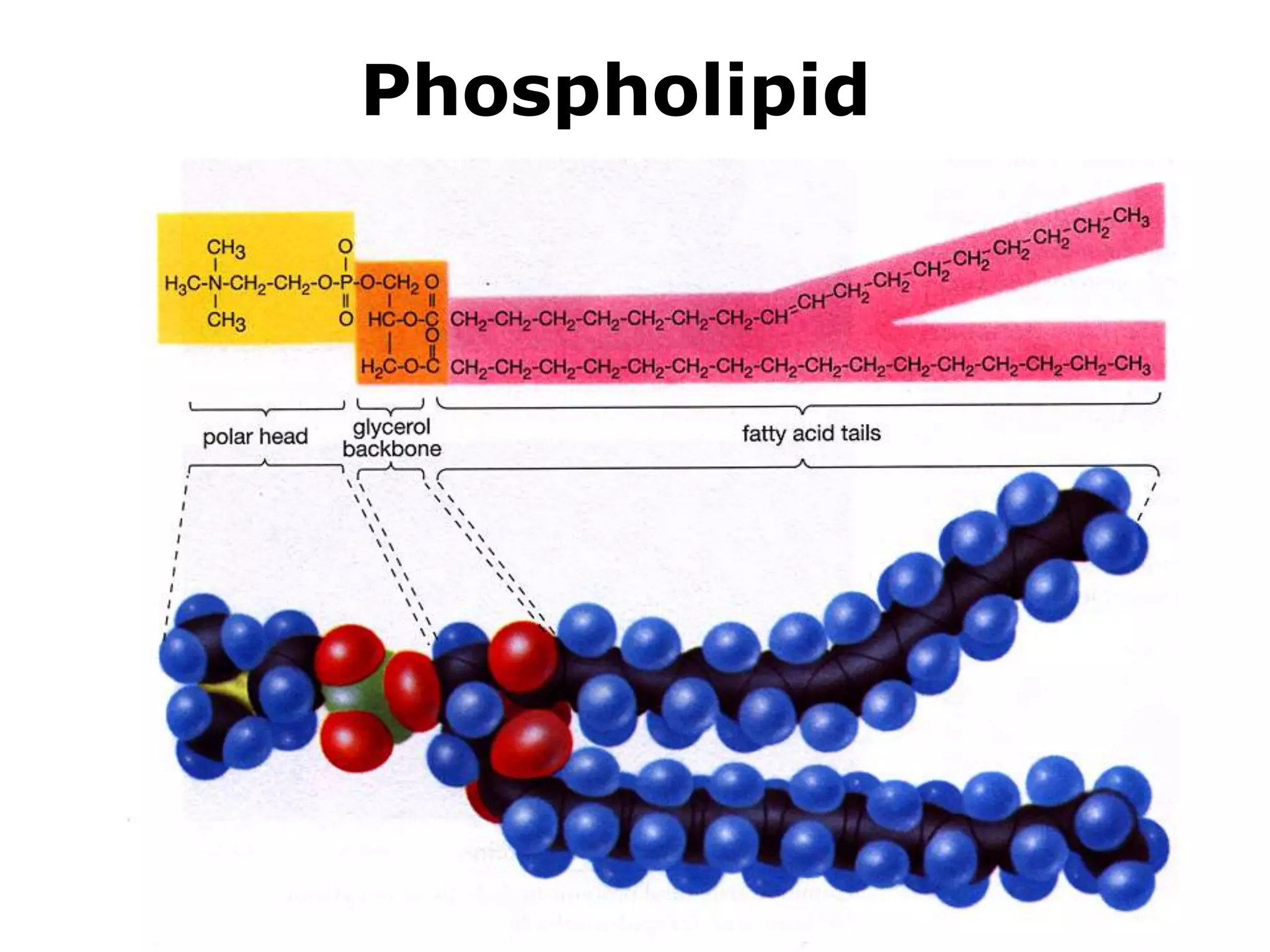
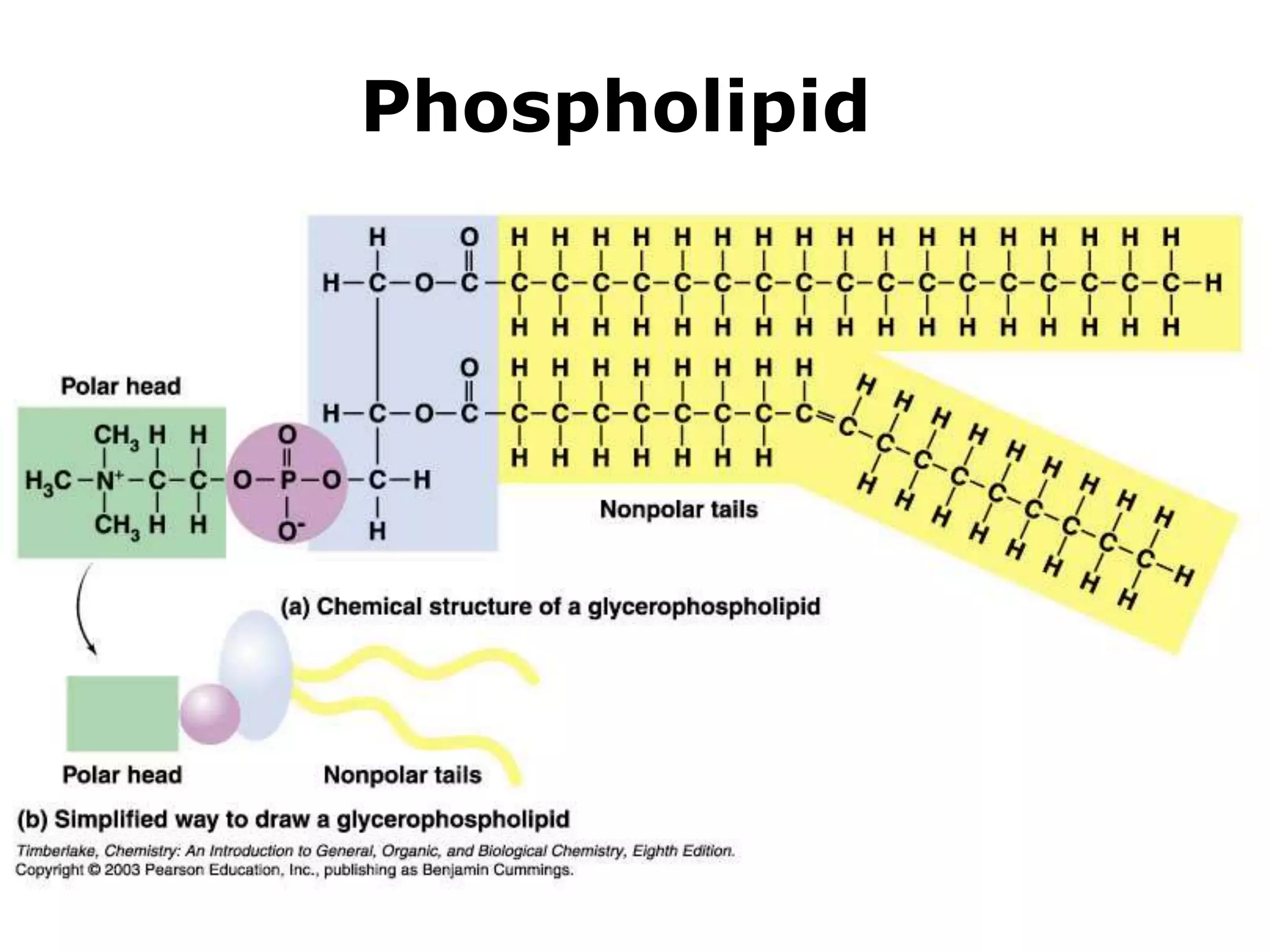
 Phospholipids: glycerol + 2 fatty acids + phosphate + 
amino alcohol 
 Glycolipids: glycerol or spinogosine + fatty acid + 
monosaccharide 
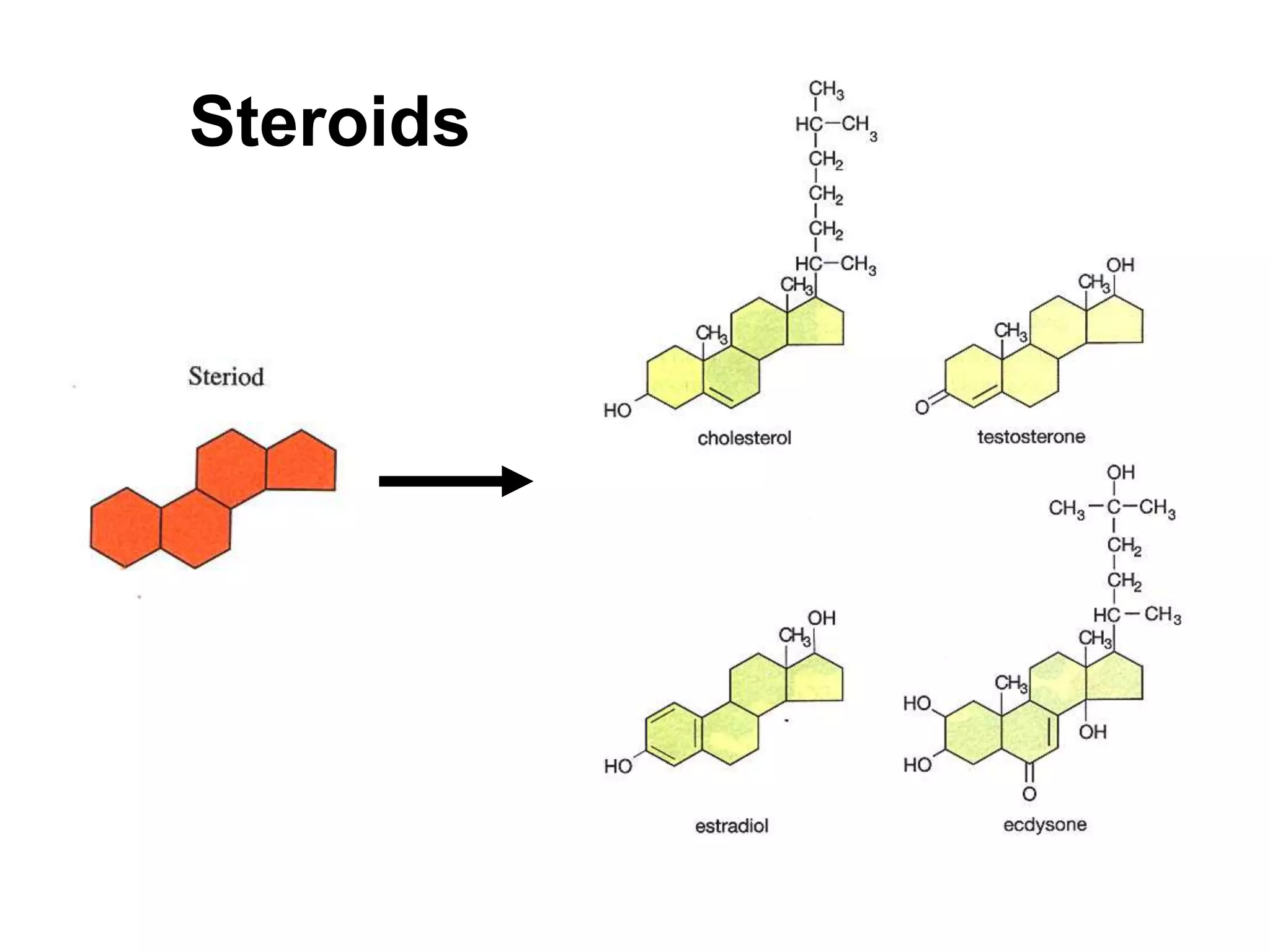
 Steroids: 3 cyclohexanes + 1 cyclopentane fused together
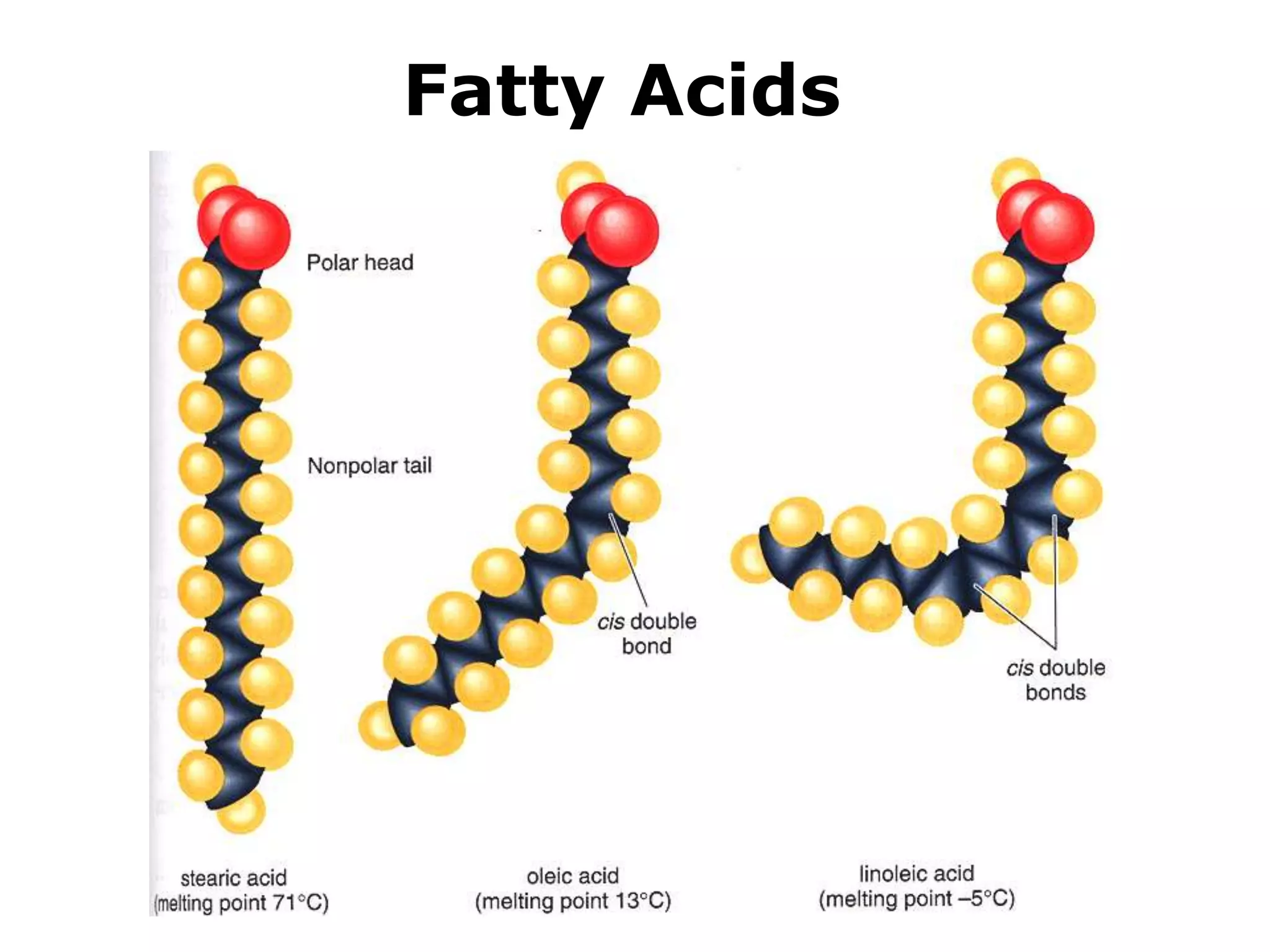
Fatty Acids
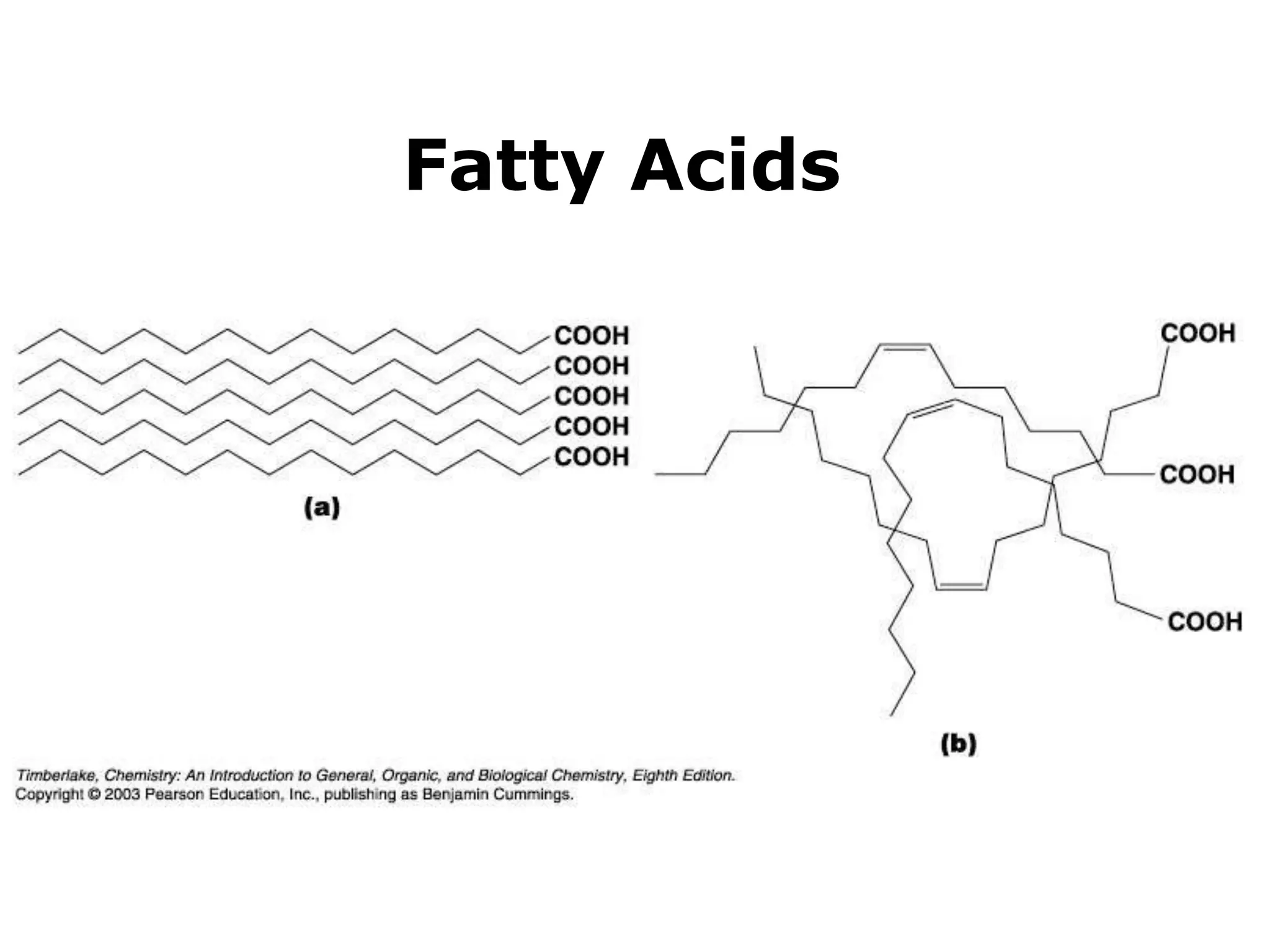
Fatty Acids
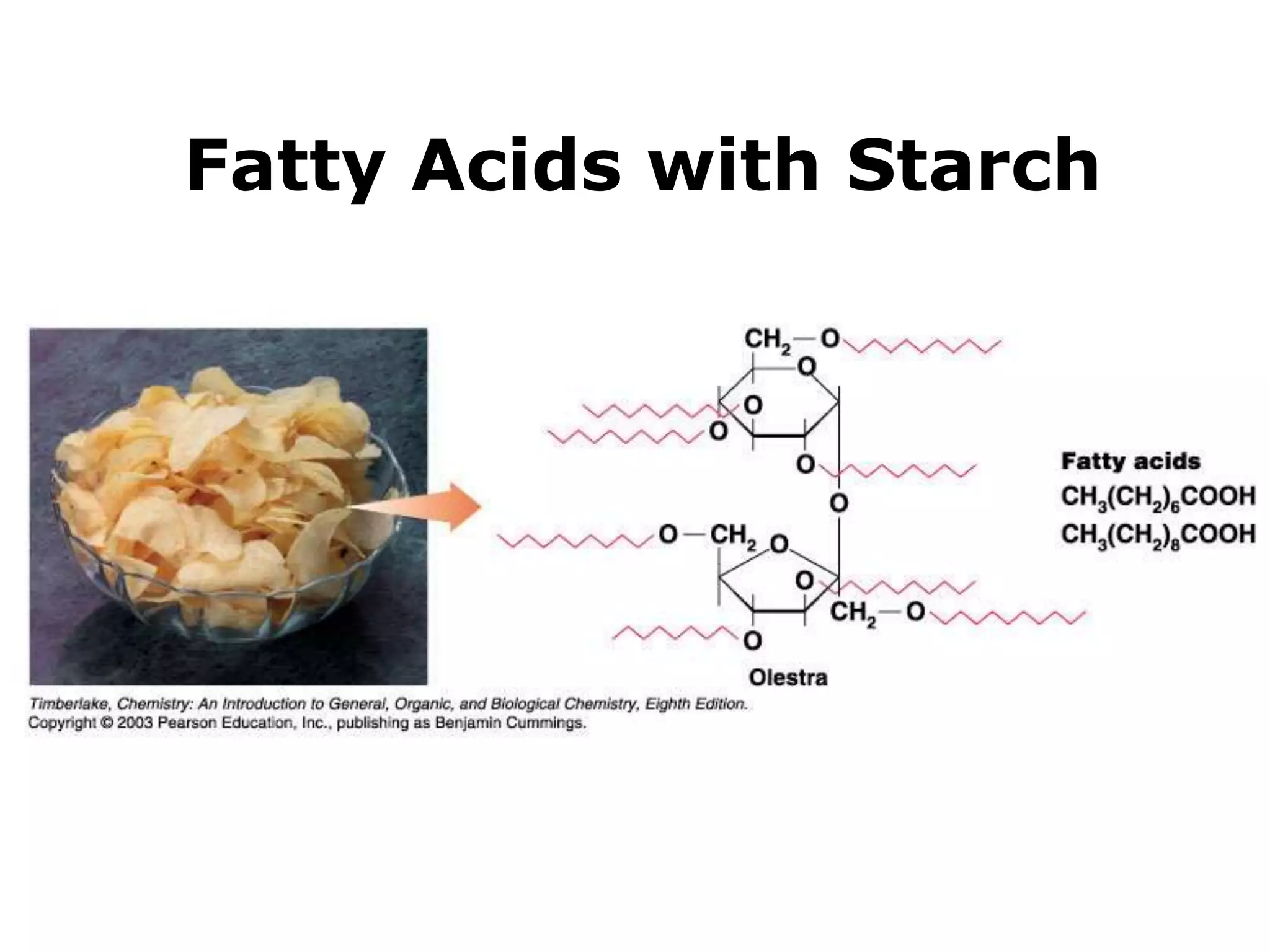
Fatty Acids with Starch
Fatty Acids 
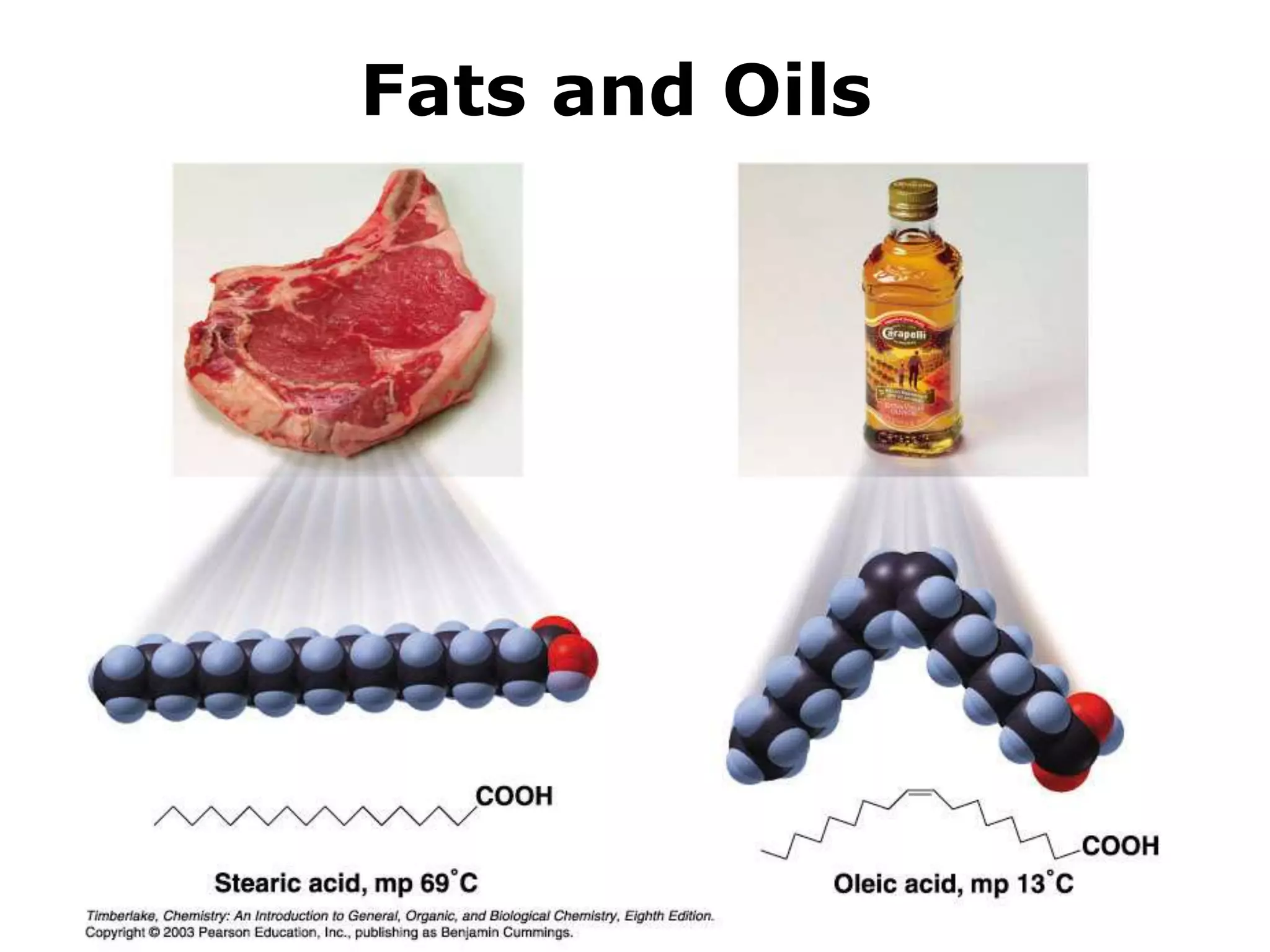
 Fatty acids: long-chain carboxylic acids 
 Form fats and oils (usually have an even 
number of carbons) 
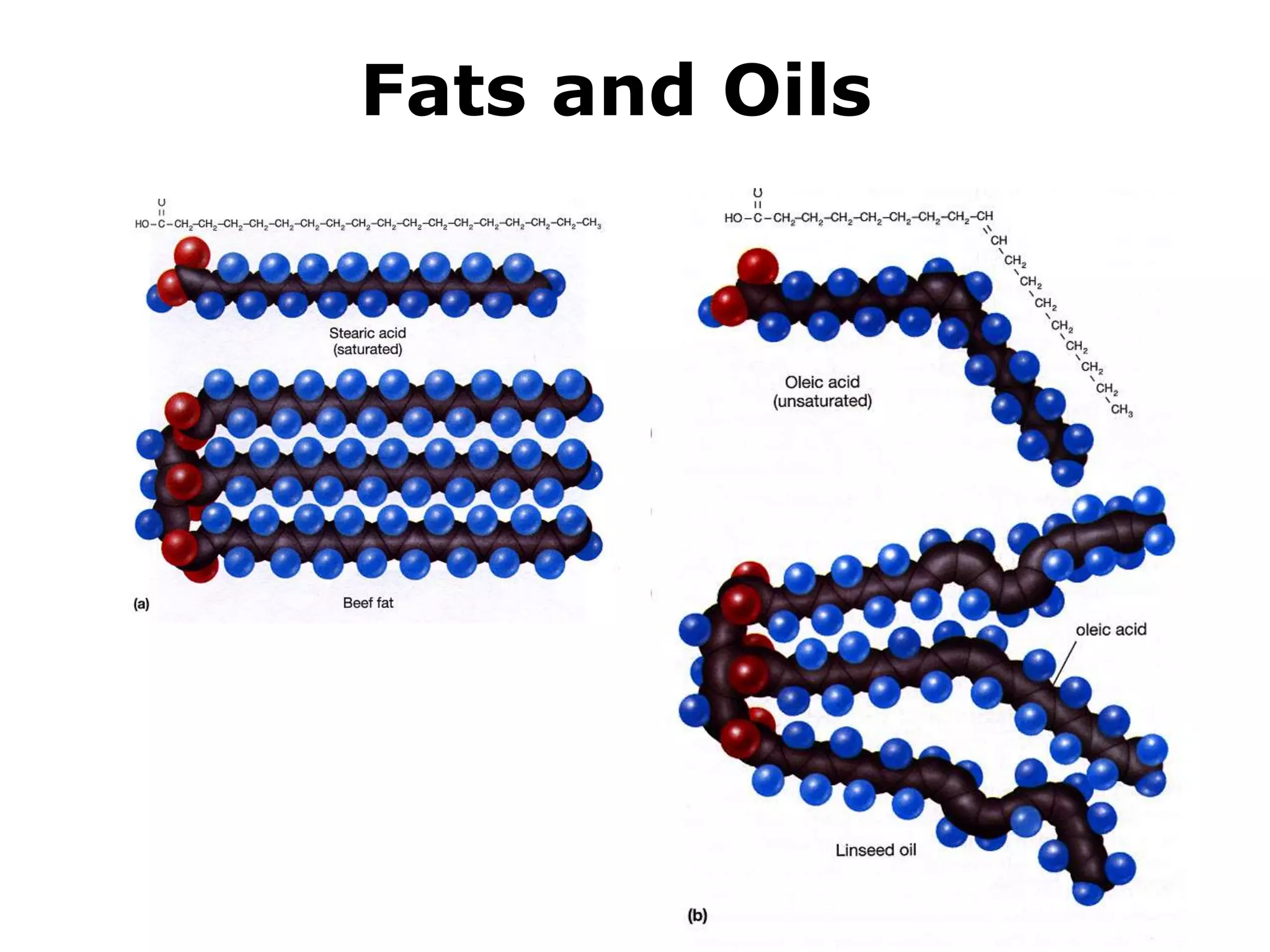
 Saturated fatty acid: all single bonds 
 Unsaturated fatty acid: at least 1 double 
bond 
 Polyunsaturated: two or more double bonds 
 Most double bonds are cis- bonds that cause a bend in 
the chain
Fatty Acids 
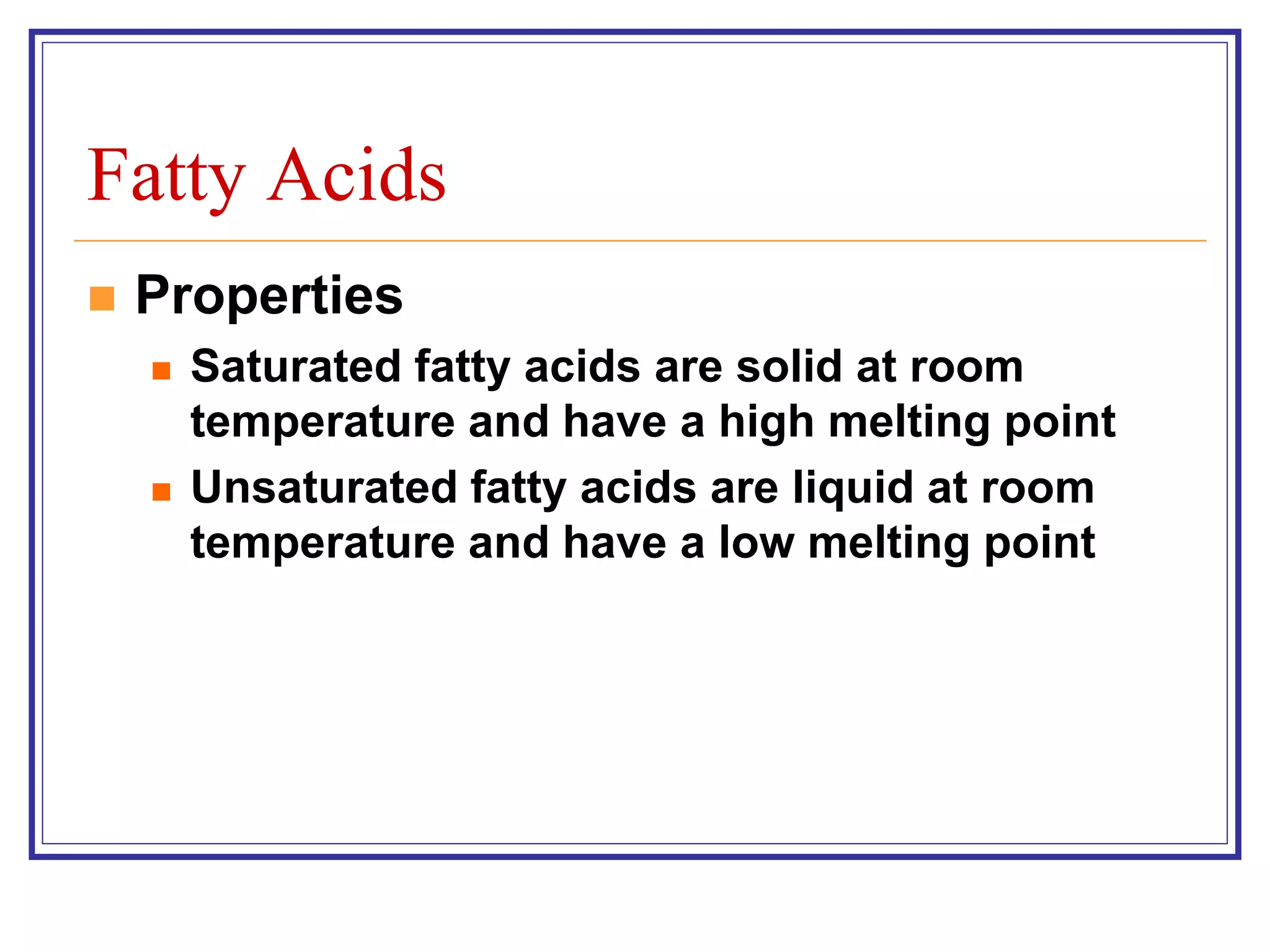
 Properties 
 Saturated fatty acids are solid at room 
temperature and have a high melting point 
 Unsaturated fatty acids are liquid at room 
temperature and have a low melting point
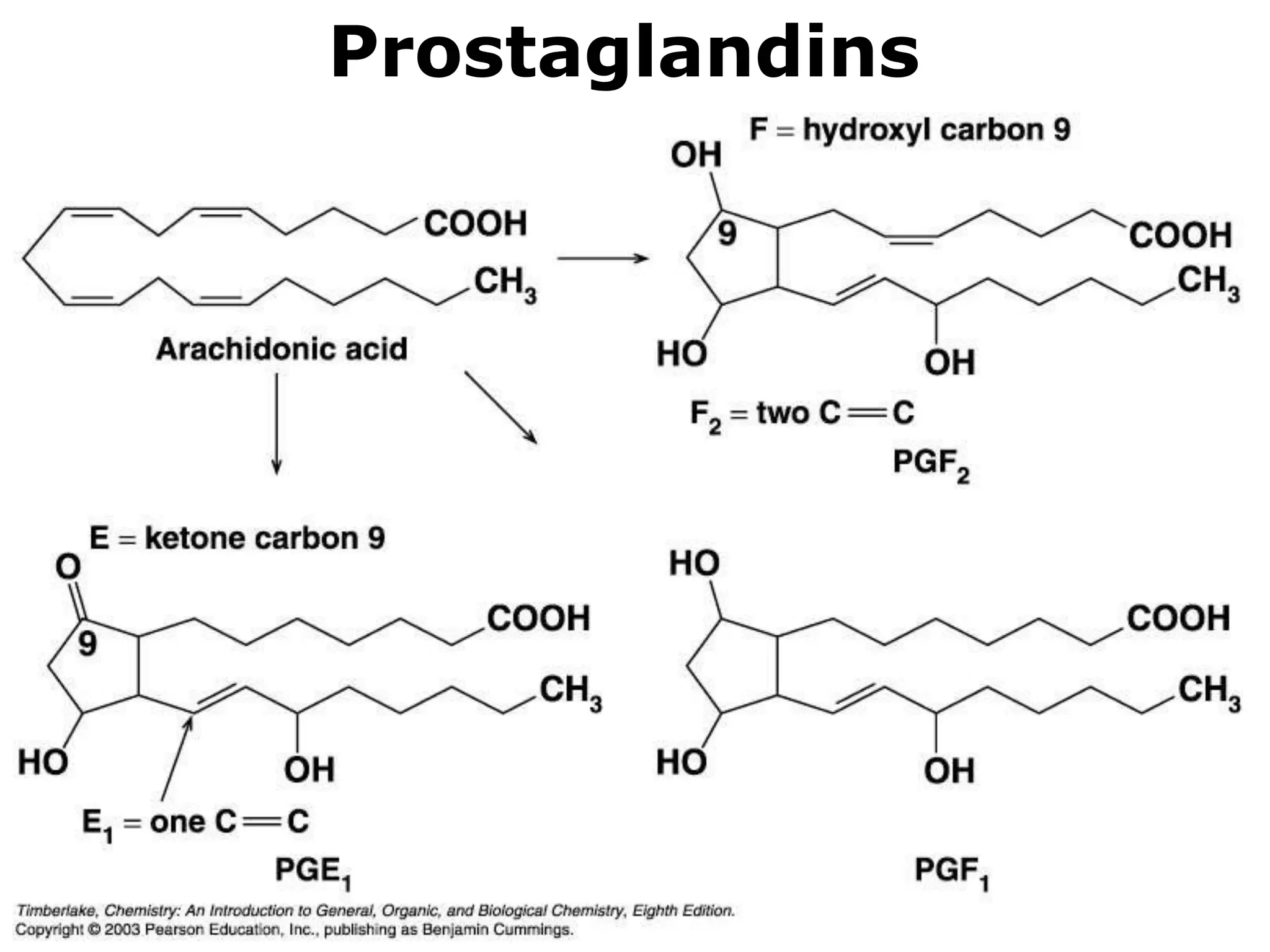
Prostaglandins
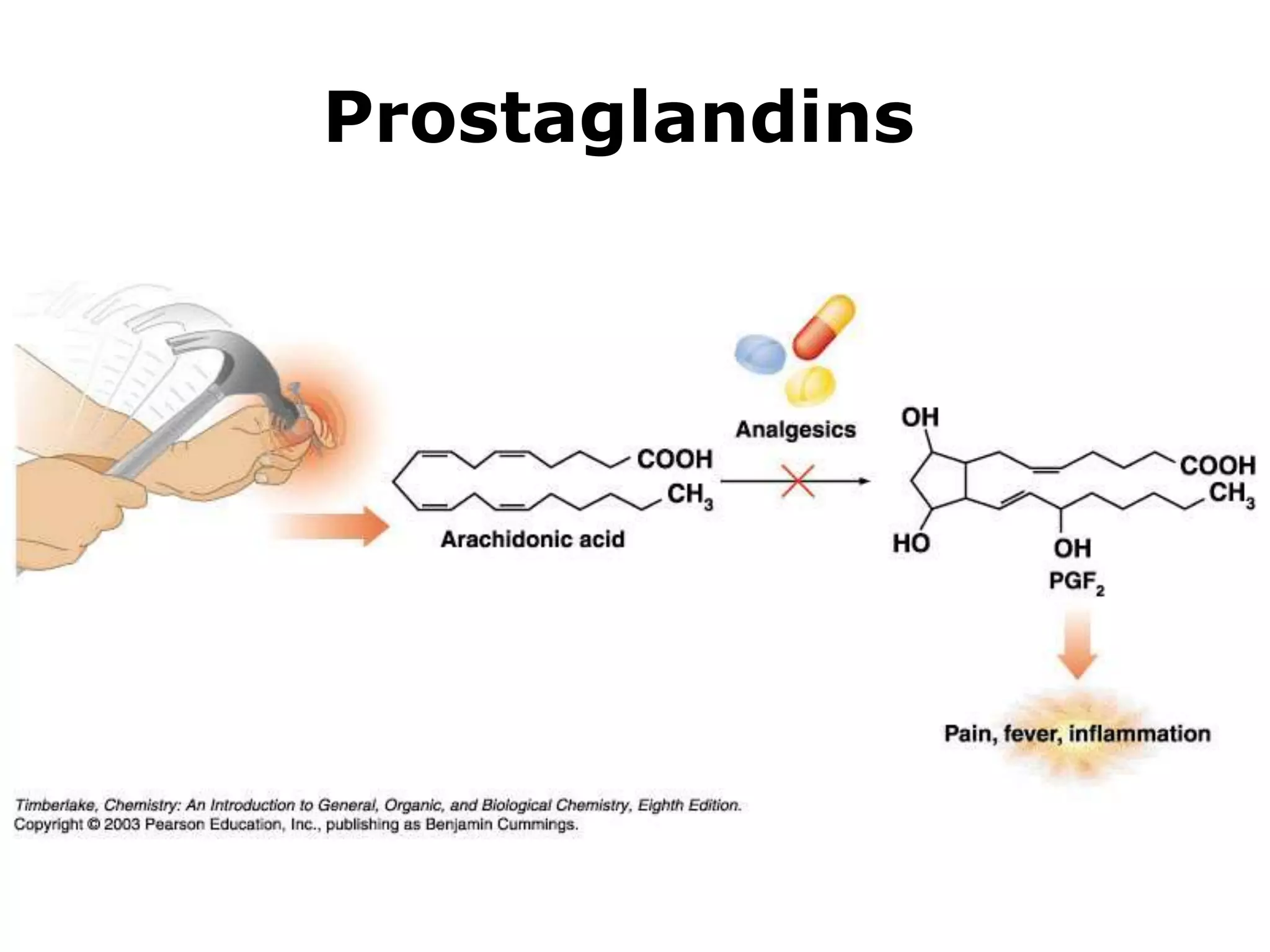
Prostaglandins
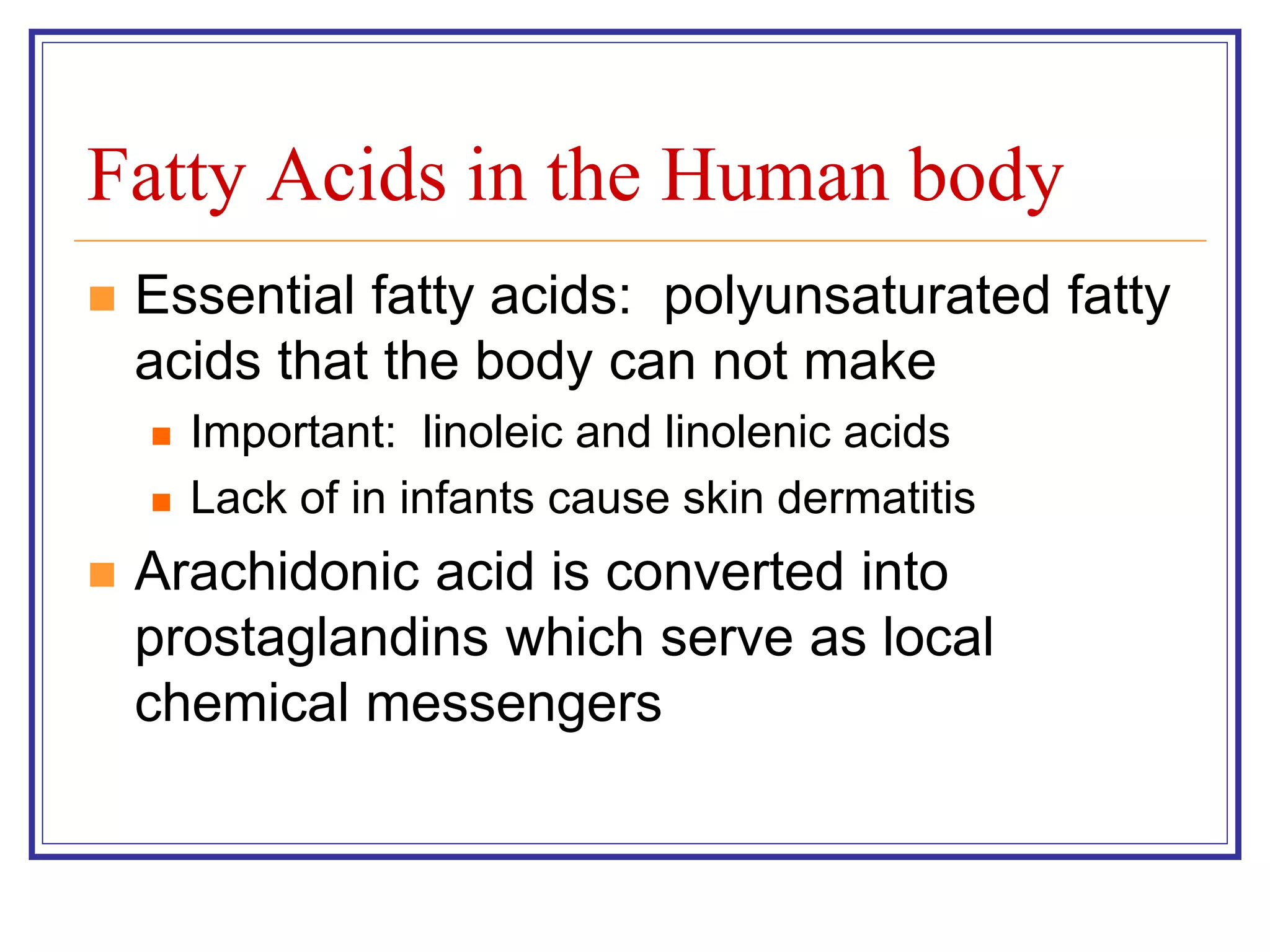
Fatty Acids in the Human body 
 Essential fatty acids: polyunsaturated fatty 
acids that the body can not make 
 Important: linoleic and linolenic acids 
 Lack of in infants cause skin dermatitis 
 Arachidonic acid is converted into 
prostaglandins which serve as local 
chemical messengers
Fats and Oils
Fats and Oils
Fats and Oils
Hydrogenation of Oils
Fats and Oils 
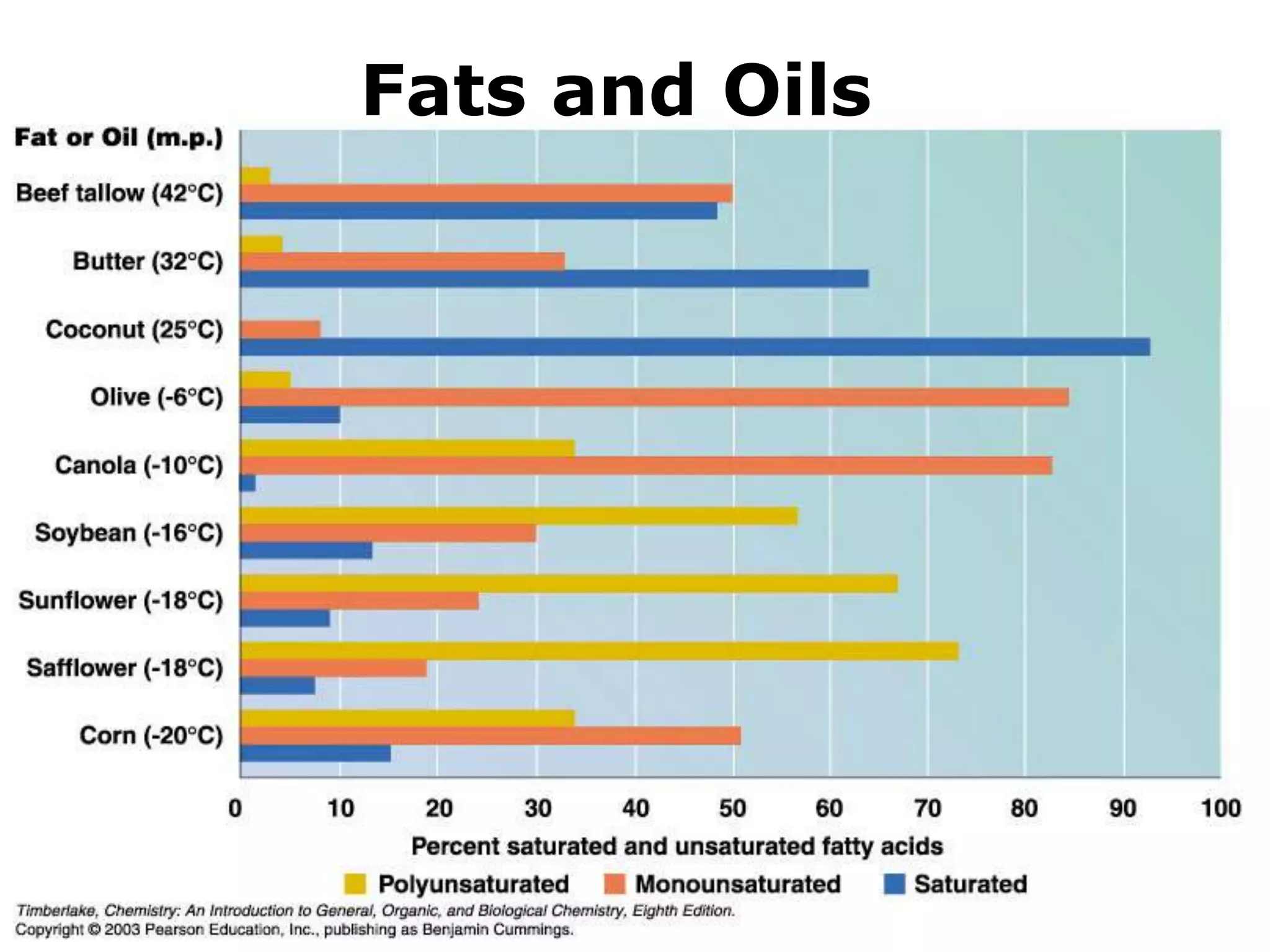
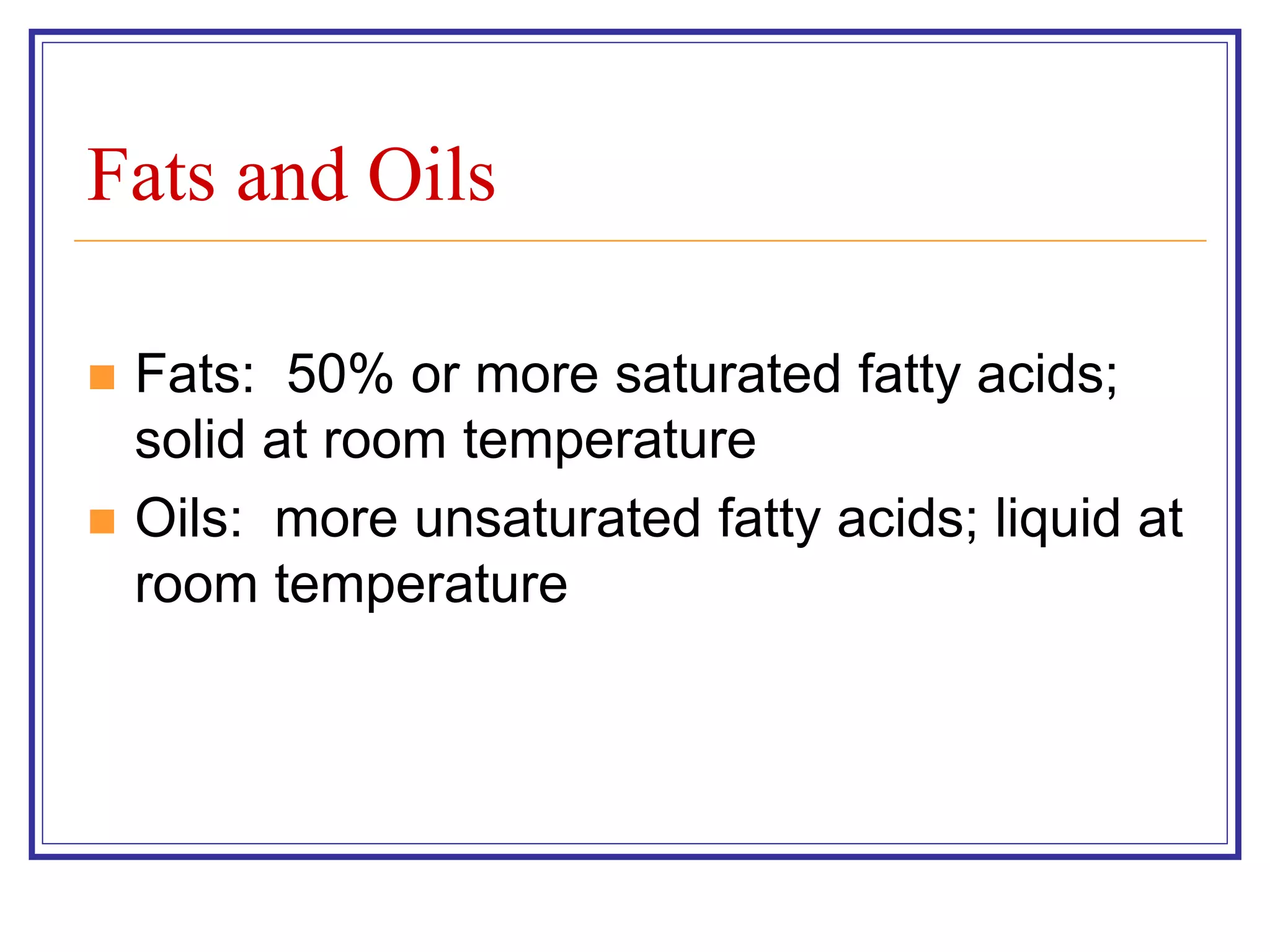
 Fats: 50% or more saturated fatty acids; 
solid at room temperature 
 Oils: more unsaturated fatty acids; liquid at 
room temperature
Fats and Oils 
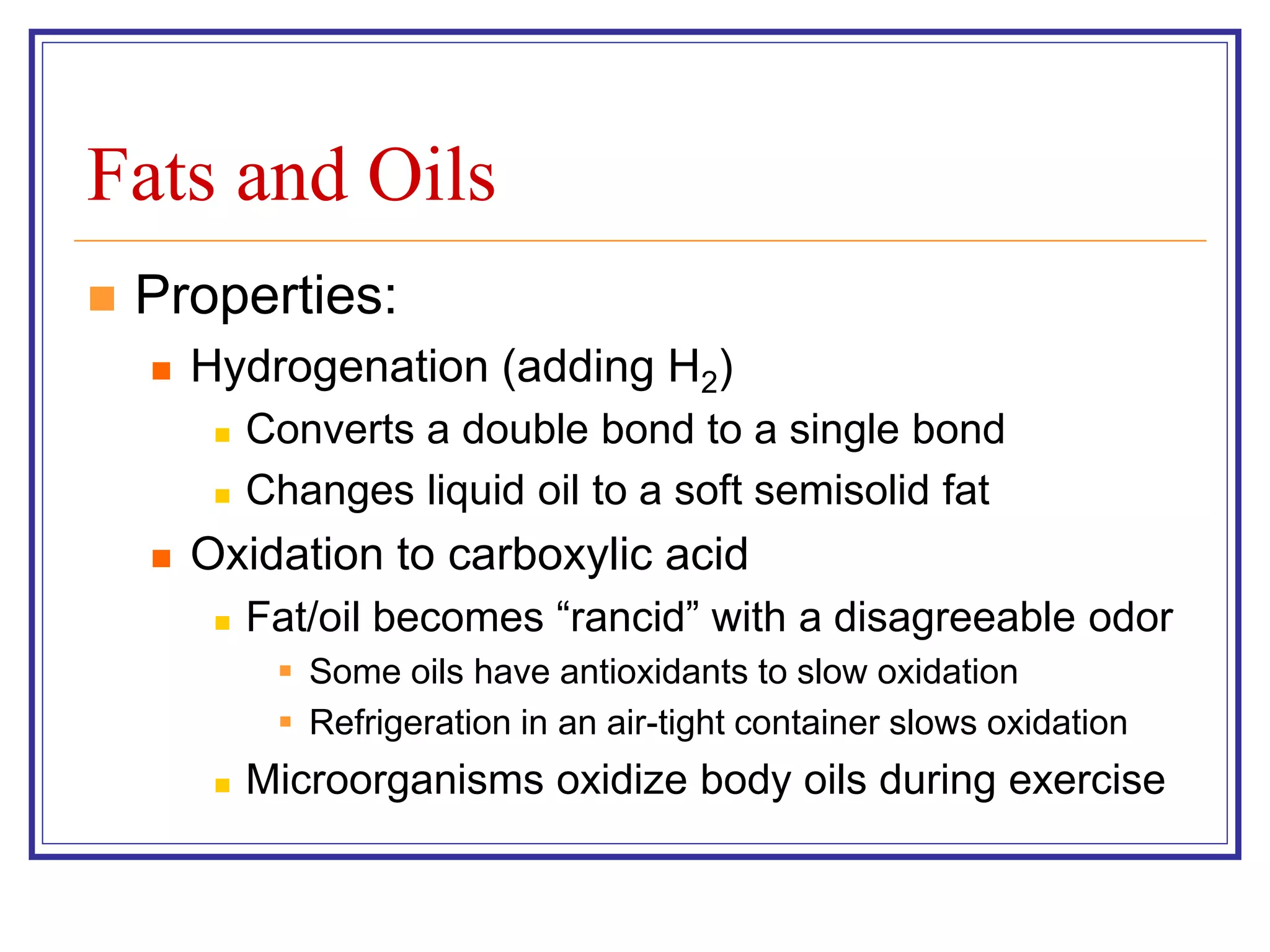
 Properties: 
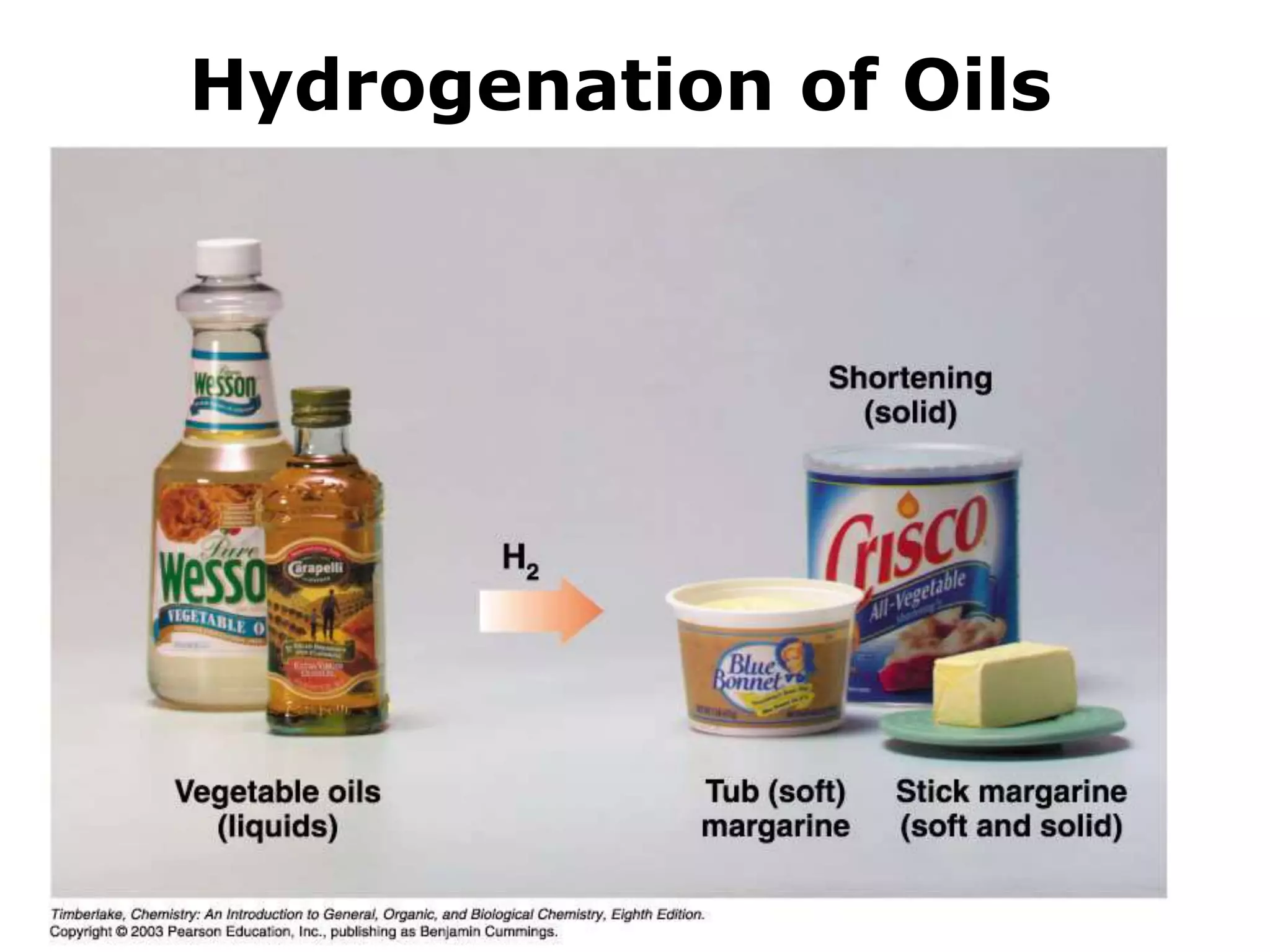
 Hydrogenation (adding H2) 
 Converts a double bond to a single bond 
 Changes liquid oil to a soft semisolid fat 
 Oxidation to carboxylic acid 
 Fat/oil becomes “rancid” with a disagreeable odor 
 Some oils have antioxidants to slow oxidation 
 Refrigeration in an air-tight container slows oxidation 
 Microorganisms oxidize body oils during exercise
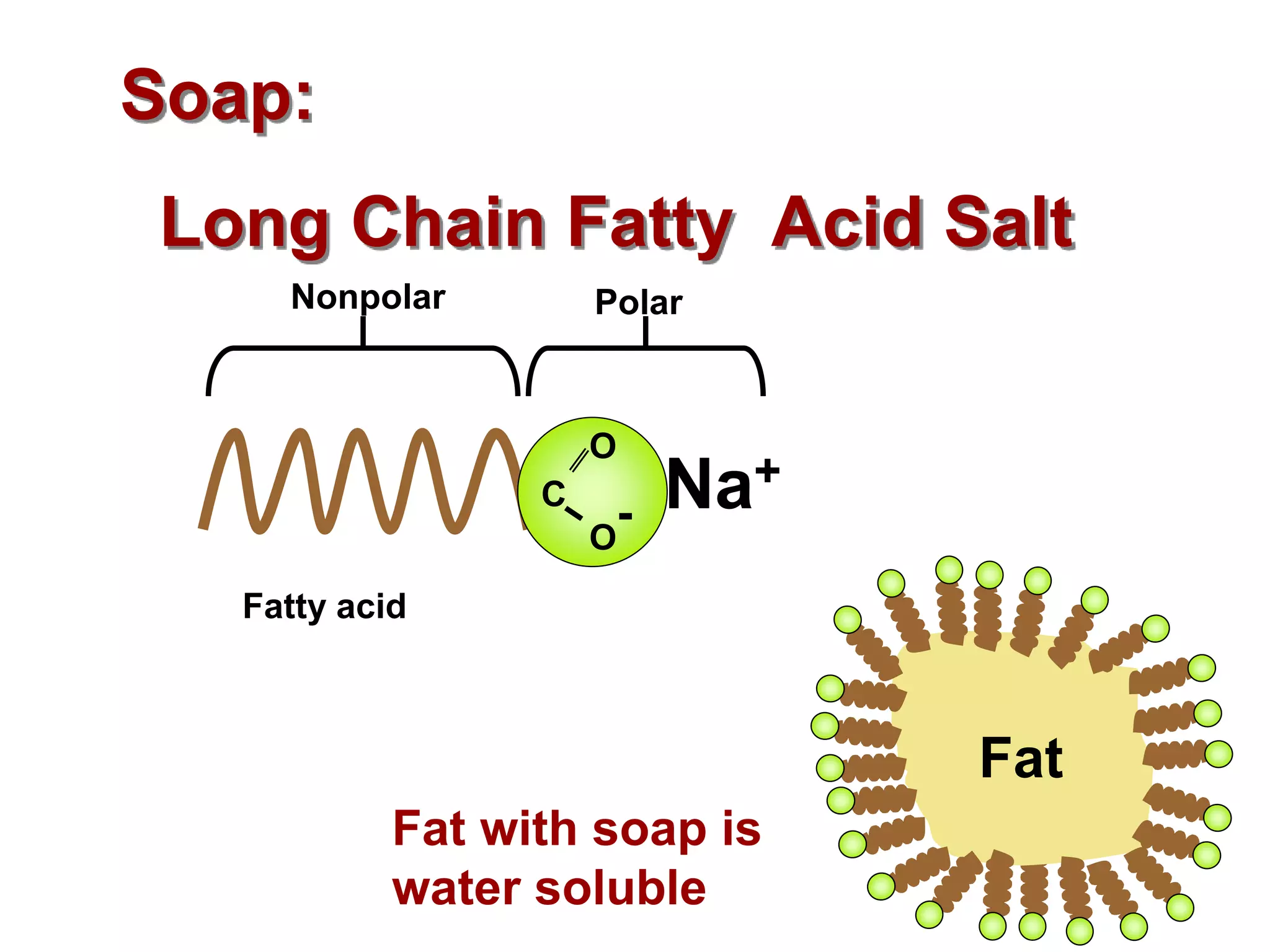
Soap: 
Long Chain Fatty Acid Salt 
Nonpolar Polar 
Fatty acid 
Na+ 
C 
O 
O 
- 
Fat 
Fat with soap is 
water soluble
Fats and Oils 
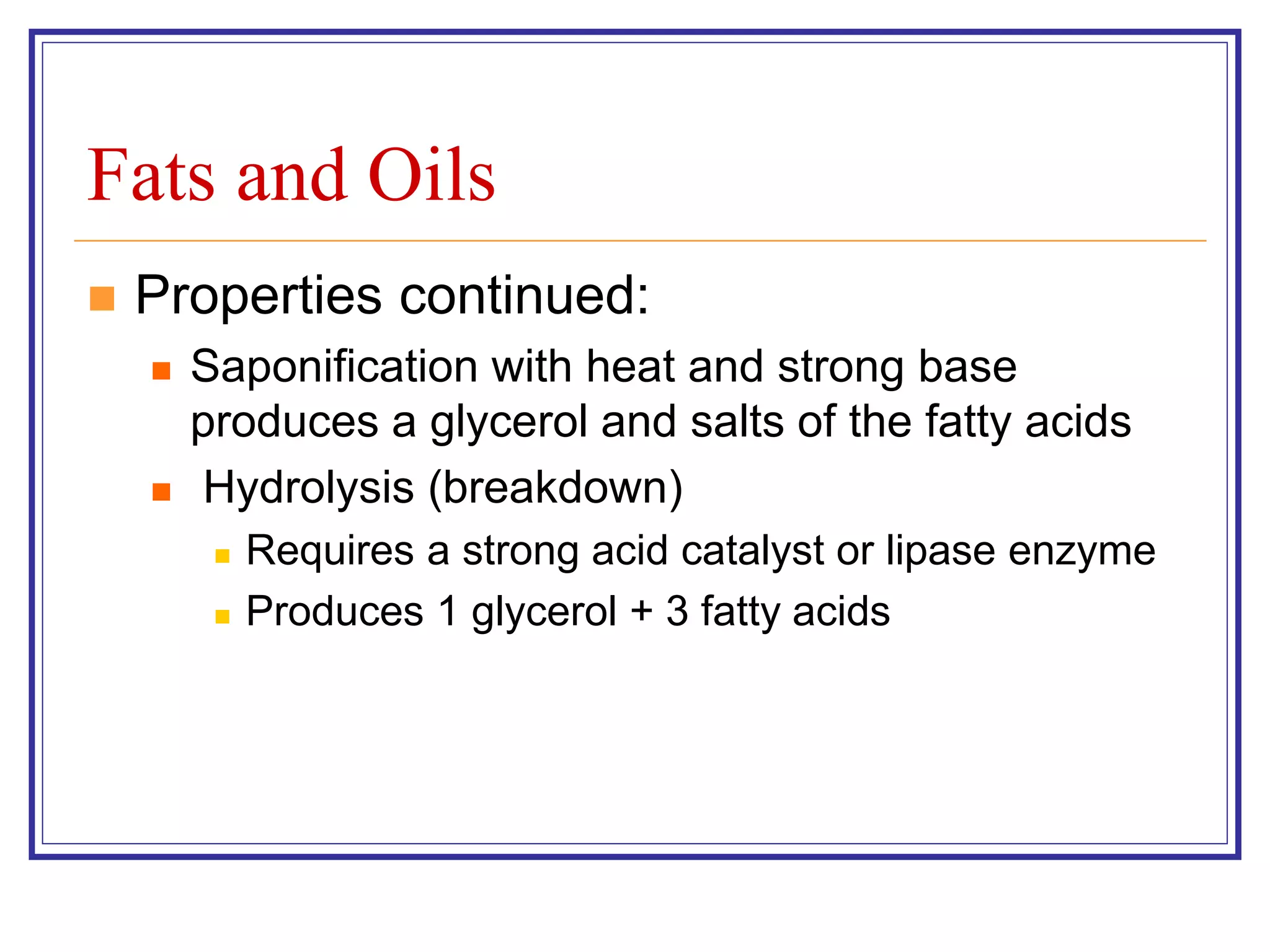
 Properties continued: 
 Saponification with heat and strong base 
produces a glycerol and salts of the fatty acids 
 Hydrolysis (breakdown) 
 Requires a strong acid catalyst or lipase enzyme 
 Produces 1 glycerol + 3 fatty acids
Phospholipid
Phospholipid
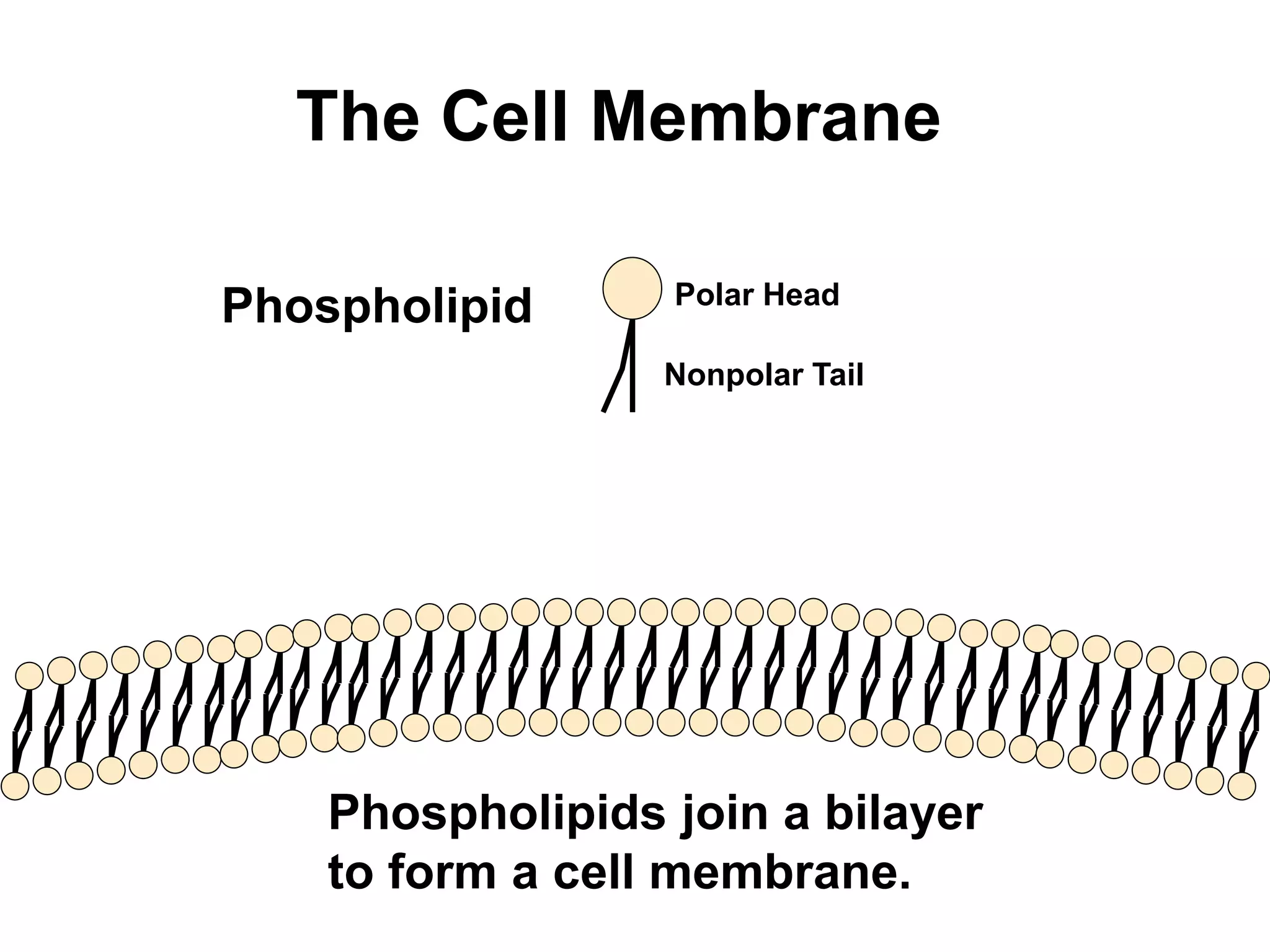
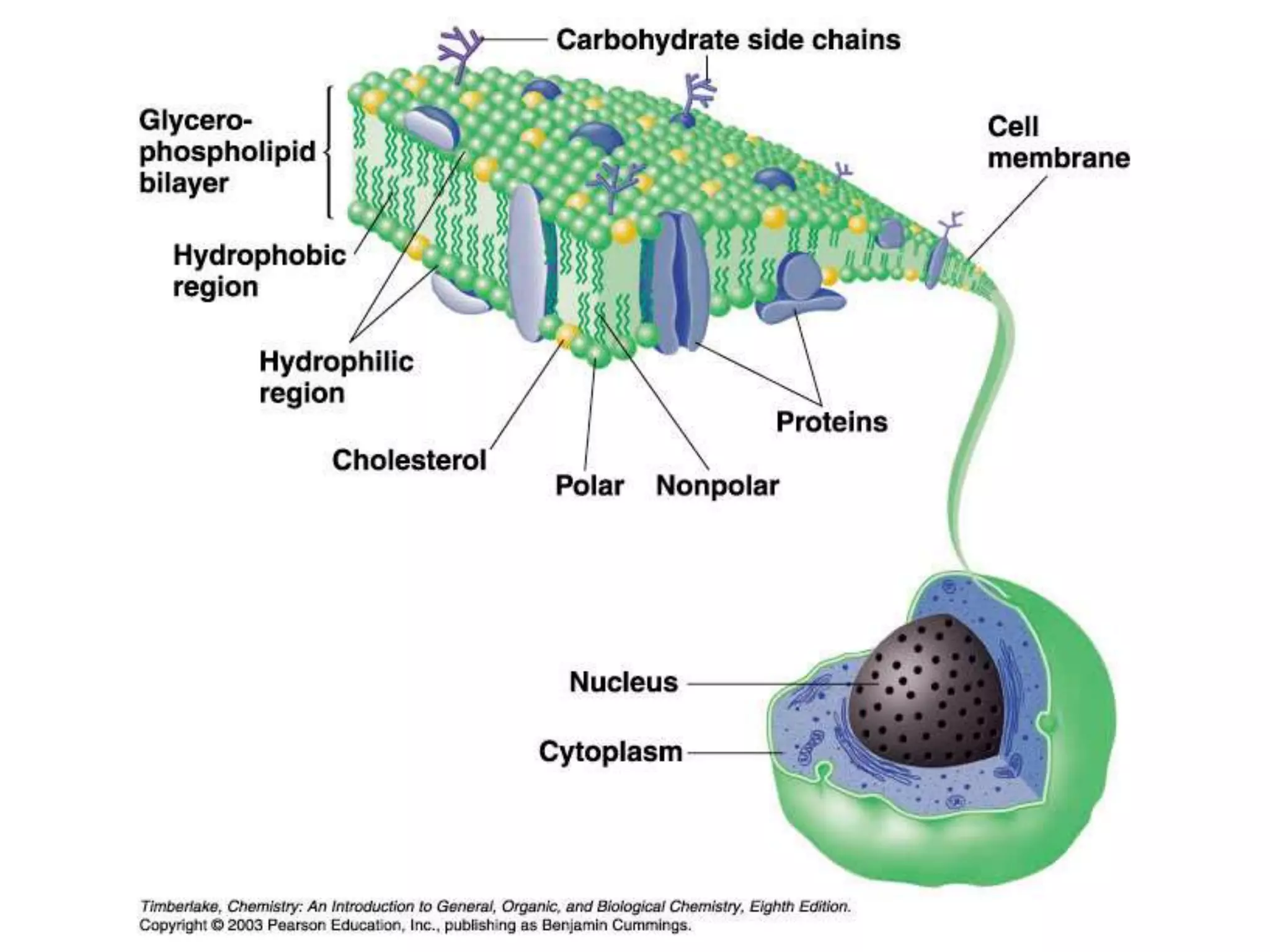
The Cell Membrane 
Phospholipid 
Polar Head 
Nonpolar Tail 
Phospholipids join a bilayer 
to form a cell membrane.
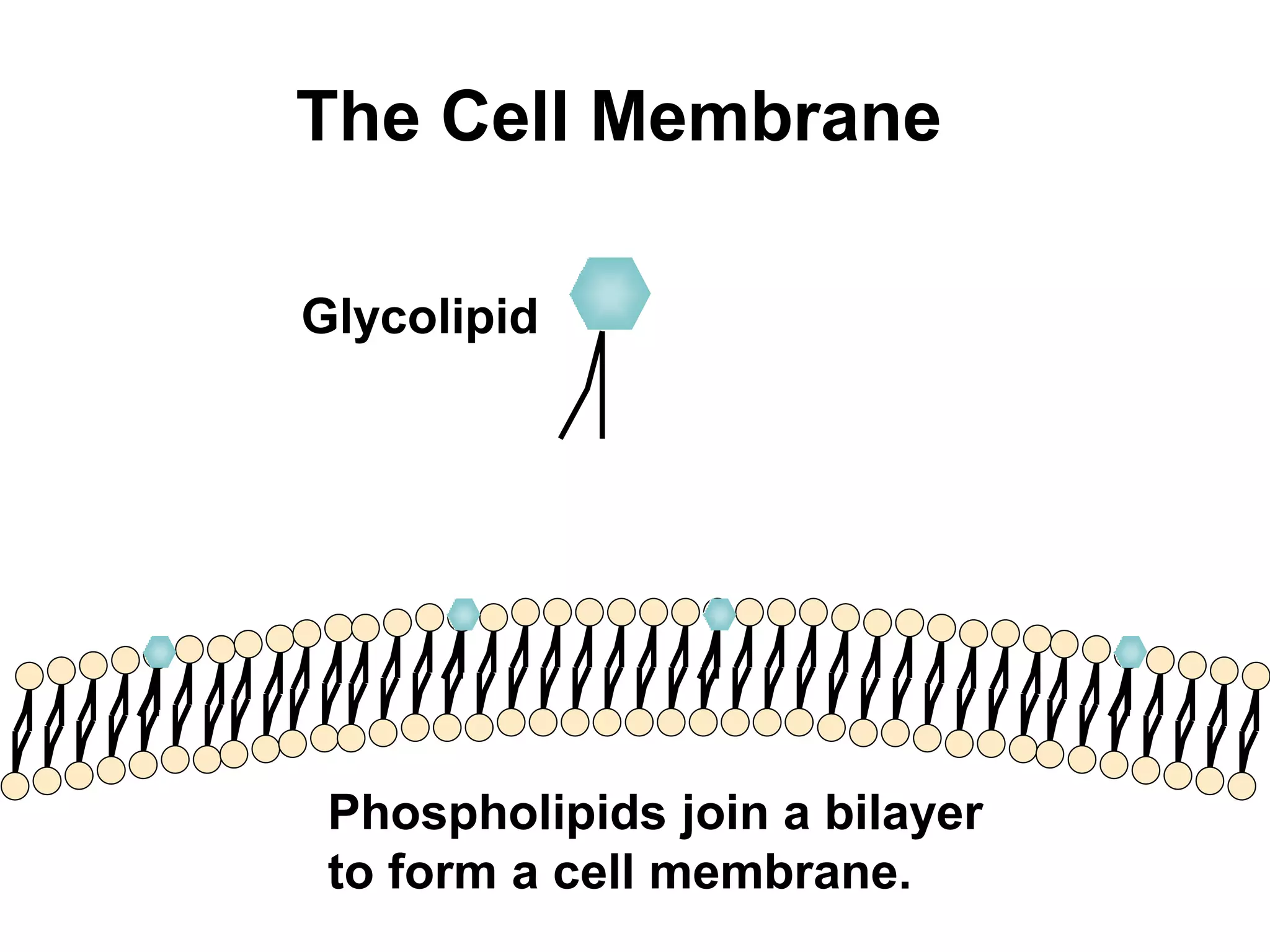
The Cell Membrane 
Glycolipid 
Phospholipids join a bilayer 
to form a cell membrane.
Phospholipids 
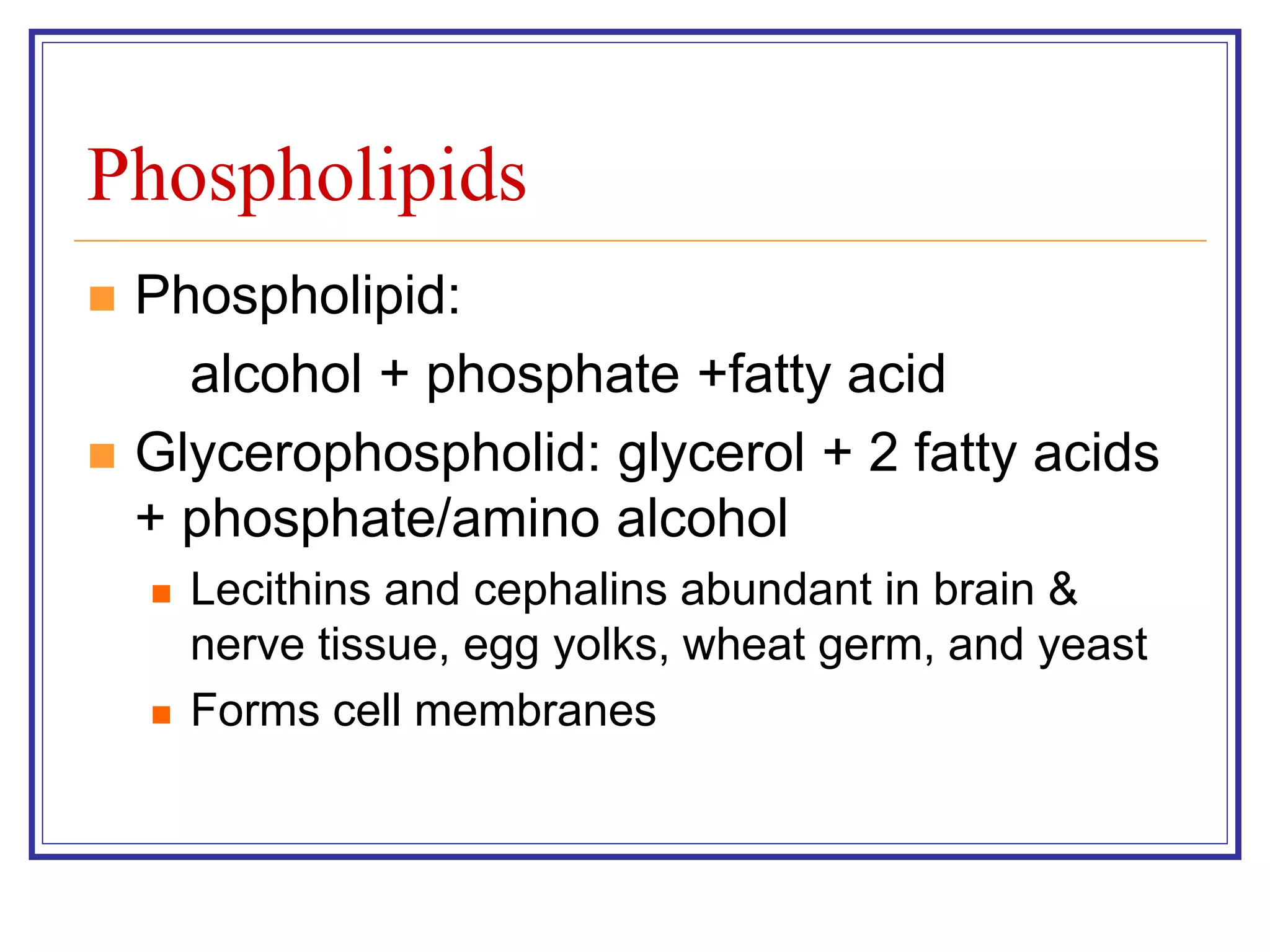
 Phospholipid: 
alcohol + phosphate +fatty acid 
 Glycerophospholid: glycerol + 2 fatty acids 
+ phosphate/amino alcohol 
 Lecithins and cephalins abundant in brain & 
nerve tissue, egg yolks, wheat germ, and yeast 
 Forms cell membranes
Phospholipids 
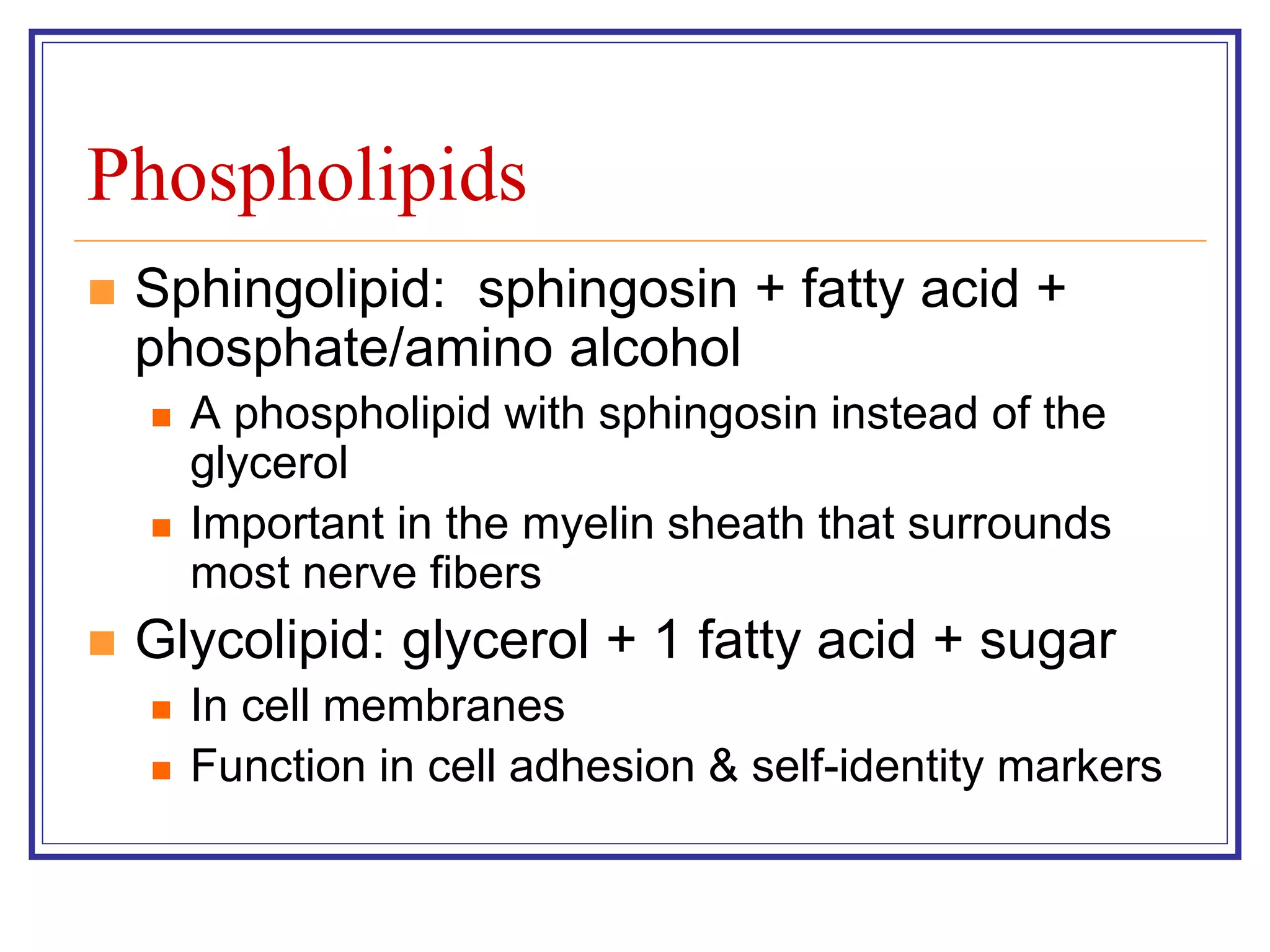
 Sphingolipid: sphingosin + fatty acid + 
phosphate/amino alcohol 
 A phospholipid with sphingosin instead of the 
glycerol 
 Important in the myelin sheath that surrounds 
most nerve fibers 
 Glycolipid: glycerol + 1 fatty acid + sugar 
 In cell membranes 
 Function in cell adhesion & self-identity markers
Phospholipids 
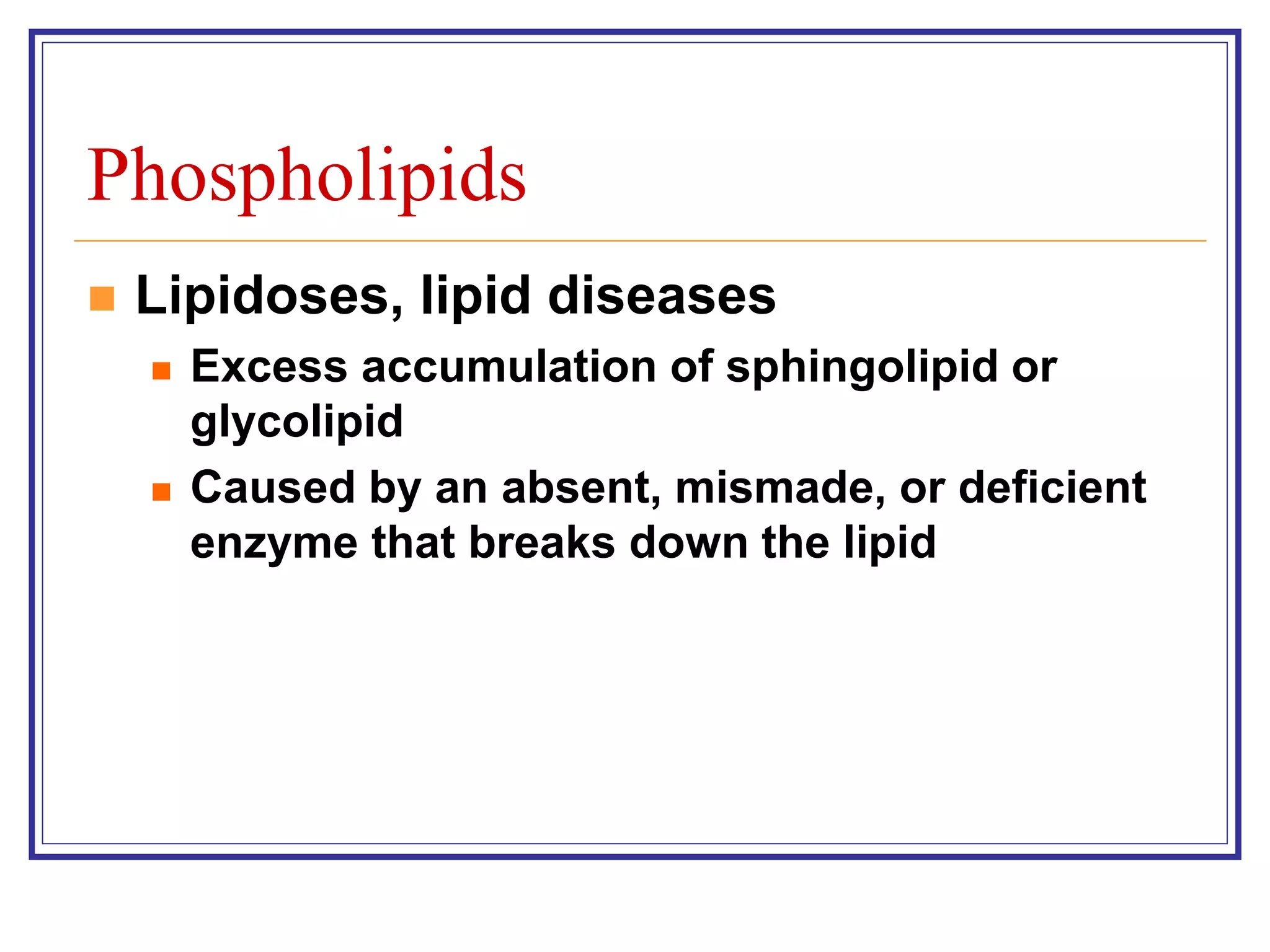
 Lipidoses, lipid diseases 
 Excess accumulation of sphingolipid or 
glycolipid 
 Caused by an absent, mismade, or deficient 
enzyme that breaks down the lipid
Steroids
Steroids 
 Cholesterol 
 Synthesized in the liver 
 Gives strength to cell membranes 
 In myelin sheath, bile salts, vitamin D produced 
by the skin 
 Excess in body leads to gall stones and plaque 
in the arteries
Steroids 
 Bile salts 
 Synthesized from cholesterol in the liver 
 Sent to the digestive tract to emulsify fats 
 Promotes absorption of cholesterol in the digestive tract 
 Fat-soluble vitamins: A, D, E, K 
 A for night vision 
 D promotes absorption of Ca+ in intestinal tract and 
deposition of Ca+ in the bones 
 E prevents oxidation of unsaturated fatty acids in cell 
membranes 
 K functions in blood cloting
Steroids 
 Hormones: 
 Sex hormones control reproduction, sexual 
characteristics, and general growth 
 Adrenal corticosteroids 
 Cortisone increases blood glucose levels and reduces 
inflammation 
 Aldosterone acts in the kidneys to maintain Na+ and water 
balance 
 Sex hormones 
 Anabolic steroid, derivative of testosterone 
 Prevents breakdown of worn out muscle cells 
 Has dangerous side effects
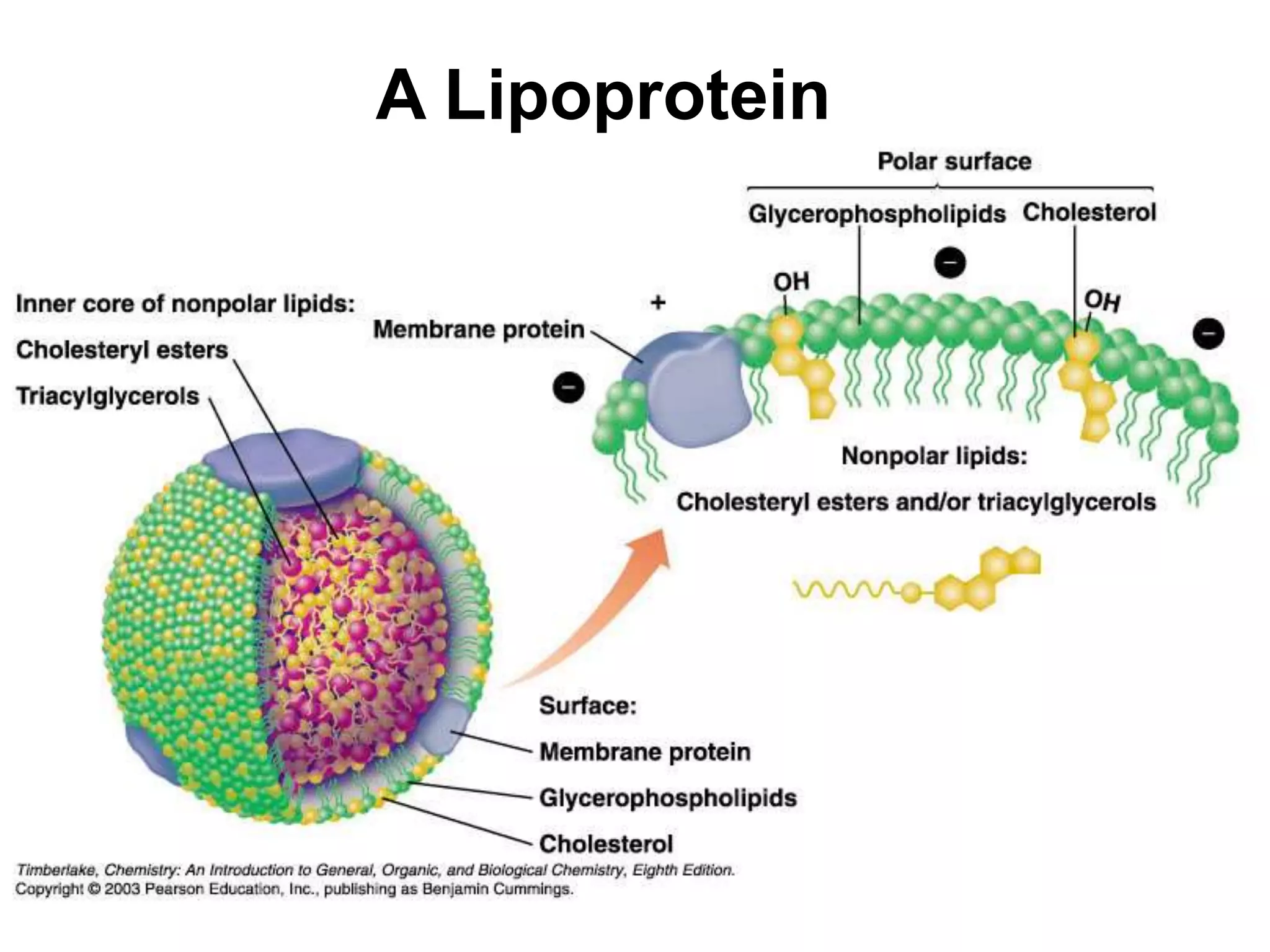
A Lipoprotein
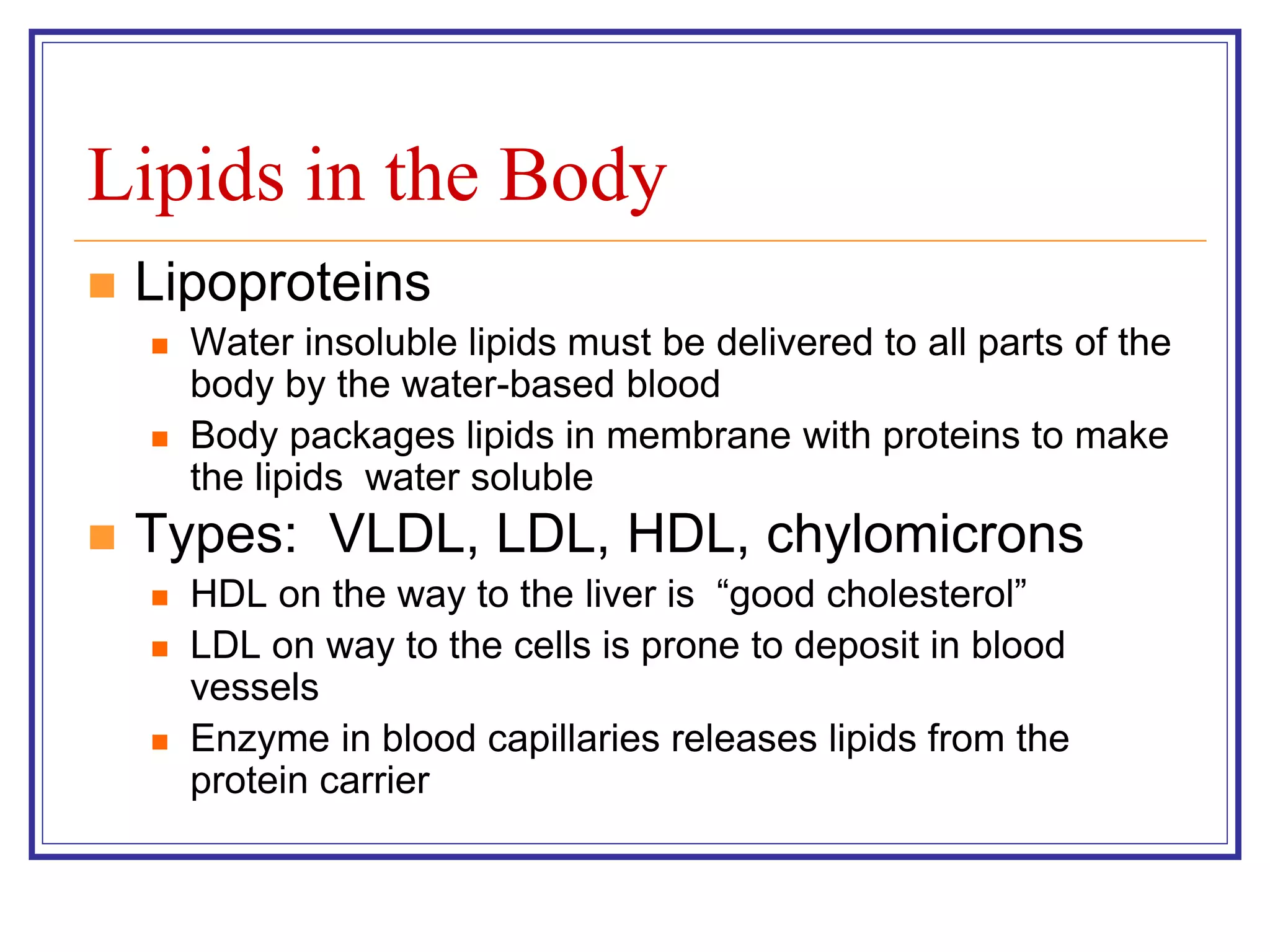
Lipids in the Body 
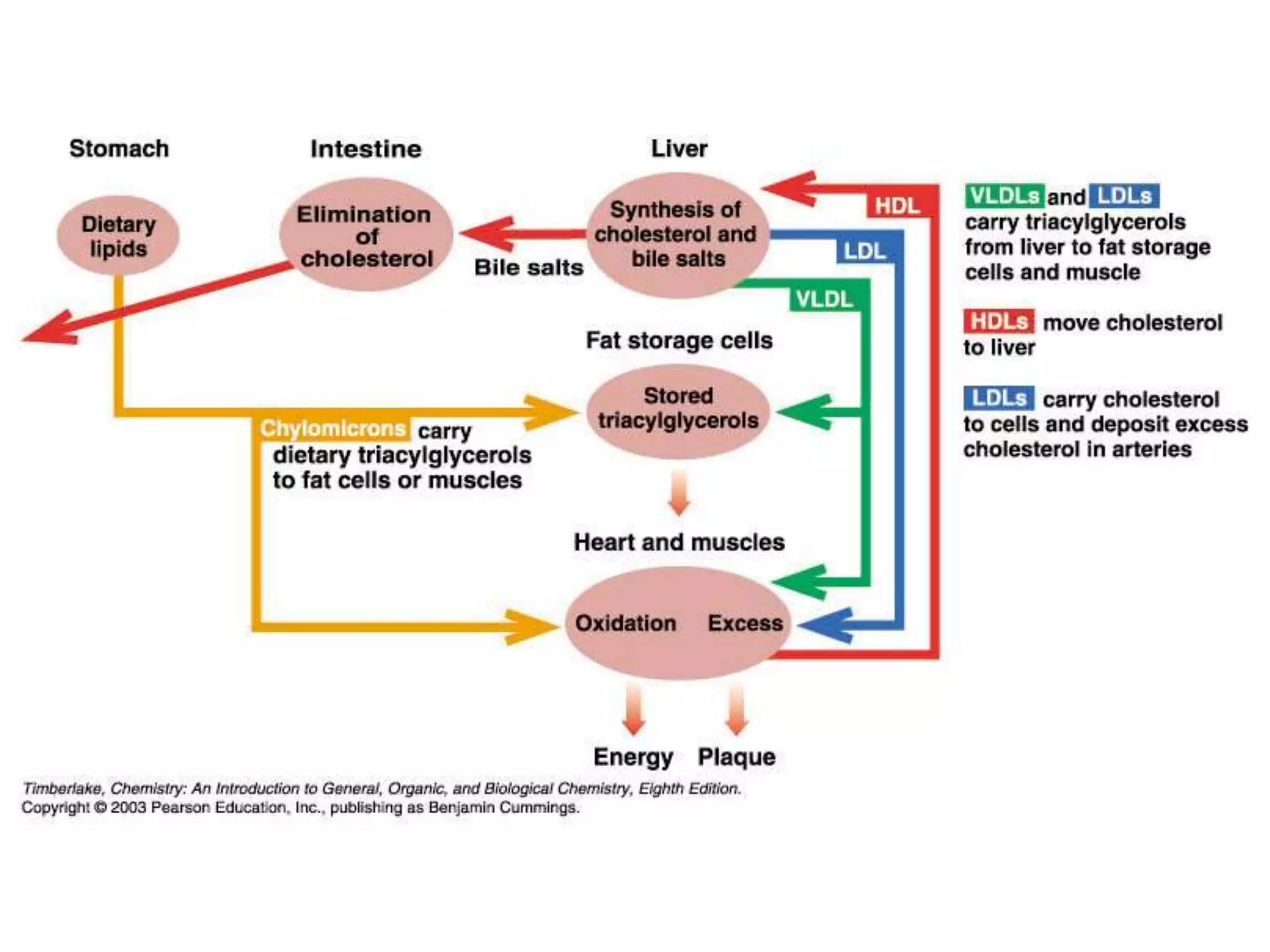
 Lipoproteins 
 Water insoluble lipids must be delivered to all parts of the 
body by the water-based blood 
 Body packages lipids in membrane with proteins to make 
the lipids water soluble 
 Types: VLDL, LDL, HDL, chylomicrons 
 HDL on the way to the liver is “good cholesterol” 
 LDL on way to the cells is prone to deposit in blood 
vessels 
 Enzyme in blood capillaries releases lipids from the 
protein carrier
Lipids in the Body 
 Lipoproteins 
 Water insoluble lipids must be delivered to all parts of the 
body by the water-based blood 
 Body packages lipids in membrane with proteins to make 
the lipids water soluble 
 Types: VLDL, LDL, HDL, chylomicrons 
 HDL on the way to the liver is “good cholesterol” 
 LDL on way to the cells is prone to deposit in blood 
vessels 
 Enzyme in blood capillaries releases lipids from the 
protein carrier
The End

Lipids Chemistry Structure & Function

  • 1.
    Biochemistry Dr AyyubPatel (MBC222 -226-229) Lipids Structure & Function
  • 2.
  • 4.
    Lipids  Lipids:family of biochemicals that are soluble in organic solvents but not in water  Classes:  Waxes: fatty acid + a long-chain alcohol  Triglycerides (fats & oils): glycerol + 3 fatty acids  Phospholipids: glycerol + 2 fatty acids + phosphate + amino alcohol  Glycolipids: glycerol or spinogosine + fatty acid + monosaccharide  Steroids: 3 cyclohexanes + 1 cyclopentane fused together
  • 5.
  • 6.
  • 7.
  • 8.
    Fatty Acids Fatty acids: long-chain carboxylic acids  Form fats and oils (usually have an even number of carbons)  Saturated fatty acid: all single bonds  Unsaturated fatty acid: at least 1 double bond  Polyunsaturated: two or more double bonds  Most double bonds are cis- bonds that cause a bend in the chain
  • 9.
    Fatty Acids Properties  Saturated fatty acids are solid at room temperature and have a high melting point  Unsaturated fatty acids are liquid at room temperature and have a low melting point
  • 10.
  • 11.
  • 12.
    Fatty Acids inthe Human body  Essential fatty acids: polyunsaturated fatty acids that the body can not make  Important: linoleic and linolenic acids  Lack of in infants cause skin dermatitis  Arachidonic acid is converted into prostaglandins which serve as local chemical messengers
  • 13.
  • 14.
  • 15.
  • 16.
  • 17.
    Fats and Oils  Fats: 50% or more saturated fatty acids; solid at room temperature  Oils: more unsaturated fatty acids; liquid at room temperature
  • 18.
    Fats and Oils  Properties:  Hydrogenation (adding H2)  Converts a double bond to a single bond  Changes liquid oil to a soft semisolid fat  Oxidation to carboxylic acid  Fat/oil becomes “rancid” with a disagreeable odor  Some oils have antioxidants to slow oxidation  Refrigeration in an air-tight container slows oxidation  Microorganisms oxidize body oils during exercise
  • 19.
    Soap: Long ChainFatty Acid Salt Nonpolar Polar Fatty acid Na+ C O O - Fat Fat with soap is water soluble
  • 20.
    Fats and Oils  Properties continued:  Saponification with heat and strong base produces a glycerol and salts of the fatty acids  Hydrolysis (breakdown)  Requires a strong acid catalyst or lipase enzyme  Produces 1 glycerol + 3 fatty acids
  • 21.
  • 22.
  • 23.
    The Cell Membrane Phospholipid Polar Head Nonpolar Tail Phospholipids join a bilayer to form a cell membrane.
  • 24.
    The Cell Membrane Glycolipid Phospholipids join a bilayer to form a cell membrane.
  • 25.
    Phospholipids  Phospholipid: alcohol + phosphate +fatty acid  Glycerophospholid: glycerol + 2 fatty acids + phosphate/amino alcohol  Lecithins and cephalins abundant in brain & nerve tissue, egg yolks, wheat germ, and yeast  Forms cell membranes
  • 26.
    Phospholipids  Sphingolipid:sphingosin + fatty acid + phosphate/amino alcohol  A phospholipid with sphingosin instead of the glycerol  Important in the myelin sheath that surrounds most nerve fibers  Glycolipid: glycerol + 1 fatty acid + sugar  In cell membranes  Function in cell adhesion & self-identity markers
  • 27.
    Phospholipids  Lipidoses,lipid diseases  Excess accumulation of sphingolipid or glycolipid  Caused by an absent, mismade, or deficient enzyme that breaks down the lipid
  • 28.
  • 30.
    Steroids  Cholesterol  Synthesized in the liver  Gives strength to cell membranes  In myelin sheath, bile salts, vitamin D produced by the skin  Excess in body leads to gall stones and plaque in the arteries
  • 31.
    Steroids  Bilesalts  Synthesized from cholesterol in the liver  Sent to the digestive tract to emulsify fats  Promotes absorption of cholesterol in the digestive tract  Fat-soluble vitamins: A, D, E, K  A for night vision  D promotes absorption of Ca+ in intestinal tract and deposition of Ca+ in the bones  E prevents oxidation of unsaturated fatty acids in cell membranes  K functions in blood cloting
  • 32.
    Steroids  Hormones:  Sex hormones control reproduction, sexual characteristics, and general growth  Adrenal corticosteroids  Cortisone increases blood glucose levels and reduces inflammation  Aldosterone acts in the kidneys to maintain Na+ and water balance  Sex hormones  Anabolic steroid, derivative of testosterone  Prevents breakdown of worn out muscle cells  Has dangerous side effects
  • 33.
  • 35.
    Lipids in theBody  Lipoproteins  Water insoluble lipids must be delivered to all parts of the body by the water-based blood  Body packages lipids in membrane with proteins to make the lipids water soluble  Types: VLDL, LDL, HDL, chylomicrons  HDL on the way to the liver is “good cholesterol”  LDL on way to the cells is prone to deposit in blood vessels  Enzyme in blood capillaries releases lipids from the protein carrier
  • 36.
    Lipids in theBody  Lipoproteins  Water insoluble lipids must be delivered to all parts of the body by the water-based blood  Body packages lipids in membrane with proteins to make the lipids water soluble  Types: VLDL, LDL, HDL, chylomicrons  HDL on the way to the liver is “good cholesterol”  LDL on way to the cells is prone to deposit in blood vessels  Enzyme in blood capillaries releases lipids from the protein carrier
  • 37.