LIPIDS
Lipids are heterogeneous group of
compounds including fats, oils, steriods,
waxes, and related compounds. They are
related by their physical rather than by their
chemical properties.
These properties are:
They are relatively insoluble in water; and
They are soluble in nonpolar solvents
4 MAIN GROUPS OF LIPIDS
1. Fatty acids (unsaturated and saturated)
2. Glycerides (glycerol-containing lipids)
3. Nonglyceride lipids (sphingolipids.
Steroids, waxes)
4. Complex lipids
IMPORTANCE OF LIPIDS IN
BIOLOGICAL PROCESS
 Energy source – Excellent source of energy for the body.
When oxidized, each gram of fat releases 9 kilocalories (kcal)
of energy, or more than twice the energy released by
oxidation of a gram of carbohydrate.
 Energy storage – Most of the energy stored in the body is in
the form of lipids (triglycerides). Stored in fat cells called,
adipocytes, these fats are a particularly rich source of energy
for the body.
 Cell membrane structural components –
Phosphogycerides, sphingolipids, and steroids make up the
basic structure of all cell structure of all cell membranes.
These membranes control the flow of molecules into and out
of cells and allow cell-to-cell communication.
 Hormones – The steroid hormones are critical chemical
messengers that allow tissues of the body to communicate
with one another. The hormone like prostaglandins exert
strong biological effects on both the cells that produce them
and other cells of the body.
 Vitamins – The lipid-soluble vitamins, A, D, E, and K, play a
major role in the regulation of several critical biological
processes, including blood clotting and vision.
 Vitamin absorption – Dietary fat serves as a carrier of
the lipid-soluble vitamins. All are transported into cells
of the small intestine in association with fat molecules.
Therefore, a diet that is too low in fat (less than 20% of
calories) can result in a deficiency of these four
vitamins.
 Protection – Fats serve as a shock absorber, or
protective layer, for the vital organs. About 4% of the
total body fat is reserved for this critical function.
 Insulation – Fat stored beneath the skin
(subcutaneous fat) serves to insulate the body from
extremes of cold temperatures.
ROLES OF LIPIDS
Fatty acids – Metabolic fuel; Building blocks for other lipids
Triacylglycerides – Main storage form of fatty acids and
chemical energy.
Phospholipids – Component of membranes; Sources of
arachidonic acid, inositol triphosphate, and diglyceride for
signal transduction.
Sphingolipids – Component of membranes
Cholesterol – Component of membranes; Precursor of bile
salts and steroid humans.
Bile salts – Lipid digestion and absorption; Main product of
cholesterol metabolism.
Steroid hormones – Intracellular
signals that regulate gene expression
in target cells
Eicosanoids – Regulators of
physiological functions.
Vitamins – Vision, Calcium
metabolism, Antioxidants, blood
coagulation.
Ketone bodies – Metabolic fuel
STRUCTURE OF LIPIDS
1. FATTY ACIDS – monocarboxylic acids that typically
contain hydrocarbon chains of variable lengths (usually
12 to 20 carbons long).
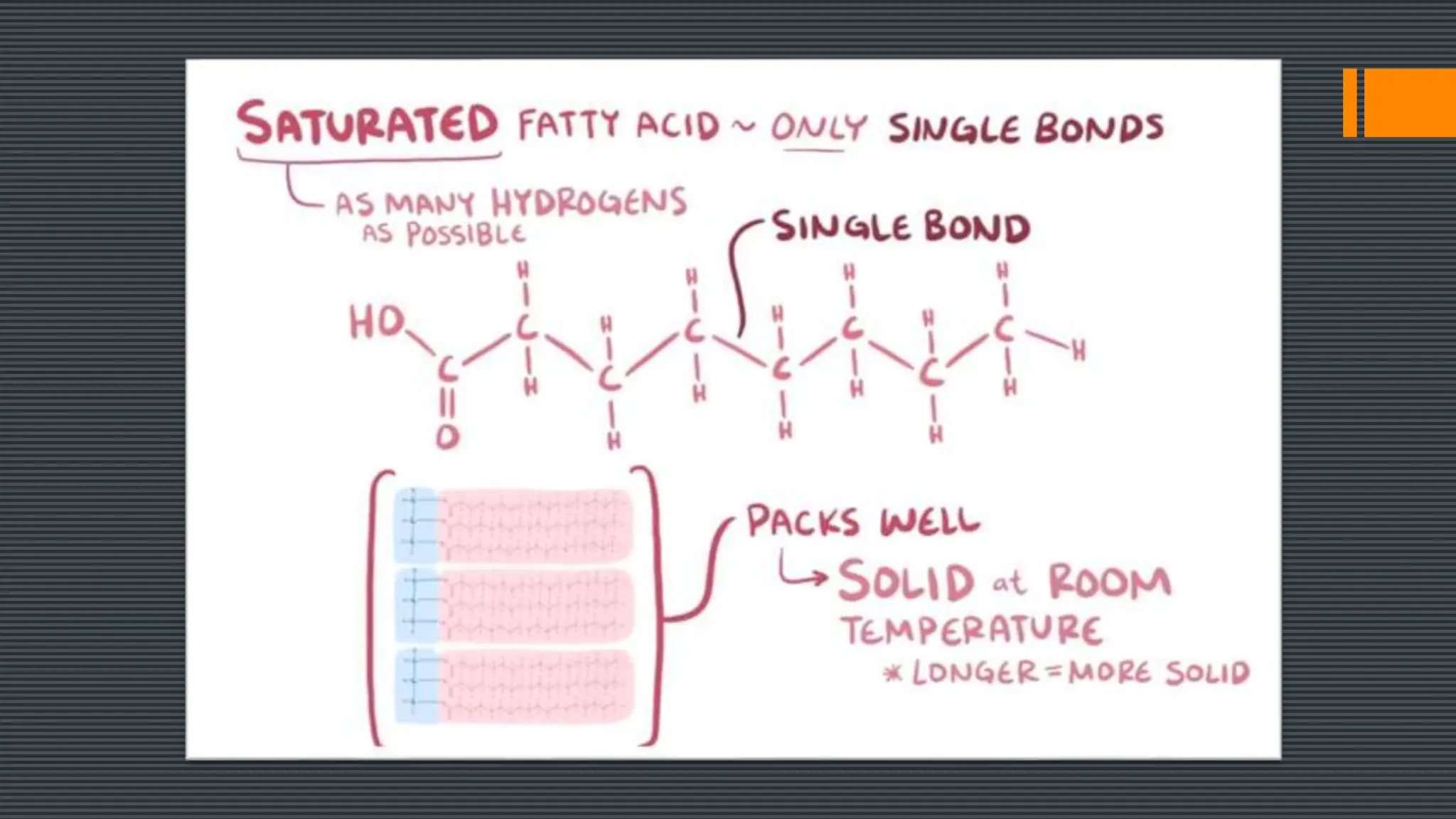
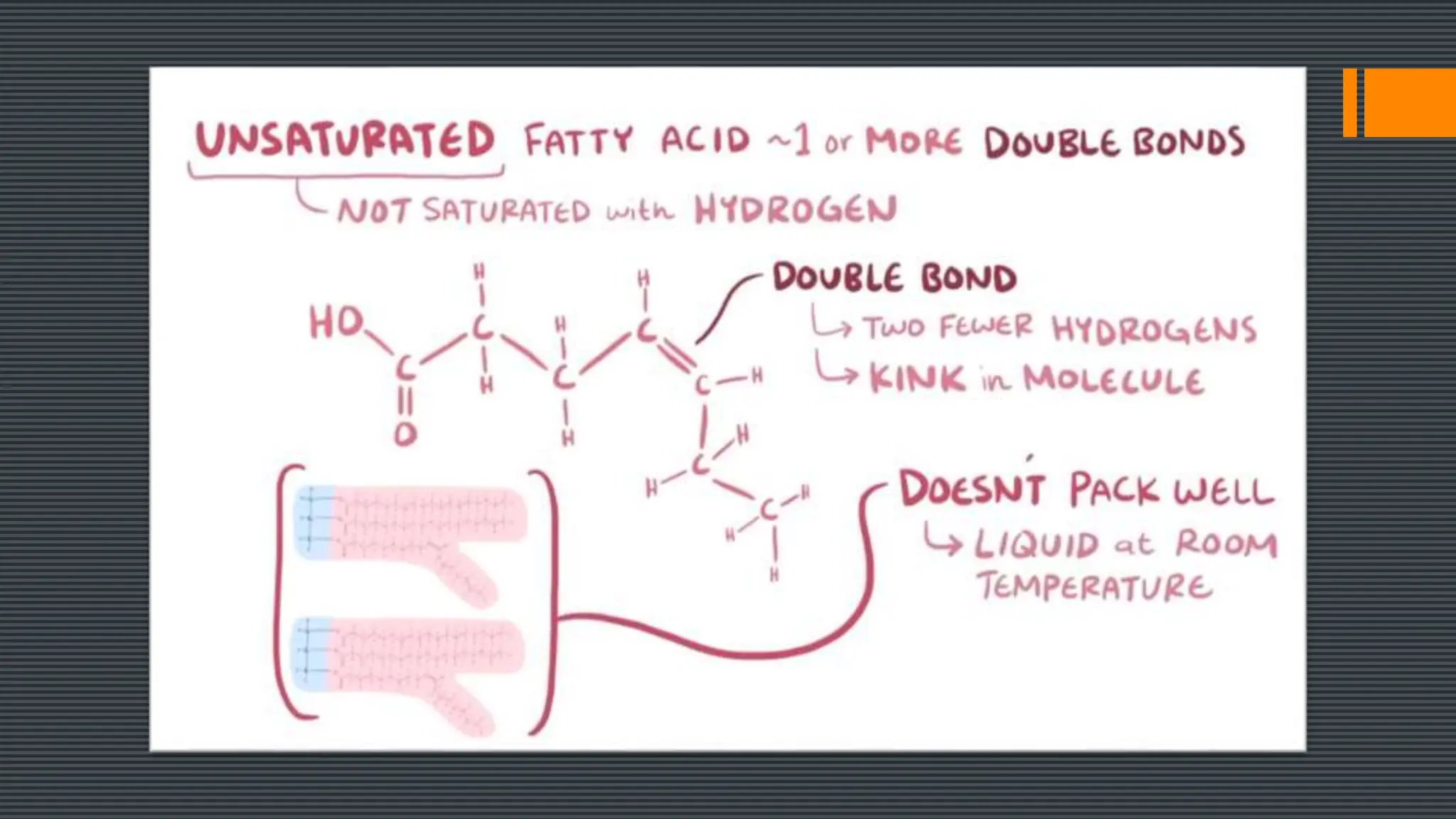
Saturated fatty acids – only contain C-C single bonds.
Unsaturated fatty acids – contain one or more C=C
double bonds
 MONOUNSATURATED FATTY ACIDS – contains only one C=C double bond.
 POLYUNSATURATED FATTY ACIDS – contains two or more C=C double bonds.
Melting points of saturated fatty acids increase with
increasing and number, as is the case with
alkanes. Saturated fatty acids containing ten or
more carbons are solids at room temperature.
The melting point of a saturated fatty acid is
greater than that of an unsaturated fatty acid of the
same chain length. The reason is that saturated
fatty acid chains tend to be fully extended and to
stack in a regular structure, thereby causing
increased intermolecular attraction.
CIS AND TRANS ISOMERISM
Unsaturated fatty acids can exhibit cis and trans
isomerism. Nearly all naturally occurring fatty acids
are in the cis configuration.
Trans double bonds are formed from the catalytic
hydrogenation of vegetable oils to make
margarine. Cis-fatty acids possess a bent (120◦)
structure while trans-fatty acids are linear.
CHEMICAL REACTIONS OF
FATTY ACIDS
ESTERIFICATION
ACID HYDROLYSIS
SAPONIFICATION
REACTION AT THE DOUBLE
BOND (UNSATURATED FATTY
ACIDS)
DIETARY FATTY ACIDS
Nonessential fatty acids – can be synthesized in
the body.
Essential fatty acids – cannot be synthesized and
must be obtained from the diet (e.g., linoleic acid,
linoleric acid)
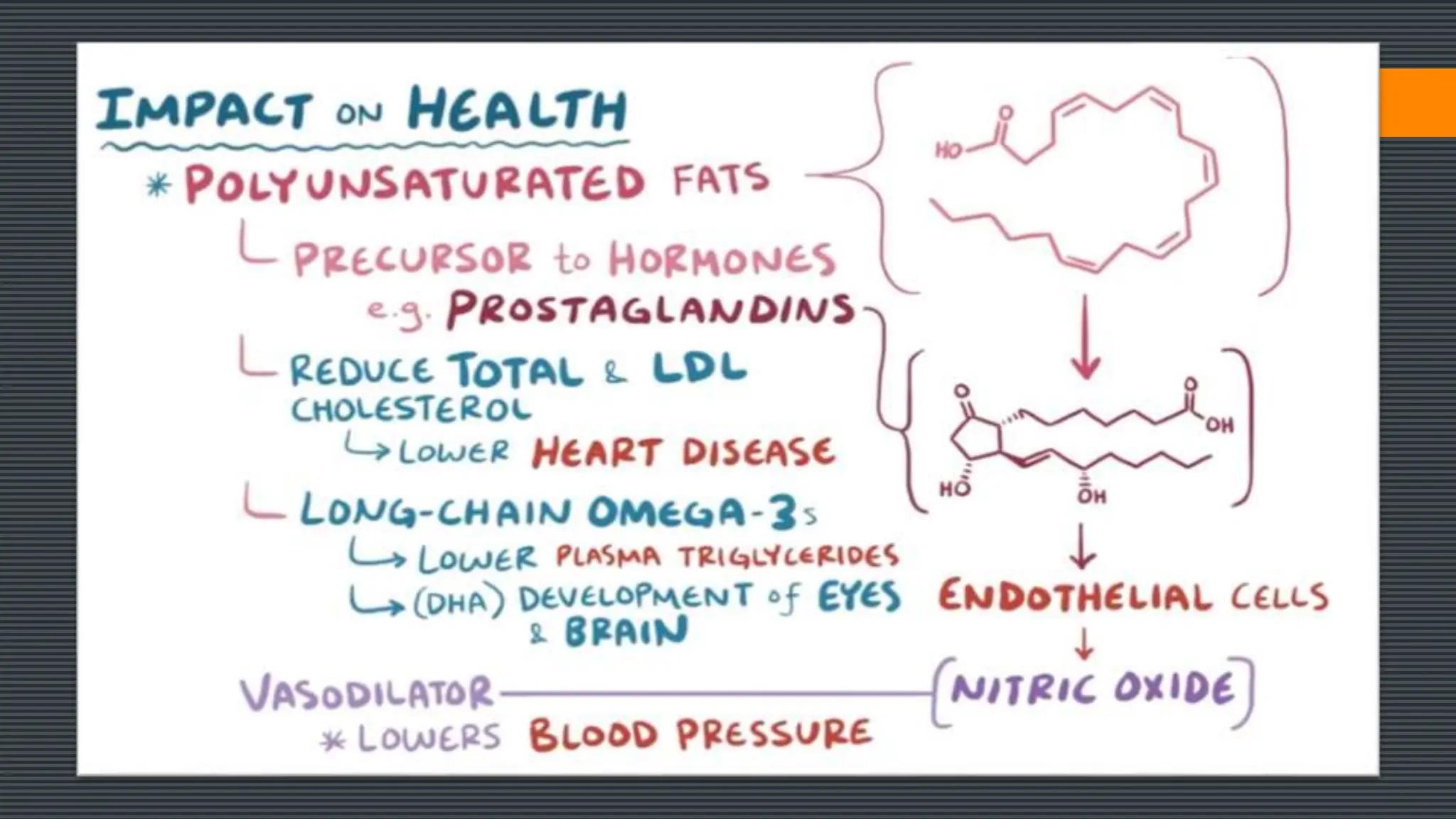
2. EICOSANOIDS
Derived from either arachidonic acid or EPA; they
are a diverse group of hormonelike molecules
produced in mammalian tissue.
Prostaglandin – involved in inflammation,
reproduction, and digestion; contain a
cyclopentane ring and hydroxy groups at C11 and
C15.
Thromboxane – involved in platelet
aggregation and vasoconstriction; contain a
cyclic ether.
Leukotrienes – attract immune system
cells to damaged tissue (chemostatic
agents); have linear structures.
BRIEF SUMMARY OF BIOLOGICAL
PROCESSES THAT ARE THOUGHT
TO BE REGULATED BY
PROSTAGLANDINS,
LEUKOTRIENES, AND
THROMBOXANES
BLOD CLOTTING
 Thromboxane A2 is produced by platelets in the blood and
stimulates constriction of the blood vessels and aggregation
of the platelets. PGI2 (prostacyclin) is produced by the cells
lining the blood vessels and has precisely the opposite effect
of thromboxane A2.
THE INFLAMMATORY
RESPONSE
 Prostaglandins are thought to promote certain aspects of the
inflammatory response, especially pain and fever. Drugs
such as aspirin block prostaglandin synthesis and help to
relieve the symptoms.
REPRODUCTIVE SYSTEM
PGE2 stimulates smooth muscle contraction,
particularly uterine contractions. An increase in the
level of prostaglandins has been noted
immediately before the onset of labor. PGE2 has
also been used to induce second trimester
abortions.
GASTROINTESTINAL TRACT
 Prostaglandins have been shown to both inhibit the secretion
of acid and increase the secretion of a protective mucus layer
into the stomach. Prostaglandins help to protect the stomach
lining.
KIDNEYS
Prostaglandins produced in the kidneys cause the
renal blood vessels to dilate. The greater the flow
of blood through the kidney results in increased
water and electrolyte secretion.
RESPIRATORY TRACT
Eicosanoids produced by certain white
blood cells, the leukotrienes, promote the
constriction of the bronchi associated with
asthma. Other prostaglandins promote
bronchodilation.
OMEGA-3 FATTY ACIDS
 According to American Heart Association (AHA), they issued
a dietary guidelines that it is recommended to eat at least two
servings of “oily” fish in our diet each week.
 Salmon, albacore tuna, sardines, lake trout, and mackerel.
These fish contain high levels of two omega-3 fatty acids
called eicosapentanoic acid (EPA) and the docosahexanoic
acid (DHA).
GLYCERIDES
NEUTRAL GLYCERIDES
 Are lipid esters that contain the glycerol molecule and fatty
acids.
 Neutral glycerides and phosphoglyceride.
 Neutral glycerides are non-ionic and nonpolar
 Phosphoglyceride molecules have a polar region.
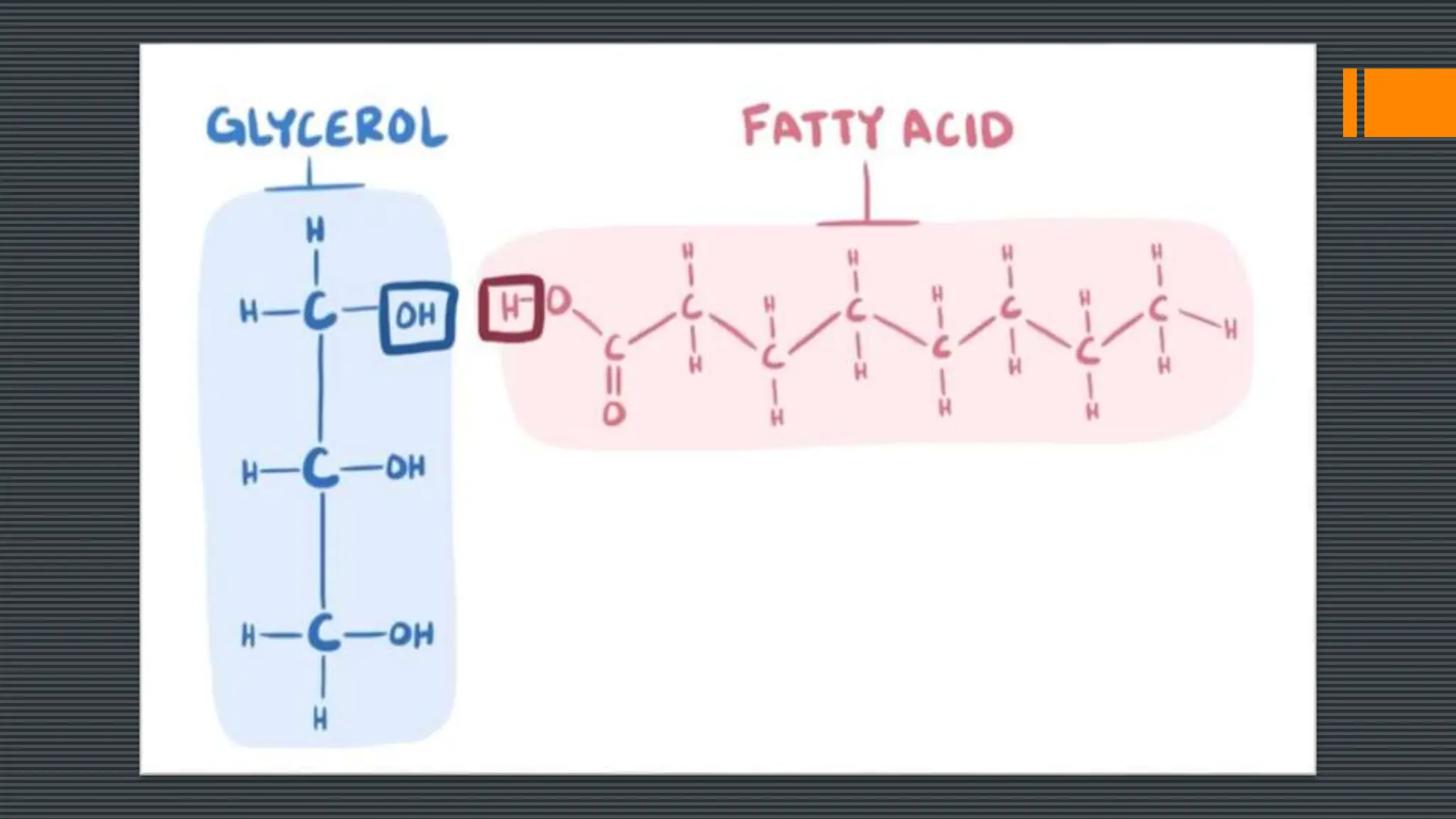
Esterification of glycerol with a fatty acid
produces a neutral glyceride.
Monoglycerides, diglycerides, or
triglycerides.
3. TRIGLYCEROLS
Main storage forms of fatty acids.
(TAGs) esters of fatty acids bound to glycerol;
sometimes referred to as neutral fats.
Depending on the number of bound fatty acids to
glycerol, they may be called as monoacylglycerols,
diacyglycerols, or triacylglycerols.
Depending on their fatty acid
compositions, TAGs may be classified
as:
Fats – contain a large proportion of
saturated fatty acids; solids at room
temperature.
Oils – contain a large proportion of
unsaturated fatty acids; liquids at room
temperature.
4. WAX ESTERS
Waxes are complex mixtures of lipids which
serve as protective coatings on plant
surfaces, and the skin and fur of animals.
Wax esters – esters of long-chain fatty
acids and long-chain alcohols
5. PHOSPHOLIPIDS
 Amphipathic molecules; contain a polar head (phosphate or other
charged polar groups) and a hydrophobic tail (hydrocarbon chains of
fatty acids).
 All phospholipids may be considered as derivatives of phosphatic
acid.
 Upon suspension in water, phospholipids naturally arrange to form
bilayers. Hydrophobic groups are placed in the interior to exclude
water, while hydrophilic groups are oriented so that they are exposed
to water. Because of this, phospholipids are the major components of
cellular membranes.
NONGLYCERIDE LIPIDS
4. SPHINGOLIPIDS
Contains sphingosine
Similar to phospholipids, they are important
components of cellular membranes, instead
of glycerol, they are based on a long-chain
amino alcohol known as sphingosine.
TYPES OF SPHINGOLIPIDS
 Sphingomyelin – ceramide is esterified to a phosphate
group (from phosphorylcholine or phosphorylethanolamine);
found in greatest abundance in the myelin sheath of nerve
cells. Its role is essential to proper cerebral function and
nerve transmission.
 Glycolipids (or glycosphingolipids) – do not contain
phosphate; has a carbohydrate attached via O-glycosidic
linkage to ceramide.
7. STEROIDS
 Triterpene derivatives with four fused rings; resembles
phenanthrene.
 Cholesterol – essential component of animal cell
membranes; important precursor of other important steroids
such as bile acids, adrenocortical hormones, sex hormones,
D vitamins, cardiac glycosides, sitosterols in plants, and
some alkaloids.
STEROIDS
Naturally occuring family of organic molecules of
biochemical and medical interest. The bile salts
that aid in the emulsification and digestion of lipids
are steroid molecules, as are sex hormones,
testosterone and estrone.
The steroids are members of a large, diverse
collection of lipids called the isoprenoids. All of
these compounds are built from one or more five-
carbon units called isoprene.
ISOPRENOIDS
A large group of biomolecules which
contain repeating 5-carbon structural units
known as isoprene units. Subclassified into
steroids and terpenes.
8. TERPENES
Isoprenols which are found largely in the essential
oils of plants and animals. General term of lipids
that are synthesized from isoprene units.
Examples are, steroids, bile salts, the lipid-soluble
vitamins, chlorophyll, and certain plant hormones.
CHOLESTEROL
 A common steroid is found in the membranes of most animal
cells. It is an amphipathic molecule and is readily soluble in
the hydrophobic region of membranes. Cholesterol, in
combination, with other substances, contributes to a
narrowing of the artery passageway. As narrowing increases,
more pressure is necessary to ensure adequate blood flow,
and high blood pressure (hypertension) develops.
Hypertension is also linked to heart disease.
In series of chemical reactions, cholesterol
is converted to the steroid progesterone,
the most important hormone associated
with pregnancy. Produced in the ovaries
and in the placenta, progesterone is
responsible for both the successful initiation
and the successful completion of
pregnancy.
WAXES
Are derived from many different sources and have
a variety of chemical compositions, depending on
the source.
Paraffin wax, composed of a mixture of solid
hydrocarbons (usually the straight chain
compounds).
Natural waxes generally are composed of a long-
chain fatty acid esterified to a long-chain alcohol.
Long hydrocarbon tails are extremely hydrophobic,
waxes are completely insoluble in water.
COMPLEX LIPIDS
 Are lipids that are bonded to other types of molecules. The
most common and important complex lipids are plasma
lipoproteins, which are responsible for the transport of other
lipids in the body.
 Lipoprotein particles consist of a core of hydrophobic lipids
surrounded by amphipatic proteins, phospholipids, and
cholesterol.
4 MAJOR CLASSES OF HUMAN
PLASMA LIPOPROTEINS:
 CHYLOMICRONS – which have a density of less than 0.95
g/mL, carry dietary triglycerides from the intestine to other
tissues. The remaining lipoproteins are classified by their
densities.
 VERY LOW DENSITY LIPOPROTEINS (VLDL) – have a
density of 0.95-1.019 g/mL. They bind triglycerides
synthesized in the liver and carry them to adipose and other
tissues for storage.
LOW-DENSITY LIPOPROTEINS (LDL) – are
characterized by a density of 1.019-1.063 g/mL.
They carry cholesterol to peripheral issues and
help regulate cholesterol levels in those tissues.
These are richest in cholesterol, frequently
carrying 40% of the plasma cholesterol.
HIGH-DENSITY LIPOPROTEINS (HDL) – have a
density of 1.063-1.210 g/mL. They are bound to
plasma cholesterol; however, they transport
cholesterol from peripheral tissues to the liver.
9. LIPID VITAMINS
 Vitamin A – participates in the visual cycle in rod cells; active molecule is
retinal.
 Vitamin D – involved in the regulation of calcium and phosphorus
metabolism; most abundant form in the circulatory system is vitamin D3.
 Vitamin E – antioxidant which traps radicals formed as a result of
phospholipid hydrocarbon chain oxidation by oxygen gas; active molecule
is a-tocopherol.
 Vitamin K – plays an important role in the blood-clotting process; long
unsaturated hydrocarbon side consists of repeating isoprene units.
10. KETONE BODIES
Molecules formed when fatty acid
breakdown predominates over
carbohydrate breakdown. Include
acetoacetate, B-hydroxybutyrate, and
acetone.
LIPOPROTEINS
Any protein linked to a lipid group; most
often applied to a group of structures found
in the plasma of mammals which transport
lipid molecules through the blood.
Lipoprotein are classified according to
density.
THANK YOU
The structure of lipids and it's components

The structure of lipids and it's components

  • 2.
  • 3.
    Lipids are heterogeneousgroup of compounds including fats, oils, steriods, waxes, and related compounds. They are related by their physical rather than by their chemical properties. These properties are: They are relatively insoluble in water; and They are soluble in nonpolar solvents
  • 4.
    4 MAIN GROUPSOF LIPIDS 1. Fatty acids (unsaturated and saturated) 2. Glycerides (glycerol-containing lipids) 3. Nonglyceride lipids (sphingolipids. Steroids, waxes) 4. Complex lipids
  • 5.
    IMPORTANCE OF LIPIDSIN BIOLOGICAL PROCESS  Energy source – Excellent source of energy for the body. When oxidized, each gram of fat releases 9 kilocalories (kcal) of energy, or more than twice the energy released by oxidation of a gram of carbohydrate.  Energy storage – Most of the energy stored in the body is in the form of lipids (triglycerides). Stored in fat cells called, adipocytes, these fats are a particularly rich source of energy for the body.
  • 6.
     Cell membranestructural components – Phosphogycerides, sphingolipids, and steroids make up the basic structure of all cell structure of all cell membranes. These membranes control the flow of molecules into and out of cells and allow cell-to-cell communication.  Hormones – The steroid hormones are critical chemical messengers that allow tissues of the body to communicate with one another. The hormone like prostaglandins exert strong biological effects on both the cells that produce them and other cells of the body.  Vitamins – The lipid-soluble vitamins, A, D, E, and K, play a major role in the regulation of several critical biological processes, including blood clotting and vision.
  • 8.
     Vitamin absorption– Dietary fat serves as a carrier of the lipid-soluble vitamins. All are transported into cells of the small intestine in association with fat molecules. Therefore, a diet that is too low in fat (less than 20% of calories) can result in a deficiency of these four vitamins.  Protection – Fats serve as a shock absorber, or protective layer, for the vital organs. About 4% of the total body fat is reserved for this critical function.  Insulation – Fat stored beneath the skin (subcutaneous fat) serves to insulate the body from extremes of cold temperatures.
  • 9.
  • 10.
    Fatty acids –Metabolic fuel; Building blocks for other lipids Triacylglycerides – Main storage form of fatty acids and chemical energy. Phospholipids – Component of membranes; Sources of arachidonic acid, inositol triphosphate, and diglyceride for signal transduction. Sphingolipids – Component of membranes Cholesterol – Component of membranes; Precursor of bile salts and steroid humans. Bile salts – Lipid digestion and absorption; Main product of cholesterol metabolism.
  • 11.
    Steroid hormones –Intracellular signals that regulate gene expression in target cells Eicosanoids – Regulators of physiological functions. Vitamins – Vision, Calcium metabolism, Antioxidants, blood coagulation. Ketone bodies – Metabolic fuel
  • 12.
    STRUCTURE OF LIPIDS 1.FATTY ACIDS – monocarboxylic acids that typically contain hydrocarbon chains of variable lengths (usually 12 to 20 carbons long). Saturated fatty acids – only contain C-C single bonds. Unsaturated fatty acids – contain one or more C=C double bonds  MONOUNSATURATED FATTY ACIDS – contains only one C=C double bond.  POLYUNSATURATED FATTY ACIDS – contains two or more C=C double bonds.
  • 24.
    Melting points ofsaturated fatty acids increase with increasing and number, as is the case with alkanes. Saturated fatty acids containing ten or more carbons are solids at room temperature. The melting point of a saturated fatty acid is greater than that of an unsaturated fatty acid of the same chain length. The reason is that saturated fatty acid chains tend to be fully extended and to stack in a regular structure, thereby causing increased intermolecular attraction.
  • 25.
    CIS AND TRANSISOMERISM Unsaturated fatty acids can exhibit cis and trans isomerism. Nearly all naturally occurring fatty acids are in the cis configuration. Trans double bonds are formed from the catalytic hydrogenation of vegetable oils to make margarine. Cis-fatty acids possess a bent (120◦) structure while trans-fatty acids are linear.
  • 26.
  • 27.
  • 28.
    DIETARY FATTY ACIDS Nonessentialfatty acids – can be synthesized in the body. Essential fatty acids – cannot be synthesized and must be obtained from the diet (e.g., linoleic acid, linoleric acid)
  • 29.
    2. EICOSANOIDS Derived fromeither arachidonic acid or EPA; they are a diverse group of hormonelike molecules produced in mammalian tissue. Prostaglandin – involved in inflammation, reproduction, and digestion; contain a cyclopentane ring and hydroxy groups at C11 and C15.
  • 30.
    Thromboxane – involvedin platelet aggregation and vasoconstriction; contain a cyclic ether. Leukotrienes – attract immune system cells to damaged tissue (chemostatic agents); have linear structures.
  • 31.
    BRIEF SUMMARY OFBIOLOGICAL PROCESSES THAT ARE THOUGHT TO BE REGULATED BY PROSTAGLANDINS, LEUKOTRIENES, AND THROMBOXANES
  • 32.
    BLOD CLOTTING  ThromboxaneA2 is produced by platelets in the blood and stimulates constriction of the blood vessels and aggregation of the platelets. PGI2 (prostacyclin) is produced by the cells lining the blood vessels and has precisely the opposite effect of thromboxane A2.
  • 33.
    THE INFLAMMATORY RESPONSE  Prostaglandinsare thought to promote certain aspects of the inflammatory response, especially pain and fever. Drugs such as aspirin block prostaglandin synthesis and help to relieve the symptoms.
  • 34.
    REPRODUCTIVE SYSTEM PGE2 stimulatessmooth muscle contraction, particularly uterine contractions. An increase in the level of prostaglandins has been noted immediately before the onset of labor. PGE2 has also been used to induce second trimester abortions.
  • 35.
    GASTROINTESTINAL TRACT  Prostaglandinshave been shown to both inhibit the secretion of acid and increase the secretion of a protective mucus layer into the stomach. Prostaglandins help to protect the stomach lining.
  • 36.
    KIDNEYS Prostaglandins produced inthe kidneys cause the renal blood vessels to dilate. The greater the flow of blood through the kidney results in increased water and electrolyte secretion.
  • 37.
    RESPIRATORY TRACT Eicosanoids producedby certain white blood cells, the leukotrienes, promote the constriction of the bronchi associated with asthma. Other prostaglandins promote bronchodilation.
  • 38.
    OMEGA-3 FATTY ACIDS According to American Heart Association (AHA), they issued a dietary guidelines that it is recommended to eat at least two servings of “oily” fish in our diet each week.  Salmon, albacore tuna, sardines, lake trout, and mackerel. These fish contain high levels of two omega-3 fatty acids called eicosapentanoic acid (EPA) and the docosahexanoic acid (DHA).
  • 39.
  • 42.
    NEUTRAL GLYCERIDES  Arelipid esters that contain the glycerol molecule and fatty acids.  Neutral glycerides and phosphoglyceride.  Neutral glycerides are non-ionic and nonpolar  Phosphoglyceride molecules have a polar region.
  • 43.
    Esterification of glycerolwith a fatty acid produces a neutral glyceride. Monoglycerides, diglycerides, or triglycerides.
  • 44.
    3. TRIGLYCEROLS Main storageforms of fatty acids. (TAGs) esters of fatty acids bound to glycerol; sometimes referred to as neutral fats. Depending on the number of bound fatty acids to glycerol, they may be called as monoacylglycerols, diacyglycerols, or triacylglycerols.
  • 45.
    Depending on theirfatty acid compositions, TAGs may be classified as: Fats – contain a large proportion of saturated fatty acids; solids at room temperature. Oils – contain a large proportion of unsaturated fatty acids; liquids at room temperature.
  • 46.
    4. WAX ESTERS Waxesare complex mixtures of lipids which serve as protective coatings on plant surfaces, and the skin and fur of animals. Wax esters – esters of long-chain fatty acids and long-chain alcohols
  • 47.
    5. PHOSPHOLIPIDS  Amphipathicmolecules; contain a polar head (phosphate or other charged polar groups) and a hydrophobic tail (hydrocarbon chains of fatty acids).  All phospholipids may be considered as derivatives of phosphatic acid.  Upon suspension in water, phospholipids naturally arrange to form bilayers. Hydrophobic groups are placed in the interior to exclude water, while hydrophilic groups are oriented so that they are exposed to water. Because of this, phospholipids are the major components of cellular membranes.
  • 48.
  • 49.
    4. SPHINGOLIPIDS Contains sphingosine Similarto phospholipids, they are important components of cellular membranes, instead of glycerol, they are based on a long-chain amino alcohol known as sphingosine.
  • 50.
    TYPES OF SPHINGOLIPIDS Sphingomyelin – ceramide is esterified to a phosphate group (from phosphorylcholine or phosphorylethanolamine); found in greatest abundance in the myelin sheath of nerve cells. Its role is essential to proper cerebral function and nerve transmission.  Glycolipids (or glycosphingolipids) – do not contain phosphate; has a carbohydrate attached via O-glycosidic linkage to ceramide.
  • 51.
    7. STEROIDS  Triterpenederivatives with four fused rings; resembles phenanthrene.  Cholesterol – essential component of animal cell membranes; important precursor of other important steroids such as bile acids, adrenocortical hormones, sex hormones, D vitamins, cardiac glycosides, sitosterols in plants, and some alkaloids.
  • 52.
    STEROIDS Naturally occuring familyof organic molecules of biochemical and medical interest. The bile salts that aid in the emulsification and digestion of lipids are steroid molecules, as are sex hormones, testosterone and estrone.
  • 53.
    The steroids aremembers of a large, diverse collection of lipids called the isoprenoids. All of these compounds are built from one or more five- carbon units called isoprene.
  • 54.
    ISOPRENOIDS A large groupof biomolecules which contain repeating 5-carbon structural units known as isoprene units. Subclassified into steroids and terpenes.
  • 55.
    8. TERPENES Isoprenols whichare found largely in the essential oils of plants and animals. General term of lipids that are synthesized from isoprene units. Examples are, steroids, bile salts, the lipid-soluble vitamins, chlorophyll, and certain plant hormones.
  • 56.
    CHOLESTEROL  A commonsteroid is found in the membranes of most animal cells. It is an amphipathic molecule and is readily soluble in the hydrophobic region of membranes. Cholesterol, in combination, with other substances, contributes to a narrowing of the artery passageway. As narrowing increases, more pressure is necessary to ensure adequate blood flow, and high blood pressure (hypertension) develops. Hypertension is also linked to heart disease.
  • 59.
    In series ofchemical reactions, cholesterol is converted to the steroid progesterone, the most important hormone associated with pregnancy. Produced in the ovaries and in the placenta, progesterone is responsible for both the successful initiation and the successful completion of pregnancy.
  • 60.
    WAXES Are derived frommany different sources and have a variety of chemical compositions, depending on the source. Paraffin wax, composed of a mixture of solid hydrocarbons (usually the straight chain compounds). Natural waxes generally are composed of a long- chain fatty acid esterified to a long-chain alcohol. Long hydrocarbon tails are extremely hydrophobic, waxes are completely insoluble in water.
  • 61.
    COMPLEX LIPIDS  Arelipids that are bonded to other types of molecules. The most common and important complex lipids are plasma lipoproteins, which are responsible for the transport of other lipids in the body.  Lipoprotein particles consist of a core of hydrophobic lipids surrounded by amphipatic proteins, phospholipids, and cholesterol.
  • 62.
    4 MAJOR CLASSESOF HUMAN PLASMA LIPOPROTEINS:  CHYLOMICRONS – which have a density of less than 0.95 g/mL, carry dietary triglycerides from the intestine to other tissues. The remaining lipoproteins are classified by their densities.  VERY LOW DENSITY LIPOPROTEINS (VLDL) – have a density of 0.95-1.019 g/mL. They bind triglycerides synthesized in the liver and carry them to adipose and other tissues for storage.
  • 63.
    LOW-DENSITY LIPOPROTEINS (LDL)– are characterized by a density of 1.019-1.063 g/mL. They carry cholesterol to peripheral issues and help regulate cholesterol levels in those tissues. These are richest in cholesterol, frequently carrying 40% of the plasma cholesterol. HIGH-DENSITY LIPOPROTEINS (HDL) – have a density of 1.063-1.210 g/mL. They are bound to plasma cholesterol; however, they transport cholesterol from peripheral tissues to the liver.
  • 64.
    9. LIPID VITAMINS Vitamin A – participates in the visual cycle in rod cells; active molecule is retinal.  Vitamin D – involved in the regulation of calcium and phosphorus metabolism; most abundant form in the circulatory system is vitamin D3.  Vitamin E – antioxidant which traps radicals formed as a result of phospholipid hydrocarbon chain oxidation by oxygen gas; active molecule is a-tocopherol.  Vitamin K – plays an important role in the blood-clotting process; long unsaturated hydrocarbon side consists of repeating isoprene units.
  • 65.
    10. KETONE BODIES Moleculesformed when fatty acid breakdown predominates over carbohydrate breakdown. Include acetoacetate, B-hydroxybutyrate, and acetone.
  • 66.
    LIPOPROTEINS Any protein linkedto a lipid group; most often applied to a group of structures found in the plasma of mammals which transport lipid molecules through the blood. Lipoprotein are classified according to density.
  • 68.

Editor's Notes

  • #4 Non-polar solvents are solvents that are composed of atoms that have small differences in electronegativity and are called non-polar solvents. 
  • #28 What is Esterification Reaction? When primary alcohol is treated with a carboxylic acid in the presence of sulphuric acid a compound is formed. This compound has a sweet smell. The compound obtained is called ester. The chemical reaction occurring in the formation of the ester is known as an esterification reaction. Saponification is the process of creating soap. Soaps are nothing more than potassium or sodium salts of long-chain fatty acids. Ester reacts with an inorganic base to produce alcohol and soap during saponification.
  • #29 There are two types of fatty acids: essential and nonessential. The body can create nonessential fatty acids by converting amino acids in the foods a person eats. However, the body cannot create essential fatty acids. It can only get them directly from food sources.
  • #31 a hormone of the prostacyclin type released from blood platelets. It induces platelet aggregation and arterial constriction. Leukotrienes are inflammatory chemicals the body releases after coming in contact with an allergen or allergy trigger. Leukotrienes cause tightening of airway muscles and the production of excess mucus and fluid.
  • #35 Prostaglandin E2 (PGE2), also known by the name dinoprostone, is a naturally occurring compound involved in promoting labor, though it is also present in the inflammatory pathway.[1] Prostaglandin E2 is FDA approved for cervical ripening for the induction of labor in patients for which there is a medical indication for induction Prostaglandin E2 (PGE2), a principal mediator of inflammation, plays a critical role in cervical ripening. Its biosynthesis in the cervix involves conversion of arachidonic acid to prostaglandin H2 (PGH2) by PGH2 synthase (PTGS2) and conversion of PGH2 to PGE2 by prostaglandin E synthase 2 (PTGES2).
  • #45 Triacylglycerols (TAGs) are chemical compounds that are major components of vegetable oils and animal fats. TAG are formed by one molecule of glycerol esterified by fatty acid molecules in all three OH groups. The chemical formula of TAG is RCOO-CH2-CH(-OOCR')CH2OOCR" wherein R, R', and R" are long alkyl chains.
  • #48 An amphipathic molecule is a compound comprising a hydrophilic head and a hydrophobic tail. The hydrophilic head is the polar part interacting with water, while the hydrophobic tail is the nonpolar section refraining from interactions with water. Phosphatidic acid is the simplest (diacyl)glycerophospholipid present in cells and is now a well established second messenger with direct biological functions. It is specifically recognized by diverse proteins and plays an important role in cellular signaling and membrane dynamics in all eukaryotes.
  • #53 Emulsification is the process of mixing two immiscible phases(e.g., oil and water) with the aid of a surface active agent (emulsifier) into homogeneous dispersion or emulsion.
  • #56 Terpenes are naturally occurring chemical compounds found in plants and some animals. They're responsible for the aromas, flavors, and even colors associated with various types of vegetation. In terms of cannabis, terpenes are what make certain strains smell or taste different from others.