Lipids Types of Lipids Fatty Acids Fats, and Oils Chemical Properties of Triglycerides
Types of Lipids Lipids with fatty acids Waxes Fats and oils (trigycerides) Phospholipids Sphingolipids Lipids without fatty acids Steroids
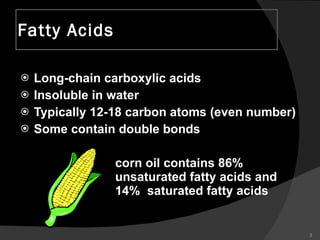
Fatty Acids Long-chain carboxylic acids Insoluble in water Typically 12-18 carbon atoms (even number) Some contain double bonds corn oil contains 86%  unsaturated fatty acids and  14%  saturated fatty acids
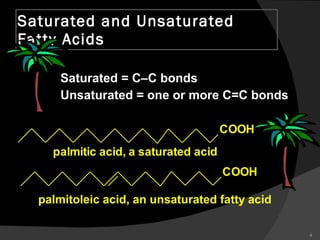
Saturated and Unsaturated Fatty Acids Saturated = C–C bonds Unsaturated = one or more C=C bonds
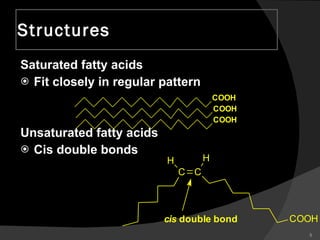
Structures Saturated fatty acids Fit closely in regular pattern Unsaturated fatty acids Cis double bonds
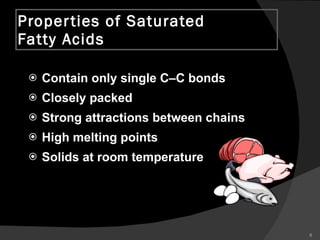
Properties of Saturated Fatty Acids Contain only single C–C bonds Closely packed  Strong attractions between chains High melting points Solids at room temperature
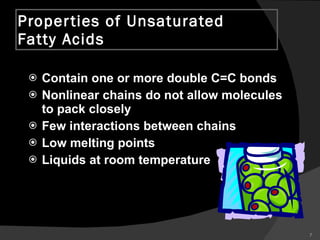
Properties of Unsaturated Fatty Acids Contain one or more double C=C bonds Nonlinear chains do not allow molecules to pack closely Few interactions between chains Low melting points Liquids at room temperature
Learning Check L1 How would the melting point of stearic acid compare to the melting points of oleic acid and linoleic acid? Assign the melting points of –17°C, 13°C, and 69°C to the correct fatty acid.  Explain. stearic acid  (18 C)  saturated oleic acid  (18 C)  one double bond linoleic acid  (18 C)  two double bonds
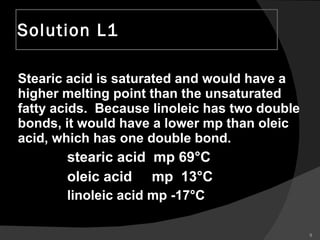
Solution L1 Stearic acid is saturated and would have a higher melting point than the unsaturated fatty acids.  Because linoleic has two double bonds, it would have a lower mp than oleic acid, which has one double bond. stearic acid  mp 69°C oleic acid  mp  13°C linoleic acid mp -17°C
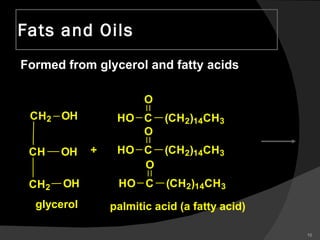
Fats and Oils Formed from glycerol and fatty acids
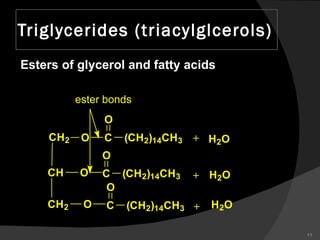
Triglycerides (triacylglcerols) Esters of glycerol and fatty acids
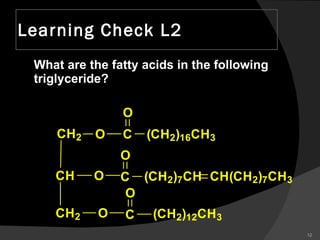
Learning Check L2 What are the fatty acids in the following triglyceride?
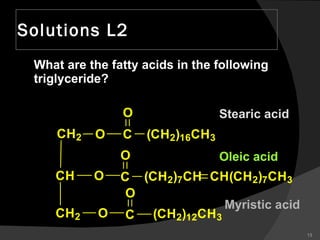
Solutions L2 What are the fatty acids in the following triglyceride? Stearic acid Oleic acid Myristic acid
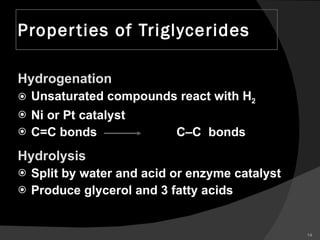
Properties of Triglycerides Hydrogenation Unsaturated compounds react with H 2   Ni or Pt catalyst C=C bonds    C–C bonds Hydrolysis Split by water and acid or enzyme catalyst Produce glycerol and 3 fatty acids
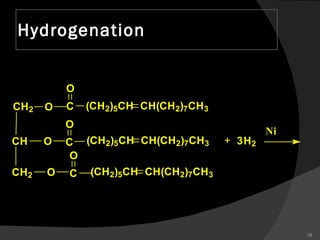
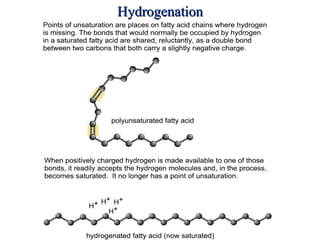
Hydrogenation
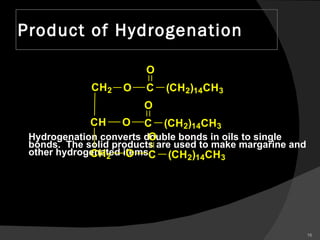
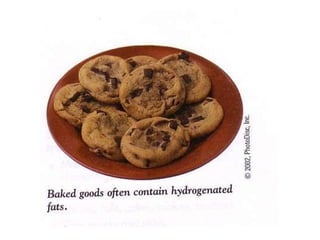
Product of Hydrogenation Hydrogenation converts double bonds in oils to single bonds.  The solid products are used to make margarine and other hydrogenated items .
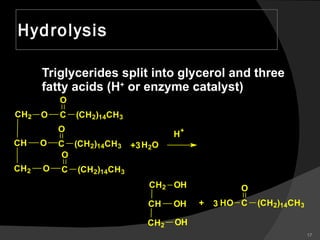
Hydrolysis Triglycerides split into glycerol and three fatty acids (H +  or enzyme catalyst)
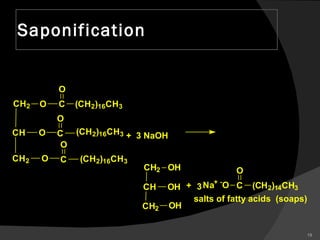
Saponification and Soap Hydrolysis with a strong base Triglycerides split into glycerol and the salts of fatty acids  The salts of fatty acids are “soaps” KOH gives softer soaps
Saponification
Learning Check L3 What are the products obtained from the complete hydrogenation  of glyceryl trioleate? (1)  Glycerol and 3 oleic acids (2)  Glyceryltristearate (3)  Glycerol and 3 stearic acids
Solution L3 What are the products obtained from the complete hydrogenation  of glyceryl trioleate? 2.  Glyceryltristearate
The Lipids:  Triglycerides, Phospholipids and Sterols
Lipids Objectives 1.  Understand the chemical composition and differences between fats 2.  Explain the structural and functional processes of triglycerides, phospholipids, and sterols 3.  Describe the process of fat digestion and absorption 4.  Discuss the different types of lipoproteins in the body 5.  Clarify the recommended intakes of fat and essential fatty acid requirements to meet daily nutritive needs 6.  Describe the health-risk factors with over consumption of lipids in the diet
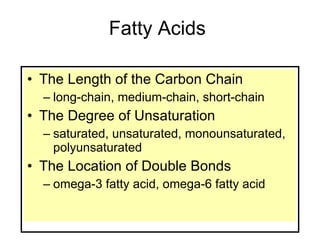
Fatty Acids The Length of the Carbon Chain long-chain, medium-chain, short-chain The Degree of Unsaturation saturated, unsaturated, monounsaturated, polyunsaturated The Location of Double Bonds omega-3 fatty acid, omega-6 fatty acid
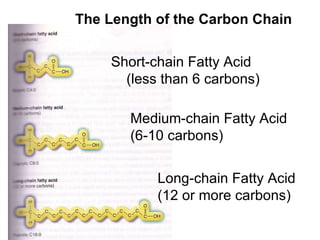
The Length of the Carbon Chain Short-chain Fatty Acid (less than 6 carbons) Medium-chain Fatty Acid (6-10 carbons) Long-chain Fatty Acid (12 or more carbons)
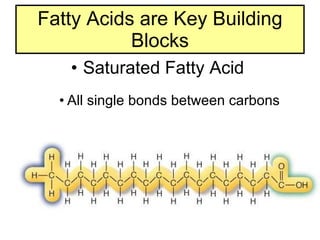
Fatty Acids are Key Building Blocks Saturated Fatty Acid  All single bonds between carbons
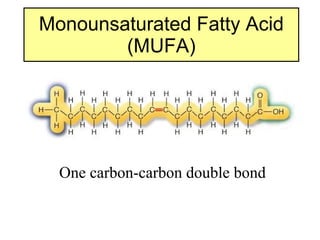
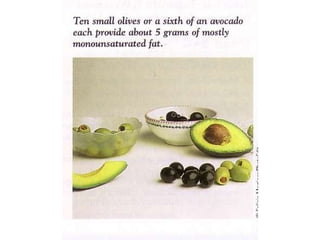
Monounsaturated Fatty Acid (MUFA) One carbon-carbon double bond
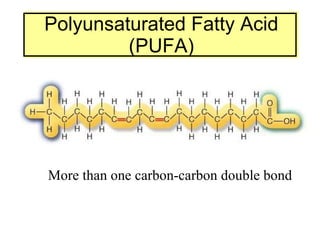
Polyunsaturated Fatty Acid (PUFA) More than one carbon-carbon double bond
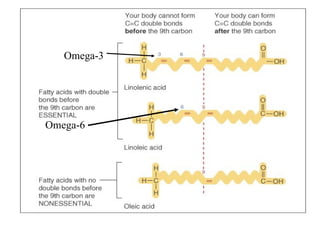
Location of Double Bonds PUFA are identified by position of the double bond nearest the methyl end (CH 3 ) of the carbon chain; this is described as a omega number; If PUFA has first double bond 3 carbons away from the methyl end=omega 3 FA 6 carbons from methyl end=omega 6 FA
Degree of Unsaturation Firmness saturated vs. unsaturated Stability oxidation, antioxidants Hydrogenation advantages, disadvantages Trans-Fatty Acids from hydrogenation
Hydrogenation
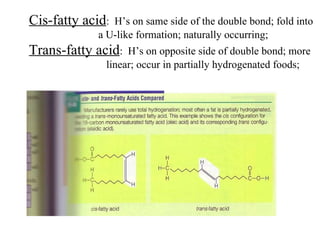
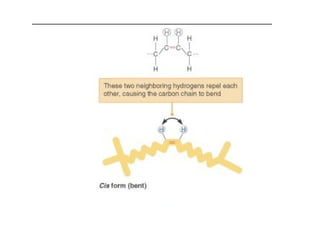
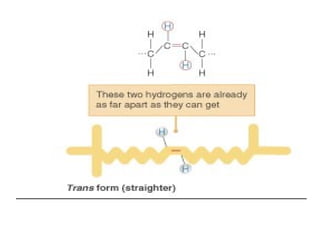
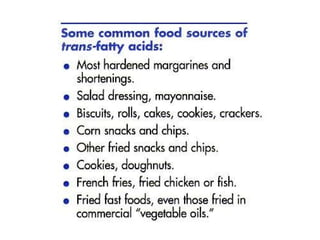
Cis-fatty acid :  H’s on same side of the double bond; fold into a U-like formation; naturally occurring; Trans-fatty acid :  H’s on opposite side of double bond; more linear; occur in partially hydrogenated foods;
 
 
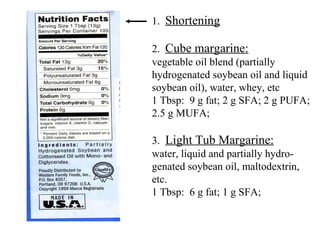
1.  Shortening 2.  Cube margarine: vegetable oil blend (partially hydrogenated soybean oil and liquid  soybean oil), water, whey, etc 1 Tbsp:  9 g fat; 2 g SFA; 2 g PUFA; 2.5 g MUFA; 3.  Light Tub Margarine: water, liquid and partially hydro- genated soybean oil, maltodextrin, etc. 1 Tbsp:  6 g fat; 1 g SFA;
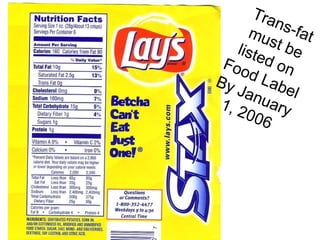
Trans-fat must be listed on  Food Label  By January 1, 2006
 
 
But, is all Trans Fat  Bad? CLA Conjugated Linoleic Acid
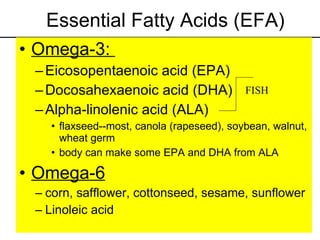
Essential Fatty Acids (EFA) Omega-3:  Eicosopentaenoic acid (EPA) Docosahexaenoic acid (DHA) Alpha-linolenic acid (ALA) flaxseed--most, canola (rapeseed), soybean, walnut, wheat germ body can make some EPA and DHA from ALA Omega-6 corn, safflower, cottonseed, sesame, sunflower Linoleic acid FISH
Omega-3 Omega-6
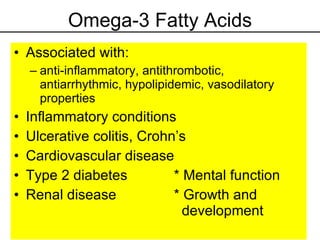
Omega-3 Fatty Acids Associated with: anti-inflammatory, antithrombotic, antiarrhythmic, hypolipidemic, vasodilatory properties Inflammatory conditions Ulcerative colitis, Crohn’s Cardiovascular disease Type 2 diabetes * Mental function Renal disease * Growth and     development
Essential Fatty Acid Deficiency Classical symptoms include: growth retardation, reproductive failure, skin lesions, kidney and liver disorders, subtle neurological and visual problems People with chronic intestinal diseases Depression--omega-3 ?inadequate intake alters brain activity or depression alters fatty acid metabolism? Attention Deficit Hyperactivity Disorder lower levels of omega-3--more behavioral problems
Eicosanoids:   made from EFA --derivatives of 20-carbon fatty acids; --affect cells where they are made; --have different effects in different cells --cause muscles to contract and muscles to relax; -- help regulate blood pressure, blood clot  formation, blood lipids, and immune response; --participate in immune response to injury and  infection, producing fever, inflammation, and pain; --include:prostaglandins, thromboxanes, leukotrienes
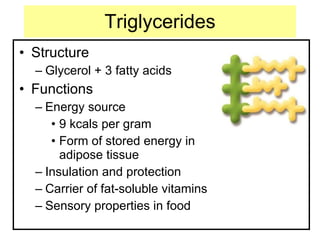
Triglycerides Structure Glycerol + 3 fatty acids Functions Energy source 9 kcals per gram Form of stored energy in adipose tissue Insulation and protection Carrier of fat-soluble vitamins Sensory properties in food
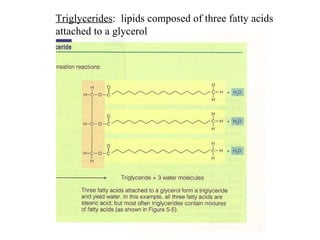
Triglycerides :  lipids composed of three fatty acids  attached to a glycerol
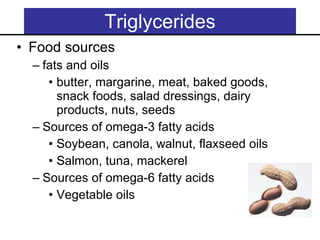
Triglycerides Food sources fats and oils butter, margarine, meat, baked goods, snack foods, salad dressings, dairy products, nuts, seeds Sources of omega-3 fatty acids Soybean, canola, walnut, flaxseed oils Salmon, tuna, mackerel Sources of omega-6 fatty acids Vegetable oils
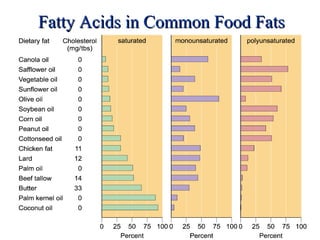
Fatty Acids in Common Food Fats
 
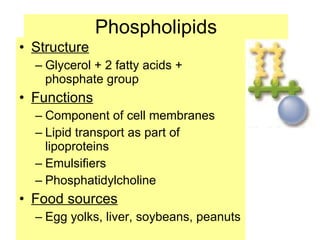
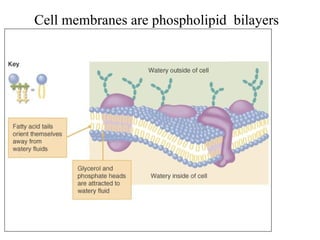
Phospholipids Structure Glycerol + 2 fatty acids + phosphate group Functions Component of cell membranes Lipid transport as part of lipoproteins Emulsifiers Phosphatidylcholine Food sources Egg yolks, liver, soybeans, peanuts
Cell membranes are phospholipid  bilayers
 
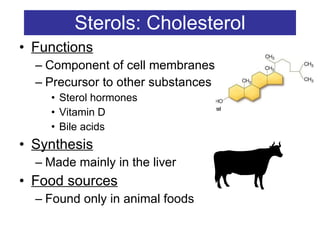
Sterols: Cholesterol Functions Component of cell membranes Precursor to other substances Sterol hormones Vitamin D Bile acids Synthesis Made mainly in the liver Food sources Found only in animal foods
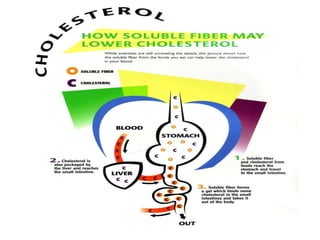
Lipid Digestion In the Mouth hard fats begin to melt; lingual lipase In the Stomach gastric lipase--SCFA In the Small Intestine release of CCK; bile-emulsifier; fat drawn into surrounding watery fluids; intestinal lipases; remove each TG fatty acid; leave glycerol; Bile Routes reabsorbed or trapped by dietary fiber
 
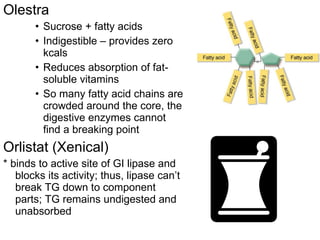
Olestra Sucrose + fatty acids Indigestible – provides zero kcals Reduces absorption of fat-soluble vitamins So many fatty acid chains are crowded around the core, the digestive enzymes cannot find a breaking point Orlistat (Xenical) * binds to active site of GI lipase and blocks its activity; thus, lipase can’t break TG down to component parts; TG remains undigested and unabsorbed
Metabolic Pathways and Energy Production Metabolism and ATP Energy Important Coenzymes  Glycolysis
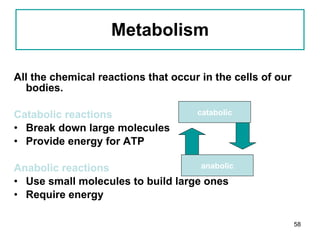
Metabolism All the chemical reactions that occur in the cells of our bodies. Catabolic reactions Break down large molecules  Provide energy for ATP Anabolic reactions Use small molecules to build large ones Require energy catabolic anabolic
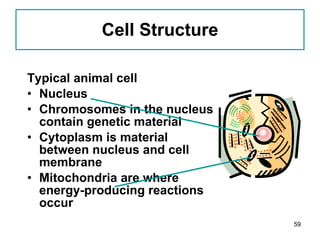
Cell Structure Typical animal cell Nucleus Chromosomes in the nucleus contain genetic material Cytoplasm is material between nucleus and cell membrane Mitochondria are where energy-producing reactions occur
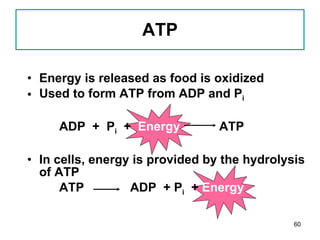
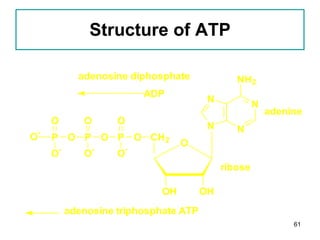
ATP Energy is released as food is oxidized Used to form ATP from ADP and P i ADP  +  P i   +  Energy   ATP In cells, energy is provided by the hydrolysis of ATP ATP   ADP  + P i   +  Energy
Structure of ATP
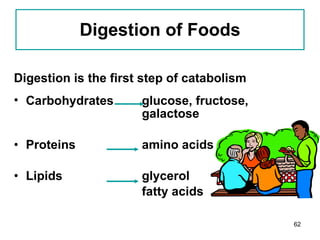
Digestion of Foods Digestion is the first step of catabolism Carbohydrates glucose, fructose,  galactose Proteins amino acids Lipids glycerol  fatty acids
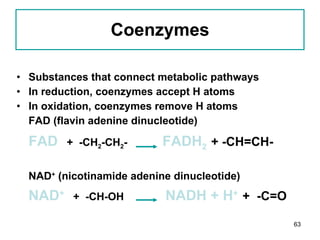
Coenzymes Substances that connect metabolic pathways In reduction, coenzymes accept H atoms In oxidation, coenzymes remove H atoms  FAD (flavin adenine dinucleotide)  FAD   +  -CH 2 -CH 2 -    FADH 2  + -CH=CH- NAD +  (nicotinamide adenine dinucleotide) NAD +   +  -CH-OH   NADH + H +  +  -C=O
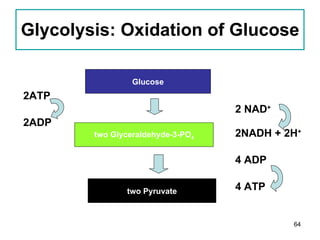
Glycolysis: Oxidation of Glucose 2ATP 2 NAD + 2ADP 2NADH + 2H + 4 ADP 4 ATP Glucose two Glyceraldehyde-3-PO 4 two Pyruvate
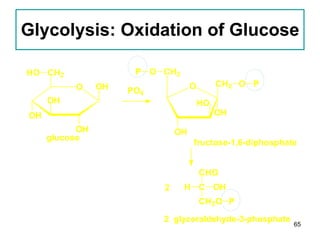
Glycolysis: Oxidation of Glucose
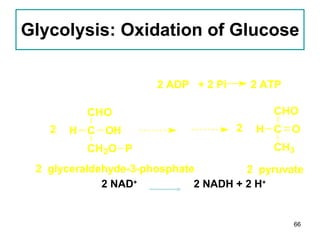
Glycolysis: Oxidation of Glucose   2 NAD +   2 NADH + 2 H +
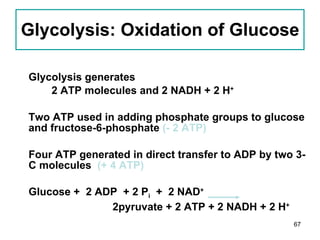
Glycolysis: Oxidation of Glucose Glycolysis generates    2 ATP molecules and 2 NADH + 2 H + Two ATP used in adding phosphate groups to glucose and fructose-6-phosphate  (- 2 ATP) Four ATP generated in direct transfer to ADP by two 3-C molecules  (+ 4 ATP) Glucose +  2 ADP  + 2 P i   +  2 NAD +   2pyruvate + 2 ATP + 2 NADH + 2 H +
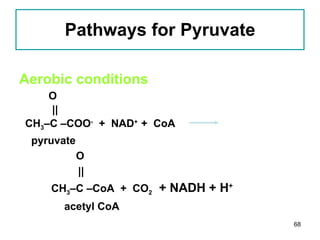
Pathways for Pyruvate Aerobic conditions   O || CH 3 –C –COO -   +  NAD +  +  CoA pyruvate O     || CH 3 –C –CoA  +  CO 2   + NADH + H + acetyl CoA
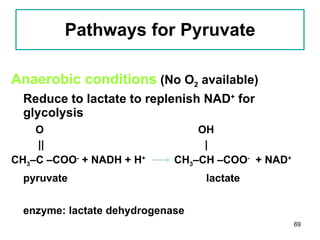
Pathways for Pyruvate Anaerobic conditions  (No O 2  available) Reduce to lactate to replenish NAD +  for glycolysis O   OH ||   | CH 3 –C –COO -  + NADH + H +   CH 3 –CH –COO -   + NAD + pyruvate    lactate enzyme: lactate dehydrogenase
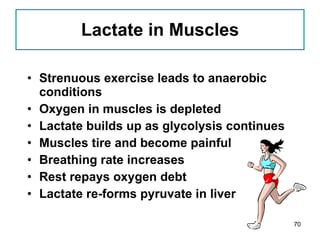
Lactate in Muscles Strenuous exercise leads to anaerobic conditions Oxygen in muscles is depleted Lactate builds up as glycolysis continues Muscles tire and become painful Breathing rate increases Rest repays oxygen debt  Lactate re-forms pyruvate in liver
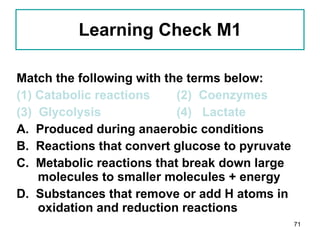
Learning Check M1 Match the following with the terms below: (1) Catabolic reactions (2)  Coenzymes (3)  Glycolysis (4)  Lactate A.  Produced during anaerobic conditions B.  Reactions that convert glucose to pyruvate C.  Metabolic reactions that break down large molecules to smaller molecules + energy D.  Substances that remove or add H atoms in oxidation and reduction reactions
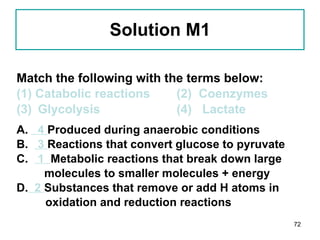
Solution M1 Match the following with the terms below: (1) Catabolic reactions (2)  Coenzymes Glycolysis (4)  Lactate A.  4  Produced during anaerobic conditions B.  3  Reactions that convert glucose to pyruvate C.  1  Metabolic reactions that break down large   molecules to smaller molecules + energy D.   2  Substances that remove or add H atoms in oxidation and reduction reactions

Main lecture for lipids

  • 1.
    Lipids Types ofLipids Fatty Acids Fats, and Oils Chemical Properties of Triglycerides
  • 2.
    Types of LipidsLipids with fatty acids Waxes Fats and oils (trigycerides) Phospholipids Sphingolipids Lipids without fatty acids Steroids
  • 3.
    Fatty Acids Long-chaincarboxylic acids Insoluble in water Typically 12-18 carbon atoms (even number) Some contain double bonds corn oil contains 86% unsaturated fatty acids and 14% saturated fatty acids
  • 4.
    Saturated and UnsaturatedFatty Acids Saturated = C–C bonds Unsaturated = one or more C=C bonds
  • 5.
    Structures Saturated fattyacids Fit closely in regular pattern Unsaturated fatty acids Cis double bonds
  • 6.
    Properties of SaturatedFatty Acids Contain only single C–C bonds Closely packed Strong attractions between chains High melting points Solids at room temperature
  • 7.
    Properties of UnsaturatedFatty Acids Contain one or more double C=C bonds Nonlinear chains do not allow molecules to pack closely Few interactions between chains Low melting points Liquids at room temperature
  • 8.
    Learning Check L1How would the melting point of stearic acid compare to the melting points of oleic acid and linoleic acid? Assign the melting points of –17°C, 13°C, and 69°C to the correct fatty acid. Explain. stearic acid (18 C) saturated oleic acid (18 C) one double bond linoleic acid (18 C) two double bonds
  • 9.
    Solution L1 Stearicacid is saturated and would have a higher melting point than the unsaturated fatty acids. Because linoleic has two double bonds, it would have a lower mp than oleic acid, which has one double bond. stearic acid mp 69°C oleic acid mp 13°C linoleic acid mp -17°C
  • 10.
    Fats and OilsFormed from glycerol and fatty acids
  • 11.
    Triglycerides (triacylglcerols) Estersof glycerol and fatty acids
  • 12.
    Learning Check L2What are the fatty acids in the following triglyceride?
  • 13.
    Solutions L2 Whatare the fatty acids in the following triglyceride? Stearic acid Oleic acid Myristic acid
  • 14.
    Properties of TriglyceridesHydrogenation Unsaturated compounds react with H 2 Ni or Pt catalyst C=C bonds C–C bonds Hydrolysis Split by water and acid or enzyme catalyst Produce glycerol and 3 fatty acids
  • 15.
  • 16.
    Product of HydrogenationHydrogenation converts double bonds in oils to single bonds. The solid products are used to make margarine and other hydrogenated items .
  • 17.
    Hydrolysis Triglycerides splitinto glycerol and three fatty acids (H + or enzyme catalyst)
  • 18.
    Saponification and SoapHydrolysis with a strong base Triglycerides split into glycerol and the salts of fatty acids The salts of fatty acids are “soaps” KOH gives softer soaps
  • 19.
  • 20.
    Learning Check L3What are the products obtained from the complete hydrogenation of glyceryl trioleate? (1) Glycerol and 3 oleic acids (2) Glyceryltristearate (3) Glycerol and 3 stearic acids
  • 21.
    Solution L3 Whatare the products obtained from the complete hydrogenation of glyceryl trioleate? 2. Glyceryltristearate
  • 22.
    The Lipids: Triglycerides, Phospholipids and Sterols
  • 23.
    Lipids Objectives 1. Understand the chemical composition and differences between fats 2. Explain the structural and functional processes of triglycerides, phospholipids, and sterols 3. Describe the process of fat digestion and absorption 4. Discuss the different types of lipoproteins in the body 5. Clarify the recommended intakes of fat and essential fatty acid requirements to meet daily nutritive needs 6. Describe the health-risk factors with over consumption of lipids in the diet
  • 24.
    Fatty Acids TheLength of the Carbon Chain long-chain, medium-chain, short-chain The Degree of Unsaturation saturated, unsaturated, monounsaturated, polyunsaturated The Location of Double Bonds omega-3 fatty acid, omega-6 fatty acid
  • 25.
    The Length ofthe Carbon Chain Short-chain Fatty Acid (less than 6 carbons) Medium-chain Fatty Acid (6-10 carbons) Long-chain Fatty Acid (12 or more carbons)
  • 26.
    Fatty Acids areKey Building Blocks Saturated Fatty Acid All single bonds between carbons
  • 27.
    Monounsaturated Fatty Acid(MUFA) One carbon-carbon double bond
  • 28.
    Polyunsaturated Fatty Acid(PUFA) More than one carbon-carbon double bond
  • 29.
    Location of DoubleBonds PUFA are identified by position of the double bond nearest the methyl end (CH 3 ) of the carbon chain; this is described as a omega number; If PUFA has first double bond 3 carbons away from the methyl end=omega 3 FA 6 carbons from methyl end=omega 6 FA
  • 30.
    Degree of UnsaturationFirmness saturated vs. unsaturated Stability oxidation, antioxidants Hydrogenation advantages, disadvantages Trans-Fatty Acids from hydrogenation
  • 31.
  • 32.
    Cis-fatty acid : H’s on same side of the double bond; fold into a U-like formation; naturally occurring; Trans-fatty acid : H’s on opposite side of double bond; more linear; occur in partially hydrogenated foods;
  • 33.
  • 34.
  • 35.
    1. Shortening2. Cube margarine: vegetable oil blend (partially hydrogenated soybean oil and liquid soybean oil), water, whey, etc 1 Tbsp: 9 g fat; 2 g SFA; 2 g PUFA; 2.5 g MUFA; 3. Light Tub Margarine: water, liquid and partially hydro- genated soybean oil, maltodextrin, etc. 1 Tbsp: 6 g fat; 1 g SFA;
  • 36.
    Trans-fat must belisted on Food Label By January 1, 2006
  • 37.
  • 38.
  • 39.
    But, is allTrans Fat Bad? CLA Conjugated Linoleic Acid
  • 40.
    Essential Fatty Acids(EFA) Omega-3: Eicosopentaenoic acid (EPA) Docosahexaenoic acid (DHA) Alpha-linolenic acid (ALA) flaxseed--most, canola (rapeseed), soybean, walnut, wheat germ body can make some EPA and DHA from ALA Omega-6 corn, safflower, cottonseed, sesame, sunflower Linoleic acid FISH
  • 41.
  • 42.
    Omega-3 Fatty AcidsAssociated with: anti-inflammatory, antithrombotic, antiarrhythmic, hypolipidemic, vasodilatory properties Inflammatory conditions Ulcerative colitis, Crohn’s Cardiovascular disease Type 2 diabetes * Mental function Renal disease * Growth and development
  • 43.
    Essential Fatty AcidDeficiency Classical symptoms include: growth retardation, reproductive failure, skin lesions, kidney and liver disorders, subtle neurological and visual problems People with chronic intestinal diseases Depression--omega-3 ?inadequate intake alters brain activity or depression alters fatty acid metabolism? Attention Deficit Hyperactivity Disorder lower levels of omega-3--more behavioral problems
  • 44.
    Eicosanoids: made from EFA --derivatives of 20-carbon fatty acids; --affect cells where they are made; --have different effects in different cells --cause muscles to contract and muscles to relax; -- help regulate blood pressure, blood clot formation, blood lipids, and immune response; --participate in immune response to injury and infection, producing fever, inflammation, and pain; --include:prostaglandins, thromboxanes, leukotrienes
  • 45.
    Triglycerides Structure Glycerol+ 3 fatty acids Functions Energy source 9 kcals per gram Form of stored energy in adipose tissue Insulation and protection Carrier of fat-soluble vitamins Sensory properties in food
  • 46.
    Triglycerides : lipids composed of three fatty acids attached to a glycerol
  • 47.
    Triglycerides Food sourcesfats and oils butter, margarine, meat, baked goods, snack foods, salad dressings, dairy products, nuts, seeds Sources of omega-3 fatty acids Soybean, canola, walnut, flaxseed oils Salmon, tuna, mackerel Sources of omega-6 fatty acids Vegetable oils
  • 48.
    Fatty Acids inCommon Food Fats
  • 49.
  • 50.
    Phospholipids Structure Glycerol+ 2 fatty acids + phosphate group Functions Component of cell membranes Lipid transport as part of lipoproteins Emulsifiers Phosphatidylcholine Food sources Egg yolks, liver, soybeans, peanuts
  • 51.
    Cell membranes arephospholipid bilayers
  • 52.
  • 53.
    Sterols: Cholesterol FunctionsComponent of cell membranes Precursor to other substances Sterol hormones Vitamin D Bile acids Synthesis Made mainly in the liver Food sources Found only in animal foods
  • 54.
    Lipid Digestion Inthe Mouth hard fats begin to melt; lingual lipase In the Stomach gastric lipase--SCFA In the Small Intestine release of CCK; bile-emulsifier; fat drawn into surrounding watery fluids; intestinal lipases; remove each TG fatty acid; leave glycerol; Bile Routes reabsorbed or trapped by dietary fiber
  • 55.
  • 56.
    Olestra Sucrose +fatty acids Indigestible – provides zero kcals Reduces absorption of fat-soluble vitamins So many fatty acid chains are crowded around the core, the digestive enzymes cannot find a breaking point Orlistat (Xenical) * binds to active site of GI lipase and blocks its activity; thus, lipase can’t break TG down to component parts; TG remains undigested and unabsorbed
  • 57.
    Metabolic Pathways andEnergy Production Metabolism and ATP Energy Important Coenzymes Glycolysis
  • 58.
    Metabolism All thechemical reactions that occur in the cells of our bodies. Catabolic reactions Break down large molecules Provide energy for ATP Anabolic reactions Use small molecules to build large ones Require energy catabolic anabolic
  • 59.
    Cell Structure Typicalanimal cell Nucleus Chromosomes in the nucleus contain genetic material Cytoplasm is material between nucleus and cell membrane Mitochondria are where energy-producing reactions occur
  • 60.
    ATP Energy isreleased as food is oxidized Used to form ATP from ADP and P i ADP + P i + Energy ATP In cells, energy is provided by the hydrolysis of ATP ATP ADP + P i + Energy
  • 61.
  • 62.
    Digestion of FoodsDigestion is the first step of catabolism Carbohydrates glucose, fructose, galactose Proteins amino acids Lipids glycerol fatty acids
  • 63.
    Coenzymes Substances thatconnect metabolic pathways In reduction, coenzymes accept H atoms In oxidation, coenzymes remove H atoms FAD (flavin adenine dinucleotide) FAD + -CH 2 -CH 2 - FADH 2 + -CH=CH- NAD + (nicotinamide adenine dinucleotide) NAD + + -CH-OH NADH + H + + -C=O
  • 64.
    Glycolysis: Oxidation ofGlucose 2ATP 2 NAD + 2ADP 2NADH + 2H + 4 ADP 4 ATP Glucose two Glyceraldehyde-3-PO 4 two Pyruvate
  • 65.
  • 66.
    Glycolysis: Oxidation ofGlucose 2 NAD + 2 NADH + 2 H +
  • 67.
    Glycolysis: Oxidation ofGlucose Glycolysis generates 2 ATP molecules and 2 NADH + 2 H + Two ATP used in adding phosphate groups to glucose and fructose-6-phosphate (- 2 ATP) Four ATP generated in direct transfer to ADP by two 3-C molecules (+ 4 ATP) Glucose + 2 ADP + 2 P i + 2 NAD + 2pyruvate + 2 ATP + 2 NADH + 2 H +
  • 68.
    Pathways for PyruvateAerobic conditions O || CH 3 –C –COO - + NAD + + CoA pyruvate O || CH 3 –C –CoA + CO 2 + NADH + H + acetyl CoA
  • 69.
    Pathways for PyruvateAnaerobic conditions (No O 2 available) Reduce to lactate to replenish NAD + for glycolysis O OH || | CH 3 –C –COO - + NADH + H + CH 3 –CH –COO - + NAD + pyruvate lactate enzyme: lactate dehydrogenase
  • 70.
    Lactate in MusclesStrenuous exercise leads to anaerobic conditions Oxygen in muscles is depleted Lactate builds up as glycolysis continues Muscles tire and become painful Breathing rate increases Rest repays oxygen debt Lactate re-forms pyruvate in liver
  • 71.
    Learning Check M1Match the following with the terms below: (1) Catabolic reactions (2) Coenzymes (3) Glycolysis (4) Lactate A. Produced during anaerobic conditions B. Reactions that convert glucose to pyruvate C. Metabolic reactions that break down large molecules to smaller molecules + energy D. Substances that remove or add H atoms in oxidation and reduction reactions
  • 72.
    Solution M1 Matchthe following with the terms below: (1) Catabolic reactions (2) Coenzymes Glycolysis (4) Lactate A. 4 Produced during anaerobic conditions B. 3 Reactions that convert glucose to pyruvate C. 1 Metabolic reactions that break down large molecules to smaller molecules + energy D. 2 Substances that remove or add H atoms in oxidation and reduction reactions