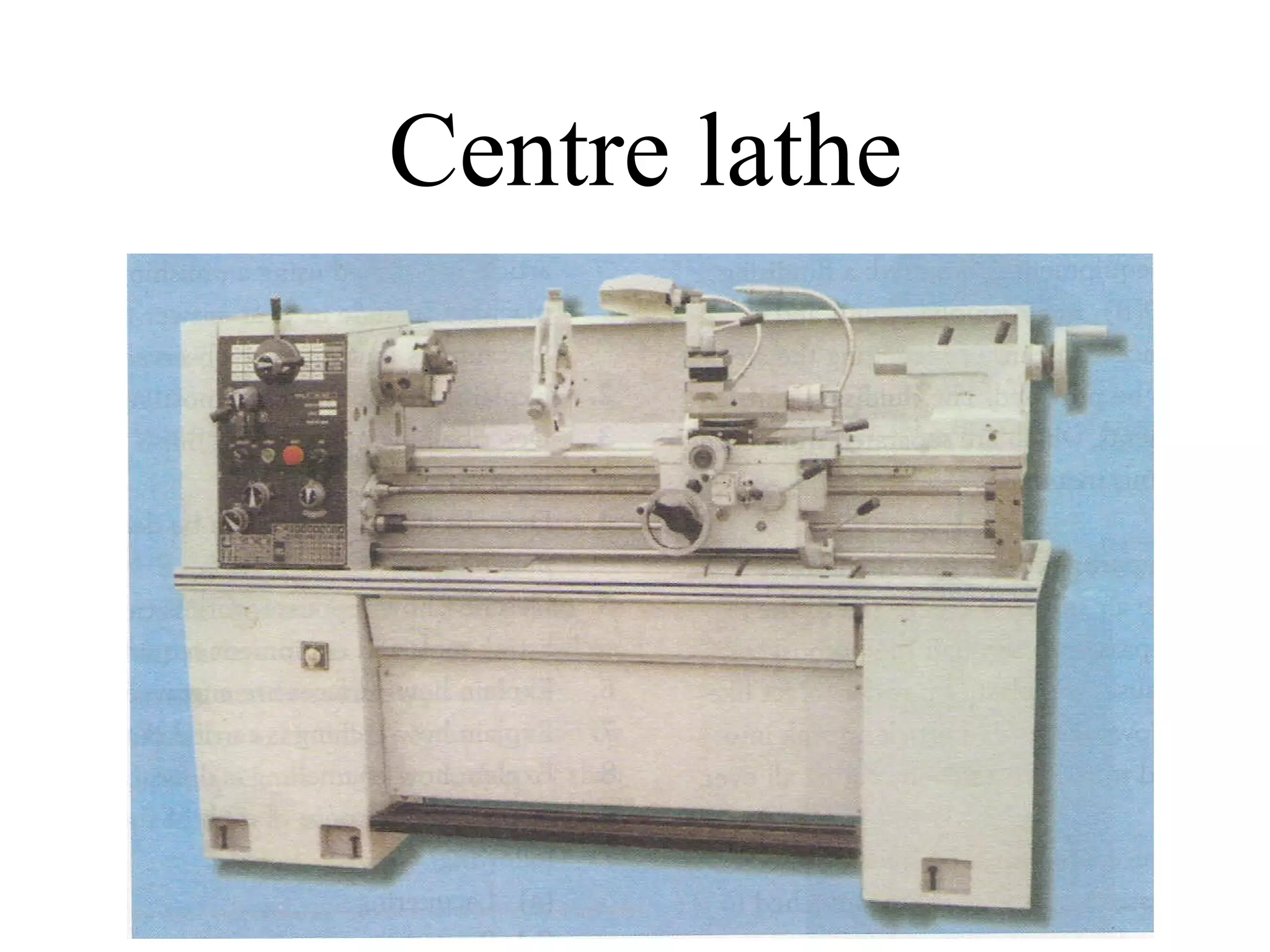
Centre lathe
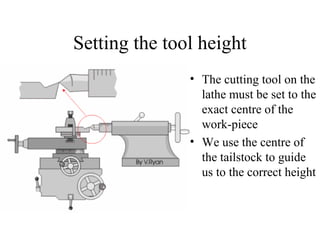
Setting the tool height
• The cutting tool on the
lathe must be set to the
exact centre of the
work-piece
• We use the centre of
the tailstock to guide
us to the correct height
Lathe parts
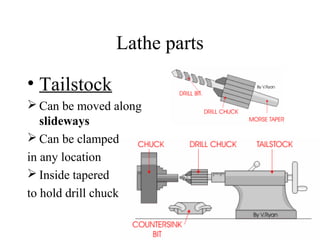
• Tailstock
 Can be moved along
slideways
 Can be clamped
in any location
 Inside tapered
to hold drill chuck
Lathe parts
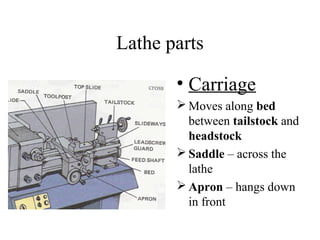
• Carriage
 Moves along bed
between tailstock and
headstock
 Saddle – across the
lathe
 Apron – hangs down
in front
Lathe parts
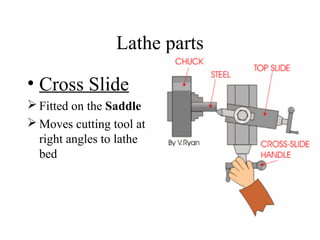
• Cross Slide
 Fitted on the Saddle
 Moves cutting tool at
right angles to lathe
bed
Lathe parts
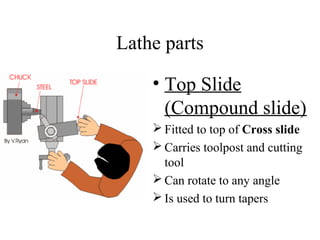
• Top Slide
(Compound slide)
 Fitted to top of Cross slide
 Carries toolpost and cutting
tool
 Can rotate to any angle
 Is used to turn tapers
Lathe parts
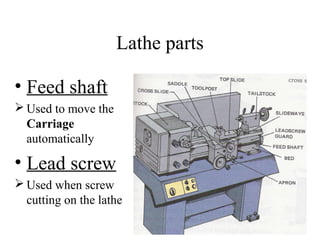
• Feed shaft
 Used to move the
Carriage
automatically
• Lead screw
 Used when screw
cutting on the lathe
Lathe parts
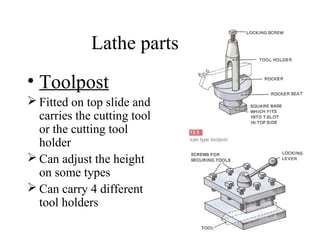
• Toolpost
 Fitted on top slide and
carries the cutting tool
or the cutting tool
holder
 Can adjust the height
on some types
 Can carry 4 different
tool holders
Lathe parts
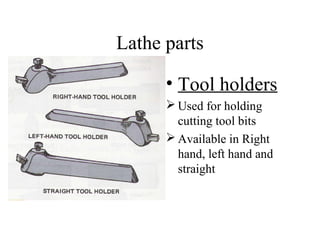
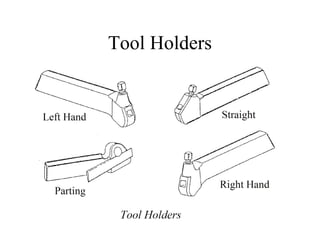
• Tool holders
 Used for holding
cutting tool bits
 Available in Right
hand, left hand and
straight
Tool Holders
Cutting Tool Materials
• Carbon Steels
• High Speed Steel (HSS)
• Stellite
• Carbides
• Diamond
Carbon Steels
• Carbon steels start to soften at a
temperature of about 180o
C. This limitation
means that such tools are rarely used for
metal cutting operations. widely used for
woodworking and they can be used in a
router to machine aluminum sheet up to
about 3mm thick.
High Speed Steel (HSS)
• HSS tools are so named because they were
developed to cut at higher speeds. They are
tough and suitable for interrupted cutting and
are used to manufacture tools of complex
shape such as drills, reamers, taps, dies and
gear cutters. Tools may also be coated to
improve wear resistance.
Stellite
• A non-ferrous alloy of chromium and
cobalt, so hard that it cannot be forged or
machined except by grinding, it is usually
used in the form of a tipped tool.
Carbides
• Also known as cemented carbides or
sintered carbides .Have high hardness over
a wide range of temperatures and high
thermal conductivity. Can be shaped only
by special grinding wheels and is always
used in the form of a tipped tool.
Diamond
• The hardest known substance is diamond. It
is most suited for light uninterrupted
finishing cuts at almost any speed and is
mainly used for very high speed machining
of aluminum - silicon alloys, composites
and other non - metallic materials.
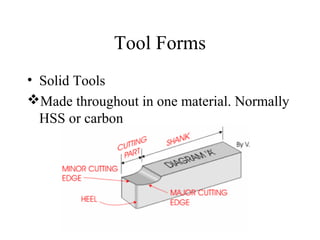
Tool Forms
• Solid Tools
Made throughout in one material. Normally
HSS or carbon
Butt-Brazed
• Tools made by brazing or welding a piece
of HSS to a high tensile steel shank.
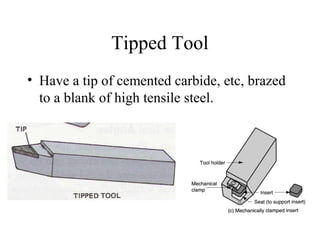
Tipped Tool
• Have a tip of cemented carbide, etc, brazed
to a blank of high tensile steel.
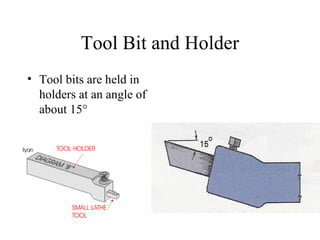
Tool Bit and Holder
• Tool bits are held in
holders at an angle of
about 15°
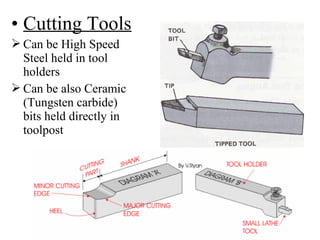
• Cutting Tools
 Can be High Speed
Steel held in tool
holders
 Can be also Ceramic
(Tungsten carbide)
bits held directly in
toolpost
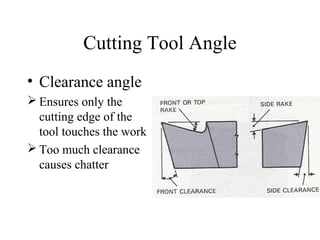
Cutting Tool Angle
• Clearance angle
 Ensures only the
cutting edge of the
tool touches the work
 Too much clearance
causes chatter
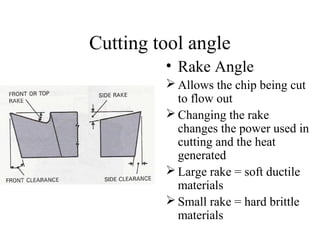
Cutting tool angle
• Rake Angle
 Allows the chip being cut
to flow out
 Changing the rake
changes the power used in
cutting and the heat
generated
 Large rake = soft ductile
materials
 Small rake = hard brittle
materials
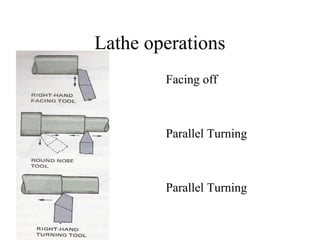
Lathe operations
Facing off
Parallel Turning
Parallel Turning
Parallel Turning
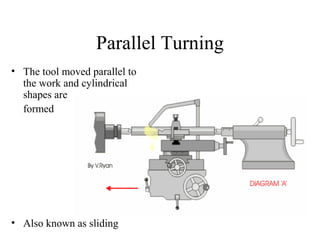
• The tool moved parallel to
the work and cylindrical
shapes are
formed
• Also known as sliding
Parallel Turning
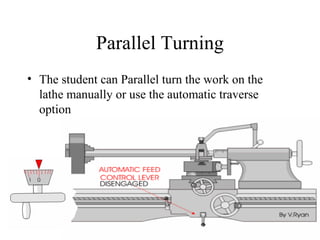
• The student can Parallel turn the work on the
lathe manually or use the automatic traverse
option
Facing off
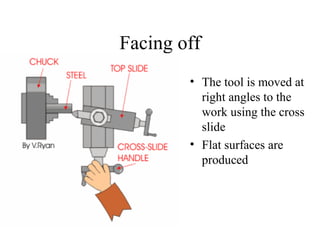
• The tool is moved at
right angles to the
work using the cross
slide
• Flat surfaces are
produced
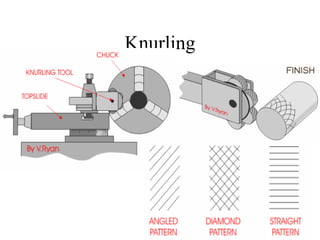
Knurling
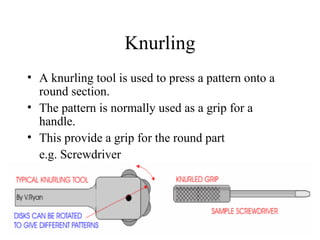
• A knurling tool is used to press a pattern onto a
round section.
• The pattern is normally used as a grip for a
handle.
• This provide a grip for the round part
e.g. Screwdriver
Knurling
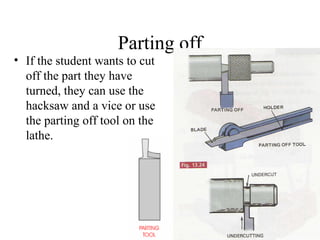
Parting off
• If the student wants to cut
off the part they have
turned, they can use the
hacksaw and a vice or use
the parting off tool on the
lathe.
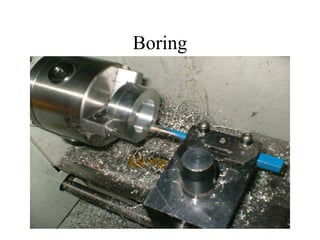
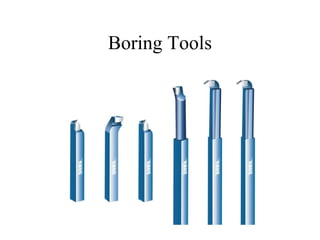
Boring
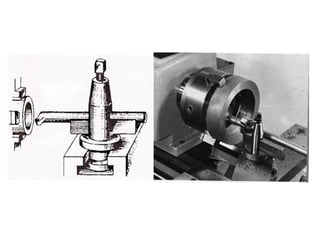
Boring Tools
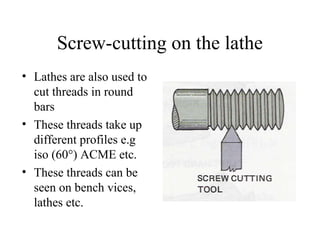
Screw-cutting on the lathe
• Lathes are also used to
cut threads in round
bars
• These threads take up
different profiles e.g
iso (60°) ACME etc.
• These threads can be
seen on bench vices,
lathes etc.
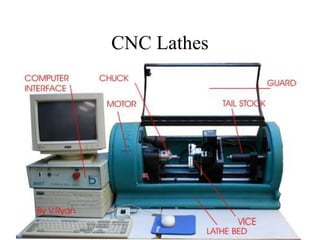
CNC Lathes
• In Industry it is not
efficient or profitable to
make everyday products
by hand.
• On a CNC machine it is
possible to make
hundreds of the same item
in a day.
• First a design is drawn
using design software,
then it is processed by
the computer and
made using the CNC
machine.
• In industry, CNC
machines can be
extremely large.
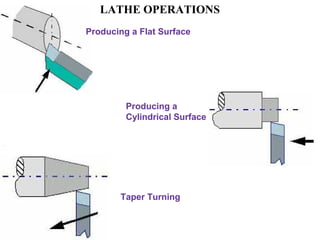
LATHE OPERATIONS
.
Producing a
Cylindrical Surface
Taper Turning
Producing a Flat Surface
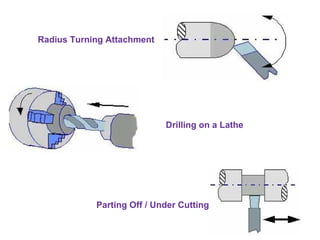
Drilling on a Lathe
Parting Off / Under Cutting
Radius Turning Attachment
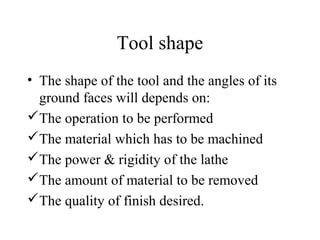
Tool shape
• The shape of the tool and the angles of its
ground faces will depends on:
The operation to be performed
The material which has to be machined
The power & rigidity of the lathe
The amount of material to be removed
The quality of finish desired.
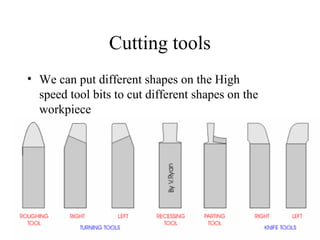
Cutting tools
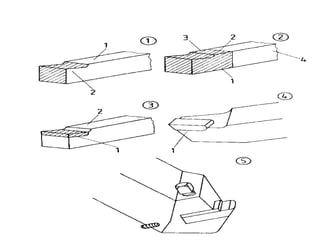
• We can put different shapes on the High
speed tool bits to cut different shapes on the
workpiece
Home work
• Sketch and explain the following
1. Solid tools
2. Butt brazed
3. Tipped tools
Sketch and explain the following tool shape
• Fine finishing
• Round nose rougher
• Round nose
• Internal screw cutting tool
• Parting off tool
• Knife tool
• Form tool

Lathe tools

  • 1.
  • 2.
    Setting the toolheight • The cutting tool on the lathe must be set to the exact centre of the work-piece • We use the centre of the tailstock to guide us to the correct height
  • 3.
    Lathe parts • Tailstock Can be moved along slideways  Can be clamped in any location  Inside tapered to hold drill chuck
  • 4.
    Lathe parts • Carriage Moves along bed between tailstock and headstock  Saddle – across the lathe  Apron – hangs down in front
  • 5.
    Lathe parts • CrossSlide  Fitted on the Saddle  Moves cutting tool at right angles to lathe bed
  • 6.
    Lathe parts • TopSlide (Compound slide)  Fitted to top of Cross slide  Carries toolpost and cutting tool  Can rotate to any angle  Is used to turn tapers
  • 7.
    Lathe parts • Feedshaft  Used to move the Carriage automatically • Lead screw  Used when screw cutting on the lathe
  • 8.
    Lathe parts • Toolpost Fitted on top slide and carries the cutting tool or the cutting tool holder  Can adjust the height on some types  Can carry 4 different tool holders
  • 9.
    Lathe parts • Toolholders  Used for holding cutting tool bits  Available in Right hand, left hand and straight
  • 10.
  • 11.
    Cutting Tool Materials •Carbon Steels • High Speed Steel (HSS) • Stellite • Carbides • Diamond
  • 12.
    Carbon Steels • Carbonsteels start to soften at a temperature of about 180o C. This limitation means that such tools are rarely used for metal cutting operations. widely used for woodworking and they can be used in a router to machine aluminum sheet up to about 3mm thick.
  • 13.
    High Speed Steel(HSS) • HSS tools are so named because they were developed to cut at higher speeds. They are tough and suitable for interrupted cutting and are used to manufacture tools of complex shape such as drills, reamers, taps, dies and gear cutters. Tools may also be coated to improve wear resistance.
  • 14.
    Stellite • A non-ferrousalloy of chromium and cobalt, so hard that it cannot be forged or machined except by grinding, it is usually used in the form of a tipped tool.
  • 15.
    Carbides • Also knownas cemented carbides or sintered carbides .Have high hardness over a wide range of temperatures and high thermal conductivity. Can be shaped only by special grinding wheels and is always used in the form of a tipped tool.
  • 16.
    Diamond • The hardestknown substance is diamond. It is most suited for light uninterrupted finishing cuts at almost any speed and is mainly used for very high speed machining of aluminum - silicon alloys, composites and other non - metallic materials.
  • 17.
    Tool Forms • SolidTools Made throughout in one material. Normally HSS or carbon
  • 18.
    Butt-Brazed • Tools madeby brazing or welding a piece of HSS to a high tensile steel shank.
  • 19.
    Tipped Tool • Havea tip of cemented carbide, etc, brazed to a blank of high tensile steel.
  • 20.
    Tool Bit andHolder • Tool bits are held in holders at an angle of about 15°
  • 21.
    • Cutting Tools Can be High Speed Steel held in tool holders  Can be also Ceramic (Tungsten carbide) bits held directly in toolpost
  • 22.
    Cutting Tool Angle •Clearance angle  Ensures only the cutting edge of the tool touches the work  Too much clearance causes chatter
  • 23.
    Cutting tool angle •Rake Angle  Allows the chip being cut to flow out  Changing the rake changes the power used in cutting and the heat generated  Large rake = soft ductile materials  Small rake = hard brittle materials
  • 24.
    Lathe operations Facing off ParallelTurning Parallel Turning
  • 25.
    Parallel Turning • Thetool moved parallel to the work and cylindrical shapes are formed • Also known as sliding
  • 26.
    Parallel Turning • Thestudent can Parallel turn the work on the lathe manually or use the automatic traverse option
  • 27.
    Facing off • Thetool is moved at right angles to the work using the cross slide • Flat surfaces are produced
  • 28.
    Knurling • A knurlingtool is used to press a pattern onto a round section. • The pattern is normally used as a grip for a handle. • This provide a grip for the round part e.g. Screwdriver
  • 29.
  • 30.
    Parting off • Ifthe student wants to cut off the part they have turned, they can use the hacksaw and a vice or use the parting off tool on the lathe.
  • 31.
  • 33.
  • 34.
    Screw-cutting on thelathe • Lathes are also used to cut threads in round bars • These threads take up different profiles e.g iso (60°) ACME etc. • These threads can be seen on bench vices, lathes etc.
  • 35.
  • 36.
    • In Industryit is not efficient or profitable to make everyday products by hand. • On a CNC machine it is possible to make hundreds of the same item in a day. • First a design is drawn using design software, then it is processed by the computer and made using the CNC machine. • In industry, CNC machines can be extremely large.
  • 37.
    LATHE OPERATIONS . Producing a CylindricalSurface Taper Turning Producing a Flat Surface
  • 39.
    Drilling on aLathe Parting Off / Under Cutting Radius Turning Attachment
  • 40.
    Tool shape • Theshape of the tool and the angles of its ground faces will depends on: The operation to be performed The material which has to be machined The power & rigidity of the lathe The amount of material to be removed The quality of finish desired.
  • 41.
    Cutting tools • Wecan put different shapes on the High speed tool bits to cut different shapes on the workpiece
  • 42.
    Home work • Sketchand explain the following 1. Solid tools 2. Butt brazed 3. Tipped tools Sketch and explain the following tool shape • Fine finishing • Round nose rougher • Round nose • Internal screw cutting tool • Parting off tool • Knife tool • Form tool