Milling Processes
Radha.R, Assistant Professor (Sr), VIT University, Chennai
Milling
• Milling is a metal removal process by means of using a
rotating cutter having more cutting teeth feed against the
workpiece.
• Milling machine is one of the most versatile conventional
machine tools with a wide range of metal cutting capability.
• Many complicated operations such as indexing, gang milling,
and straddle milling etc. can be carried out on a milling
machine.
Types of Milling Machines and parameters:
Based on cutter rotation
1. Peripheral Milling
2. Face Milling
Based on Cutting direction
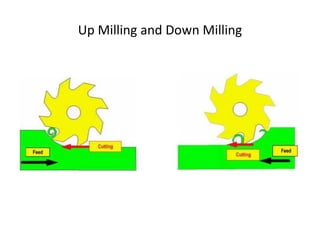
1. Up Milling
2. Down Milling
Based on arrangement
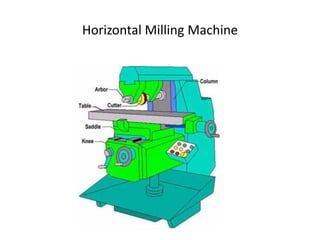
1. Horizontal Milling Machine
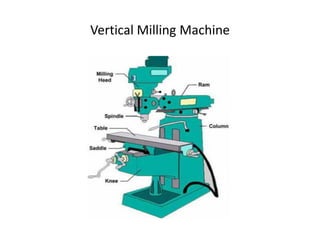
2. Vertical Milling Machine
Cutting parameters:
• Spindle speed
• Feed / cutter tooth or Chip load
• table feed
• depth of cut
• rotating direction of the cutter
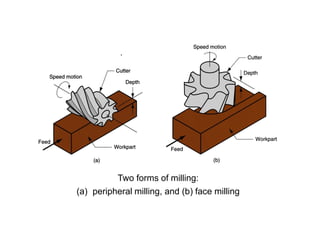
Peripheral Milling vs. Face Milling
• Peripheral milling
– Cutter axis is parallel to surface being machined
– Cutting edges on outside periphery of cutter
• Face milling
– Cutter axis is perpendicular to surface being milled
– Cutting edges on both the end and outside periphery of
the cutter
Two forms of milling:
(a) peripheral milling, and (b) face milling
Up Milling and Down Milling
Horizontal Milling Machine
Vertical Milling Machine
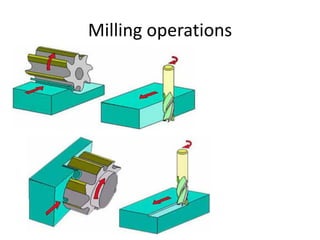
Milling operations
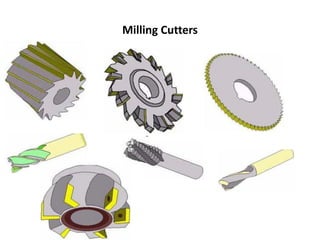
Milling Cutters
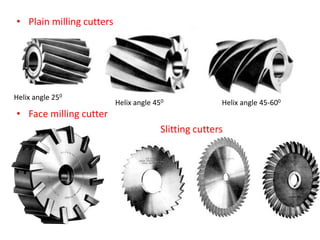
• Plain milling cutters
• Face milling cutter
Slitting cutters
Helix angle 250
Helix angle 45-600Helix angle 450
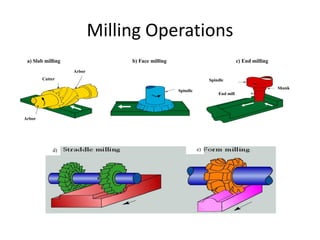
Milling Operations
a) Slab milling b) Face milling c) End milling
Arbor
Arbor
Cutter
Spindle
Spindle
Shank
End mill
d) e)
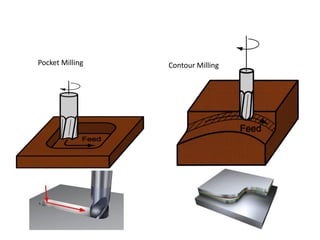
Pocket Milling Contour Milling
Cutting conditions in Milling
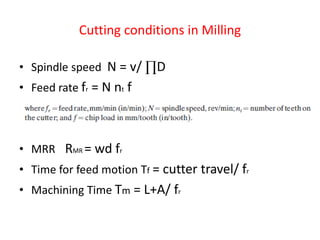
• Spindle speed N = v/ ∏D
• Feed rate fr = N nt f
• MRR RMR = wd fr
• Time for feed motion Tf = cutter travel/ fr
• Machining Time Tm = L+A/ fr
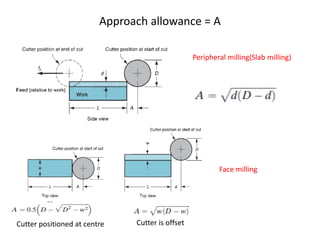
Approach allowance = A
Peripheral milling(Slab milling)
Face milling
Cutter positioned at centre Cutter is offset

Milling

  • 1.
    Milling Processes Radha.R, AssistantProfessor (Sr), VIT University, Chennai
  • 2.
    Milling • Milling isa metal removal process by means of using a rotating cutter having more cutting teeth feed against the workpiece. • Milling machine is one of the most versatile conventional machine tools with a wide range of metal cutting capability. • Many complicated operations such as indexing, gang milling, and straddle milling etc. can be carried out on a milling machine.
  • 3.
    Types of MillingMachines and parameters: Based on cutter rotation 1. Peripheral Milling 2. Face Milling Based on Cutting direction 1. Up Milling 2. Down Milling Based on arrangement 1. Horizontal Milling Machine 2. Vertical Milling Machine Cutting parameters: • Spindle speed • Feed / cutter tooth or Chip load • table feed • depth of cut • rotating direction of the cutter
  • 4.
    Peripheral Milling vs.Face Milling • Peripheral milling – Cutter axis is parallel to surface being machined – Cutting edges on outside periphery of cutter • Face milling – Cutter axis is perpendicular to surface being milled – Cutting edges on both the end and outside periphery of the cutter
  • 5.
    Two forms ofmilling: (a) peripheral milling, and (b) face milling
  • 6.
    Up Milling andDown Milling
  • 7.
  • 8.
  • 9.
  • 10.
  • 11.
    • Plain millingcutters • Face milling cutter Slitting cutters Helix angle 250 Helix angle 45-600Helix angle 450
  • 12.
    Milling Operations a) Slabmilling b) Face milling c) End milling Arbor Arbor Cutter Spindle Spindle Shank End mill d) e)
  • 13.
  • 14.
    Cutting conditions inMilling • Spindle speed N = v/ ∏D • Feed rate fr = N nt f • MRR RMR = wd fr • Time for feed motion Tf = cutter travel/ fr • Machining Time Tm = L+A/ fr
  • 15.
    Approach allowance =A Peripheral milling(Slab milling) Face milling Cutter positioned at centre Cutter is offset