Management of Intrapartum
 Fetal Heart Rate Tracings
             ACOG
   Number 116, November 2010
DO NOT INTERPRET FHR in ISOLATION
• TIMING IS IMPORTANT ie MULTIP MOVING QUICKLY vs NULLIP
  with unfavorable cervix OR IN EARLY LABOR or INDUCTION
• PELVIS & BABY SIZE & OB HISTORY & OB Complications
• CLINICAL FACTORS
   –   Gestational age                       ( Postdates / < 32 weeks )
   –   Maternal Medical Complications             ( ?Exacerbation?)
   –   Previous Fetal Status                 (Change from admission?)
   –   Fetal Complications (IUGR, Oligohydramnios, Anomalies, Abruption,
       Postdates)
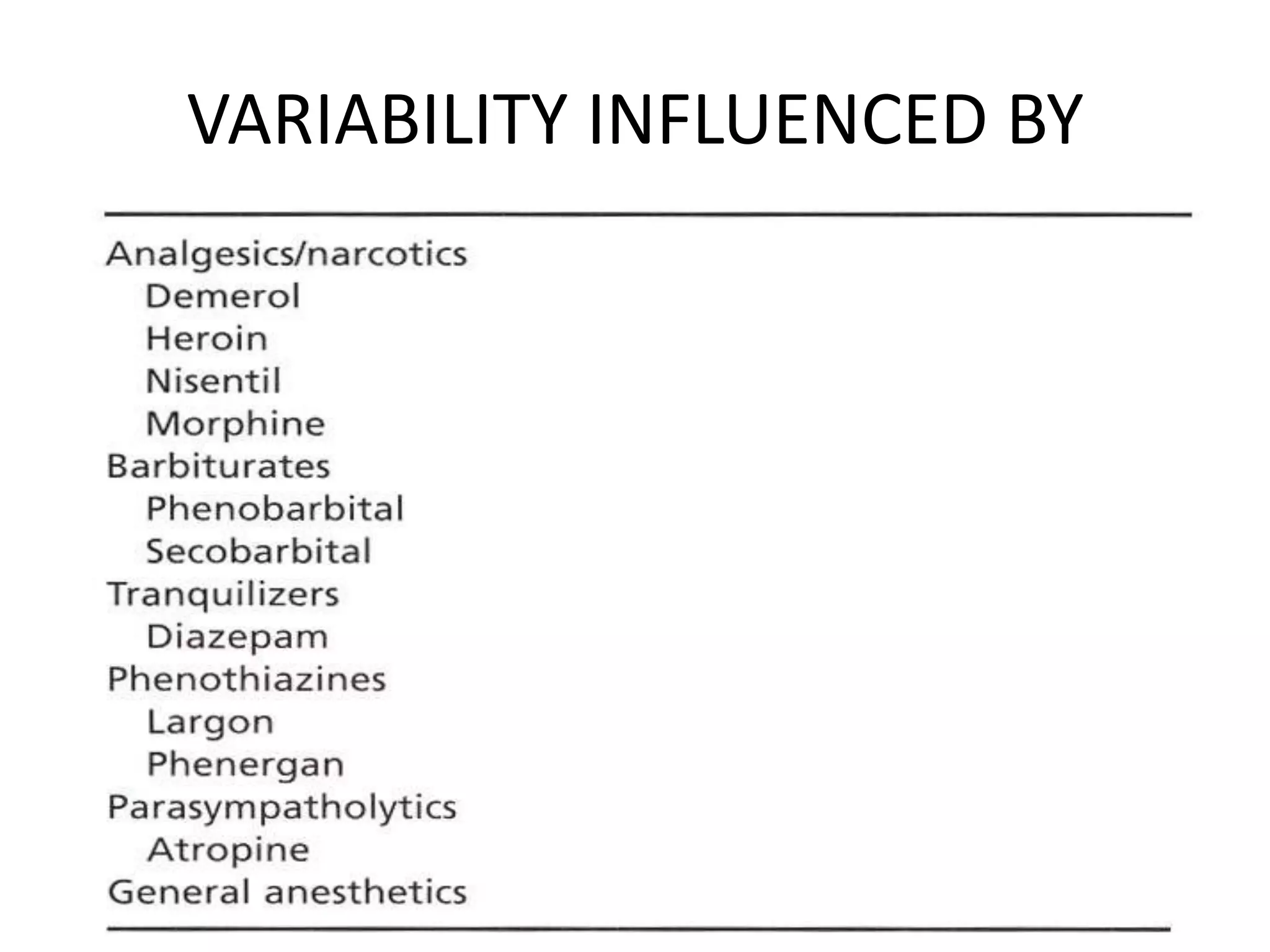
   – Medications ( Narcotics, B sympatho, Ephedrine, B blockers,)

               MISCELLANEOUS FACTORS
   – Fever, Meconium, Magnesium Sulfate, Epidural, Vaginal bleeding,
     VABC, Recent AROM, Smoking , illicit drugs
Physiologic Control of FHR
• Normal FHR patterns rely on sympathetic
  and parasympathetic activity AND ability
  of the heart to respond appropriately to
  the input from the nervous system
• Parasympathetic and Sympathetic nervous
  system are dependent on intact functioning
  CNS with no preceding damage or
  significant anatomical anomaly or insult
• Normal function of CNS & Myocardium both
  depend on adequate oxygenation
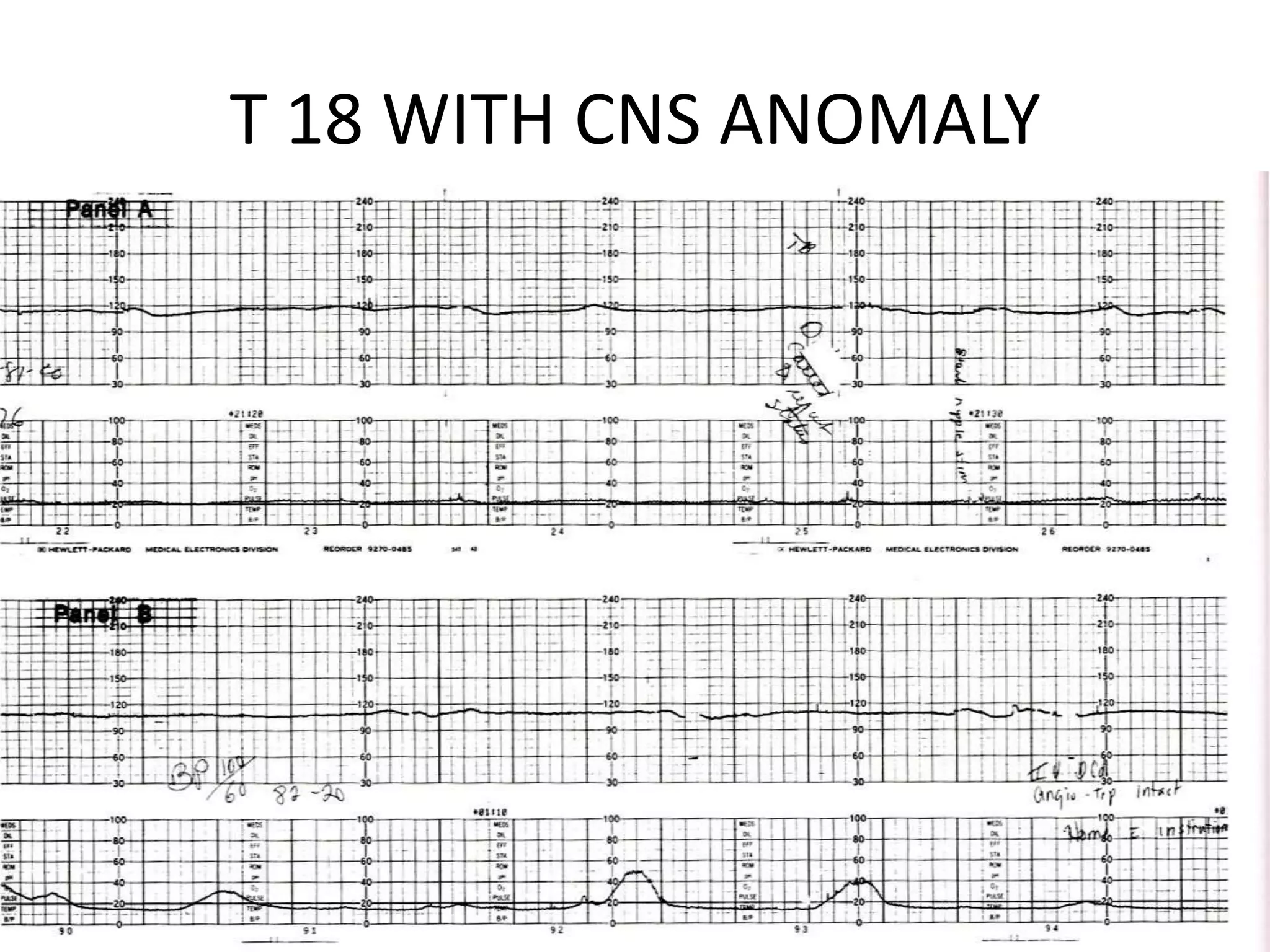
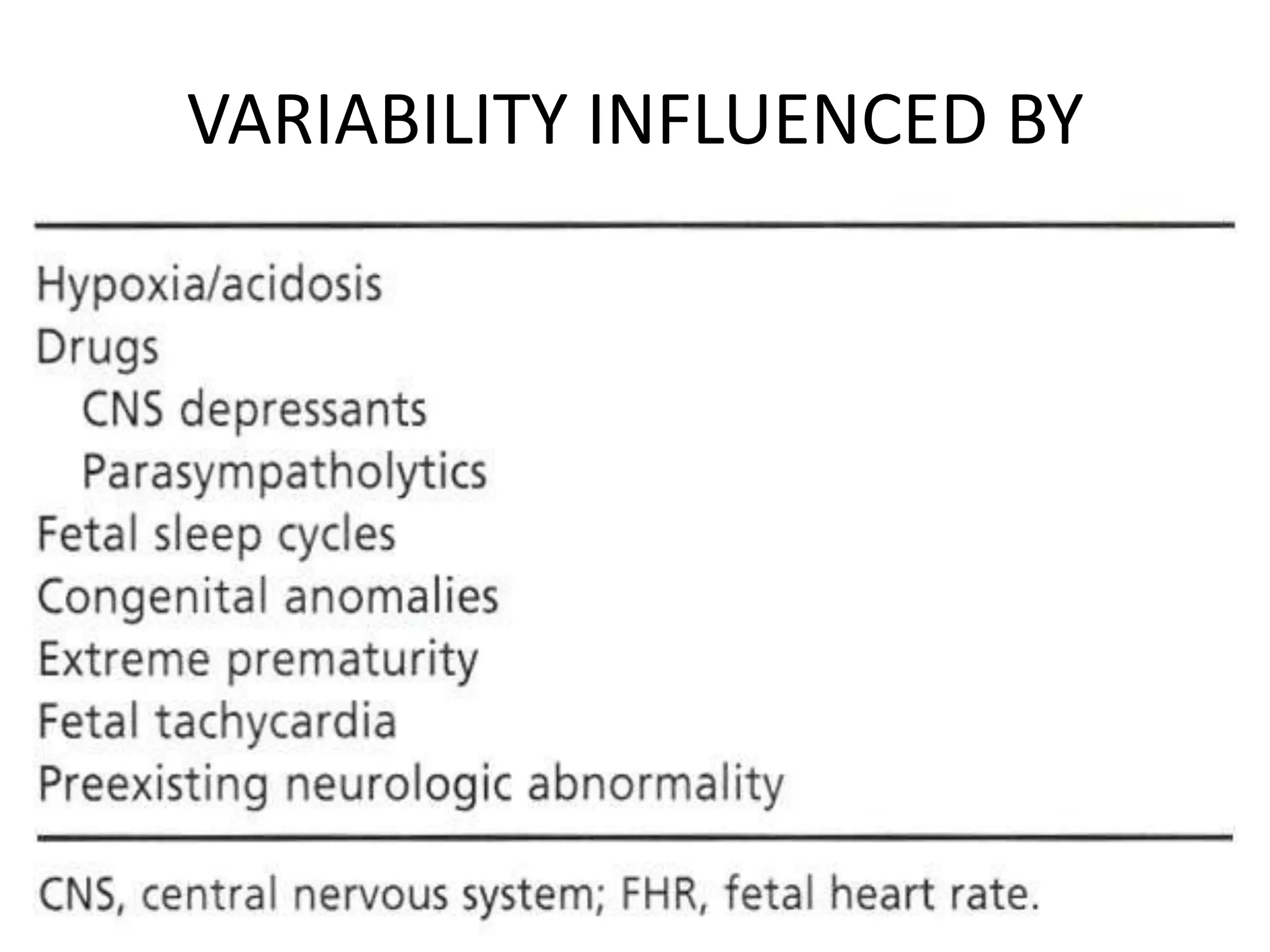
T 18 WITH CNS ANOMALY
VARIABILITY INFLUENCED BY
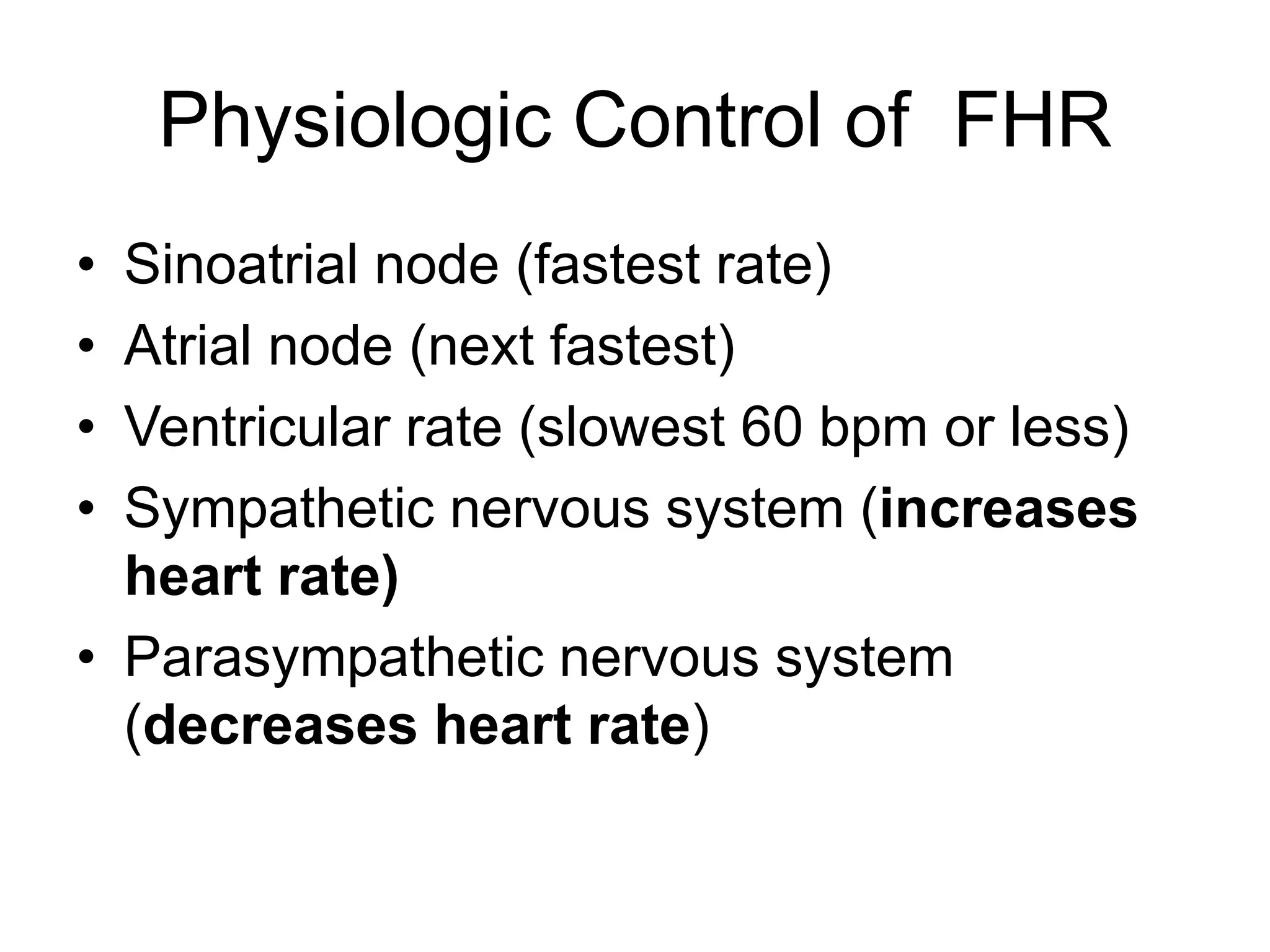
Physiologic Control of FHR
• Sinoatrial node (fastest rate)
• Atrial node (next fastest)
• Ventricular rate (slowest 60 bpm or less)
• Sympathetic nervous system (increases
  heart rate)
• Parasympathetic nervous system
  (decreases heart rate)
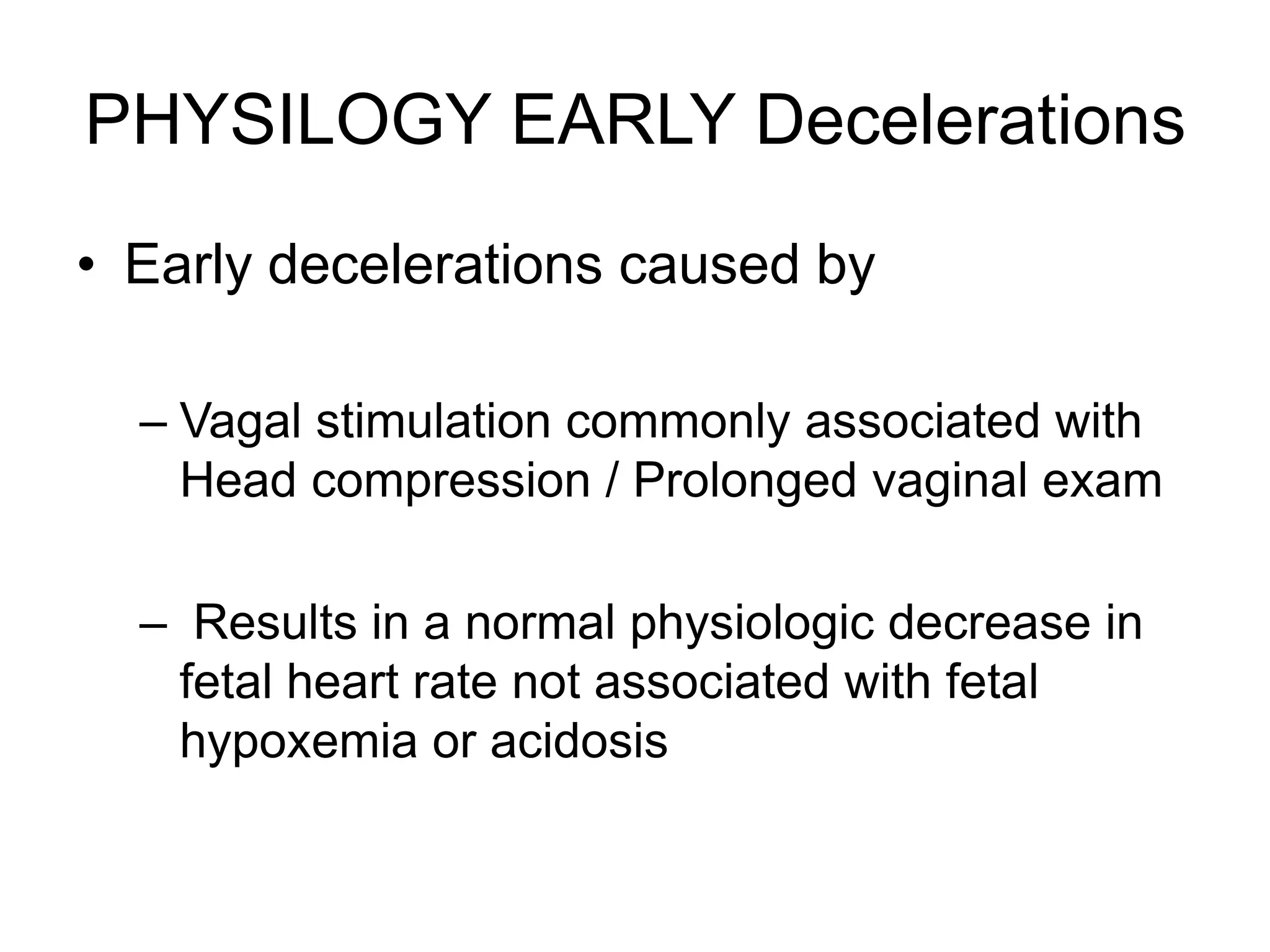
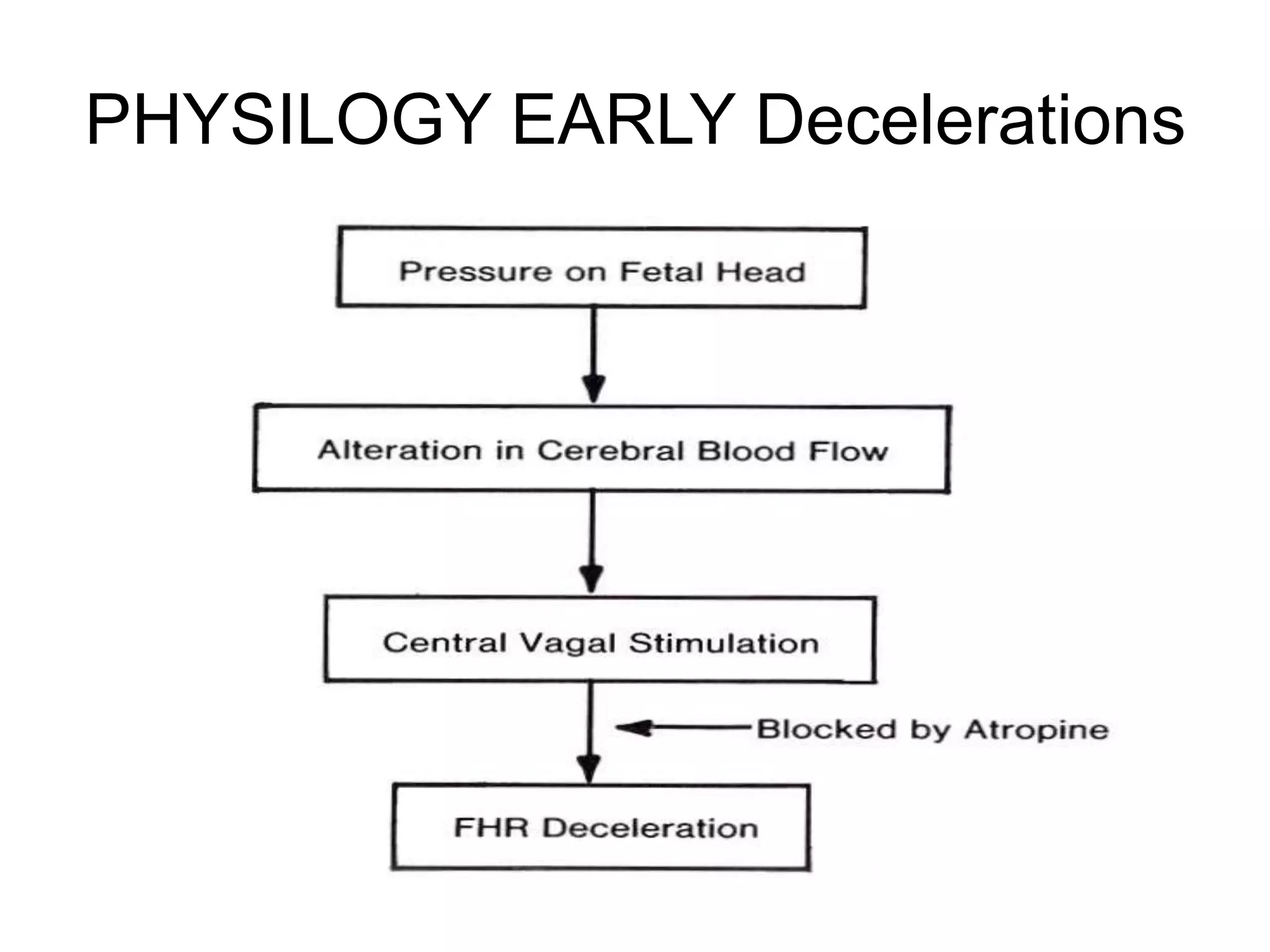
PHYSILOGY EARLY Decelerations
• Early decelerations caused by

  – Vagal stimulation commonly associated with
    Head compression / Prolonged vaginal exam

  – Results in a normal physiologic decrease in
   fetal heart rate not associated with fetal
   hypoxemia or acidosis
PHYSILOGY EARLY Decelerations
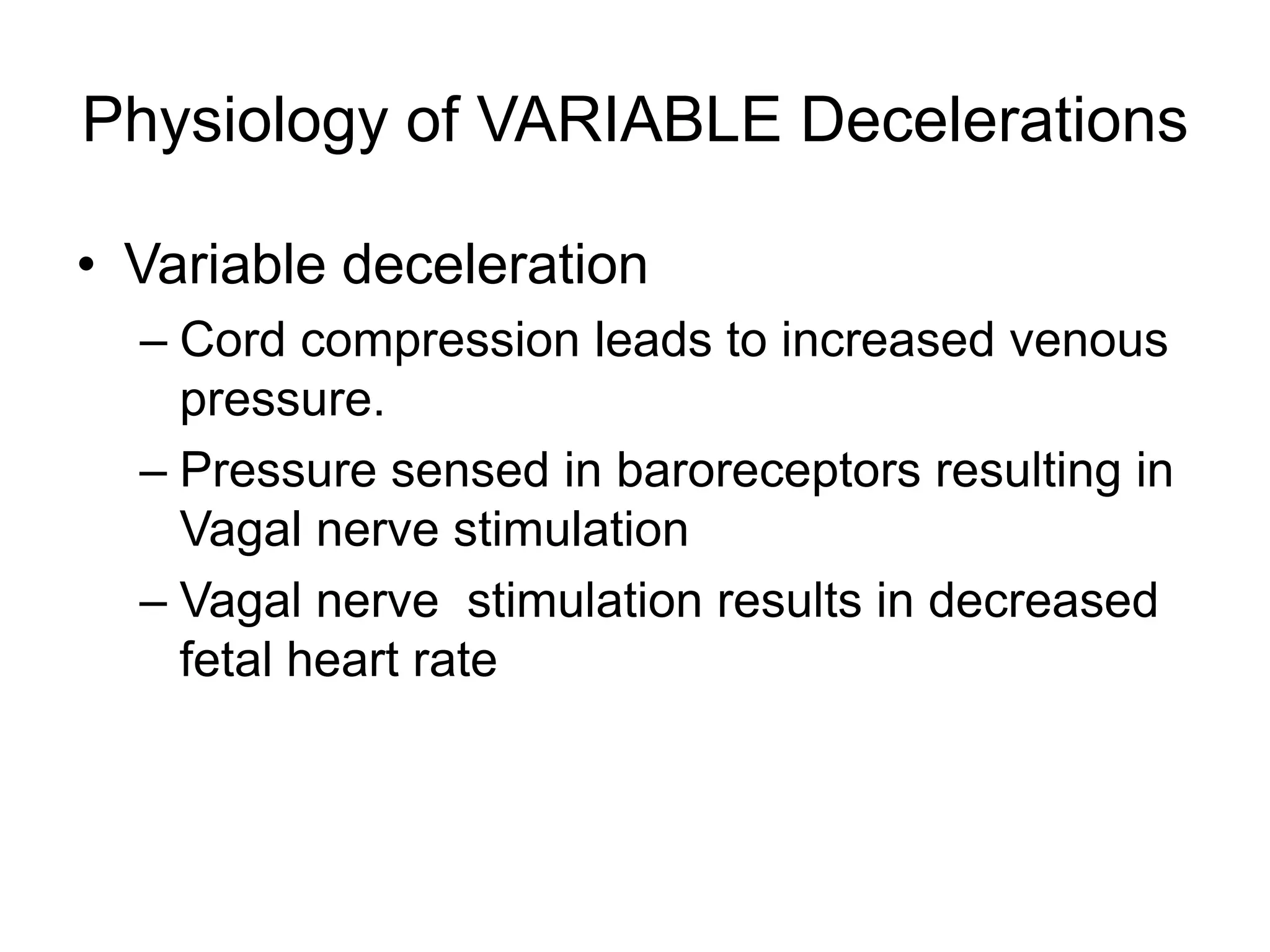
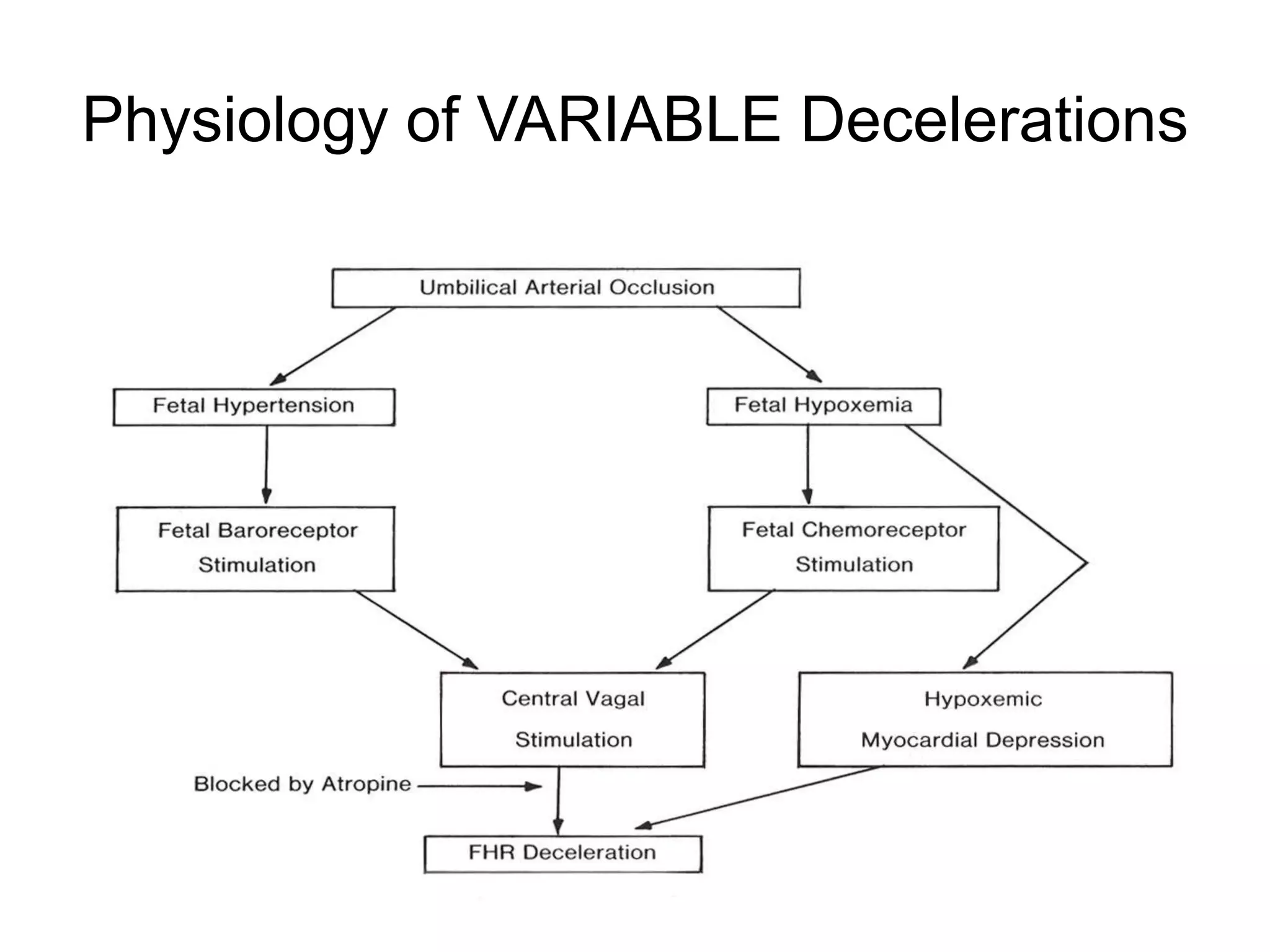
Physiology of VARIABLE Decelerations

• Variable deceleration
  – Cord compression leads to increased venous
    pressure.
  – Pressure sensed in baroreceptors resulting in
    Vagal nerve stimulation
  – Vagal nerve stimulation results in decreased
    fetal heart rate
Physiology of VARIABLE Decelerations
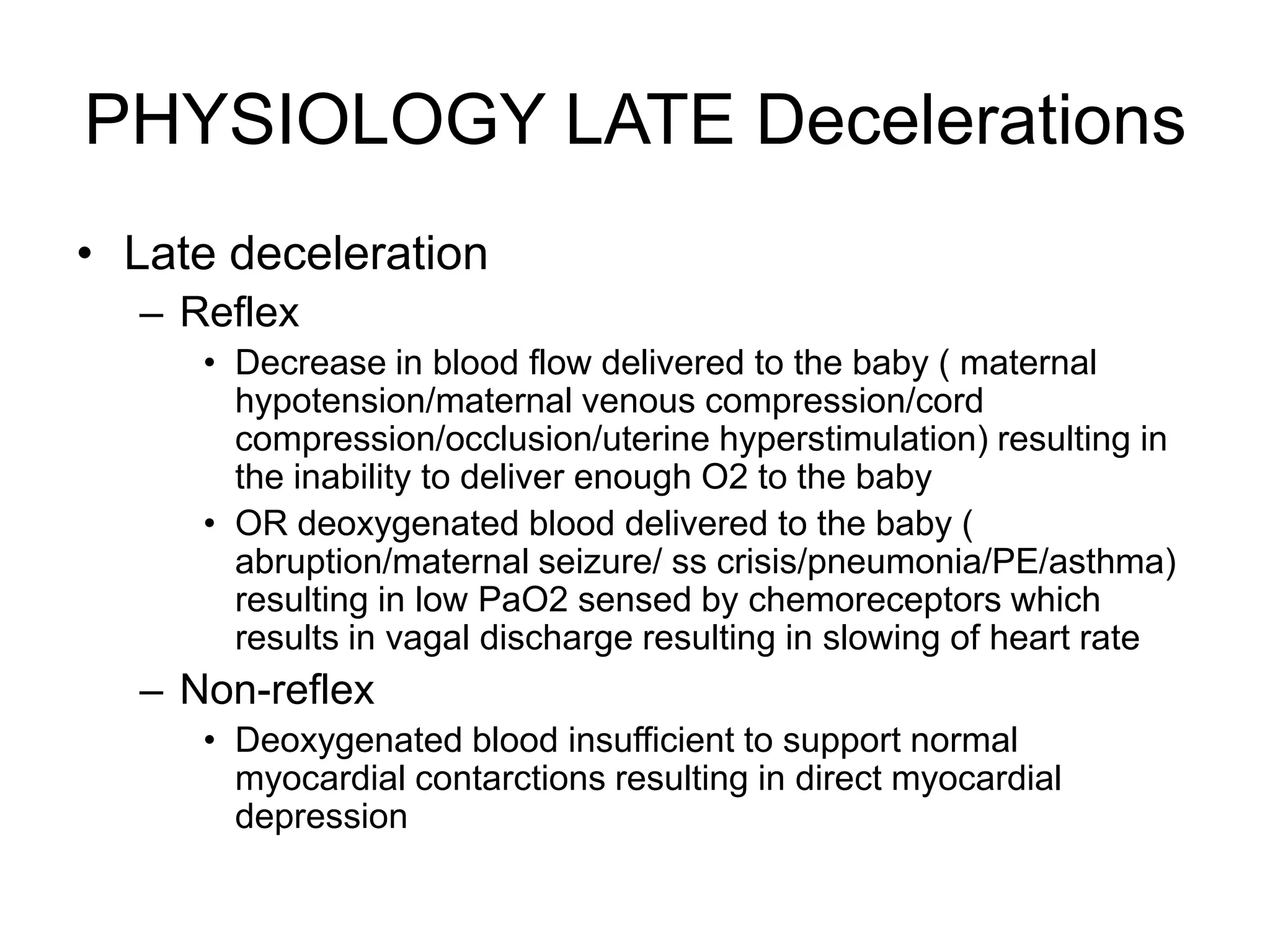
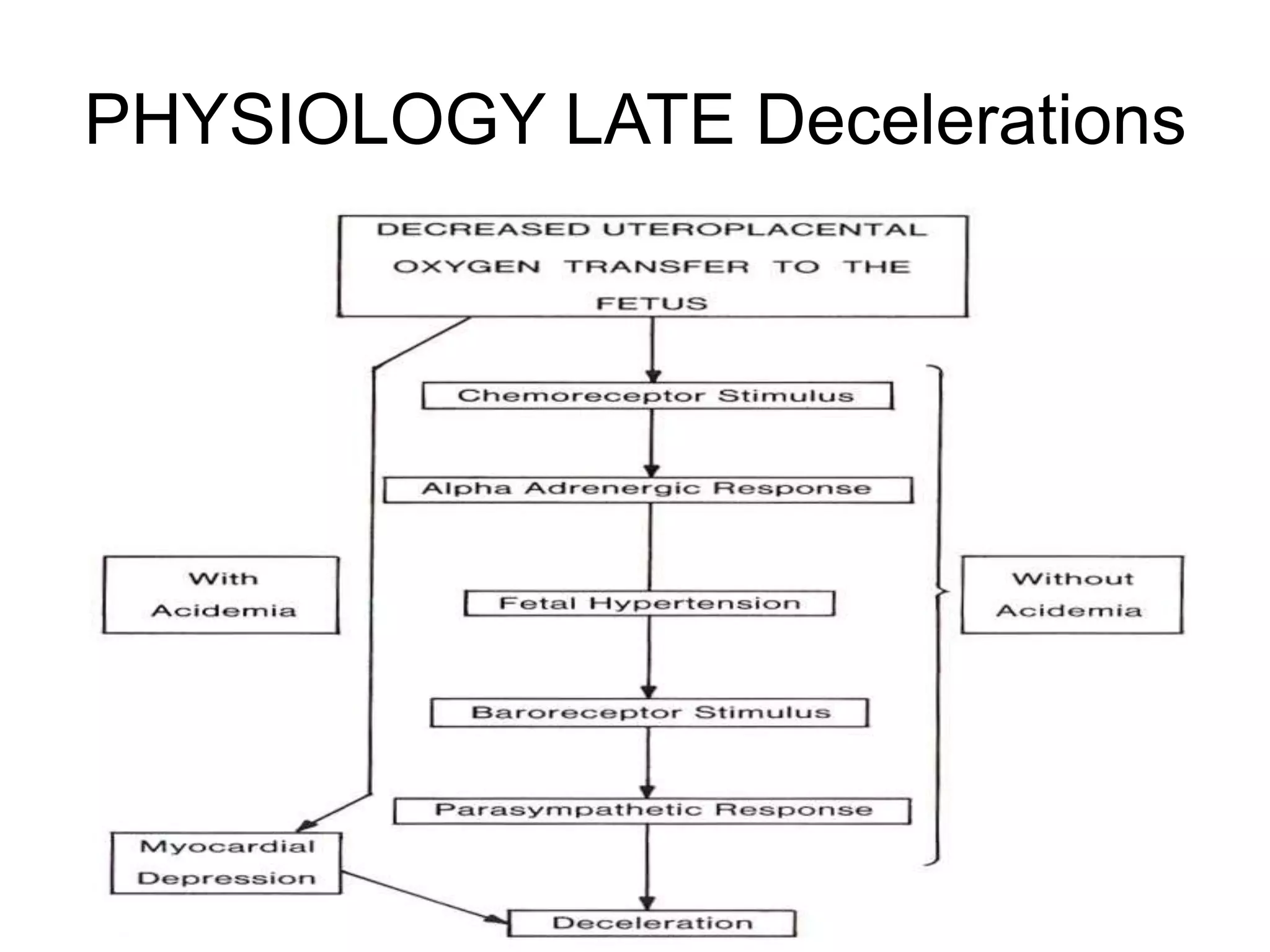
PHYSIOLOGY LATE Decelerations
• Late deceleration
  – Reflex
     • Decrease in blood flow delivered to the baby ( maternal
       hypotension/maternal venous compression/cord
       compression/occlusion/uterine hyperstimulation) resulting in
       the inability to deliver enough O2 to the baby
     • OR deoxygenated blood delivered to the baby (
       abruption/maternal seizure/ ss crisis/pneumonia/PE/asthma)
       resulting in low PaO2 sensed by chemoreceptors which
       results in vagal discharge resulting in slowing of heart rate
  – Non-reflex
     • Deoxygenated blood insufficient to support normal
       myocardial contarctions resulting in direct myocardial
       depression
PHYSIOLOGY LATE Decelerations
NICHD NOMENCLATURE

     STANADARDIZED NOMENCLATURE
  should lead to comparable research & improved
communication

• Revised and Presented in 2008 by NICHD

• NICHD nomenclature endorsed by
  – American College of Obstetricians and Gynecologists
  – American Women’s Health, Obstetric, and Neonatal
    Nursing
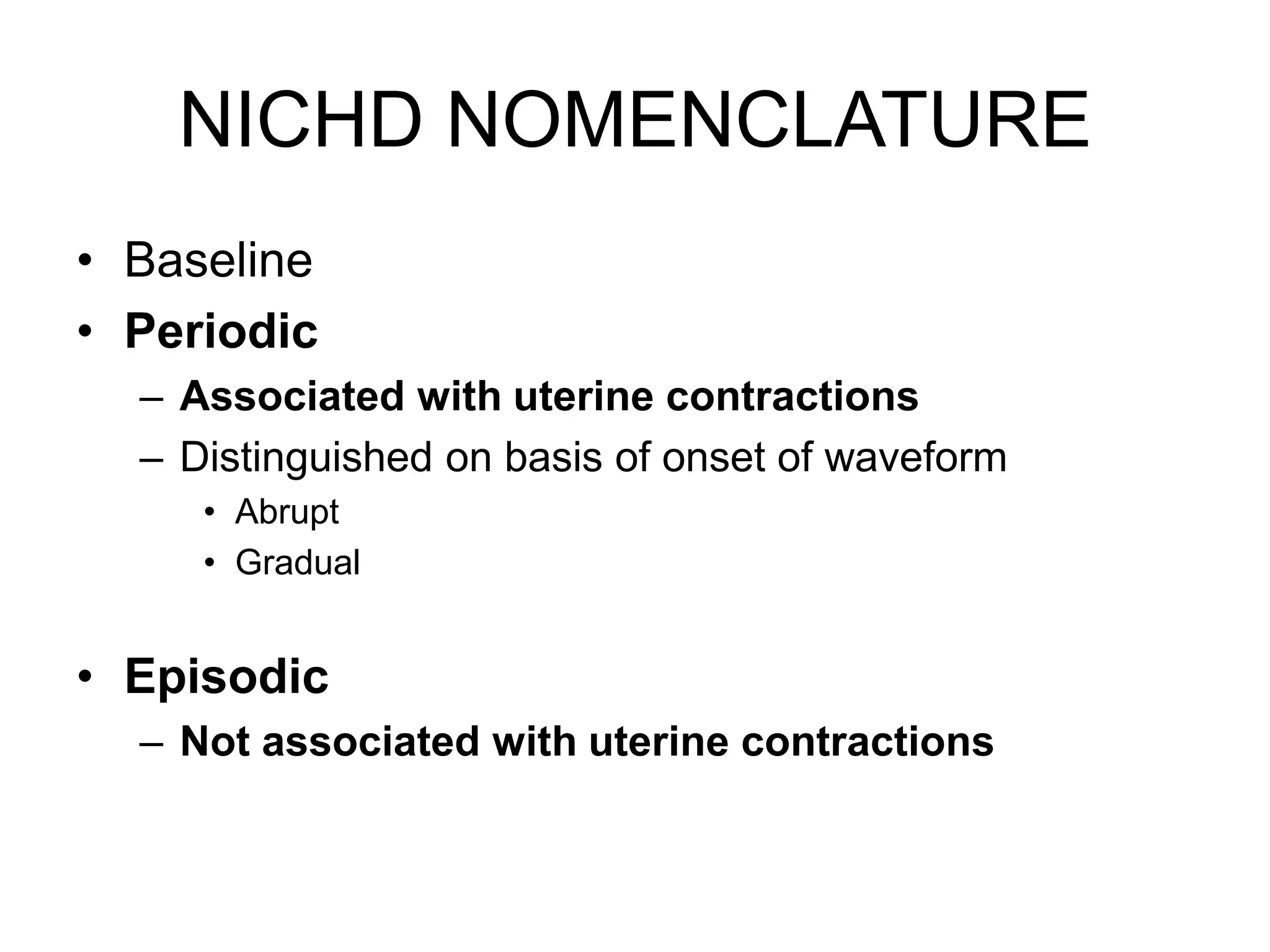
NICHD NOMENCLATURE
• Baseline
• Periodic
  – Associated with uterine contractions
  – Distinguished on basis of onset of waveform
     • Abrupt
     • Gradual


• Episodic
  – Not associated with uterine contractions
NICHD NOMENCLATURE
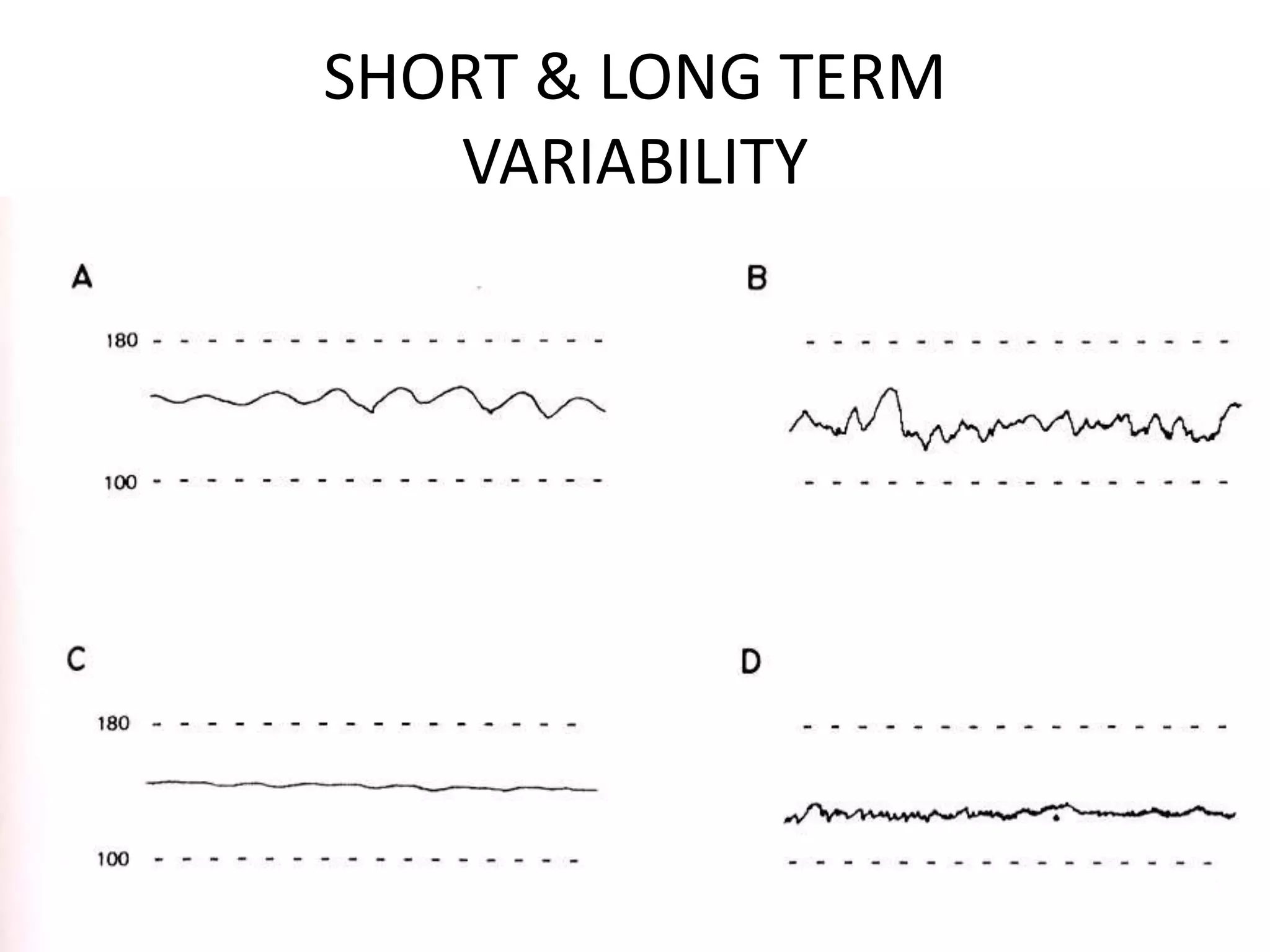
• No distinction made between short-term
  variability and long-term variability

• Variability defined visually based on
  amplitude of FHR complexes
SHORT & LONG TERM
   VARIABILITY
NICHD NOMENCLATURE
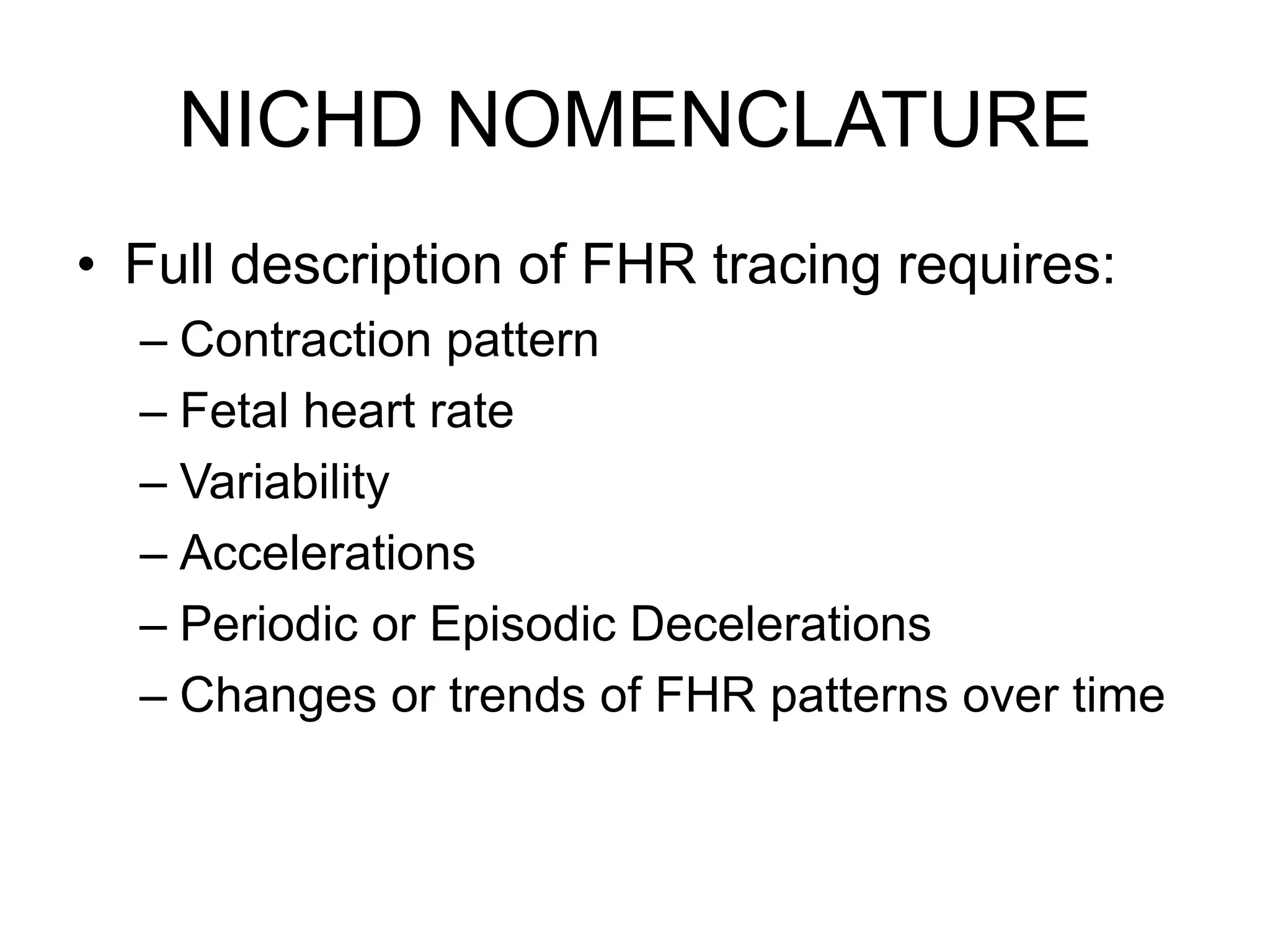
• Full description of FHR tracing requires:
  – Contraction pattern
  – Fetal heart rate
  – Variability
  – Accelerations
  – Periodic or Episodic Decelerations
  – Changes or trends of FHR patterns over time
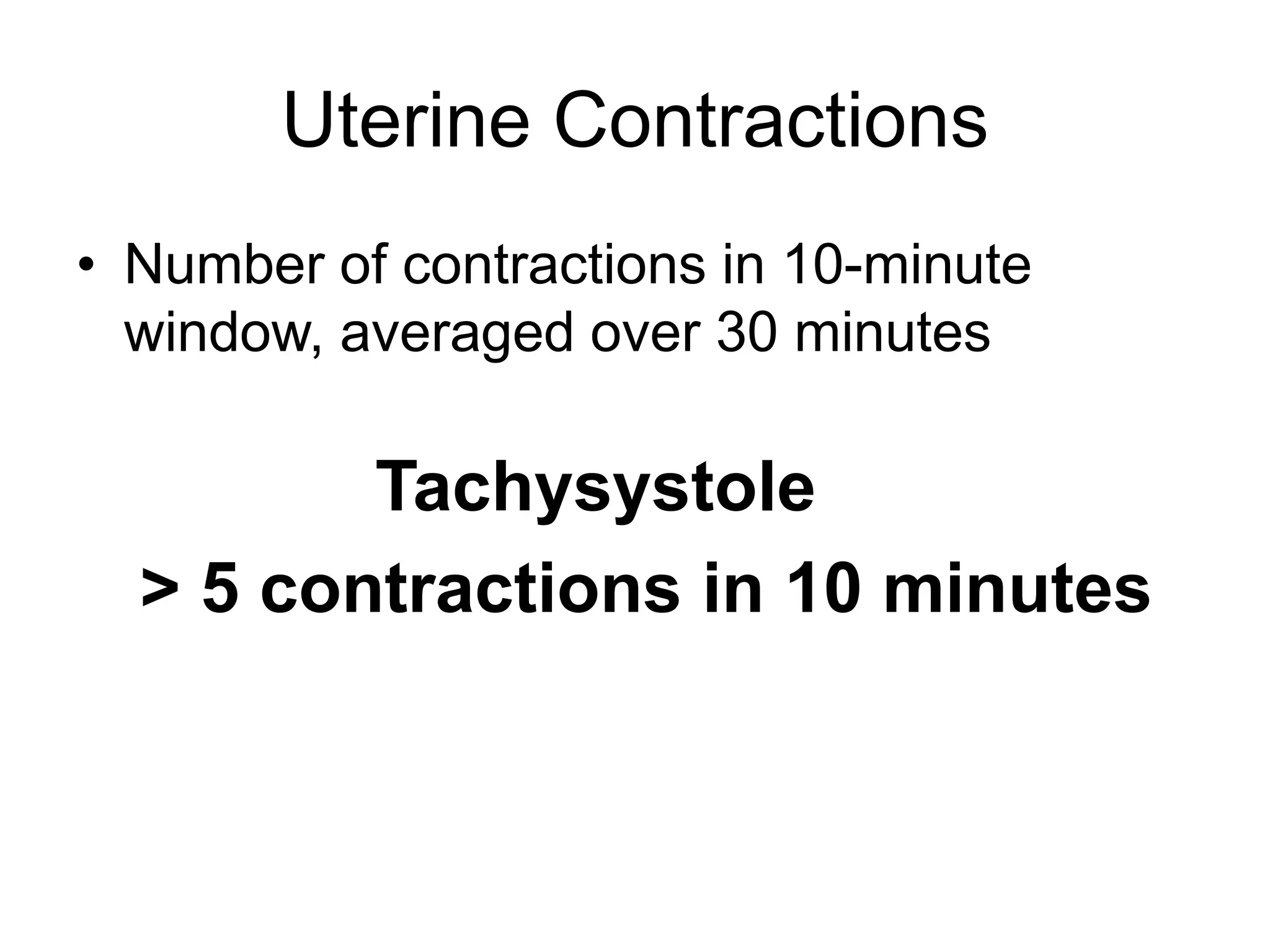
Uterine Contractions
• Number of contractions in 10-minute
  window, averaged over 30 minutes

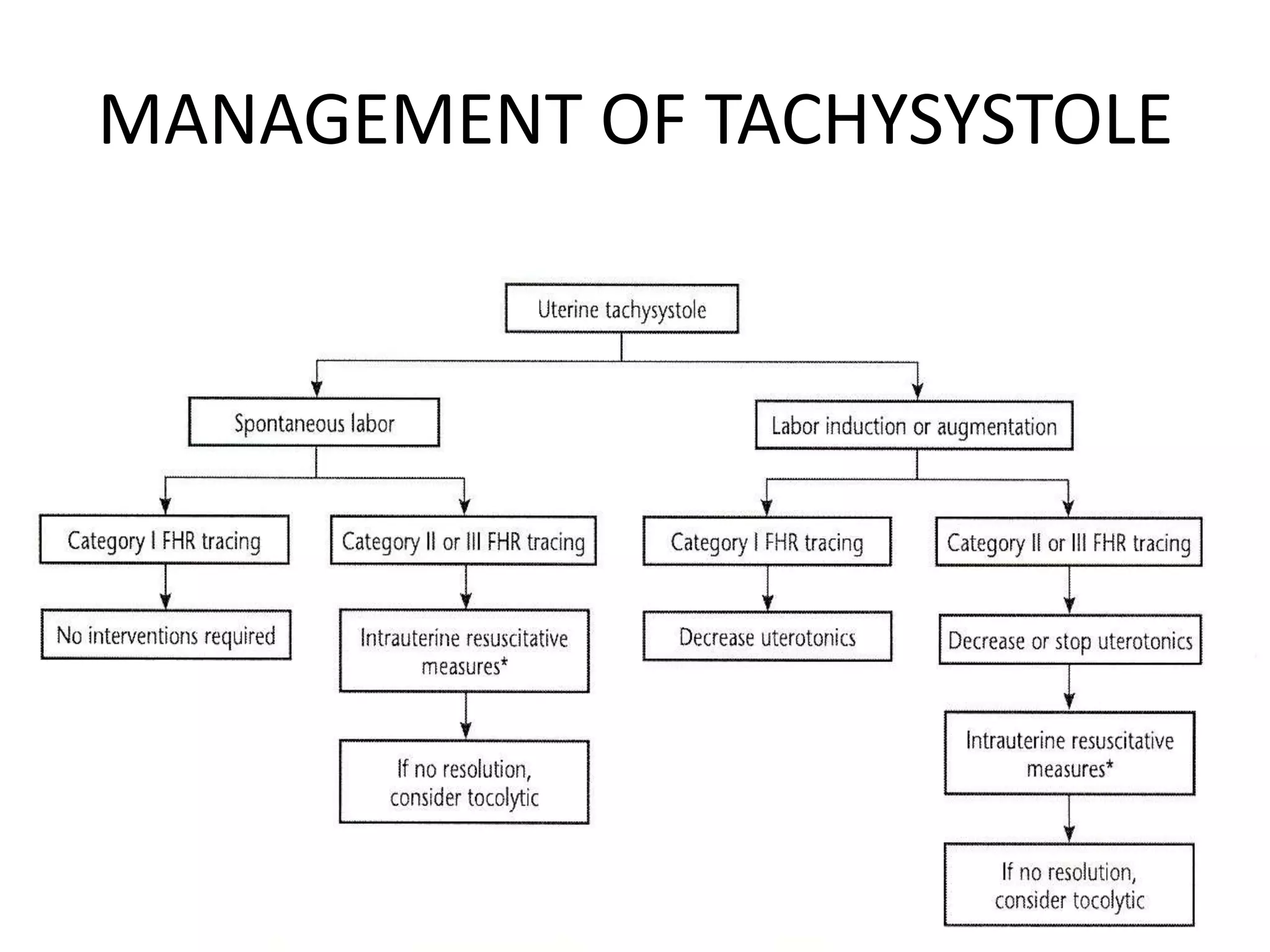
         Tachysystole
  > 5 contractions in 10 minutes
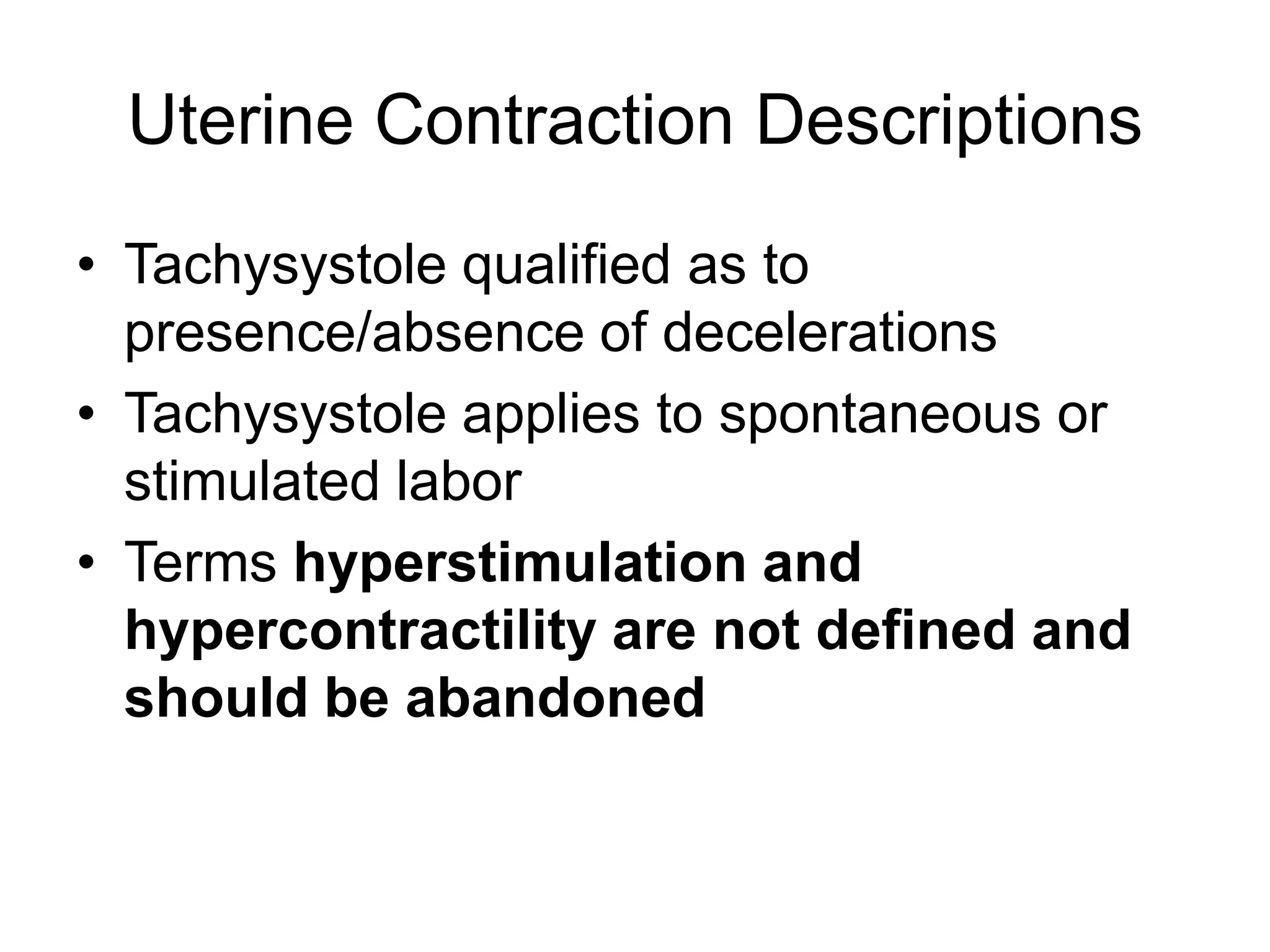
Uterine Contraction Descriptions
• Tachysystole qualified as to
  presence/absence of decelerations
• Tachysystole applies to spontaneous or
  stimulated labor
• Terms hyperstimulation and
  hypercontractility are not defined and
  should be abandoned
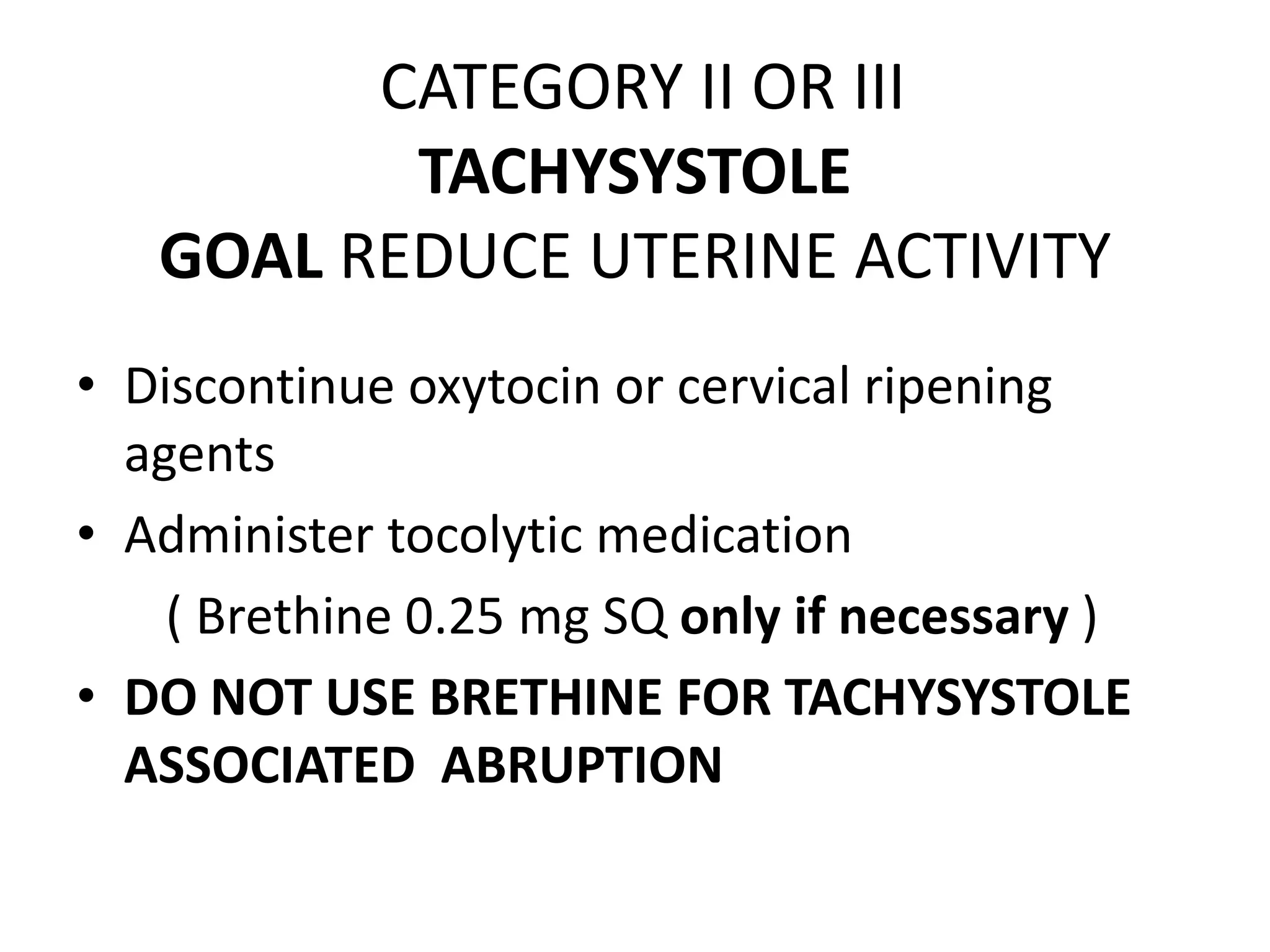
CATEGORY II OR III
          TACHYSYSTOLE
   GOAL REDUCE UTERINE ACTIVITY
• Discontinue oxytocin or cervical ripening
  agents
• Administer tocolytic medication
    ( Brethine 0.25 mg SQ only if necessary )
• DO NOT USE BRETHINE FOR TACHYSYSTOLE
  ASSOCIATED ABRUPTION
MANAGEMENT OF TACHYSYSTOLE
NICHD NOMENCLATURE
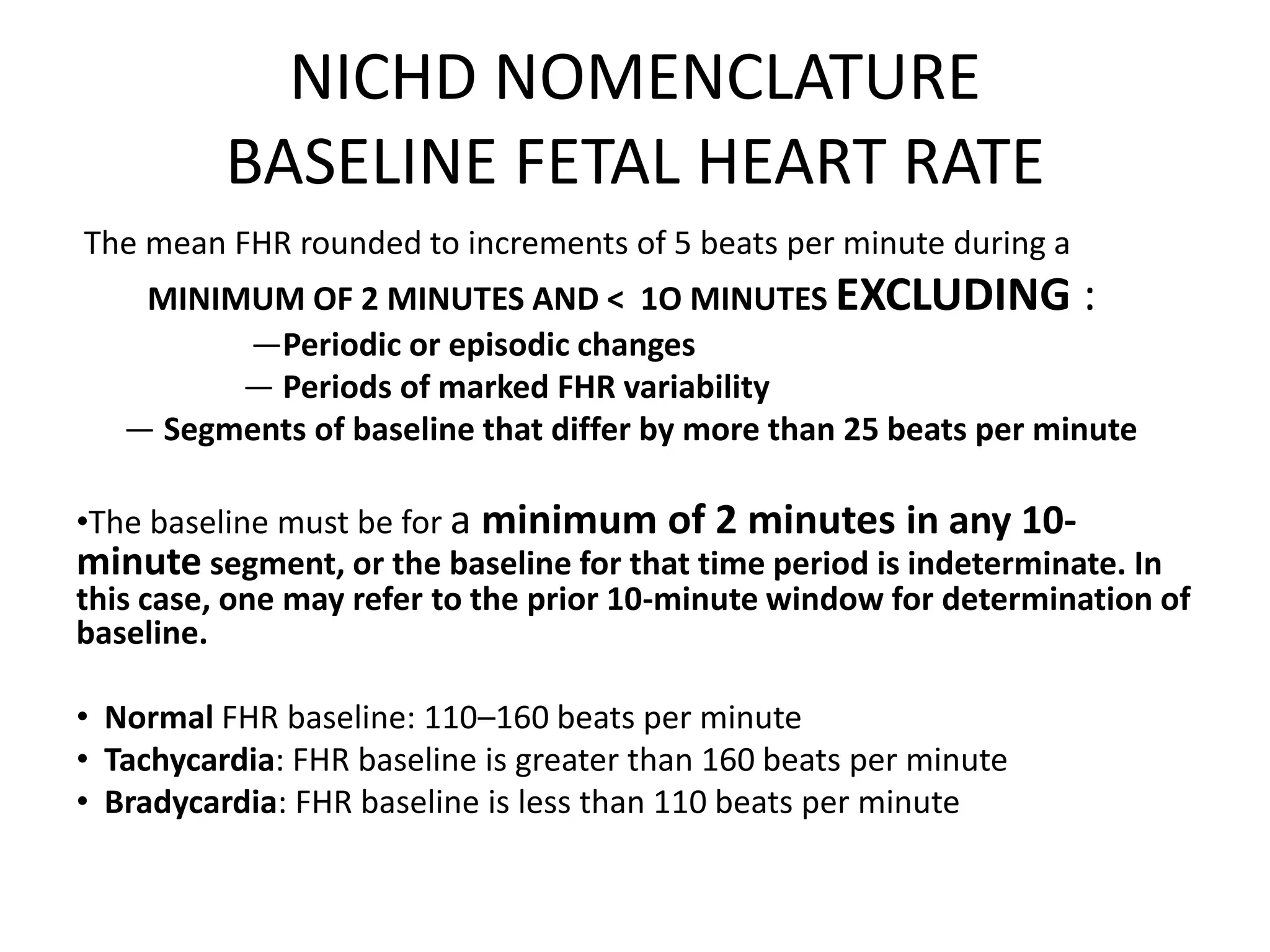
          BASELINE FETAL HEART RATE
The mean FHR rounded to increments of 5 beats per minute during a
    MINIMUM OF 2 MINUTES AND < 1O MINUTES EXCLUDING :
         —Periodic or episodic changes
         — Periods of marked FHR variability
   — Segments of baseline that differ by more than 25 beats per minute

•The baseline must be for a minimum of 2 minutes in any 10-
minute segment, or the baseline for that time period is indeterminate. In
this case, one may refer to the prior 10-minute window for determination of
baseline.

• Normal FHR baseline: 110–160 beats per minute
• Tachycardia: FHR baseline is greater than 160 beats per minute
• Bradycardia: FHR baseline is less than 110 beats per minute
NICHD NOMENCLATURE
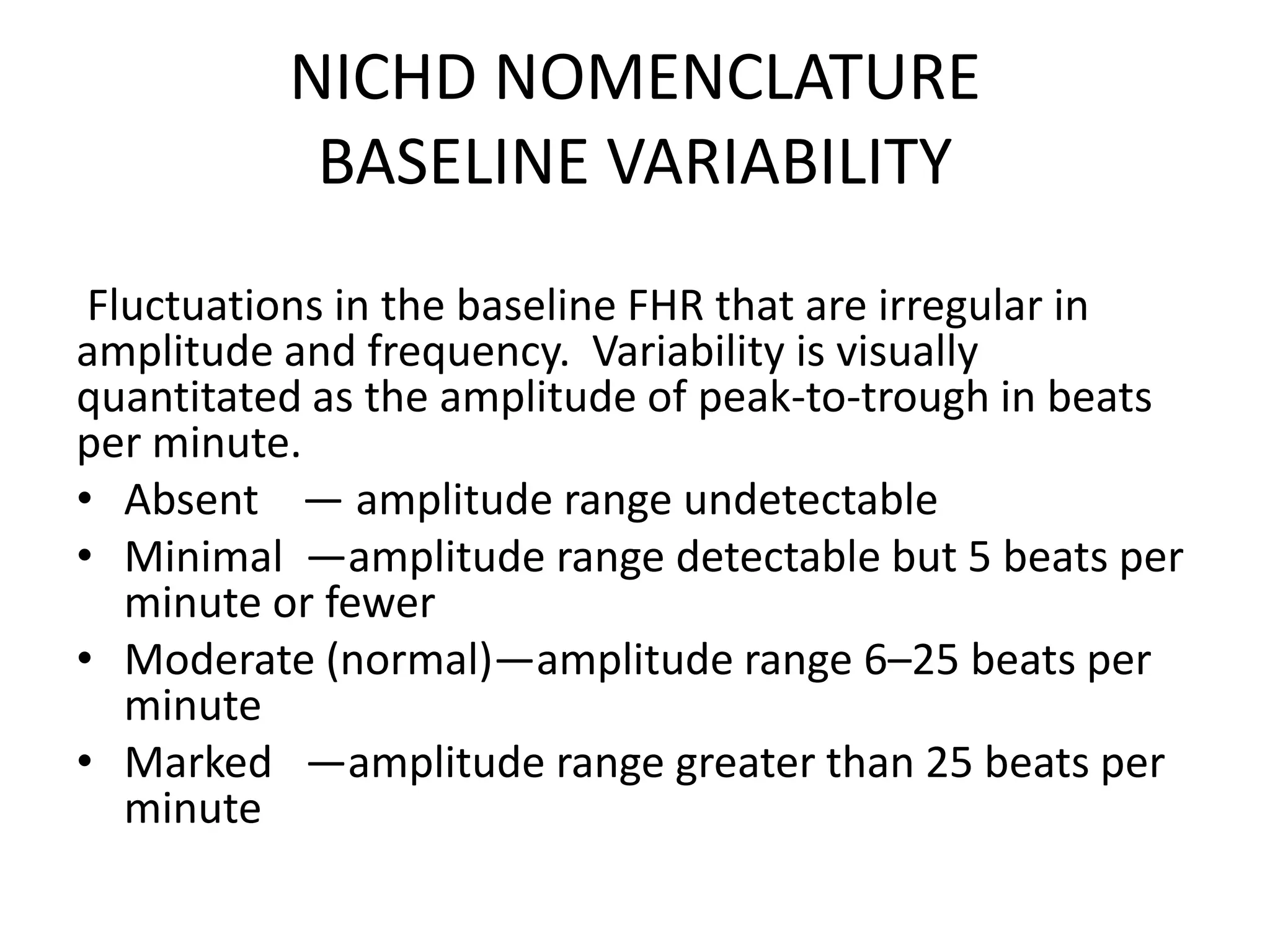
           BASELINE VARIABILITY
 Fluctuations in the baseline FHR that are irregular in
amplitude and frequency. Variability is visually
quantitated as the amplitude of peak-to-trough in beats
per minute.
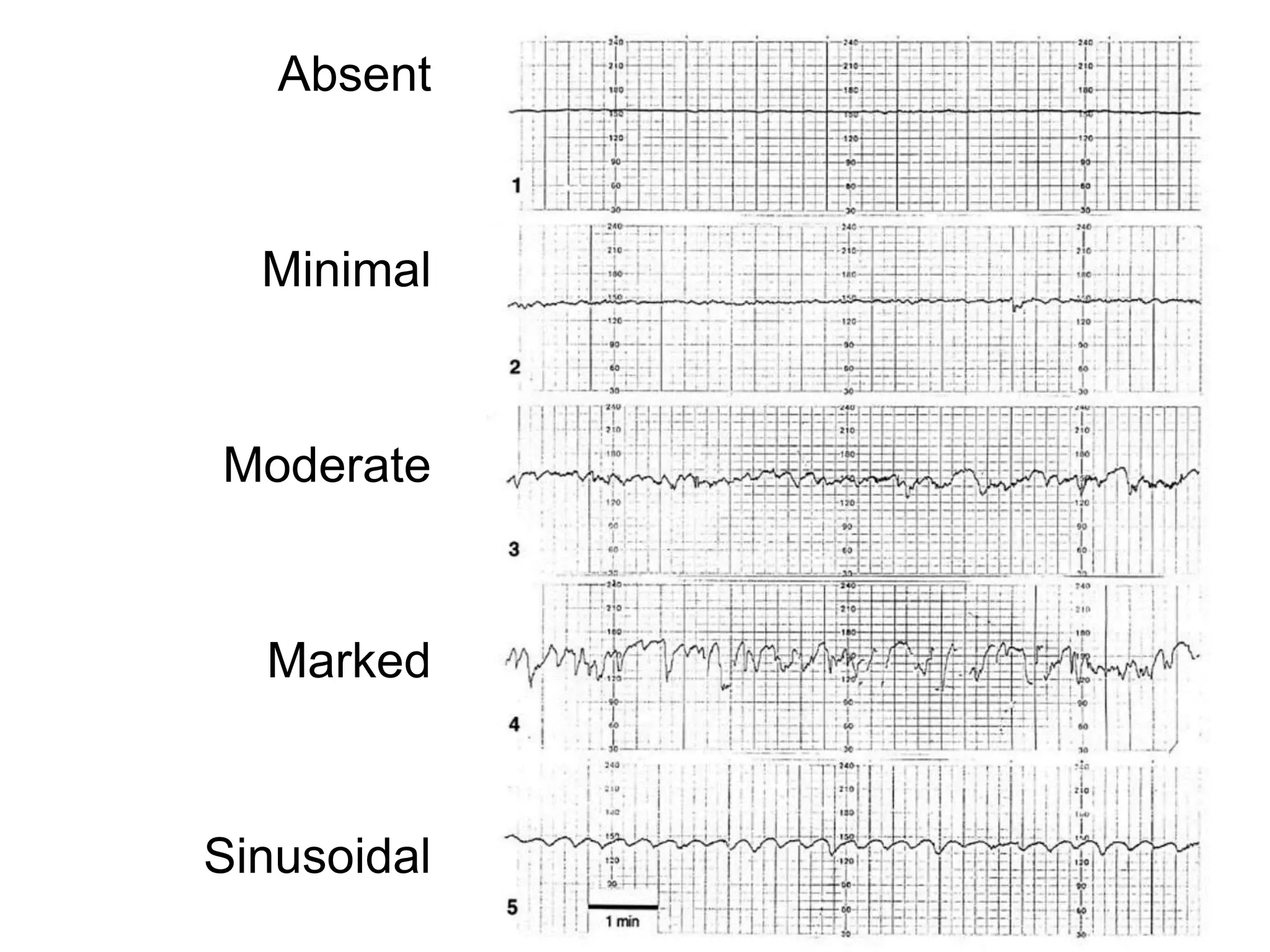
• Absent — amplitude range undetectable
• Minimal —amplitude range detectable but 5 beats per
   minute or fewer
• Moderate (normal)—amplitude range 6–25 beats per
   minute
• Marked —amplitude range greater than 25 beats per
   minute
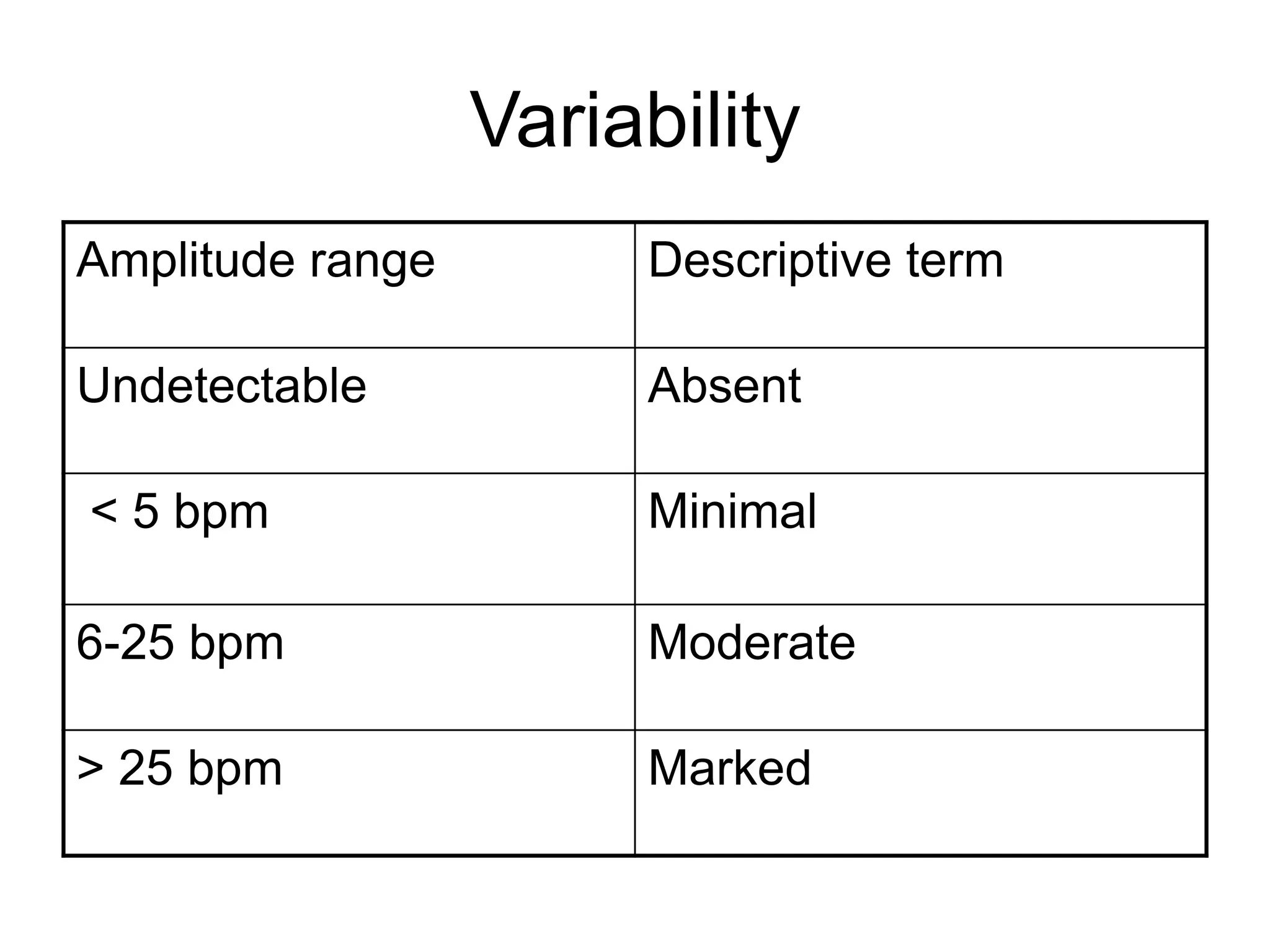
Variability
Amplitude range        Descriptive term

Undetectable           Absent

< 5 bpm                Minimal

6-25 bpm               Moderate

> 25 bpm               Marked
Absent


  Minimal


Moderate


  Marked


Sinusoidal
NICHD NOMENCLATURE
                  ACCELERATION
• A visually apparent abrupt increase (onset to peak in less than 30 seconds)
  in the FHR above the baseline
• At 32 weeks of gestation and beyond, an acceleration has a peak of 15
  beats per minute or more above baseline, with a duration of 15 seconds
  or more but less than 2 minutes from onset to return.

• Before 32 weeks of gestation, an acceleration has a peak of 10 beats per
  minute or more above baseline, with a duration of 10 seconds or more but
  less than 2 minutes from onset to return.

• Prolonged ACCELERATION
        > 2 minutes < 10 minutes in duration
 BASELINE CHANGE
           If an acceleration lasts >/= to 10 minutes
                      it is a baseline change
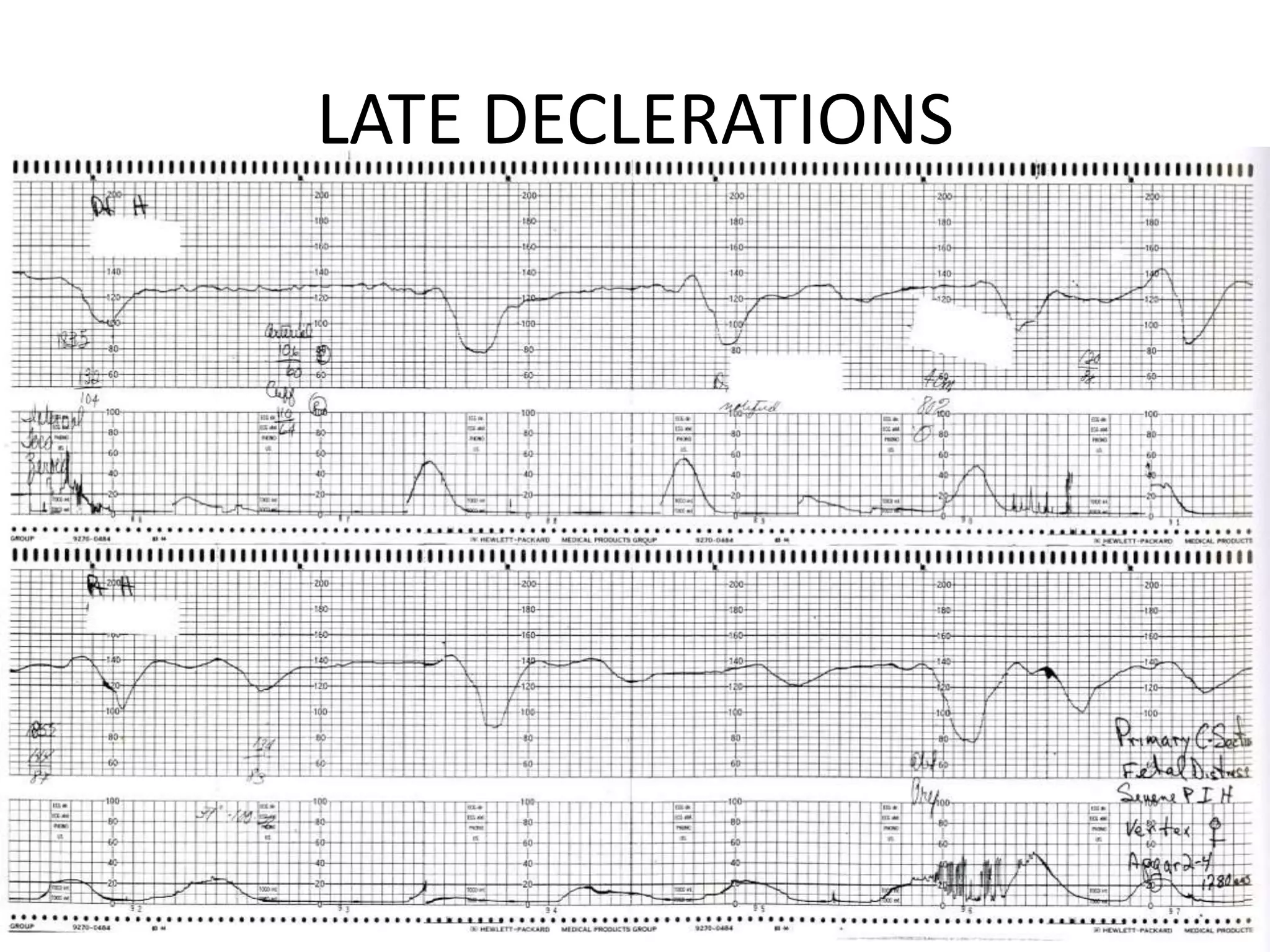
LATE DECELERATIONS
• Late deceleration
  – Visually apparent gradual (defined as onset of
    deceleration to nadir ≥30 seconds) decrease and
    return to baseline FHR associated with uterine
    contraction
  – The decrease calculated from most recent portion of
    baseline
  – The deceleration is delayed in timing, with the nadir
    of the deceleration occurring after the peak of the
    contraction.
• In most cases the onset, nadir, and recovery of
  the deceleration occur after the beginning, peak,
  and ending of the contraction, respectively
LATE DECLERATIONS
EARLY DECELERATIONS
• Early deceleration
  – Visually apparent gradual decrease (defined as onset
    of deceleration to nadir ≥30 seconds) and return to
    baseline FHR associated with uterine contraction
  – Calculated from most recent portion of baseline
  – Coincident in timing, with nadir of deceleration
    occurring at same time as the peak of contraction
• In most cases onset, nadir, and recovery of
  deceleration are coincident with the beginning,
  peak, and ending of the contraction, respectively
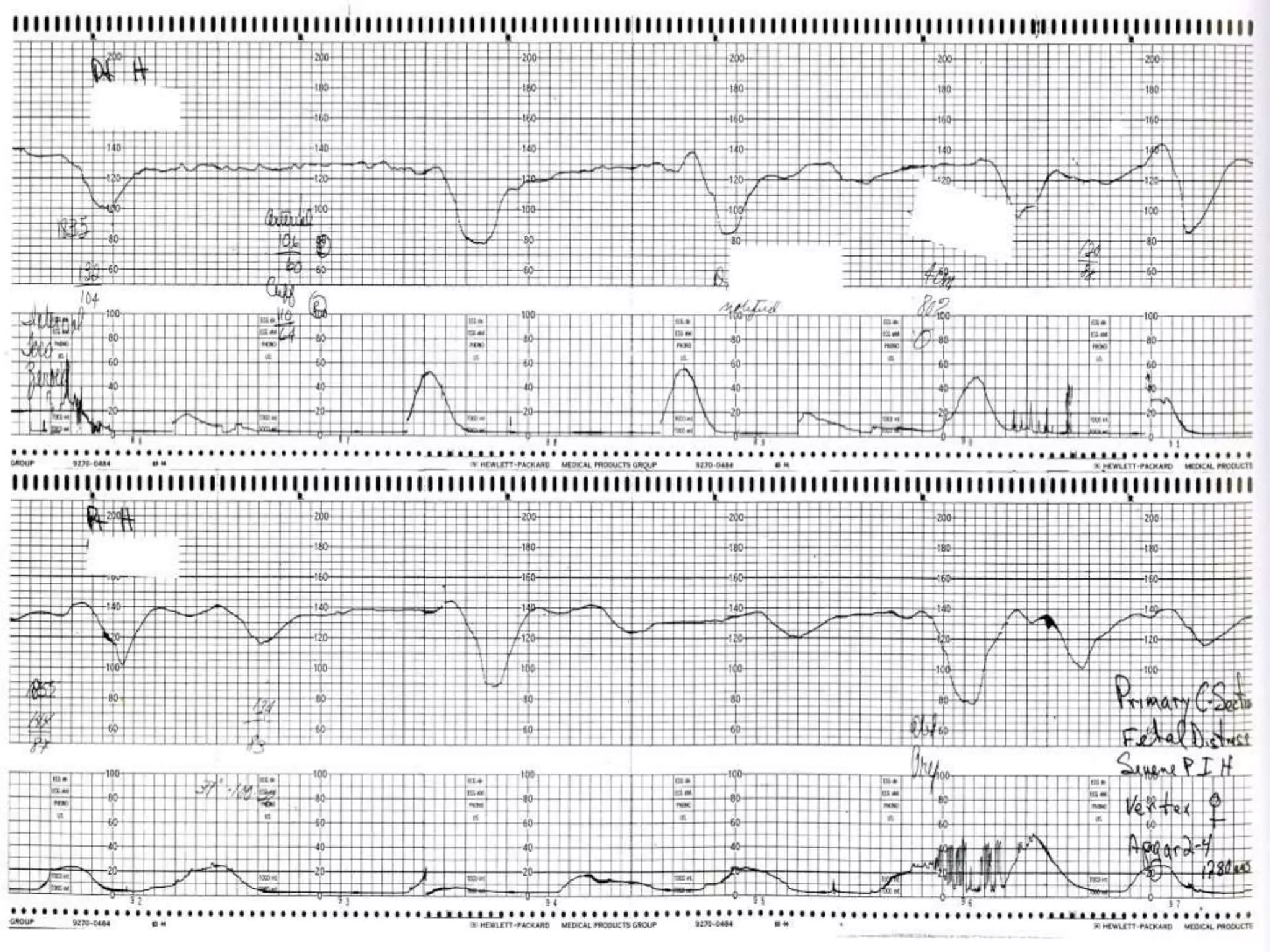
VARIABLE DECELERATIONS
• Variable deceleration
  – Visually apparent abrupt decrease (defined as onset
    of deceleration to beginning of nadir <30 seconds) in
    FHR below the baseline
  – The decrease is calculated from most recent portion
    of baseline
  – The decrease in FHR below baseline is ≥15
    beats/min, lasting ≥15 seconds, and <2 minutes from
    onset to return to baseline.
• When variable decelerations are associated with
  uterine contractions, their onset, depth, and
  duration commonly vary with successive uterine
  contractions
PROLONGED DECELERATION
    >/= 2 & < 10 minutes

 – Decrease in FHR below baseline calculated
   from most recent10 minute stable baseline
 – Decrease from baseline is ≥15 beats/min,
   lasting ≥2 minutes, but <10 minutes from
   onset to return to baseline.

• IF 15 BPM DECELERATION LAST
          ≥ 10 minutes it is a
FETAL HEART RATE BASELINE CHANGE
QUANTIFICATION OF
    DELERATIONS & ACCELERATIONS
• Decelerations are quantitated by the depth of the nadir in
  BPM below baseline
• The duration is quantitated in minutes and seconds from
  beginning to end of deceleration
• Accelerations are quantitated similarly

• Decelerations may be defined as recurrent if they occur
  with ≥50% of uterine contractions in any 20-minute
  segment

• Bradycardia and tachycardia are quantitated by actual
  FHR in BPM.
Interpretation of FHR patterns
• New three-tier system

• FHR tracing patterns reflect current fetal
  acid-base status

• FHR tracing patterns cannot RELIABLY
  OR CONSISTENTLY predict development
  of cerebral palsy
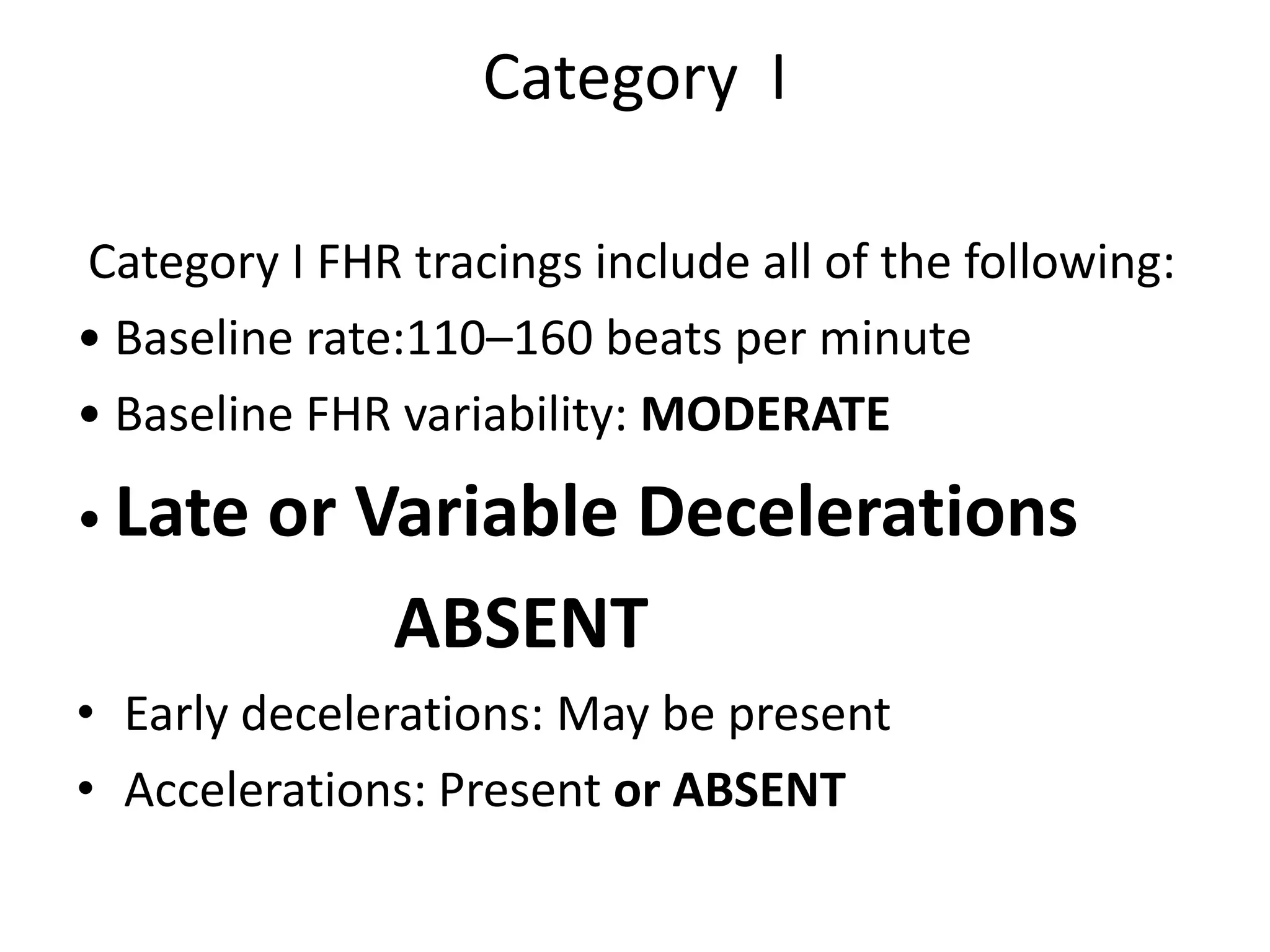
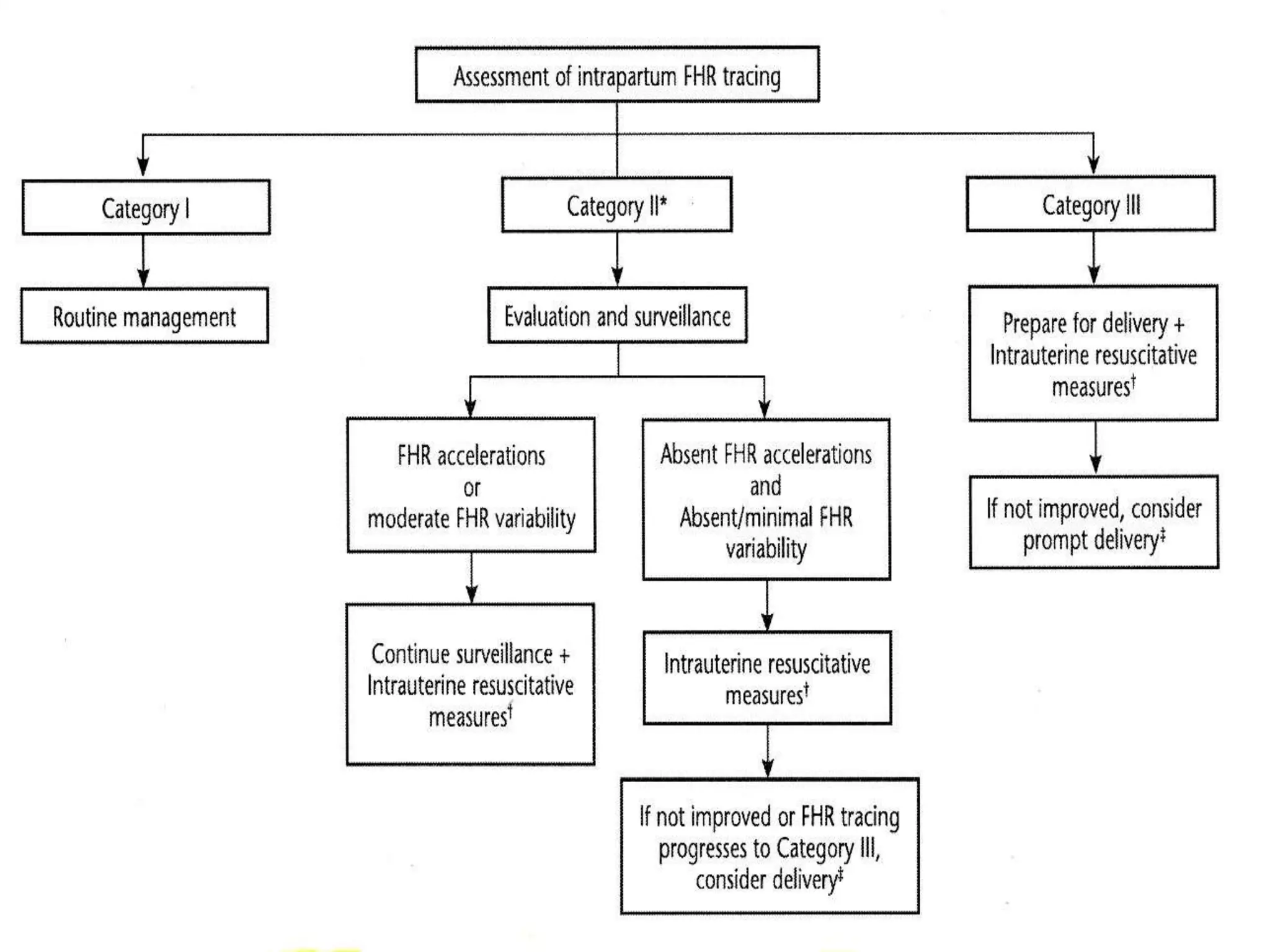
Category I

Category I FHR tracings include all of the following:
• Baseline rate:110–160 beats per minute
• Baseline FHR variability: MODERATE
• Late   or Variable Decelerations
             ABSENT
• Early decelerations: May be present
• Accelerations: Present or ABSENT
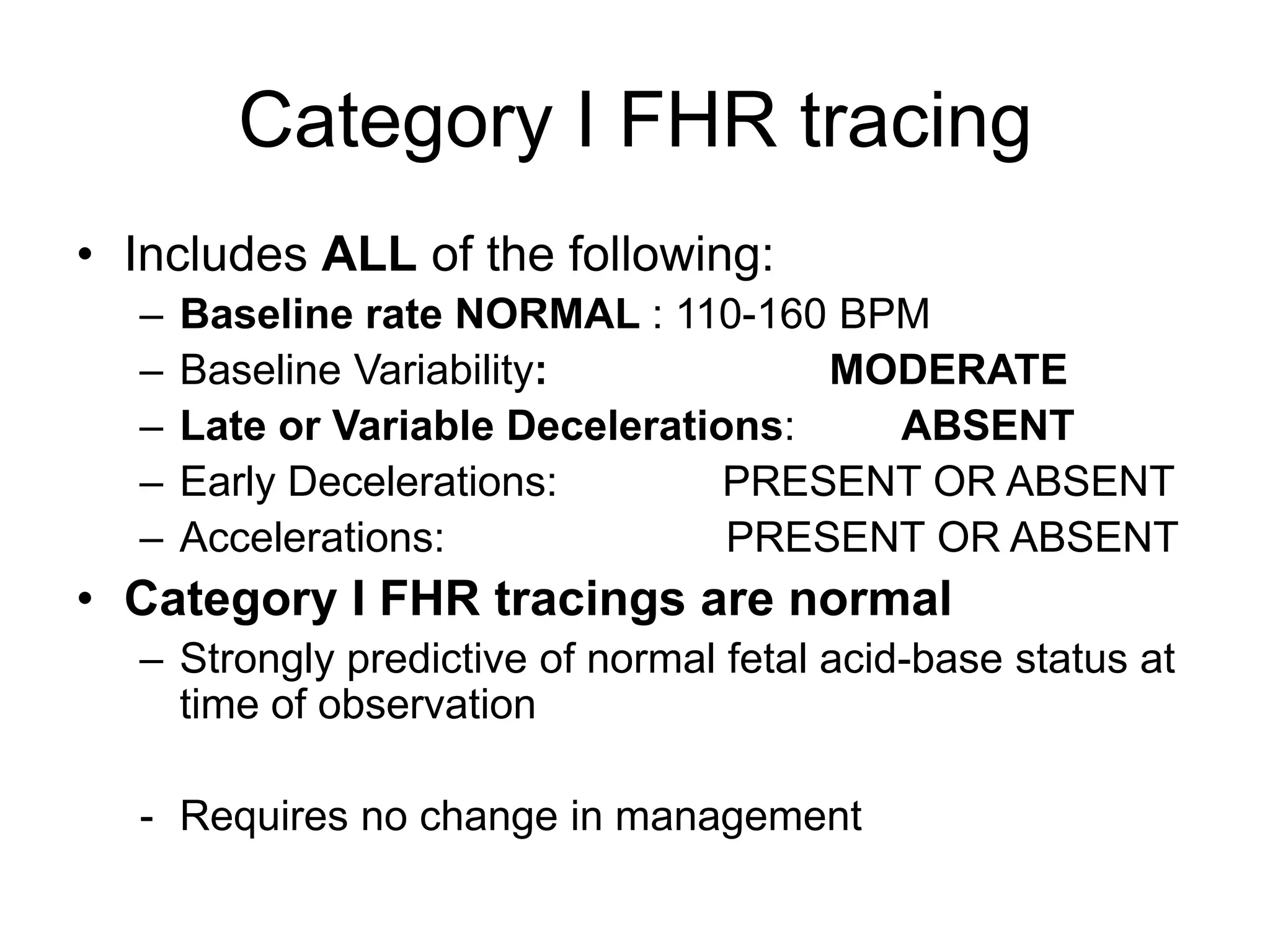
Category I FHR tracing
• Includes ALL of the following:
  –   Baseline rate NORMAL : 110-160 BPM
  –   Baseline Variability:           MODERATE
  –   Late or Variable Decelerations:   ABSENT
  –   Early Decelerations:        PRESENT OR ABSENT
  –   Accelerations:              PRESENT OR ABSENT
• Category I FHR tracings are normal
  – Strongly predictive of normal fetal acid-base status at
    time of observation

  - Requires no change in management
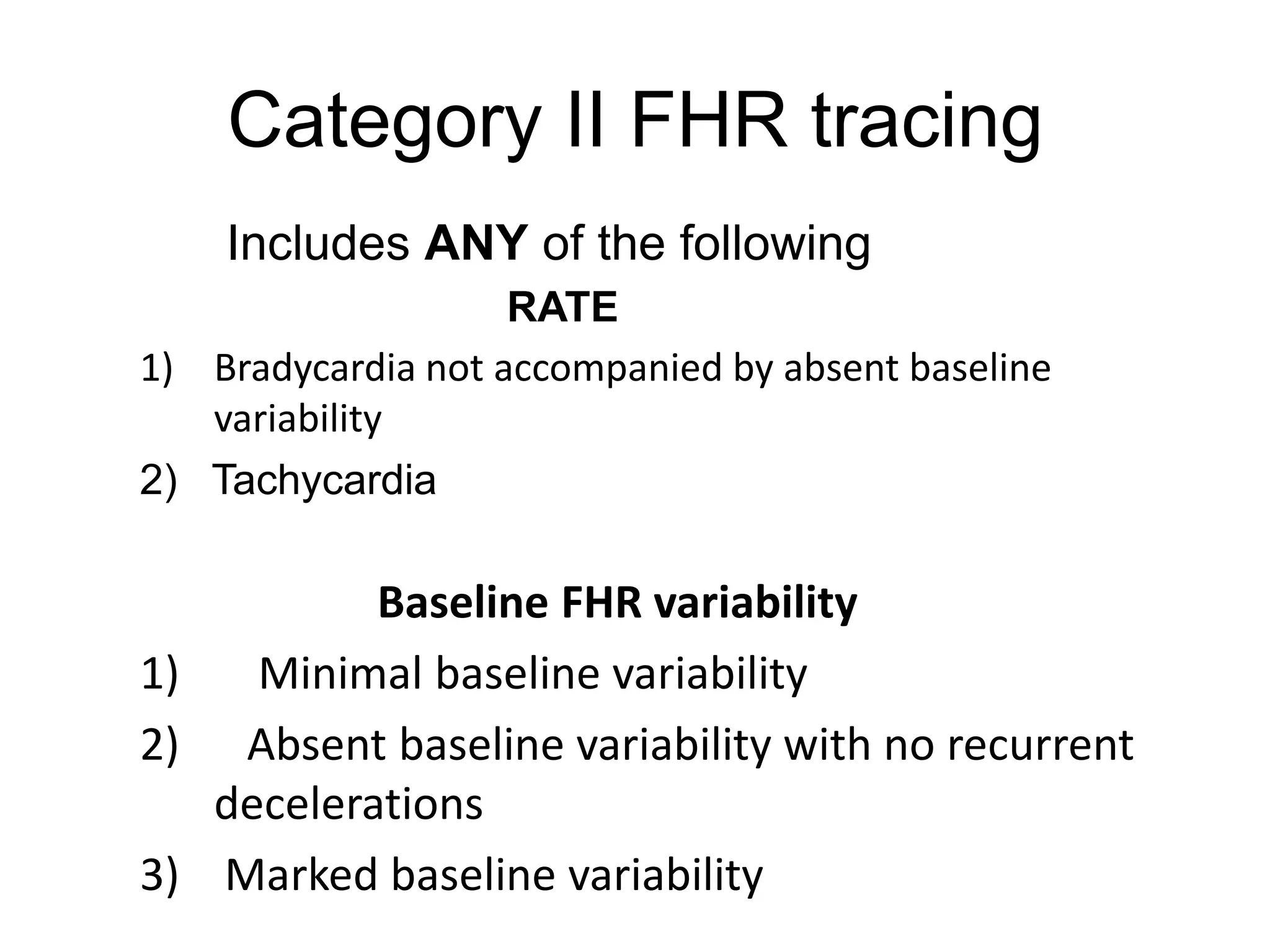
Category II FHR tracing
    Includes ANY of the following
                    RATE
1) Bradycardia not accompanied by absent baseline
   variability
2) Tachycardia

           Baseline FHR variability
1)   Minimal baseline variability
2) Absent baseline variability with no recurrent
   decelerations
3) Marked baseline variability
Category II FHR tracing
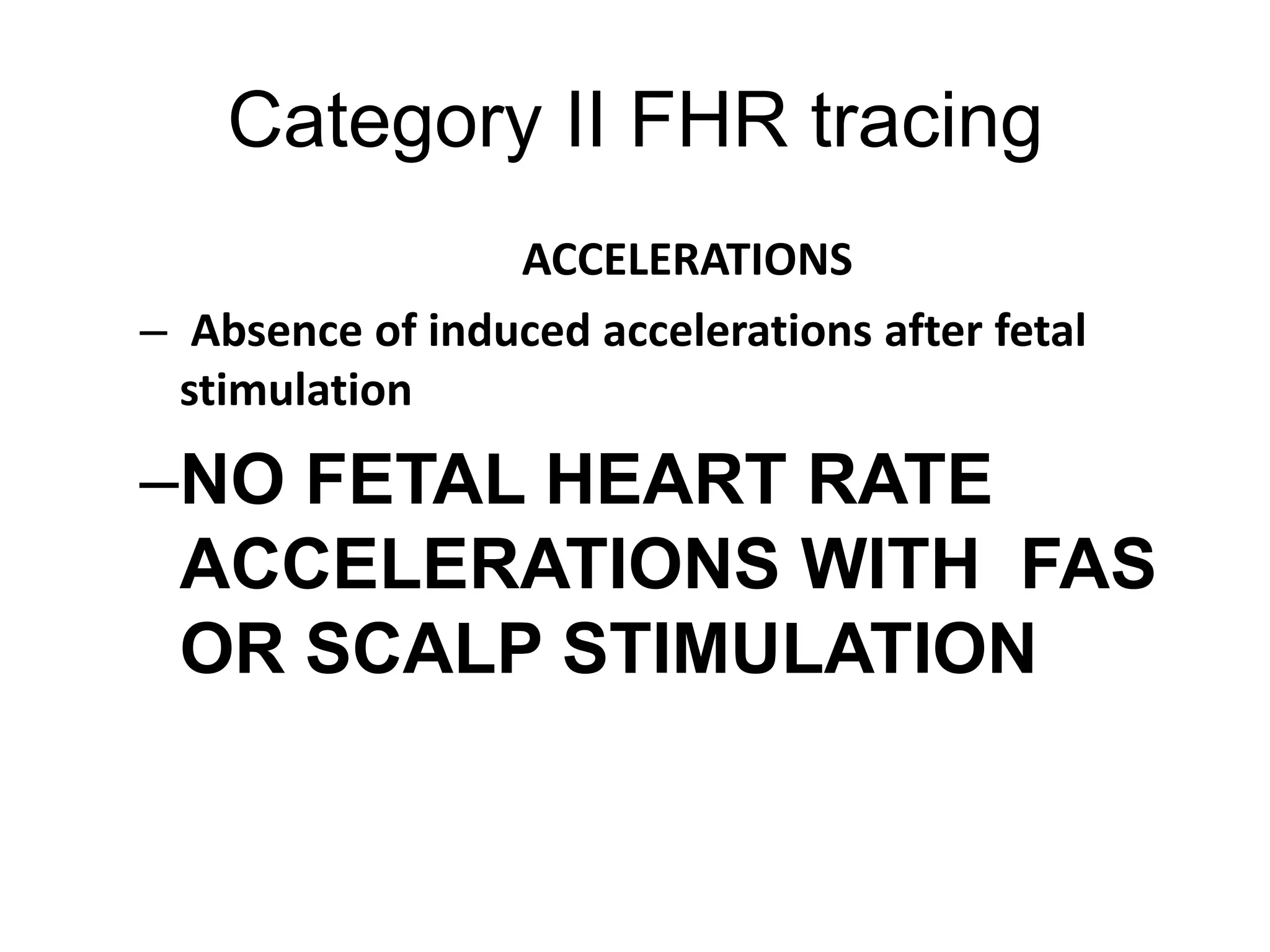
                 ACCELERATIONS
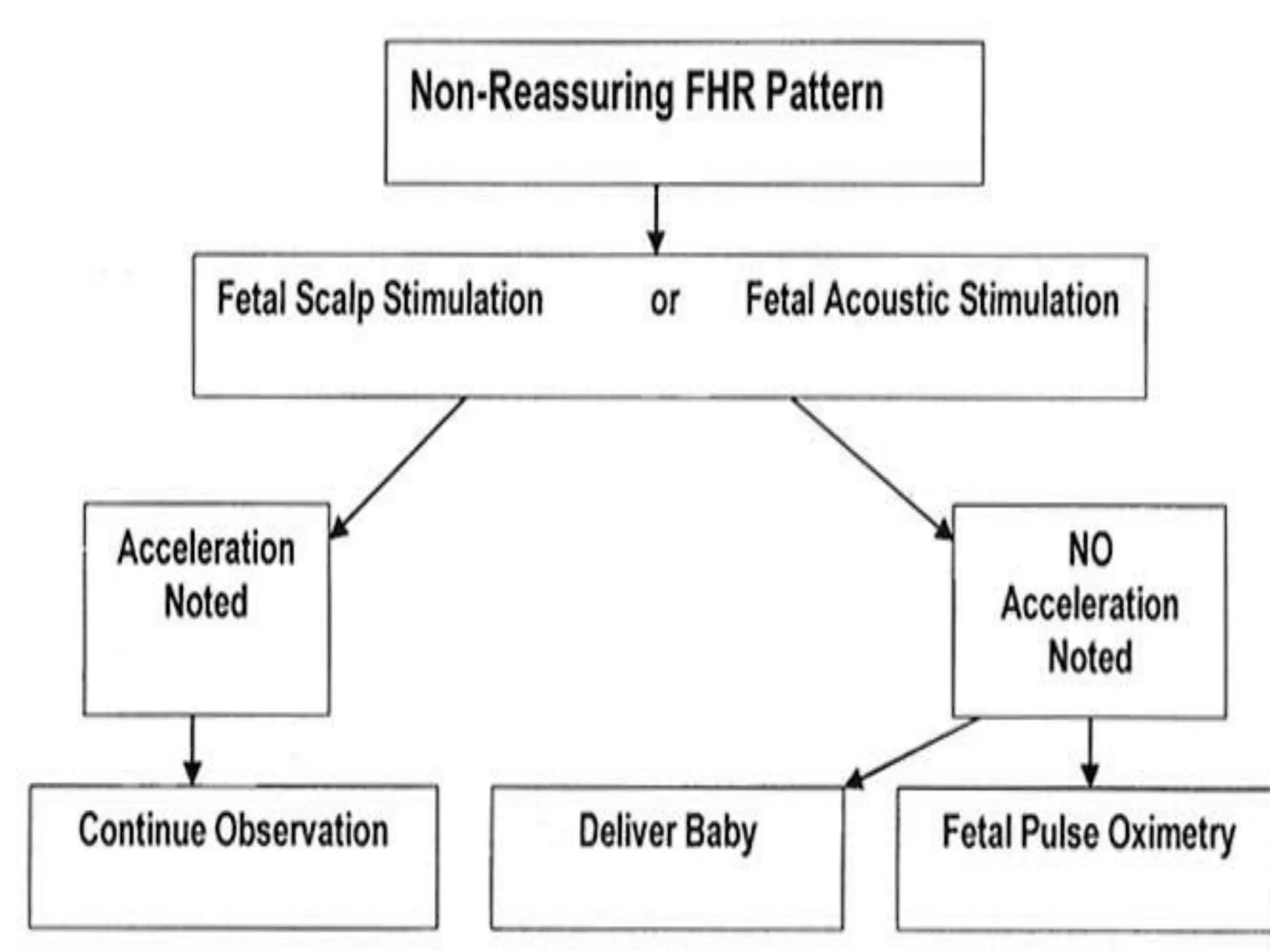
– Absence of induced accelerations after fetal
  stimulation
–NO FETAL HEART RATE
 ACCELERATIONS WITH FAS
 OR SCALP STIMULATION
Category II FHR tracing
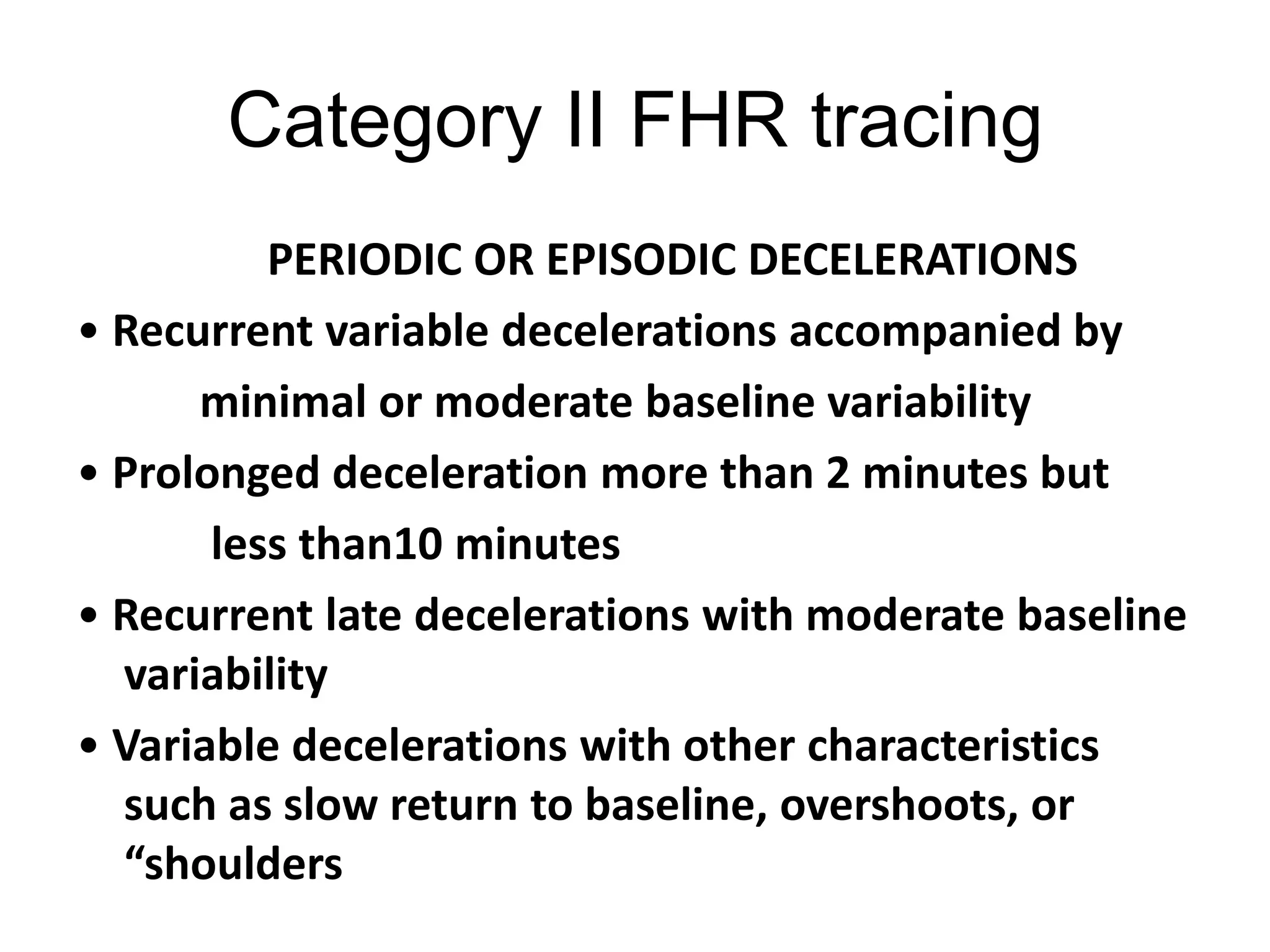
          PERIODIC OR EPISODIC DECELERATIONS
• Recurrent variable decelerations accompanied by
      minimal or moderate baseline variability
• Prolonged deceleration more than 2 minutes but
       less than10 minutes
• Recurrent late decelerations with moderate baseline
  variability
• Variable decelerations with other characteristics
  such as slow return to baseline, overshoots, or
  “shoulders
Category II FHR tracing
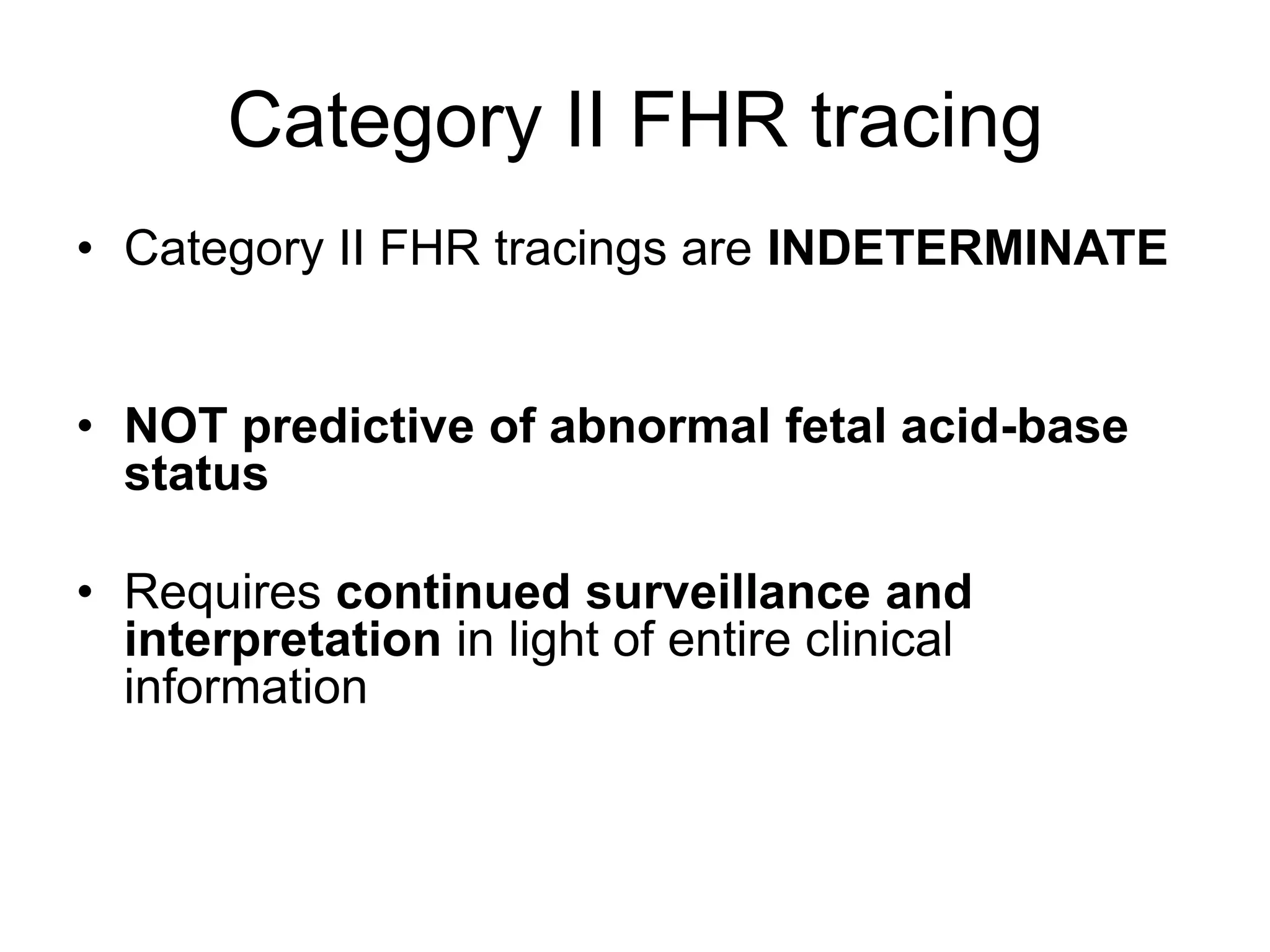
• Category II FHR tracings are INDETERMINATE


• NOT predictive of abnormal fetal acid-base
  status

• Requires continued surveillance and
  interpretation in light of entire clinical
  information
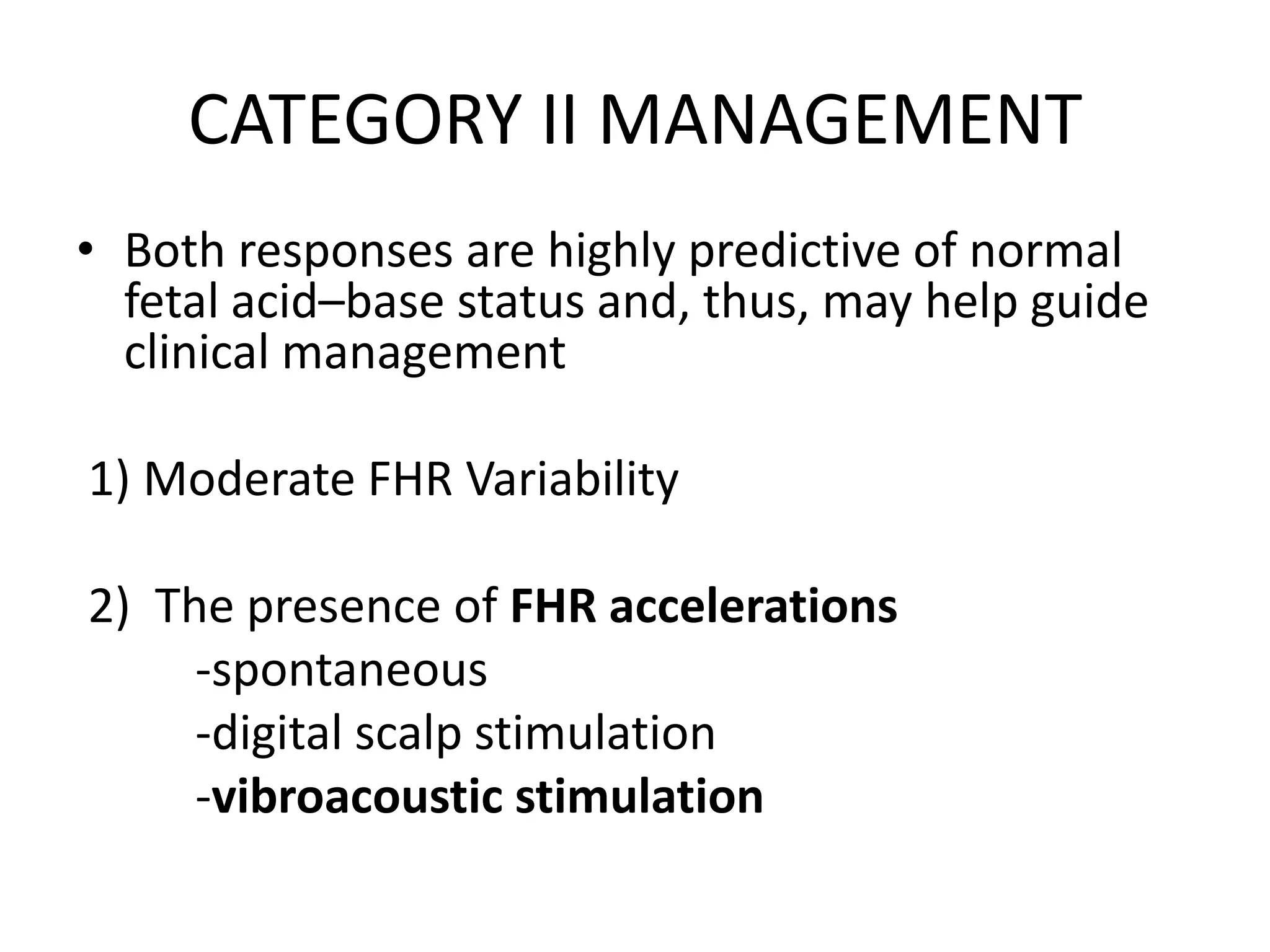
CATEGORY II MANAGEMENT
• Both responses are highly predictive of normal
  fetal acid–base status and, thus, may help guide
  clinical management

1) Moderate FHR Variability

2) The presence of FHR accelerations
     -spontaneous
     -digital scalp stimulation
     -vibroacoustic stimulation
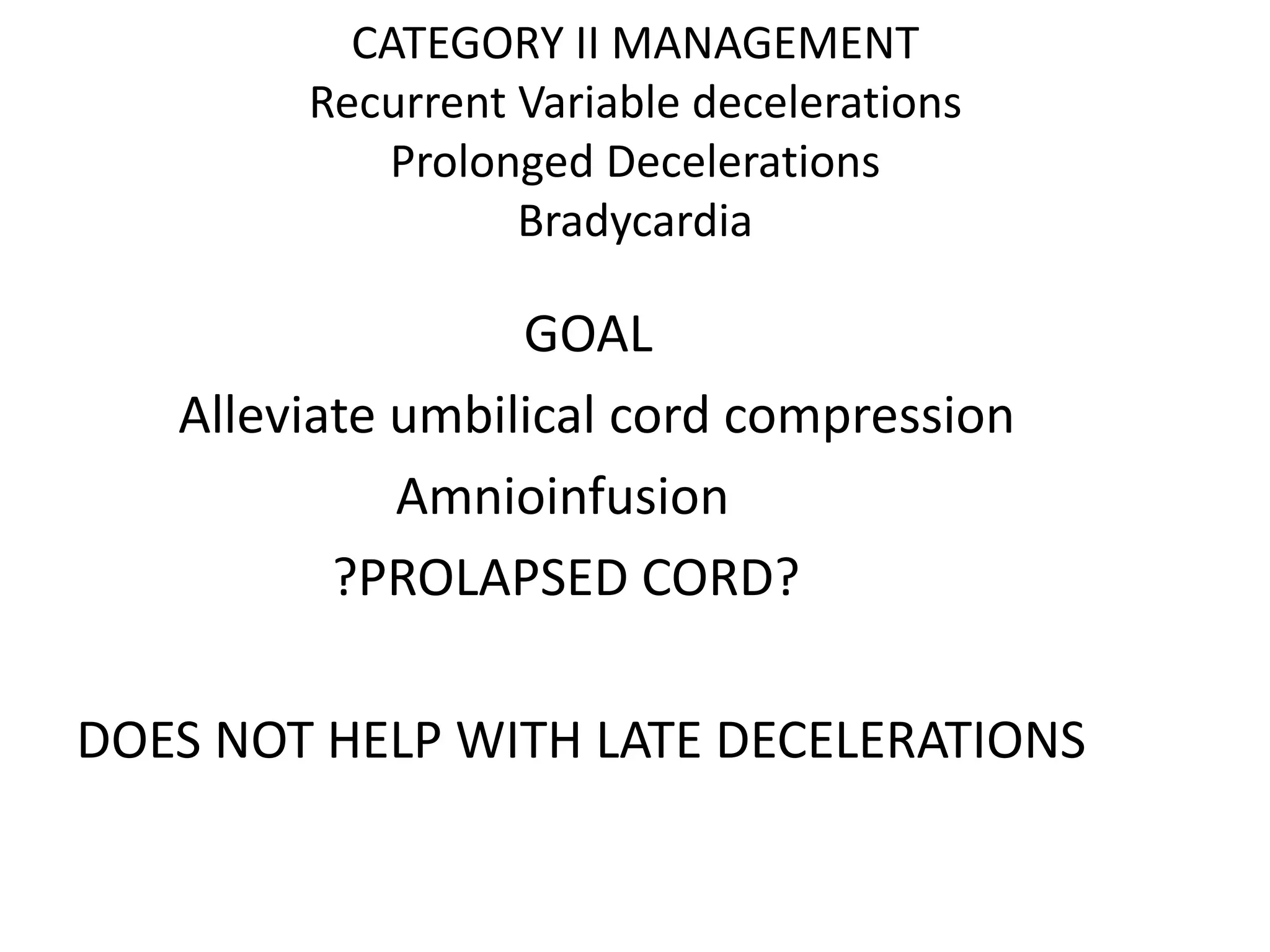
CATEGORY II MANAGEMENT
        Recurrent Variable decelerations
            Prolonged Decelerations
                  Bradycardia

                  GOAL
   Alleviate umbilical cord compression
             Amnioinfusion
          ?PROLAPSED CORD?

DOES NOT HELP WITH LATE DECELERATIONS
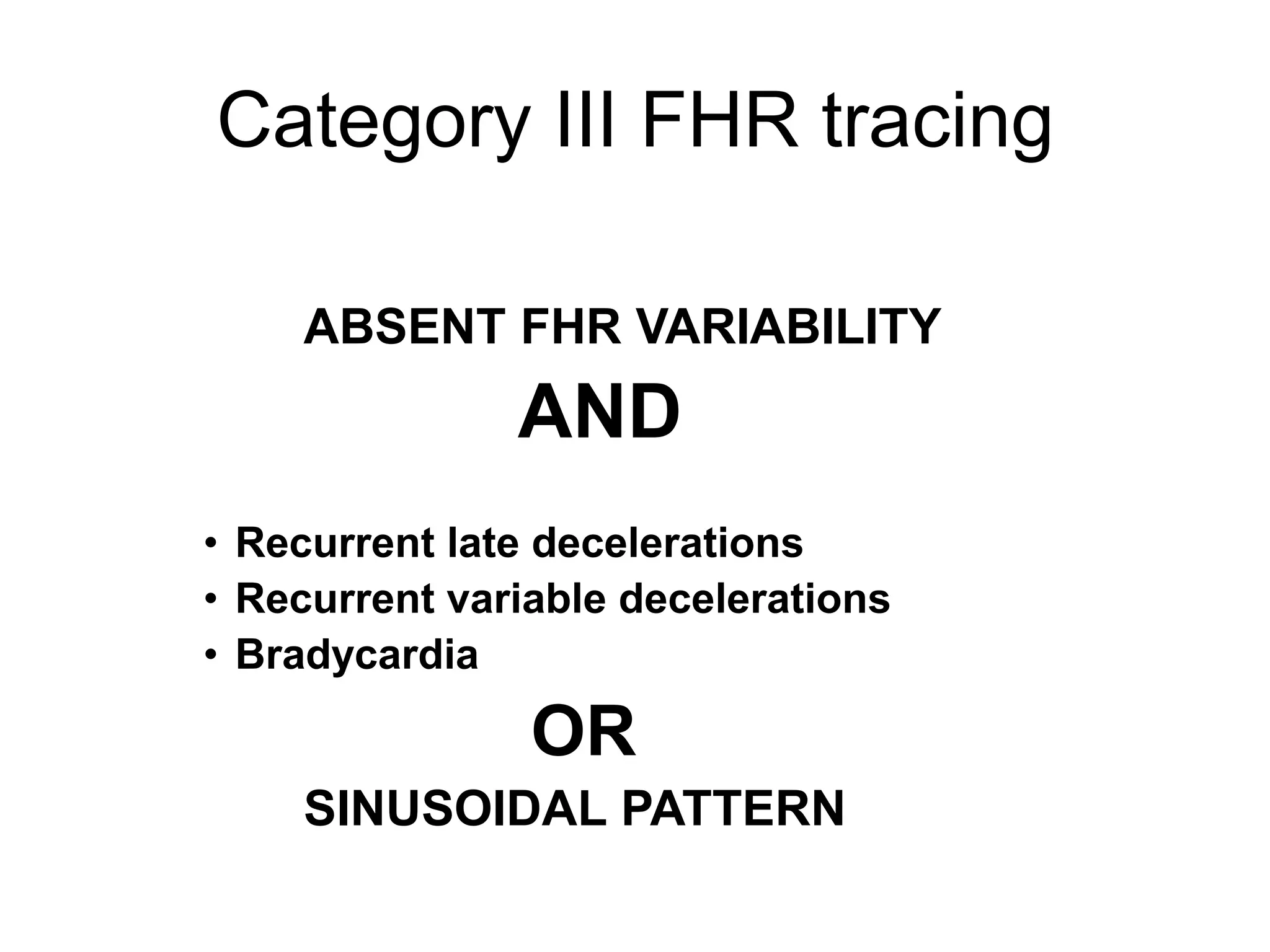
Category III FHR tracing

    ABSENT FHR VARIABILITY
               AND
• Recurrent late decelerations
• Recurrent variable decelerations
• Bradycardia

                OR
    SINUSOIDAL PATTERN
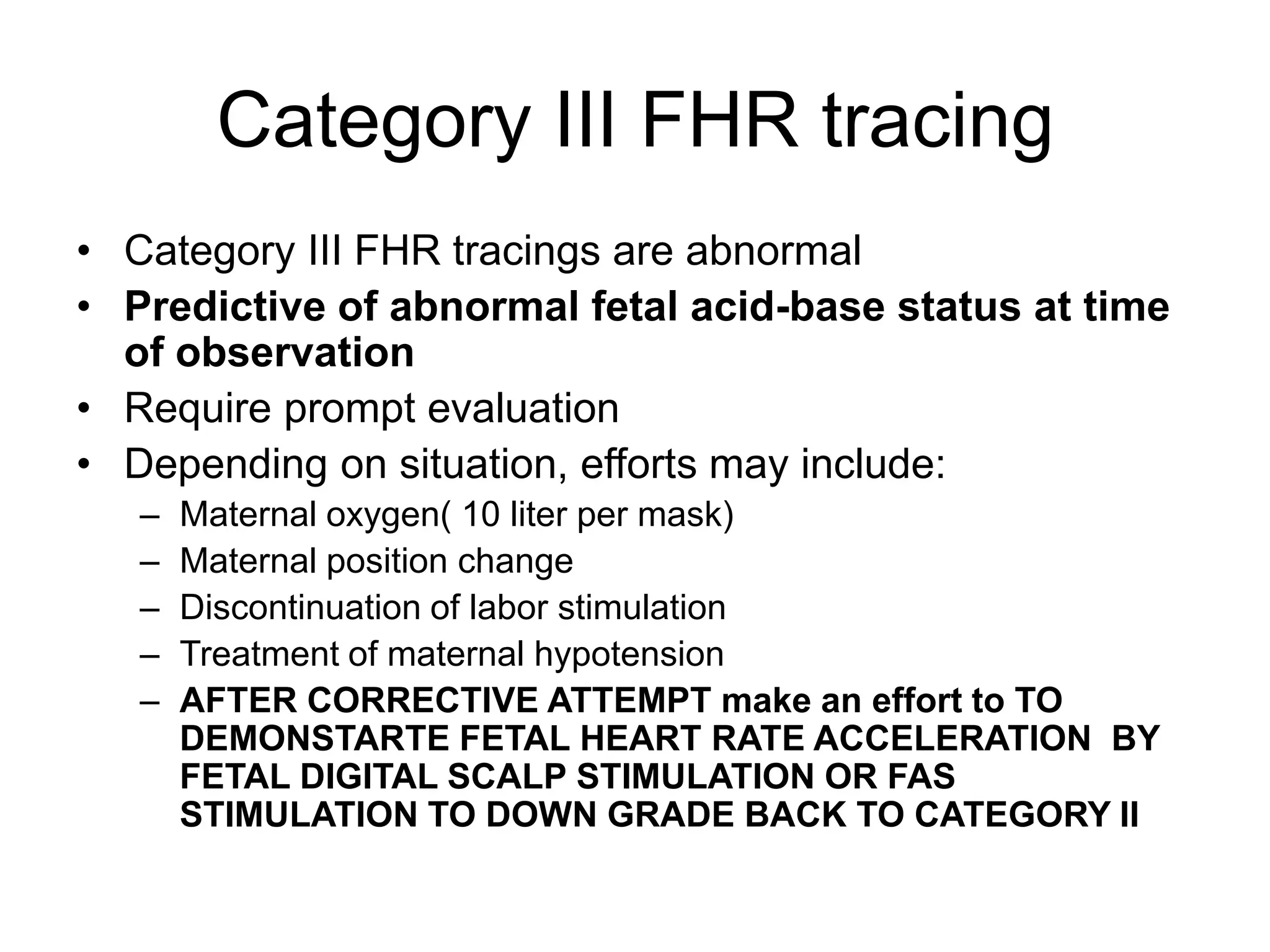
Category III FHR tracing
• Category III FHR tracings are abnormal
• Predictive of abnormal fetal acid-base status at time
  of observation
• Require prompt evaluation
• Depending on situation, efforts may include:
   –   Maternal oxygen( 10 liter per mask)
   –   Maternal position change
   –   Discontinuation of labor stimulation
   –   Treatment of maternal hypotension
   –   AFTER CORRECTIVE ATTEMPT make an effort to TO
       DEMONSTARTE FETAL HEART RATE ACCELERATION BY
       FETAL DIGITAL SCALP STIMULATION OR FAS
       STIMULATION TO DOWN GRADE BACK TO CATEGORY II
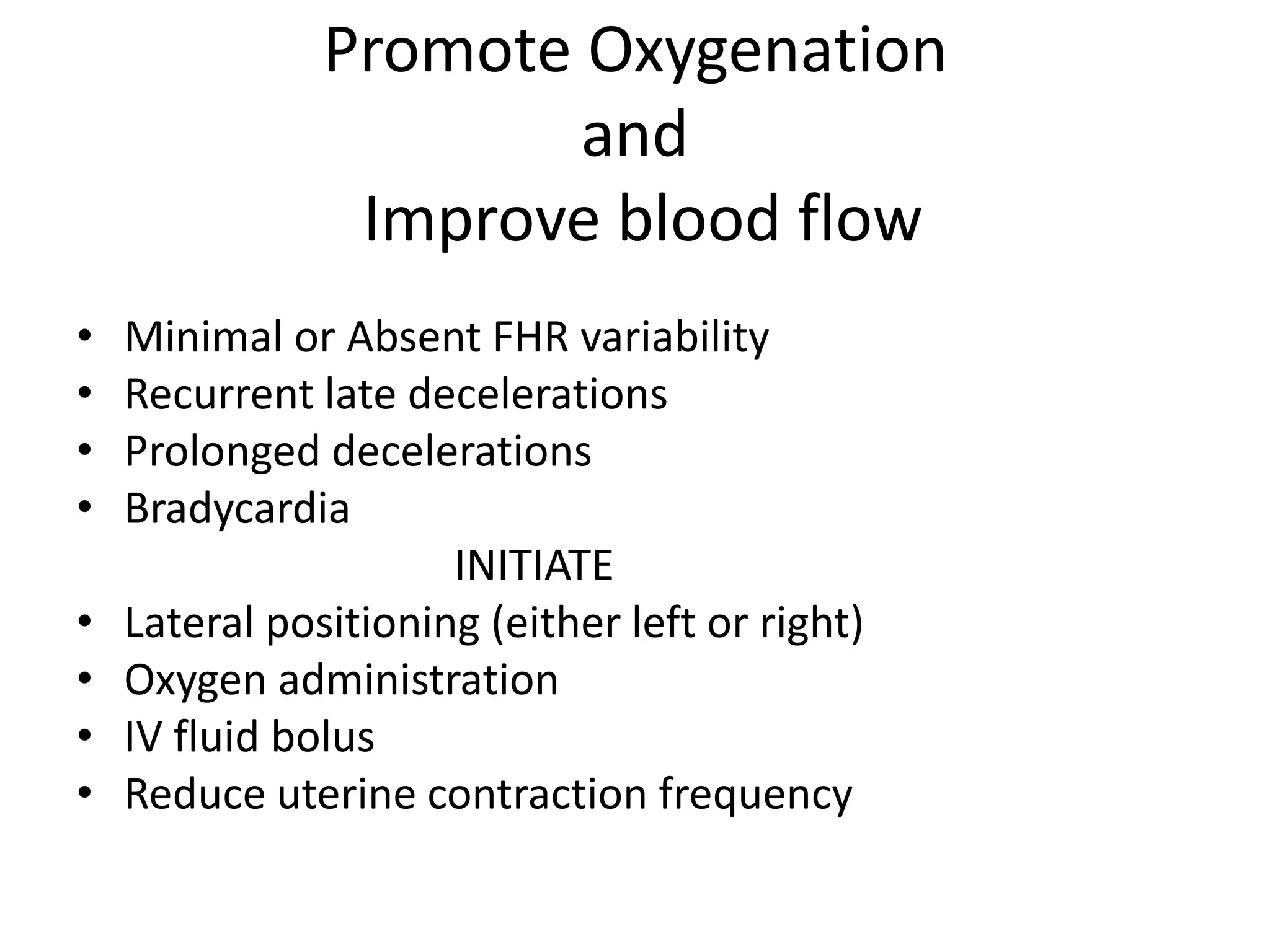
Promote Oxygenation
                       and
                Improve blood flow
•   Minimal or Absent FHR variability
•   Recurrent late decelerations
•   Prolonged decelerations
•   Bradycardia
                      INITIATE
•   Lateral positioning (either left or right)
•   Oxygen administration
•   IV fluid bolus
•   Reduce uterine contraction frequency
NICHD Expert Panel
Agreement about definition of NORMAL FHR tracing that confers an
extremely high predictability of a NORMALLY oxygenated fetus when it is
obtained
    •   Normal baseline rate
    •   Moderate FHR variability
    •   Presence of accelerations
    •   Absence of decelerations

Agreement that patterns predictive of current or impending fetal asphyxia
PLACING the fetus is at risk for NEUROLOGIC DAMAGE OR DEATH
        ABSENT FHR VARIABILITY
                AND
   RECURRENT LATES
 RECURRENT VARIABLES
Goals of EFM
• Delivery of newborn
  – In the absence of a significant acidosis
     • Umbilical artery pH < 7.1, base excess < -12
     • And/or 5 minute Apgar < 7
  – In the presence of neonatal vigor
• Quickly categorize FHR patterns based on their
  relationship (or lack thereof) to the above goals
• Clearly communicate FHR patterns to members
  of the OB team
Communication
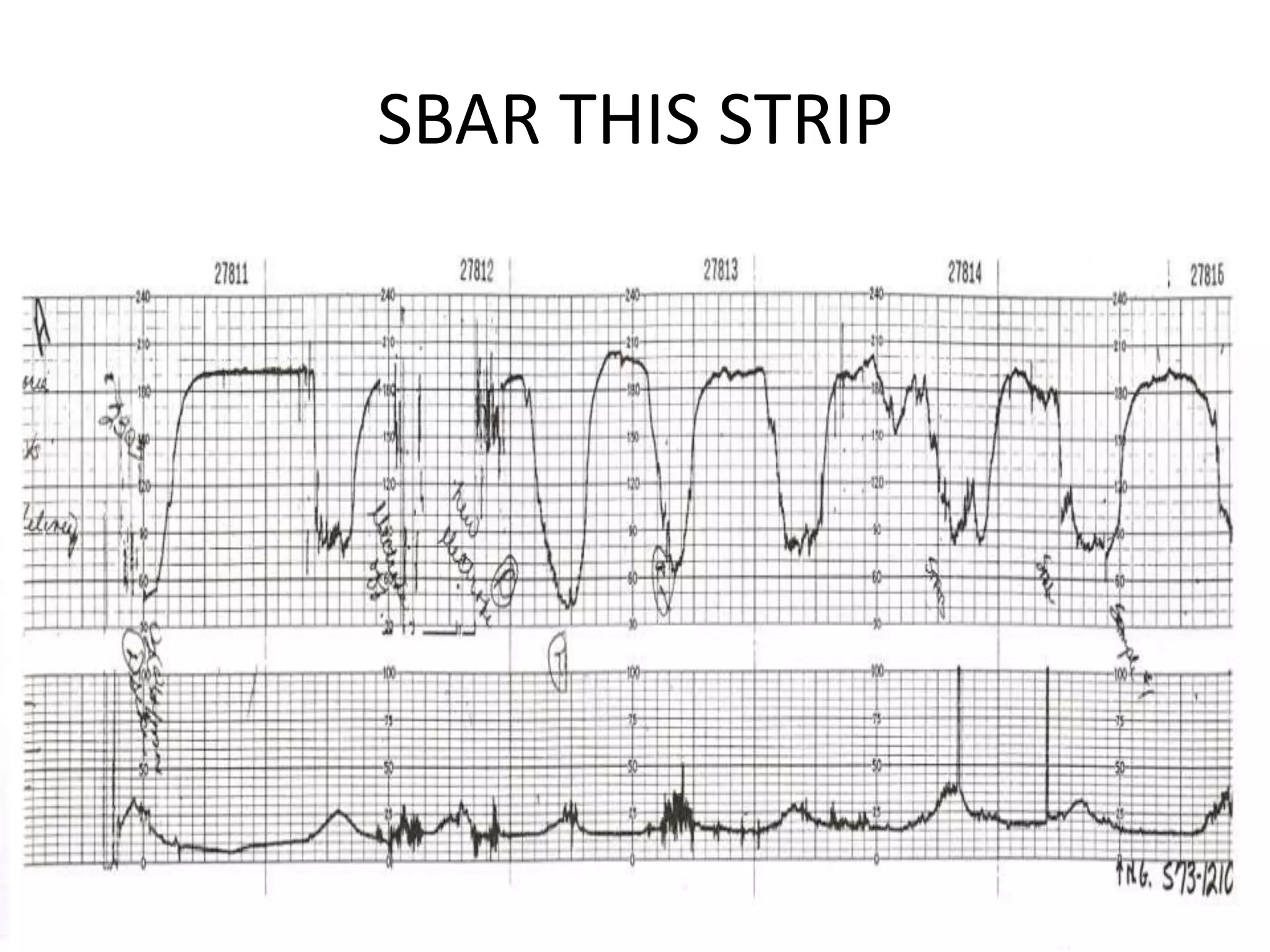
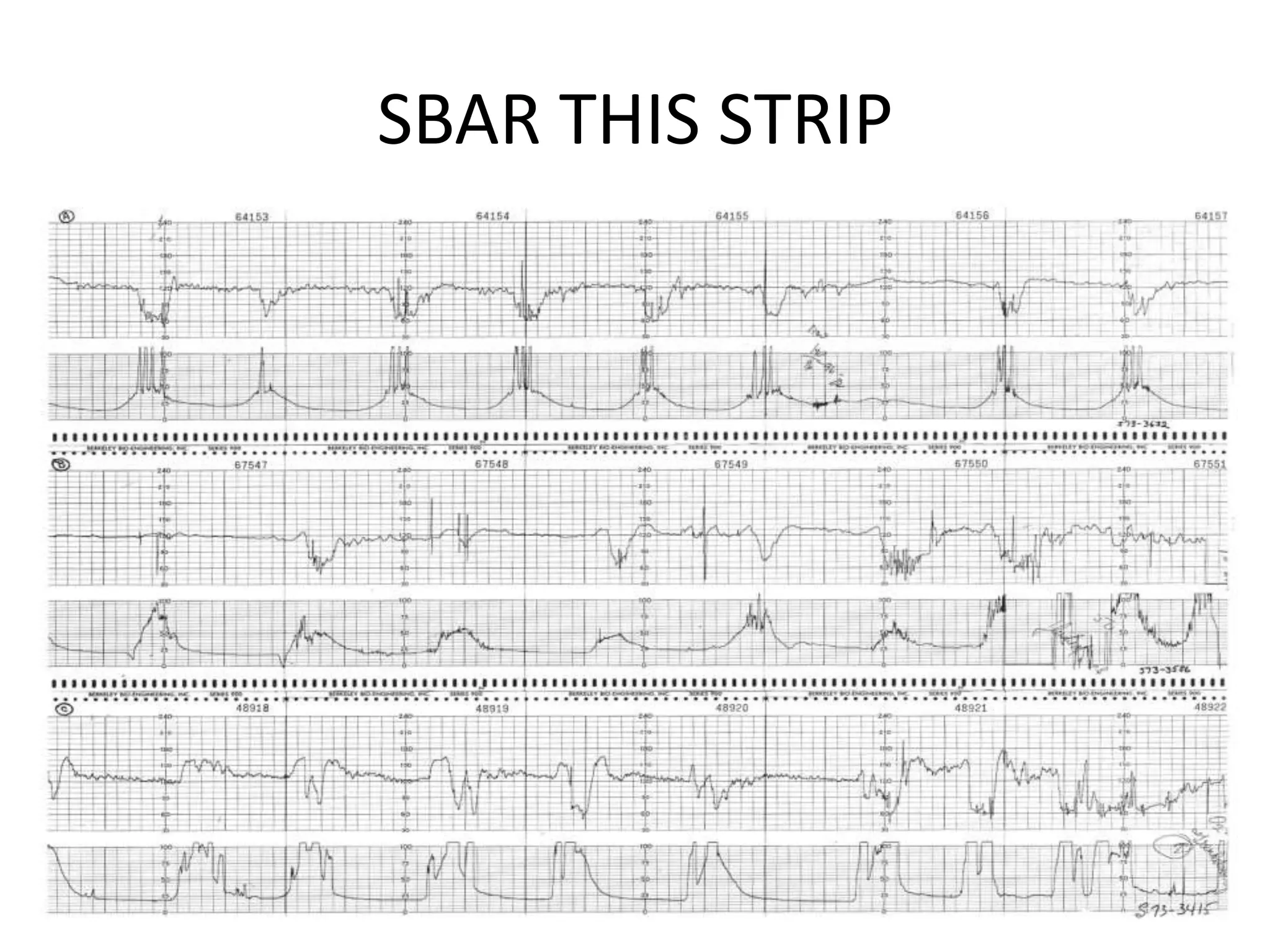
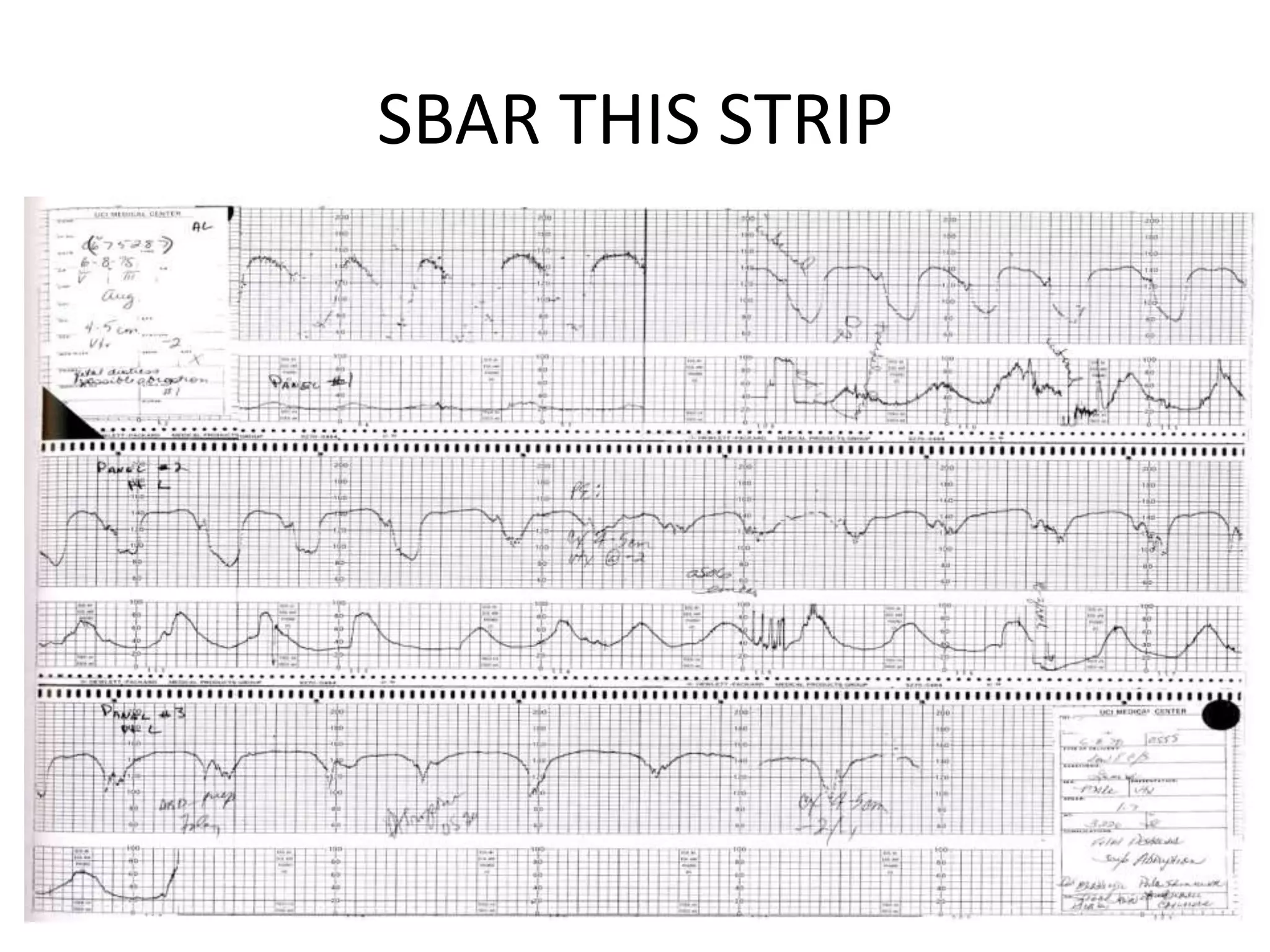
• SBAR
 – Situation (patient characteristics)
 – Background (evolution of tracing)
 – Assessment (description of current tracing)
 – Recommendation (action plan)
Communication
• Description of FHR pattern
  – VARIABILLITY (absent, minimal, moderate, marked)
  – Descriptions of PERIODIC/EPISODIC changes
     •   Type or shape
     •   Recurrent or intermittent
     •   Severity (nadir)
     •   Relationship to uterine activity
  – BASELINE FHR
  – Presence/absence of ACCELERATIONS
  – Has the FHR tracing changed or evolved over time
    since admission. Is the change transient with an
    obvious cause ( meds, hypotension, meconium,
    AROM, fever, bleeding, maternal position)
  – Potential influence of Maternal condition &/OR Fetal
    condition in relation to FHR patterns
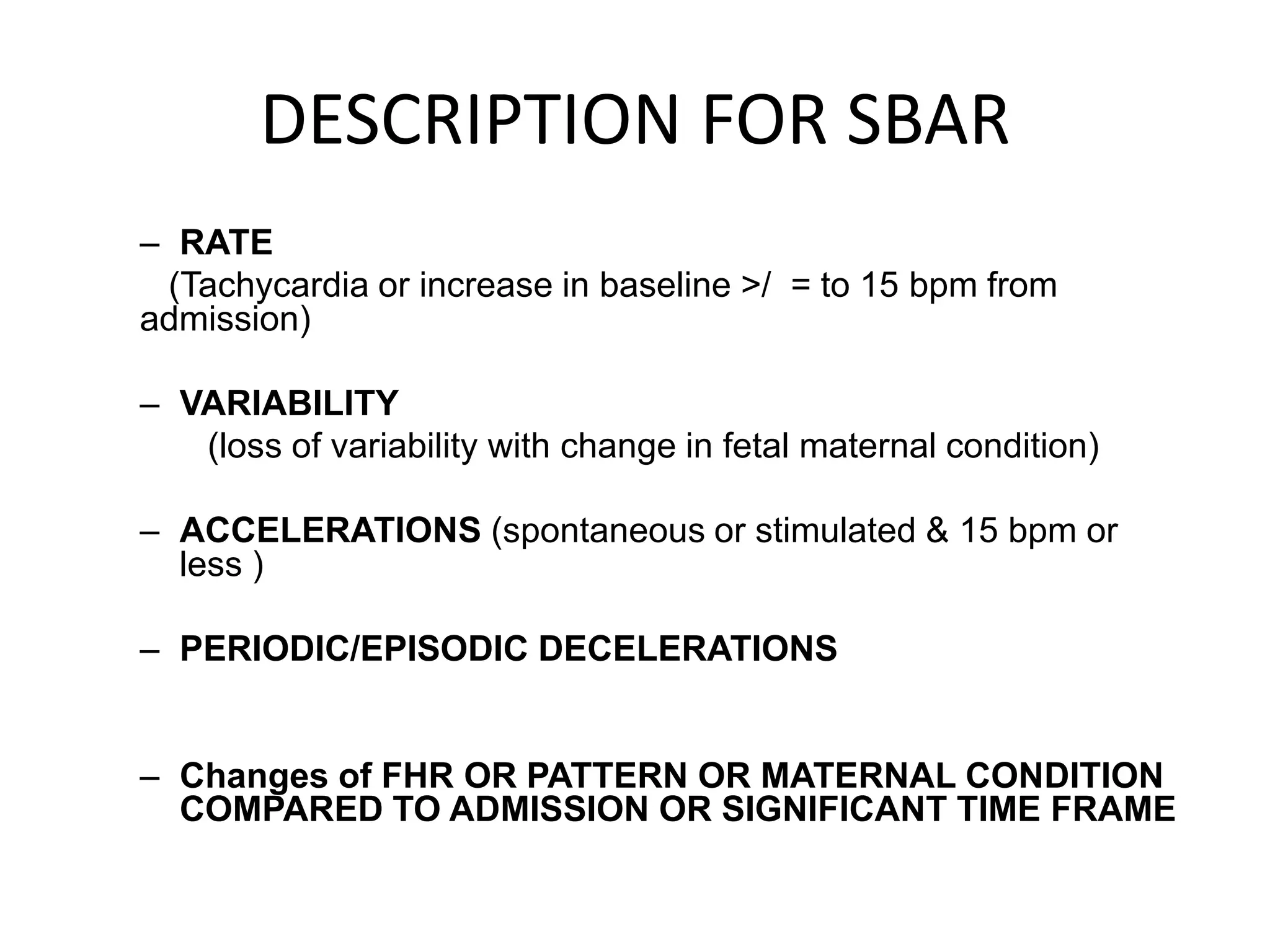
DESCRIPTION FOR SBAR
– RATE
 (Tachycardia or increase in baseline >/ = to 15 bpm from
admission)

– VARIABILITY
   (loss of variability with change in fetal maternal condition)

– ACCELERATIONS (spontaneous or stimulated & 15 bpm or
  less )

– PERIODIC/EPISODIC DECELERATIONS


– Changes of FHR OR PATTERN OR MATERNAL CONDITION
  COMPARED TO ADMISSION OR SIGNIFICANT TIME FRAME
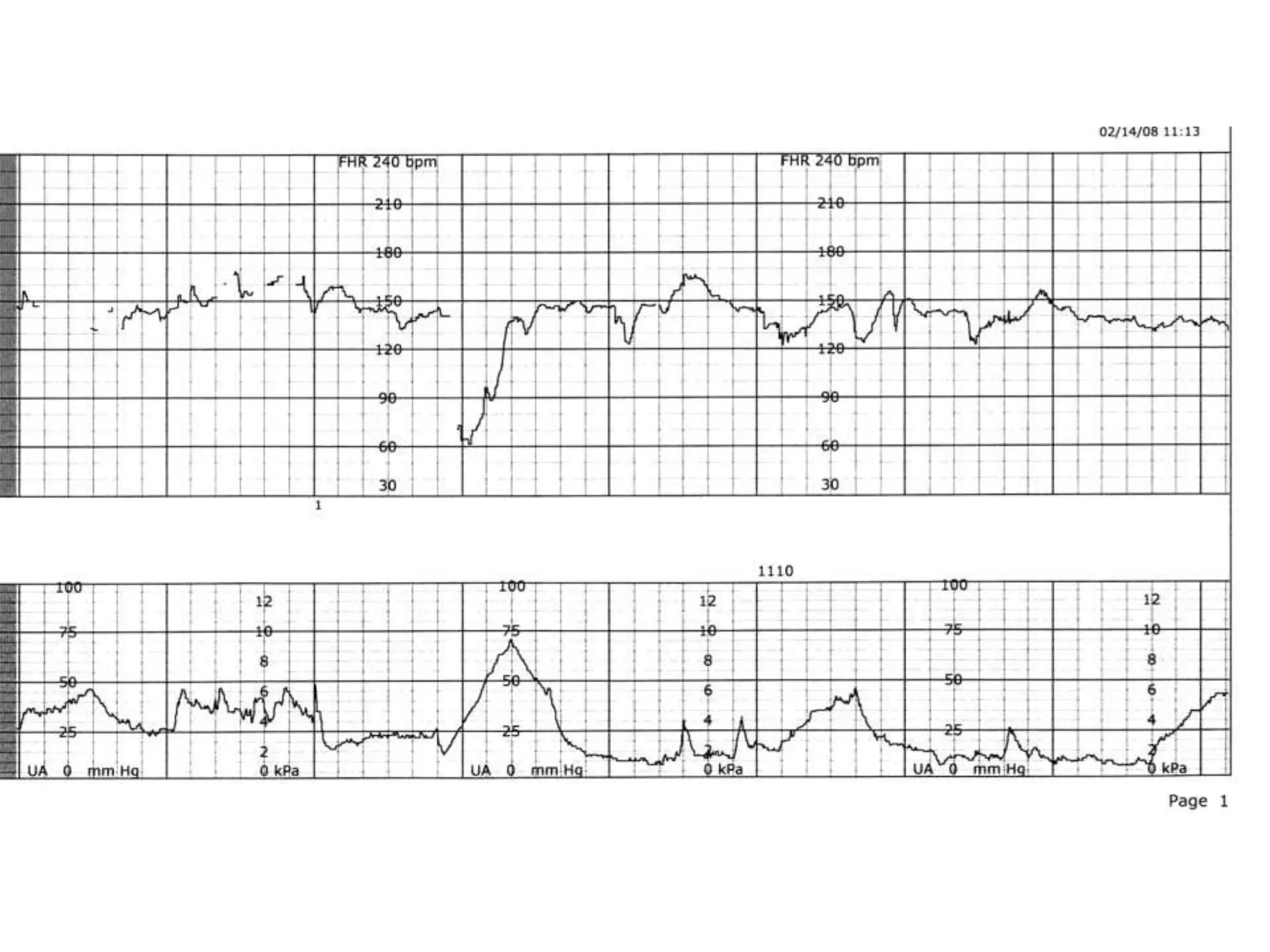
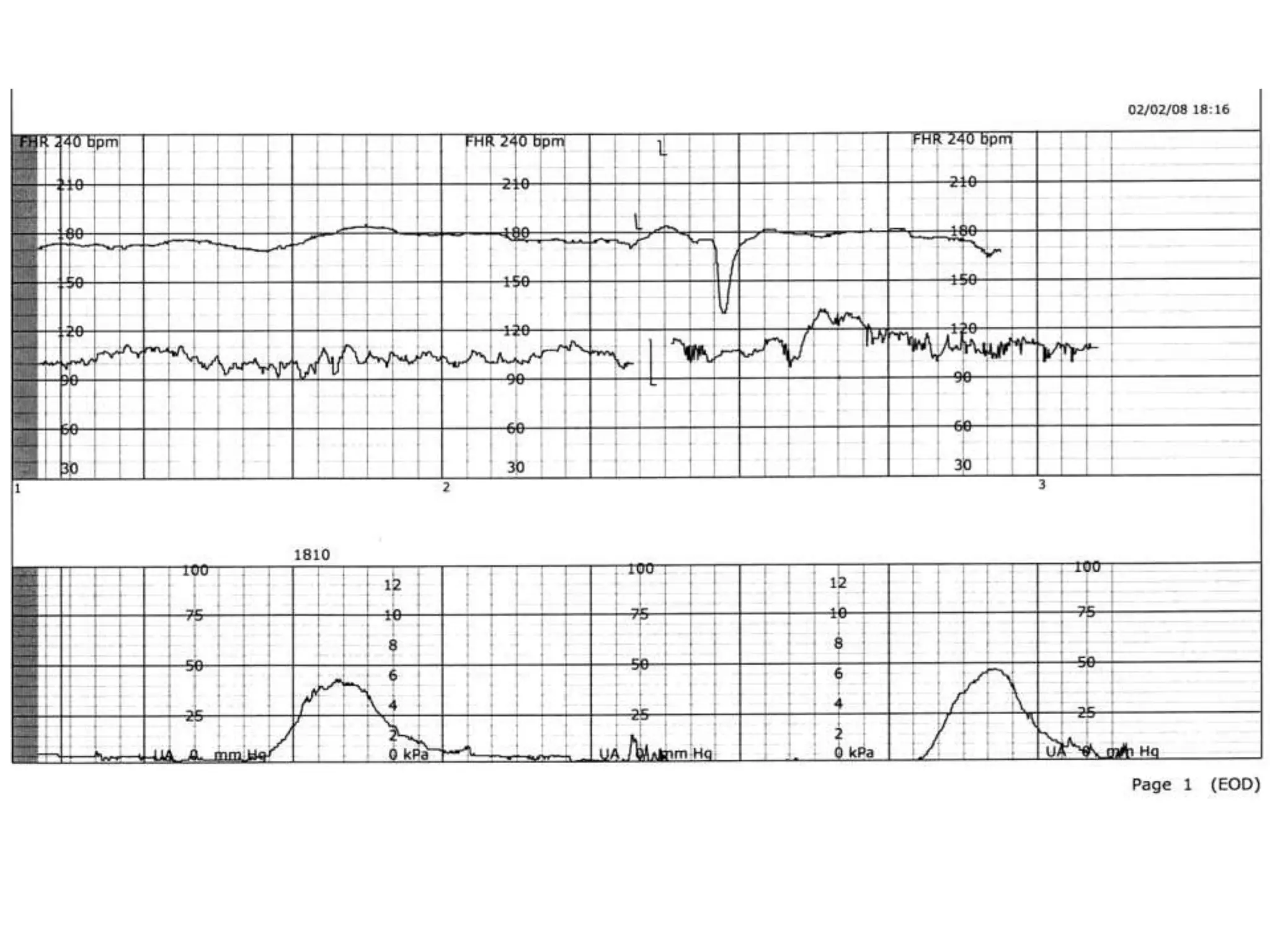
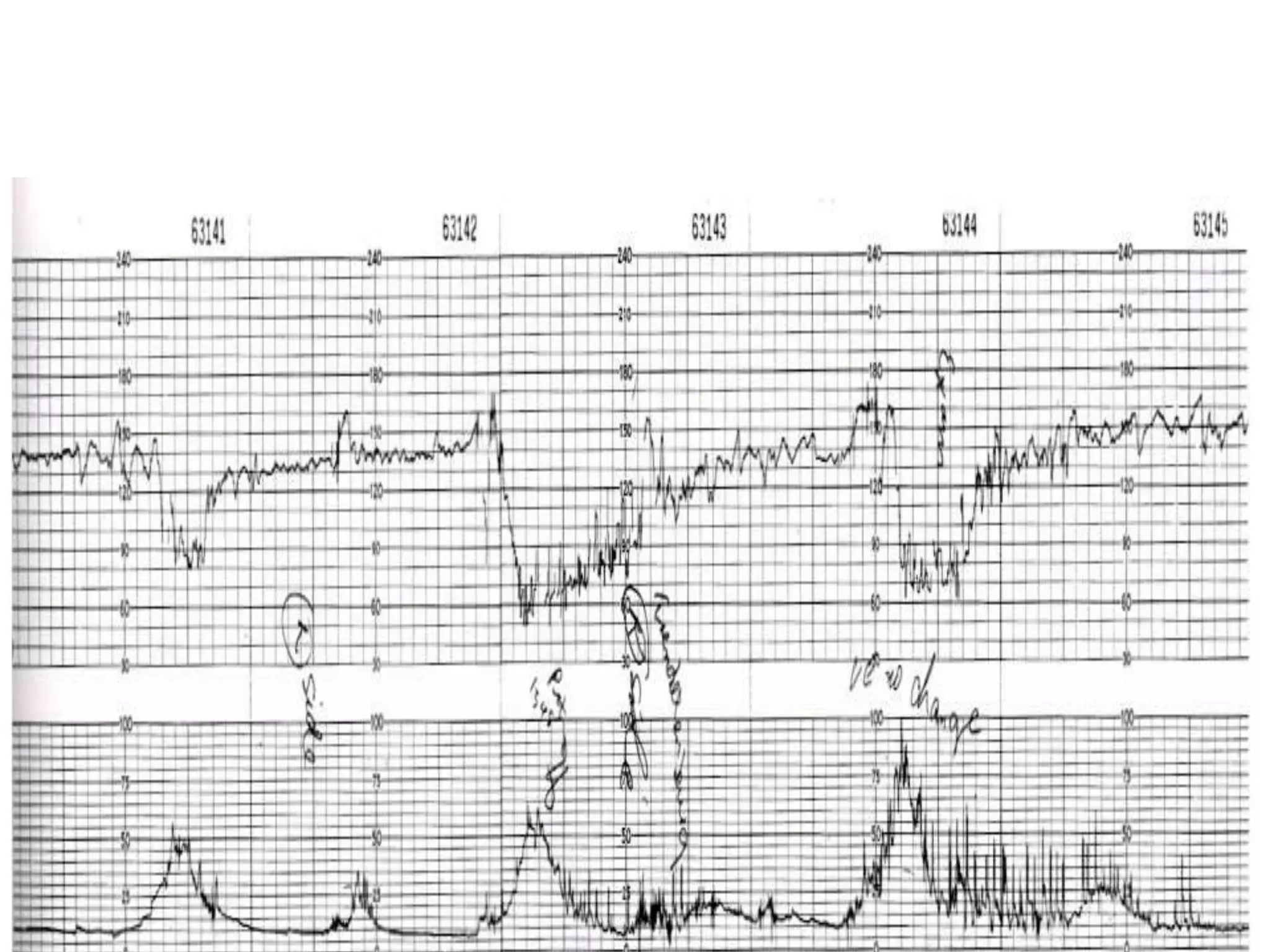
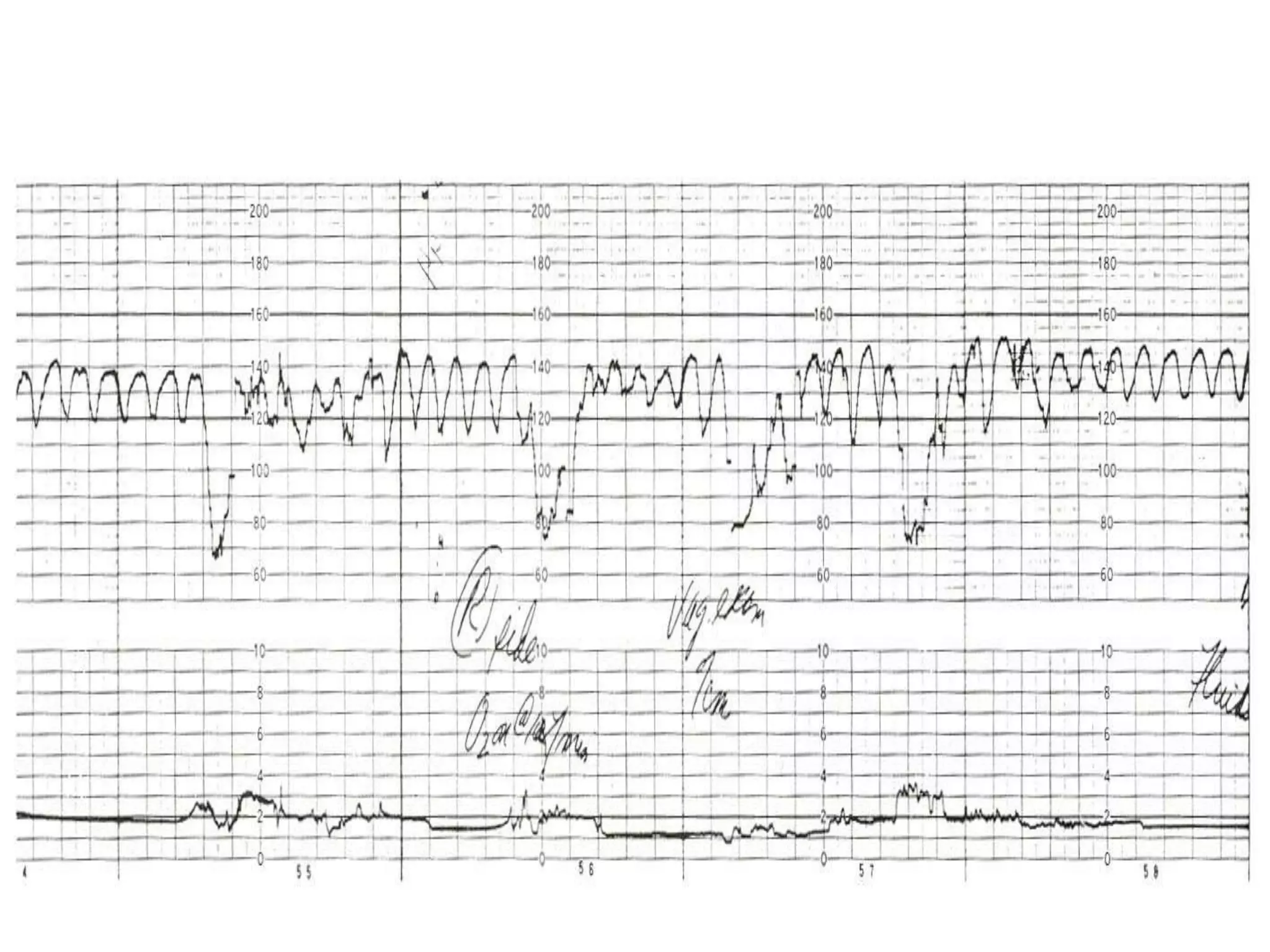
SBAR THIS STRIP
SBAR THIS STRIP
SBAR THIS STRIP
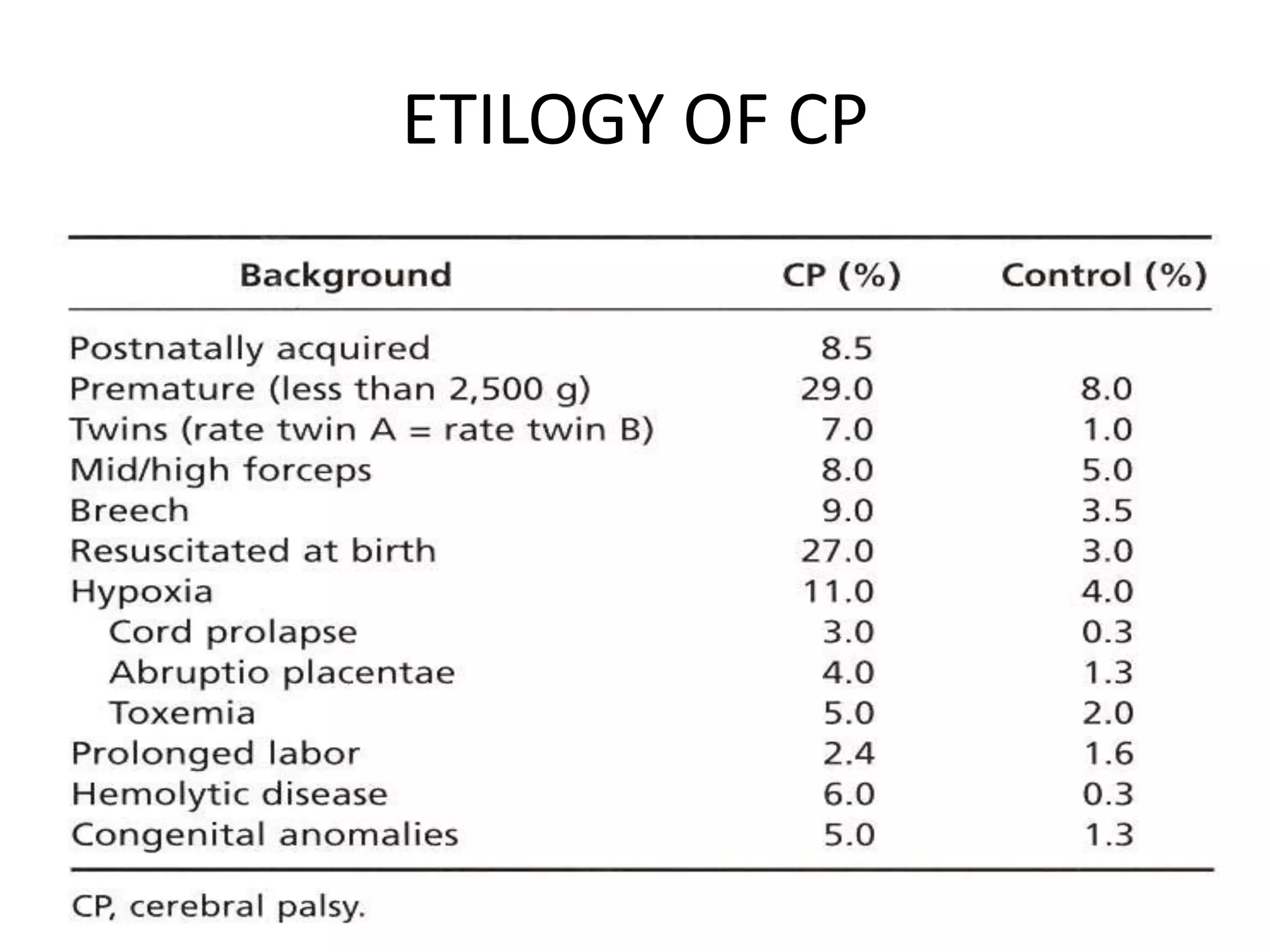
ETILOGY OF CP
Prematurity results in CP
• CP develops in as many as 15-20 % of surviving premature infants
• The earlier the gestational age at delivery; The greater is the risk
  of developing CP.
• CP risk % >>> 30 weeks >> 32-34 weeks with a plateau > 34
  weeks unless chorioamnionitis or intrapartum hypoxia occurs.
• CP as a result of prematurity is associated with the presence of
  Periventricular Leukomalacia (PVL is an anatomic lesion.)
• In addition to perinatal inflammation, cerebral ischemia contributes
  to PVL and may result in CP in preterm infants.
• Other conditions that primarily affect preterm infants and may lead
  to CP include severe intraventricular hemorrhage (IVH) and
  periventricular hemorrhagic infarction which may result in
  posthemorrhagic hydrocephalus which frequently leads to CP
Chorioamnionitis SYNERGISTICALLY
    Increases the risk of CP with Prematurity
  • There are significant associations between clinical chorioamnionitis or
    histological chorioamnionitis and cerebral palsy, for clinical
    chorioamnionitis a pooled odds ratio of 2.42 (95% CI 1.52–3.84), and for
    histological chorioamnionitis a pooled odds ratio of 1.83 (95%
    confidence interval, 1.17–2.89).
  • This data is associated with an increased risks of 140% and 80% for
    neonates exposed to clinical chorioamnionitis or histological
    chorioamnionitis, to develop CP respectively.
  • PVL occurs more frequently in premature infants born to mothers with
    chorioamnionitis, premature or prolonged rupture of the membranes. In
    a meta-analysis, chorioamnionitis was associated with cystic PVL
    (relative risk 3.0) and cerebral palsy (relative risk 1.9) . Funisitis or
    neonatal sepsis also increases the risk of PVL
Obstet Gynecol 2010;116:387–92 Clin Obstet Gynecol 1998 Dec;41(4):827-31
.
 Paediatr Perinat Epidemiol 1998 Jan;12(1):72-83
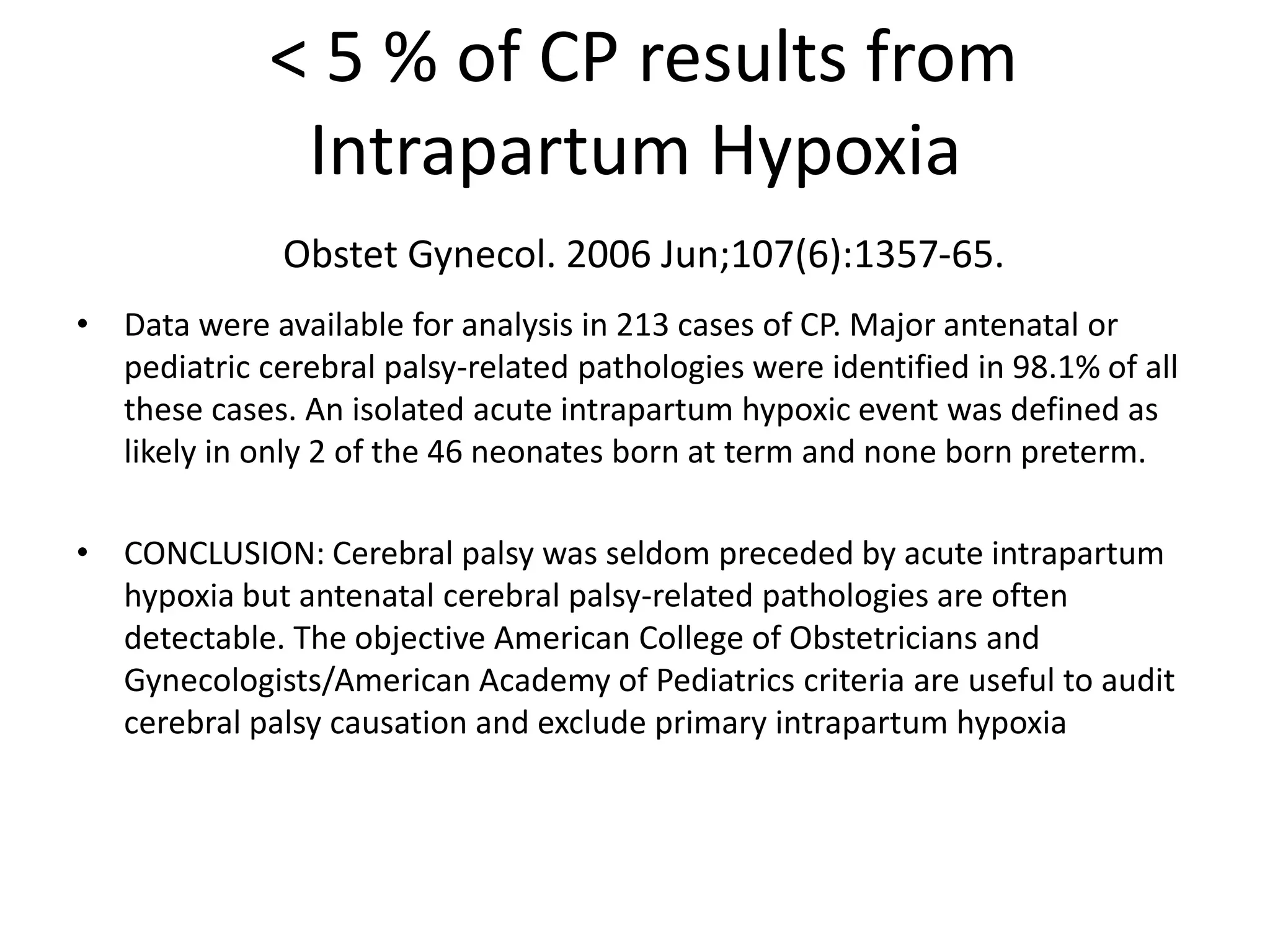
< 5 % of CP results from
              Intrapartum Hypoxia
              Obstet Gynecol. 2006 Jun;107(6):1357-65.
• Data were available for analysis in 213 cases of CP. Major antenatal or
  pediatric cerebral palsy-related pathologies were identified in 98.1% of all
  these cases. An isolated acute intrapartum hypoxic event was defined as
  likely in only 2 of the 46 neonates born at term and none born preterm.

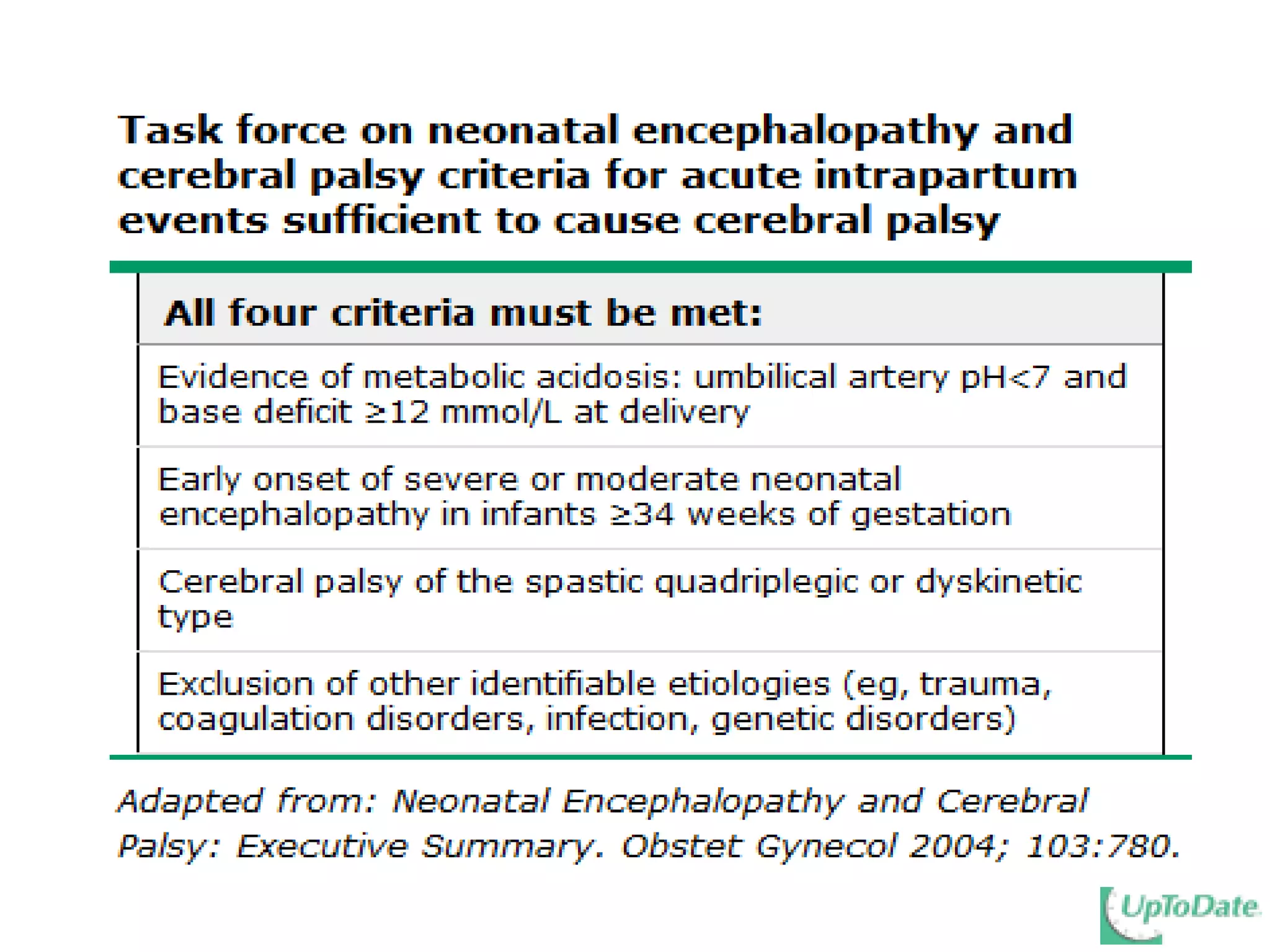
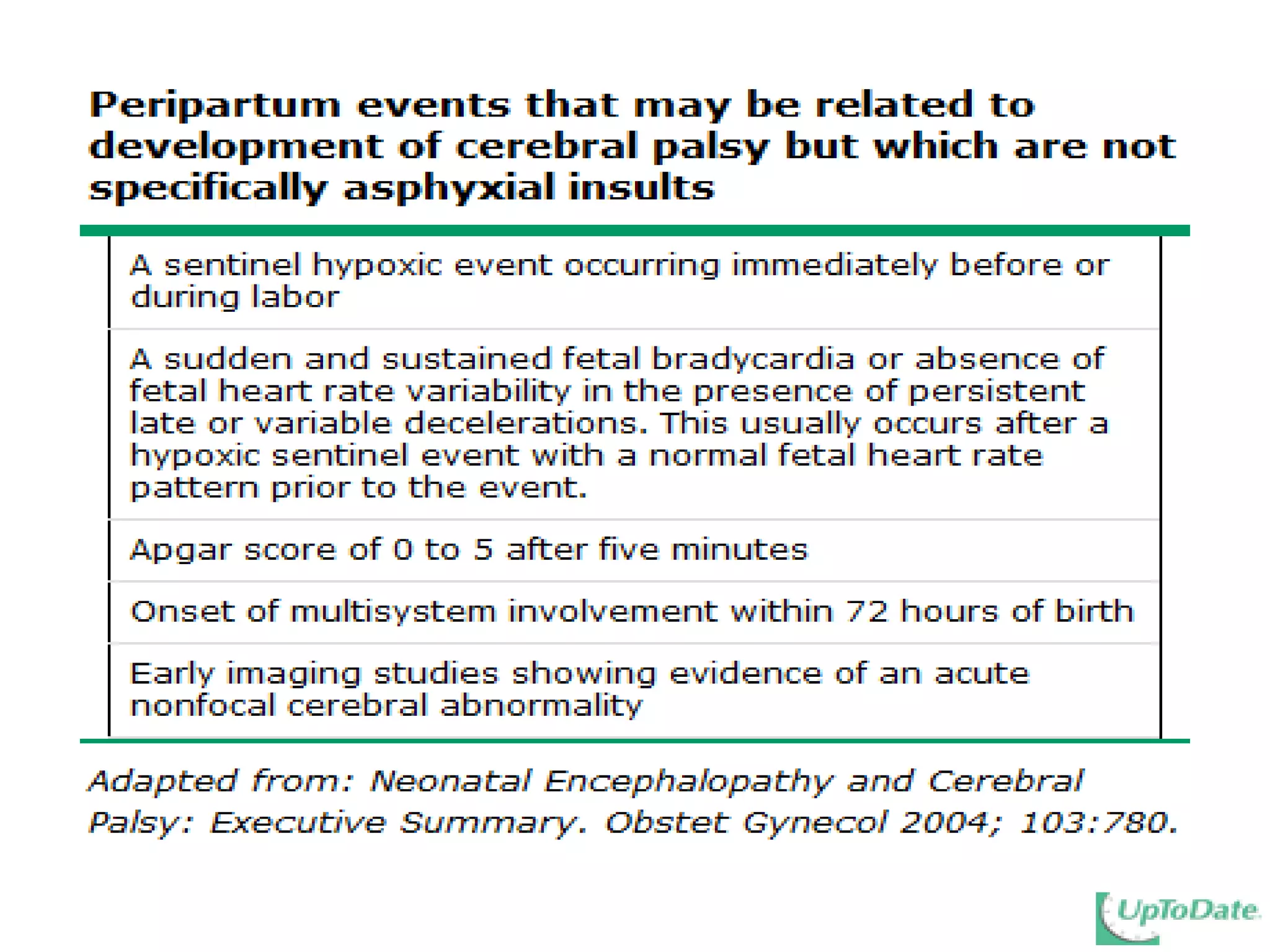
• CONCLUSION: Cerebral palsy was seldom preceded by acute intrapartum
  hypoxia but antenatal cerebral palsy-related pathologies are often
  detectable. The objective American College of Obstetricians and
  Gynecologists/American Academy of Pediatrics criteria are useful to audit
  cerebral palsy causation and exclude primary intrapartum hypoxia
Fht interpretation & management

Fht interpretation & management

  • 1.
    Management of Intrapartum Fetal Heart Rate Tracings ACOG Number 116, November 2010
  • 2.
    DO NOT INTERPRETFHR in ISOLATION • TIMING IS IMPORTANT ie MULTIP MOVING QUICKLY vs NULLIP with unfavorable cervix OR IN EARLY LABOR or INDUCTION • PELVIS & BABY SIZE & OB HISTORY & OB Complications • CLINICAL FACTORS – Gestational age ( Postdates / < 32 weeks ) – Maternal Medical Complications ( ?Exacerbation?) – Previous Fetal Status (Change from admission?) – Fetal Complications (IUGR, Oligohydramnios, Anomalies, Abruption, Postdates) – Medications ( Narcotics, B sympatho, Ephedrine, B blockers,) MISCELLANEOUS FACTORS – Fever, Meconium, Magnesium Sulfate, Epidural, Vaginal bleeding, VABC, Recent AROM, Smoking , illicit drugs
  • 3.
    Physiologic Control ofFHR • Normal FHR patterns rely on sympathetic and parasympathetic activity AND ability of the heart to respond appropriately to the input from the nervous system • Parasympathetic and Sympathetic nervous system are dependent on intact functioning CNS with no preceding damage or significant anatomical anomaly or insult • Normal function of CNS & Myocardium both depend on adequate oxygenation
  • 4.
    T 18 WITHCNS ANOMALY
  • 5.
  • 6.
  • 7.
    Physiologic Control ofFHR • Sinoatrial node (fastest rate) • Atrial node (next fastest) • Ventricular rate (slowest 60 bpm or less) • Sympathetic nervous system (increases heart rate) • Parasympathetic nervous system (decreases heart rate)
  • 8.
    PHYSILOGY EARLY Decelerations •Early decelerations caused by – Vagal stimulation commonly associated with Head compression / Prolonged vaginal exam – Results in a normal physiologic decrease in fetal heart rate not associated with fetal hypoxemia or acidosis
  • 9.
  • 10.
    Physiology of VARIABLEDecelerations • Variable deceleration – Cord compression leads to increased venous pressure. – Pressure sensed in baroreceptors resulting in Vagal nerve stimulation – Vagal nerve stimulation results in decreased fetal heart rate
  • 11.
  • 12.
    PHYSIOLOGY LATE Decelerations •Late deceleration – Reflex • Decrease in blood flow delivered to the baby ( maternal hypotension/maternal venous compression/cord compression/occlusion/uterine hyperstimulation) resulting in the inability to deliver enough O2 to the baby • OR deoxygenated blood delivered to the baby ( abruption/maternal seizure/ ss crisis/pneumonia/PE/asthma) resulting in low PaO2 sensed by chemoreceptors which results in vagal discharge resulting in slowing of heart rate – Non-reflex • Deoxygenated blood insufficient to support normal myocardial contarctions resulting in direct myocardial depression
  • 13.
  • 14.
    NICHD NOMENCLATURE STANADARDIZED NOMENCLATURE should lead to comparable research & improved communication • Revised and Presented in 2008 by NICHD • NICHD nomenclature endorsed by – American College of Obstetricians and Gynecologists – American Women’s Health, Obstetric, and Neonatal Nursing
  • 15.
    NICHD NOMENCLATURE • Baseline •Periodic – Associated with uterine contractions – Distinguished on basis of onset of waveform • Abrupt • Gradual • Episodic – Not associated with uterine contractions
  • 16.
    NICHD NOMENCLATURE • Nodistinction made between short-term variability and long-term variability • Variability defined visually based on amplitude of FHR complexes
  • 17.
    SHORT & LONGTERM VARIABILITY
  • 18.
    NICHD NOMENCLATURE • Fulldescription of FHR tracing requires: – Contraction pattern – Fetal heart rate – Variability – Accelerations – Periodic or Episodic Decelerations – Changes or trends of FHR patterns over time
  • 19.
    Uterine Contractions • Numberof contractions in 10-minute window, averaged over 30 minutes Tachysystole > 5 contractions in 10 minutes
  • 20.
    Uterine Contraction Descriptions •Tachysystole qualified as to presence/absence of decelerations • Tachysystole applies to spontaneous or stimulated labor • Terms hyperstimulation and hypercontractility are not defined and should be abandoned
  • 21.
    CATEGORY II ORIII TACHYSYSTOLE GOAL REDUCE UTERINE ACTIVITY • Discontinue oxytocin or cervical ripening agents • Administer tocolytic medication ( Brethine 0.25 mg SQ only if necessary ) • DO NOT USE BRETHINE FOR TACHYSYSTOLE ASSOCIATED ABRUPTION
  • 22.
  • 23.
    NICHD NOMENCLATURE BASELINE FETAL HEART RATE The mean FHR rounded to increments of 5 beats per minute during a MINIMUM OF 2 MINUTES AND < 1O MINUTES EXCLUDING : —Periodic or episodic changes — Periods of marked FHR variability — Segments of baseline that differ by more than 25 beats per minute •The baseline must be for a minimum of 2 minutes in any 10- minute segment, or the baseline for that time period is indeterminate. In this case, one may refer to the prior 10-minute window for determination of baseline. • Normal FHR baseline: 110–160 beats per minute • Tachycardia: FHR baseline is greater than 160 beats per minute • Bradycardia: FHR baseline is less than 110 beats per minute
  • 24.
    NICHD NOMENCLATURE BASELINE VARIABILITY Fluctuations in the baseline FHR that are irregular in amplitude and frequency. Variability is visually quantitated as the amplitude of peak-to-trough in beats per minute. • Absent — amplitude range undetectable • Minimal —amplitude range detectable but 5 beats per minute or fewer • Moderate (normal)—amplitude range 6–25 beats per minute • Marked —amplitude range greater than 25 beats per minute
  • 25.
    Variability Amplitude range Descriptive term Undetectable Absent < 5 bpm Minimal 6-25 bpm Moderate > 25 bpm Marked
  • 26.
    Absent Minimal Moderate Marked Sinusoidal
  • 27.
    NICHD NOMENCLATURE ACCELERATION • A visually apparent abrupt increase (onset to peak in less than 30 seconds) in the FHR above the baseline • At 32 weeks of gestation and beyond, an acceleration has a peak of 15 beats per minute or more above baseline, with a duration of 15 seconds or more but less than 2 minutes from onset to return. • Before 32 weeks of gestation, an acceleration has a peak of 10 beats per minute or more above baseline, with a duration of 10 seconds or more but less than 2 minutes from onset to return. • Prolonged ACCELERATION > 2 minutes < 10 minutes in duration BASELINE CHANGE If an acceleration lasts >/= to 10 minutes it is a baseline change
  • 28.
    LATE DECELERATIONS • Latedeceleration – Visually apparent gradual (defined as onset of deceleration to nadir ≥30 seconds) decrease and return to baseline FHR associated with uterine contraction – The decrease calculated from most recent portion of baseline – The deceleration is delayed in timing, with the nadir of the deceleration occurring after the peak of the contraction. • In most cases the onset, nadir, and recovery of the deceleration occur after the beginning, peak, and ending of the contraction, respectively
  • 29.
  • 30.
    EARLY DECELERATIONS • Earlydeceleration – Visually apparent gradual decrease (defined as onset of deceleration to nadir ≥30 seconds) and return to baseline FHR associated with uterine contraction – Calculated from most recent portion of baseline – Coincident in timing, with nadir of deceleration occurring at same time as the peak of contraction • In most cases onset, nadir, and recovery of deceleration are coincident with the beginning, peak, and ending of the contraction, respectively
  • 31.
    VARIABLE DECELERATIONS • Variabledeceleration – Visually apparent abrupt decrease (defined as onset of deceleration to beginning of nadir <30 seconds) in FHR below the baseline – The decrease is calculated from most recent portion of baseline – The decrease in FHR below baseline is ≥15 beats/min, lasting ≥15 seconds, and <2 minutes from onset to return to baseline. • When variable decelerations are associated with uterine contractions, their onset, depth, and duration commonly vary with successive uterine contractions
  • 32.
    PROLONGED DECELERATION >/= 2 & < 10 minutes – Decrease in FHR below baseline calculated from most recent10 minute stable baseline – Decrease from baseline is ≥15 beats/min, lasting ≥2 minutes, but <10 minutes from onset to return to baseline. • IF 15 BPM DECELERATION LAST ≥ 10 minutes it is a FETAL HEART RATE BASELINE CHANGE
  • 33.
    QUANTIFICATION OF DELERATIONS & ACCELERATIONS • Decelerations are quantitated by the depth of the nadir in BPM below baseline • The duration is quantitated in minutes and seconds from beginning to end of deceleration • Accelerations are quantitated similarly • Decelerations may be defined as recurrent if they occur with ≥50% of uterine contractions in any 20-minute segment • Bradycardia and tachycardia are quantitated by actual FHR in BPM.
  • 34.
    Interpretation of FHRpatterns • New three-tier system • FHR tracing patterns reflect current fetal acid-base status • FHR tracing patterns cannot RELIABLY OR CONSISTENTLY predict development of cerebral palsy
  • 35.
    Category I Category IFHR tracings include all of the following: • Baseline rate:110–160 beats per minute • Baseline FHR variability: MODERATE • Late or Variable Decelerations ABSENT • Early decelerations: May be present • Accelerations: Present or ABSENT
  • 36.
    Category I FHRtracing • Includes ALL of the following: – Baseline rate NORMAL : 110-160 BPM – Baseline Variability: MODERATE – Late or Variable Decelerations: ABSENT – Early Decelerations: PRESENT OR ABSENT – Accelerations: PRESENT OR ABSENT • Category I FHR tracings are normal – Strongly predictive of normal fetal acid-base status at time of observation - Requires no change in management
  • 37.
    Category II FHRtracing Includes ANY of the following RATE 1) Bradycardia not accompanied by absent baseline variability 2) Tachycardia Baseline FHR variability 1) Minimal baseline variability 2) Absent baseline variability with no recurrent decelerations 3) Marked baseline variability
  • 38.
    Category II FHRtracing ACCELERATIONS – Absence of induced accelerations after fetal stimulation –NO FETAL HEART RATE ACCELERATIONS WITH FAS OR SCALP STIMULATION
  • 39.
    Category II FHRtracing PERIODIC OR EPISODIC DECELERATIONS • Recurrent variable decelerations accompanied by minimal or moderate baseline variability • Prolonged deceleration more than 2 minutes but less than10 minutes • Recurrent late decelerations with moderate baseline variability • Variable decelerations with other characteristics such as slow return to baseline, overshoots, or “shoulders
  • 40.
    Category II FHRtracing • Category II FHR tracings are INDETERMINATE • NOT predictive of abnormal fetal acid-base status • Requires continued surveillance and interpretation in light of entire clinical information
  • 41.
    CATEGORY II MANAGEMENT •Both responses are highly predictive of normal fetal acid–base status and, thus, may help guide clinical management 1) Moderate FHR Variability 2) The presence of FHR accelerations -spontaneous -digital scalp stimulation -vibroacoustic stimulation
  • 42.
    CATEGORY II MANAGEMENT Recurrent Variable decelerations Prolonged Decelerations Bradycardia GOAL Alleviate umbilical cord compression Amnioinfusion ?PROLAPSED CORD? DOES NOT HELP WITH LATE DECELERATIONS
  • 43.
    Category III FHRtracing ABSENT FHR VARIABILITY AND • Recurrent late decelerations • Recurrent variable decelerations • Bradycardia OR SINUSOIDAL PATTERN
  • 44.
    Category III FHRtracing • Category III FHR tracings are abnormal • Predictive of abnormal fetal acid-base status at time of observation • Require prompt evaluation • Depending on situation, efforts may include: – Maternal oxygen( 10 liter per mask) – Maternal position change – Discontinuation of labor stimulation – Treatment of maternal hypotension – AFTER CORRECTIVE ATTEMPT make an effort to TO DEMONSTARTE FETAL HEART RATE ACCELERATION BY FETAL DIGITAL SCALP STIMULATION OR FAS STIMULATION TO DOWN GRADE BACK TO CATEGORY II
  • 45.
    Promote Oxygenation and Improve blood flow • Minimal or Absent FHR variability • Recurrent late decelerations • Prolonged decelerations • Bradycardia INITIATE • Lateral positioning (either left or right) • Oxygen administration • IV fluid bolus • Reduce uterine contraction frequency
  • 48.
    NICHD Expert Panel Agreementabout definition of NORMAL FHR tracing that confers an extremely high predictability of a NORMALLY oxygenated fetus when it is obtained • Normal baseline rate • Moderate FHR variability • Presence of accelerations • Absence of decelerations Agreement that patterns predictive of current or impending fetal asphyxia PLACING the fetus is at risk for NEUROLOGIC DAMAGE OR DEATH ABSENT FHR VARIABILITY AND RECURRENT LATES RECURRENT VARIABLES
  • 49.
    Goals of EFM •Delivery of newborn – In the absence of a significant acidosis • Umbilical artery pH < 7.1, base excess < -12 • And/or 5 minute Apgar < 7 – In the presence of neonatal vigor • Quickly categorize FHR patterns based on their relationship (or lack thereof) to the above goals • Clearly communicate FHR patterns to members of the OB team
  • 50.
    Communication • SBAR –Situation (patient characteristics) – Background (evolution of tracing) – Assessment (description of current tracing) – Recommendation (action plan)
  • 51.
    Communication • Description ofFHR pattern – VARIABILLITY (absent, minimal, moderate, marked) – Descriptions of PERIODIC/EPISODIC changes • Type or shape • Recurrent or intermittent • Severity (nadir) • Relationship to uterine activity – BASELINE FHR – Presence/absence of ACCELERATIONS – Has the FHR tracing changed or evolved over time since admission. Is the change transient with an obvious cause ( meds, hypotension, meconium, AROM, fever, bleeding, maternal position) – Potential influence of Maternal condition &/OR Fetal condition in relation to FHR patterns
  • 52.
    DESCRIPTION FOR SBAR –RATE (Tachycardia or increase in baseline >/ = to 15 bpm from admission) – VARIABILITY (loss of variability with change in fetal maternal condition) – ACCELERATIONS (spontaneous or stimulated & 15 bpm or less ) – PERIODIC/EPISODIC DECELERATIONS – Changes of FHR OR PATTERN OR MATERNAL CONDITION COMPARED TO ADMISSION OR SIGNIFICANT TIME FRAME
  • 58.
  • 59.
  • 60.
  • 61.
  • 62.
    Prematurity results inCP • CP develops in as many as 15-20 % of surviving premature infants • The earlier the gestational age at delivery; The greater is the risk of developing CP. • CP risk % >>> 30 weeks >> 32-34 weeks with a plateau > 34 weeks unless chorioamnionitis or intrapartum hypoxia occurs. • CP as a result of prematurity is associated with the presence of Periventricular Leukomalacia (PVL is an anatomic lesion.) • In addition to perinatal inflammation, cerebral ischemia contributes to PVL and may result in CP in preterm infants. • Other conditions that primarily affect preterm infants and may lead to CP include severe intraventricular hemorrhage (IVH) and periventricular hemorrhagic infarction which may result in posthemorrhagic hydrocephalus which frequently leads to CP
  • 63.
    Chorioamnionitis SYNERGISTICALLY Increases the risk of CP with Prematurity • There are significant associations between clinical chorioamnionitis or histological chorioamnionitis and cerebral palsy, for clinical chorioamnionitis a pooled odds ratio of 2.42 (95% CI 1.52–3.84), and for histological chorioamnionitis a pooled odds ratio of 1.83 (95% confidence interval, 1.17–2.89). • This data is associated with an increased risks of 140% and 80% for neonates exposed to clinical chorioamnionitis or histological chorioamnionitis, to develop CP respectively. • PVL occurs more frequently in premature infants born to mothers with chorioamnionitis, premature or prolonged rupture of the membranes. In a meta-analysis, chorioamnionitis was associated with cystic PVL (relative risk 3.0) and cerebral palsy (relative risk 1.9) . Funisitis or neonatal sepsis also increases the risk of PVL Obstet Gynecol 2010;116:387–92 Clin Obstet Gynecol 1998 Dec;41(4):827-31 . Paediatr Perinat Epidemiol 1998 Jan;12(1):72-83
  • 64.
    < 5 %of CP results from Intrapartum Hypoxia Obstet Gynecol. 2006 Jun;107(6):1357-65. • Data were available for analysis in 213 cases of CP. Major antenatal or pediatric cerebral palsy-related pathologies were identified in 98.1% of all these cases. An isolated acute intrapartum hypoxic event was defined as likely in only 2 of the 46 neonates born at term and none born preterm. • CONCLUSION: Cerebral palsy was seldom preceded by acute intrapartum hypoxia but antenatal cerebral palsy-related pathologies are often detectable. The objective American College of Obstetricians and Gynecologists/American Academy of Pediatrics criteria are useful to audit cerebral palsy causation and exclude primary intrapartum hypoxia